Kiwi Puree for Baby: Easy 5-Minute No-Cook Recipe
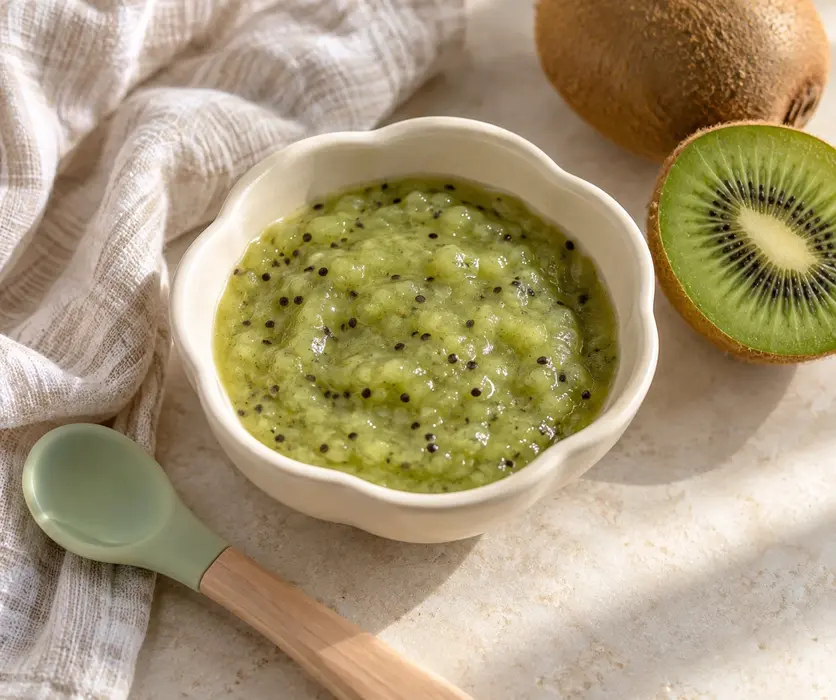
Kiwi puree for baby is one of the quickest homemade fruit purees you can make. A ripe kiwi is naturally soft, so there is no steaming or cooking required just peel, mash or blend, and serve in a texture that suits your baby’s eating skills. Its bright, sweet-tart flavor also pairs easily with familiar foods such as banana, pear, oatmeal, avocado, or plain yogurt. Babies can generally begin complementary foods at around 6 months when they show developmental signs of readiness; there is no universal rule requiring kiwi to be delayed until 8 or 10 months.
If your baby is just starting solids, see our complete guide to first foods for baby at 6 months for more beginner-friendly food ideas.
Why You’ll Love This Kiwi Puree
This is an especially convenient fruit puree for days when you want homemade baby food without cooking a separate meal.
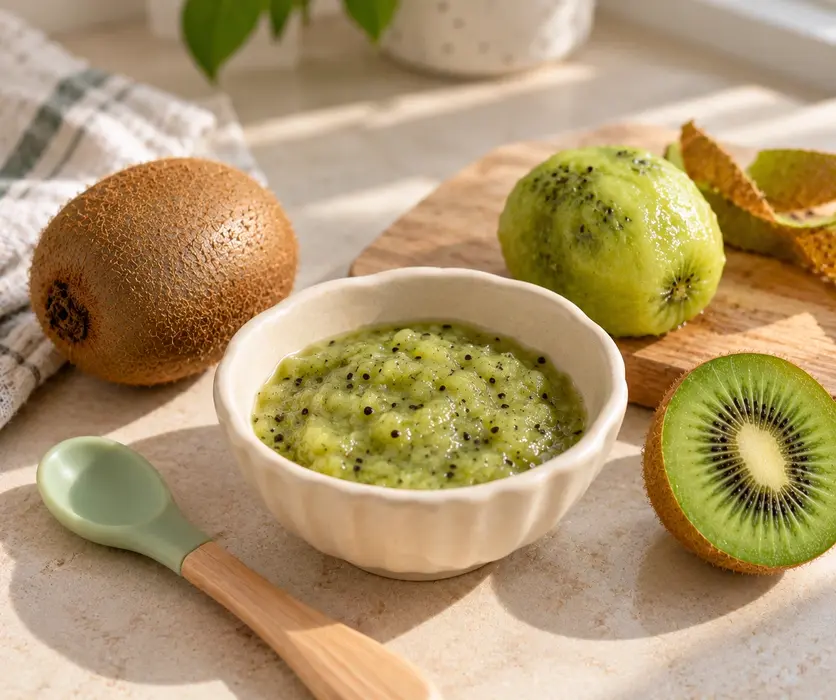
- Only one main ingredient: a ripe kiwi is all you need for the basic puree.
- Ready in about five minutes with no steaming, roasting, or boiling.
- Easy to adjust from smooth puree to a thicker fork-mashed texture as eating skills develop.
- Naturally flavorful, with no need for added sugar.
- Easy to combine with banana, pear, oatmeal, avocado, or plain yogurt.
- Small-batch friendly, which is useful when offering a new fruit.
Ingredients You’ll Need
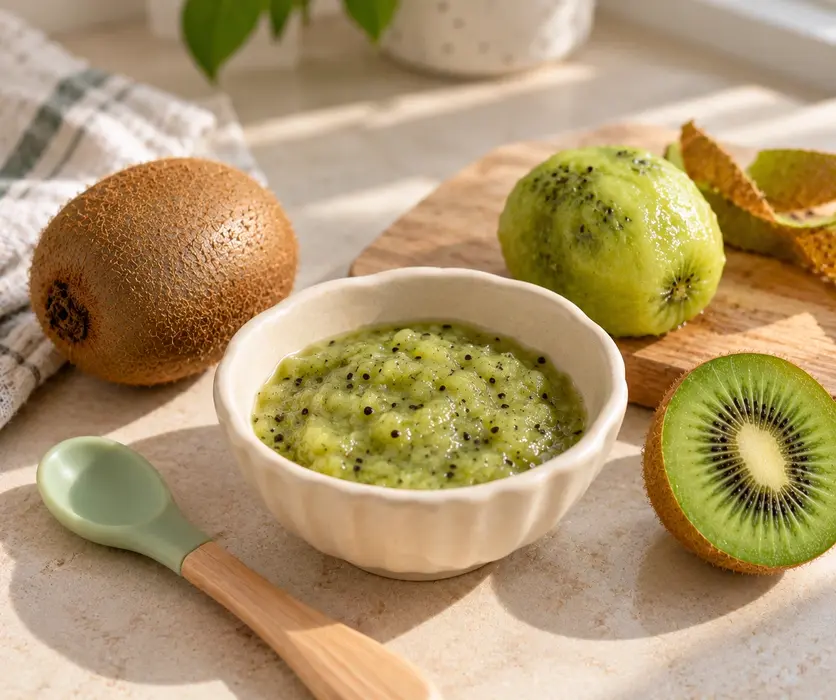
Ripe Kiwi
You need 1 ripe kiwi for the basic recipe. Choose fruit that gives slightly when gently pressed but is not mushy or leaking. A very firm kiwi is usually more tart and harder to mash; a ripe kiwi gives a smoother texture and a more balanced flavor.
Optional Additions
- A little mashed ripe banana or pear for a thicker, milder combination.
- A spoonful of prepared baby oatmeal for more body.
- Plain pasteurized unsweetened yogurt, once dairy has been introduced appropriately.
- A very small amount of breast milk, prepared infant formula, or water only if thinning is needed.
The tiny black seeds are naturally embedded throughout the kiwi flesh. Rather than trying to remove individual seeds, focus on preparing the fruit in a texture that matches your baby’s developmental eating skills.
How to Make Kiwi Puree for Baby
One of the biggest advantages of kiwi puree is how little preparation it requires.
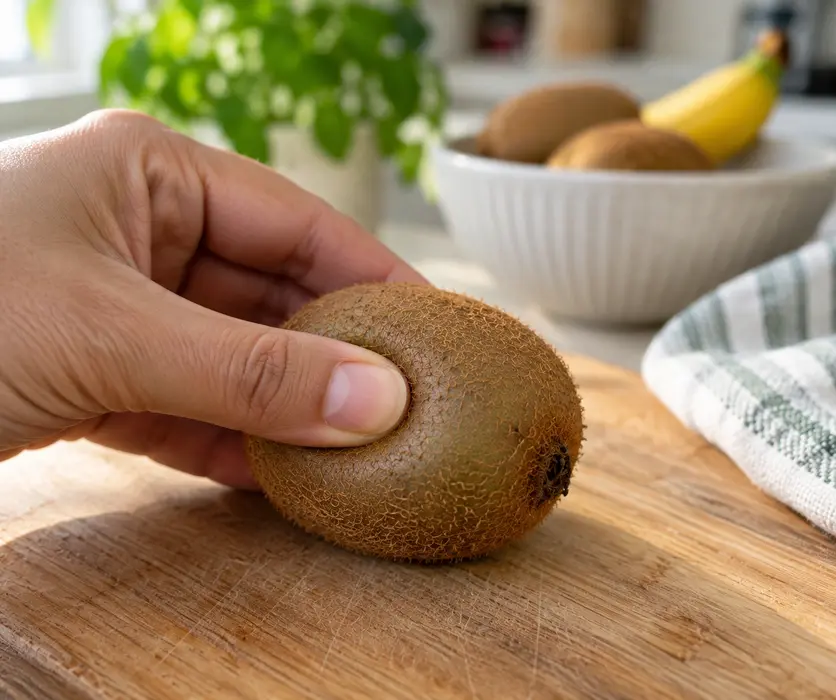
Step 1: Choose a Ripe Kiwi
Gently press the kiwi with your fingers. It should yield slightly without feeling mushy. If it is still very firm, leave it at room temperature and use it when it has softened.
Step 2: Wash and Peel
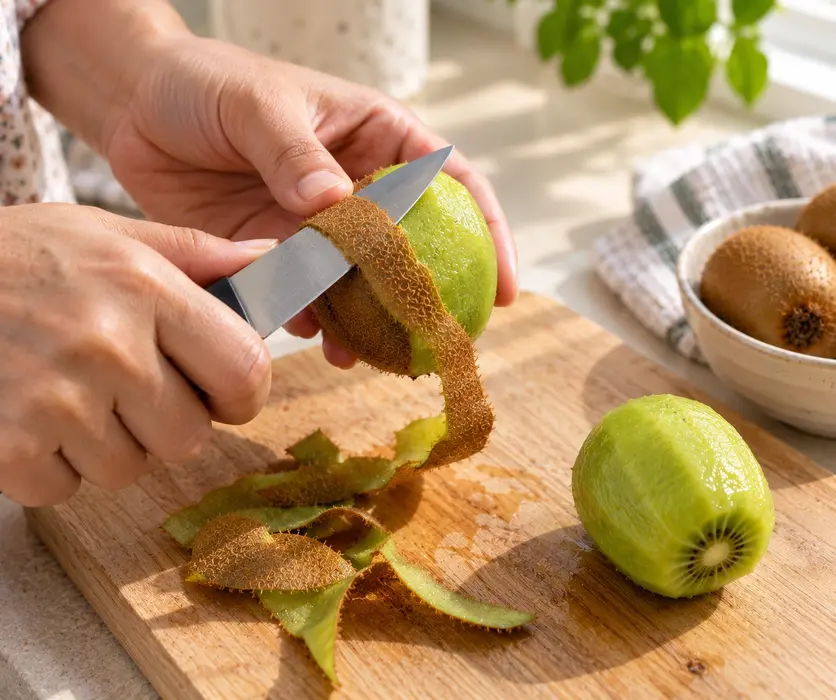
Wash the outside of the kiwi before cutting it. Slice off the ends, then remove the fuzzy outer skin with a small knife or vegetable peeler.
Step 3: Cut the Kiwi
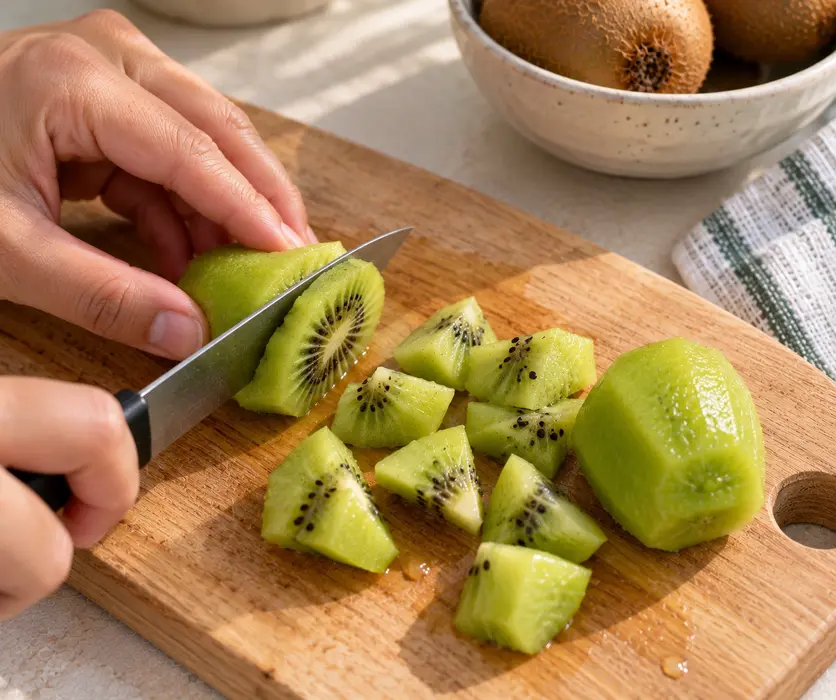
Cut the peeled fruit into several chunks. This makes it easier to mash evenly or blend quickly. There is no need to cook a ripe kiwi before pureeing it.
Step 4: Mash or Blend
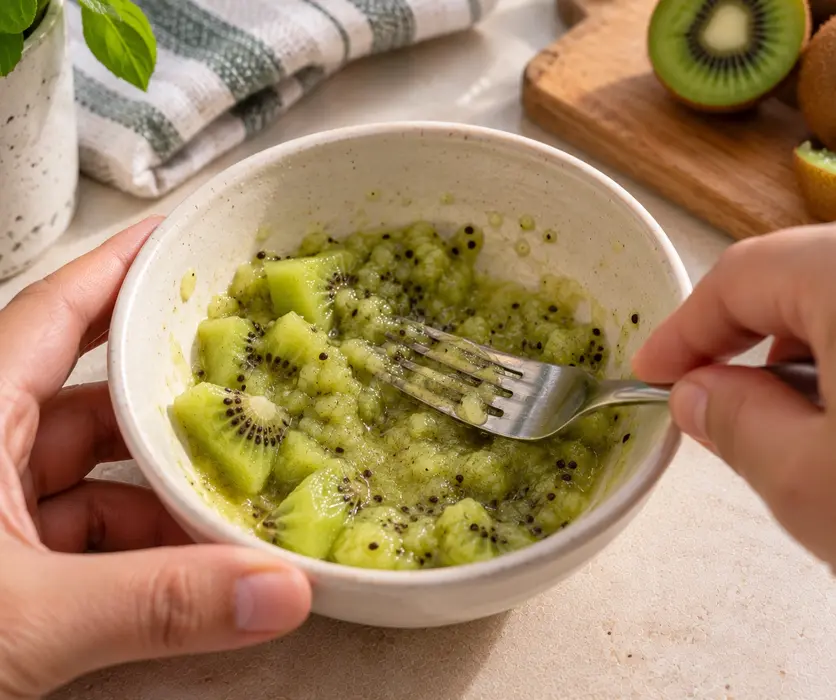
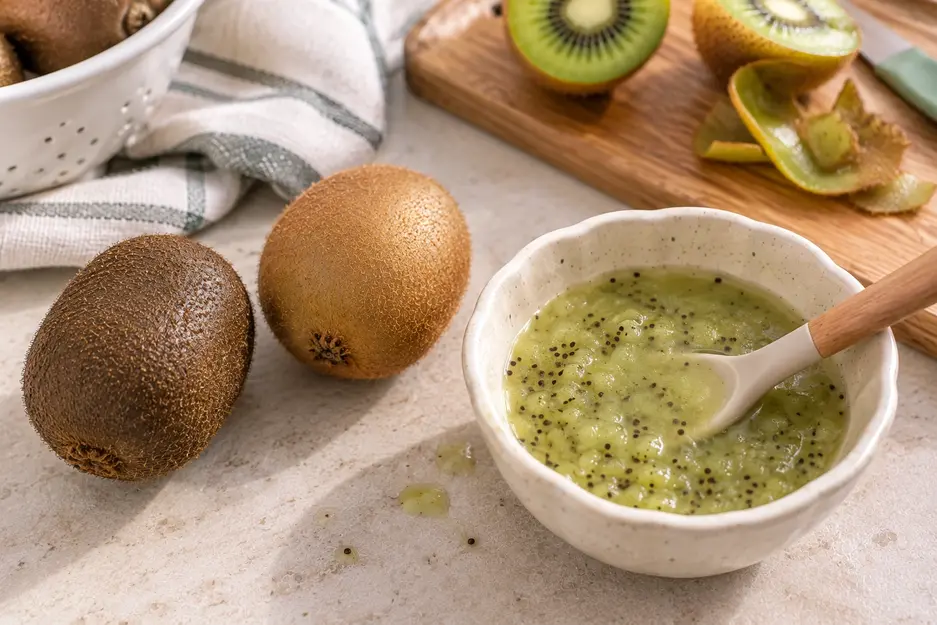
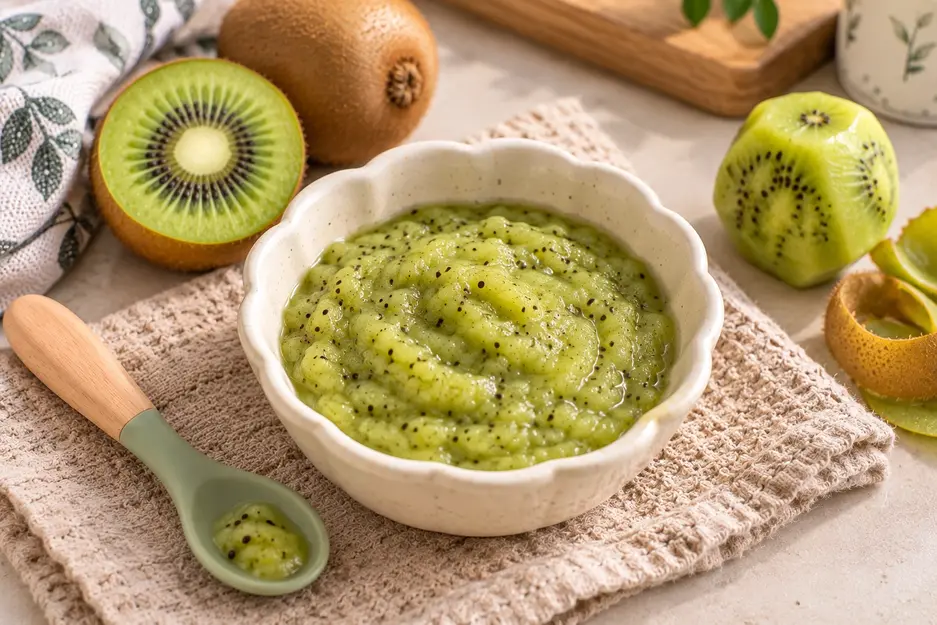
For a smooth puree, transfer the kiwi pieces to a small blender and process briefly until smooth. For a thicker texture, place the pieces in a bowl and mash thoroughly with a fork. Avoid adding liquid immediately because ripe kiwi can already be quite juicy.
Step 5: Adjust the Consistency
Check the puree before serving. If it is thicker than you want, stir in a very small amount of breast milk, prepared formula, or water. If the kiwi is particularly juicy and the puree seems too thin, mashed banana or prepared oatmeal can give it more body.
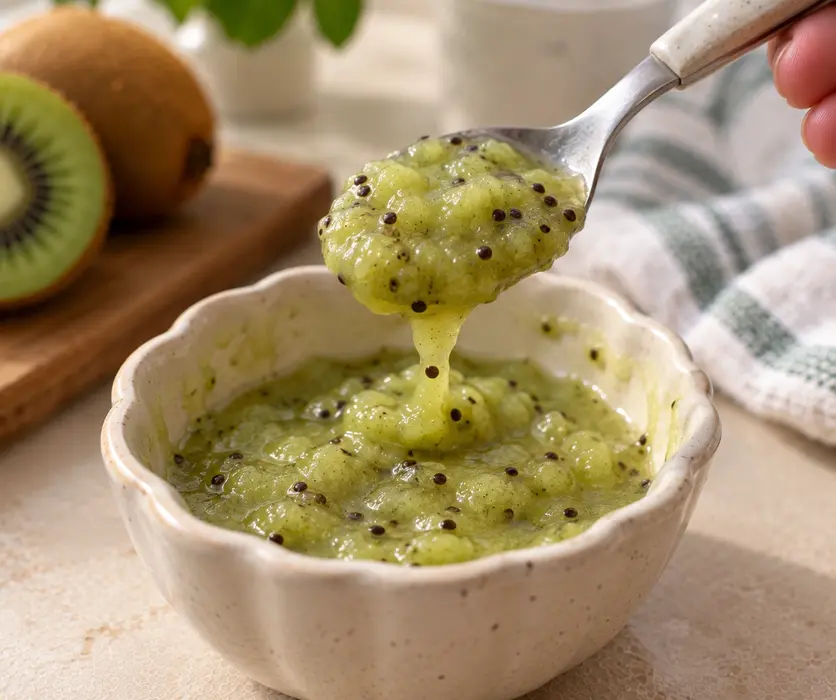
Getting the Texture Right
The best texture depends more on your baby’s developmental eating skills than on reaching one exact age. When babies are beginning solids, smooth mashed or pureed foods may be easier to manage. As their eating skills develop, foods can gradually become thicker, mashed, or lumpier.
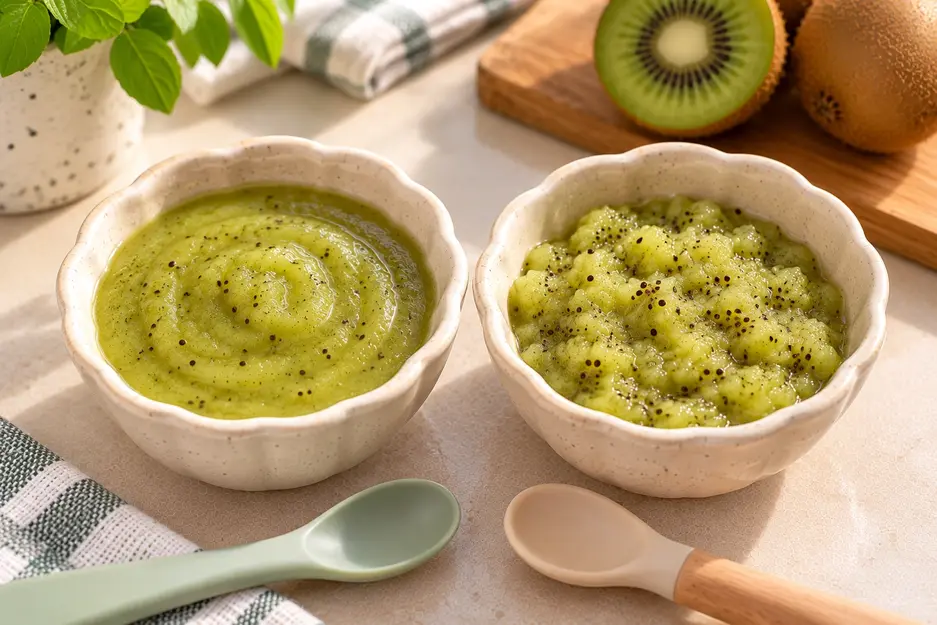
Kiwi can become surprisingly thin when blended because it is juicy. Blend only as much as necessary. For a thicker consistency, mash rather than fully blend, or combine it with banana or prepared oatmeal. Always supervise your baby while eating and serve food in a developmentally appropriate texture.
Want to try a savory puree next? Our potato puree for baby guide shows how to get a smooth, creamy texture without making it sticky or gummy.
How to Serve Kiwi to Baby
Babies can generally begin complementary foods at around 6 months when they show developmental readiness. There is no universal requirement to wait until 8 or 10 months specifically to introduce kiwi. Early foods should be prepared in a texture that matches the child’s eating skills. For a baby who is just beginning solids, offer a small amount of mashed or pureed kiwi from a spoon. As oral and self-feeding skills develop, you can gradually move toward thicker mashed textures and appropriately prepared soft foods.
Kiwi has a naturally tart flavor. Some babies enjoy it immediately, while others may prefer it combined with something milder such as banana, pear, oatmeal, or yogurt. Breast milk or infant formula remains an important source of nutrition during the first year while complementary foods are gradually introduced.
5 Easy Kiwi Puree Combinations
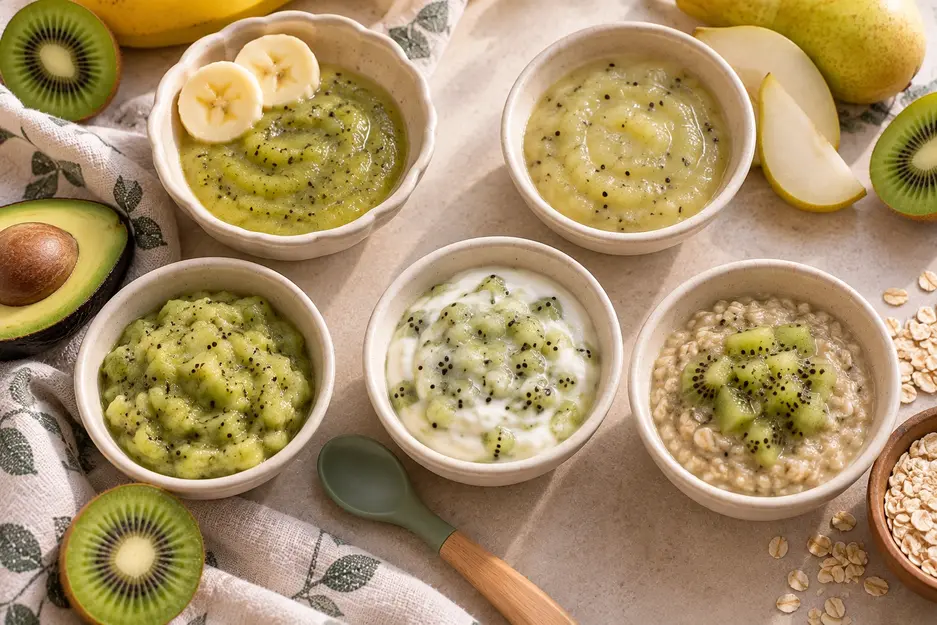
1. Kiwi + Banana
Mash ripe kiwi with banana for a creamier, thicker puree. Banana also softens kiwi’s tart flavor.
2. Kiwi + Pear
Combine ripe kiwi with soft pear puree for a gentle fruit combination.
3. Kiwi + Avocado
Mashed avocado gives kiwi a creamy texture and creates a less runny mixture.
4 Kiwi + Yogurt
Stir mashed kiwi into plain, pasteurized, unsweetened yogurt once dairy has been introduced appropriately.
5. Kiwi + Oatmeal
Add a spoonful of mashed kiwi to prepared and cooled baby oatmeal for an easy breakfast variation.
When introducing foods for the first time, keeping combinations simple can make it easier to identify how your baby responds to individual ingredients.
Looking for another simple fruit puree? Try our apple puree for baby next, or use it as a mild base for new fruit combinations.
Storage and Freezing
Because this recipe takes only a few minutes, making small fresh batches is often easiest. Transfer leftovers promptly to a clean airtight container and refrigerate them. If you want to prepare portions ahead, freeze the puree in a clean baby-food freezer tray, then transfer frozen portions to a freezer-safe container.
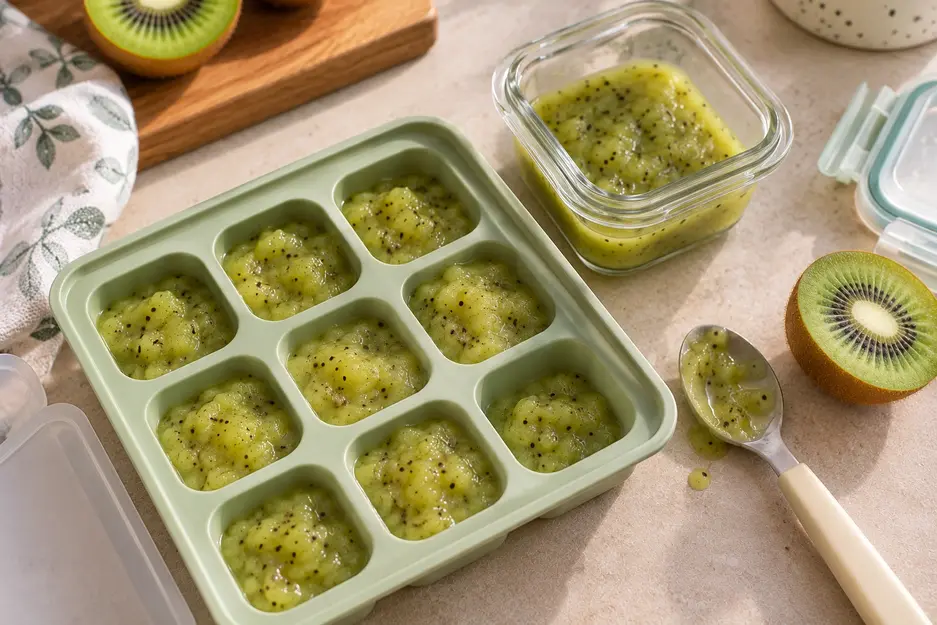
Thaw frozen puree in the refrigerator. Once thawed, kiwi may look slightly more watery than freshly mashed fruit, so stir it before serving. Discard food that has already been served from and contaminated with saliva rather than returning it to the storage container.
For exact storage limits, follow current food-safety guidance applicable to homemade baby food rather than relying on acidity as a reason for a specific storage time.
Recipe Success Tips
- Start with truly ripe fruit. It is easier to mash and usually tastes less sharply tart.
- Don’t add liquid too early. Kiwi may become thinner than expected once mashed or blended.
- Blend briefly. Over-processing is unnecessary for such a soft fruit.
- Use banana or oatmeal to thicken an especially juicy puree.
- Make small batches because the recipe is so quick.
- Expect some tartness; babies are learning a range of flavors.
- Follow your baby’s hunger and fullness cues rather than encouraging a fixed portion.
Common Mistakes to Avoid
Using an underripe kiwi: Firm kiwi can be difficult to mash and may taste much more tart. Allow it to ripen first.
Adding too much liquid: Kiwi is naturally juicy. Blend or mash first and only thin it if necessary.
Focusing on age alone: Readiness for complementary foods depends on developmental signs as well as age.
Making a very large batch: Kiwi puree is exceptionally quick to make, so smaller portions are often more practical.
Assuming redness always means acidity: Food contact can irritate skin, but allergic reactions are also possible. Do not diagnose a rash at home based only on appearance.
Kiwi Puree for Baby Recipe Card
| Prep Time | 5 minutes |
| Cook Time | 0 minutes |
| Total Time | 5 minutes |
| Yield | Approximately 1–2 small baby portions |
Ingredients
- 1 ripe kiwi
- Breast milk, prepared formula, or water, only if needed for consistency
- Mashed banana or pear, optional
Instructions
- Wash the kiwi.
- Cut off the ends and peel away the fuzzy skin.
- Cut the peeled fruit into chunks.
- Mash thoroughly with a fork or blend briefly until you reach the desired texture.
- Check the consistency before adding liquid.
- If needed, add a very small amount of breast milk, prepared formula, or water.
- For a thicker or milder variation, stir in a little mashed banana or pear.
- Serve in a texture appropriate for your baby’s developmental eating skills.
Notes
Choose a kiwi that gives slightly when gently pressed. Very ripe kiwi may produce a thinner puree, so avoid adding liquid until after blending. Always supervise babies while they eat and prepare food in a texture appropriate for their abilities.
Conclusion
Kiwi puree for baby is a simple, no-cook recipe that takes just a few minutes to prepare. Choosing a ripe kiwi gives you a naturally soft texture that can be mashed or blended to suit your baby’s current eating skills.
Start simple, then try pairing kiwi with banana, pear, avocado, oatmeal, or plain yogurt as your baby becomes familiar with different flavors and textures. There is no need to wait for a specific kiwi-only age milestone; what matters most is that your baby is developmentally ready for complementary foods and that the food is prepared appropriately.
Disclaimer:
This content is for general informational and educational purposes only and is not a substitute for individualized medical or feeding advice. Babies develop at different rates, so introduce solid foods when your baby shows appropriate developmental readiness and prepare foods in a texture suitable for their eating skills. Always supervise your baby while eating. If your baby has known or suspected food allergies, eczema, feeding difficulties, or other medical concerns, consult your pediatrician or a qualified healthcare professional before introducing new foods. Stop serving a food and seek appropriate medical care if you notice signs of an allergic reaction.
FAQ’s
Q.1 When can babies have kiwi?
Most babies can begin complementary foods at around 6 months when they are developmentally ready. There is no standard rule requiring parents to delay kiwi specifically until 8 or 10 months.
Q.2 Do I need to remove the tiny black kiwi seeds?
The tiny seeds are naturally embedded throughout kiwi flesh and generally do not need to be individually removed when the fruit is prepared appropriately. The overall texture and preparation should match your baby’s eating skills.
Q.3 Is kiwi an allergen?
Kiwi can cause an allergic reaction in some people. When introducing a new food, watch for symptoms such as rash, vomiting, coughing, wheezing, or swelling of the lips or face. Breathing difficulty or swelling of the throat or tongue requires emergency medical attention. If your baby has diagnosed food allergies, significant eczema, or specific feeding concerns, discuss introduction with a healthcare professional.
Q.4 Why does my baby’s skin look red after eating kiwi?
Food contact can sometimes irritate sensitive skin around the mouth, but redness can also occur with an allergic reaction. Do not automatically assume every reaction is caused by acidity. Stop feeding and seek medical advice if symptoms concern you, particularly if they are widespread, worsening, or accompanied by swelling, vomiting, coughing, wheezing, or breathing problems.
Q.5 Can I mix kiwi with yogurt?
Yes. Plain pasteurized unsweetened yogurt can be used as a complementary food once dairy has been introduced appropriately. Kiwi and yogurt make a creamy, tart combination.