Spinach Apple Pancakes for Babies (8+ Months)
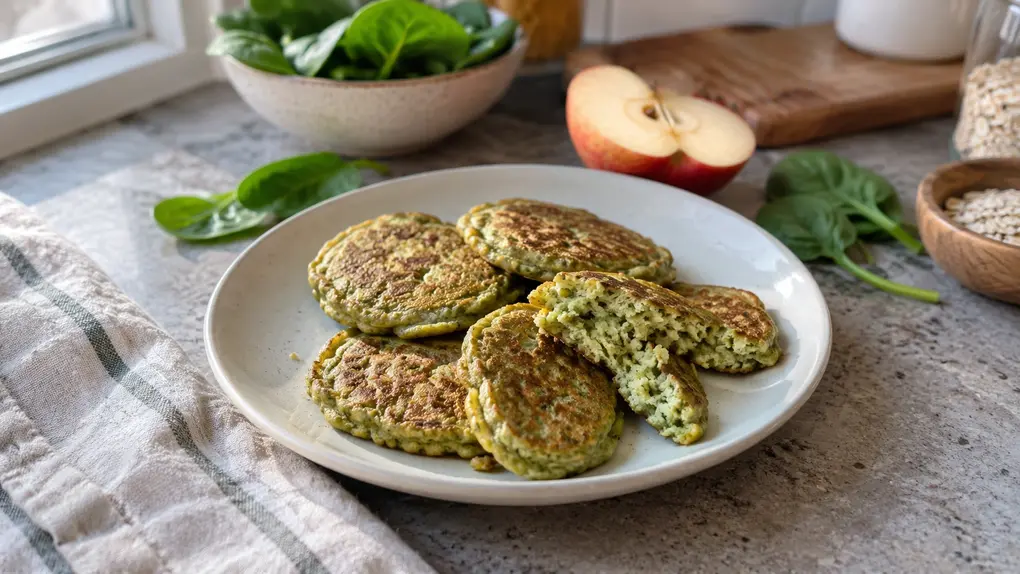
Getting a baby to accept spinach on its own can be a genuine uphill effort, and that’s exactly the problem spinach apple pancakes for babies are built to solve. Blending spinach with naturally sweet apple and oats helps balance spinach’s earthy flavor while adding a leafy green to a soft, baby-friendly pancake. This recipe is designed for babies around 8 months and up who are developmentally ready for finger foods, with a batter thick enough to hold its shape and clear visual cues to help you judge when the pancakes are properly cooked.
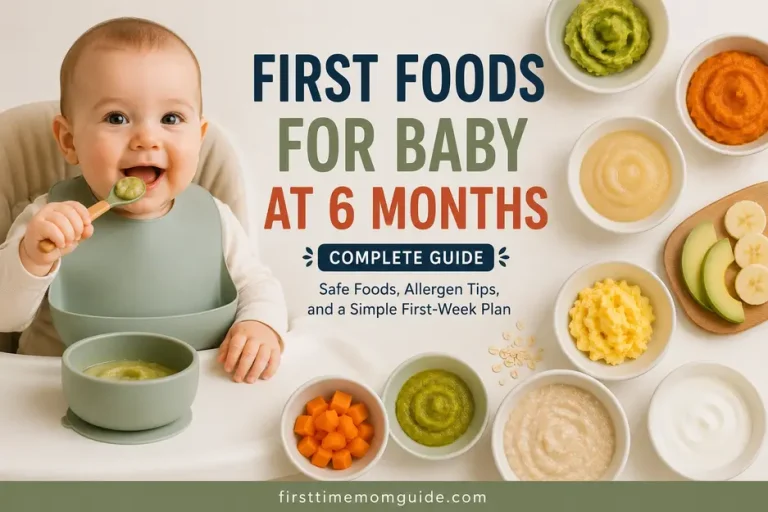
If you’re just beginning solids, our first foods for baby at 6 months guide can help you choose suitable foods and textures before moving on to finger foods like pancakes.
Why You’ll Love This Recipe
- Just five ingredients, all easy to find in a regular grocery store
- No added sugar the apple carries all the sweetness the batter needs
- A genuinely effective way to introduce spinach without a strong bitter taste taking over
- Firm enough to hold together for a baby practicing self-feeding
- Freezes well for batch cooking on a slower day
- Naturally soft texture, manageable before a full set of teeth has come in
- Works for breakfast, lunch, or a snack not tied to one meal of the day
When Can Babies Eat This?
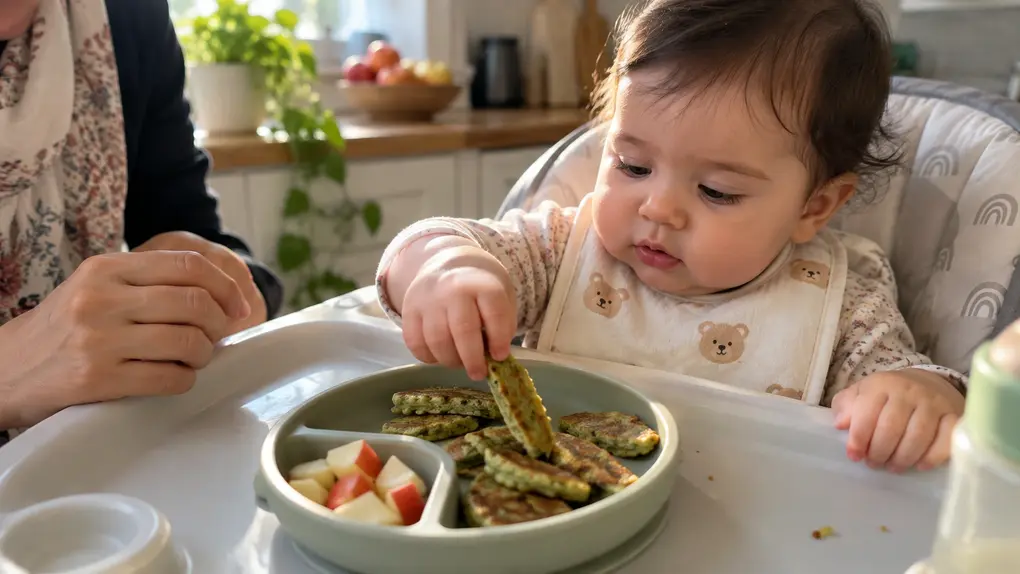
This recipe is intended for babies around 8 months and up who are developmentally ready for finger foods. Readiness matters more than reaching an exact age: your baby should be able to sit upright with good head and neck control, bring food to their mouth, and manage soft finger foods safely. Because this recipe contains egg, introduce it in an age-appropriate form and watch for signs of an allergic reaction. Parents of babies with severe eczema, an existing food allergy, or other allergy concerns should discuss allergen introduction with their pediatrician or allergy specialist.
Why Apple and Spinach Actually Work Together
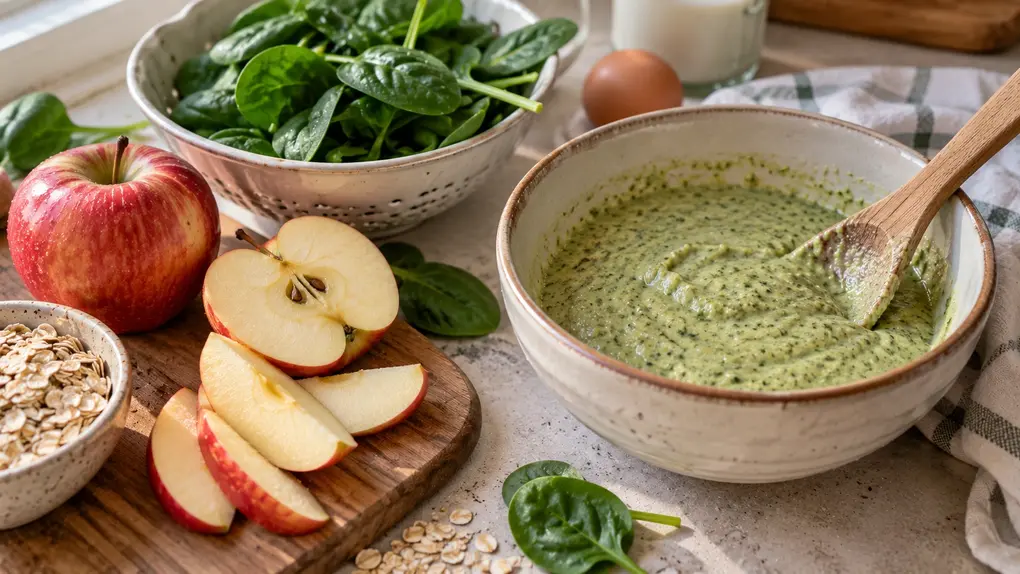
Spinach has an earthy flavor that some babies may find unfamiliar at first. Apple brings natural sweetness and moisture, which can make the overall flavor milder and help the ingredients blend into a smooth batter without much extra liquid. The pairing gives the pancakes a softer, more approachable flavor while keeping spinach as part of the recipe.
If your baby is still getting used to apple, you can start with our apple puree for baby before trying it in pancakes.
Ingredients You’ll Need
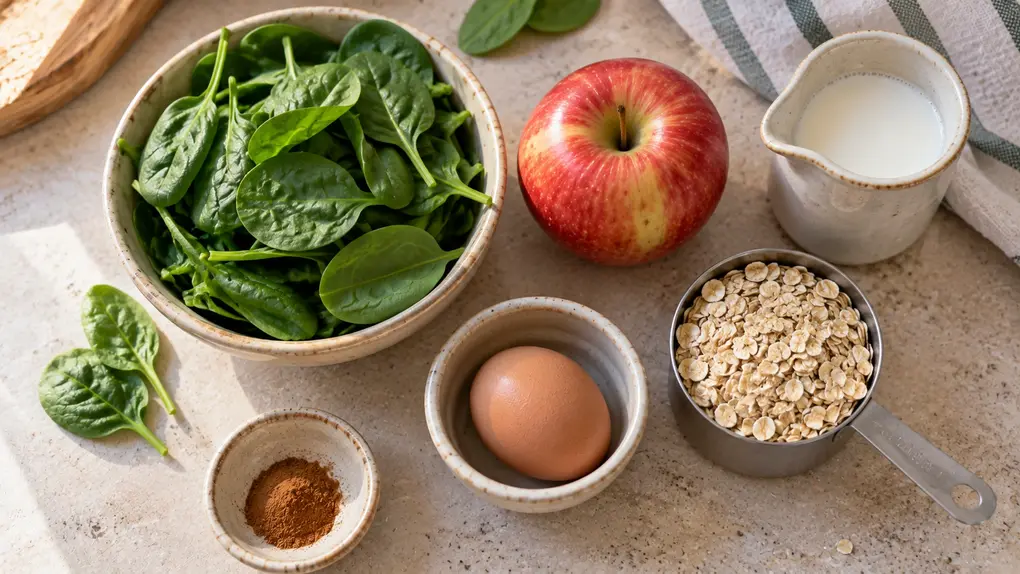
Main Ingredients:
- 1 cup packed fresh baby spinach
- 1 medium apple, peeled and roughly chopped
- 1 large egg
- 1/2 cup rolled oats
- A splash of milk (breast milk, formula, dairy, or a plant-based milk), only if needed for consistency
Optional Additions:
1/4 teaspoon cinnamon, for babies who’ve already tried it
Why each ingredient matters: spinach provides the nutritional boost this recipe is built around, apple supplies natural sweetness and moisture that offsets the spinach’s bitterness, egg binds the batter together as it cooks, and rolled oats form the dry base that keeps the texture soft but structured rather than runny.
Ingredient Substitutions
For an egg-free version, a flax egg 1 tablespoon ground flaxseed mixed with 3 tablespoons water, rested 5 minutes until thickened can replace the egg, though the batter will be noticeably more delicate and needs gentler handling when flipping. Fresh spinach is strongly preferred over frozen here, since frozen spinach carries extra water that can thin the batter unpredictably once thawed; if frozen is all you have, squeezing out as much liquid as possible first is essential.
Rolled oats can be swapped for quick oats without much difference, though steel-cut oats don’t break down properly in a home blender and should be avoided.
How to Make Spinach Apple Pancakes for Babies
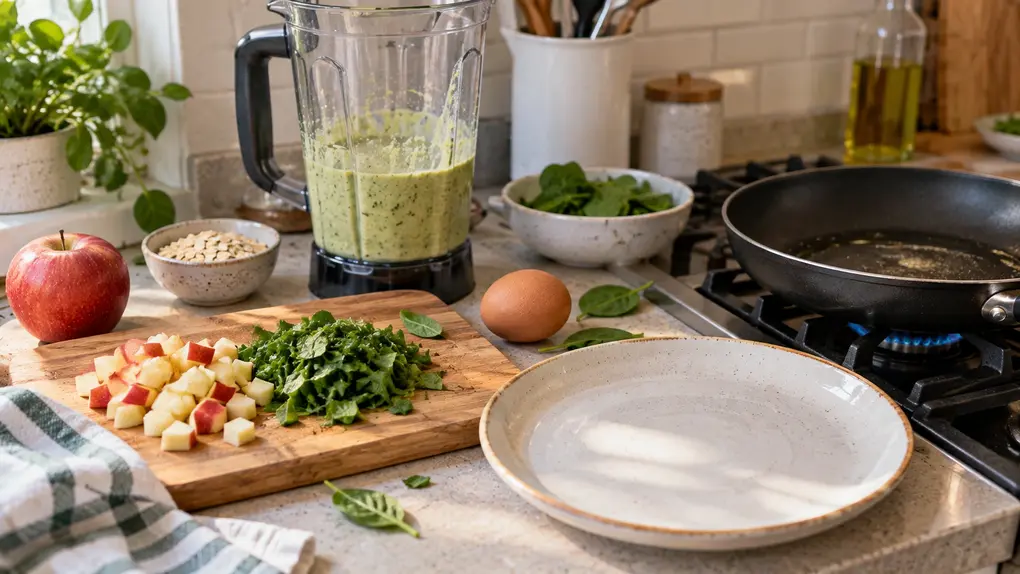
Step 1: Prepare the Apple
Peel, core, and roughly chop the apple into small chunks so it blends down easily without leaving large fibrous pieces in the batter.
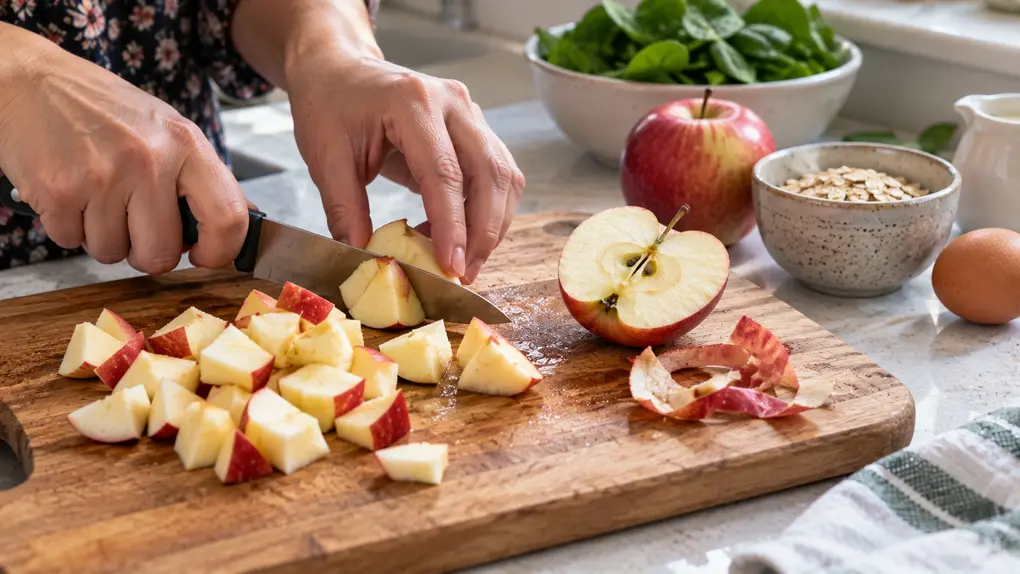
Step 2: Add Everything to the Blender
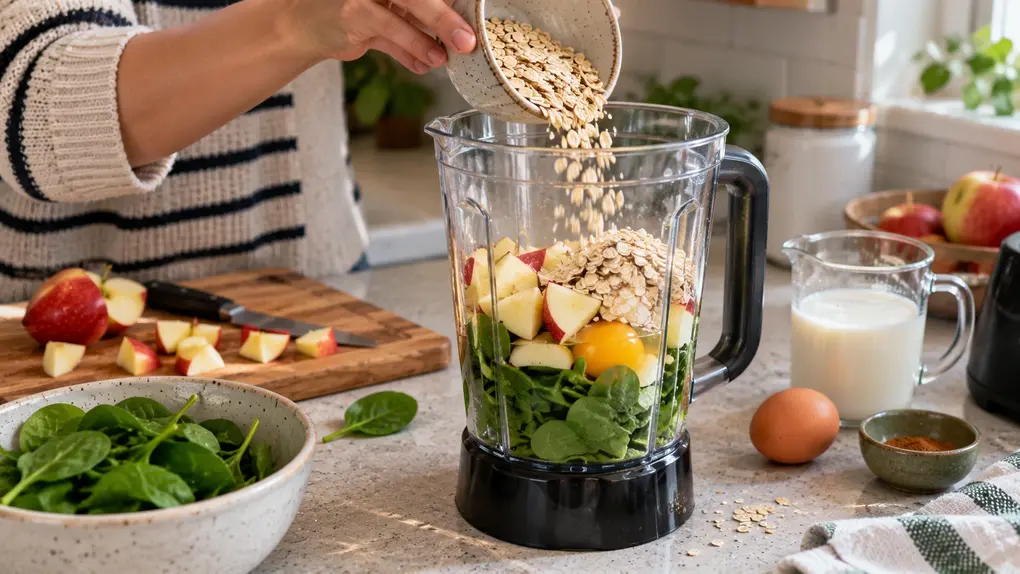
Place the spinach, chopped apple, egg, oats, and cinnamon (if using) into a blender in that order, since adding the softer ingredients first helps everything blend more evenly.
Step 3: Blend Until Smooth
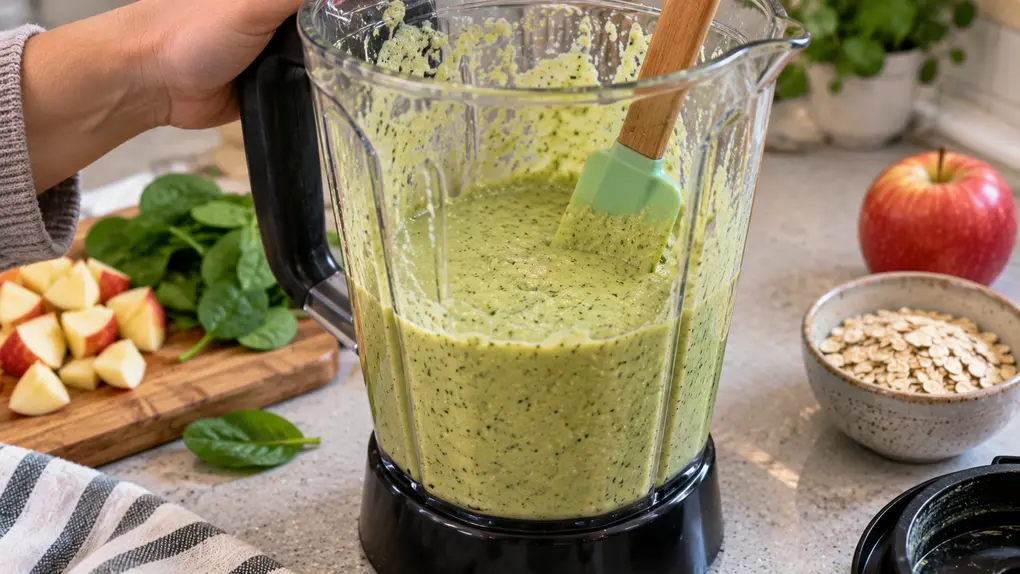
Blend on high for about 45 to 60 seconds, stopping once to scrape down the sides, until the batter turns a uniform pale green with no visible spinach flecks or apple chunks remaining.
Step 4: Check the Consistency
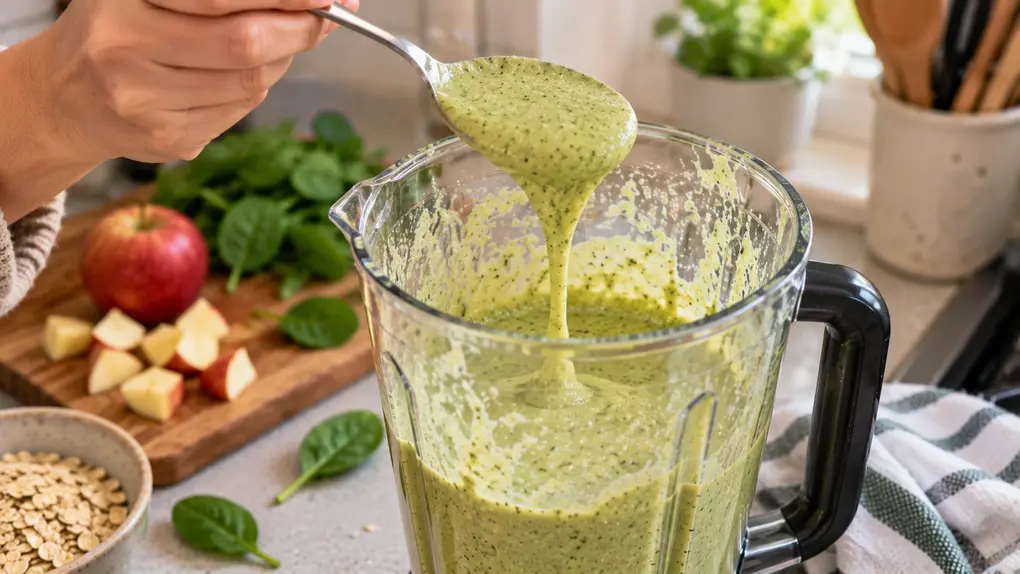
The batter should be thick but pourable, similar to a heavy smoothie. If it looks too thick to pour, add a small splash of milk and blend briefly again; if it looks thin and watery, blend in an extra tablespoon of oats.
Step 5: Heat the Pan
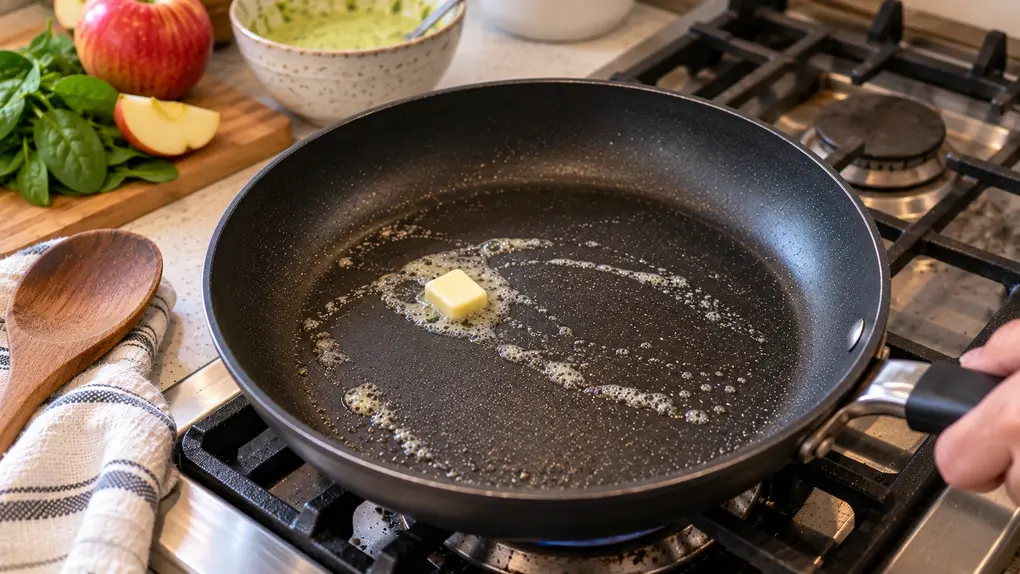
Warm a non-stick skillet over medium-low heat and add a small amount of butter or neutral oil, just enough to prevent sticking.
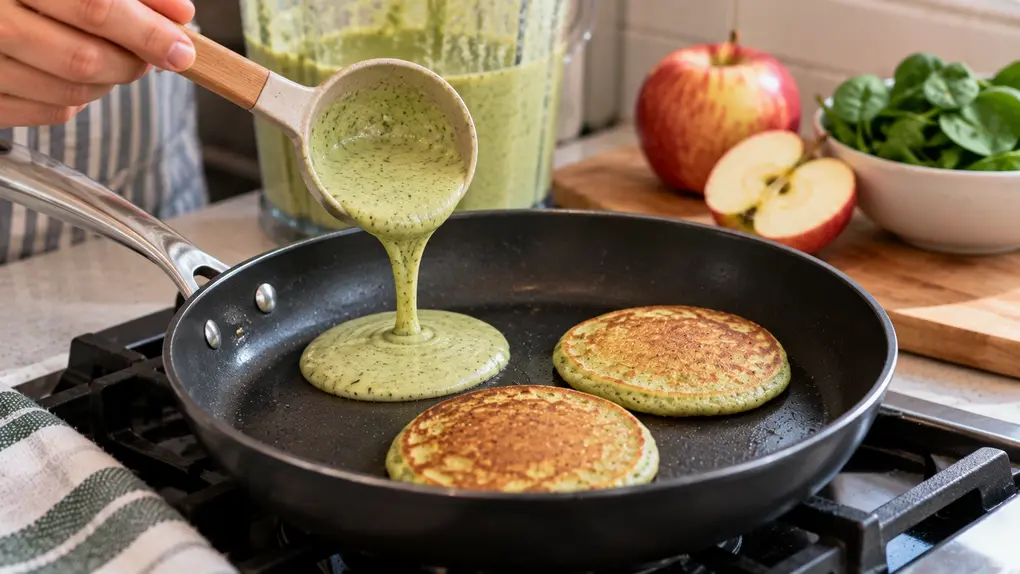
Step 6: Cook Small Pancakes
Spoon about 2 tablespoons of batter per pancake onto the pan, leaving space between each one, and cook for about 2 to 3 minutes until the edges look set and small bubbles form on top.
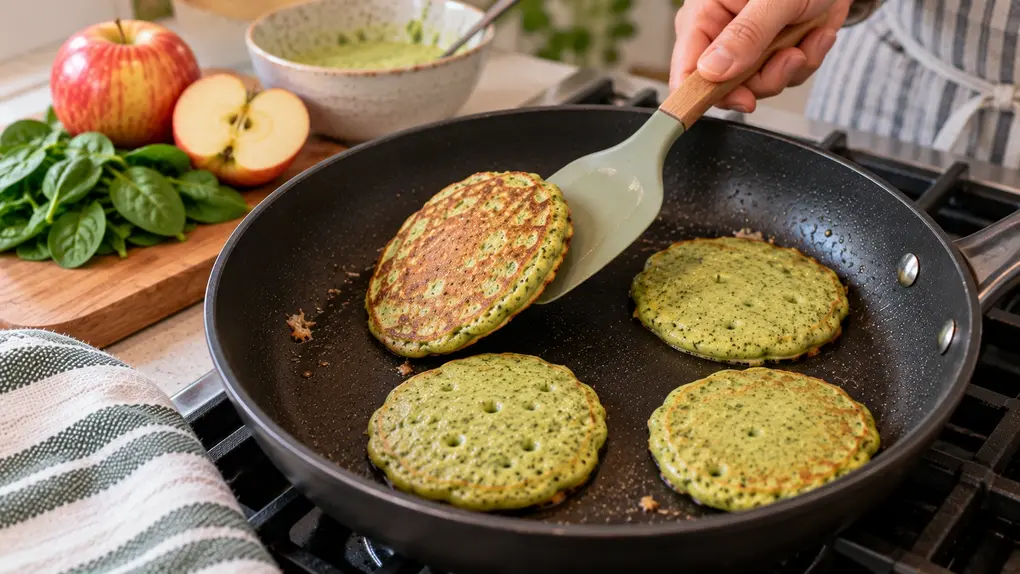
Step 7: Flip and Finish Cooking
Flip gently with a thin spatula and cook the second side for another 1 to 2 minutes, until lightly golden and firm to the touch in the center.
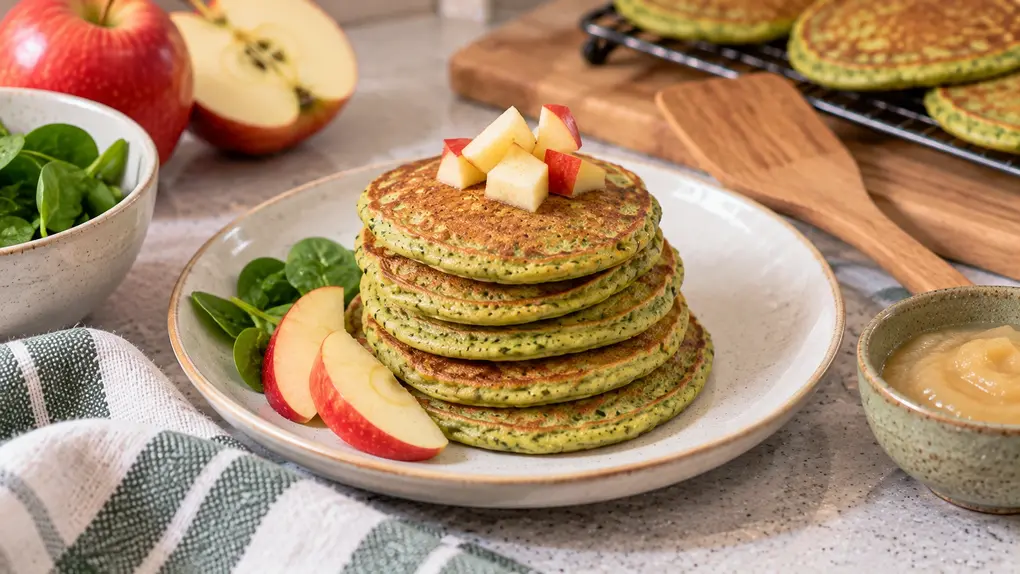
Step 8: Cool Before Serving
Transfer the pancakes to a plate and let them cool to a safe, lukewarm temperature before cutting into age-appropriate pieces and serving.
Texture & Consistency Guide
The finished batter should behave like a thick smoothie pourable in a slow ribbon off a spoon, not runny like milk and not thick enough to hold a solid shape on its own. If the pancake spreads out thin and flat in the pan rather than holding a rounded shape, the batter needs a spoonful more oats. If it barely spreads at all once spooned into the pan, a small splash of extra milk loosens it back to the right consistency.
How to Serve for Baby-Led Weaning
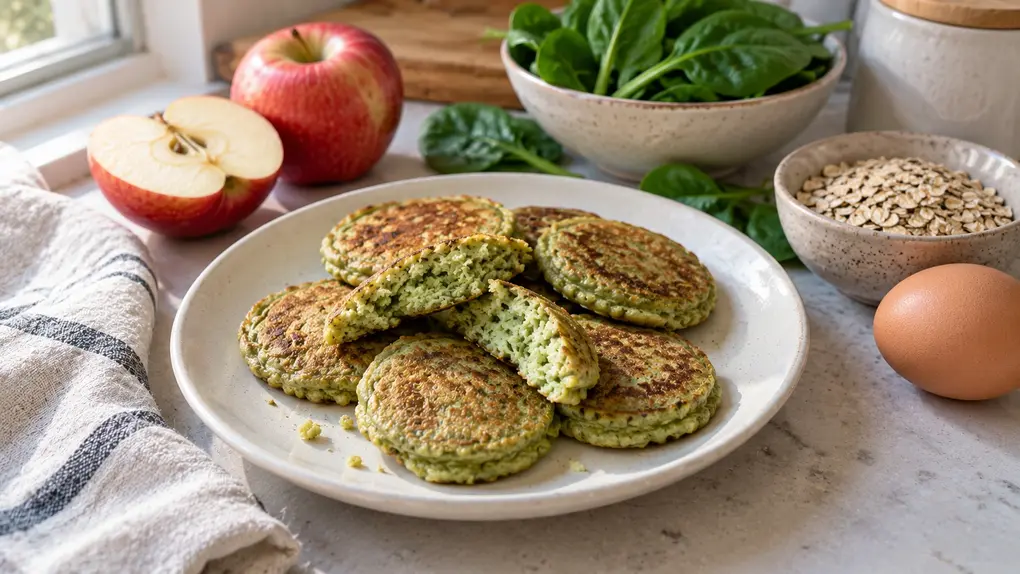
For a baby around 8 months who’s newer to self-feeding, cutting the pancake into thick strips gives enough surface area for a whole-hand grasp. As pincer grasp develops over the following weeks, smaller bite-sized pieces offer good practice picking food up between finger and thumb. The pancake should always feel soft enough to squish gently between your fingers if it feels firm or rubbery, it’s likely overcooked and worth adjusting the heat lower next time.
Serving Ideas
- Plain, without any topping, especially while your baby is still adjusting to the flavor
- Paired with a small spoonful of plain whole-milk yogurt for dipping, once dairy has been introduced
- Alongside soft fruit like mashed avocado or ripe pear for a fuller plate
- Cut into strips and served slightly warm alongside a protein for a more complete meal
Recipe Variations Worth Trying
Once your baby is comfortable with the base recipe, a few adjustments keep it interesting:
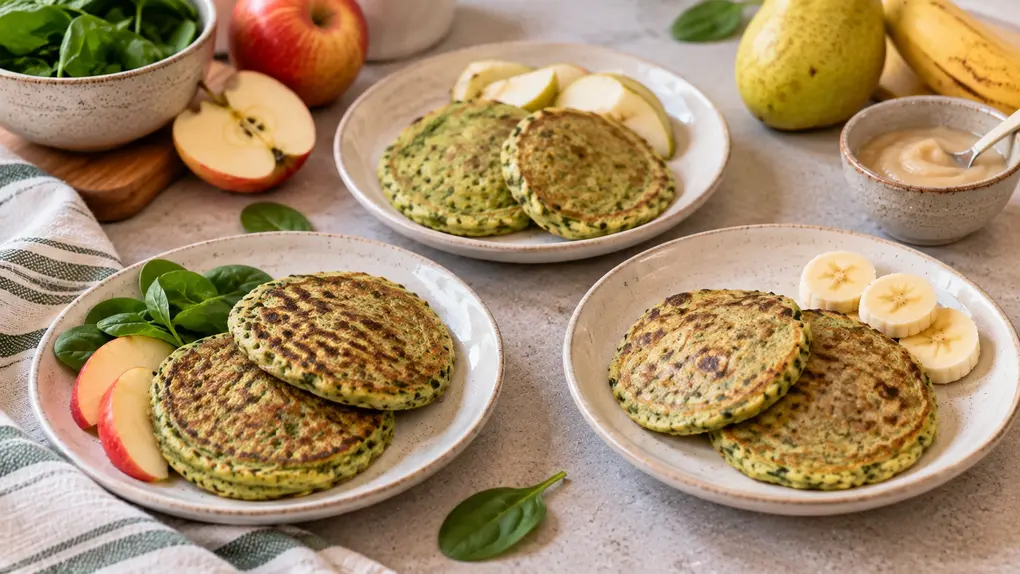
- Pear Instead of Apple: Swap the apple for an equal amount of ripe, peeled pear for a slightly softer, sweeter result.
- Banana Addition: Replace half the apple with half a ripe banana for extra natural sweetness and a creamier texture.
- Higher-Protein Version: Stir in a tablespoon of plain full-fat yogurt after blending, adjusting with a little extra oat if the batter loosens too much.
- Family-Style Version: For older children or adults sharing the batch, season their portions separately if desired. Honey may be added only for children 12 months and older; never serve honey to a baby under 12 months.
Troubleshooting
Why did my pancakes fall apart when I flipped them? This usually means the batter was too thin or the pancakes were flipped before the edges fully set waiting until the edges look matte and bubbles form on top prevents this.
Why does my batter taste more bitter than sweet? This is usually a sign the apple-to-spinach ratio was off, or the apple wasn’t quite ripe enough using a slightly larger, sweeter apple like Fuji or Gala helps balance the flavor better than a tart variety.
Why is my batter watery instead of thick? Frozen spinach that wasn’t drained well is the most common cause fresh spinach, or well-squeezed thawed spinach, keeps the batter at the right thickness.
Why is the center still wet after cooking? The pancakes may be too large or the heat too high, causing the outside to set before the inside finishes making them smaller and lowering the heat slightly both help.
Why did my pancakes turn out an unappealing dark green? Over-blending for too long can break down the spinach further than needed, deepening the color a shorter blend time, just until smooth, keeps the color lighter and more appealing.
Before serving, check both texture and temperature. A properly cooked pancake should feel soft and moist rather than crisp, tough, or rubbery, and it should squash easily between your fingers. Break one open to make sure the center is fully cooked and no wet batter remains. Let the pancakes cool before serving, then cut them into a shape that matches your baby’s current self-feeding skills. Stay close and supervise while your baby eats.
Storage, Freezing & Reheating
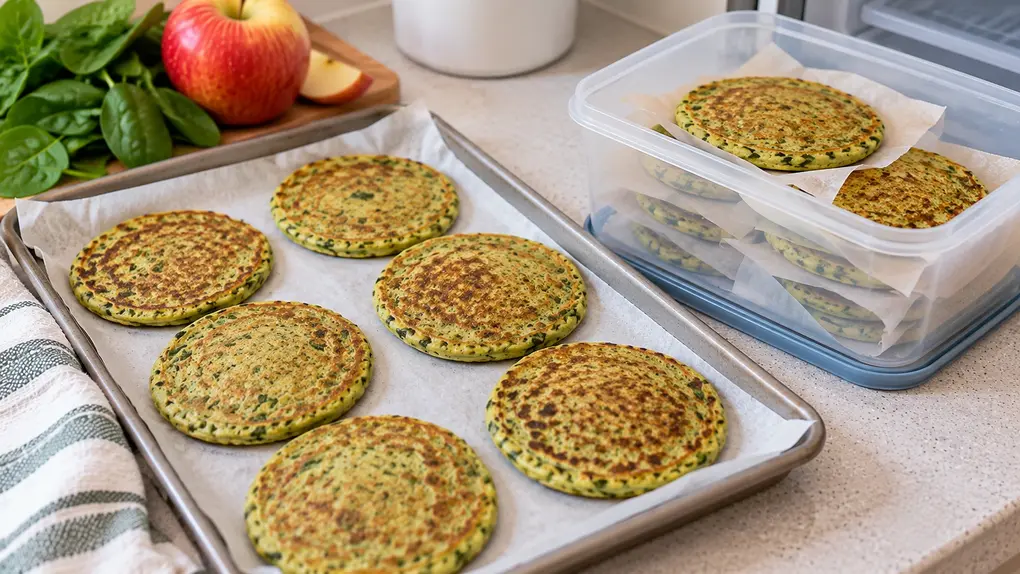
Store cooled pancakes in an airtight container in the refrigerator for up to 3 days. To freeze, arrange the cooled pancakes in a single layer on a parchment-lined tray until solid, then transfer to a freezer-safe bag or container for up to 2 months, which keeps them from freezing into one clump. To reheat from the fridge, a few minutes in a dry skillet over low heat or a 15 to 20 second microwave burst both work well; from frozen, a slightly longer 30 to 40 second microwave burst, or an overnight thaw in the refrigerator, works best. Always check the temperature yourself before serving, since microwaves can create uneven hot spots.
Spinach Apple Pancakes vs. Plain Apple Pancakes: Which One Now?
| item | Plain Apple Pancakes | Spinach Apple Pancakes for Babies |
|---|---|---|
| Vegetable content | None | Added leafy green |
| Flavor | Fully sweet | Sweet with mild earthy undertone |
| Best for | Babies new to pancakes generally | Babies who’ve tried spinach and apple separately already |
| Freezer storage | Yes | Yes |
This comparison isn’t about one being better than the other spinach apple pancakes for babies make more sense once your baby has already tried both ingredients individually and you’re looking to combine established foods into a new format, rather than as a first-ever introduction to either ingredient.
A Note on the Egg Allergen
Egg is one of the more common early allergens, so if your baby hasn’t tried it yet, introducing it on its own first at home, during the day, away from this recipe is a reasonable approach rather than the first exposure happening inside a pancake. Once egg has been introduced and tolerated on its own, using it here is fine. If you’d rather wait, the flaxseed substitute above lets you make this recipe before egg has entered the rotation at all.
Recipe Card
🥬🍎 Spinach Apple Pancakes for Babies
Age/Readiness: 8+ months, once apple, spinach, and egg have each been tried individually Prep Time: 10 minutes Cook Time: 10 minutes Total Time: 20 minutes Yield: About 10–12 small pancakes
Ingredients:
- 1 cup packed fresh baby spinach
- 1 medium apple, peeled and chopped
- 1 large egg
- 1/2 cup rolled oats
- Splash of milk, if needed
- 1/4 teaspoon cinnamon, optional
Instructions:
- Peel, core, and chop the apple into small chunks.
- Add spinach, apple, egg, oats, and cinnamon to a blender.
- Blend until smooth and pale green, about 45-60 seconds.
- Check consistency, adjusting with milk or extra oats as needed.
- Heat a lightly greased non-stick skillet over medium-low heat.
- Spoon 2 tablespoons of batter per pancake, cook 2-3 minutes until edges set.
- Flip and cook another 1-2 minutes until golden and firm.
- Cool before cutting and serving.
Notes: Use fresh spinach rather than frozen for the most reliable texture. A sweeter apple variety like Fuji or Gala balances the spinach’s bitterness better than a tart one.
Storage: Refrigerate up to 3 days, or freeze flat before bagging for up to 2 months.
Conclusion
Spinach apple pancakes for babies combine naturally sweet apple with spinach in a soft finger food that is easy to batch-cook and serve. Start with the base recipe, then try the pear or banana variations once your baby is comfortable with the ingredients and texture. They can be a practical way to offer spinach in a different form while giving your baby more experience with self-feeding.
Want another easy pancake option? Try these banana oat pancakes for baby for a naturally sweet baby-friendly breakfast.
Disclaimer:
This article is for general informational purposes and does not replace guidance from your pediatrician. Always confirm your baby has tried spinach, apple, and egg individually before trying spinach apple pancakes for babies, and consult your pediatrician about allergen introduction if you have any concerns.
FAQ’s
Q.1 Can babies eat spinach apple pancakes without egg?
Yes, a flax egg (1 tablespoon ground flaxseed plus 3 tablespoons water, rested 5 minutes) works as a substitute, though the pancakes will be more delicate and need gentler handling when flipping.
Q.2 What age can babies start eating spinach apple pancakes?
This recipe is generally suited to around 8 months and up, once a baby has tried apple, spinach, and egg individually and is developing self-feeding skills.
Q.3 Can I freeze spinach apple pancakes for babies?
Yes, they freeze well for up to 2 months when cooled completely and stored flat before bagging to prevent sticking together.
Q.4 Why does my baby refuse the green color even though it tastes sweet?
Some babies react to unfamiliar colors before tasting food at all offering it alongside a familiar food, or trying again on a different day, often helps more than changing the recipe itself.
Q.5 Can toddlers eat this same recipe?
Yes, toddlers can eat larger portions, and a pinch of salt or a light drizzle of honey can be added for children over 12 months sharing the same batch.