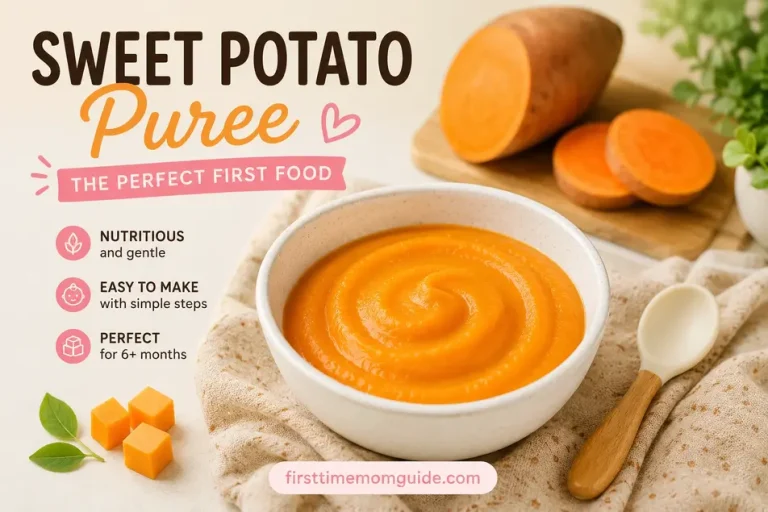
Vegetable Purees for Baby — Every Recipe You Need in One Place
Starting vegetable purees for baby is one of the best first steps you can take with solids. Vegetables introduce a wide range of flavours early, build healthy eating habits that last for years, and deliver the vitamins and minerals a growing baby genuinely needs after 6 months.
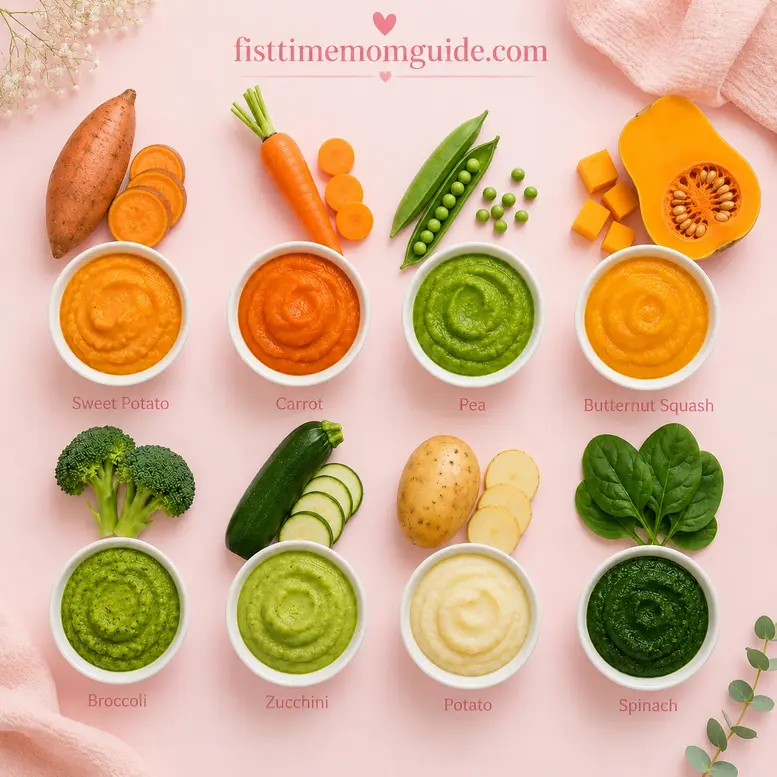
This guide covers 8 vegetable purees each with exact ingredients, a clear step-by-step method, texture tips, common mistakes to avoid, smart combinations, and any precautions worth knowing. Everything here is based on guidance from the American Academy of Pediatrics and the World Health Organization. No guessing, no filler.
if you tried fruits and vegitable purees then you must try these combo purees fr your baby.
Is Your Baby Ready? Check These Signs First
The AAP recommends starting solids around 6 months but readiness signs matter more than the date on the calendar.
- Sits upright with minimal support and holds head steady
- Opens mouth when they see food or a spoon approaching
- Moves food from front to back of tongue and swallows
- Shows interest in what you are eating
- Tongue-thrust reflex has faded no longer pushes everything out automatically
⚠️ Important: Never start solids before 4 months. If your baby is between 4 and 6 months and showing readiness signs, speak to your pediatrician first.
How to Make Any Vegetable Puree — The Basic Method
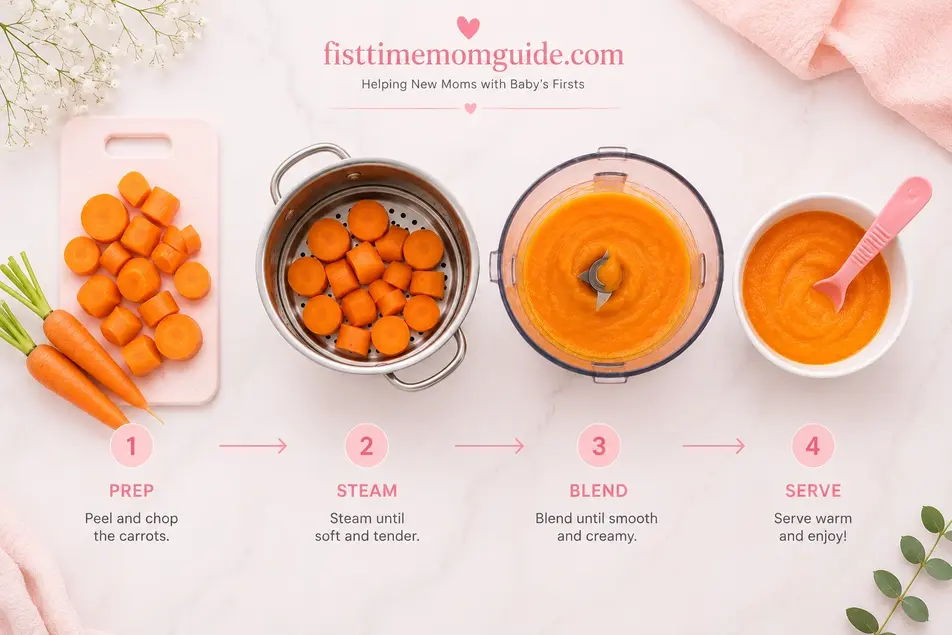
Every vegetable in this guide follows these same five steps. Learn this once and you can make any puree.
- Wash, peel, and cut into small, even pieces.
- Steam never boil. Boiling washes vitamins into the water you pour away.
- Blend with liquid added gradually until completely smooth.
- Check consistency should flow slowly off a spoon like thin yogurt
- Cool completely before serving or storing.
Safe liquids to thin purees:
- Breast milk most familiar taste for baby
- Formula good neutral alternative
- Cooled boiled water simplest option
⚠️ Never Add: Salt, sugar, butter, or honey to baby vegetable purees. Baby kidneys cannot process sodium. Honey is dangerous under 12 months.
8 Best Vegetable Purees for Baby Complete Recipes
The eight vegetables below are arranged from mildest to strongest flavour which is also the most sensible order of introduction for most babies.
1. Sweet Potato Puree 🍠
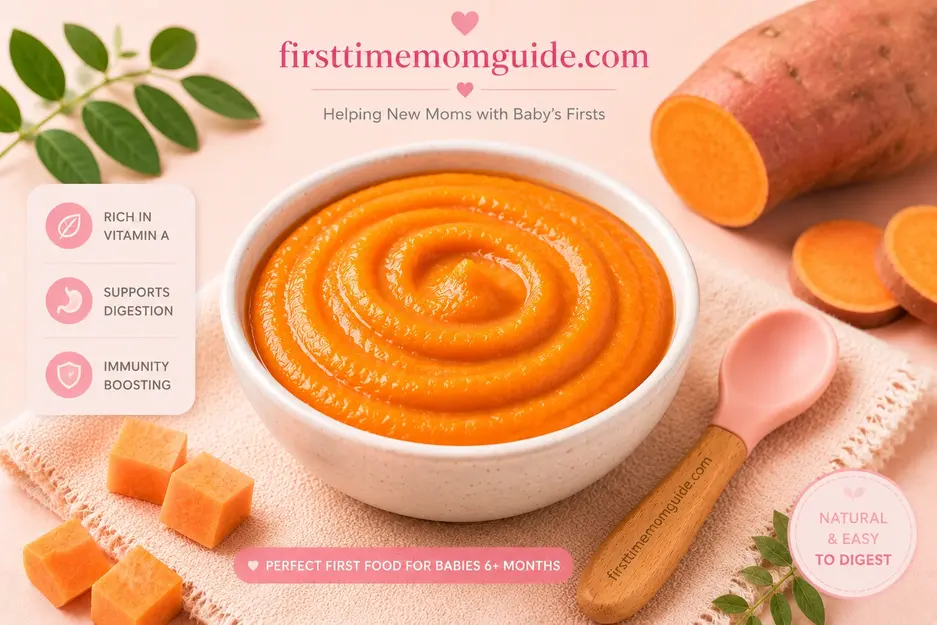
Sweet potato is the most recommended first vegetable puree naturally sweet, smooth, and packed with nutrients. Most babies accept it immediately, making it the perfect starting point for solids.
Best Age to Start
6 months and older. Very low allergy risk and one of the easiest textures to achieve.
Benefits
- Rich in beta-carotene converts to Vitamin A for healthy eyes and immunity
- High in fibre supports digestion and regular bowel movements
- Good source of Vitamin B6 and potassium supports brain and heart health
- Naturally sweet one of the highest acceptance rates of any first food
Ingredients
- 1 medium sweet potato (about 200g)
- 3 to 4 tablespoons breast milk, formula, or cooled boiled water
How to Make
- Peel and cut into even 2cm cubes.
- Steam for 12 to 15 minutes until a fork slides through with no resistance.
- Blend with 2 tablespoons of liquid until completely smooth.
- Add more liquid one tablespoon at a time to reach the right consistency.
- Cool completely before serving or storing.
Mistakes to Avoid
- Do not boil nutrients leach into the water
- Do not add sugar, cinnamon, or butter not appropriate for babies
- Do not make it too thick thin it down if baby keeps pushing it out
Mix It With
- Apple puree adds Vitamin C and a mild fruity note
- Carrot doubles the beta-carotene
- Banana creamy and naturally filling
- Chicken puree adds protein and iron from 7 months
⚠️ Precaution
Large amounts eaten regularly can cause temporary orange skin (carotenemia). This is harmless — just vary the vegetables.
2. Butternut Squash Puree 🎃
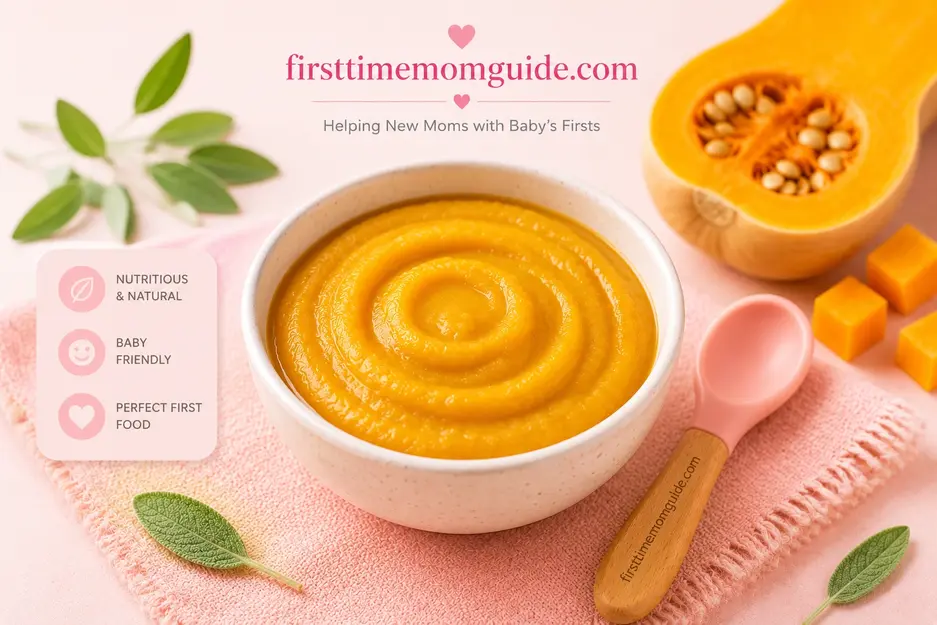
Butternut squash puree surprises most parents — it is naturally creamy, mildly sweet, and needs almost no liquid to reach the perfect texture. One of the easiest and most impressive first purees you can make.
Best Age to Start
6 months and older. Naturally creamy and very smooth — minimal effort required.
Benefits
- Very high in Vitamin A one of the best plant sources of beta-carotene
- Good source of Vitamin C supports immunity and iron absorption
- Contains Vitamin E protects developing cells
- High in magnesium and potassium supports bone and heart development
Ingredients
- Half a medium butternut squash (about 300g), peeled and deseeded
- 1 to 2 tablespoons liquid squash needs very little
How to Make
- Peel, deseed, and cut into 2cm cubes.
- STEAM: 14 to 18 minutes until completely soft. OR ROAST: 200°C for 35 to 40 minutes cut-side down.
- Blend with just 1 tablespoon of liquid squash is naturally very moist.
- Add more liquid only if needed. Blend until completely smooth.
- Cool before serving.
Mistakes to Avoid
- Adding too much liquid upfront squash releases a lot of moisture during cooking
- Leaving seeds in fragments do not blend and create lumps
- Using underripe squash it is less sweet and harder to cook
Mix It With
- Apple puree adds Vitamin C and a fruity note
- Carrot doubles the Vitamin A content
- Cinnamon tiny pinch only, from 8 months
⚠️ Precaution
Like other orange vegetables, frequent large amounts can cause temporary harmless skin yellowing. Rotate vegetables regularly.
3. Carrot Puree 🥕
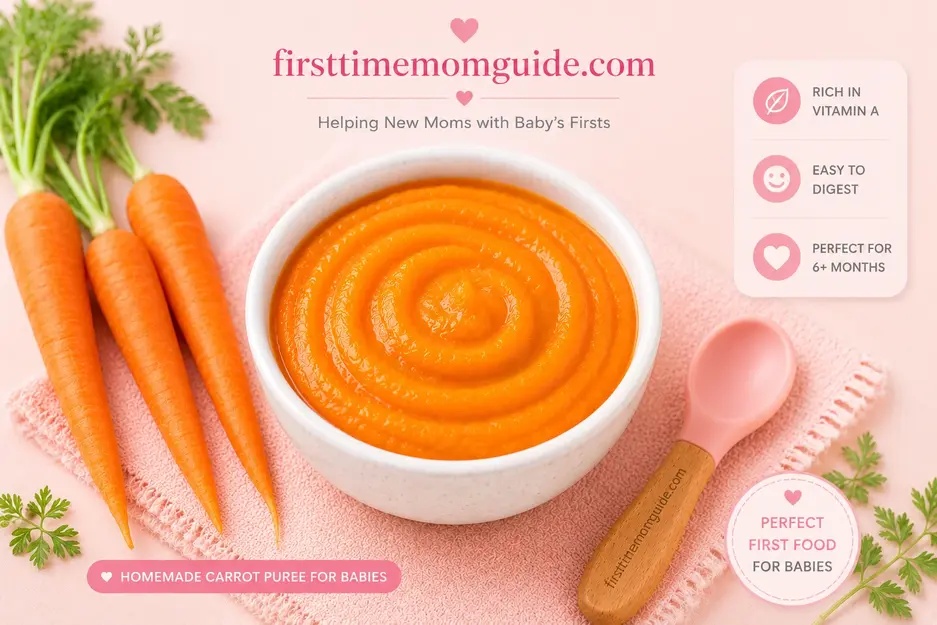
Carrot puree is one of the sweetest vegetables on this list most babies accept it from the very first try. It blends beautifully and delivers powerful nutrition in every spoonful.
Best Age to Start
6 months and older. A classic stage 1 first food recommended by pediatricians worldwide.
Benefits
- Extremely high in beta-carotene supports healthy vision and immune function
- Contains Vitamin B6 essential for brain development
- Good source of potassium supports healthy heart function
- Naturally sweet flavour very well-accepted by young babies
Ingredients
- 3 to 4 medium carrots (about 200g), peeled
- 3 to 5 tablespoons breast milk, formula, or cooled boiled water
How to Make
- Peel and slice into thin, even rounds.
- Steam for 15 to 20 minutes carrots are dense and need longer than most vegetables.
- Blend with 2 tablespoons of liquid for at least 2 minutes.
- Pass through a fine mesh sieve if any graininess remains.
- Adjust consistency and cool before serving.
Mistakes to Avoid
- Not cooking long enough hard carrot will never blend smooth
- Under-blending 30 seconds is not enough for carrot fibres
- Boiling instead of steaming significant loss of beta-carotene
Mix It With
- Sweet potato familiar flavour, doubles Vitamin A
- Pear puree the acidity balances carrot’s sweetness
- Lentil puree adds iron and protein from 7 months
⚠️ Precaution
Frequent large amounts alongside other orange vegetables can cause temporary harmless skin yellowing. Rotate your baby’s vegetables.
4. Pea Puree
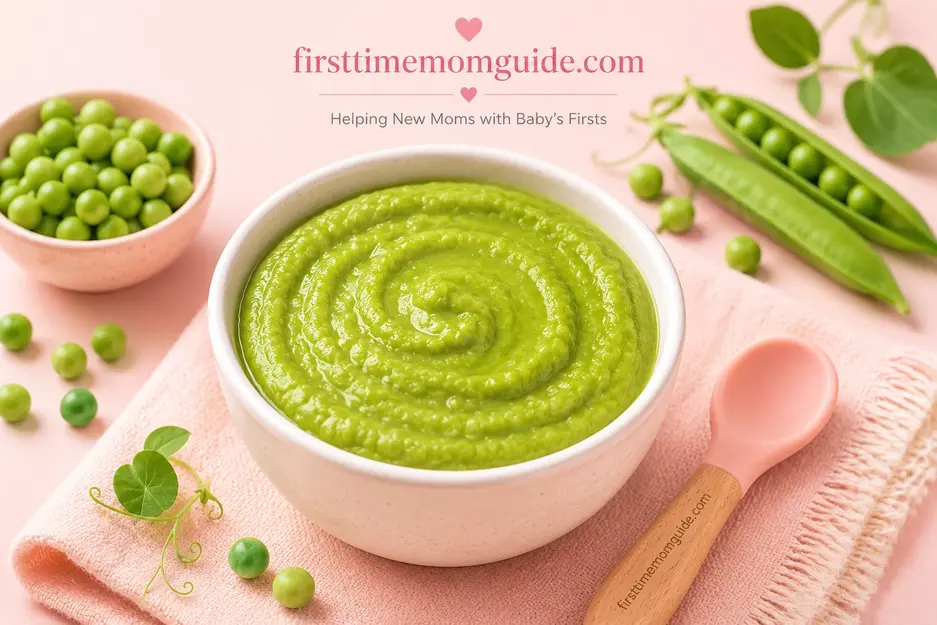
Pea puree requires one extra step straining but it is one of the most nutritious first foods you can give your baby. Get the preparation right and most babies accept it well.
Best Age to Start
6 months and older. One of the best plant-based sources of iron and protein available at this stage.
Benefits
- Excellent plant-based protein supports muscle growth and development
- Good source of iron critical after 6 months when stored iron depletes
- High in Vitamin K important for bone development
- Contains Vitamins A, B, and C wide nutritional range in one food
Ingredients
- 1 cup frozen or fresh peas
- 3 to 4 tablespoons breast milk, formula, or cooled boiled water
How to Make
- Steam fresh peas 4 to 5 minutes, frozen peas 3 minutes. Do not overcook.
- Blend immediately with 3 to 4 tablespoons of liquid for 2 full minutes.
- Push through a fine mesh sieve not optional for babies under 8 months.
- Add a little extra liquid after sieving thickens the puree.
- Cool before serving.
⚠️ Precaution
Pea puree can feel grainy for young babies, so always strain it under 8 months. Avoid canned peas because they often contain added salt.
5. Broccoli Puree 🥦
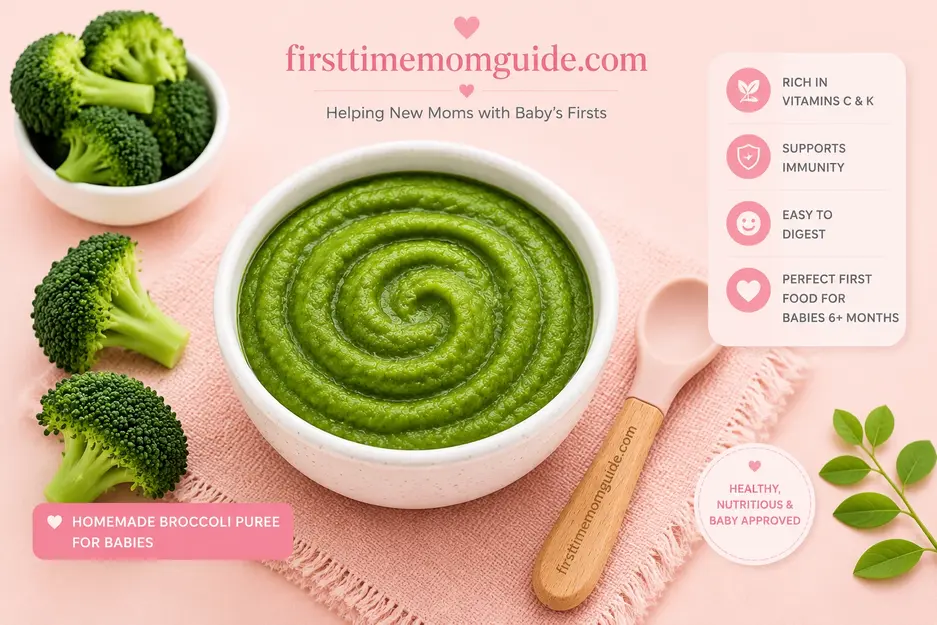
Broccoli puree is one of the most nutritious vegetables on this list. The key is not overcooking it properly steamed broccoli mixed with sweet potato is accepted by most babies far more willingly than parents expect.
Best Age to Start
6 months and older. One of the most nutrient-dense first vegetables available.
Benefits
- Excellent source of Vitamin C supports immunity and increases iron absorption
- Contains calcium important for healthy bone development
- Has natural iron adds to daily iron intake from plant sources
- High in folate supports healthy brain and cell development
Ingredients
- 1 cup broccoli florets (about 150g)
- 4 to 5 tablespoons liquid broccoli needs more than most vegetables
How to Make
- Cut into small, even florets.
- Steam for 6 to 8 minutes only do not overcook.
- Transfer to blender immediately after steaming.
- Blend with 3 to 4 tablespoons of liquid for 2 full minutes.
- Adjust consistency and cool before serving.
Mistakes to Avoid
- Overcooking creates bitter taste and sulphur smell; 6 to 8 minutes maximum
- Not blending long enough broccoli fibres need 2 full minutes
- Offering plain broccoli first always mix with sweet potato for first introductions
Mix It With
- Sweet potato: Best first combination; sweetness masks broccoli’s stronger flavor
- Carrot: Keeps the combination mild and nutritious
- Cauliflower: Both are brassicas and complement each other well
⚠️ Precaution
If baby rejects broccoli, mix 1 part broccoli with 2 parts sweet potato. Gradually increase the broccoli ratio over 2 to 4 weeks.
6. Zucchini Puree 🥒
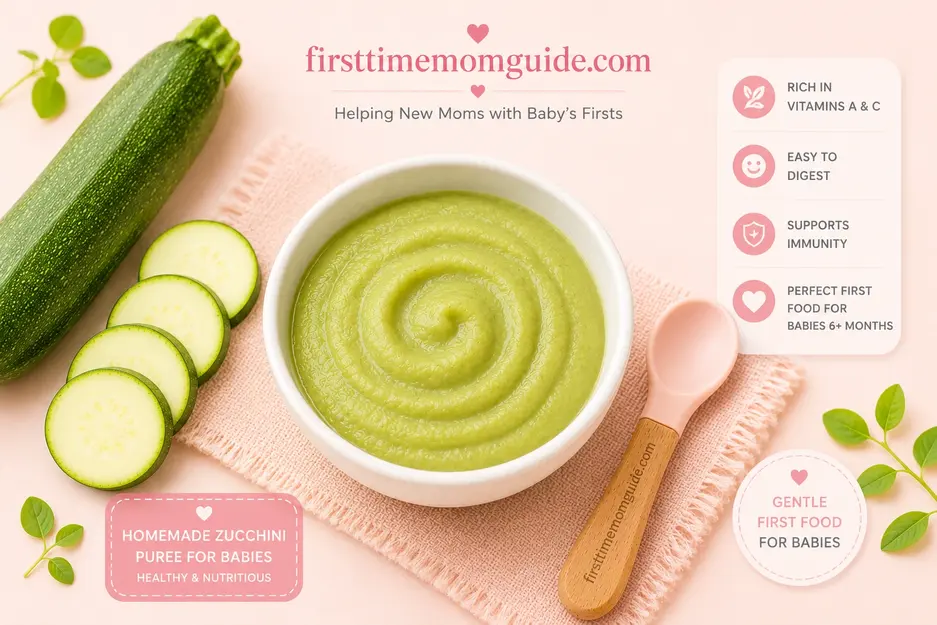
Zucchini is the easiest vegetable on this list to prepare and one of the hardest for babies to dislike. Its neutral flavor and high-water content make it a perfect gentle first food and an ideal mixing partner for stronger-tasting vegetables.
Best Age to Start
6 months and older. One of the gentlest vegetables for a developing digestive system.
Benefits
- Very easy to digest ideal for sensitive tummies
- High water content naturally easy to blend to right consistency
- Contains Vitamin C supports immunity and iron absorption
- Good source of Vitamin B6 supports brain development
Ingredients
- 2 medium zucchini (about 200g)
- 1 to 2 tablespoons liquid zucchini may need almost none
How to Make
- Wash and trim ends. No peeling needed.
- Slice into 1cm rounds.
- Steam for 4 to 5 minutes cooks much faster than root vegetables.
- Blend without liquid first zucchini releases a lot of water.
- Add liquid only if needed. Cool before serving.
Mistakes to Avoid
- Overcooking turns watery and tasteless in minutes
- Adding too much liquid before blending will be too thin to hold on a spoon
- Storing too long use within 48 hours in fridge and up to 2 months in freezer
Mix It With
- Potato adds body and thickness to zucchini’s thin consistency
- Pea both are mild greens that blend well together
- Broccoli zucchini’s neutrality softens broccoli’s stronger flavor
⚠️ Precaution
Zucchini puree separates a little on thawing. Stir well before serving.
7. Potato Puree 🥔
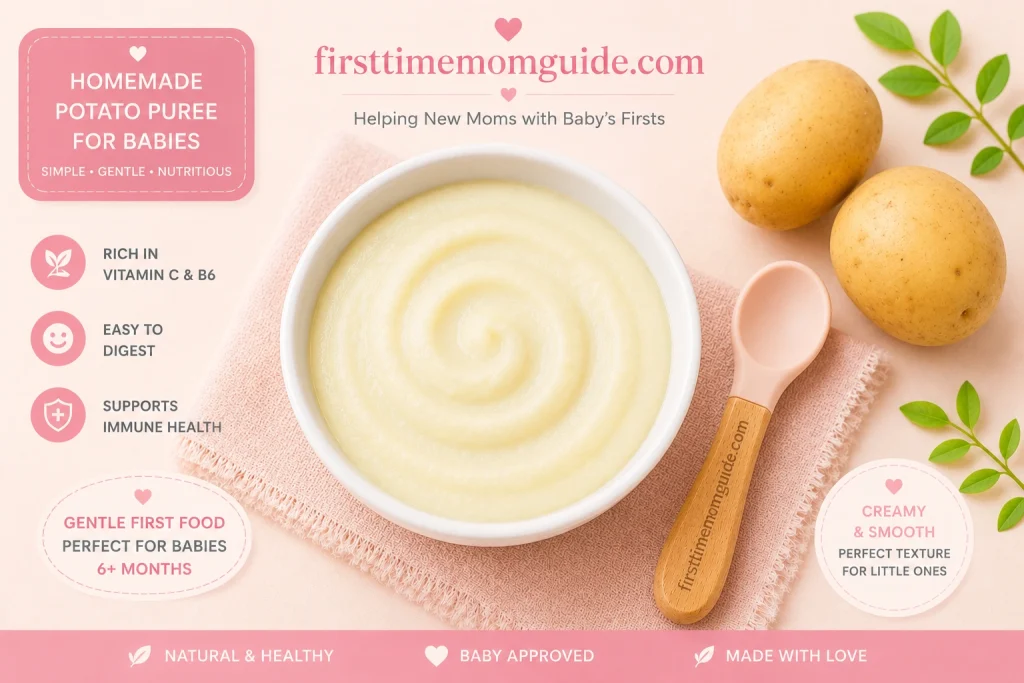
Potato puree is energy-dense, neutral in flavor, and mixes perfectly with almost any other vegetable or protein. Think of it as the base that makes other flavors easier for your baby to accept.
Best Age to Start
6 months and older. One of the most useful mixing bases in a baby’s early diet.
Benefits
- High in carbohydrates provides energy for a rapidly growing baby
- Good source of Vitamin B6 supports brain and immune function
- Contains potassium important for heart and muscle health
- Neutral flavour the most versatile mixing partner for other vegetables
Ingredients
- 2 medium potatoes (about 250g), peeled
- 4 to 6 tablespoons breast milk or formula not water alone
How to Make
- Peel and cut into even 2cm cubes.
- Steam for 15 to 20 minutes until completely soft.
- Do NOT use a blender or food processor it makes potato gluey.
- Mash firmly with a fork or push through a potato ricer.
- Add warm breast milk or formula gradually, mixing with a spoon until smooth.
Mistakes to Avoid
- Blending in a food processor breaks down starch and creates a thick gluey paste
- Adding salt never add salt to baby food; kidneys cannot process sodium
- Using water only milk gives a creamier, more nutritious result
Mix It With
- Carrot adds colour, sweetness, and beta-carotene
- Peas a classic combination; potato softens pea’s flavour
- Chicken or lentils creates a complete meal with protein and iron
⚠️ Precaution
Never add butter, cream, or olive oil to baby potato puree. Breast milk or formula provides all the creaminess needed.
8. Spinach Puree 🌿
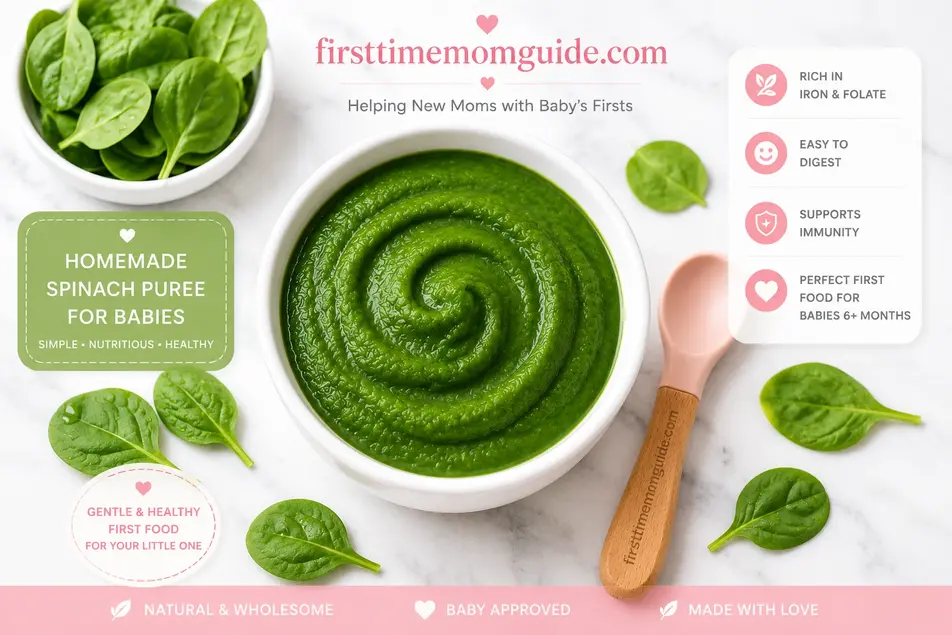
Spinach has a strong earthy flavor that needs to be mixed with something sweeter always. But it is worth introducing early because it is one of the most iron-rich foods available and early exposure builds tolerance before taste preferences become fixed.
Best Age to Start
7 months and older not 6 months. Very young babies are more sensitive to the natural nitrates in leafy greens.
Benefits
- One of the richest plant-based sources of iron critical for brain development after 6 months
- High in folate supports healthy cell growth and DNA development
- Contains Vitamin K important for blood clotting and bone health
- Good source of magnesium and calcium supports bone and muscle development
Ingredients
- 2 large handfuls fresh baby spinach (about 100g)
- 2 to 3 tablespoons breast milk, formula, or cooled boiled water
How to Make
- Wash spinach thoroughly leaves hold a lot of soil between the folds.
- Wilt in a dry pan for 2 to 3 minutes or steam until leaves collapse.
- Transfer immediately to blender with 2 tablespoons of liquid.
- Blend for 1 to 2 minutes until smooth.
- Always mix with sweet potato, banana, or apple before serving.
Mistakes to Avoid
- Giving plain spinach alone too bitter for most babies; always mix with something sweet
- Overcooking loses colour and iron content very quickly; wilt only
- Reheating more than once increases nitrate levels; only reheat what you will use immediately
Mix It With
- Sweet potato sweetness masks spinach’s bitter edge completely
- Banana mash creamy and familiar; one of the easiest ways to introduce spinach
- Apple puree balances bitterness and adds Vitamin C, increasing iron absorption
⚠️ Precaution
Do not introduce before 7 months. Never reheat spinach puree more than once. Speak to your doctor if there is a family history of kidney problems.
Vegetable Purees for Baby — Quick Reference Chart
Use this chart to compare all eight vegetable purees at a glance when planning what to make next.
| Vegetable | Start Age | Key Nutrient | Taste | Blend Ease | Mix Needed? |
| Sweet Potato | 6 months | Vitamin A, Fibre | Sweet ⭐⭐⭐⭐⭐ | Very Easy | Optional |
| Carrot | 6 months | Beta-carotene | Sweet ⭐⭐⭐⭐ | Easy — blend long | Optional |
| Pea | 6 months | Iron, Protein | Mild ⭐⭐⭐ | Must strain | Optional |
| Butternut Squash | 6 months | Vitamins A, C, E | Sweet ⭐⭐⭐⭐⭐ | Very Easy | Optional |
| Broccoli | 6 months | Vitamin C, Calcium | Strong ⭐⭐ | Long blend + sieve | Recommended |
| Zucchini | 6 months | Vitamin C, B6 | Very Mild ⭐ | Very Easy | Optional |
| Potato | 6 months | Carbs, B6 | Neutral ⭐⭐ | Mash — no blender | Optional |
| Spinach | 7 months+ | Iron, Folate | Strong ⭐ | Fast blend | Always |
How to Store Baby Vegetable Purees Safely
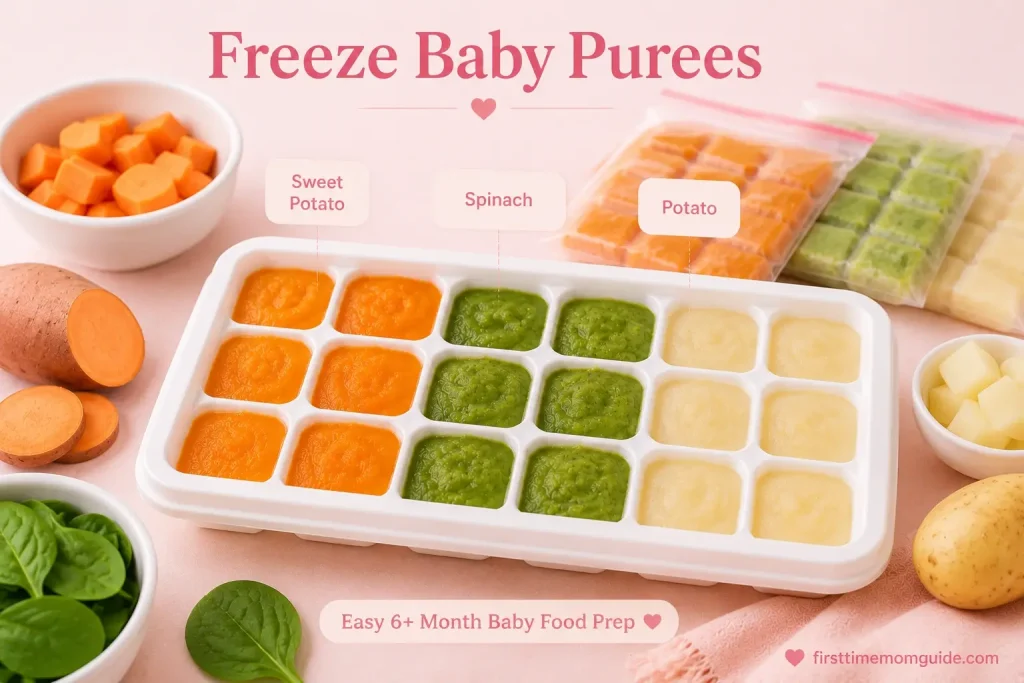
Batch cooking and freezing is the smartest approach to baby food. Spend 45 minutes on the weekend making several purees and you have two to three weeks of meals ready to go. Each cube is roughly one tablespoon two cubes is a typical portion for a 6 to 8-month old.
| Method | Duration | Key Rule |
| Fridge — airtight container | 48 to 72 hours | Cool fully before storing. Label with name and date. |
| Freezer — ice cube tray | Up to 3 months | Cover tray. Transfer frozen cubes to labelled zip bags. |
| Thawing | Use within 24 hrs | Thaw in fridge overnight or in warm water. Never on the counter. |
| Reheating | Warm only | Test on your wrist before serving. Use a pan avoid microwave. |
| Re-freezing | Never | Once thawed, use within 24 hours or discard. |
5 Tips Every Mom Needs to Know
- Steam, never boil. Steaming retains up to 50% more vitamins particularly Vitamin C and folate.
- One new vegetable every 3 to 5 days. This gap lets you identify any allergic reaction clearly.
- Rejection is not permanent. Babies need 8 to 15 exposures before reliably accepting a new flavor. Offer again in 2 weeks.
- Mix rejected vegetables with sweet ones. Broccoli with sweet potato, spinach with banana flavor bridging works.
- Pair iron-rich vegetables with Vitamin C. Serve pea or spinach alongside apple or mango to increase iron absorption.
Author Words:
Vegetable purees for baby do not need to be complicated. Eight vegetables, one basic method, and a freezer full of labelled cubes that is everything you need to give your baby a strong, varied start with solids.
Start with sweet potato. Add carrot. Introduce pea. Build from there. Your baby will reject some and love others and that is completely normal. The variety you offer now builds the foundation of healthy eating for years.
FAQ’s
Q1. What is the best first vegetable puree for a 6-month-old?
Sweet potato is the most widely recommended starting point naturally sweet, rich in Vitamin A, and easy to blend completely smooth. Carrot and butternut squash are equally good choices. All three are mild, low allergy risk, and well-accepted by most babies.
Q2. Can I give my baby raw vegetable purees?
No. All vegetables on this list must be cooked before pureeing. Raw vegetables cannot be blended smooth enough for stage 1 and are very difficult for a young gut to process. The only exceptions are avocado and very ripe banana, which can be mashed raw.
Q3. How much vegetable puree should I give my baby at 6 months?
Start with 1 to 2 teaspoons per feeding. Breast milk or formula remains the main nutrition source at this age. By 8 months, most babies take 2 to 4 tablespoons per meal, two to three times a day. Always follow your baby’s hunger and fullness cues.
Q4. Why does my baby keep refusing vegetables?
Refusal is completely normal. Babies need 8 to 15 exposures to a new flavor before reliably accepting it. Offer again in 2 weeks. Use flavor bridging mix the refused vegetable with an already-accepted sweet puree and gradually increase the ratio over 2 to 4 weeks.
Q5. How long do homemade vegetable purees last in the freezer?
Up to 3 months in an airtight freezer-safe container. In the fridge, use within 48 to 72 hours. Always label with the name and date. Never refreeze a puree that has already been thawed.