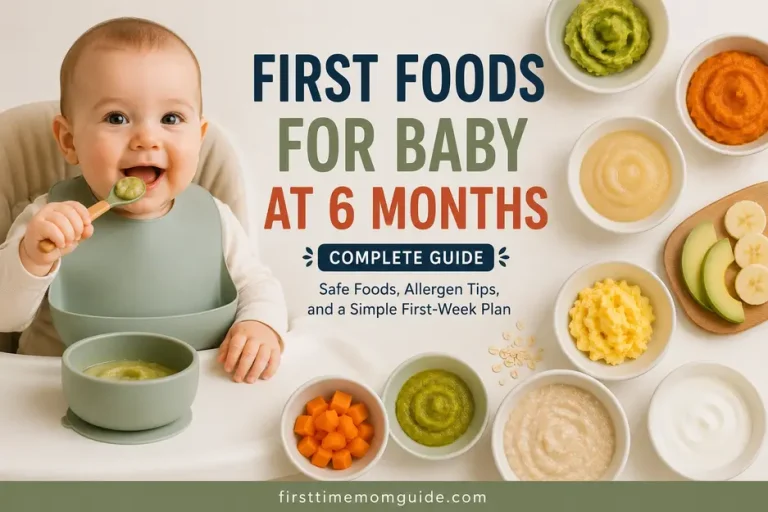
Baby Food for 6–12 Months: When and What to Feed Your Baby
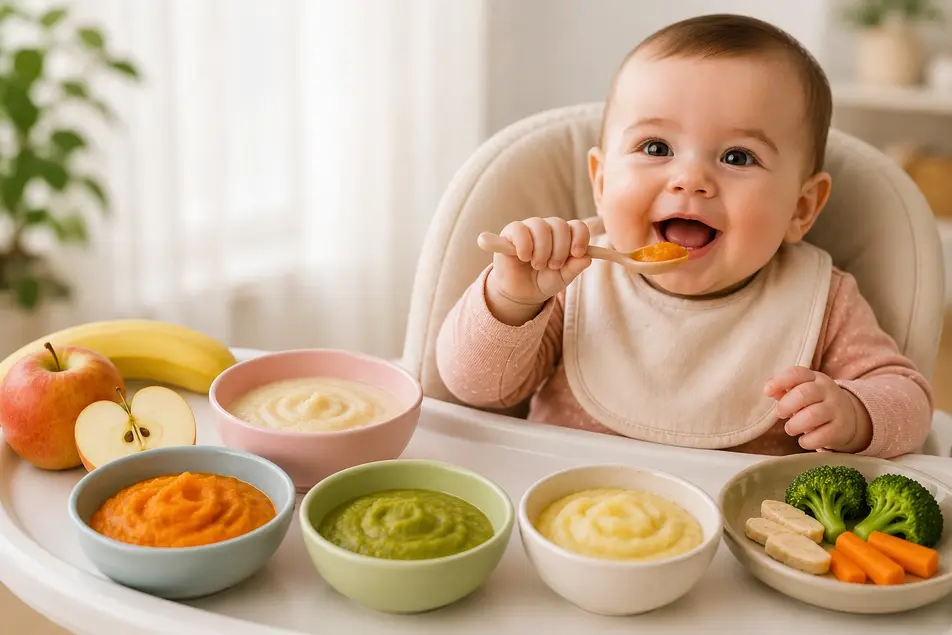
Starting solids is one of the biggest milestones in your baby’s first year. It can feel exciting and a little scary at the same time — what is safe? What comes first? How much is enough?
This baby food guide covers everything from the very first spoonful at 6 months all the way to soft finger foods and full little meals at 12 months. Every food on this list is real, simple, and safe when prepared the right way. No fluff, no guessing — just honest, mom-tested information.
Whether you are looking for a baby food chart, a weekly baby meal plan, or just want to know which foods to avoid, you are in the right place.
May being a new mom you would like to know about new born baby essentials.
First Foods: Where Every Baby Starts (6 Months) 🍚
When your baby shows signs of readiness — sitting with support, showing interest in food, and losing the tongue-thrust reflex — it is time for baby food to begin. Most babies reach this point around 6 months.
Start with single-ingredient, smooth, thin purees. Give each new food 3–5 days before adding another. This helps you spot any allergic reaction quickly.
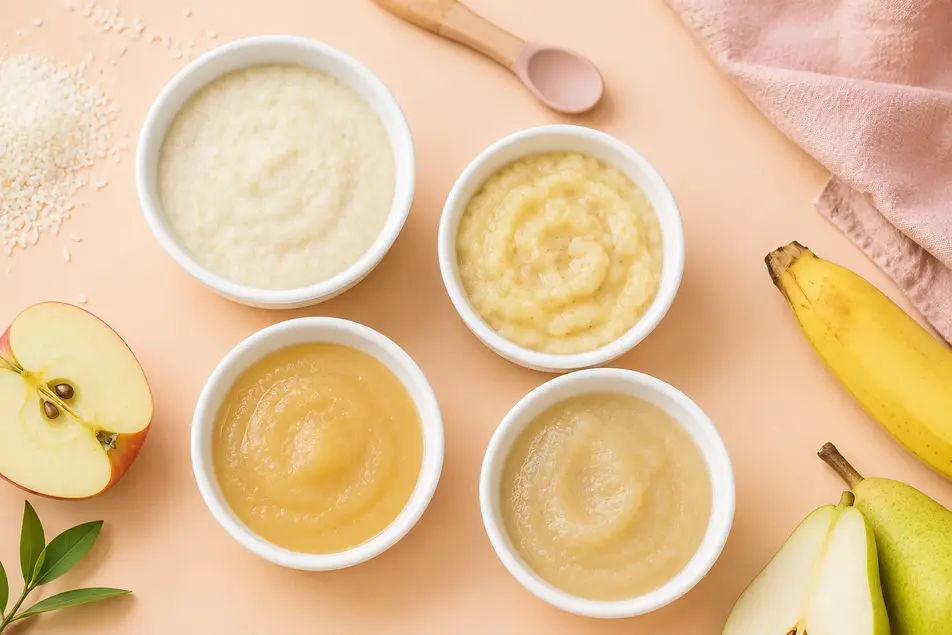
Best first baby foods:
Vegetable Purees: Starting the Good Habit Early 🥕
Vegetables are some of the best baby food choices because they build taste preferences early. Babies who try a wide variety of vegetables before 12 months are more likely to accept them as toddlers.
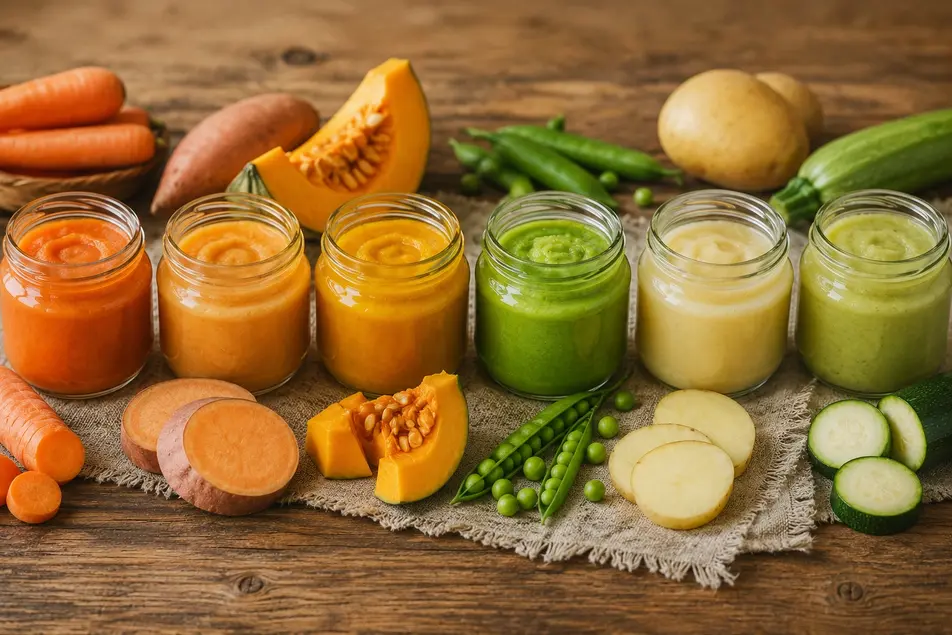
Introduce these one at a time:
- Carrot — naturally sweet, rich in beta-carotene, steam and blend smooth
- Sweet potato — filling, vitamin A-packed, easy to mash
- Pumpkin — mild flavor, smooth texture, great for 6+ months
- Peas — blend well and add iron; strain if texture is too lumpy
- Potato — mash with water or breast milk, no salt
- Zucchini — light and easy to digest, good starter vegetable
Always steam vegetables — boiling can wash away nutrients.
Fruit Purees: Natural Sweetness Babies Love 🍑
Fruit purees are perfect baby food for introducing natural sweetness without any added sugar. Most babies take to fruit immediately
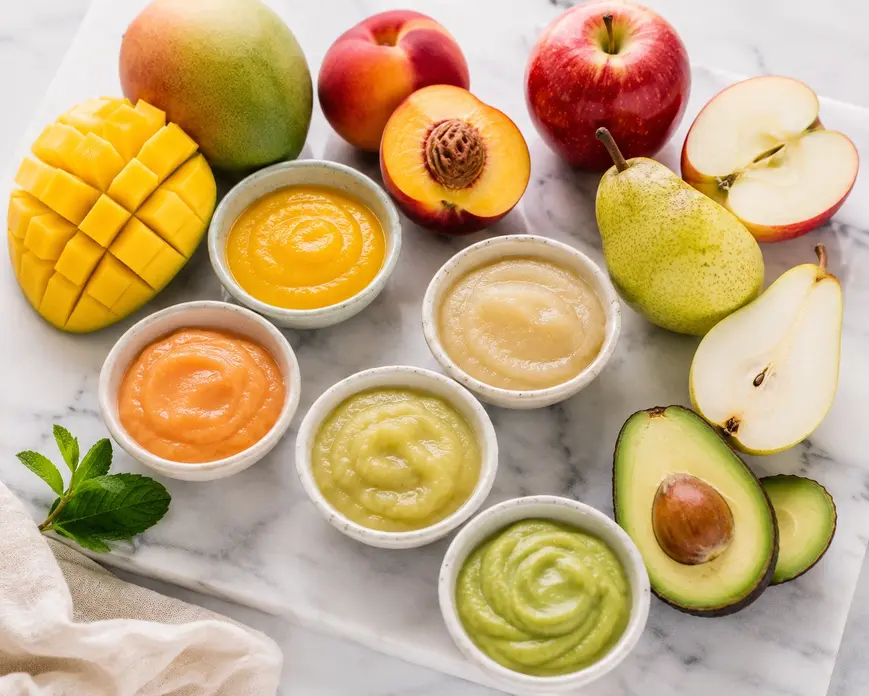
- Banana — mash with a fork, no cooking, best first fruit
- Mango — steam slightly if not fully ripe, blend smooth, high in vitamin C
- Peach — peel, steam, and puree; mild and gentle
- Apple — steam with skin removed, blend until smooth
- Pear — soft and easy to puree, great for digestion
- Avocado — no cooking needed, mash smooth, full of healthy fats for brain growth
Mix fruits with vegetables your baby is not enjoying yet to increase acceptance.
Iron-Rich Foods: Non-Negotiable After 6 Months 🫘
Iron is one of the most important nutrients in baby food after 6 months. Breast milk alone does not provide enough iron at this stage. Low iron can affect brain development and energy levels.
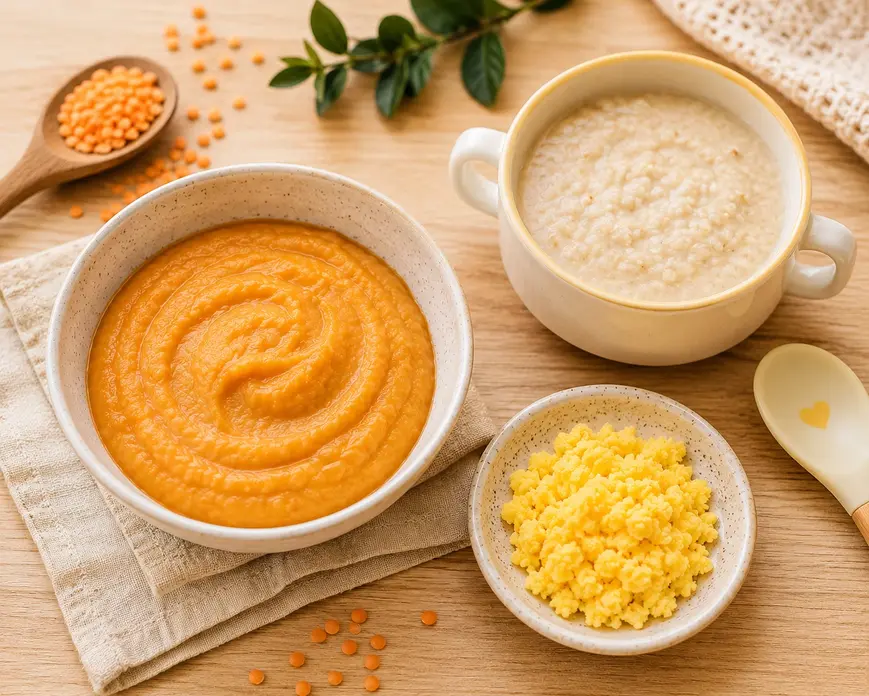
Iron-rich baby foods to introduce early:
- Red lentils — cook until very soft, blend smooth, mild taste
- Beans — black beans or kidney beans blended smooth
- Egg yolk — hard boil and mash; introduce before 12 months to reduce allergy risk
- Chicken puree — steam or poach, blend with broth or water until smooth
- Meat puree — beef or turkey, well-cooked and blended; choose lean cuts
- Iron-fortified cereal — oatmeal or rice cereal with added iron is the easiest option
Pair iron-rich foods with vitamin C (like mashed tomato or mango) to help your baby absorb more iron.
Protein Foods: Building a Strong Little Body 🥚
Protein supports your baby’s muscles, organs, and growth. As baby food gets more advanced (7–8 months onward), protein should become a regular part of meals.
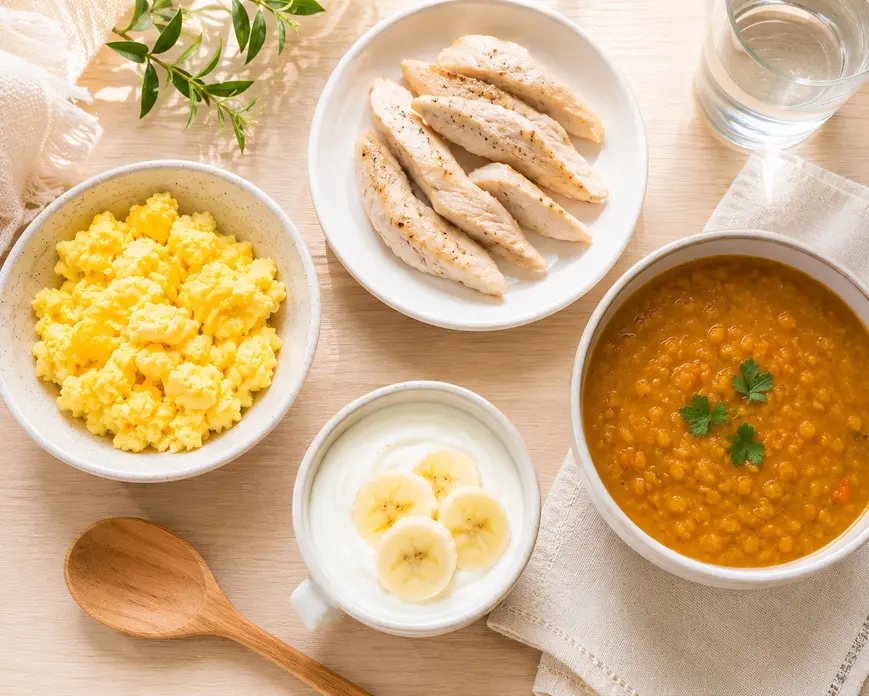
- Egg — whole egg from around 6 months (unless allergy history; check with your doctor)
- Chicken — one of the safest and most digestible proteins for babies
- Yogurt — plain, full-fat yogurt only; no added sugar; fine from 6 months onward
- Lentils — plant-based protein that also gives iron
- Chickpeas — blend smooth or mash well; great from 8 months
- Fish — white fish like cod or tilapia; introduce carefully and watch for allergy signs for 3–5 days
Fish allergy note: Fish is a common allergen. If your family has a history of fish allergy, speak with your pediatrician before introducing it.
Finger Foods: Baby-Led Weaning Begins (9–12 Months) ✋
Finger foods are a huge step. They support independence, fine motor skills, and chewing development. Baby-led weaning foods should be soft enough to mash between your fingers — never hard or crunchy.
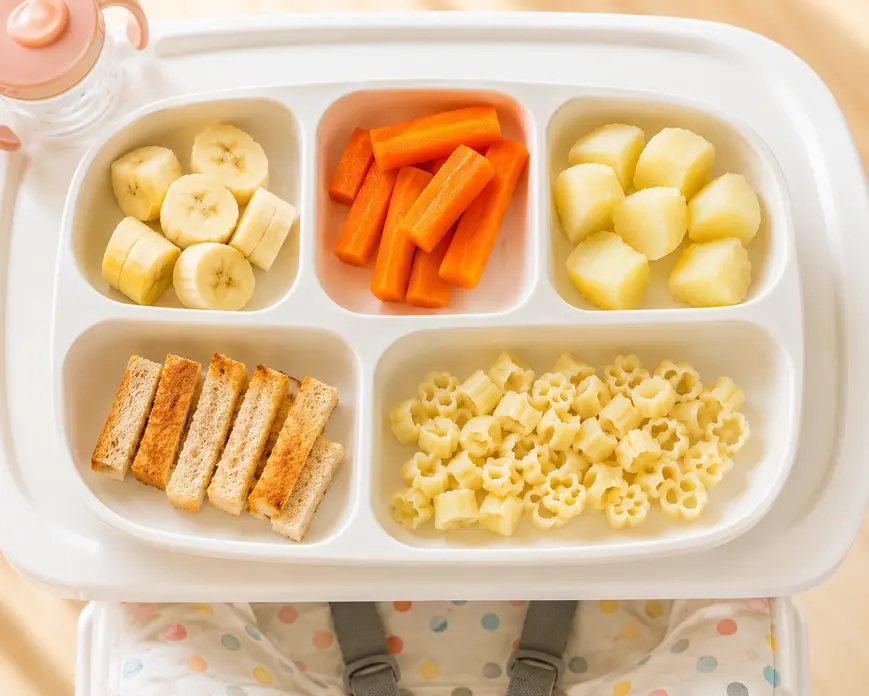
Safe baby-led weaning foods:
- Soft banana pieces — cut into small chunks, naturally grippy
- Steamed carrot sticks — cook until very soft, stick shape is easy to hold
- Soft potato cubes — well-cooked, no skin, no salt
- Toast strips — lightly toasted, easy to gum; add a thin layer of nut butter only after allergy clearance
- Pasta pieces — small shapes like penne or rotini, cooked well past al dente
Choking safety: Always sit with your baby during meals. Never leave them unsupervised with food.
Baby Breakfast Ideas: Starting the Day Right 🌅
A good breakfast sets the tone for the whole day. These baby food breakfast options are quick, nutritious, and easy to prepare:
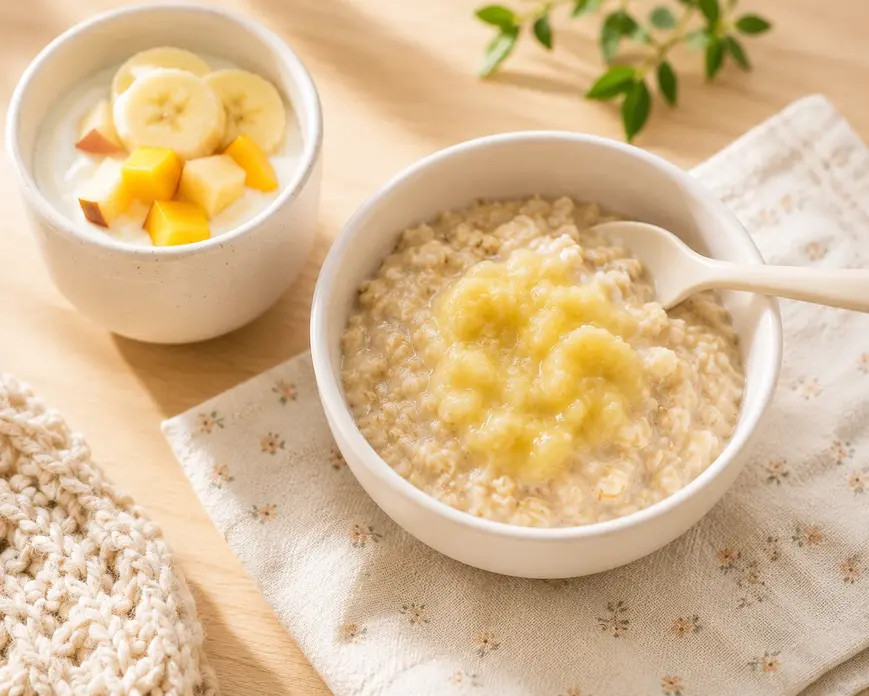
- Baby oatmeal — iron-fortified, warm, mix with fruit puree or breast milk
- Fruit porridge — blended oats with apple or pear puree, smooth texture
- Yogurt with fruit — plain full-fat yogurt with mashed banana or pureed mango
- Mashed egg — scrambled or hard-boiled egg mashed with a little breast milk or water
Rotate these to keep variety. Babies get bored with the same taste just like we do.
Lunch and Dinner Meal Ideas: Complete Little Plates 🍽️
By 8–10 months, baby food meals can start looking like mini versions of real food. Combine protein, a grain or starch, and vegetables for balanced meals.
Easy baby lunch and dinner combinations:
| Meal | Main | Vegetable | Grain/Starch |
| Khichdi-style | Red lentils | Peas | White rice |
| Chicken plate | Chicken puree | Carrot puree | Mashed potato |
| Veggie pasta | N/A | Zucchini puree | Small pasta |
| Protein mash | Egg yolk | Sweet potato | Oats |
| Fish dinner | White fish | Pea puree | Rice |
These baby food combinations are easy to batch cook and freeze in small portions.
Healthy Weight Gain Foods for Babies ⚖️
Some babies need extra calorie support — whether they were born premature, are going through a growth spurt, or are just on the smaller side. These baby food options are calorie-dense and nutritious:
| Food | Why It Helps |
| Banana | High in calories and carbs, easy to digest |
| Sweet potato | Energy-dense with fiber and vitamins |
| Oats | Filling, iron-rich, supports steady energy |
| Plain full-fat yogurt | Calcium, fat, and protein in one |
| Lentils | Protein and iron without heaviness |
| Avocado | Healthy monounsaturated fats for brain growth |
| Egg | Complete protein, choline for brain development |
Do not add butter, oil, cream, or sugar to boost calories in a baby’s diet without guidance from a doctor.
Foods to Avoid Under 1 Year: The Non-Negotiable List 🚫
This is the most important section in any baby food guide. Some foods are dangerous for babies under 12 months — not because of allergy risk, but because of real physical harm.
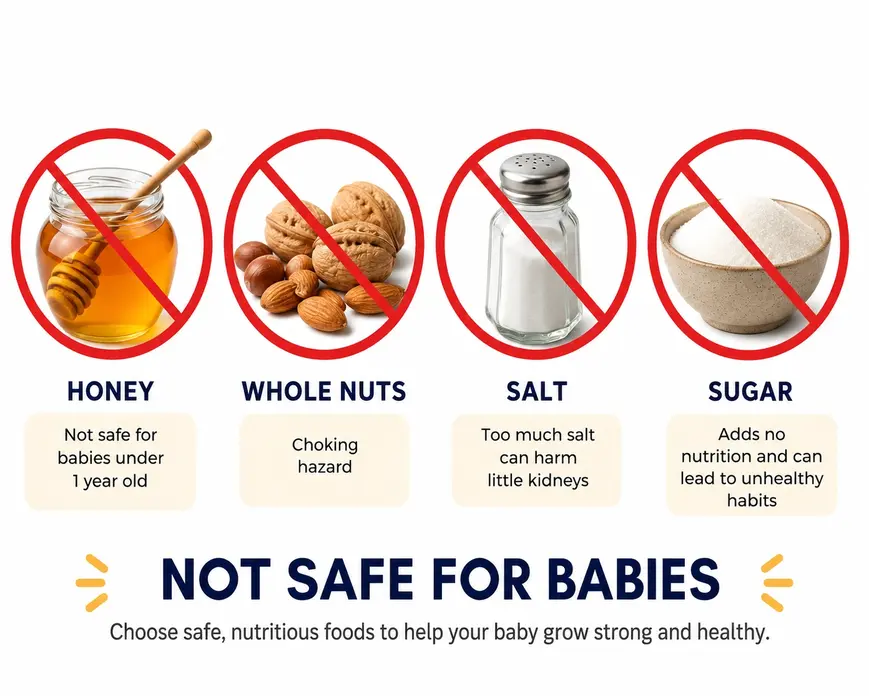
Never give these to babies under 1 year:
- Honey — even raw or organic honey can contain Clostridium botulinum spores, which cause infant botulism. This is a medical emergency.
- Whole nuts — serious choking hazard. Nut butters are fine in small amounts (thinly spread) after allergy screening.
- Added salt — baby kidneys cannot process sodium properly. Never add salt to baby food.
- Added sugar — including fruit juice, flavored yogurt, or sweetened cereals. Introduces preference for sweetness and is linked to tooth decay.
- Unpasteurized dairy — raw milk, raw cheese, or unpasteurized yogurt can carry harmful bacteria.
- Choking-risk foods — whole grapes, raw carrots, whole cherry tomatoes, large meat chunks, popcorn, hard candy.
Baby Food Storage: Keep It Safe 📦
Batch cooking baby food saves time. Here is how to store it safely:
- Fridge: Purees stay fresh for 48–72 hours in an airtight container
- Freezer: Freeze in ice cube trays, then transfer to labeled zip bags; good for up to 3 months
- Thawing: Always thaw in the fridge overnight or in warm water; never microwave in plastic
- Reheating: Warm to lukewarm only; test on your wrist before feeding
- No re-freezing: Never refreeze a puree that has already been thawed
Baby Food Chart by Age: Quick Reference 📊
| Age | Texture | Foods to Try |
| 6 months | Thin puree | Rice cereal, banana, carrot, sweet potato, pear |
| 7 months | Thicker puree | Lentils, peas, mango, chicken, yogurt |
| 8 months | Mashed | Egg, chickpeas, pasta, mixed veg meals |
| 9 months | Soft lumps | Finger foods begin: banana pieces, toast strips |
| 10–11 months | Soft chunks | Family food textures, diced fruit, shredded chicken |
| 12 months | Most textures | Whole egg, full-fat cow’s milk as a drink |
Conclusion:
Starting solids does not have to be complicated. The best baby food is simple, fresh, and introduced one step at a time. Begin with smooth purees around 6 months, add iron-rich foods early, build up to soft finger foods by 9 months, and always skip the salt, sugar, and honey.
Every baby is different. Some take baby food on day one. Others need a few weeks of exploration. Both are normal.
Trust the process, follow your baby’s cues, and keep mealtimes relaxed and fun. You are doing a great job.
FAQ’s
What is the best first food for a 6-month-old baby?
Rice cereal, mashed banana, and sweet potato puree are the most common first baby foods. They are easy to digest, low allergy risk, and simple to prepare. Iron-fortified oatmeal is another excellent choice because babies need more iron after 6 months.
Can I give my baby yogurt before 1 year?
Yes. Plain, full-fat yogurt is safe from 6 months onward. It provides calcium, protein, and gut-healthy probiotics. Just make sure it has no added sugar or fruit flavoring. Cow’s milk as a drink is only recommended after 12 months, but yogurt and cheese are fine before that.
When can babies start finger foods? Most babies are ready for soft finger foods between 8 and 10 months. Signs of readiness include sitting up well independently, picking up objects with a pincer grasp, and chewing motion. Start with very soft pieces — steamed carrot sticks, banana chunks, or toast strips.
Why should I avoid honey for babies under 1 year? Honey — including raw, organic, and cooked honey — can contain bacterial spores that cause infant botulism. A baby’s digestive system is not mature enough to fight this bacteria. Infant botulism is rare but very serious. There is no safe amount of honey for babies under 12 months.
How do I know if my baby is allergic to a new food? Introduce one new food every 3–5 days and watch for reactions. Signs of a food allergy include rash or hives, swelling around the face or lips, vomiting or diarrhea shortly after eating, or breathing difficulty. If you notice severe symptoms, call emergency services immediately. For mild reactions, contact your pediatrician before offering that food again.