Banana Baby Food Combinations: 10 Easy Purees
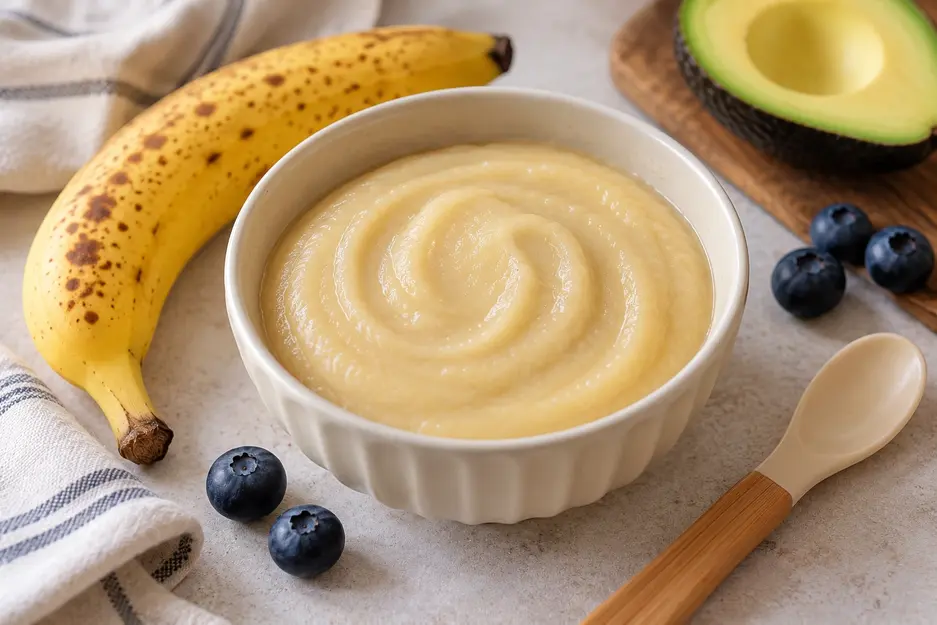
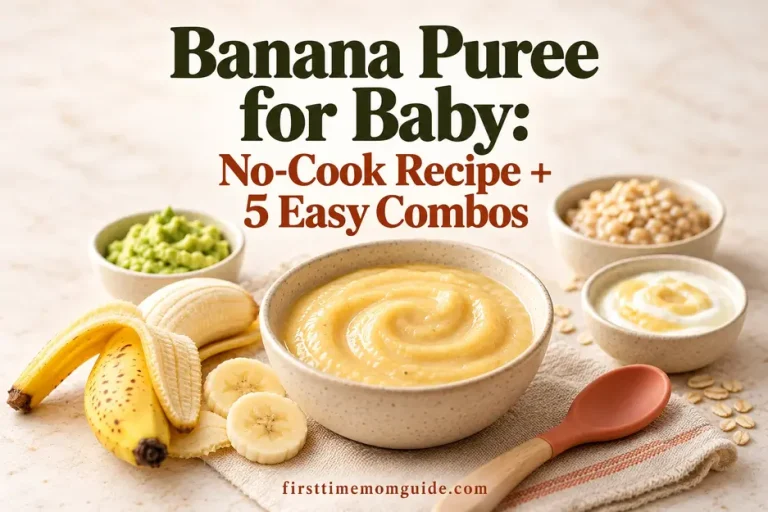
Banana is one of the simplest foods to prepare when a baby is ready to start solids. A ripe banana can be mashed in seconds and paired with familiar fruits, vegetables, grains, or yogurt to create different tastes and textures without complicated preparation. These banana baby food combinations use one easy base and turn it into ten practical options, with guidance for adjusting texture, serving safely, and storing leftovers.
New to solids? Explore our first foods for baby at 6 months guide to learn about readiness, textures, and beginner-friendly foods.
Why These Banana Combinations Are Useful
- Most begin with a ripe banana and need only a few minutes of preparation.
- The combinations offer different flavors and textures without requiring a long ingredient list.
- The same ideas can be adapted from smoother mashes to thicker, more textured foods as your baby develops feeding skills.
Ingredients You’ll Need
Main Ingredient
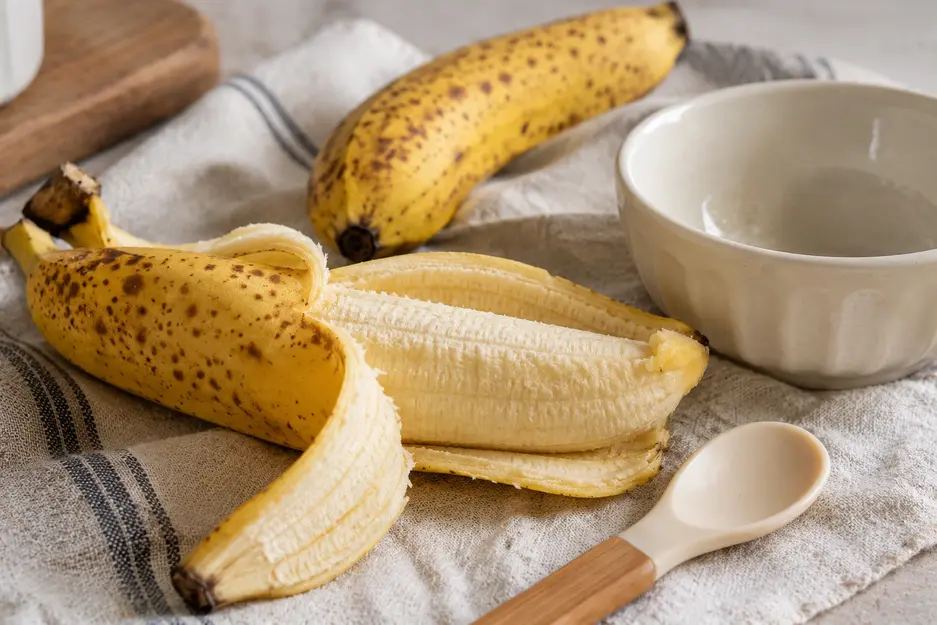
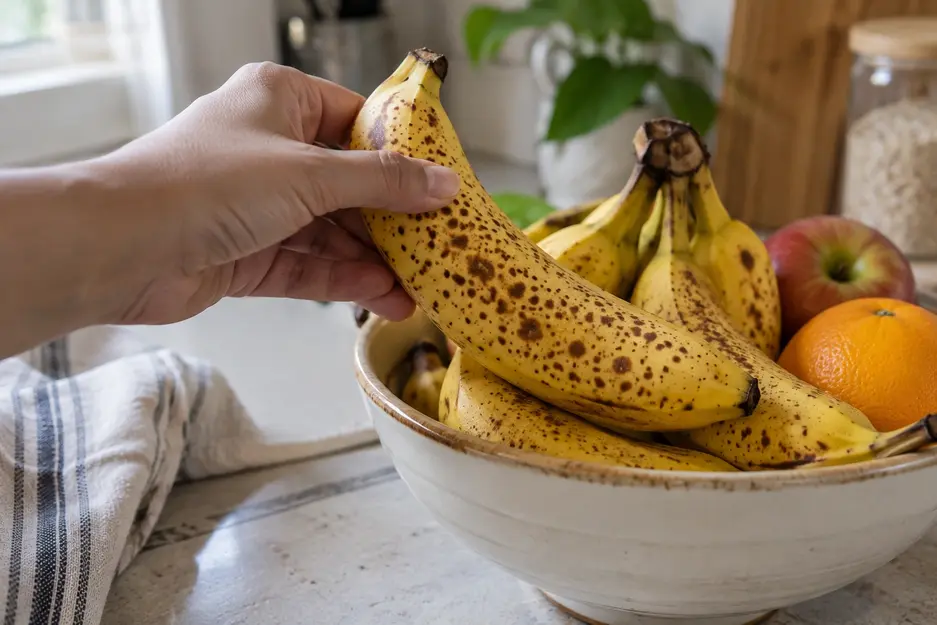
- 1 ripe banana with brown speckles, soft enough to mash easily.
A ripe banana is softer and sweeter than an underripe one, which makes it easier to mash and blend with other ingredients. The final texture can be adjusted to suit your baby’s feeding skills.
For thinning when needed, use a small amount of breast milk, prepared infant formula, or water. Do not add large amounts at once; banana is naturally soft and often needs little or no extra liquid.
How to Make a Basic Banana Puree Base
Step 1: Choose a Ripe Banana
Choose a soft banana with brown speckles on the peel. It should yield gently when pressed.
Step 2: Mash or Blend
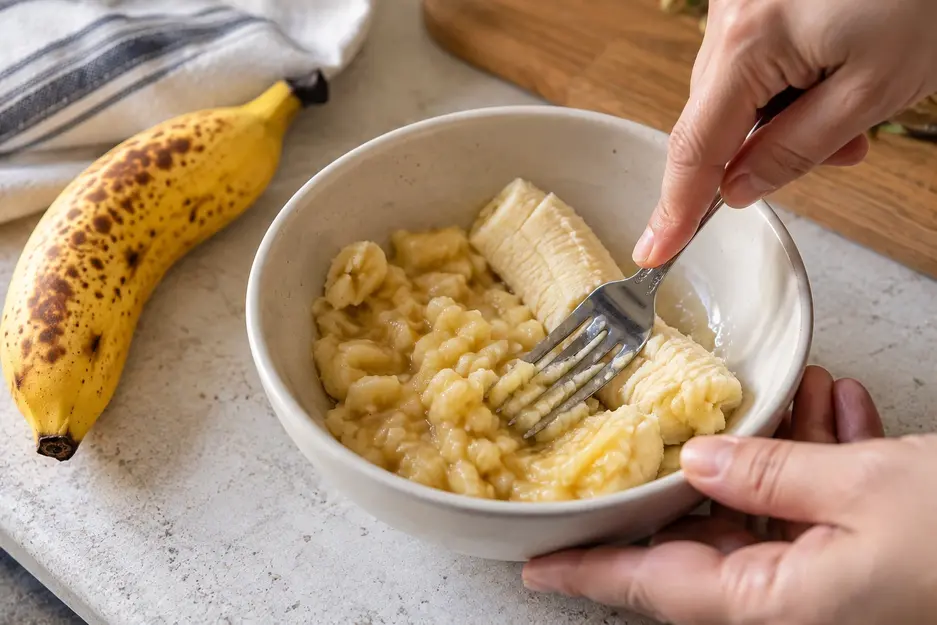
Peel the banana. Mash it thoroughly with a fork for a soft textured result, or blend it if a smoother consistency is appropriate for your baby’s current feeding skills.
Step 3: Adjust the Consistency
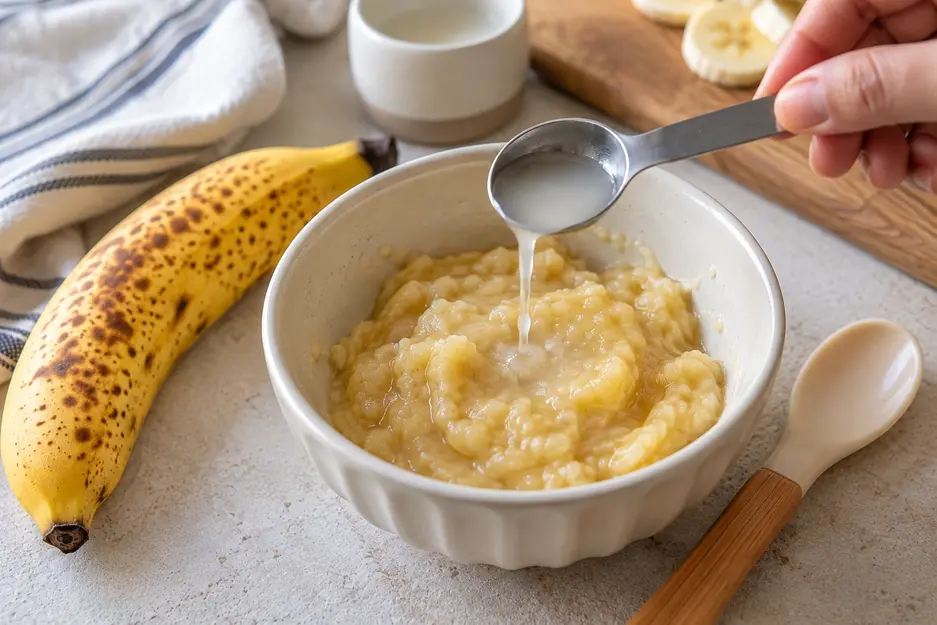
If the mixture is thicker than your baby comfortably manages, add a very small splash of breast milk, prepared formula, or water and stir. Add more only if needed.
Step 4: Add a Combination
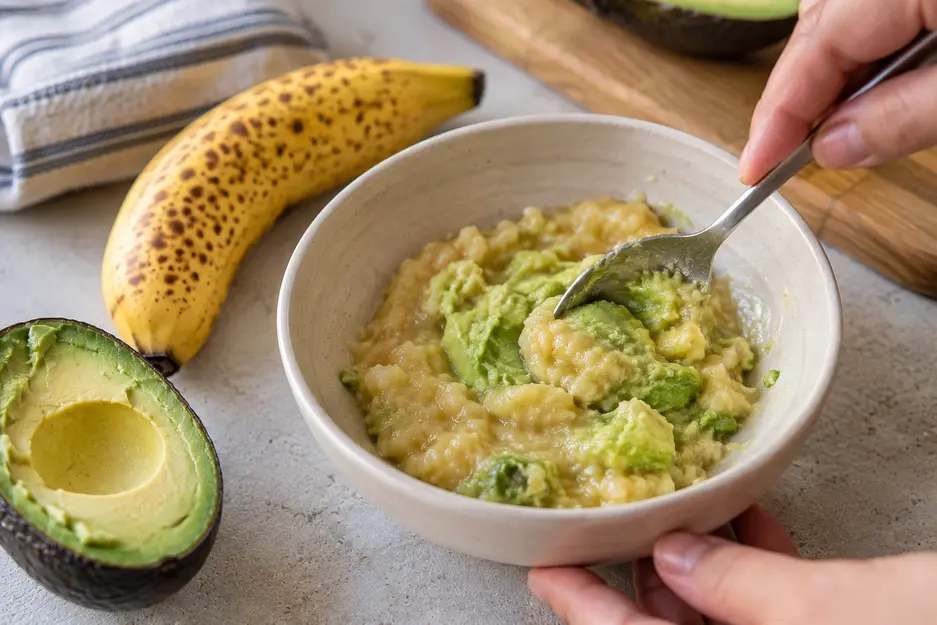
Mix in one of the ingredients below. When introducing a new food, especially a common allergen, introduce it in a way that makes any reaction easier to identify and follow your healthcare professional’s advice if your baby has known allergy risks.
Getting the Texture Right
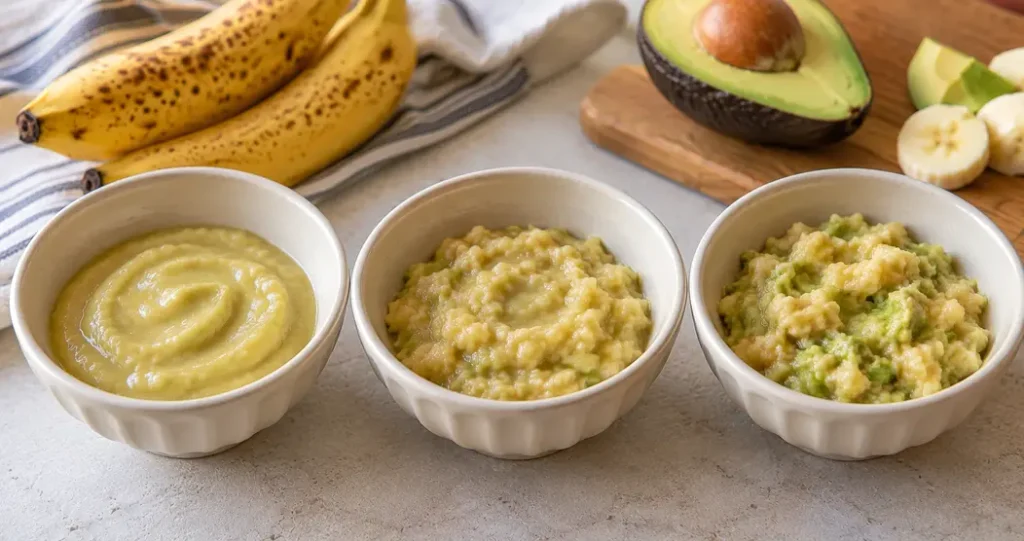
There is no single texture that every baby must eat at a particular age. When your baby is developmentally ready for solids, offer a texture they can manage safely and progress gradually as their feeding skills improve. A banana mixture can be blended smooth, mashed with soft lumps, or served in a thicker texture depending on the baby’s skills and the ingredient being added.
Thicker ingredients such as avocado, sweet potato, or butternut squash may need a small amount of liquid. Juicier fruits such as ripe peach or mango may loosen the mixture, so adding more mashed banana can thicken it naturally.
How to Serve Banana Combinations
From around 6 months, many babies are ready to begin complementary foods when they show the appropriate developmental signs. The safest texture depends on the individual baby’s skills rather than a rigid age schedule.
- Early in solids: offer a soft texture your baby can manage, which may be smooth, mashed, or softly textured.
- As skills develop: gradually offer thicker mashes and soft lumps rather than keeping every food completely smooth.
- For more experienced eaters: use less mashing and age-appropriate soft pieces or finger-food formats when your baby can manage them safely.
Always supervise eating, seat your baby upright, and prepare foods in a size and texture appropriate for their developmental stage.
10 Easy Banana Baby Food Combinations
1. Banana + Avocado
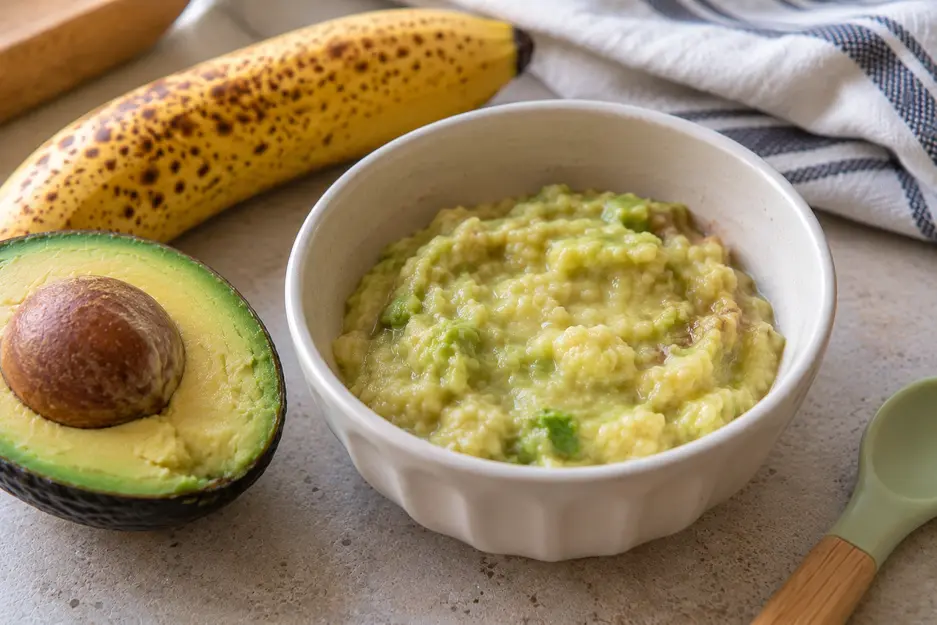
Mash roughly equal amounts of ripe banana and ripe avocado. The result is creamy and thick, so adjust with a small splash of liquid only if needed.
2. Banana + Sweet Potato
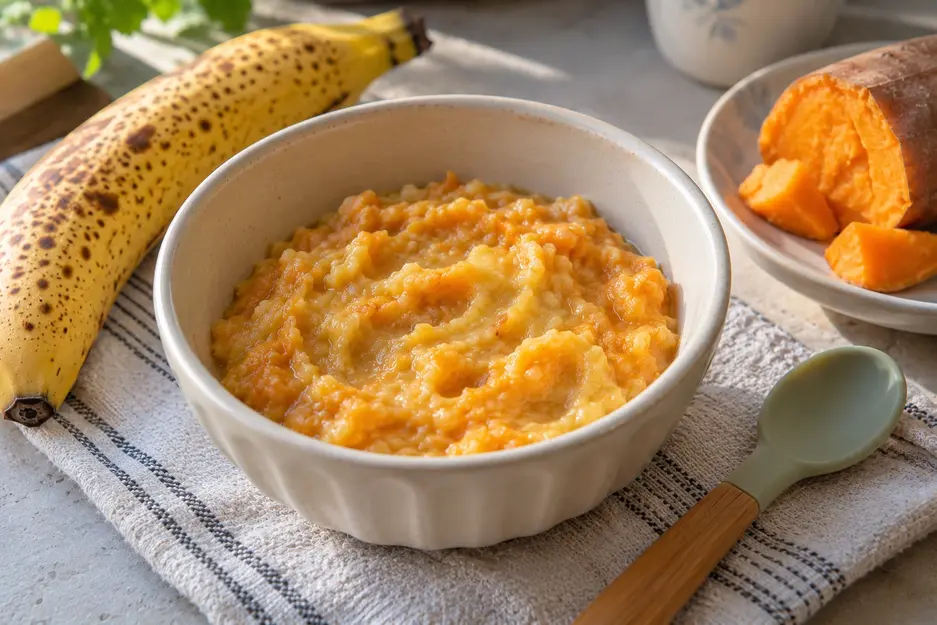
Mix mashed banana with cooled, fully cooked sweet potato. Start with roughly equal amounts and adjust to taste and texture. Add a little liquid if the mixture is too dense.
3. Banana + Oatmeal
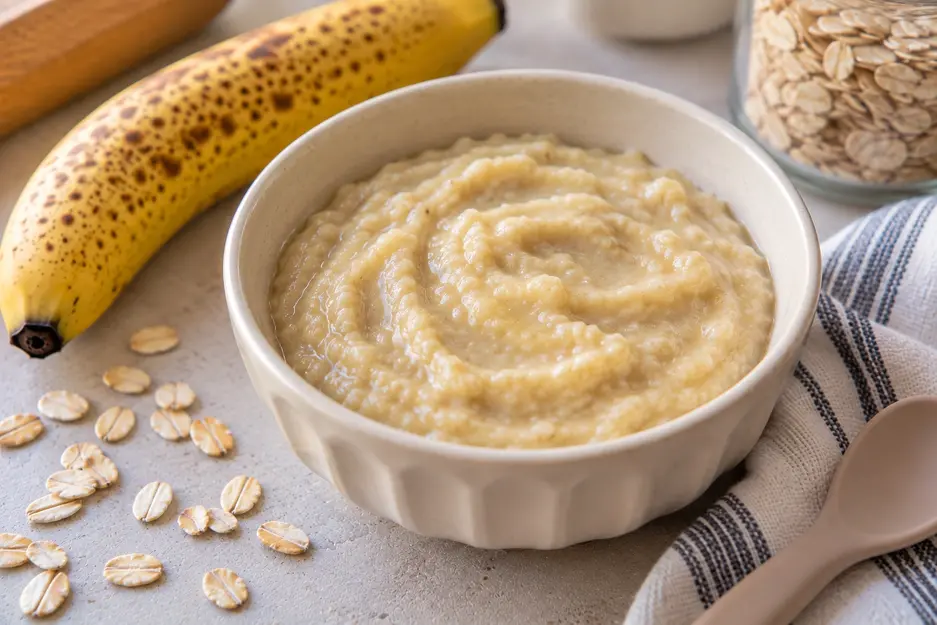
Stir mashed banana into cooled, cooked infant oatmeal. Begin with a spoonful of banana and add more until the flavor and thickness suit your baby.
As your baby develops more advanced eating skills, try our banana oat pancakes for baby for another easy way to use banana and oats
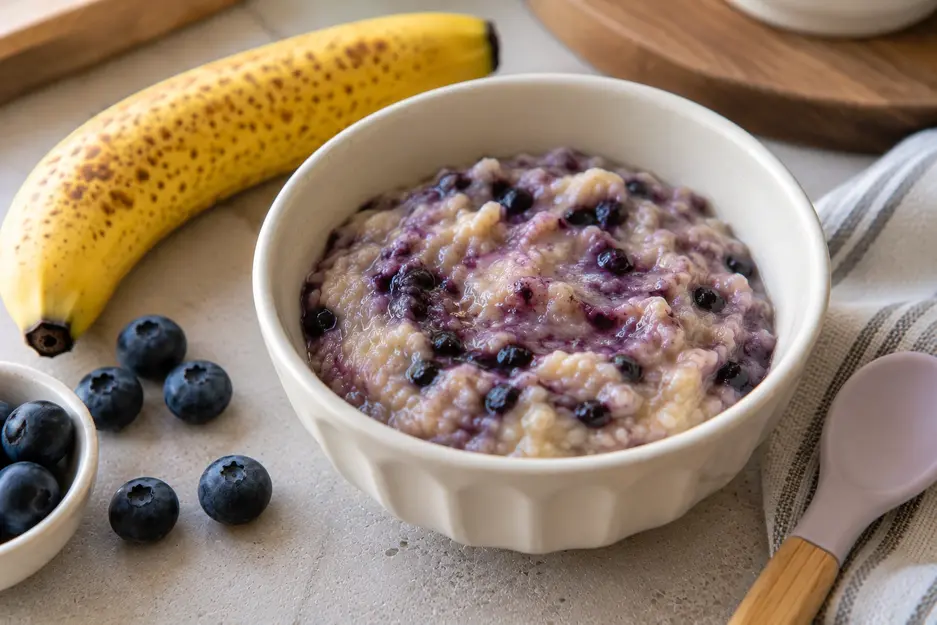
4. Banana + Blueberry
Thoroughly mash or blend ripe banana with blueberries prepared in an age-appropriate texture. Blueberries may be softened if needed; do not serve whole round berries to a baby who cannot manage them safely.
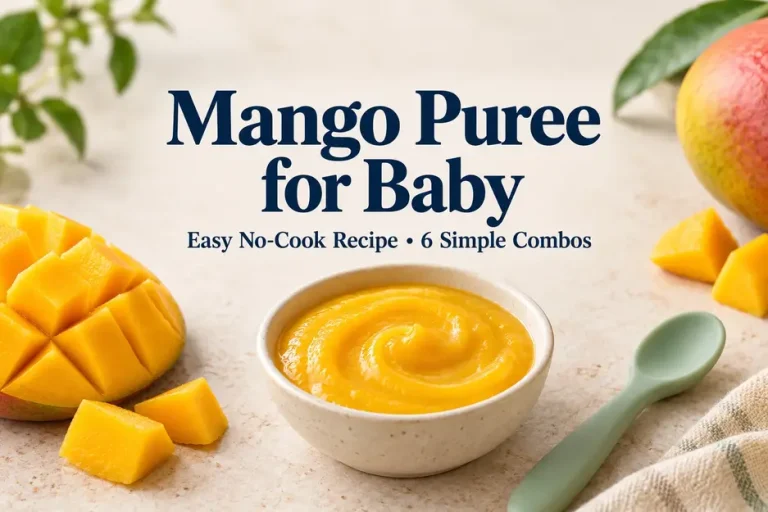
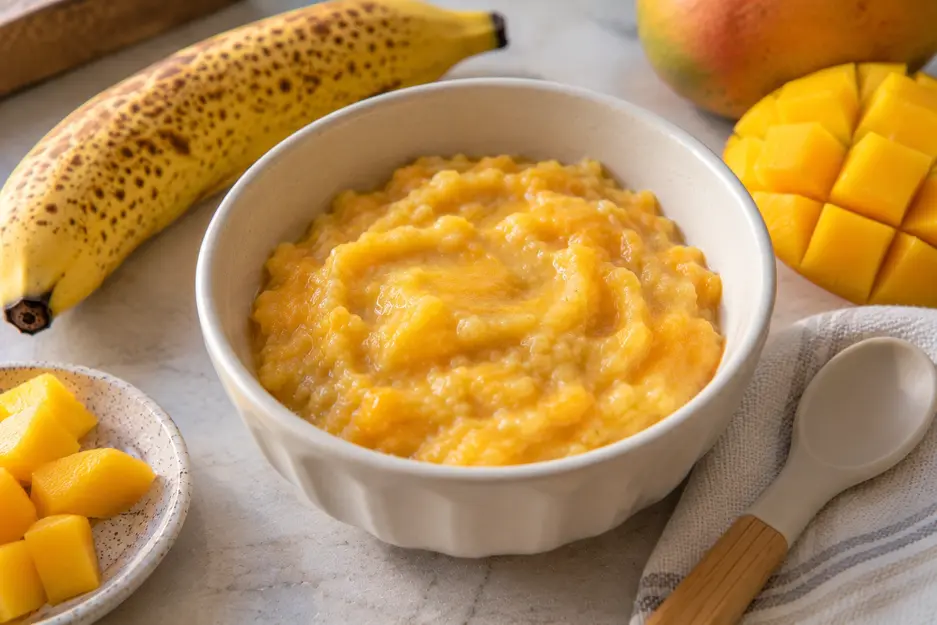
5. Banana + Mango
Mash or blend ripe banana with soft ripe mango. Roughly equal amounts make a naturally soft mixture; additional liquid is usually unnecessary.
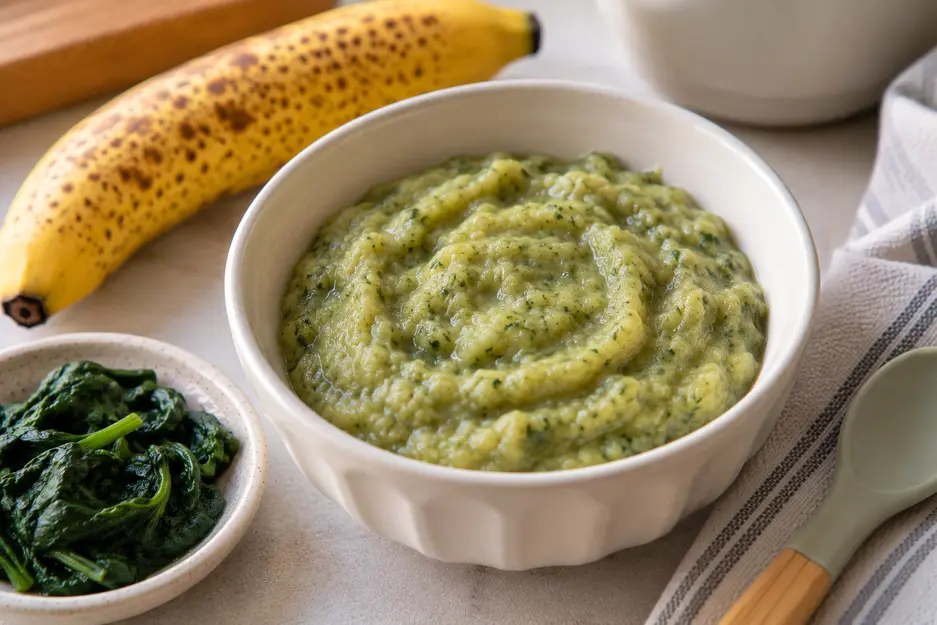
6. Banana + Spinach
Blend mashed banana with a small amount of fully cooked, finely prepared spinach. Start with a little spinach so the mixture remains easy to adjust.
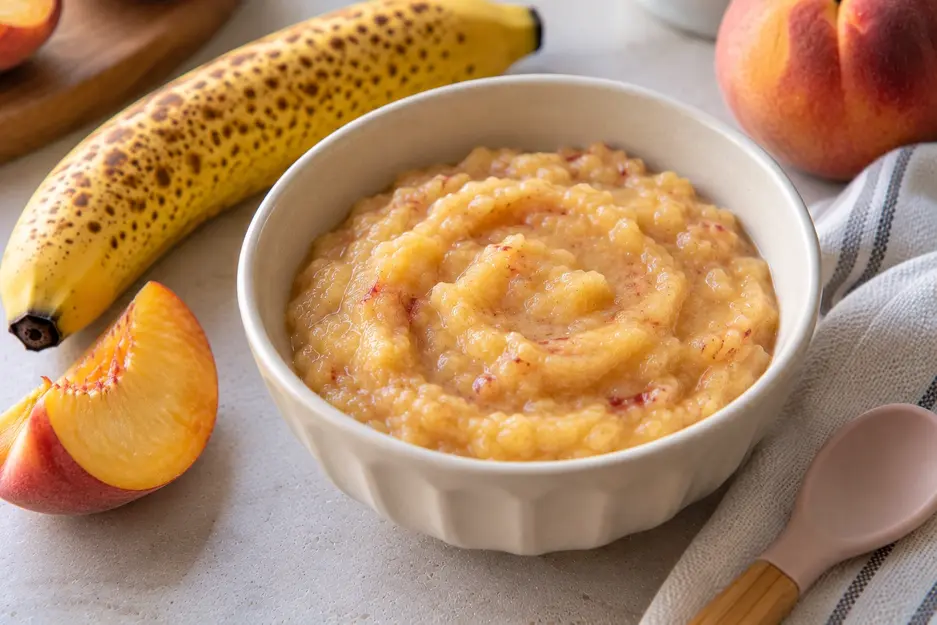
7. Banana + Peach
Mix mashed banana with very soft ripe peach prepared in an age-appropriate texture. If the peach makes the mixture too loose, add a little more banana.
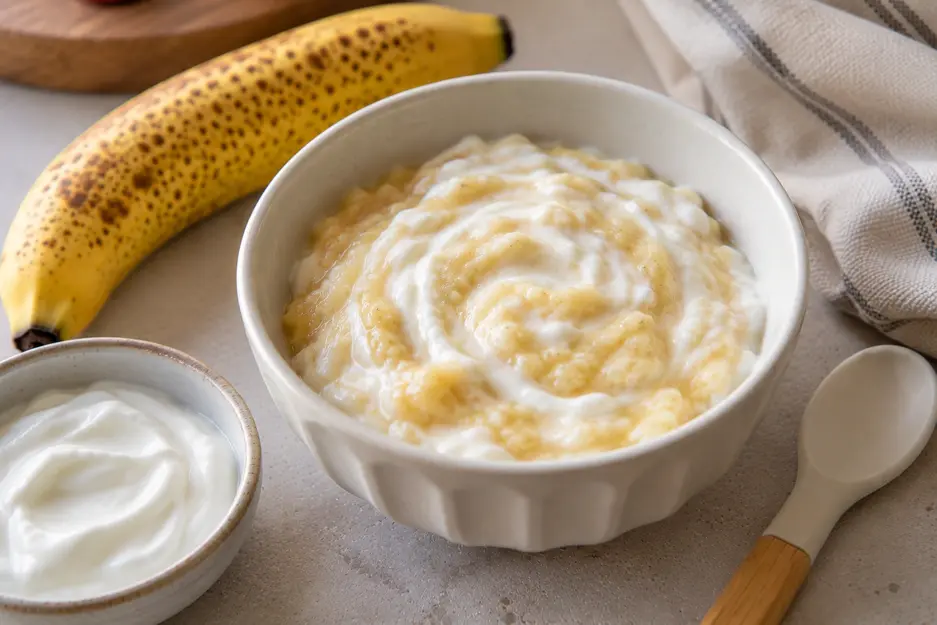
8. Banana + Plain Yogurt
Mix mashed banana with pasteurized, plain, unsweetened full-fat yogurt when dairy is appropriate for your baby. Start with a small amount when introducing dairy and follow individualized medical advice if allergy risk is a concern.
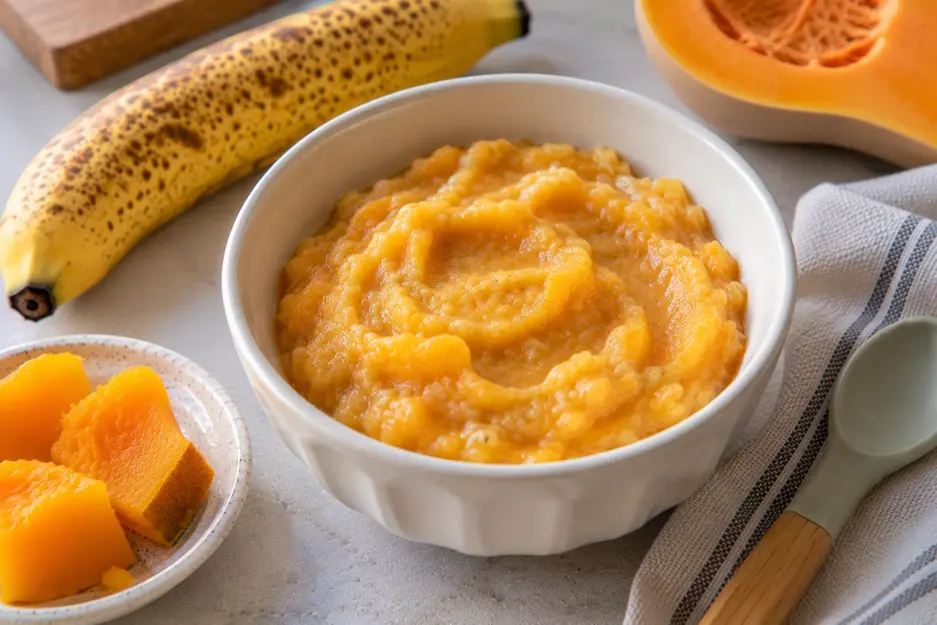
9. Banana + Butternut Squash
Mix mashed banana with cooled, fully cooked butternut squash. Adjust the ratio and thickness according to your baby’s feeding skills.
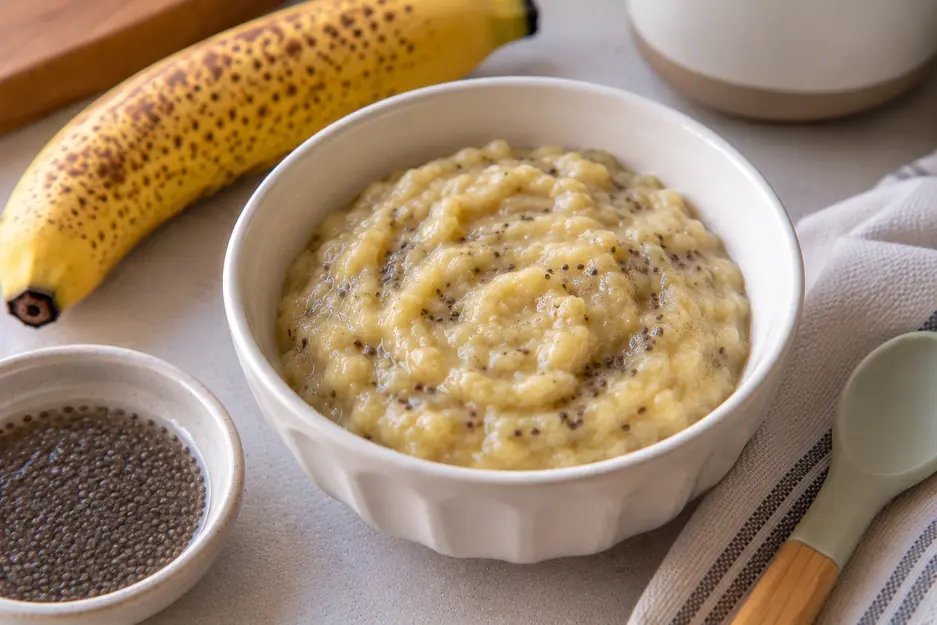
10. Banana + Chia
For a baby who is already managing complementary foods well, chia can be incorporated cautiously in an appropriate preparation. Use only a small amount, fully hydrated or otherwise prepared in a texture suitable for the child. If seeds are new to your baby or there are allergy concerns, seek individualized guidance.
Common Mistakes to Avoid
- Using an underripe banana that is firm and difficult to mash.
- Adding too much liquid at once and ending up with a runny mixture.
- Making large batches of banana-avocado mash when you care about color and appearance; both fruits can brown after exposure to air.
- Using whole round fruits, dry seeds, or other textures that are not appropriate for your baby’s current feeding skills.
- Treating age labels as rigid rules instead of adapting texture to the baby’s developmental abilities.
Storage, Freezing & Reheating
For the best quality, banana mixtures are often easiest to make in small portions. Refrigerate leftovers promptly in a clean covered container and use conservative storage times, particularly when the mixture contains dairy or another cooked ingredient.
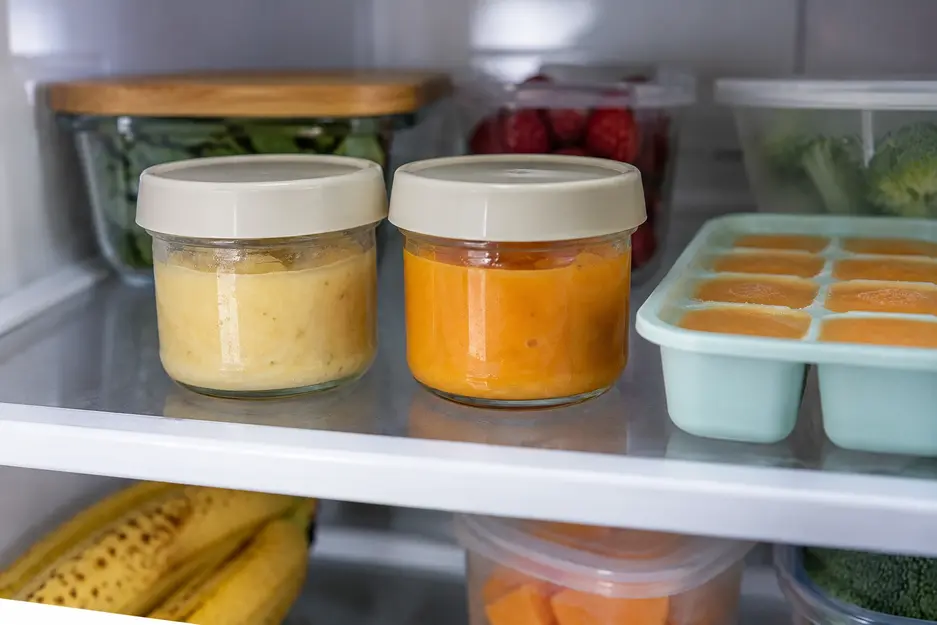
Banana can be frozen, but freezing and thawing may change its color and texture. The same is true for avocado. That is mainly a quality issue rather than a reason to say banana combinations cannot be frozen. Because each combination contains different ingredients, follow the storage guidance for the most perishable ingredient in the mixture.
Thaw frozen baby food in the refrigerator or using another food-safe method rather than leaving it at room temperature for long periods. If warming a mixture, stir thoroughly and check the temperature before serving. Discard food left over from a bowl or spoon that has been in contact with the baby’s mouth.
Banana + Avocado vs. Banana + Sweet Potato
| Feature | Banana + Avocado | Banana + Sweet Potato |
| Cooking | No cooking for ripe ingredients | Sweet potato must be fully cooked |
| Texture | Very creamy and thick | Thicker, starchy mash |
| Best use | Fast, fresh option | Useful when cooked sweet potato is already prepared |
| Storage quality | Browns quickly; often best fresh | Usually holds color better than avocado |
Both combinations are useful. Banana and avocado is convenient when you want a no-cook option, while banana and sweet potato works well when cooked vegetables are already being prepared for the family or baby.
Recipe Card: Basic Banana Puree + 10 Variations
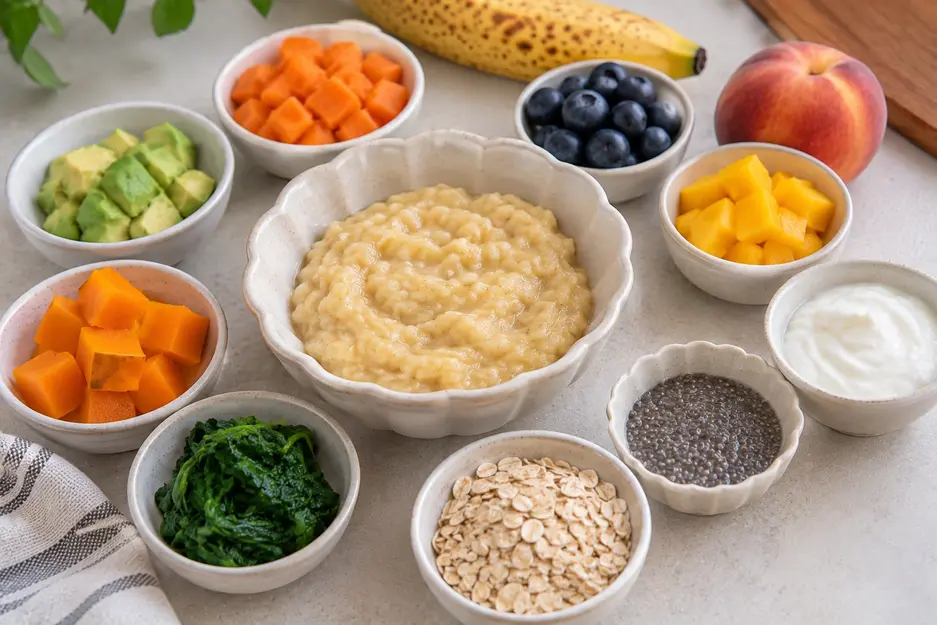
Prep time: about 3 minutes for the basic banana base. Some variations require a separately cooked ingredient.
Yield: approximately one small baby portion, depending on banana size and added ingredients.
Basic Ingredients
- 1 ripe banana
- A small amount of breast milk, prepared formula, or water if thinning is needed
Basic Method
- Peel the ripe banana.
- Mash thoroughly with a fork or blend to the texture appropriate for your baby’s feeding skills.
- Add a small amount of liquid only if the mixture needs thinning.
- Mix in one prepared combination ingredient from the list above.
Quick Variation Guide
Banana + Avocado: Mash roughly equal amounts of ripe banana and ripe avocado. The result is creamy and thick, so adjust with a small splash of liquid only if needed.
Banana + Sweet Potato: Mix mashed banana with cooled, fully cooked sweet potato. Start with roughly equal amounts and adjust to taste and texture. Add a little liquid if the mixture is too dense.
Banana + Oatmeal: Stir mashed banana into cooled, cooked infant oatmeal. Begin with a spoonful of banana and add more until the flavor and thickness suit your baby.
Banana + Blueberry: Thoroughly mash or blend ripe banana with blueberries prepared in an age-appropriate texture. Blueberries may be softened if needed; do not serve whole round berries to a baby who cannot manage them safely.
Banana + Mango: Mash or blend ripe banana with soft ripe mango. Roughly equal amounts make a naturally soft mixture; additional liquid is usually unnecessary.
Banana + Spinach: Blend mashed banana with a small amount of fully cooked, finely prepared spinach. Start with a little spinach so the mixture remains easy to adjust.
Banana + Peach: Mix mashed banana with very soft ripe peach prepared in an age-appropriate texture. If the peach makes the mixture too loose, add a little more banana.
Banana + Plain Yogurt: Mix mashed banana with pasteurized, plain, unsweetened full-fat yogurt when dairy is appropriate for your baby. Start with a small amount when introducing dairy and follow individualized medical advice if allergy risk is a concern.
Banana + Butternut Squash: Mix mashed banana with cooled, fully cooked butternut squash. Adjust the ratio and thickness according to your baby’s feeding skills.
Banana + Chia: For a baby who is already managing complementary foods well, chia can be incorporated cautiously in an appropriate preparation. Use only a small amount, fully hydrated or otherwise prepared in a texture suitable for the child. If seeds are new to your baby or there are allergy concerns, seek individualized guidance.
Conclusion
Banana baby food combinations are an easy way to vary flavor and texture without turning mealtime into a complicated recipe project. Start with a ripe banana, pair it with an ingredient your baby can safely eat, and adjust the texture to match current feeding skills. Small fresh portions are especially convenient, and the same combinations can evolve into thicker mashes and toddler-friendly textures over time.
Want another simple fruit puree? Try our kiwi puree for baby for a fresh, sweet-tart option that also pairs well with banana
Disclaimer
This article provides general food and feeding information and is not a substitute for individualized medical advice. Make sure your baby is developmentally ready for solids, supervise meals, and prepare food in a safe texture and shape. If your baby has a diagnosed food allergy, severe eczema, feeding or swallowing difficulties, or another medical condition, ask a pediatrician or appropriately qualified healthcare professional for advice tailored to your child.
FAQ’s
Q.1 When can babies start eating banana combinations?
Banana can be offered when a baby is developmentally ready for complementary foods, commonly around 6 months. Prepare the banana and any paired ingredient in a texture the baby can manage safely.
Q.2 Do I have to introduce every paired ingredient separately first?
Not every food must follow an identical rule, but introducing new foods in a way that makes reactions easier to identify is sensible. Common allergens deserve particular care. If your baby has severe eczema, a diagnosed allergy, or another medical concern, ask a qualified healthcare professional for individualized guidance.
Q.3 Can I use yogurt in banana baby food?
Pasteurized, plain, unsweetened full-fat yogurt can be an option when dairy is appropriate for your baby. Avoid sweetened yogurts and seek individualized advice when allergy risk is a concern.
Q.4 Can banana baby food combinations be frozen?
Yes, many banana-based mixtures can be frozen, although banana and avocado may darken or change texture after thawing. Storage suitability also depends on the other ingredient in the combination.
Q.5 Why does banana puree turn brown?
Cut or mashed banana naturally darkens after exposure to air because of oxidation. Browning does not automatically mean the food is spoiled; use normal food-safety checks and appropriate storage.