Apple Puree for Baby – Classic First Fruit & Storage
If there is one baby food that almost every parent makes first, it is apple puree.
Apple puree for baby is the gold standard of first foods mild in flavor, naturally sweet, easy to digest, and accepted by almost every baby without a fight. It does not require complicated cooking. It does not need special equipment. And it comes together in under 15 minutes from start to finish.But there is more to this recipe than just blending an apple. Which apple variety you choose, whether to peel or not, how long to steam, and how to store it correctly all affect the final result. Get these things right and you will have a smooth, flavorful puree that your baby actually finishes instead of pushing away.
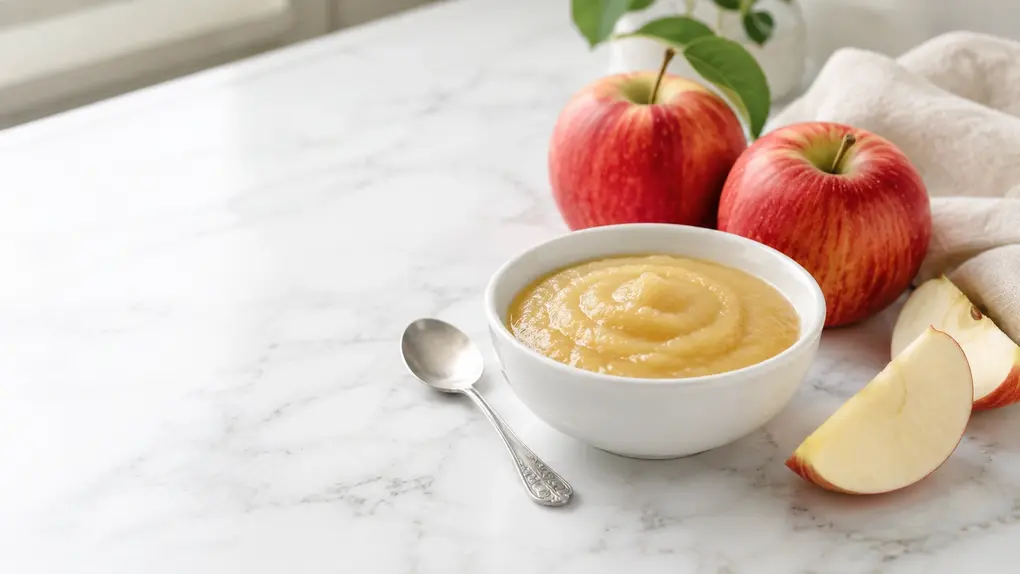
This guide covers everything honestly, from the first spoonful to proper freezer storage, backed by real nutritional data and pediatric guidance.
Why You’ll Love This Puree
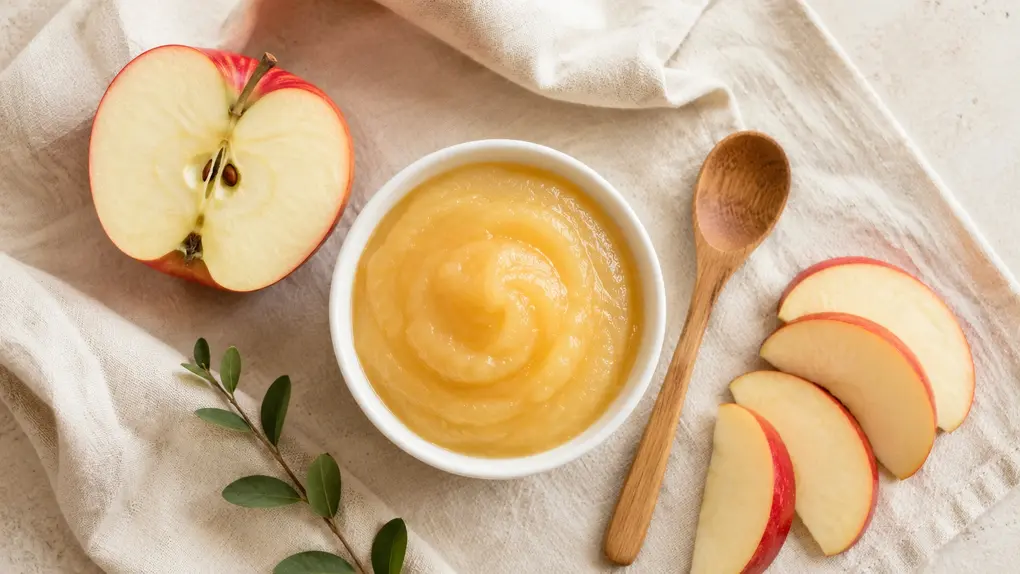
- Done in 15 minutes or less: peel, chop, steam, blend
- Naturally sweet: no sugar needed, ever
- Gentle on tiny tummies: low acidity, easy to digest
- Freezer-friendly: batch-cook and freeze for weeks
- Budget-friendly: apples are available year-round at low cost
- Versatile base: pairs with nearly every other fruit and vegetable
- Great for mild constipation: the pectin in apples supports healthy digestion
- Accepted by almost every baby: one of the lowest rejection rates of any first food
Health Benefits of Apple Puree for Baby
Apples are not just sweet and easy. They deliver genuine nutritional value that matters for babies in their first year.
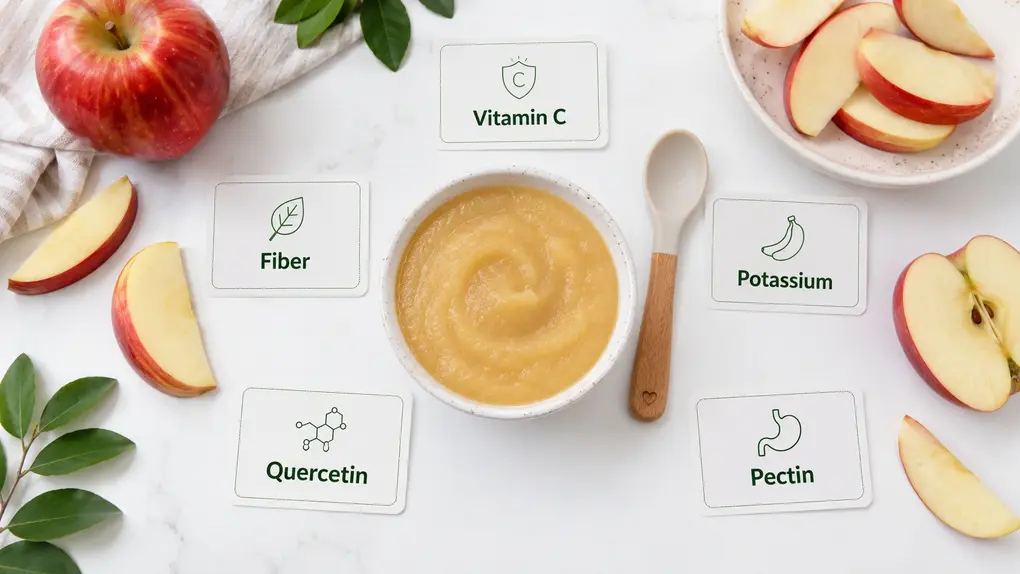
Key Nutrients in Apples (per 100g, raw, peeled):
| Nutrient | Amount | Baby Benefit |
| Dietary Fiber | 2.4 g | Healthy digestion, soft stools |
| Pectin (soluble fiber) | ~0.5–1.5 g | Prebiotic effect, gut health |
| Vitamin C | 4.6 mg | Immune support, iron absorption |
| Potassium | 107 mg | Heart function, fluid balance |
| Vitamin K | 2.2 mcg | Bone development |
| Quercetin | ~4.4 mg | Anti-inflammatory, antioxidant |
| Folate | 3 mcg | Cellular development |
| Carbohydrates | 13.8 g | Energy for rapid growth |
Why these nutrients matter for your baby:
Pectin:
Pectin is the standout nutrient in apples. It is a soluble fiber that forms a gel in the digestive tract. This gel slows digestion, feeds beneficial gut bacteria (acting as a prebiotic), and helps regulate both constipation and mild diarrhea. A 2016 review in Nutrients confirmed pectin’s role in supporting gut microbiome health in infants and young children.
Vitamin C:
Vitamin C in apples is moderate not as high as citrus but still useful. It enhances absorption of non-heme iron when served alongside iron-rich foods like spinach or lentil puree. This is one reason apple is a popular mixing base in baby food.
Quercetin
Quercetin is a plant antioxidant found primarily in apple skin. This is one reason some nutritionists argue for leaving the skin on when pureeing for older babies though for babies under 8 months, skinless and smooth is both safer and easier to digest.
Fiber:
Fiber in apples supports healthy, regular bowel movements. Many parents notice that introducing apple puree coincides with easier digestion in their babies this is not coincidence.
Honest note:
Honest note Apple puree is relatively low in protein, fat, and iron. It is an excellent starter food and flavor base, but should be rotated with iron-rich foods like lentil puree, meat purees, and fortified cereals as your baby’s diet expands beyond the first weeks of solids.
Ingredients You’ll Need
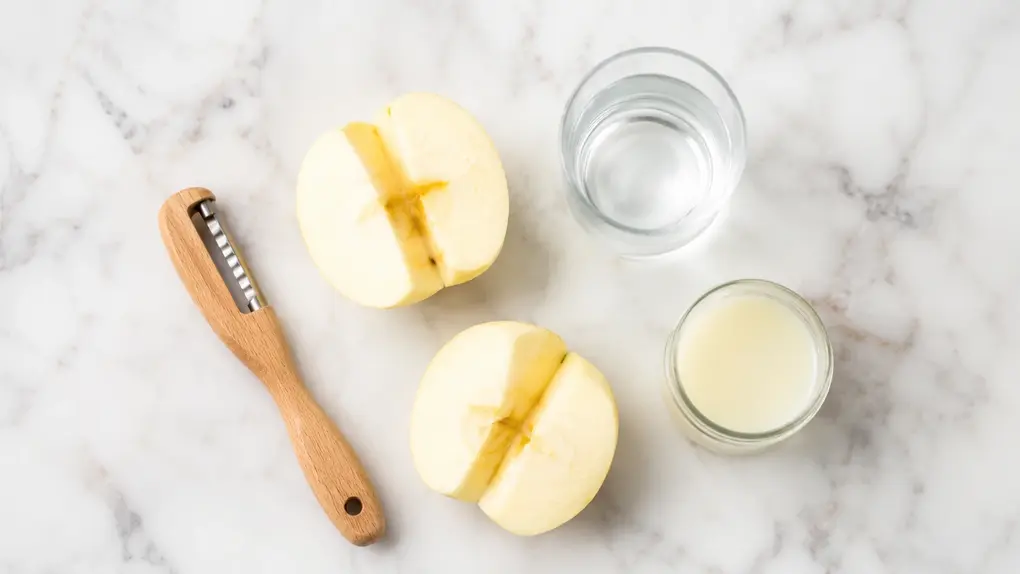
Main Ingredient
2 medium apples: any sweet, mild variety (see buying tips below)
Optional Add-Ins
- 2–4 tablespoons water (for steaming and blending consistency)
- Breast milk or formula (for creamier texture more familiar to baby)
- ¼ teaspoon cinnamon (for babies 7 months+, optional)
- ¼ ripe pear (adds natural sweetness and extra fiber)
- ¼ ripe banana (thickens texture for older babies)
Do not add:
sugar, honey, salt, corn syrup, or any artificial flavoring. Two medium apples produce enough natural sweetness for 6–8 small servings.
Ingredient Notes & Buying Tips
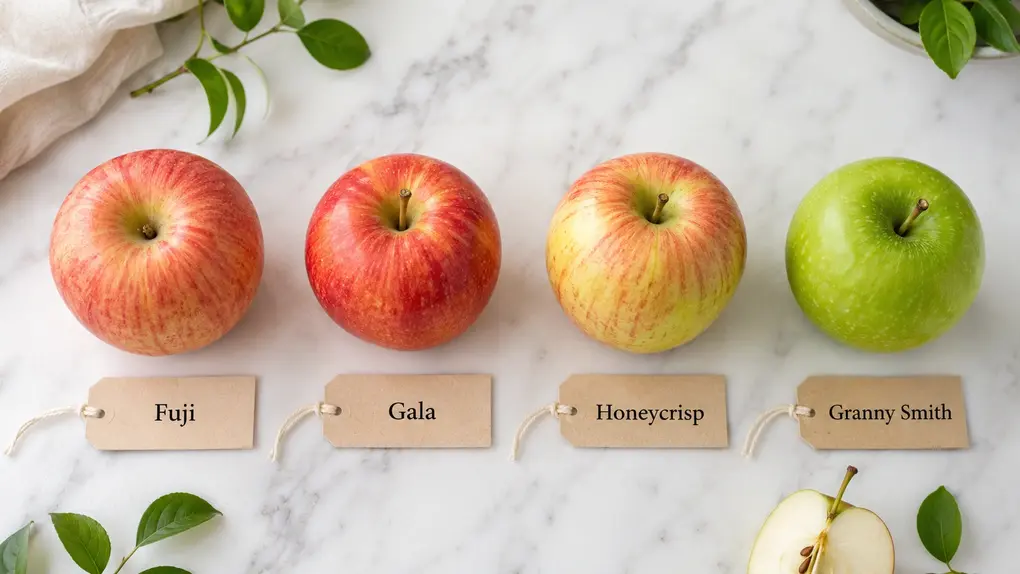
Best Apple Varieties for Baby Puree
Not all apples produce the same puree. Here is what actually matters:
| Apple Variety | Sweetness | Texture When Cooked | Best For |
| Fuji | Very sweet | Very smooth | Best overall for babies |
| Gala | Sweet, mild | Smooth | Excellent first food choice |
| Honeycrisp | Sweet-tart | Slightly fibrous | 7 months+ |
| Golden Delicious | Very sweet | Extremely smooth | Ideal for 4–6 months |
| Pink Lady | Sweet-tart | Good texture | 6 months+ |
| Granny Smith | Tart | Firmer | Mix with sweeter variety only |
For a 4–6 month old
Fuji, Gala, or Golden Delicious are the best choices. They steam to a very soft texture and blend into a naturally smooth, sweet puree without any tartness that might cause rejection.
How to Choose Fresh Apples
- Pick apples that feel firm and heavy for their size heavy means more juice and sugar content
- Skin should be smooth and free from soft spots, bruises, or wrinkles
- Smell the stem end a sweet apple fragrance means it is ripe and ready
- Avoid apples with any mushiness around the core end
Organic vs. Regular
Apples appear on the EWG Dirty Dozen list every year consistently one of the most pesticide-contaminated fruits in the US. For baby food specifically, organic apples are strongly recommended. If organic is not available, peel the apple thoroughly (pesticide concentration is highest in the skin) and wash under running water for 30–45 seconds before peeling.
Can You Use Applesauce from a Jar?
Commercially prepared, unsweetened applesauce with no added ingredients is a safe and convenient option. Look for labels that say only “apples” and nothing else no corn syrup, no citric acid preservatives, no added flavors. However, homemade puree from fresh apples delivers significantly better flavor, fresher nutrition, and zero packaging concerns.
Kitchen Equipment Needed
Everything you need is likely already in your kitchen:
- Vegetable peeler: for removing the skin
- Sharp knife and cutting board: or coring and chopping
- Steamer basket and pot with lid: preferred cooking method
- Blender or food processor: standard blender works perfectly
- Fine mesh strainer: optional, for silkiest texture in young babies
- Silicone ice cube tray: for freezing individual servings
- Airtight glass jars: for refrigerator storage
Step-by-Step Instructions
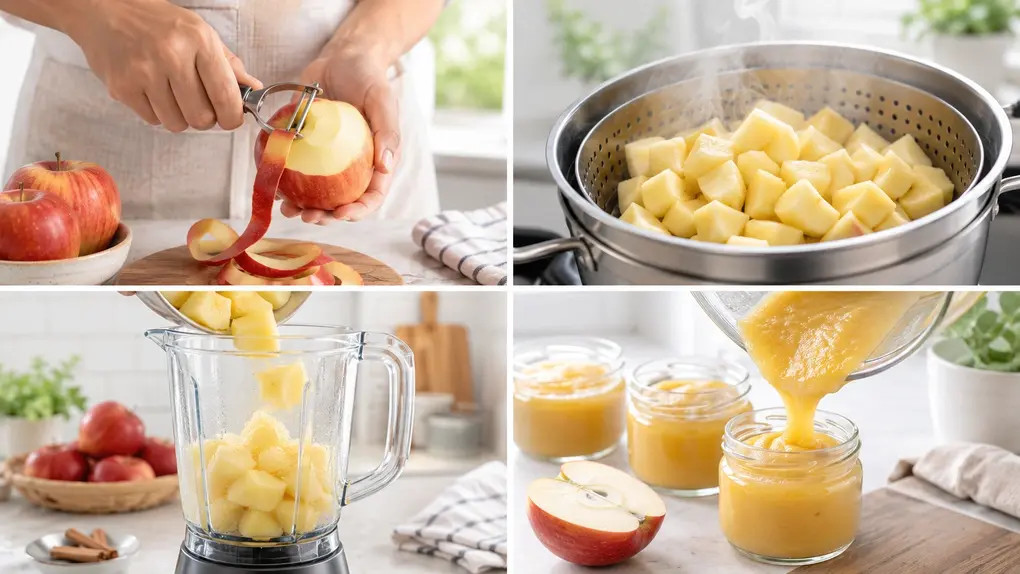
Step 1. Wash
Rinse apples under cold running water for 30–45 seconds, scrubbing the skin gently. Even if you are peeling them, washing prevents transferring surface residue to the flesh during peeling.
Step 2 . Peel
Use a vegetable peeler to remove the entire skin. For babies under 8 months, peeling is important apple skin is fibrous and does not blend as smoothly as the flesh. Skin also concentrates pesticide residue.
Step 3. Core and Chop
Cut the apple in half, then quarters. Remove the core and seeds completely. Chop into roughly 1-inch pieces consistent sizing ensures even cooking.
Step 4. Steam (Preferred Method)
Add 1–2 inches of water to a pot and bring to a boil. Place apple pieces in a steamer basket. Cover and steam for 8–10 minutes until a fork slide through the pieces with zero resistance.
Alternative Bake:
Place apple pieces on a baking sheet. Bake at 375°F (190°C) for 20–25 minutes until very soft. Baking produces a more concentrated, slightly caramelized flavor that older babies love.
Alternative Microwave:
Place pieces in a microwave-safe bowl with 2 tablespoons water. Cover with a microwave-safe plate. Microwave on high for 3–4 minutes, checking every 90 seconds. Quick but less even than steaming.
Step 5. Cool
Always cool steamed apples for 5–10 minutes before blending. Adding hot food to a blender can cause pressure buildup and is a burn risk.
Step 6. Blend
Add cooled apple pieces to blender with 2 tablespoons of the steaming water (this water contains nutrients that leached from the apple use it). Blend on high for 60 seconds until completely smooth.
Step 7. Adjust Consistency
For younger babies, add more liquid one tablespoon at a time and blend briefly. The puree should flow easily off a spoon for babies under 6 months, and hold its shape slightly for older babies.
Step 8. Strain (Optional)
For babies under 6 months, pressing through a fine mesh strainer creates a silky texture with zero fiber fragments. Skip this step for babies 7 months and older.
Texture by Baby’s Age
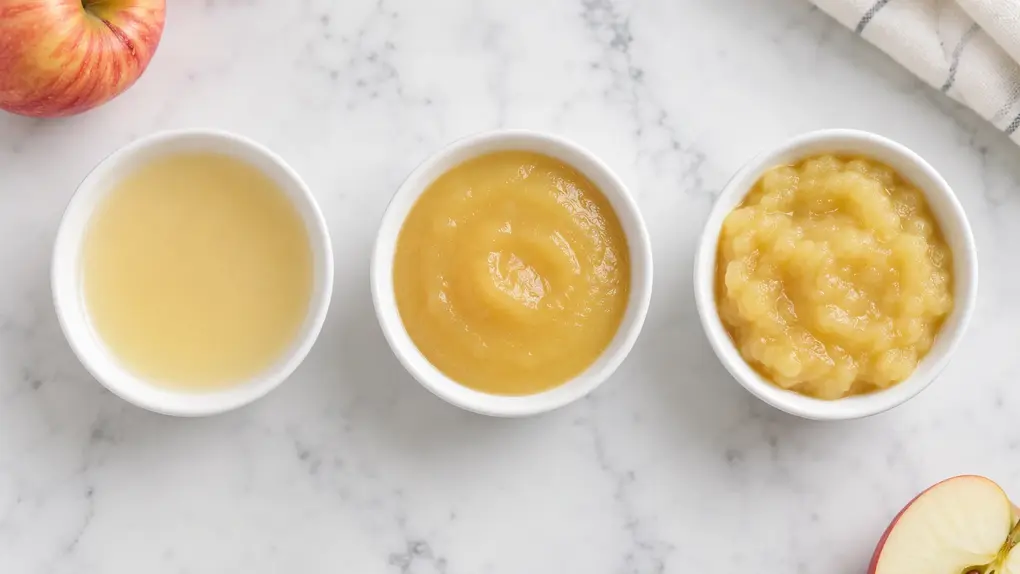
| Age | Texture Goal | How to Achieve It |
| 4–6 months | Very smooth, almost liquid | Steam well, blend fully, strain, add extra liquid |
| 6–8 months | Smooth, medium thickness | Blend well, skip straining |
| 8–10 months | Slightly textured, thicker | Shorter blend or mash with fork |
| 10–12 months | Chunky mash or small soft pieces | Fork-mash only, skip blender |
Recipe Tips
- Steam over boiling water, do not boil directly. Boiling apple chunks in water washes nutrients into the cooking liquid. Steaming keeps them in the fruit. If you do boil, use that water to thin the puree.
- Use the steaming water for blending. It contains pectin and water-soluble vitamins. Never throw it away.
- Do not over-steam. Eight to ten minutes is enough. More than 12 minutes produces a mushy, slightly brown puree that looks unappealing and loses more vitamin C.
- Fuji or Gala apples need less water than Granny Smith because they are naturally moister when cooked. Adjust liquid as you go.
- Add cinnamon only after 7 months and only a tiny pinch. Cinnamon is safe but introduces a strong flavor introduce it separately so you can identify any reaction.
- Blend in short bursts at high speed rather than one long run at low speed. This gives a more consistently smooth result.
Taste the puree yourself. It should taste like a naturally sweet, mild cooked apple. If it tastes bland or sour, the apples were not ripe enough.
Flavor Combinations & Variations
Apple puree is the perfect mixing base because its mild sweetness pairs with almost everything. Once your baby has had plain apple puree for 3–5 days with no reactions, these combinations are wonderful next steps:
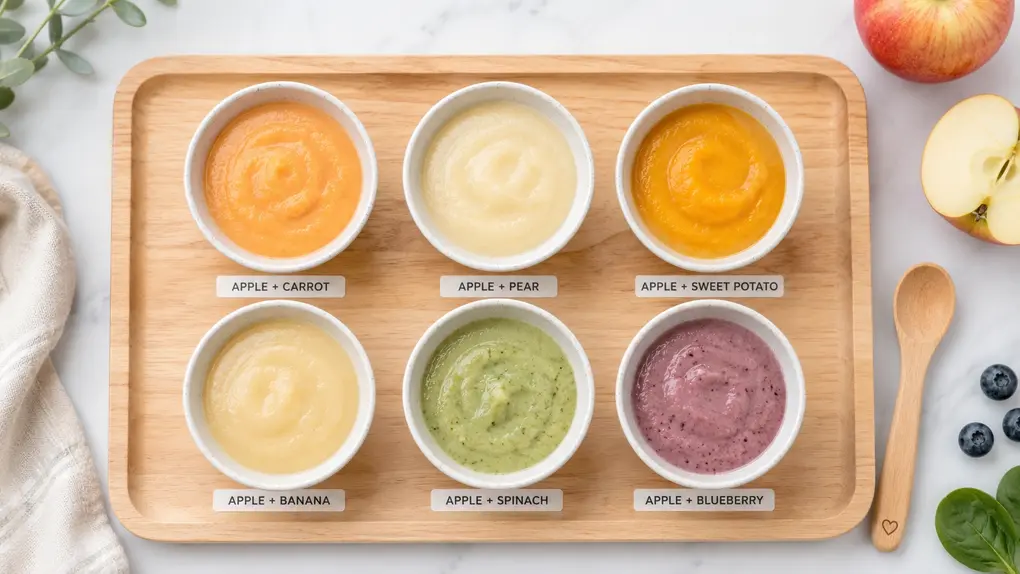
- Apple + Pear: both sweet, both digestive-friendly. A very gentle first combination. 4 months+
- Apple + Carrot: beta-carotene from carrot, vitamin C from apple to boost absorption. 5 months+
- Apple + Sweet Potato: earthy sweetness, rich in both beta-carotene and fiber. 5 months+
- Apple + Banana: thick, creamy, naturally very sweet. Great for babies who need more calories. 6 months+
- Apple + Spinach: vitamin C in apple boosts iron absorption from spinach. A clever nutritional pairing. 6 months+
- Apple + Blueberry: antioxidant-rich, beautiful purple color, slightly tangy. 6 months+
- Apple + Cinnamon: classic flavor combination, safe from 7 months in small amounts
- Apple + Oatmeal: fiber from both sources, iron from oats. Filling breakfast for 6 months+
For more mixing ideas, check these baby food combo purees for 6–12 months.
Combination Comparison Table: Apple Puree for Baby
| Combo | Best Age | Key Benefit | Flavor Profile |
| Apple + Pear | 4 months+ | Double fiber, very gentle | Sweet, mild |
| Apple + Carrot | 5 months+ | Beta-carotene + vitamin C boost | Sweet, slightly earthy |
| Apple + Sweet Potato | 5 months+ | Beta-carotene, fiber, filling | Warm, sweet |
| Apple + Banana | 6 months+ | Calories, potassium, thick | Very sweet, creamy |
| Apple + Spinach | 6 months+ | Iron absorption boost | Mild green, sweet |
| Apple + Blueberry | 6 months+ | Antioxidants, vitamin C | Tangy, sweet |
| Apple + Oatmeal | 6 months+ | Iron, soluble fiber | Warm, filling |
Storage Instructions
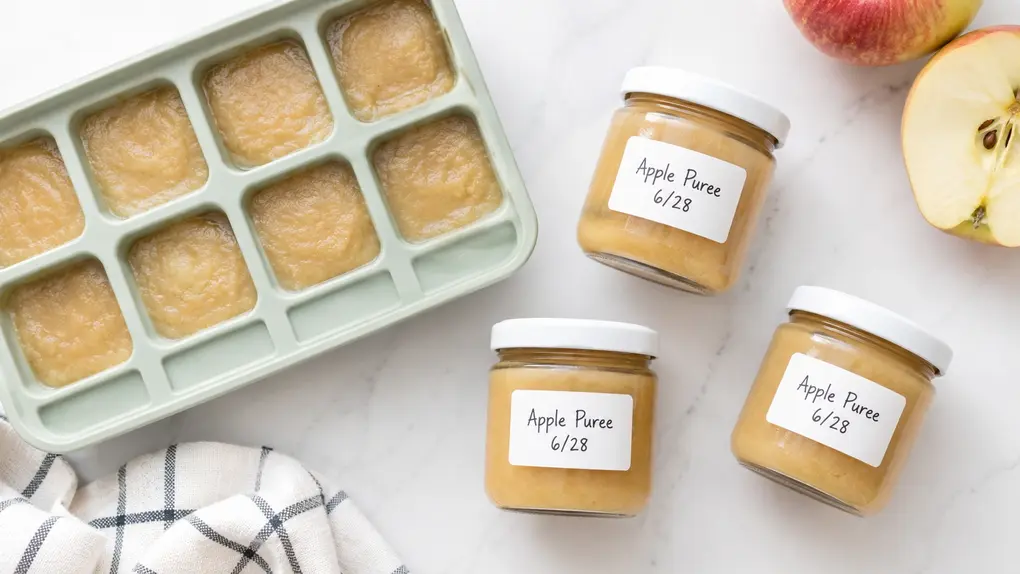
Refrigerator:
Store in an airtight glass jar for up to 3 days. Apple puree oxidizes and browns in color over time this is normal and does not affect safety or flavor. A small squeeze of fresh lemon juice stirred in before storing slows browning naturally.
Freezer:
Apple puree freezes exceptionally well. Pour into a silicone ice cube tray right after making. Freeze for 4–6 hours until solid, then transfer to a labeled zip-lock freezer bag.
- Freezer life: Up to 3 months
- Each cube = approximately 1–2 tablespoons (one small serving)
- Label with date and variety of apple used
Ice Cube Tray Method
This is the most practical storage system. Two medium apples typically produce 8–12 ice cube portions. That is nearly two weeks of daily servings, ready from the freezer at any time.
Never refreeze thawed apple puree. Thaw only what your baby will eat in one feeding.
Browning tip:
Apple puree turns slightly brown in the fridge due to oxidation the same reason cut apples brown. It is completely safe to eat. If the color bothers you, stir in 3–4 drops of fresh lemon juice before storing.
How to Reheat
From the refrigerator:
Place the sealed glass jar in a bowl of warm water for 5–8 minutes. Stir well before serving. Test temperature on the inside of your wrist it should feel neutral, not warm.
From frozen:
Thaw overnight in the refrigerator. Then use the warm water method to bring to room temperature or slightly warm. Do not microwave directly from frozen.
Microwave method (refrigerated only):
Heat on 50% power in 10-second bursts. Stir very thoroughly between each burst microwaves create uneven hot spots that are hard to detect in thick puree. Always test temperature before giving to baby.
Stovetop method:
Place puree in a small saucepan over the lowest heat setting. Stir constantly for 1–2 minutes until just warm. Remove from heat, let cool for 2 minutes, and test temperature before serving.
Cold serving:
Many babies accept apple puree at room temperature without any reheating at all especially in warm weather. This is completely safe.
Can Babies Eat Apple Puree?
Yes, puree is one of the safest and most widely recommended first foods for babies.
Here is the complete picture:
- Safe starting age: 4–6 months with pediatrician approval for solids
- Allergy risk: Apples are not a top-9 allergen. However, some babies with oral allergy syndrome (typically older children and adults with birch pollen allergy) may react to raw apple proteins. Cooked apple puree is extremely unlikely to cause this reaction since cooking breaks down the relevant proteins.
- Digestive effects: Apple puree generally supports healthy bowel movements. Some babies experience slightly looser stools initially this is normal and resolves as the gut adjusts.
- Acidity: Apples are mildly acidic. For most babies this is not an issue, but if your baby has reflux, check with your pediatrician before introducing.
Natural sugars: Apple puree contains natural fructose. This is fine in appropriate serving sizes typically 2–4 tablespoons for younger babies, up to ½ cup for older babies as part of a varied meal.
Pediatric Guidance:
The American Academy of Pediatrics (AAP) identifies fruits like apples as appropriate first foods when introduced after 4–6 months with a pediatrician’s go-ahead. Apple is specifically noted as a low-allergen, easy-to-digest option. Introduce as a single ingredient first, wait 3–5 days, then introduce the next new food.
Serving Suggestions
- Alone: start with 1–2 teaspoons of plain apple puree. Observe for 3–5 days before mixing.
- Mixed with baby oatmeal: apple oatmeal is one of the most popular first breakfast combinations for babies 6 months+
- Stirred into plain full-fat yogurt: for babies 8 months and older, the combination of probiotics and fiber is excellent
- Mixed with vegetable purees: apple is the gentlest way to introduce more bitter vegetables like spinach or broccoli
- As a natural sweetener for savory purees: a spoonful of apple puree stirred into lentil or carrot puree makes a skeptical baby much more interested
- Finger food transition (10–12 months): Serve very soft, finely diced cooked apple pieces as a finger food once your baby has good grasping skills
Expert Tips & Mistakes to Avoid
Mistake 1. Choosing the wrong apple variety:
Granny Smith apples are too tart for most babies. Red Delicious apples look beautiful but have grainy, dry flesh that produces a poor-quality puree. Fuji, Gala, or Golden Delicious give the best results for young babies.
Mistake 2. Over-steaming:
More than 12 minutes of steaming produces a brown, mushy puree that loses more vitamin C and looks unappetizing. Eight to ten minutes is the sweet spot soft enough to blend perfectly, short enough to preserve nutrients and color.
Mistake 3. Adding too much water:
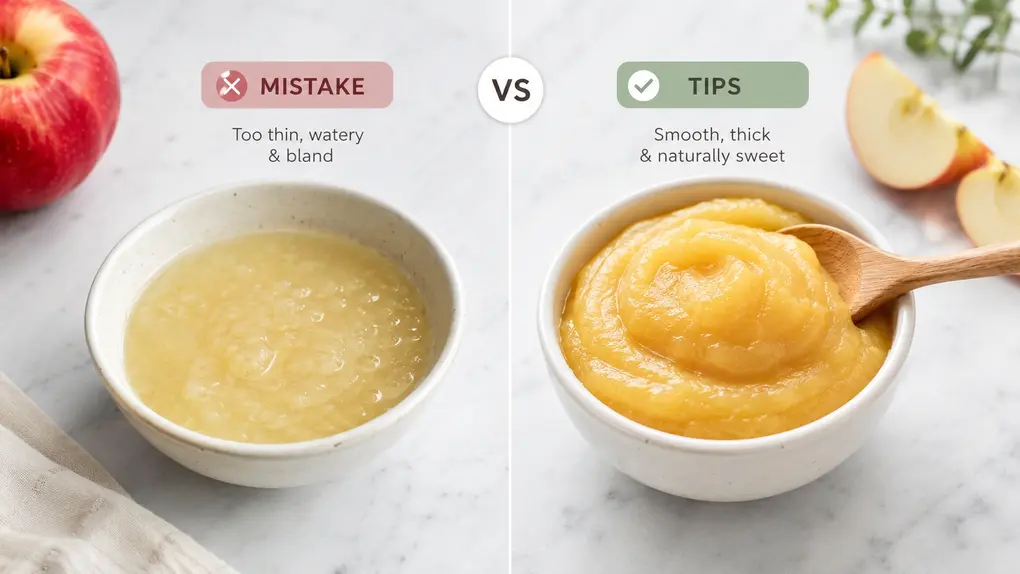
Apple puree made with too much added water is thin, watery, and flavorless. Always start with 2 tablespoons of liquid and add more only as needed. Using the steaming water rather than plain tap water also adds flavor.
Mistake 4. Skipping the peeling step for young babies Apple:
Apple skin contains insoluble fiber that does not blend completely, leaving tiny fibrous threads. For babies under 7–8 months, always peel. From 8 months onward, leaving the skin on adds quercetin and additional fiber if your blender is powerful enough.
Mistake 5. Storing in plastic containers:
Apple puree is mildly acidic. Acidic foods stored in plastic containers can pick up a plastic taste and potentially leach compounds from lower-quality plastics. Glass jars are always the better choice for baby food storage.
Mistake 6. Introducing apple too fast:
Apple is safe and low-allergen, but the “wait 3–5 days” rule still applies. Not because apple is high-risk, but because if a reaction does occur, you need to know which food caused it. Introduce one new food at a time.
Recipe Card
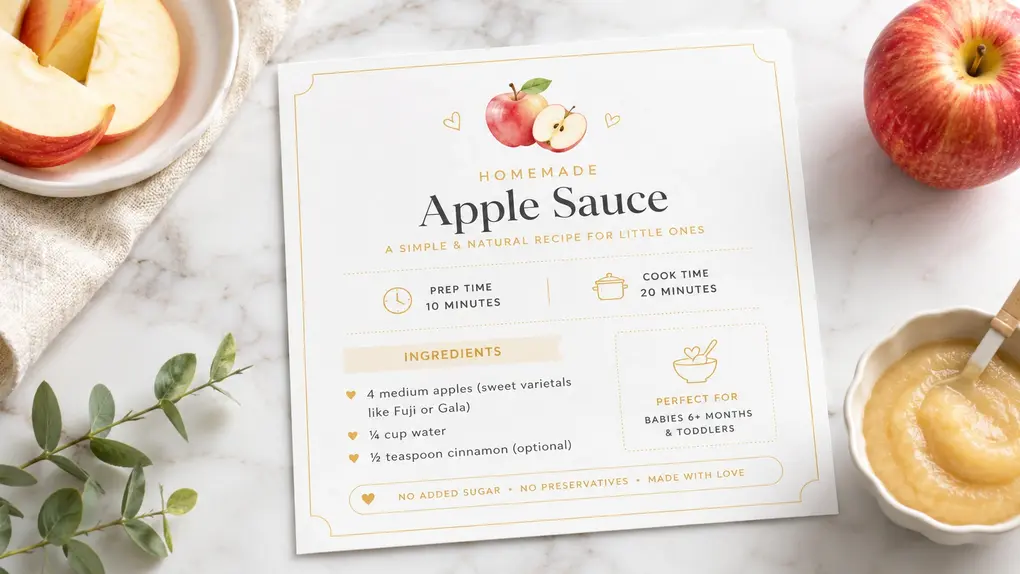
🍎 Apple Puree for Baby
Prep Time: 5 minutes Cook Time: 10 minutes Cool Time: 5 minutes Total Time: 20 minutes Servings: 8–12 small portions (one standard ice cube tray) Suitable Age: 4–6 months and up (with pediatrician approval for solids)
Not sure your baby is ready? Read this guide on signs your baby is ready for eating real food before starting apple puree.
Ingredients:
- 2 medium apples (Fuji, Gala, or Golden Delicious recommended)
- 2–4 tablespoons water for blending (use steaming water)
Optional:
- Breast milk or formula (creamier texture)
- 3–4 drops fresh lemon juice (prevents browning during storage)
- ¼ ripe pear (added fiber and sweetness)
- Tiny pinch of cinnamon (babies 7 months+ only)
Instructions:
- Wash apples under cold running water for 30–45 seconds.
- Peel completely using a vegetable peeler.
- Core, quarter, and chop into 1-inch pieces.
- Place in steamer basket over boiling water. Cover and steam for 8–10 minutes until completely soft.
- Remove from heat and cool for 5–10 minutes.
- Add apple pieces and 2 tablespoons of steaming water to blender.
- Blend on high for 60 seconds until very smooth.
- Check consistency add more liquid one tablespoon at a time if needed.
- Strain through a fine mesh strainer for babies under 7 months.
- Serve immediately or pour into ice cube tray and freeze.
Notes:
- Always get pediatrician approval before starting solids at 4 months
- Introduce as a single ingredient first wait 3–5 days before mixing with other foods
- Never add sugar, honey, salt, or any sweetener
- Apple puree turns slightly brown in the refrigerator — this is safe, not spoilage
- Stir in 3–4 drops of lemon juice before storing to slow browning
- Refrigerate for up to 3 days or freeze for up to 3 months
Estimated Nutrition Per Serving (approx. 2 tablespoons, plain apple puree):
| Nutrient | Per Serving |
| Calories | ~13 kcal |
| Carbohydrates | 3.5 g |
| Natural Sugars | 2.7 g |
| Dietary Fiber | 0.6 g |
| Vitamin C | ~1.1 mg |
| Potassium | ~26 mg |
| Vitamin K | ~0.6 mcg |
| Folate | ~0.7 mcg |
Conclusion
Apple puree for baby earns its status as the most popular first food for very good reasons. It is safe, gentle, naturally sweet, nutritious, and easy enough for any parent to make on a busy weekday morning. The key is choosing the right variety, steaming rather than boiling, using the cooking water to blend, and storing correctly so nothing goes to waste.
Start with just 1–2 teaspoons, watch your baby’s response over a few days, and then start exploring the combinations in this guide. Apple works beautifully with almost every other fruit and vegetable making it one of the most useful tools in your early feeding toolkit.
Once your baby accepts apple puree, explore more easy fruit purees for 6 month old babies.
Disclaimer
This article is for informational and educational purposes only. It is not a substitute for advice from a licensed pediatrician or registered dietitian. All babies develop differently the appropriate age for starting solids, the right texture for your baby’s stage, and suitable serving sizes should always be confirmed with your child’s healthcare provider. If your baby shows signs of an allergic reaction including hives, swelling, vomiting, or difficulty breathing after eating apple puree, stop feeding immediately and contact your doctor or emergency services. The nutritional data in this article is sourced from the USDA and is approximate. Actual values vary by apple variety, ripeness, and preparation method.
FAQ’S
These are the most commonly searched questions about apple puree for baby on Google, Reddit, Quora, and People Also Ask:
1. Can I freeze homemade apple puree for my baby?
Yes, Apple puree freezes very well and is one of the most freezer-friendly baby foods you can make. Pour into a silicone ice cube tray right after making, freeze until solid (about 4–6 hours), then transfer the frozen cubes to a labeled zip-lock freezer bag. Frozen apple puree stays good for up to 3 months. Thaw overnight in the refrigerator and never refreeze after it has been thawed. Frozen apple puree may look slightly browner than fresh this is purely cosmetic and does not affect taste or safety.
2. Do I need to peel apples before making baby puree?
For babies under 7–8 months, yes, peel the apple completely. Apple skin contains insoluble fiber that does not fully blend even in a good blender, leaving fibrous bits that are not appropriate for young babies. Apple skin also concentrates pesticide residue, especially on non-organic apples. From around 8–9 months, once your baby handles more texture, leaving the skin on (especially with a powerful blender) is nutritionally beneficial skin adds quercetin, extra fiber, and additional antioxidants.
3. Which apples are best for baby puree?
Fuji, Gala, and Golden Delicious apples produce the smoothest, sweetest, most baby-friendly puree. They steam to a very soft texture and blend into a naturally sweet puree without tartness. Avoid Granny Smith for young babies it is too tart. Avoid Red Delicious — the flesh is grainy and dry, producing a poor texture. Honeycrisp and Pink Lady work well from about 6 months and produce a slightly more complex flavor profile.
4. How long does homemade apple puree last in the fridge?
Properly stored in an airtight glass jar, homemade apple puree lasts up to 3 days in the refrigerator. It will turn slightly brown due to natural oxidation this is normal and does not mean the puree has gone bad. A few drops of fresh lemon juice stirred in before storing slows this browning significantly. Always smell the puree before serving if anything smells off or fermented, discard it regardless of how many days have passed.
5. Can I add cinnamon or spices to apple puree for my baby?
A tiny pinch of ground cinnamon is safe for babies from around 6–7 months onward, once apples have been introduced and accepted without issue. Cinnamon is the most appropriate spice to introduce first it is mild and familiar. Introduce it separately so you can identify any reaction. Skip nutmeg, cloves, chili, pepper, and any spice blends. Never add salt, sugar, or honey. Vanilla extract (pure, not imitation) is another option from around 7–8 months use just a drop.