Carrot Puree for Baby: 5 Easy Tips for Silky Smooth Results
Some first foods are just classics and carrot puree for baby is right at the top of that list.
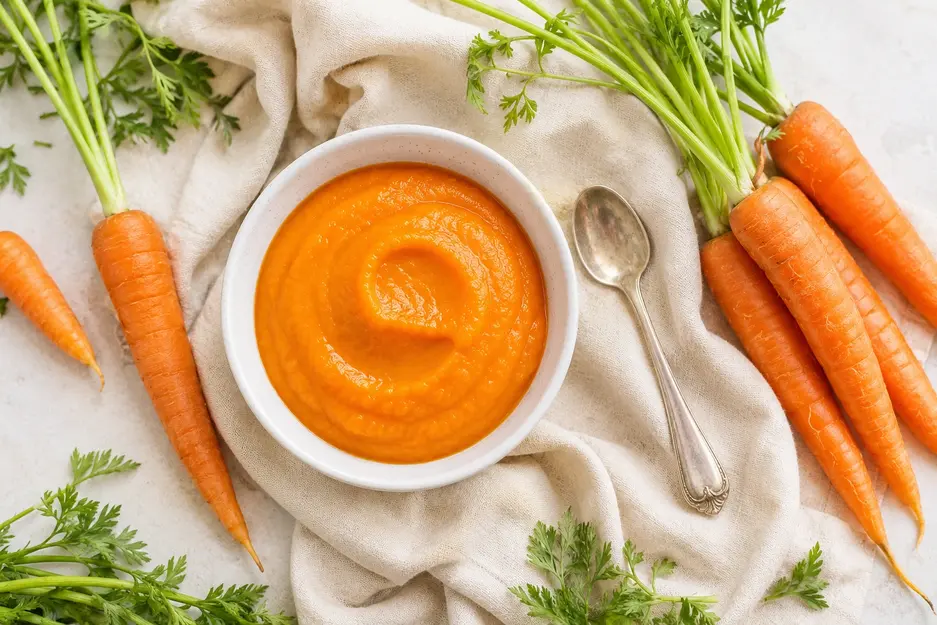
Carrots are naturally sweet, easy to digest, and simple enough that even a first-time parent gets it right on the very first try. No complicated steps. No expensive equipment. Just carrots, a little liquid, and 20 minutes. What makes carrots stand out among all vegetables is their beta-carotene a powerful antioxidant your baby’s body converts into vitamin A. That vitamin A supports eye development, immune strength, and healthy skin during one of the fastest growth periods of your baby’s life.
This guide covers everything: how to pick the right carrots, the exact steaming time that keeps nutrients intact, storage rules that actually work, and flavor combinations your baby will grow into.
Just starting solids? See our first foods for baby at 6 months guide for an easy place to begin.”
Suitable age: Carrot puree is safe to introduce from 4 to 6 months once your pediatrician approves solid foods
Why You’ll Love This Puree
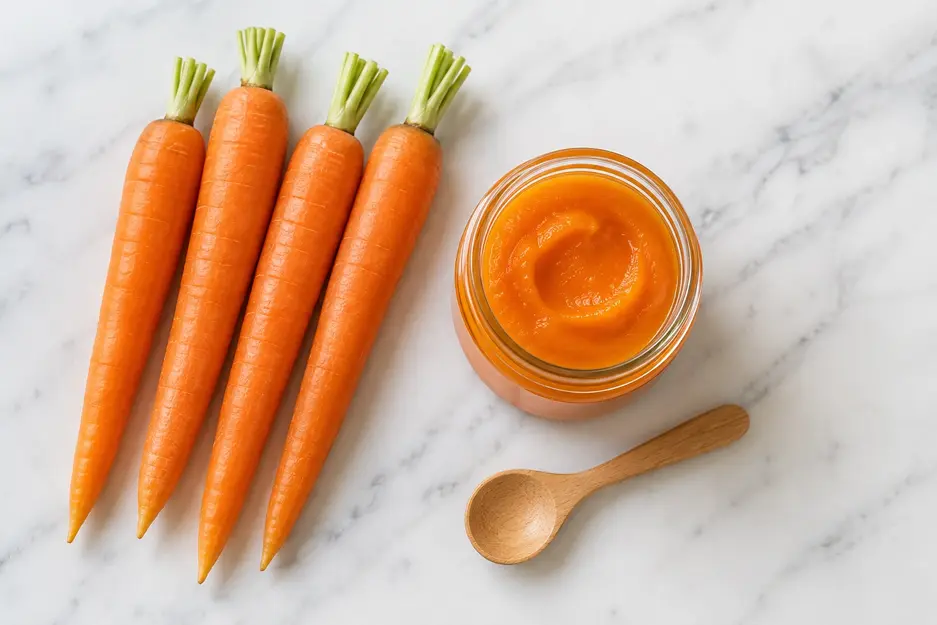
- One ingredient: just carrots, nothing extra needed to start
- Naturally sweet: one of the most accepted first vegetables globally
- Ready in 20 minutes: faster than any store-bought option
- Freezes perfectly: batch cook, freeze in cubes, sorted for weeks
- Budget-friendly: a bag of carrots costs almost nothing
- Pairs with everything: apple, lentil, sweet potato, pea, ginger, and more
Health Benefits of Carrot Puree for Baby
Carrot puree for baby is not just orange and pretty the nutritional profile is genuinely strong for a single vegetable.
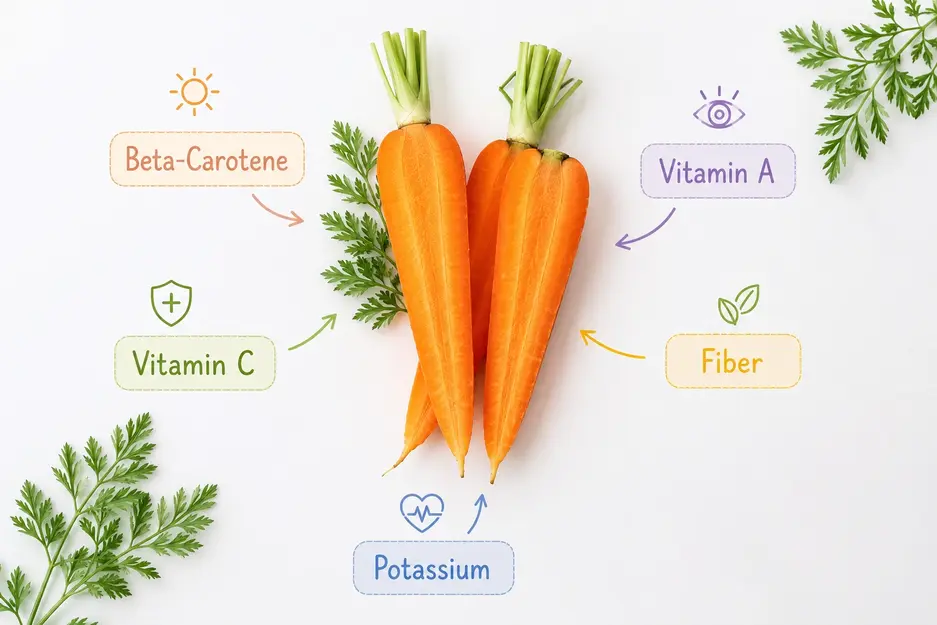
Key Nutrients in Carrots (per 100g, cooked)
| Nutrient | Amount | Baby Benefit |
| Beta-Carotene | 8,285 mcg | Converts to Vitamin A eye and immune health |
| Vitamin A (RAE) | 852 mcg | Vision development, skin, immunity |
| Vitamin C | 3.6 mg | Iron absorption, immune support |
| Potassium | 235 mg | Heart and muscle function |
| Fiber | 3 g | Healthy digestion, constipation prevention |
| Folate | 13 mcg | Cell growth and DNA formation |
Why beta-carotene matters:
Beta-carotene is a fat-soluble antioxidant. Your baby’s body converts it into vitamin A only as needed no risk of toxicity from plant sources. This makes carrots one of the safest high-vitamin-A foods for babies.
Honest note on nitrates:
Homemade carrot puree made from fresh supermarket carrots is considered safe for babies from 6 months onward, according to the European Food Safety Authority (EFSA). For babies under 4 months, skip all purees which aligns with the general AAP guideline of not starting solids before 4 to 6 months.
Ingredients You’ll Need
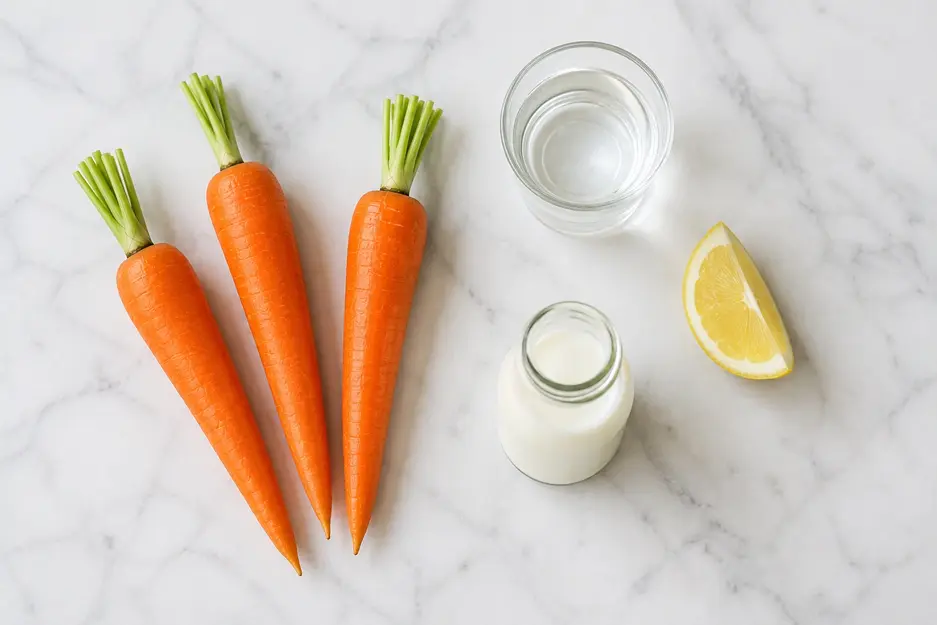
Main Ingredient
2–3 medium fresh carrots (200–250g) yields 6 to 8 baby servings
Optional Add-Ins
- 2–4 tablespoons water, breast milk, or formula
- Pinch of cinnamon (7 months+)
- Pinch of ground ginger (8 months+)
Never add: salt, sugar, honey, butter, or cow’s milk for babies under 12 months.
Ingredient Notes & Buying Tips
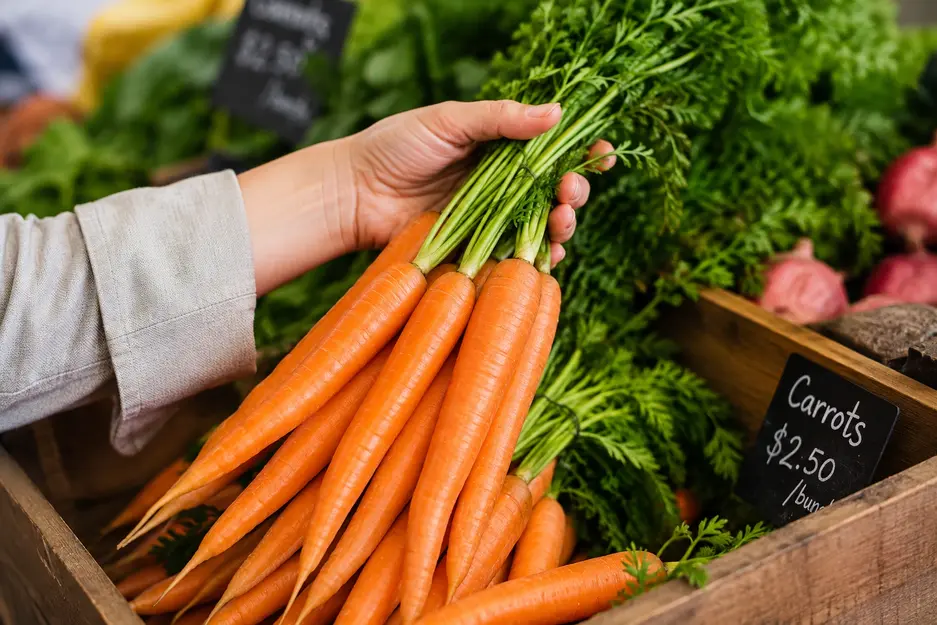
Choosing fresh carrots:
Pick ones that are firm, bright orange, and smooth. Avoid pale or bendy carrots — they are old, taste flat, and contain less beta-carotene.
Baby carrots vs regular:
Both work. Regular carrots have more flavor. Baby carrots are convenient but sometimes processed check the label for additives.
Organic vs regular:
Carrots are not on the EWG Dirty Dozen list, so pesticide residue is generally lower than most vegetables. Regular carrots are a safe, budget-friendly choice.
Frozen carrots:
Yes they work very well. Frozen carrots are blanched before packaging, so they steam quickly and blend smoothly. Thaw fully before use.
Kitchen Equipment Needed
- Steamer basket and pot
- Blender or food processor
- Vegetable peeler and knife
- Fine mesh strainer (optional for babies under 6 months)
- Silicone ice cube tray
- Airtight glass jars
Step-by-Step Instructions
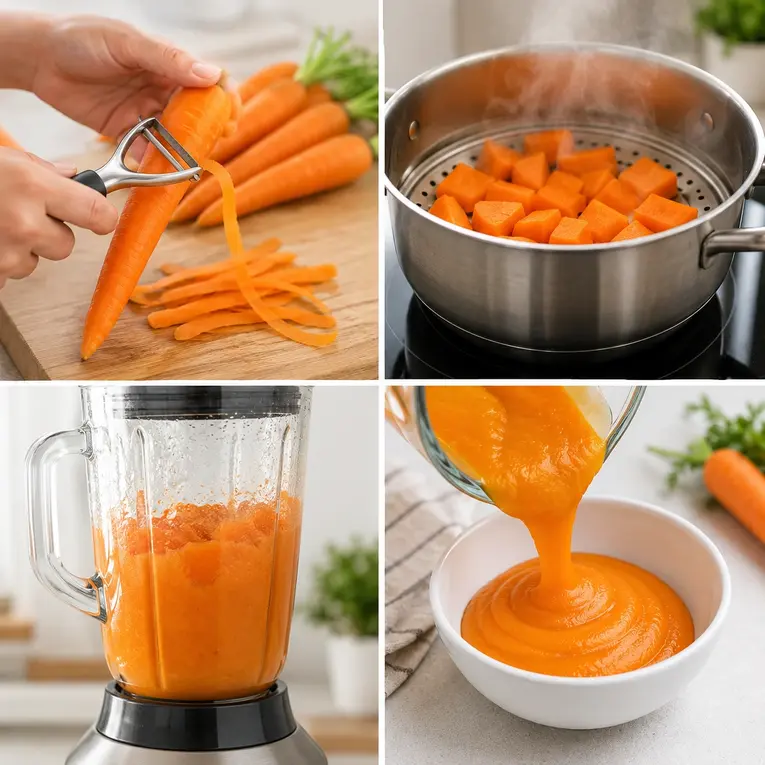
Step 1. Wash and Peel
Scrub under cold water. Peel with a vegetable peeler. Trim both ends.
Step 2. Chop
Cut into even 1-inch pieces. Uniform size means even cooking, which gives you a smoother puree. Uneven chops are the number one reason carrot purees come out lumpy.
Step 3. Steam
Add 2 inches of water to a pot. Bring to a boil. Place carrot pieces in a steamer basket above the water. Cover and steam for 10 to 12 minutes until a fork goes through with zero resistance.
Why steam instead of boil? Boiling leaches water-soluble nutrients directly into the water. Steaming keeps them in the carrot. A 2019 study in the Journal of Food Science confirmed steaming retains significantly more beta-carotene than boiling.
Step 4. Cool
Let carrots cool 5 minutes before blending. Hot steam inside a sealed blender can cause the lid to blow off.
Step 5. Blend
Add pieces and 2 tablespoons of liquid to blender. Blend on high for 90 seconds until completely smooth.
Step 6. Adjust Consistency
Too thick? Add liquid one tablespoon at a time. Too thin? Rare with carrots, but if it happens, blend uncovered briefly to release steam.
Step 7. Strain (Under 6 Months Only)
Press through a fine mesh strainer for very young babies. By 6 months, most babies handle unsifted carrot puree without any issue.
Texture by Baby’s Age
| Age | Texture | How to Get There |
| 4–6 months | Very smooth, thin | Blend fully, strain, add extra liquid |
| 6–8 months | Smooth, medium thickness | Blend well, skip straining |
| 8–10 months | Slightly chunky | Blend briefly, leave small soft pieces |
| 10–12 months | Rough mash | Fork-mash instead of blending |
Recipe Tips
- Cut evenly: the single biggest factor for smooth texture
- Do not over-steam: beyond 13 minutes, natural sweetness fades and color dulls
- Reserve the steaming water: it contains nutrients and thins perfectly
- Blend for 90 seconds minimum: shorter blending leaves fibrous bits
- Taste it yourself: fresh carrot puree should taste naturally sweet, not flat
Flavor Combinations & Variations
Once your baby has had plain carrot puree for 3 to 5 days without reactions, these combinations add variety and extra nutrition:
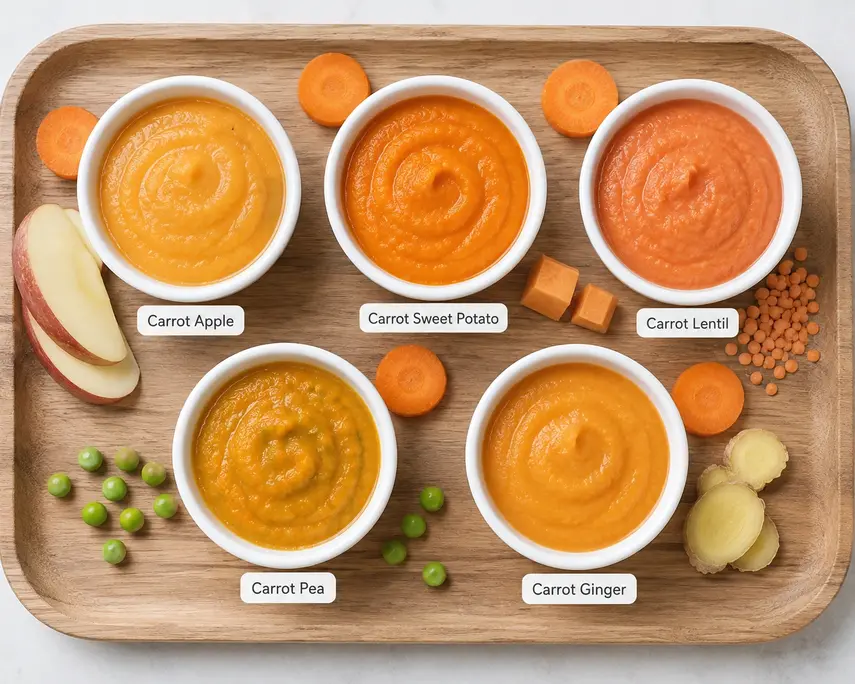
- Carrot + Apple: vitamin C boosts beta-carotene absorption, bright flavor
Want a naturally sweeter pairing? Try our apple puree for baby recipe with carrot.
- Carrot + Sweet Potato: double beta-carotene, thick and filling
- Carrot + Lentil: iron and vitamin A together, a complete mini-meal at 7 months+
- Carrot + Pea: protein meets beta-carotene, great color contrast
- Carrot + Parsnip: two mild root vegetables, gentle on digestion
- Carrot + Ginger: tiny pinch at 8 months+ supports digestion
- Carrot + Mango: tropical beta-carotene duo, both naturally orange
Carrot Puree for Baby Combination Comparison Table:
| Combo | Best Age | Key Benefit | Texture |
| Carrot + Apple | 6 months+ | Vitamin C boosts iron absorption | Smooth, runny |
| Carrot + Sweet Potato | 6 months+ | Double Vitamin A, very filling | Thick, smooth |
| Carrot + Lentil | 7 months+ | Iron + protein + beta-carotene | Medium thick |
| Carrot + Pea | 6 months+ | Protein meets Vitamin A | Smooth |
| Carrot + Ginger | 8 months+ | Digestive support, new flavor | Smooth |
| Carrot + Mango | 7 months+ | Tropical Vitamin A boost | Silky smooth |
Storage Instructions
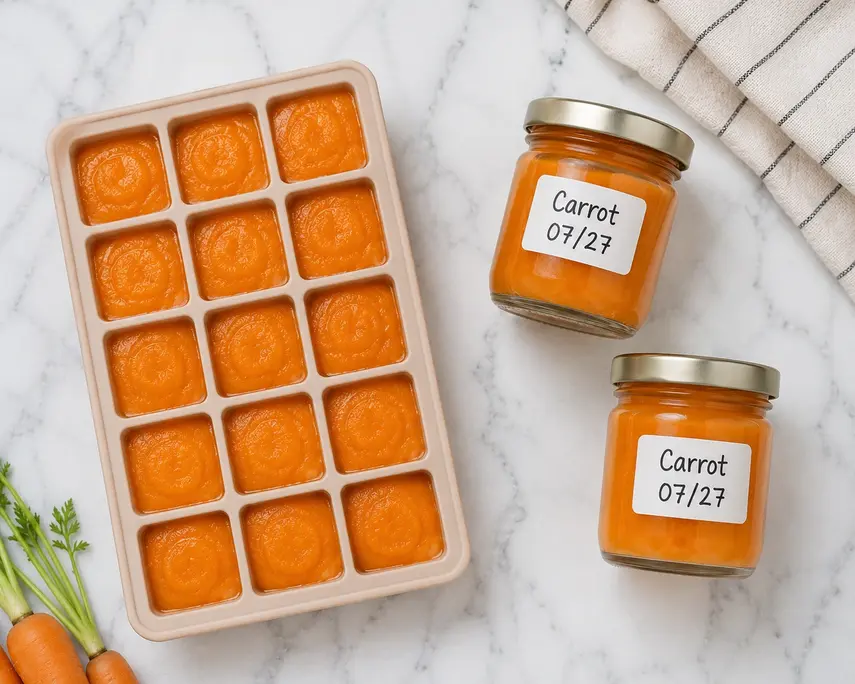
Refrigerator: Airtight glass jar, up to 3 days. Always use a clean spoon double-dipping introduces bacteria that shorten shelf life.
Freezer: Pour into silicone ice cube trays right after cooking. Freeze 4 to 6 hours until solid. Transfer cubes into a labeled freezer bag.
- Freezer life: Up to 3 months
- Each cube = approximately 1 to 2 tablespoons (one baby serving)
Never refreeze thawed carrot puree.
How to Reheat
From refrigerator: Place jar in a bowl of warm water for 5 to 8 minutes. Stir well. Test on your wrist.
From frozen: Thaw overnight in the refrigerator, then warm using the water bath method above.
Microwave (refrigerated only): 10-second bursts at 50% power. Stir between every burst. Always stir thoroughly before testing microwaves create uneven hot spots that can burn baby’s mouth.
Can Babies Eat Carrot Puree?
Yes, one of the safest and most recommended first vegetables.
- Safe starting age: 4 to 6 months with pediatrician approval
- Allergy risk: Extremely low carrots are not a top allergen
- Carotenemia: Babies who eat large amounts of orange vegetables may develop a harmless yellow-orange tint to their skin. It looks alarming but is completely safe and fades when intake is balanced with other foods. The whites of the eyes stay white — if those also look yellow, contact your pediatrician
- Orange stools: Completely normal after eating carrots
- Start with 1 to 2 teaspoons and wait 3 to 5 days before trying a new food
Expert Tips & Mistakes to Avoid
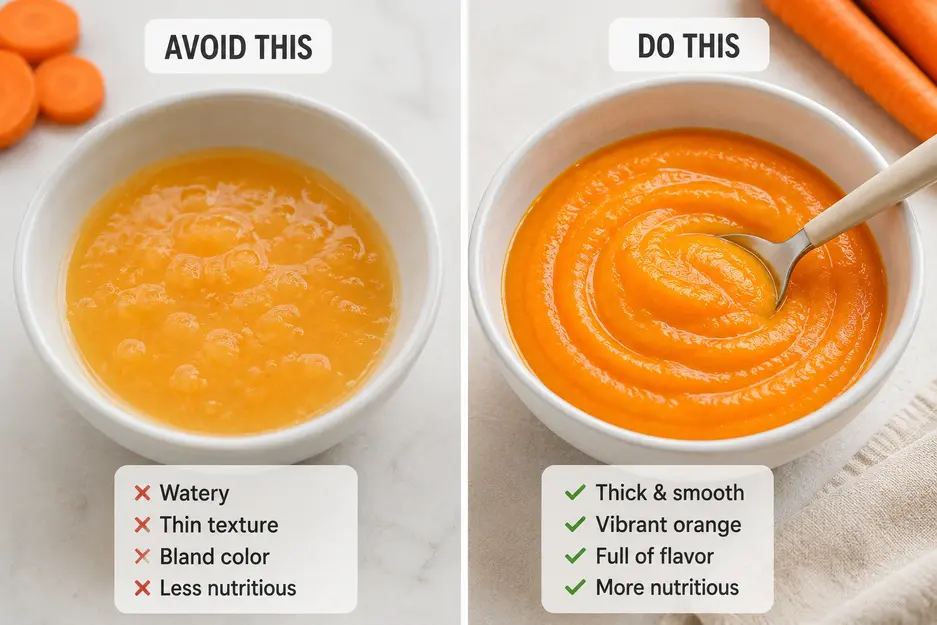
Uneven chopping: the most common reason puree has lumpy texture. Cut all pieces the same size.
Over-steaming: beyond 13 minutes, carrots lose their vibrant color and natural sweetness. Check at 10 minutes.
Blending hot: always cool 5 minutes first. Hot steam inside a sealed blender builds pressure fast.
Using old carrots: pale, bendy carrots = flat-tasting puree with less beta-carotene. Buy fresh and firm.
Too much liquid at once: add one tablespoon at a time. Over-thinning is very difficult to reverse.
Recipe Card
🥕 Carrot Puree for Baby
Prep Time: 5 min | Cook Time: 12 min | Total Time: 17 min Servings: 6–8 portions | Age: 4 to 6 months and up
Ingredients:
- 2–3 medium fresh carrots (200–250g), peeled and chopped into even 1-inch pieces
- 2–4 tablespoons water, breast milk, or formula
Optional: Pinch cinnamon (7 months+) · Pinch ground ginger (8 months+)
Instructions:
- Wash and peel carrots. Chop into even 1-inch pieces.
- Steam over boiling water for 10 to 12 minutes until fork-tender.
- Cool for 5 minutes.
- Blend on high for 90 seconds with 2 tablespoons liquid.
- Check consistency add liquid one tablespoon at a time if needed.
- Strain through fine mesh for babies under 6 months.
- Serve immediately or store using the guidelines above.
Notes: No salt, sugar, honey, or cow’s milk under 12 months · Introduce alone first for 3–5 days · Orange skin tint (carotenemia) is harmless
Estimated Nutrition Per Serving (~2 tablespoons, plain):
| Nutrient | Per Serving |
| Calories | ~18 kcal |
| Beta-Carotene | ~2,070 mcg |
| Vitamin A (RAE) | ~213 mcg |
| Fiber | ~0.75 g |
| Vitamin C | ~0.9 mg |
| Potassium | ~59 mg |
Conclusion
Carrot puree for baby earns its place as one of the most recommended first vegetables not because it is trendy, but because the science behind it is solid. Beta-carotene for eye development, fiber for digestion, potassium for muscle function all from one simple orange root vegetable.
Get the technique right even chops, the right steam time, enough blending and you will have a vibrant, silky puree that looks and tastes nothing like the pale paste inside store-bought jars.
Ready to move beyond single ingredients? Explore our baby food combo purees for more easy flavor pairings.
Disclaimer
This article is for informational purposes only and is not a substitute for advice from a licensed pediatrician or registered dietitian. Always consult your baby’s doctor before introducing new foods. Information here is based on current published guidelines from the AAP, EFSA, and USDA FoodData Central. These guidelines are updated periodically your doctor’s guidance takes priority.
FAQ’s
1. Can I freeze carrot puree for baby?
Yes carrot puree is one of the best purees for freezing. Pour into a silicone ice cube tray right after cooking, freeze for 4 to 6 hours until solid, then transfer cubes to a labeled freezer bag. Good for up to 3 months. Thaw only what your baby needs for one feeding and never refreeze.
2. Can I use frozen carrots to make baby puree?
Yes. Frozen carrots are blanched before packaging, so they steam quickly and blend smoothly. Thaw fully, steam for 3 to 4 minutes, then blend as normal. Nutritionally, they are very close to fresh.
3. Do I need to peel carrots for baby puree?
Yes always peel for baby puree. Carrot skin can carry residue, soil bacteria, and blends unevenly. Peeling takes 30 seconds and produces a smoother, cleaner result.
4. How long does homemade carrot puree last?
Refrigerator: up to 3 days in an airtight glass container. Freezer: up to 3 months in a labeled freezer bag. Always check for unusual smell or color before serving stored puree.
5. My baby’s skin turned orange-yellow after eating carrot puree is that normal
Yes this is carotenemia, a completely harmless condition caused by beta-carotene building up in the skin. It fades within weeks when carrot intake is balanced. The whites of the eyes stay white if those also appear yellow, that is a different matter and warrants a call to your pediatrician.