
How to Make Spinach Puree for Baby (Safe, Smooth & Freezer-Ready)
Green is good but only when you get it right.
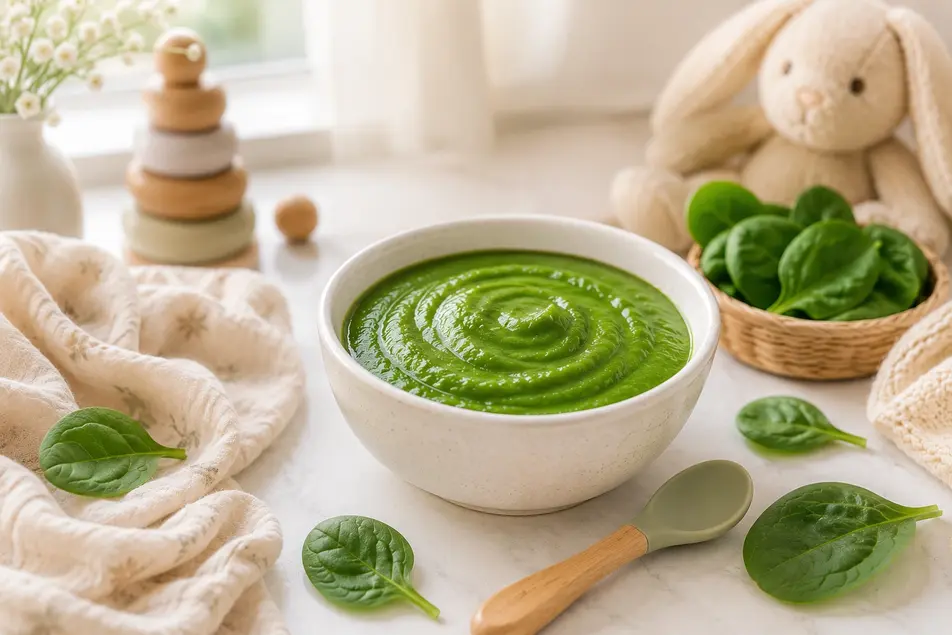
Spinach puree for baby is one of the most searched first foods online. And for good reason. Spinach is packed with iron, folate, and vitamins that growing babies need in their first year. Spinach also contains natural compounds called nitrates and oxalates, and if you prepare or store it the wrong way, you could reduce its benefits or cause unnecessary tummy trouble.
This guide covers everything honestly. No hype, no shortcuts. You will learn exactly how to make smooth, safe spinach puree. What age to start, how to freeze it properly, and why so many parents get this one wrong.
If you’re just starting solids, read our complete guide on First Foods for Baby at 6 Months before introducing spinach.
Suitable Age:
Spinach puree is generally introduced between 6 and 8 months, not at 4 months. The American Academy of Pediatrics (AAP) and the European Food Safety Authority (EFSA) both advise waiting until at least 6 months before giving nitrate containing vegetables like spinach to babies. This is the key thing most parents miss.
Why You’ll Love This Puree
- Takes under 10 minutes from start to finish
- Nutrient-dense: Iron, folate, vitamin K, and calcium in every spoonful
- Freezer-friendly: Make a full batch and freeze for up to 3 months
- Budget-friendly: A big bag of spinach costs very little and yields many servings
- Pairs with almost everything: Sweet potato, banana, apple, pear, or avocado
- Mild flavor: Much less bitter than other greens, making it easier for babies to accept
Health Benefits of Spinach Puree for Baby
Spinach is not just a color on a plate. It delivers real, science backed nutrition for growing babies.
Key Nutrients in Spinach (per 100g, cooked):
| Nutrient | Amount | Baby Benefit |
| Iron | 3.57 mg | Red blood cell production, brain development |
| Folate | 146 mcg | Neural tube support, DNA synthesis |
| Vitamin K | 494 mcg | Bone strength, blood clotting |
| Vitamin A (as beta-carotene) | 469 mcg RAE | Eye development, immune function |
| Calcium | 136 mg | Bone and teeth formation |
| Vitamin C | 9.8 mg | Boosts iron absorption |
| Magnesium | 87 mg | Muscle and nerve function |
Why these nutrients matter for your baby:
Iron is one of the most critical nutrients for infants, especially after 6 months when breast milk alone no longer meets the growing demand. Spinach contains non heme iron (plant-based iron). Pairing it with a vitamin C source like a few drops of orange juice or a fruit puree significantly increases how much iron your baby actually absorbs.
Folate supports healthy brain and spinal cord development. Babies who get adequate folate in early life show better cognitive outcomes in studies published in the American Journal of Clinical Nutrition (2017).
Vitamin K is important for blood clotting and bone mineralization. Spinach is one of the richest plant sources of vitamin K available.
Vitamin A (from beta-carotene in spinach) supports healthy eye development and strengthens the immune system during a period when babies are most vulnerable.
A word of honest caution:
Spinach also contains oxalates, which can bind to calcium and iron, reducing absorption. This is a real nutritional limitation cooking spinach reduces oxalate content significantly, which is one reason steaming before pureeing is strongly recommended over raw blending.
Ingredients You’ll Need
Main Ingredient
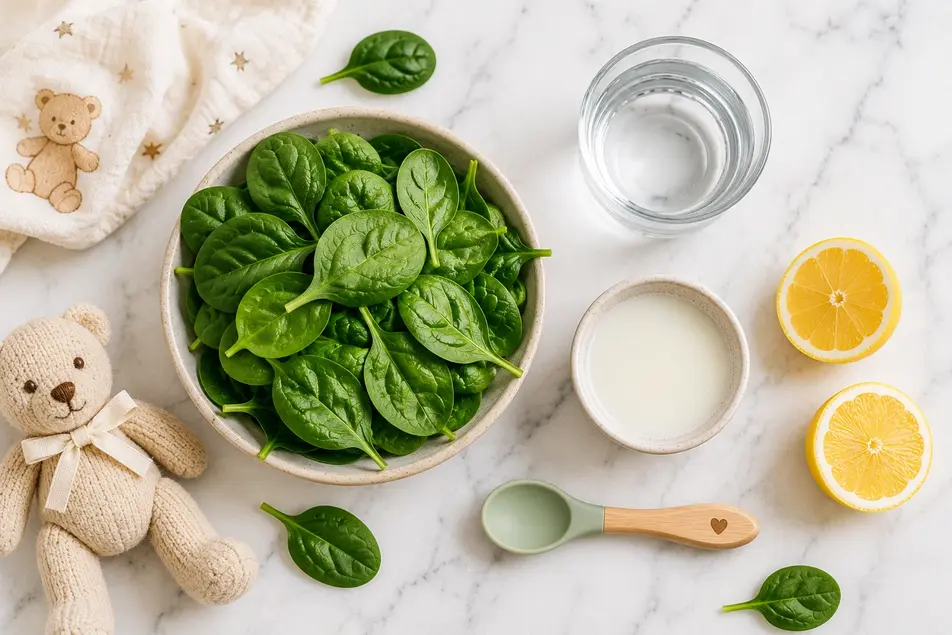
- 1–2 cups (30–60g) fresh baby spinach leaves OR thawed frozen spinach
Optional Add-Ins
- 2–4 tablespoons water (for blending)
- Breast milk or formula (makes the puree creamier and more familiar)
- ¼ ripe banana or ¼ cup sweet potato puree (to balance the flavor)
- A few drops of fresh lemon juice (boosts iron absorption through vitamin C)
- Plain full-fat yogurt (for babies 8 months and older)
Do not add: salt, sugar, honey, butter, or any seasoning for babies under 12 months.
Ingredient Notes & Buying Tips
Choosing Fresh Spinach
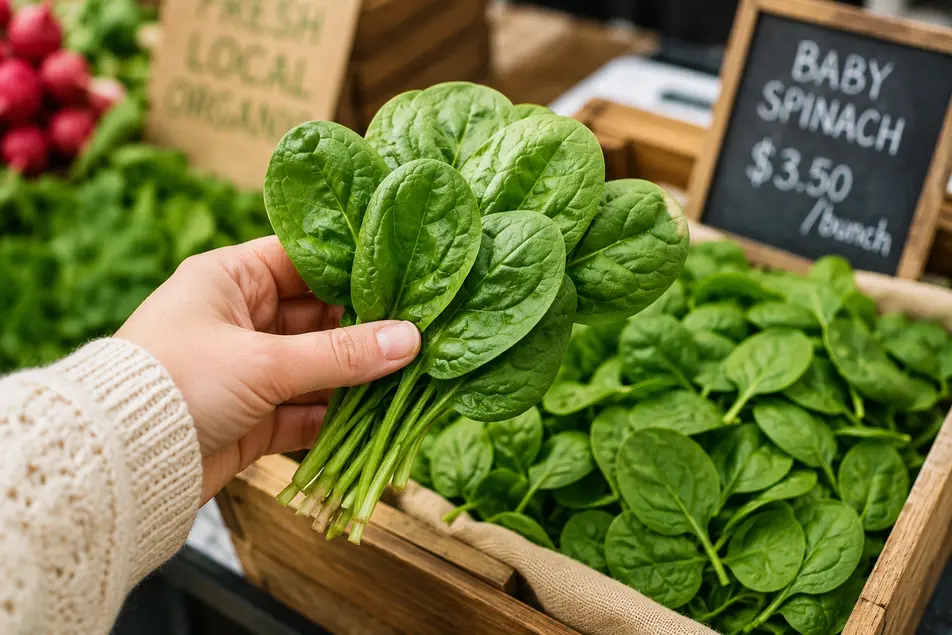
- Look for dark, vibrant green leaves with no yellowing or wilting
- Leaves should feel crisp and firm, not slimy or damp
- Avoid bags with any black spots or a strong smell
- Baby spinach (small, tender leaves) blends much smoother than mature spinach and has a milder flavor ideal for puree
Organic vs. Regular
Spinach consistently appears on the EWG Dirty Dozen list, meaning it carries higher pesticide residue than most vegetables. For baby food specifically, organic spinach is strongly recommended. If organic is not accessible, wash thoroughly under cold running water, rubbing leaves gently for at least 45 seconds.
Fresh vs. Frozen
Frozen spinach is pre-washed, pre-blanched, and nutritionally comparable to fresh. For puree purposes, frozen spinach is actually a very practical choice it blends smoother, it is always available, and the blanching process has already reduced some of the nitrate content. Thaw fully before using and squeeze out excess water before blending.
The Nitrate Reality
Spinach naturally contains nitrates. According to the European Food Safety Authority, babies under 6 months should not eat spinach-based purees. After 6 months, spinach is safe in normal serving sizes. The key rules:
- Always cook spinach before pureeing (steaming or blanching reduces nitrates)
- Never reheat spinach puree more than once
- Store cooked spinach puree in the refrigerator for no more than 24 hours (not 3 days like most fruit purees) or freeze immediately
Kitchen Equipment Needed
You do not need anything expensive. Here is what works:
- Steamer basket or pot with lid for steaming or blanching
- Blender or food processor a standard blender works well, a high-powered blender like a Nutribullet gives the silkiest result
- Fine mesh strainer removes any fibrous bits for younger babies
- Ice cube tray silicone preferred for easy popping
- Airtight glass jars for safe short term refrigerator storage
- Slotted spoon for removing spinach from boiling water
Step by Step Instructions
Step 1. Wash
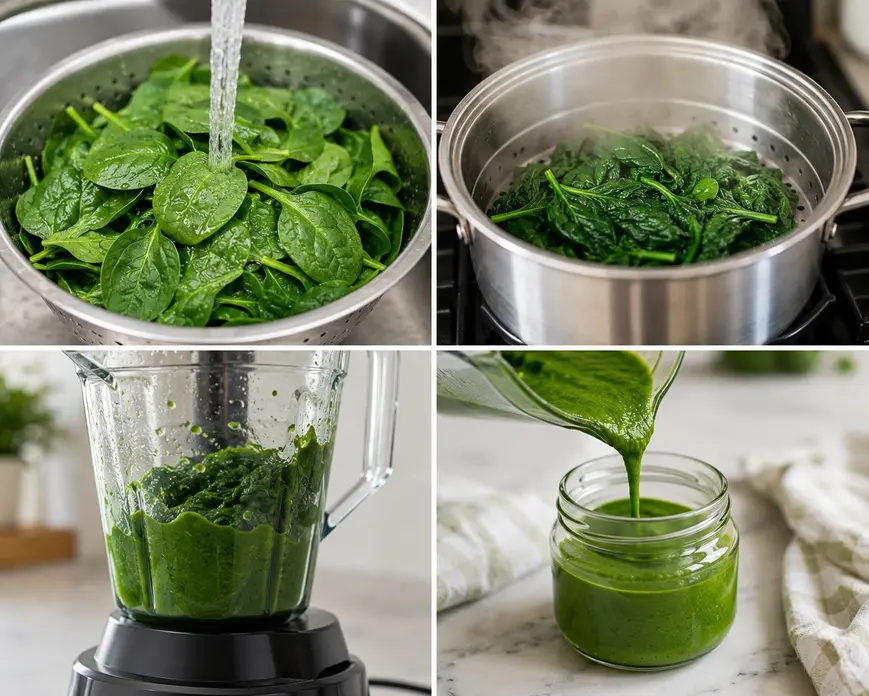
Place spinach leaves in a colander. Rinse under cold running water for at least 45 seconds. Even pre-washed bags benefit from a second rinse.
Step 2. Steam (Do Not Skip This)
Add 1to 2 inches of water to a pot. Bring to a boil. Place spinach in a steamer basket over the boiling water. Cover and steam for 3 to 4 minutes until leaves are fully wilted and bright green.
Alternatively, blanch in boiling water for 2 minutes, then immediately transfer to ice water to stop cooking (this preserves color and reduces nitrates).
Why cooking matters: Raw spinach is harder to digest for babies, has higher oxalate content, and a stronger, more bitter taste. Steaming solves all three issues.
Step 3. Cool & Squeeze
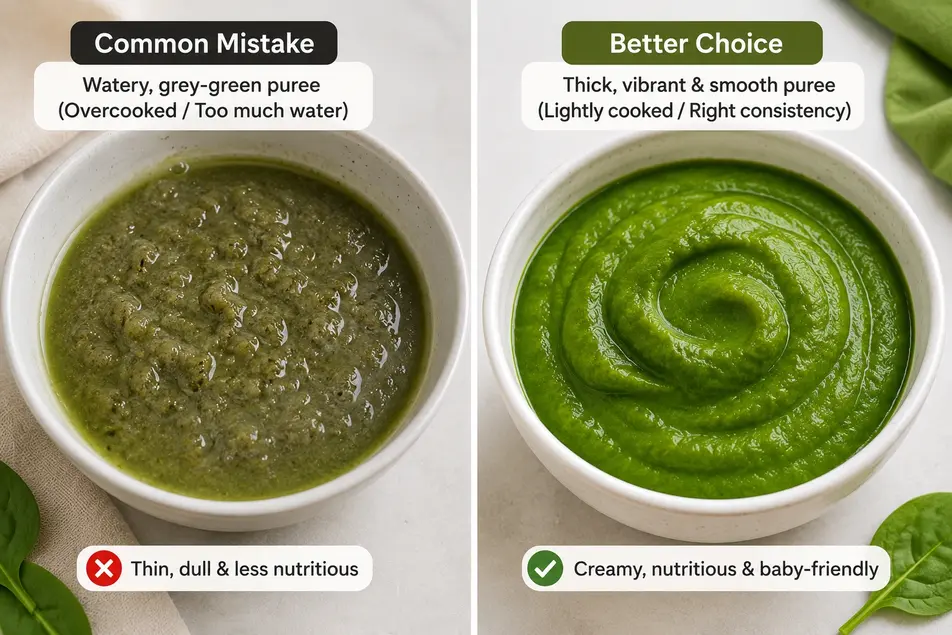
Let steamed spinach cool for 5 minutes. Then squeeze out as much water as possible using clean hands or a clean cloth. Excess water makes a watery, flavorless puree.
Step 4. Blend
Add squeezed spinach to your blender. Add 2 tablespoons of fresh water or breast milk. Blend on high for 60–90 seconds until completely smooth.
Step 5. Check Consistency
The puree should be thick but flow off a spoon. For younger babies (6–7 months), add more liquid one tablespoon at a time until it is thin enough. For older babies (8–10 months), a thicker consistency is fine.
Step 6. Strain (For Babies Under 7 Months)
Press through a fine mesh strainer using a spatula. This removes any remaining fibrous threads that spinach sometimes holds even after blending.
Serve immediately or store using the guidelines below.
Texture by Baby’s Age
| Age | Texture Goal | How to Get There |
| 6–7 months | Very smooth and runny | Blend fully, strain, add extra liquid |
| 7–8 months | Smooth, slightly thicker | Blend well, skip straining |
| 8–10 months | Medium thickness, soft texture | Blend less, leave a little texture |
| 10–12 months | Coarser mash | Mash with a fork or blend briefly |
Recipe Tips
Fresh lemon juice is your friend:
Just 3–4 drops stirred into finished puree boosts iron absorption without adding much flavor.
Steam, do not boil directly in water:
Boiling leaches water soluble nutrients like vitamin C and folate into the water. Steaming keeps them in the spinach.
Squeeze out water before blending:
Skipping this step creates a watery puree with less flavor and weaker nutrition per spoonful.
Blend longer than you think:
Spinach has fine fibers. Blend for at least 90 seconds on high for a genuinely smooth texture.
Pair with vitamin C:
A small amount of orange, mango, or lemon juice dramatically increases iron absorption from spinach. This is one of the most evidence backed food pairing tricks in infant nutrition.
Do not over steam:
More than 5 minutes causes color to go from bright green to dull grey-green and reduces nutrient content.
Flavor Combinations & Variations
Plain spinach puree has a mild, slightly earthy flavor that many babies accept easily. But combinations can make it even better and more nutritious.
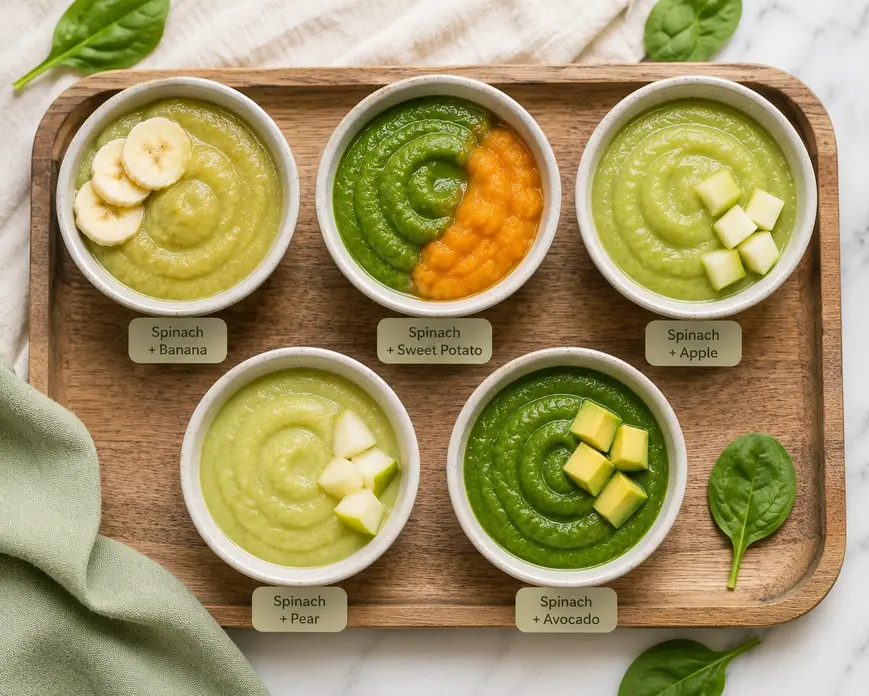
- Spinach + Banana: The banana’s sweetness completely covers any green bitterness. Great first combo. 6 months+
- Spinach + Sweet Potato: A classic pairing. Orange and green together, rich in both iron and beta-carotene. 6 months+
- Spinach + Apple: Bright, slightly tangy. The vitamin C in apple boosts spinach’s iron absorption. 6 months+
- Spinach + Pear: Gentle and sweet. Very easy on digestion. 6 months+
- Spinach + Avocado: Healthy fats combined with iron. Creamy, rich texture. 6 months+
- Spinach + Mango: Tropical and vibrant. High vitamin C content improves iron uptake. 7 months+
- Spinach + Lentils: A protein-and-iron powerhouse combination. 8 months+
Combination Comparison Table
| Combo | Best Age | Key Benefit | Flavor Profile |
| Spinach + Banana | 6 months+ | Masks bitterness, adds potassium | Sweet, mild |
| Spinach + Sweet Potato | 6 months+ | Iron + beta-carotene | Savory-sweet |
| Spinach + Apple | 6 months+ | Vitamin C boosts iron absorption | Bright, slightly tart |
| Spinach + Pear | 6 months+ | Gentle digestion, soft flavor | Very mild, sweet |
| Spinach + Avocado | 6 months+ | Healthy fats, brain development | Creamy, rich |
| Spinach + Mango | 7 months+ | High vitamin C, iron boost | Tropical, bright |
| Spinach + Lentils | 8 months+ | Protein + iron, filling meal | Savory, earthy |
Storage Instructions
Spinach puree has different storage rules than fruit purees, pay attention here.
Refrigerator
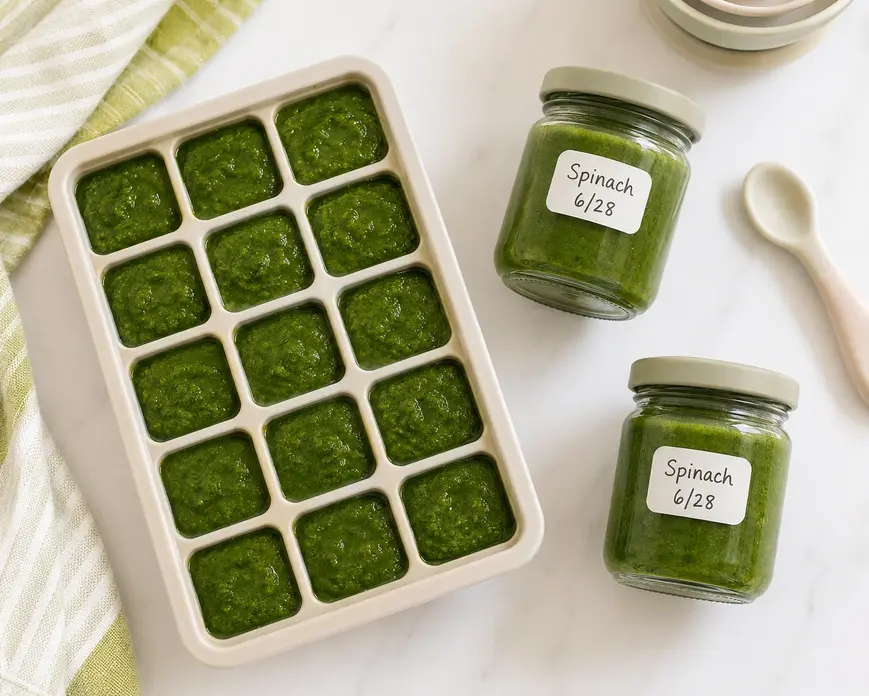
Store in an airtight glass container for a maximum of 24 hours only. Unlike blueberry or apple puree, cooked spinach should not sit in the fridge for 2–3 days because bacteria and nitrate conversion can increase over time. When in doubt, freeze immediately after making.
Freezer
Spinach puree freezes very well. Pour into a silicone ice cube tray right after cooking. Freeze for 4–6 hours, then pop cubes into a labeled freezer bag.
- Freezer life: Up to 3 months
- Each cube = roughly 1–2 tablespoons (one baby serving)
Ice Cube Tray Method
This is the most practical approach for batch cooking. Make a large batch on the weekend, freeze into cubes, and simply pull out one or two cubes each day as needed.
Never refreeze thawed spinach puree. Thaw only what your baby will eat in one sitting.
How to Reheat
From the refrigerator:
Set the glass jar in a bowl of warm (not boiling) water for 5–8 minutes. Stir thoroughly. Test temperature on the inside of your wrist before serving.
From frozen:
Thaw in the refrigerator overnight. Then warm using the warm water bath method above. Do not microwave frozen puree directly uneven heating creates hot spots.
Microwave method (refrigerated only, with caution):
Heat in 10-second bursts on 50% power. Stir between each burst. Always stir very well before testing temperature, because microwaves create uneven heating that is hard to detect.
Key rule:
Reheat spinach puree only once. Do not reheat, cool, and reheat again. This applies specifically to spinach because of its natural nitrate content.
Serving Suggestions
- Alone: start with 1–2 teaspoons of plain spinach puree and observe for 3–5 days
- Mixed with rice cereal: Adds iron from both sources, thickens texture
- Stirred into banana or sweet potato puree: The natural sweetness balances the green flavor
- Layered with yogurt: For babies 8 months and older, a green yogurt bowl looks beautiful and tastes great
- As a pasta sauce base: For babies transitioning to finger foods and soft table foods at 10–12 months
- Mixed into scrambled egg: Once eggs have been introduced separately, this is a protein-and-iron powerhouse
Expert Tips & Mistakes to Avoid
Mistake 1. Starting too early:
Many parents start spinach at 4 months alongside fruit purees. This is the most common error. Wait until 6 months and always ask your pediatrician first.
Mistake 2. Skipping the cooking step:
Raw spinach blended with water is not ideal for babies. It has higher oxalates, stronger bitterness, and harder-to-digest fiber. Always steam or blanch first.
Mistake 3. Storing cooked spinach puree for 3 days:
Unlike apple or banana puree, cooked spinach should be used within 24 hours or frozen immediately. Leaving it in the fridge longer than that is not recommended due to bacterial growth and nitrate conversion.
Mistake 4. Reheating more than once:
Reheat only one time. This applies particularly to spinach. Reheating repeatedly can increase nitrate-related compounds in the food.
Mistake 5. Forgetting to pair with vitamin C:
Spinach iron (non-heme iron) needs vitamin C to absorb well. Without it, your baby is getting far less iron than the nutrition label suggests. Add a few drops of lemon juice or pair with a vitamin C-rich fruit puree at the same meal.
Mistake 6. Not squeezing out water before blending:
Steamed spinach holds a lot of water. Blending without squeezing it out creates a thin, diluted puree. Squeeze first, then blend.
Estimated Nutrition Per Serving (approx. 2 tablespoons, plain steamed spinach)
| Nutrient | Per Serving |
| Calories | ~10 kcal |
| Protein | 1.2 g |
| Iron | ~0.7 mg |
| Folate | ~29 mcg |
| Vitamin K | ~98 mcg |
| Vitamin A | ~94 mcg RAE |
| Calcium | ~27 mg |
Disclaimer:
This article is for informational purposes only and does not replace advice from a licensed pediatrician or healthcare provider. Nitrate content in spinach is a real safety consideration for infants. Always consult your baby’s doctor before introducing any new food, especially leafy greens like spinach. Individual babies may have different nutritional needs, digestive sensitivities, or health conditions that affect dietary recommendations. The information presented here is based on current published guidelines from the AAP, EFSA, and USDA but guidelines are updated and your doctor’s guidance always takes priority.
Conclusion:
Getting spinach puree for baby right comes down to three things starting at the correct age (6 months), always cooking before blending, and storing it properly. These are not complicated steps but they are the exact steps most parents skip.
Spinach deserves its reputation as a superfood. It delivers iron, folate, vitamin K, and calcium in a form that is genuinely valuable for babies in the first year of life. Follow the preparation steps in this guide and you will have a safe, smooth, bright green puree that supports your baby’s growth from the very first spoonful.
Not sure what to feed after spinach? Follow our Baby Food Chart (6–12 Months) for an age-by-age feeding plan
FAQ’s
1. Can I freeze spinach puree for baby?
Yes, and freezing is actually the preferred storage method for spinach puree. Because cooked spinach should not stay in the refrigerator for more than 24 hours, freezing right after cooking is the safest approach. Pour into a silicone ice cube tray, freeze until solid, then transfer cubes to a labeled freezer bag. Frozen spinach puree stays good for up to 3 months. Thaw only the amount needed for one feeding never refreeze.
2. Can I use frozen spinach instead of fresh for baby puree?
Yes, absolutely. Frozen spinach is blanched before freezing, which reduces nitrate content and oxalates. It is nutritionally comparable to fresh and often smoother to blend. Thaw completely and squeeze out all excess water before blending. This is one of the best time-saving options for busy parents.
3. Do I need to peel spinach for baby puree?
No peeling needed spinach has no skin. However, you should always wash leaves thoroughly and remove any very thick, tough stems from mature spinach leaves. Baby spinach has tender stems that blend completely. If using mature spinach, pull off the stems before steaming.
4. How long does homemade spinach puree last?
Refrigerator: 24 hours maximum in an airtight glass container. This is shorter than most baby purees because of spinach’s nitrate content. Freezer: up to 3 months in a sealed, labeled freezer bag. When in doubt, freeze immediately and pull out individual cubes as needed.
5. Can I add spices to spinach baby puree?
For babies under 7 months, keep spinach puree plain or paired only with other fruits and vegetables. For babies 7–8 months and older, mild spices like a small pinch of cumin or coriander are safe and support flavor development. A few drops of lemon juice can be added from 6 months it is not a spice but does add flavor and boosts iron absorption. Always skip salt, chili, pepper, and any artificial flavoring.