Papaya Puree for Baby: Easy 5-Minute No-Cook Recipe
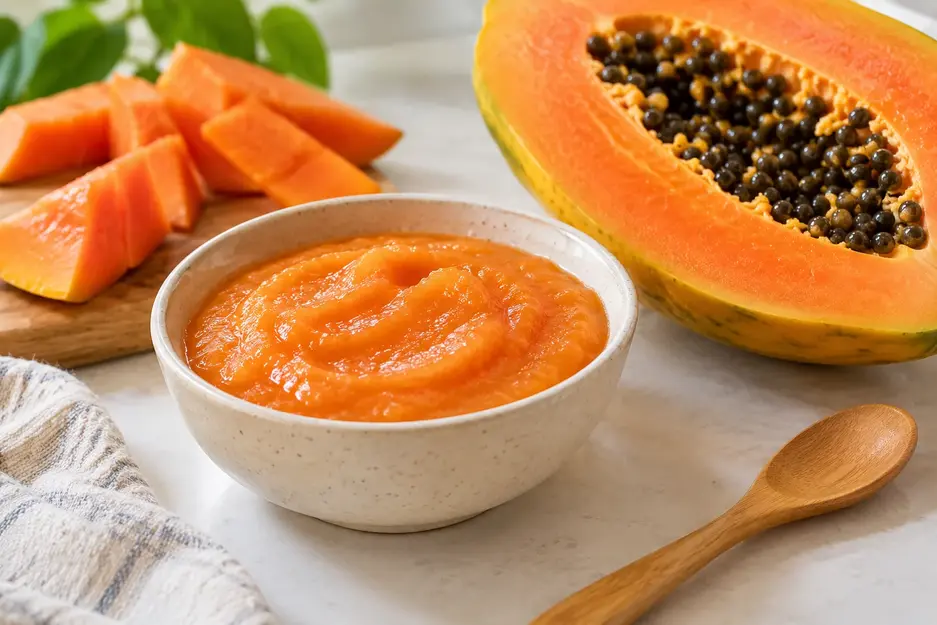
Papaya puree for baby is a quick, no-cook fruit recipe made from fully ripe papaya. Because ripe papaya is naturally soft and juicy, it can be blended into a smooth puree in minutes without steaming or boiling. Babies can generally begin complementary foods at around 6 months when they show developmental readiness, and ripe papaya can be offered in a texture that matches their eating skills. This guide shows how to choose the fruit, prepare it safely, adjust the texture, serve it for spoon-feeding or baby-led weaning, store leftovers, and build simple flavor combinations. The basic recipe contains one main ingredient and no added sugar, salt, or honey.
If your baby is just starting solids, explore our First Foods for Baby at 6 Months guide for more beginner-friendly ideas.
Why You’ll Love This Papaya Puree for Baby
This recipe is useful for first-time parents because the preparation is simple, while the same fruit can be adapted as a baby’s texture skills develop.
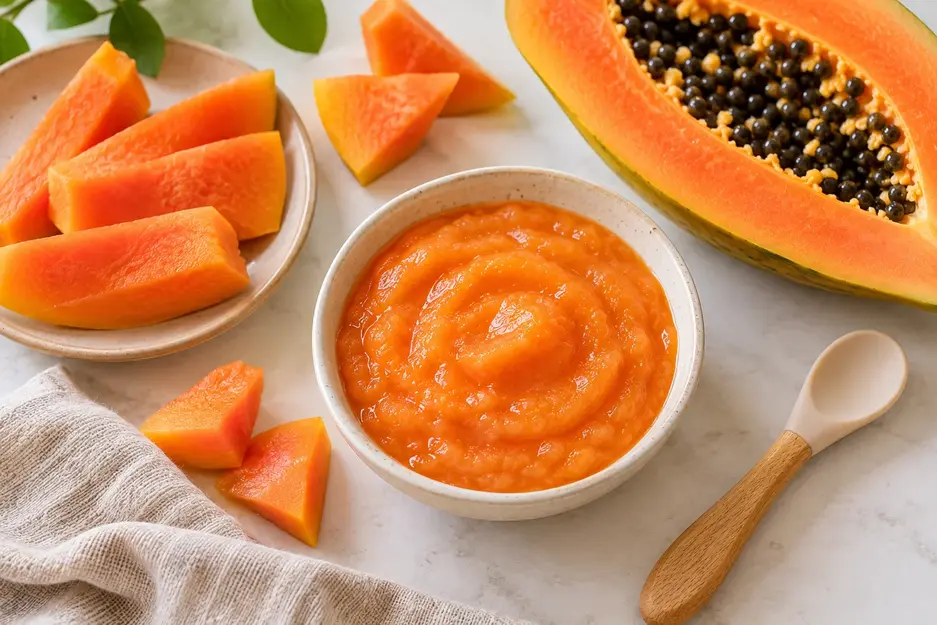
- No cooking required: fully ripe papaya is already soft enough to mash or blend.
- Fast preparation: washing, peeling, seeding, cutting, and blending take only a few minutes.
- One main ingredient: the basic puree needs only ripe papaya.
- Easy texture changes: serve it smooth, thicker and mashed, or in an appropriate soft finger-food shape.
- No added sweetness needed: ripe papaya has a naturally sweet flavor.
- Flexible combinations: it pairs well with banana, avocado, plain yogurt, oatmeal, pear, and mango after those foods are suitable for your baby.
Papaya also provides nutrients including vitamin C and folate. It should still be treated as one food within a varied complementary-feeding diet rather than as a special or medicinal food.
Ingredients You’ll Need
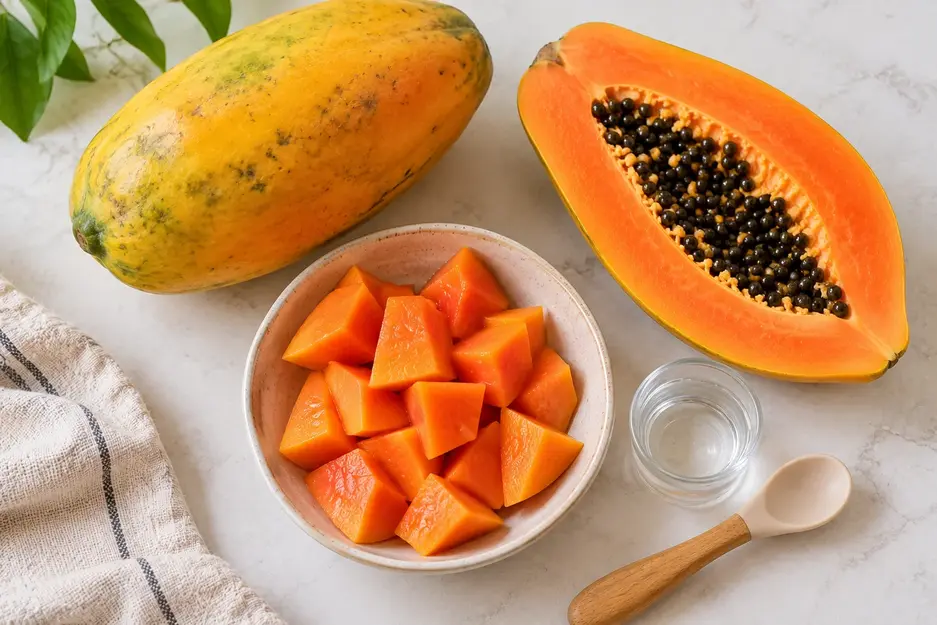
Fully ripe papaya
• 1 cup fully ripe papaya flesh: choose fruit that feels slightly soft under gentle pressure. Skin color varies by variety, so softness and fresh-looking flesh matter more than one exact shade.
• What to look for: soft orange to reddish-orange flesh with no mold, fermented smell, or obvious spoilage. Remove the peel and every black seed before blending or serving.
Optional liquid
• Optional liquid: ripe papaya usually blends without extra liquid. If needed, add water 1 teaspoon at a time. Breast milk or correctly prepared infant formula can be mixed into the portion being served immediately; follow its safe handling and storage instructions.
Simple substitutions and additions
• Easy additions: banana or avocado for thickness, plain pasteurized yogurt for creaminess, or prepared infant oatmeal for a heartier texture, once each food is appropriate for your baby. No added sugar or salt is needed, and never add honey for a baby under 12 months.
Ripe vs. Not-Ready Papaya: Quick Check
| What to Check | Ready for This Recipe | Wait a Little Longer |
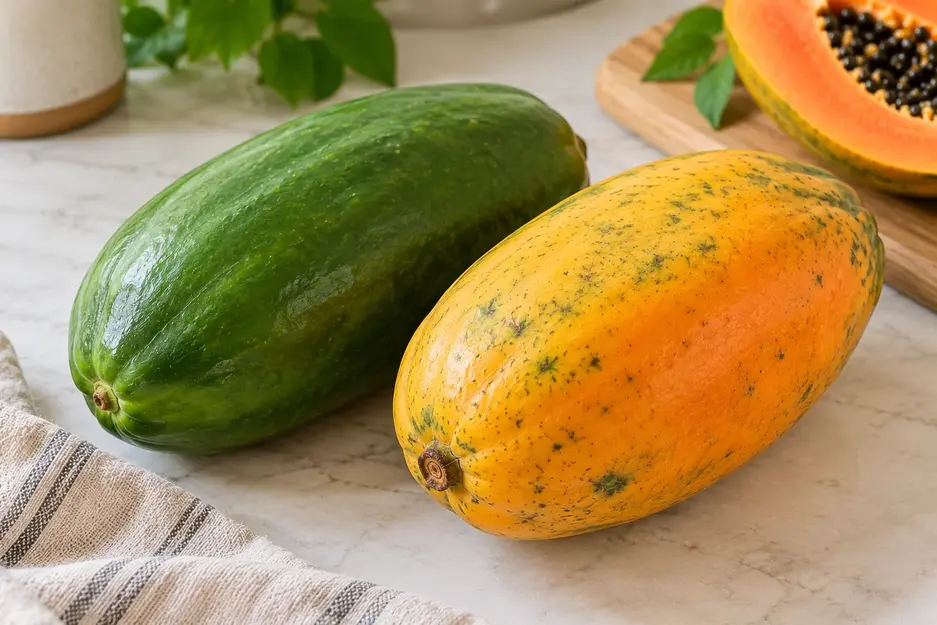
| Feel | Slightly soft under gentle pressure | Hard and firm |
| Flesh | Soft, juicy, orange to reddish-orange | Firm or difficult to mash |
| Aroma | Fresh, mild fruity smell | Little aroma because fruit is still firm |
| For puree | Mashes or blends easily without cooking | Does not give the soft no-cook texture needed |
How to Make Papaya Puree for Baby
Step 1: Choose a Fully Ripe Papaya
Select a ripe papaya that feels slightly soft when gently pressed. For this no-cook recipe, avoid hard, green fruit because it will not mash into the soft texture you want for a baby puree.
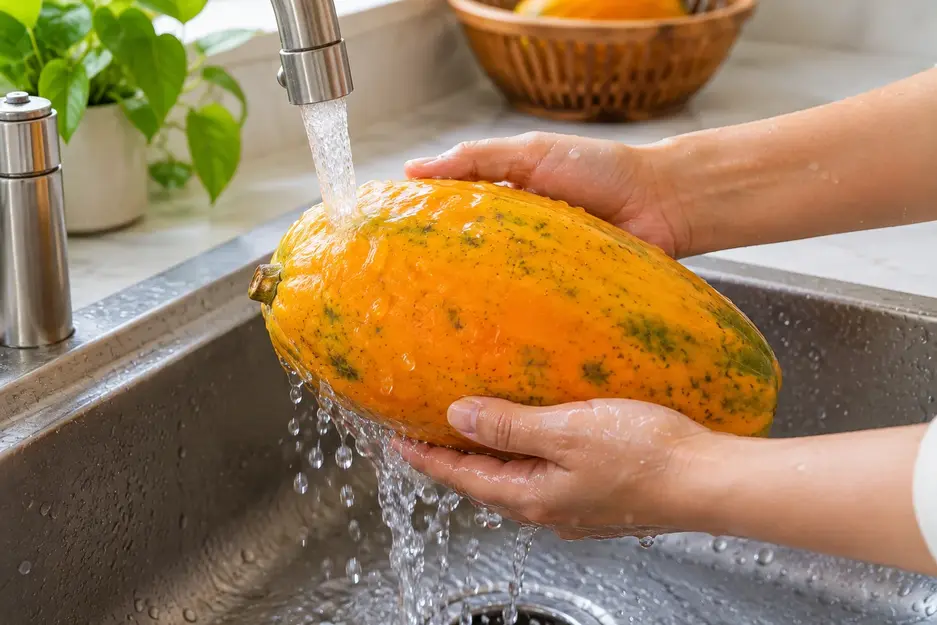
Step 2: Wash the Whole Fruit
Rinse the whole papaya under clean running water before cutting. Washing the outside first reduces the chance of transferring dirt from the peel to the edible flesh with your hands or knife.
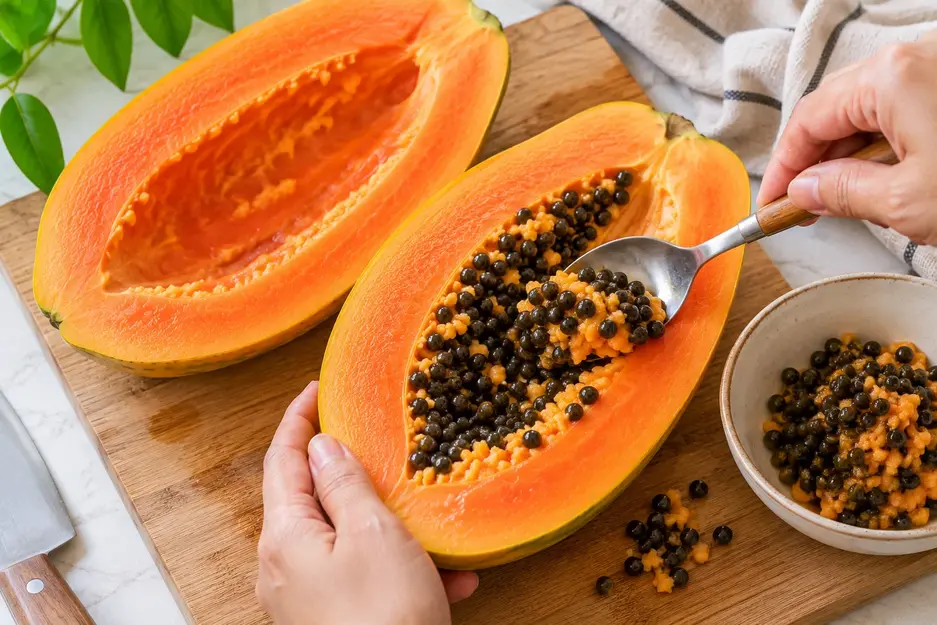
Step 3: Cut the Papaya and Remove the Seeds
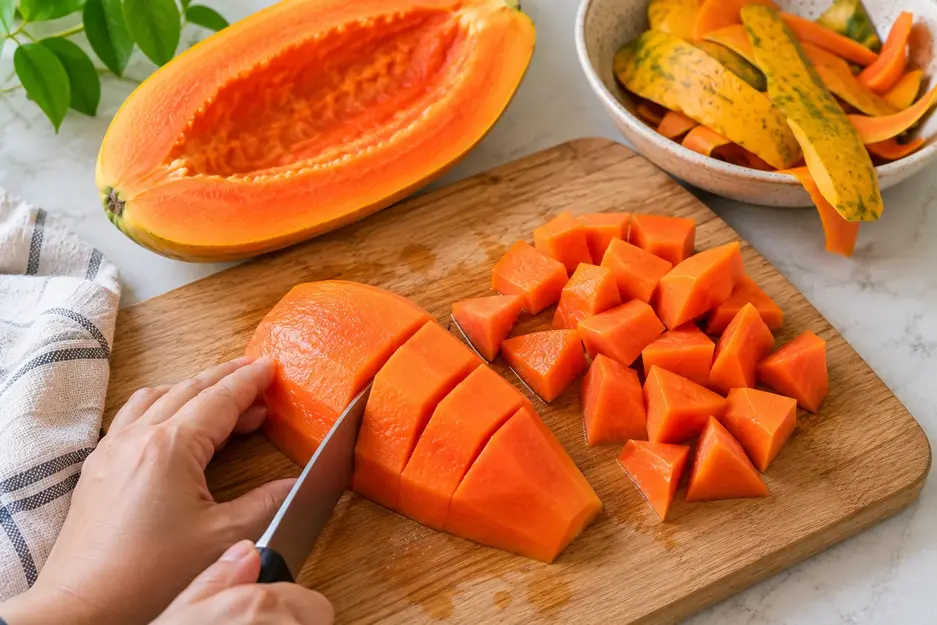
Place the papaya on a stable cutting board and slice it lengthwise. Scoop out all of the black seeds with a clean spoon. The seeds are not needed for this recipe and should not be included in the baby’s serving.
Step 4: Peel and Cut the Flesh
Remove the skin completely, then cut about 1 cup of soft papaya flesh into chunks. Smaller pieces are easier to process evenly in a compact blender or food processor.
Step 5: Blend or Mash
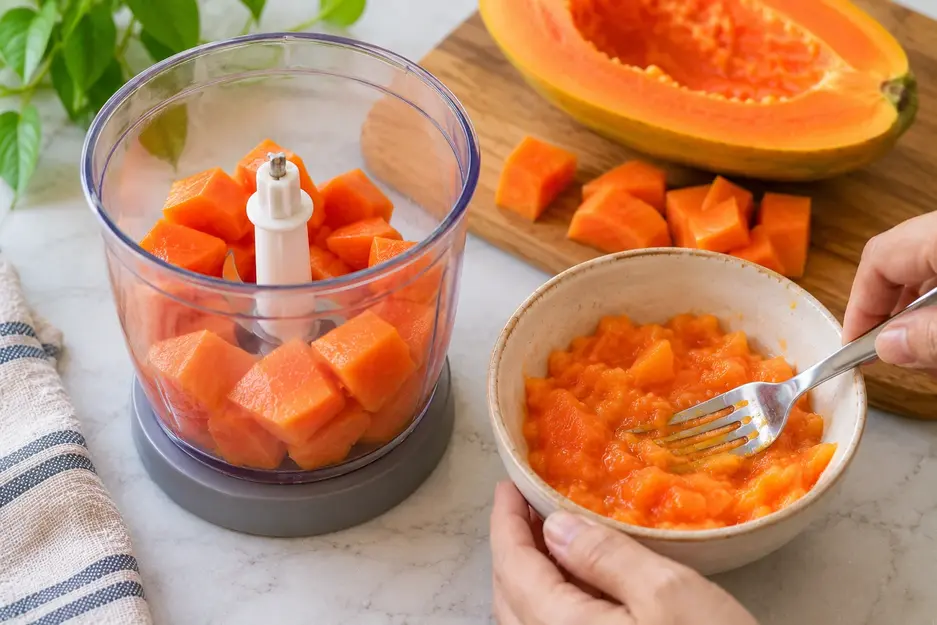
For a smooth puree, place the papaya chunks in a small blender or food processor and blend until creamy. Stop to scrape down the sides if needed. For a thicker texture, mash very soft papaya thoroughly with a fork instead of blending.
Step 6: Adjust the Consistency
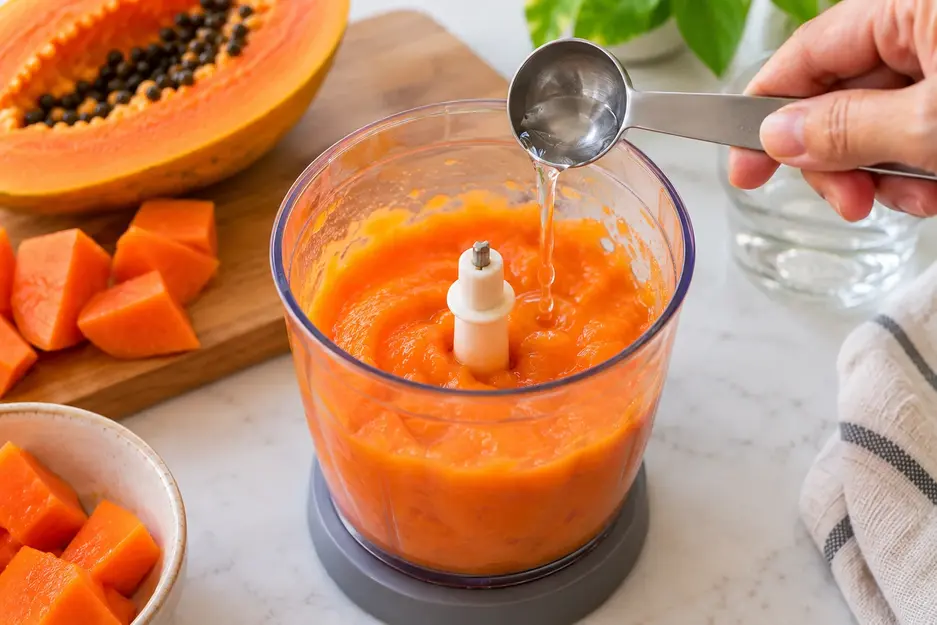
Blend first without liquid. If the puree is thicker than desired, add water 1 teaspoon at a time and blend again. This prevents naturally juicy papaya from becoming unnecessarily watery.
Step 7: Check and Serve
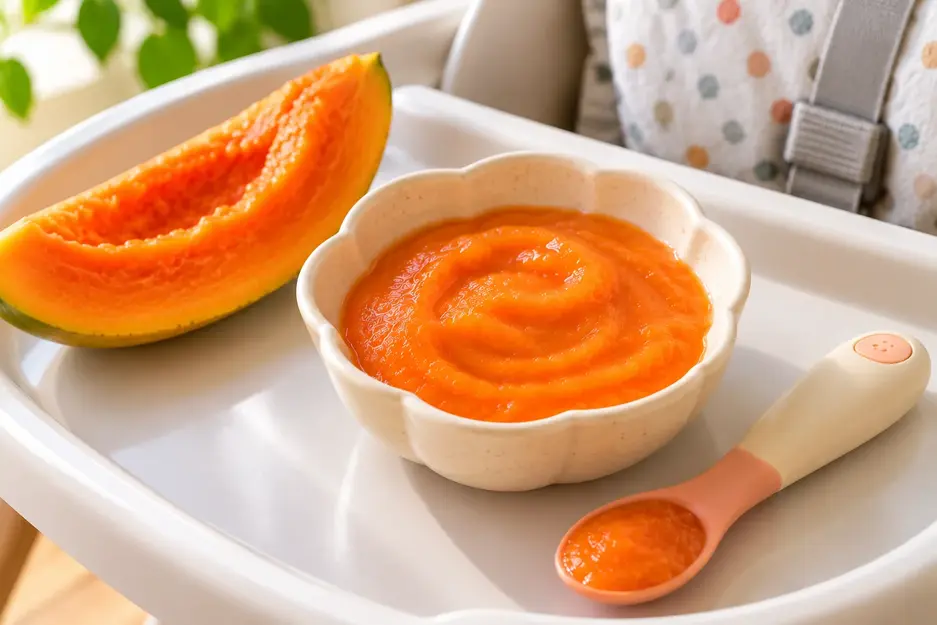
Check the finished puree for any firm or tough pieces and choose a texture that matches your baby’s current eating skills. Portion what you plan to serve, seat your baby upright, and supervise the entire meal.
Getting the Texture Right
The ideal papaya puree is soft and spoonable, but there is no single texture every baby must eat. The right consistency depends on developmental readiness and previous experience with solids.
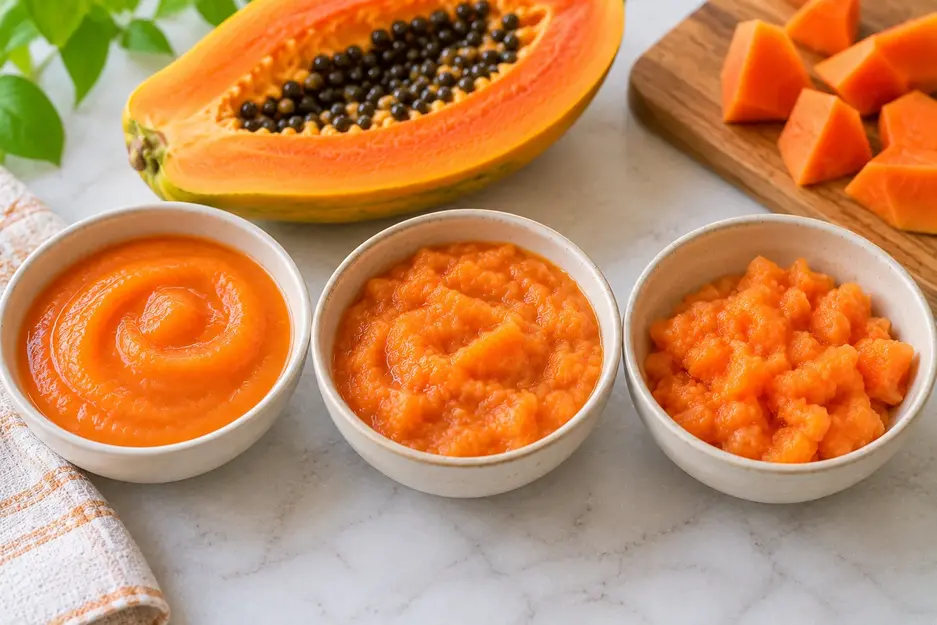
For a very smooth texture, blend until no obvious pieces remain. For a thicker mash, use less processing or mash with a fork. If the puree is too thick, loosen it with water one teaspoon at a time. If it is too thin, avoid adding unnecessary powders simply to thicken it; serve it as an appropriate thin puree or combine it with an already-introduced thicker food such as banana, avocado, or prepared oatmeal.
Some papayas are more fibrous than others. If you notice tough strands, blend a little longer and inspect the finished food before serving. Texture should progress as your baby’s eating skills develop rather than staying smooth simply because puree was the first form offered.
How to Serve Papaya to Baby
Age ranges are general guides, not deadlines. Babies develop oral-motor and hand skills at different rates, so preparation should follow your child’s readiness and ability to manage the food.
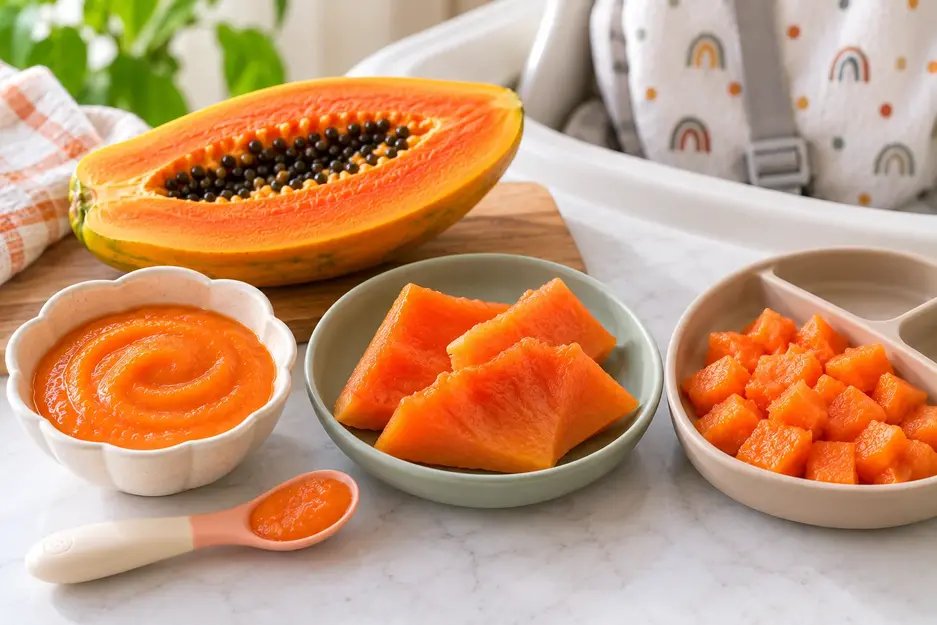
Around 6 Months
When a baby is developmentally ready for complementary foods, generally around 6 months, ripe papaya can be offered as a smooth puree or soft mash. For spoon-feeding, offer a small amount on a baby spoon or preload the spoon and allow the baby to bring it toward the mouth.
For a baby-led approach, very ripe papaya can be offered in a large, soft graspable piece when the child is ready to self-feed. Papaya can be slippery, so the piece should be soft and easy to hold, and the baby should remain seated upright with close adult supervision.
Around 9 Months
As chewing skills and the pincer grasp develop, thicker mashed papaya and smaller soft pieces can become practical. There is no need to keep every fruit completely smooth if your baby is ready for more texture.
12+ Months
Soft bite-sized pieces of peeled ripe papaya work well for many toddlers. A child can also practise using a spoon or fork. Continue to remove the skin and seeds and adapt the size and texture to the child’s eating skills.
Papaya Serving Guide at a Glance
| Stage | Practical Texture | Serving Idea |
| Around 6 months | Smooth puree, soft mash, or suitable soft graspable piece | Spoon-feed, preload a spoon, or offer a soft piece when ready to self-feed |
| Around 9 months | Thicker mash and developmentally appropriate soft pieces | Encourage texture practice and emerging pincer grasp |
| 12+ months | Soft bite-sized pieces | Finger-feed or practise with spoon/fork |
Papaya Puree Flavor Combinations
Once the individual ingredients are suitable for your baby, these combinations can change both flavor and texture without adding sugar or salt.
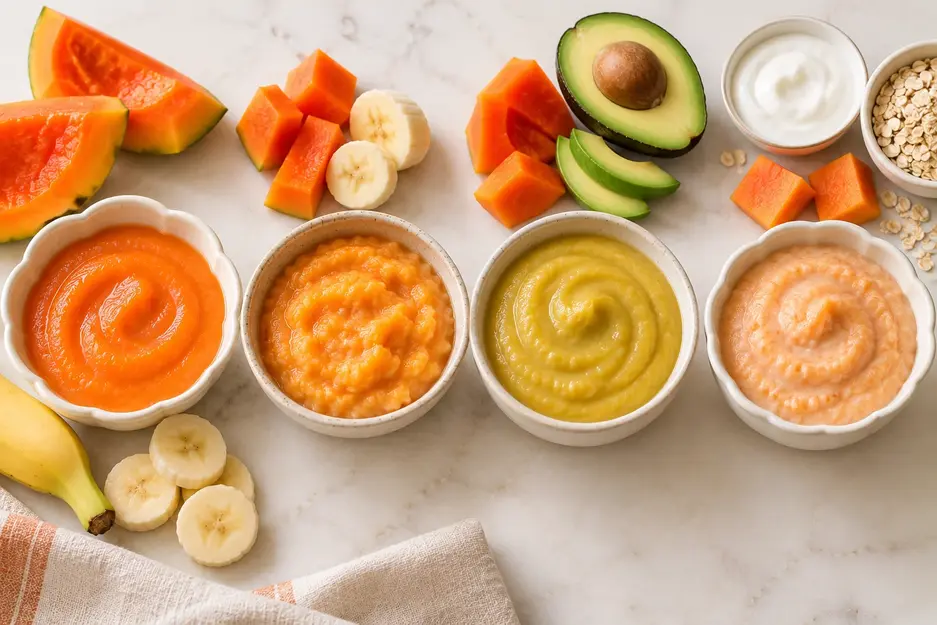
Papaya + Banana
Mash equal parts ripe papaya and banana for a thicker, creamy fruit mixture.
Papaya + Avocado
Combine ripe papaya with soft avocado for a smooth, less juicy mash.
Papaya + Plain Yogurt
Stir papaya puree into plain, unsweetened, pasteurized yogurt after dairy has been introduced appropriately. Cow’s milk protein is a common food allergen, so follow current allergen-introduction guidance.
Papaya + Oatmeal
Stir a spoonful of papaya puree into prepared infant oatmeal for a thicker spoonable breakfast.
Papaya + Mango
Blend equal parts ripe papaya and ripe mango for a naturally sweet tropical combination.
Papaya + Pear
Mix papaya with soft ripe pear or cooked pear for a mild two-fruit puree.
Papaya + Cinnamon
Add only a tiny pinch of cinnamon for flavor once plain papaya is familiar; added sugar is not needed.
For another quick no-cook fruit option, try our Kiwi Puree for Baby.
Storage, Freezing & Thawing
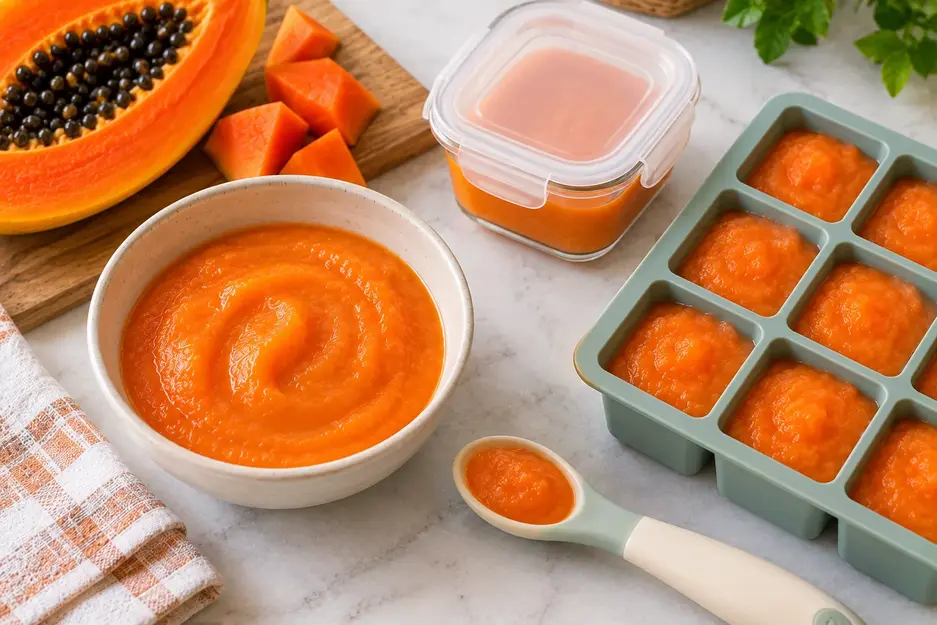
Refrigerator
Transfer unused puree promptly to a clean, covered container. For homemade baby food, small fresh batches are easiest to manage; a conservative approach is to use refrigerated fruit puree within 1–2 days. Discard food left in the baby’s bowl after feeding rather than returning it to the storage container.
Freezer
Papaya puree can be portioned into a clean freezer tray. Once frozen solid, transfer the portions to a freezer-safe container and label it with the date. Freezing can make high-moisture fruit softer, more watery, or slightly separated after thawing, so fresh papaya usually gives the best texture.
Thawing and Serving
Thaw frozen puree in the refrigerator. Stir well after thawing and inspect it before serving. Papaya does not need reheating; it can be served cool or at a comfortable room temperature. If any baby food is warmed, stir and check the temperature carefully before feeding.
Recipe Success Tips
- Start with truly ripe fruit. Soft papaya gives a smoother puree without cooking.
- Blend before adding water. Ripe papaya is juicy, and too much liquid can quickly make the puree runny.
- Prepare a small batch. One cup of fruit is enough to offer several small portions without creating excessive leftovers.
- Progress the texture gradually. Move from smooth to mashed and soft pieces as your baby’s eating skills develop.
- Keep allergen introductions clear. When introducing a common allergen such as dairy, avoid combining several unfamiliar foods at once if that would make a reaction difficult to identify.
- Keep the storage batch separate. Put the baby’s serving in a clean bowl so a saliva-covered spoon does not repeatedly enter the stored food.
- Supervise every meal. Soft food can still pose a choking risk, so upright seating and attentive supervision remain essential.
Common Mistakes to Avoid
Choosing hard, underripe fruit
A firm papaya will not produce the soft no-cook puree this recipe promises. Choose fruit that is ripe and yields gently to pressure.
Adding too much liquid at once
Papaya often blends without water. Add only one teaspoon at a time if adjustment is actually needed.
Treating age labels as strict rules
A baby’s developmental skills should guide texture progression. The age ranges in this guide are approximate.
Leaving peel or seeds in the serving
Remove both before pureeing or offering papaya pieces.
Keeping a large batch in the refrigerator
Fresh fruit puree is better made in modest amounts. Small batches simplify safe storage and reduce waste.
Papaya Puree Recipe Card
A quick no-cook puree made from fully ripe papaya. Serve it smooth, mashed, or adapt the fruit’s texture as your baby’s eating skills develop.
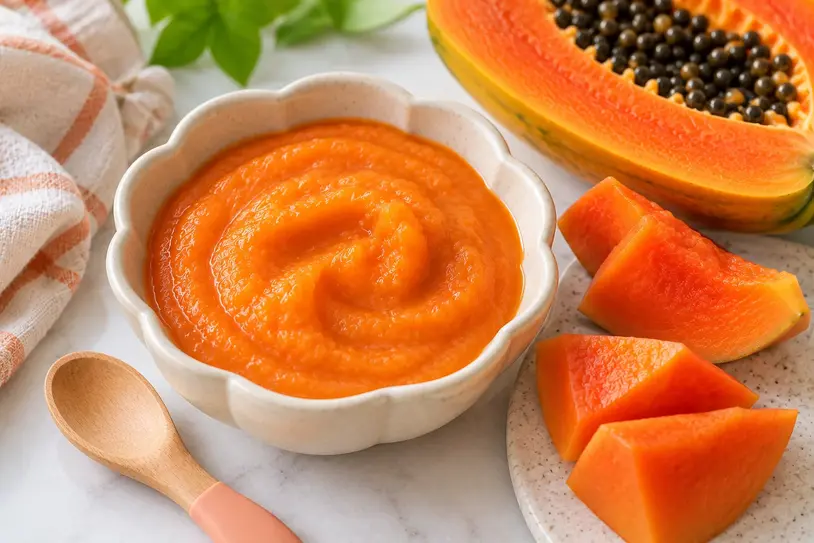
| Prep Time | 5 minutes |
| Cook Time | 0 minutes |
| Total Time | 5 minutes |
| Yield | About 1 cup |
Ingredients
- 1 cup fully ripe papaya flesh, peeled, seeded, and cut into chunks
- 1–3 teaspoons water, only if needed for blending
Instructions
- Wash the whole papaya under clean running water.
- Cut it in half lengthwise and scoop out all black seeds.
- Remove the peel and cut 1 cup of flesh into chunks.
- Place the chunks in a small blender or food processor.
- Blend until smooth, stopping to scrape down the sides if needed.
- If a thinner consistency is appropriate, add water 1 teaspoon at a time and blend again.
- Serve a suitable portion immediately or transfer unused puree promptly to a clean covered container.
Essential Notes
Choose soft, fully ripe papaya for this no-cook recipe. Do not add sugar, salt, or honey. Match the final texture to your baby’s developmental eating skills rather than relying on age alone.
Conclusion
Papaya puree for baby is an easy way to turn fully ripe fruit into a soft, no-cook food in about five minutes. Choose ripe papaya, remove the skin and seeds, and start with a texture your baby can manage comfortably. As eating skills develop, the same fruit can move from a smooth puree to a thicker mash and appropriately prepared soft finger food. Keeping the basic recipe simple also makes later combinations easy. Banana and avocado can thicken papaya, oatmeal adds a grain, and plain yogurt can add creaminess once dairy has been introduced appropriately. Small batches, clean storage, age-appropriate preparation, and close supervision keep the recipe practical for everyday feeding.
Building a wider first-food rotation? Try our Beet Puree for Baby next.
Disclaimer
This article provides general food and feeding information and is not individualized medical advice. Babies develop feeding skills at different rates. Discuss food allergies, feeding difficulties, medical conditions, or concerns about starting solids with your child’s pediatrician or another appropriately qualified healthcare professional.
FAQ’s
Q.1 What age can babies eat papaya?
Ripe papaya can generally be introduced when a baby is developmentally ready for complementary foods, usually around 6 months. There is no evidence-based rule requiring banana, apple, or another fruit to be introduced first.
Q.2 Is papaya a common allergen for babies?
Papaya is not one of the major common food allergens, but any food can trigger an allergic reaction. Cross-reactivity between papaya and natural rubber latex has been reported. If your baby has a known allergy, previous food reaction, or a medical condition affecting feeding, seek individualized advice from a pediatrician or allergist.
Q.3 Does papaya need to be cooked for babies?
No. Fully ripe, soft papaya does not need cooking. Wash the fruit, remove the peel and seeds, then prepare the flesh in a texture and shape suited to the baby’s eating skills.
Q.4 Can I freeze papaya puree?
Yes. It can be frozen in small portions, although thawed papaya can become softer, more watery, or separated. Stir it well after thawing and discard food with signs of spoilage.
Q.5 Can papaya be served for baby-led weaning?
Yes, when the baby is developmentally ready and the ripe fruit is prepared in an appropriate soft shape. Early self-feeders generally need a larger graspable piece, while smaller soft pieces become practical as pincer-grasp skills develop.