
Leek Puree for Baby: Easy Creamy Recipe for 6+ Months
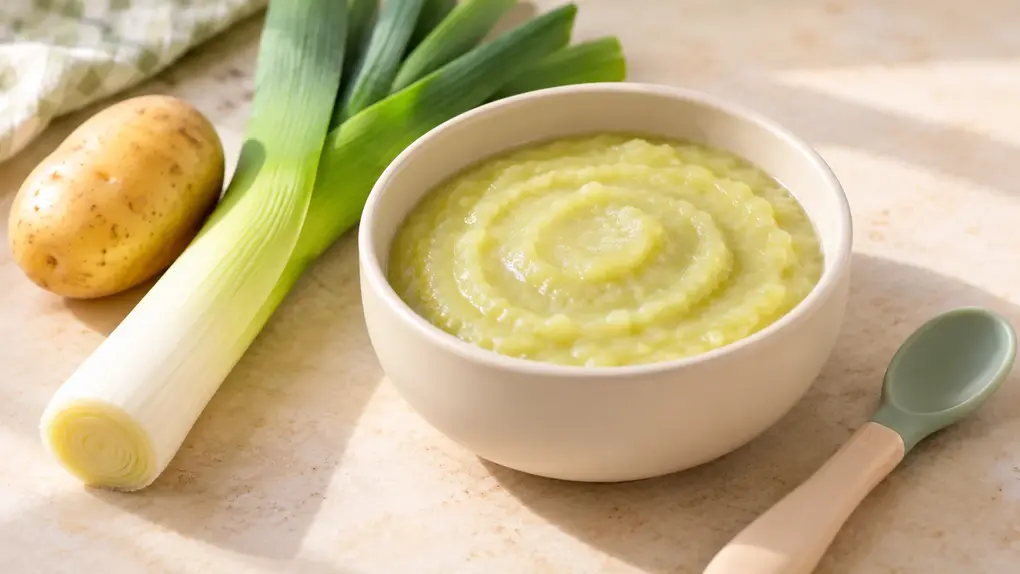
Leek puree for baby is a mild, creamy vegetable recipe made with tender leek, potato, and water. Cooking leek until completely soft mellows its stronger raw flavor, while potato gives the puree enough body to sit comfortably on a spoon without cream, salt, or sugar.
This simple recipe depends on good preparation. Leeks need careful washing because soil can hide between their layers, and both vegetables should be fork-tender before blending. Make it silky smooth for an early eater, then gradually leave it thicker as texture skills develop.
New to solids? See our First Foods for Baby at 6 Months guide for more easy first-food ideas.
Quick Recipe Guide
| Quick detail | At a glance |
| Age guidance | For babies developmentally ready for complementary foods, commonly around 6 months |
| Prep / cook / total | 10 min / 15 min / 25 min |
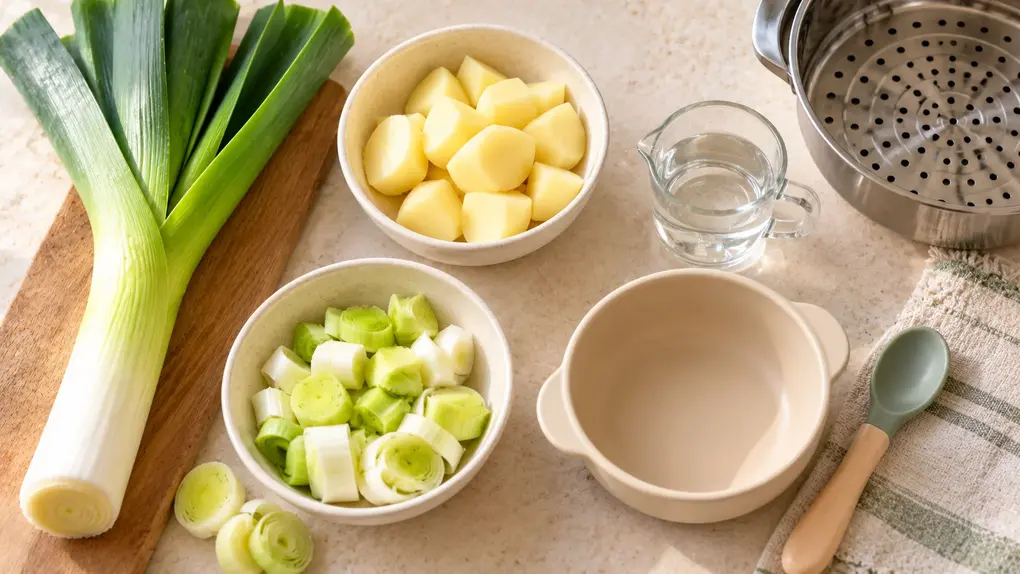
| Main ingredients | 1 medium leek, 1 small potato, water |
| Texture | Smooth puree at first; thicker puree or mash as skills develop |
| Yield | About 1½ cups, depending on leek size and blending liquid |
| Storage | Refrigerate up to 48 hours; conservative freezer guideline: up to 1 month |
| Key tip | Use white/light-green leek, wash between layers, and cook until very soft |
Before you begin, remember the three essentials: clean the leek between its layers, use the tender white and light-green portion for the smoothest result, and add blending water gradually rather than pouring it in all at once.
Why You’ll Love This Recipe
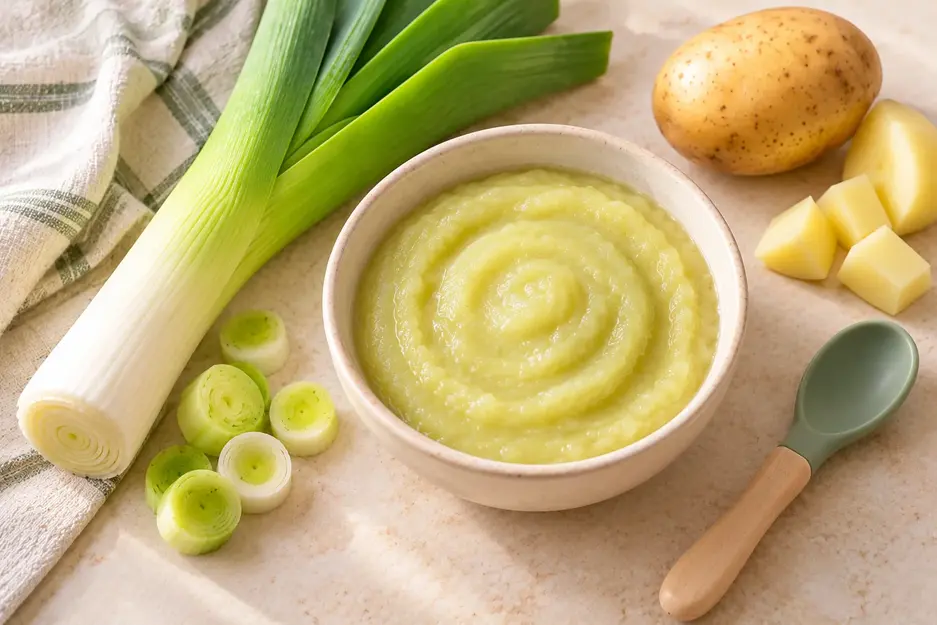
Leek and potato make a mild savory combination that is easy to adjust as your baby’s eating skills develop.
- Only three basic ingredients.
- Naturally creamy without dairy.
- Easy to make thinner or thicker with small texture adjustments.
- A mild base that pairs well with familiar vegetables, lentils, chicken, or herbs.
- Suitable for small-batch freezing.
- Can progress from smooth puree to soft mash rather than staying a one-stage recipe.
Ingredients You’ll Need
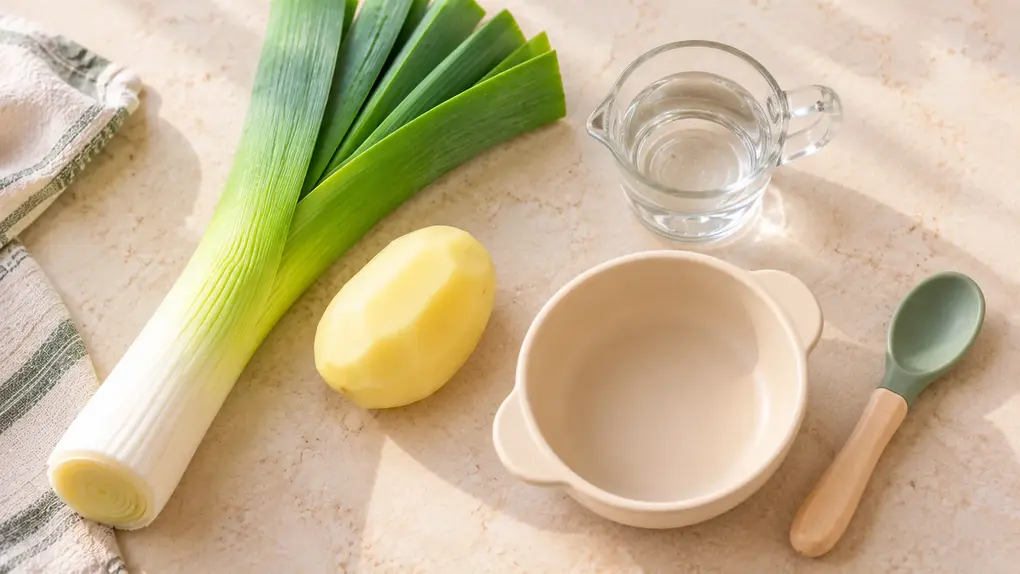
Leek
Use 1 medium leek. Choose one that feels firm, with a clean white base and fresh-looking green leaves. For this puree, concentrate on the white and light-green section. The dark-green leaves are tougher and more fibrous, so they are better reserved for adult soups, stocks, or stews.
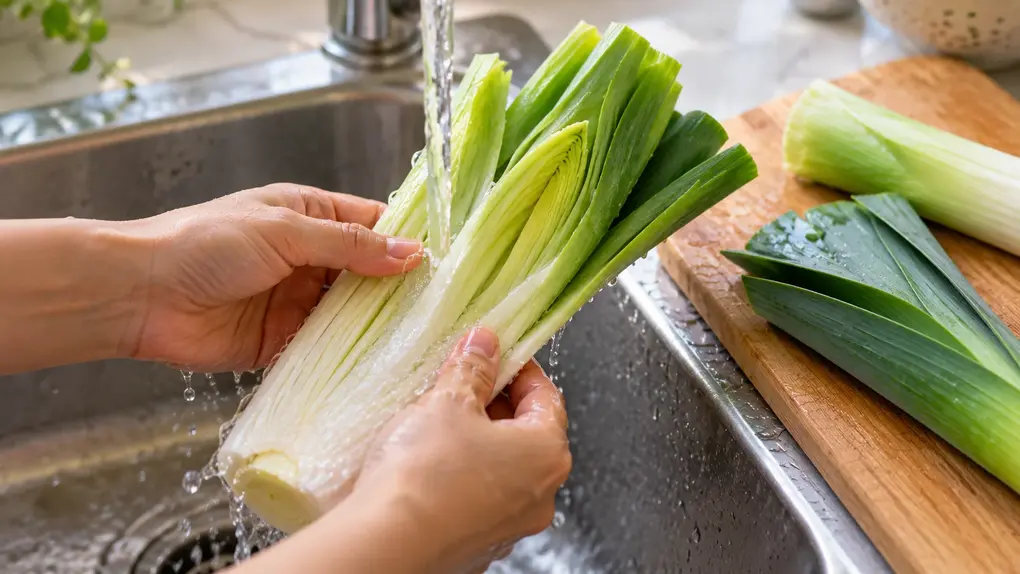
Leeks can hold dirt well below the outer surface. After trimming the root, cut the stalk lengthwise and gently fan the layers apart under cool running water. Rinse until you cannot see any remaining soil or grit, then slice the clean leek thinly so it cooks evenly.
Potato
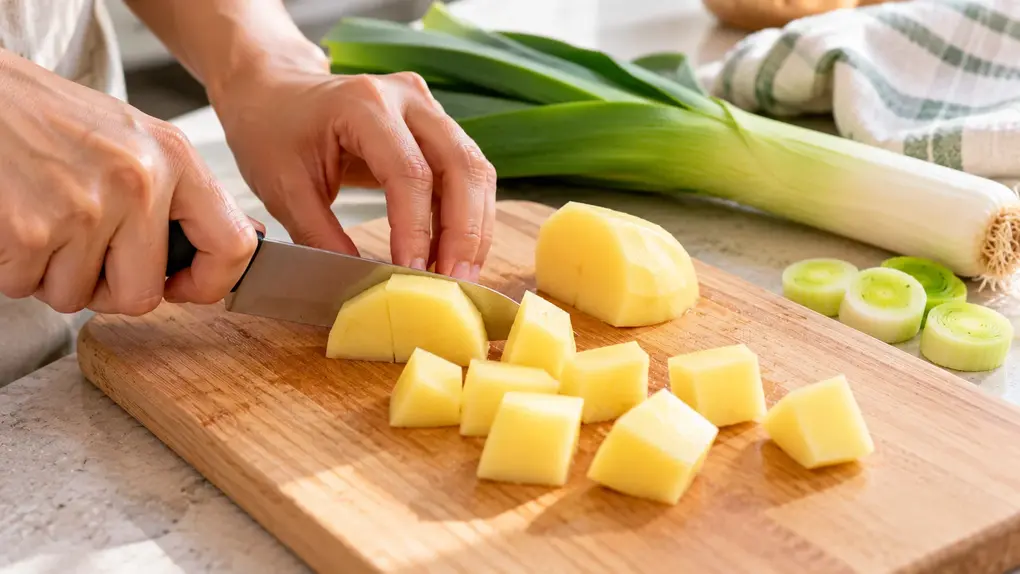
Use 1 small potato, about 120 g after peeling. Potato softens the leek flavor and gives the puree a creamy, spoonable body. Cut it into roughly 1-inch pieces of similar size so they become tender at about the same time.
Water
You need water for steaming plus approximately 2–6 tablespoons for blending. Start with 2 tablespoons. Add more only after blending and checking the consistency.
Simple substitutions
Sweet potato can replace white potato for a naturally sweeter variation. Once individual foods have been introduced appropriately, leek can also be combined with peas, carrot, cauliflower, soft cooked lentils, fully cooked chicken, or plain pasteurized full-fat yogurt. There is no need to add salt or sugar to the baby’s portion.
How to Make Leek Puree for Baby
1. Clean the leek carefully
Trim off the root and tough dark-green top. Slice the white and light-green section lengthwise, separate the layers, and rinse thoroughly under cool running water. When no grit remains, slice the leek thinly.
2. Prepare the potato
Peel the potato and cut it into roughly 1-inch cubes. Keeping the pieces similar in size helps them cook evenly and prevents some pieces staying firm while others become very soft.
3. Start steaming the potato
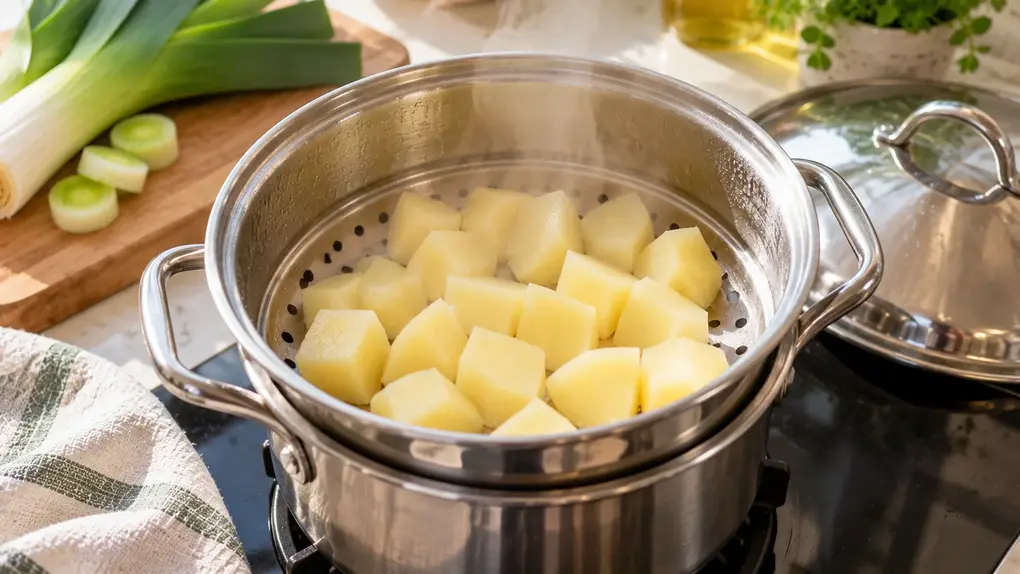
Bring about 1–2 inches of water to a gentle simmer in a saucepan fitted with a steamer basket. Add the potato cubes, cover, and steam for about 7 minutes.
4. Add the leek
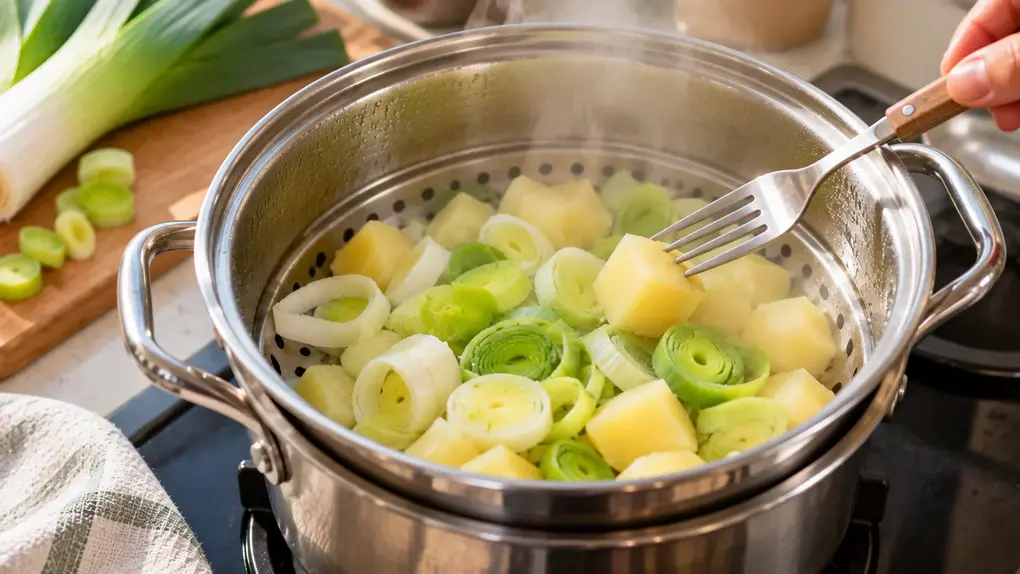
Scatter the sliced leek over the partially cooked potato. Cover again and steam for another 7–8 minutes. Check both vegetables before stopping: a fork should slide easily through a potato cube and the thicker pieces of leek without resistance.
5. Blend until smooth
Transfer the cooked vegetables to a blender or food processor. Add 2 tablespoons of water and blend. Stop, scrape down the sides, and check the consistency before adding more water 1 tablespoon at a time.
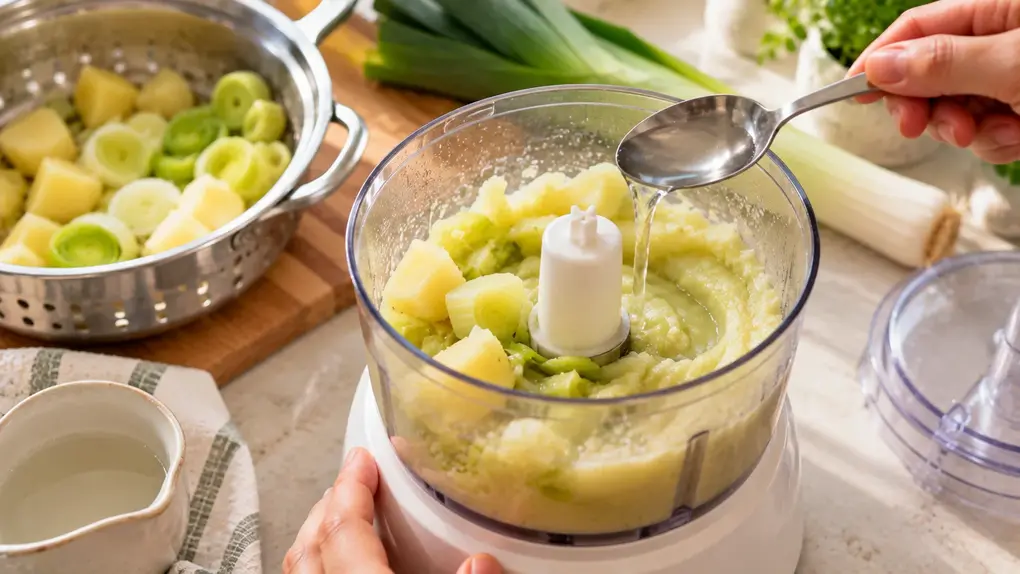
6. Check the texture and cool
For an early smooth puree, blend thoroughly until no obvious pieces remain. Spoon the amount you plan to serve into a clean baby bowl and allow it to cool to a comfortable temperature before offering it.
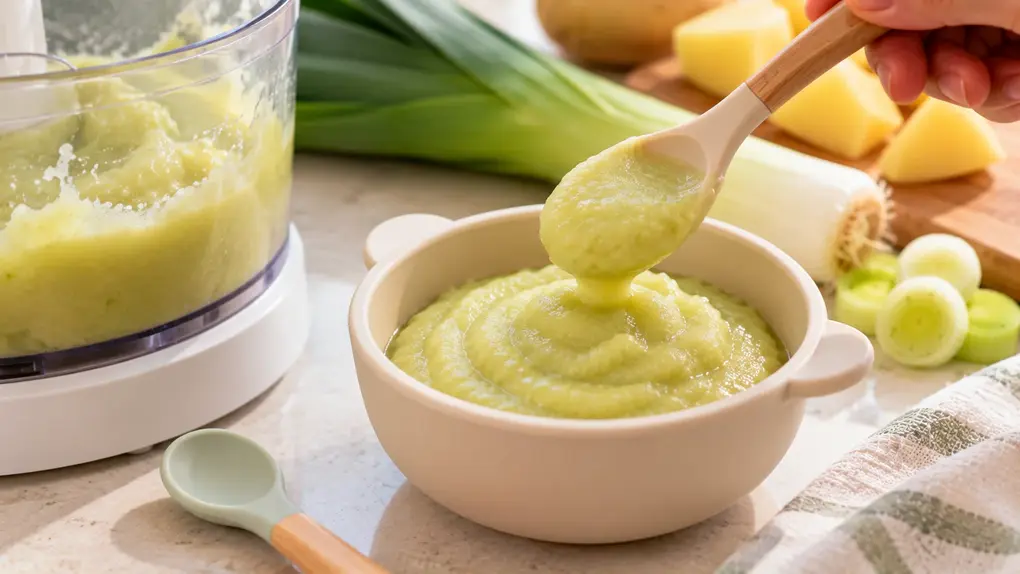
Getting the Texture Right
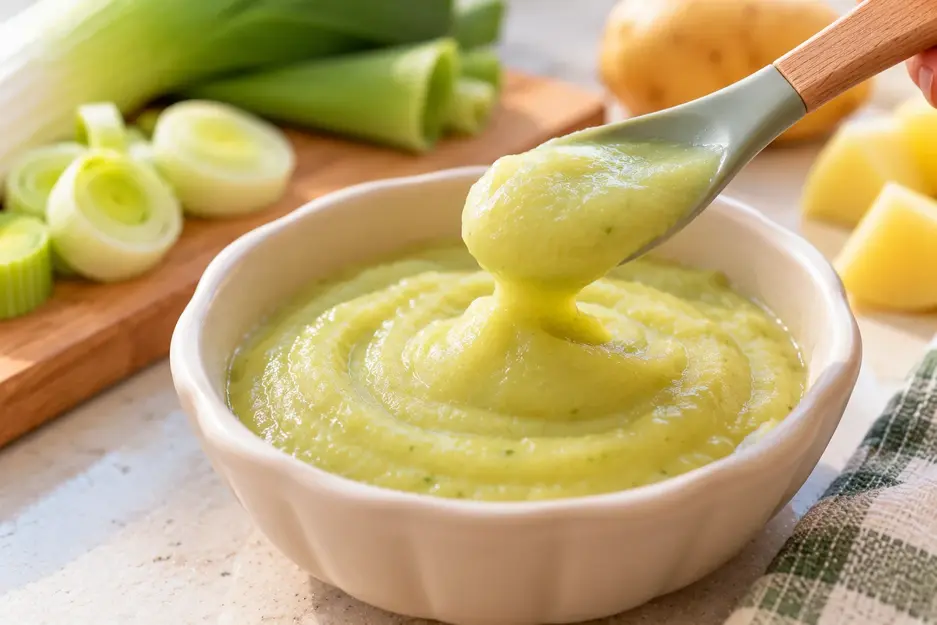
A good early leek puree should be creamy and spoonable rather than watery. It should fall softly from the spoon rather than pour like a liquid.
If the puree is too thick
Blend in water 1 tablespoon at a time. Stir or blend after each addition before deciding whether it needs more.
If it is too thin
Blend in a little more cooked potato if available. Avoid trying to thicken baby puree with uncooked flour.
If it seems stringy
First check that you used the tender white and light-green section and cooked it until very soft. Blend longer, scraping down the sides. For an early eater who needs a particularly smooth puree, pressing persistent fibers through a fine sieve can create a finer finish.
If the texture changes after chilling or freezing
Potato naturally thickens as it cools and can become slightly grainier after freezing. Stir the puree thoroughly first. If it still needs loosening, add a small amount of suitable liquid gradually.
How to Serve It to Baby
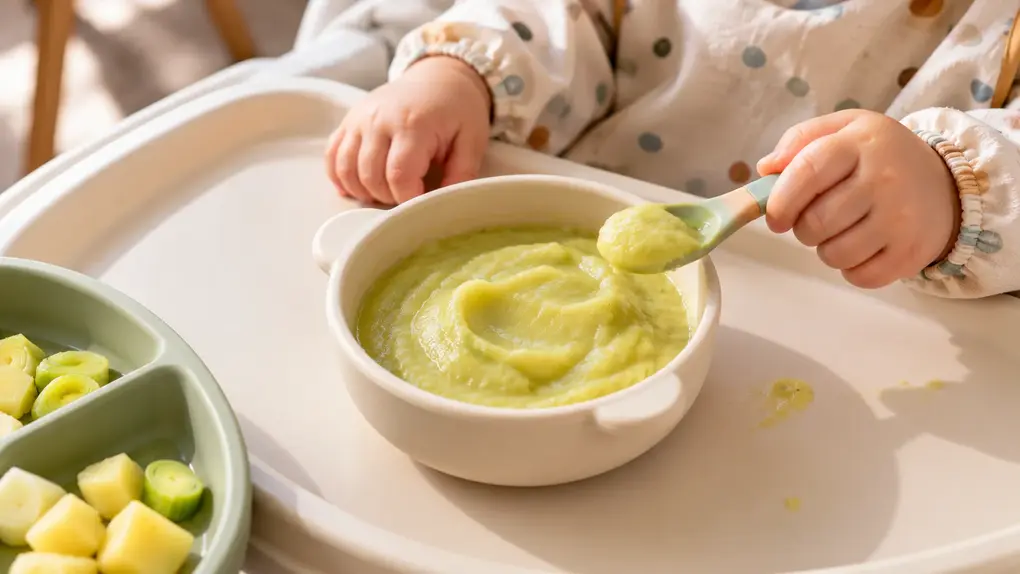
Around 6 months
When your baby is developmentally ready for solids, offer a small amount of smooth puree from a spoon. Follow hunger and fullness cues instead of expecting a fixed portion to be finished. Age is only a general guide; readiness skills also matter.
Around 9 months
As eating skills improve, use less blending liquid or shorten the blending time. The puree can become thicker and eventually move toward a soft mash rather than remaining completely smooth.
12+ months
Serve a thicker leek-and-potato mash as one component of a balanced meal. Older babies and toddlers can increasingly experience appropriately prepared family foods and a wider variety of textures.
For self-feeding
A thicker version can be placed on a short baby spoon and handed to baby for self-feeding. Puree itself does not replace appropriately prepared finger foods if your family is following a baby-led approach. Keep baby upright and supervise every meal.
Flavor Combinations to Try
Once the individual ingredients are suitable and familiar, the basic leek-and-potato puree can become a flexible savory base. Change the serving portion rather than mixing an entire stored batch, especially when you want different flavors across several meals.

- Leek + sweet potato: replace white potato for a sweeter, orange-tinted puree.
- Leek + potato + peas: blend in soft cooked peas for a greener vegetable combination.
- Leek + carrot + potato: steam carrot until completely tender and blend with the other vegetables.
- Leek + cauliflower: add very soft steamed cauliflower for another mild savory combination.
- Leek + lentils: mix with thoroughly cooked soft lentils for a thicker meal.
- Leek + chicken + potato: blend in fully cooked tender chicken with enough liquid for an appropriate texture.
- Leek + plain yogurt: once dairy is appropriate, stir pasteurized full-fat plain yogurt into a cooled serving.
- Leek + thyme: a tiny amount of mild herb can add another flavor without relying on salt.
Avoid honey before 12 months. Do not make a young baby’s food more flavorful by adding salt, sugar, or salty packaged seasonings.
For another mild green option, try our Pea Puree for Baby recipe.
Storage, Freezing & Reheating
Cool and refrigerate freshly prepared puree promptly in a clean airtight container. For a conservative homemade baby-food approach, use refrigerated puree within 48 hours.
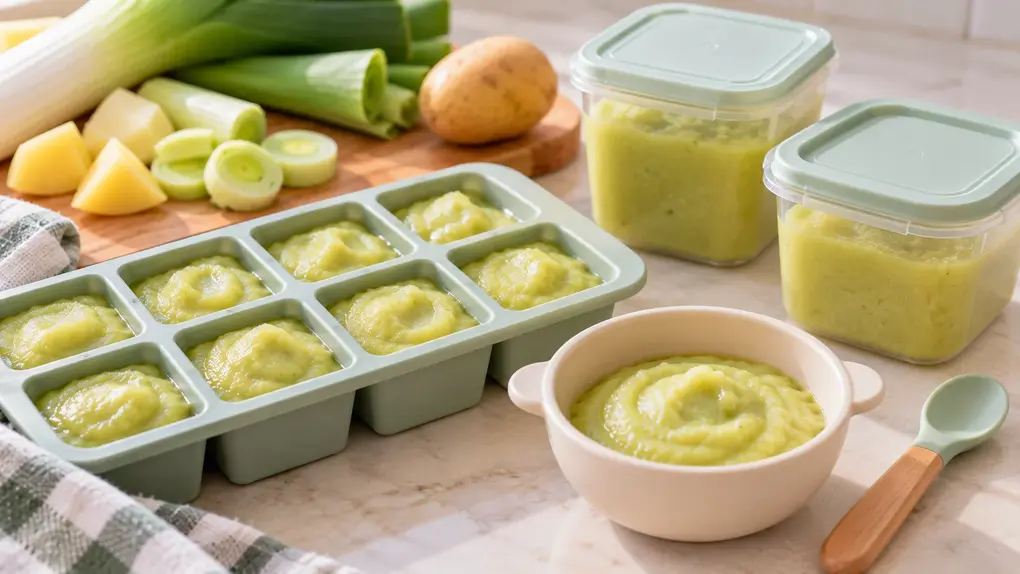
For longer storage, freeze fresh untouched puree promptly in small individual portions. For a conservative homemade baby-food approach, use frozen portions within one month for best quality. Labeling portions with the recipe name and preparation date makes older portions easier to identify.
Thaw a portion overnight in the refrigerator or by another safe thawing method. Do not refreeze previously thawed homemade baby food. If warming the puree, heat only the amount needed, stir thoroughly so there are no hot spots, and check the temperature before feeding.
Keep the main storage batch separate from baby’s feeding bowl. Once saliva from a used spoon has contacted a serving, discard what remains in that bowl rather than returning it to the storage container. Freezing small portions makes this easier and reduces unnecessary waste.
Recipe Success Tips
- Wash between the leek layers; rinsing only the outside can leave hidden grit.
- Use the tender white and light-green section for a smoother result.
- Do not rush steaming. Undercooked leek can remain fibrous even after blending.
- Cut potato into even pieces so the cubes become tender together.
- Start with only 2 tablespoons of blending water and increase slowly.
- Keep stored puree untouched and portion out what you need before feeding.
- As skills develop, gradually move toward thicker and lumpier textures rather than keeping every meal perfectly smooth.
Common Mistakes to Avoid
Not cleaning the inner layers
Leeks can look clean on the outside while still holding soil inside. Split and rinse the layers before slicing.
Using too much dark-green leek
The darker leaves are tougher and can make an early smooth puree more fibrous. Use the white and light-green section for this recipe.
Stopping cooking too early
A blender cannot fully compensate for firm vegetables. Continue steaming until both the potato and leek are easily pierced with a fork.
Adding too much water
A few tablespoons can make a large difference. Add water gradually after the first blend.
Repeatedly reheating the whole batch
Remove only the portion needed for the meal rather than warming and cooling the main container again and again.
Leek Puree for Baby Recipe Card
A mild, creamy homemade puree made with leek, potato, and water. Blend it smooth for an early eater or gradually leave it thicker as texture skills develop.
Prep time: 10 minutes
Cook time: 15 minutes
Total time: 25 minutes
Yield: About 1½ cups
Ingredients
- 1 medium leek
- 1 small potato, about 120 g peeled
- 2–6 tablespoons water for blending, plus water for steaming
Instructions
- Trim the leek root and tough dark-green top.
- Split the white and light-green section lengthwise, separate the layers, rinse thoroughly, and slice thinly.
- Peel the potato and cut into roughly 1-inch cubes.
- Bring 1–2 inches of water to a simmer beneath a steamer basket.
- Add potato, cover, and steam for 7 minutes.
- Add sliced leek, cover, and steam another 7–8 minutes until both vegetables are very tender.
- Transfer to a blender or food processor.
- Add 2 tablespoons water and blend smooth, adding extra water 1 tablespoon at a time only if needed.
- Cool the serving portion to a comfortable temperature before offering.
Essential note: Do not add salt or sugar. For an early eater, blend until smooth; as eating skills progress, gradually offer a thicker or mashed texture.
Storage: Refrigerate promptly in a clean airtight container and use within 48 hours. Freeze untouched portions promptly and use within 1 month for best quality.
Conclusion
Leek puree for baby is an easy savory option when you want to expand beyond sweeter purees. The key is careful preparation: wash the leek between its layers, use the tender white and light-green section, steam both vegetables until completely soft, and add blending water slowly. Once the smooth version is familiar, the same leek-and-potato base can gradually become thicker and more textured as your baby’s eating skills develop.
Want to try another mild vegetable? Try our Cauliflower Puree for Baby next.
Disclaimer
This recipe provides general food-preparation information, not individualized medical advice. Babies commonly begin complementary foods around 6 months when developmentally ready, but development varies. Always supervise eating and provide textures appropriate for current skills. Breast milk or infant formula remains an important source of nutrition during the first year. If your baby was born prematurely, has swallowing difficulties, significant eczema, known food allergies, or another condition affecting feeding, seek individualized guidance from a pediatrician or qualified healthcare professional when needed.
FAQ’s
Q.1 Can babies eat leeks?
Cooked leek can be included in complementary feeding once a baby is developmentally ready for solid foods, commonly around 6 months. Preparation and texture should match the baby’s current eating abilities.
Q.2 Do I need to cook leek before making baby puree?
Yes for this recipe. Cooking softens the leek’s texture and mellows its stronger raw flavor. Steam until even the thicker pieces are completely tender.
Q.3 Why is my leek puree stringy?
Tough green leaves, insufficient cooking, or inadequate blending can leave fibers. Use the tender part, cook until very soft, and blend thoroughly. For a particularly smooth early puree, a fine sieve can remove persistent fibers.
Q.4 Can I make leek puree without potato?
Yes, although leek alone makes a lighter puree. You can combine very soft cooked leek with another suitable cooked vegetable such as sweet potato or cauliflower when that ingredient is appropriate for your baby.
Q.5 Is leek puree suitable for a 6-month-old?
For a developmentally ready baby, thoroughly cooked leek can be blended into a smooth puree. Readiness matters alongside chronological age.