Zucchini Pancakes for Baby: 5 Secrets to Soft, Fluffy Pancakes
Soft, veggie-packed and easy to hold, these zucchini pancakes are a simple breakfast or snack for babies starting finger foods. They use everyday ingredients, contain no added salt or sugar, and freeze well for busy mornings.
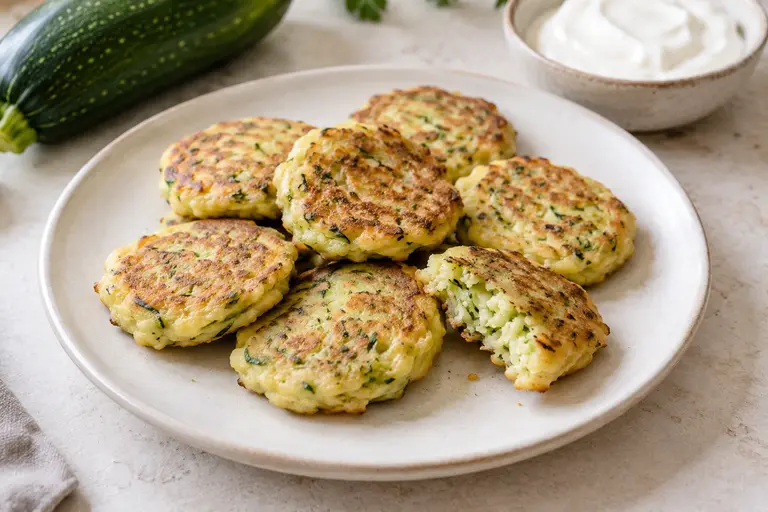
The secret is simple: squeeze the grated zucchini well, keep the batter thick, and cook the pancakes gently so the centre is fully done. The result should be soft enough to squash between your fingers, but sturdy enough for little hands to pick up. This recipe is designed for babies who are developmentally ready for solids, usually around 6 months. If egg, dairy or wheat is new to your baby, introduce allergens carefully and follow your healthcare professional’s advice when needed. The precise yield and cooking time are provisional until a real batch is tested.
If your baby is just starting solids, explore our First Foods for Baby at 6 Months guide for suitable foods and textures.
| AGE Around 6m+* | YIELD About 12 | TOTAL TIME About 30–35 min |
| TEXTURE Soft finger food | FREEZER Yes | ALLERGENS Egg, dairy, wheat/oats |
Only when baby is developmentally ready for solids.
Why You’ll Love These Baby Zucchini Pancakes
- Simple ingredients: zucchini, egg, flour, yogurt and a little baking powder.
- Soft finger-food texture that can be cut to suit your baby’s eating skills.
- No added salt, honey or refined sugar in the baby portion.
- Easy to batch cook and useful for breakfast, lunch or snack time.
- Freezer friendly, so you can prepare a few portions ahead.
- Family friendly: cook the baby batch plain, then season adult portions separately.
Unlike a long nutrition article, this recipe keeps the focus on what parents usually need most: what to use, what the batter should look like, how to cook it, how to serve it, and how to store it safely.
Ingredients You Need
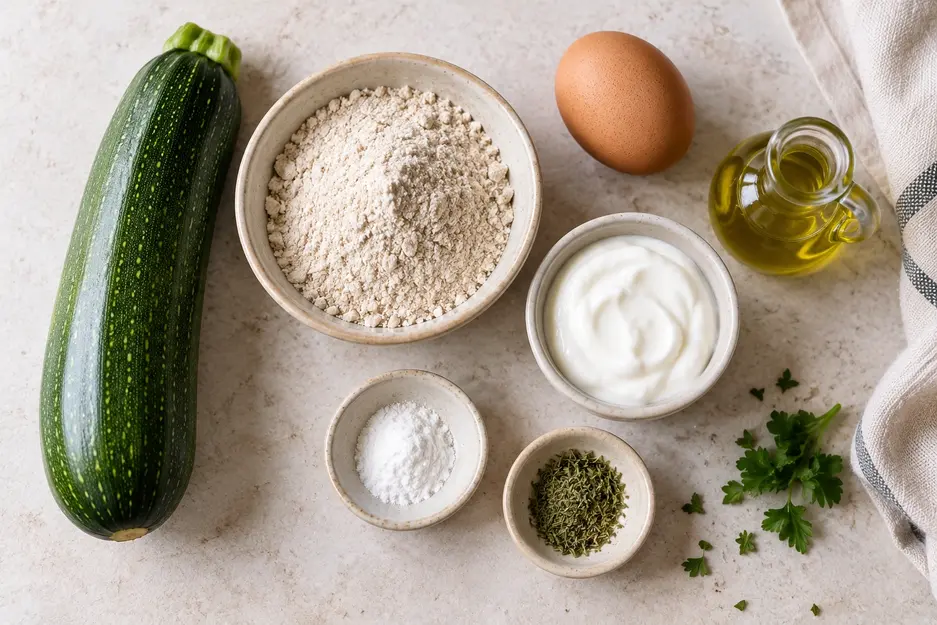
- 1 medium zucchini, about 200 g before squeezing (weigh the squeezed zucchini for your own batch record)
- 1 large egg
- 60 g oat flour or whole-wheat flour, about 1/2 cup depending on flour
- 2 tablespoons plain full-fat pasteurised yogurt
- 1/4 teaspoon baking powder
- Optional: a small pinch of mild dried herbs or cinnamon
- A little olive oil or unsalted butter for the pan
Use plain yogurt with no added sugar. If you use oat flour, finely ground plain oats work well, but packaged oat flour is convenient. Whole-wheat flour also works, although it may make the batter slightly firmer.
Zucchini varies a lot in water content. That is why the recipe gives you a texture target rather than telling you to add extra liquid automatically. The finished batter should be thick and scoopable, not runny.
Do not add salt to the baby’s portion. Babies do not need salt added to food, and honey should be avoided before 12 months.
How to Make Zucchini Pancakes for Baby
The method is easy, but the texture matters. Work through the steps below and check the batter before cooking the full batch.
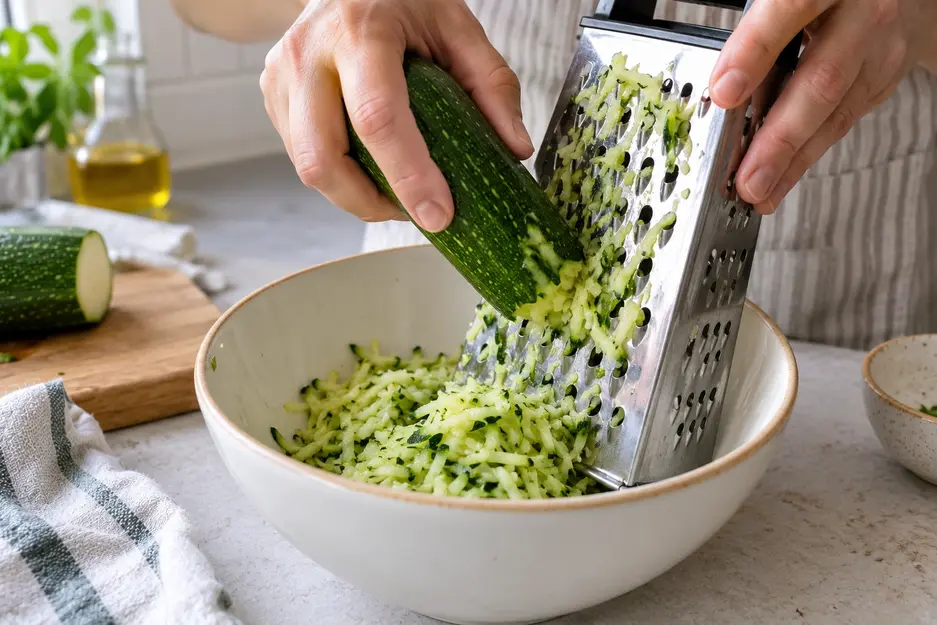
1. Grate the zucchini
Wash the zucchini, trim the ends and grate it on the coarse side of a box grater. Tender skin can stay on. Coarse shreds give the pancakes a little structure without making them hard.
2. Squeeze out the moisture
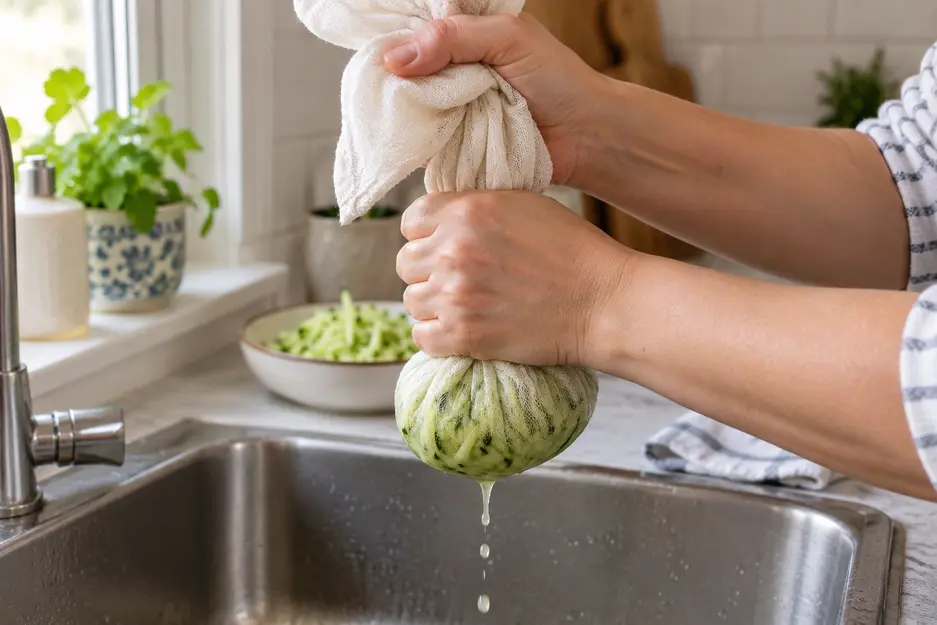
Place the grated zucchini in a clean muslin cloth or thin kitchen towel. Twist and squeeze firmly over the sink until the shreds are moist but no longer releasing a steady stream of liquid.
This is the most important step. Too much water can make the batter spread, tear or stay wet in the middle.
3. Whisk the egg and yogurt
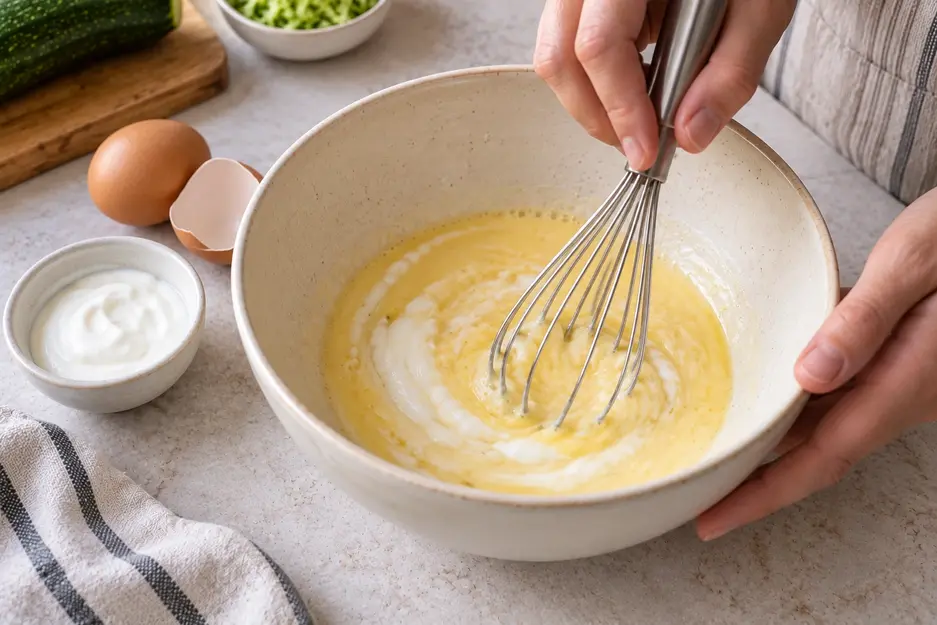
Crack the egg into a medium bowl and add the yogurt. Whisk until evenly combined. The mixture does not need to become foamy.
4. Add the dry ingredients
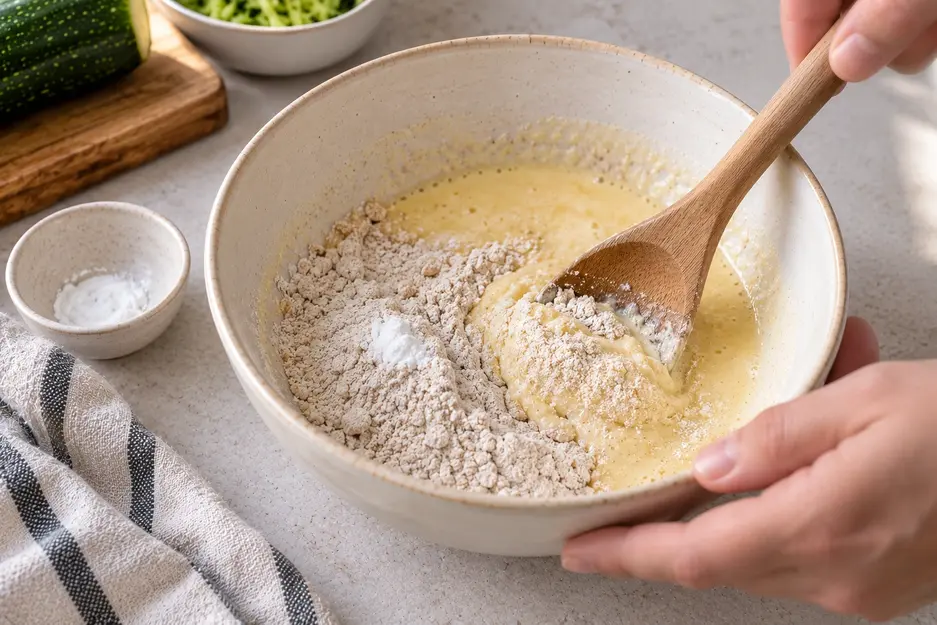
Add the flour, baking powder and optional mild seasoning. Stir just until the flour disappears. Avoid aggressive mixing; you only need a smooth, thick base.
5. Fold in the zucchini and rest
Fold the squeezed zucchini into the batter. Let it sit for about 5 minutes so the flour can absorb some of the remaining moisture.
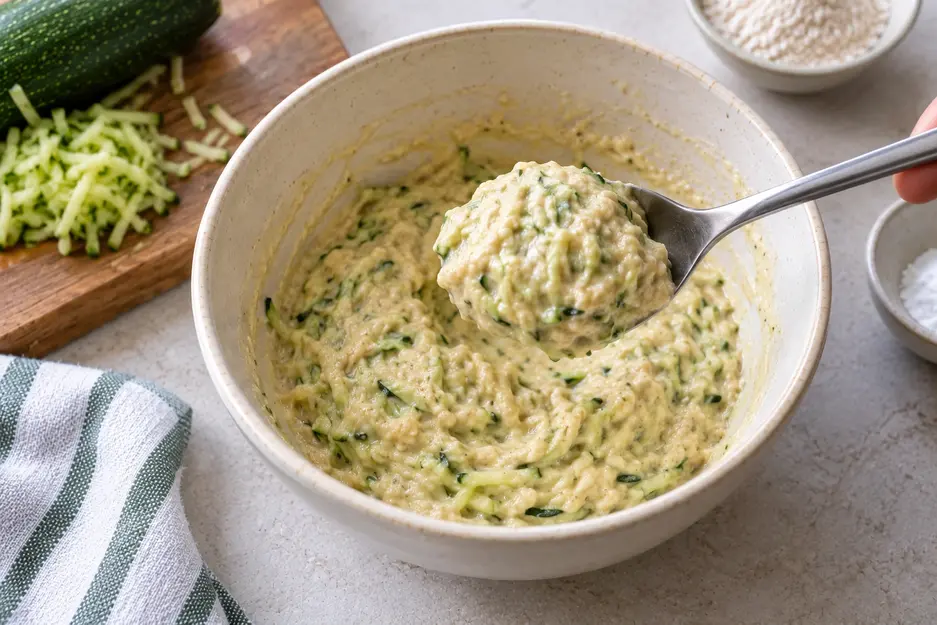
Check the consistency after resting. A spoonful should hold its shape for a moment. If it looks watery, add flour one teaspoon at a time. If it is extremely stiff, add a teaspoon of water and mix again.
6. Cook the pancakes gently
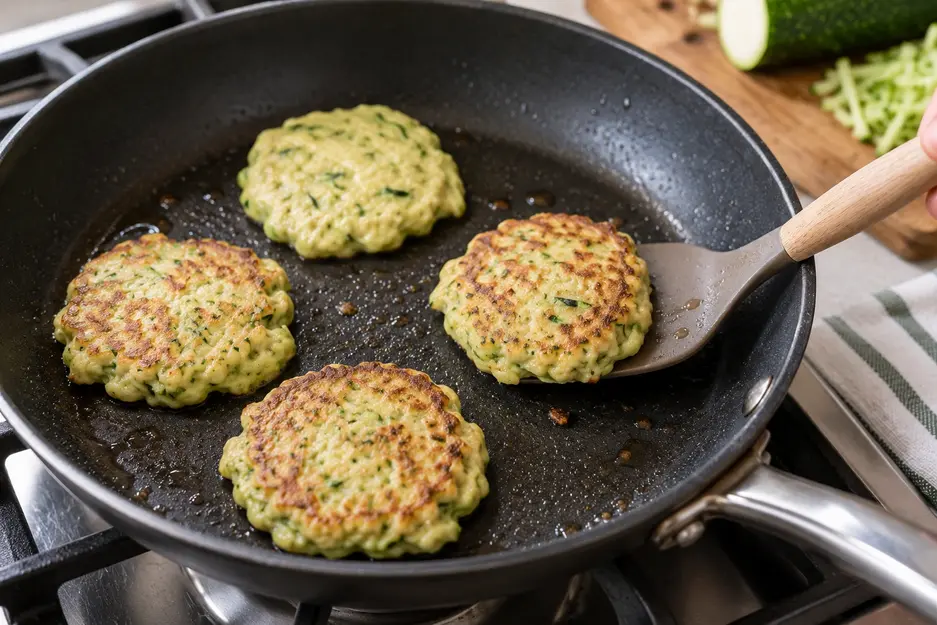
Warm a non-stick pan over low-medium heat and lightly grease it. Drop tablespoon-sized portions into the pan and flatten them gently so they are about 1 cm thick or a little thinner.
Cook for roughly 2 to 3 minutes on the first side, then flip and cook the second side. The exact time depends on the pan and thickness, so use doneness rather than colour alone.
The centre should be fully cooked with no wet batter. Egg dishes should reach 71°C/160°F when checked with a food thermometer. If the outside browns too fast, lower the heat and make the next pancakes a little thinner.
7. Cool and check the texture
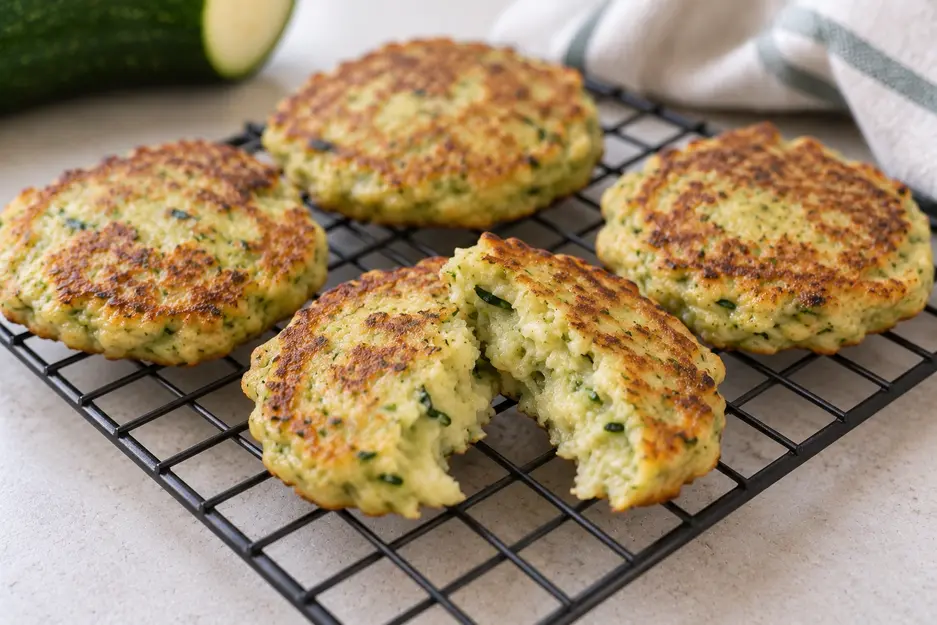
Move the pancakes to a clean plate or wire rack. Cool them until they are safe to touch, then tear one open. The middle should look cooked and soft, not gummy or raw.
Before serving to a baby, press a piece between your thumb and finger. It should squash easily.
What Should the Batter Look Like?
Before you cook the full batch, check the batter. It should be thick enough to sit on the spoon, with visible zucchini strands throughout. It should not pour across the pan as soon as it lands.
- Too wet: add flour 1 teaspoon at a time.
- Too thick: add water 1 teaspoon at a time.
- Just right: a spoonful spreads only slightly when you press it with the back of the spoon.
Cook one test pancake first. That single pancake tells you whether the zucchini was squeezed enough and whether the heat is right.
How to Serve Zucchini Pancakes to Baby
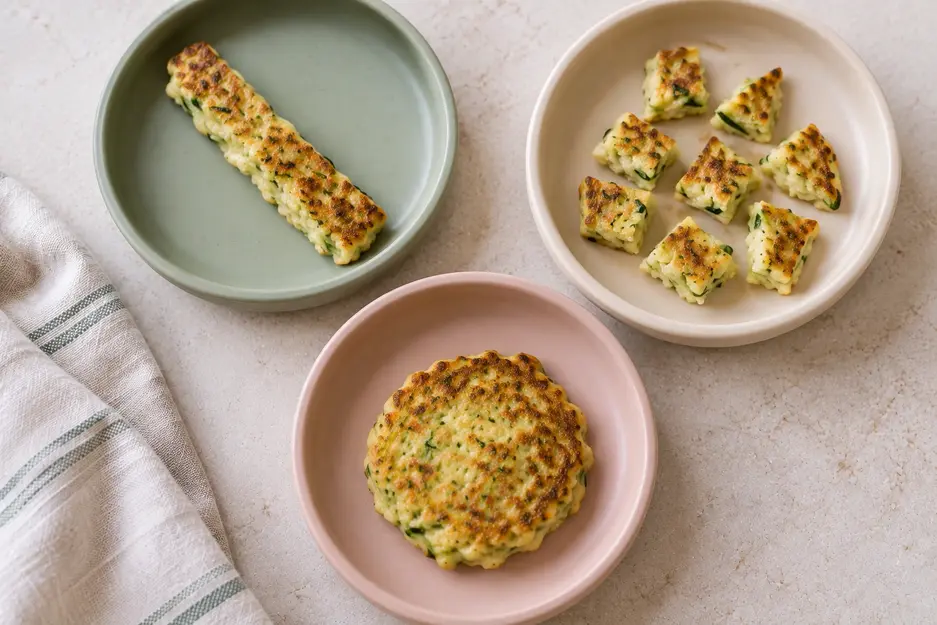
Serving size and shape should follow your baby’s developmental skills rather than the calendar alone. Babies should be sitting upright and showing the signs of readiness for solids before finger foods are offered.
- Around 6–8 months: offer a soft, wide strip or a larger piece that your baby can grip in a fist.
- Around 9–12 months: offer soft bite-sized pieces as the pincer grasp develops, or continue with larger pieces if that works better.
- 12 months+: offer a small whole pancake or torn pieces, depending on your child’s chewing and self-feeding skills.
These are general examples, not rigid rules. Always adapt the texture and size to your own baby. The pancake should be soft enough to mash easily in the mouth.
Serve it plain or with a thin layer or small spoonful of a familiar accompaniment, such as plain yogurt. Add variety across the meal with age-appropriate fruit or an iron-rich food your baby already tolerates.
Stay with your baby while they eat. Cutting and softening food can reduce choking risk, but no food is completely risk-free.
Tips for Soft, Fluffy Pancakes
- Squeeze first. Wet zucchini is the most common reason the pancakes turn soggy.
- Keep them small. Mini pancakes are easier to flip and cook through evenly.
- Flatten the batter. Thick mounds can brown before the centre is done.
- Use low-medium heat. Gentle cooking gives the egg time to cook without burning the outside.
- Rest the batter. Five minutes helps the flour absorb moisture.
- Adjust by teaspoons. Add flour or water slowly because every zucchini is different.
If your first pancake spreads too much, treat it as a test pancake. Add a little flour before cooking the rest. If it is dry and firm, loosen the batter slightly. Small adjustments are better than changing the recipe all at once.
Storage, Freezing and Reheating
These pancakes are useful for meal prep, but baby food should be cooled and stored promptly. Only store pancakes that have not been partly eaten.
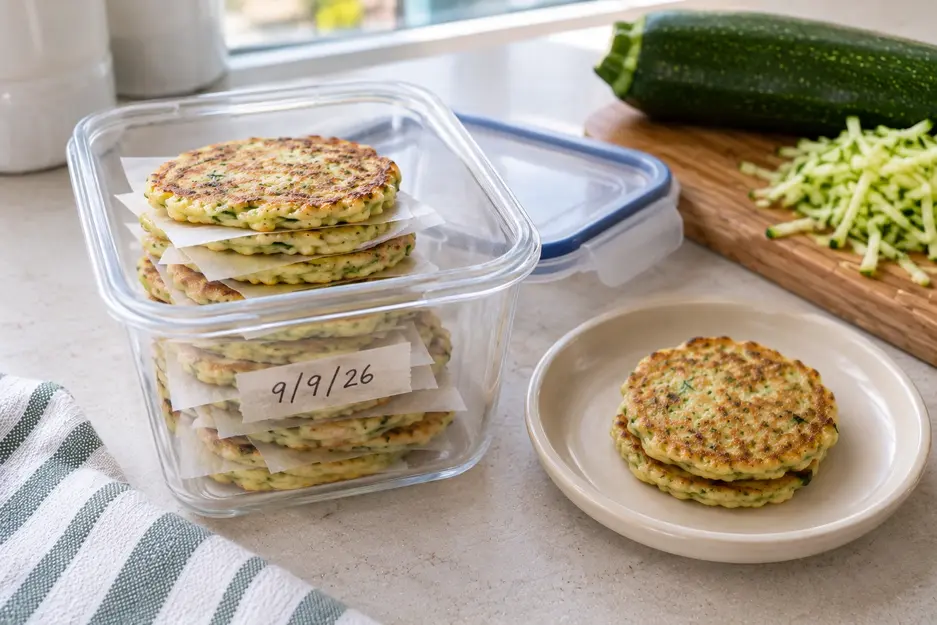
- Fridge: cool promptly and store in an airtight container for up to 2 days.
- Freezer: cool completely, freeze in a single layer until firm, then transfer to a freezer-safe container or bag.
- Best quality: use frozen pancakes within about 1 month for the best texture.
- Defrost: thaw thoroughly in the refrigerator or use the microwave defrost setting. Do not thaw at room temperature.
- After defrosting: use within 24 hours.
- Reheat: reheat once until steaming hot throughout, then cool to a safe temperature before serving.
- Leftovers from baby’s plate: discard rather than storing again.
If microwaving, check carefully for hot spots before serving. A small batch stored in meal-sized portions makes it easier to take out only what you need.
Easy Variations
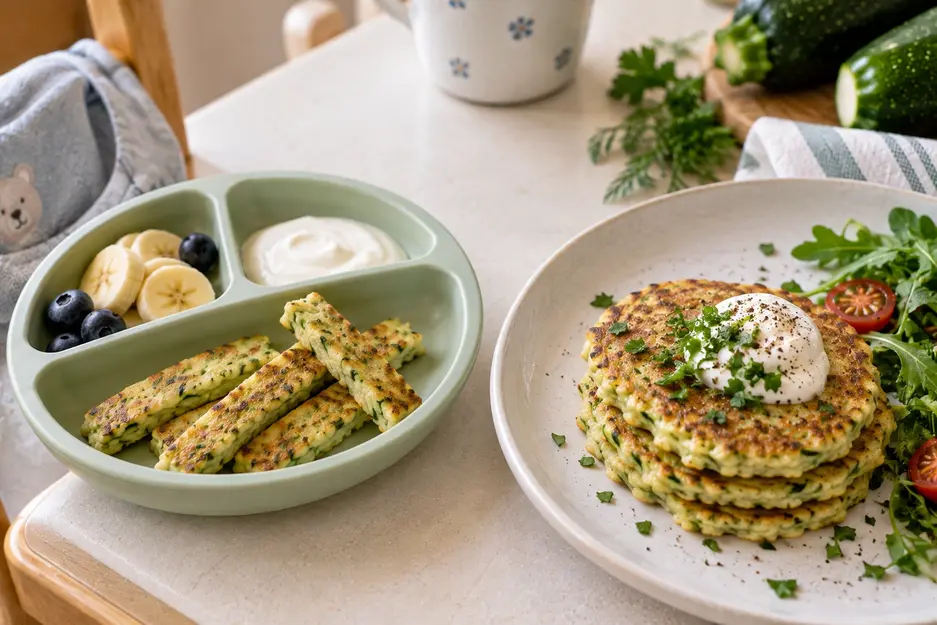
Once your baby has safely tolerated the basic ingredients, you can make small flavour changes without turning the recipe into something complicated.
- Mild herbs: add a small pinch of dried oregano, parsley or another familiar mild herb.
- Cinnamon: a tiny pinch gives a warm flavour without adding sugar.
- Whole-wheat flour: use in place of oat flour, then adjust the batter by teaspoons if needed.
- Family batch: cook the baby portion plain, then season adult servings after cooking.
Avoid treating untested substitutions as guaranteed swaps. Egg-free binders and chickpea flour can change the texture considerably. If you need an allergy-friendly version, use a recipe specifically tested for that substitution.
For another soft vegetable breakfast, try our Sweet Potato Pancakes for Baby for a naturally sweet alternative.
Zucchini Pancakes for Baby Recipe Card
Prep: about 10 minutes | Rest: 5 minutes | Cook: until fully cooked; timing varies
Ingredients
- 1 medium zucchini (about 200 g before squeezing)
- 1 large egg
- 60 g oat flour or whole-wheat flour
- 2 tbsp plain full-fat pasteurised yogurt
- 1/4 tsp baking powder
- Optional mild herbs or cinnamon
- Olive oil or unsalted butter for cooking
Instructions
- Wash and coarsely grate the zucchini.
- Squeeze the grated zucchini firmly in a clean cloth to remove excess moisture.
- Whisk the egg and yogurt in a bowl.
- Stir in the flour, baking powder and optional seasoning.
- Fold in the zucchini and rest the batter for about 5 minutes.
- Cook tablespoon-sized portions, flattened to about 1 cm or less, over low-medium heat. Turn when the first side is set. Cook until the centre is fully cooked; check egg dishes reach 71°C/160°F with a food thermometer.
- Cool, check that the texture squashes easily, then cut or serve in a shape suited to your baby.
Food-safety note: Egg dishes should reach 71°C/160°F. Refrigerate cooked pancakes promptly, use refrigerated portions within 2 days, defrost frozen food thoroughly, reheat only once until steaming hot, and cool before serving.
Conclusion
These zucchini pancakes are a simple way to turn an everyday vegetable into a soft, make-ahead meal for your baby. Squeeze the zucchini well, keep the batter thick, and cook each pancake thoroughly for the best texture. Serve them in a shape that suits your baby’s eating skills, and freeze extra untouched portions for another busy day.
If your baby refuses them at first, offer them again another day without pressure. The goal is to make mealtimes relaxed, safe and enjoyable while your baby explores new foods. A small batch is a great place to start, and you can prepare more once you know the recipe works for your family.
Looking for more veggie-packed breakfast ideas? Try our Spinach Apple Pancakes for Babies for another soft finger-food option.
Disclaimer
This recipe is provided for general information and is intended for healthy, full-term babies who are developmentally ready for solids. It is not a substitute for individual medical or feeding advice. Babies develop at different rates, so adapt food texture and serving size to your child’s abilities and supervise them closely while eating. The ingredient formula is adapted and has not been independently kitchen-tested; actual results may vary.
FAQ’s
Q.1 Can babies eat zucchini pancakes from 6 months?
They can be offered from around 6 months when a baby is developmentally ready for solids and the pancake has an appropriate soft texture. Readiness and safe positioning matter more than age alone.
Q.2 Do babies need teeth to eat these?
Not necessarily. Babies can manage many soft foods with their gums, but the pancake still needs to be fully cooked, soft and easy to squash. Watch how your baby handles the texture.
Q.3 Can I make them without egg?
An egg-free version needs a tested binder. Flax, banana and commercial egg replacers can all change the structure, so this recipe does not give an untested one-for-one replacement.
Q.4 Can I use chickpea flour?
Chickpea flour may work, but it absorbs moisture differently and has a stronger flavour. Use a specifically tested chickpea-flour recipe if you want a dependable result.
Q.5 Why are my pancakes falling apart?
The zucchini may still contain too much water, the batter may be too thin, or the first side may not have set before flipping. Squeeze well, add flour by the teaspoon if needed, and keep the pancakes small.