Sweet Potato Pancakes for Baby Led Weaning (8+ Months)
By around 8 months, many babies who are already comfortable with solid foods are ready to explore soft finger foods they can grasp and bring to their mouths. These sweet potato pancakes are designed to be soft enough for a baby to manage while still holding together during self-feeding. The batter uses mashed sweet potato, egg, and a small amount of flour to create a tender pancake with enough structure to survive the flip and little hands. The age in this recipe is a general guide; developmental readiness and your baby’s individual feeding skills matter more than a specific month.
New to solids? Start with our First Foods for Baby at 6 Months guide to check readiness, textures, and first-food basics.
Why You’ll Love This Recipe
- Only four main ingredients, all easy to find.
- No added sugar – sweet potato provides natural sweetness.
- Soft but sturdy enough for self-feeding.
- Easy to make in a small batch or double for later.
- Works for breakfast, lunch, or a snack.
- Simple variations make it easy to adapt for the family.
When Can Babies Eat These Pancakes?
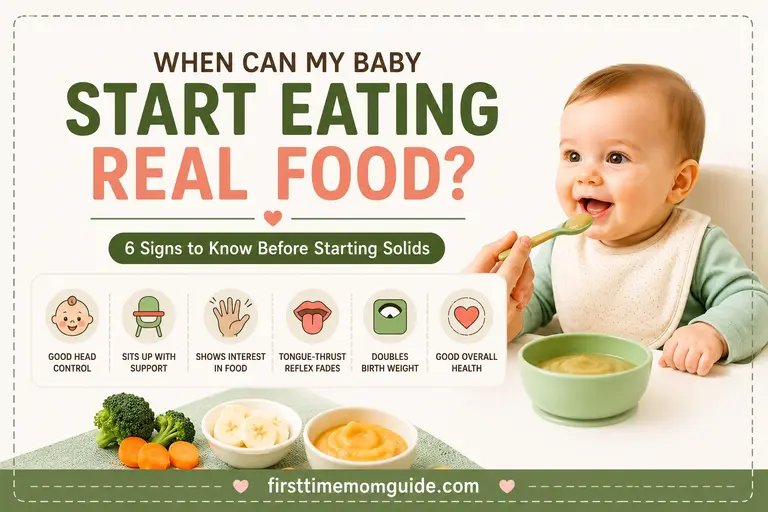
This recipe is aimed at babies around 8 months and older who are already showing developmental readiness for solid foods and have some experience with soft finger foods. Age alone does not determine readiness. Your baby should be able to sit upright with good head and neck control, reach for food, grasp appropriately sized pieces, and bring food toward the mouth. Feeding skills develop at different rates, so use your baby’s abilities rather than the calendar as the main guide. If you have concerns about feeding readiness, swallowing, growth, or food allergies, speak with your child’s pediatrician or another qualified healthcare professional.
Why This Recipe Holds Together
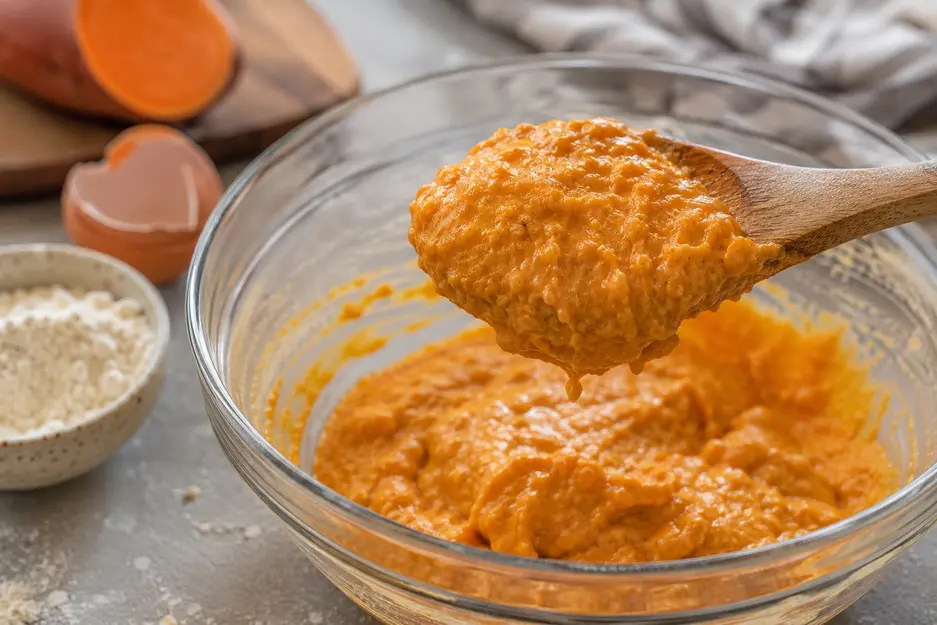
Baby pancakes can fall apart when the batter contains plenty of moist fruit or vegetables but not enough structure. Here, egg and flour work together. Egg proteins set during cooking and help bind the ingredients, while the flour absorbs some moisture and adds enough structure to keep the pancakes intact. Mashed sweet potato provides moisture, color, and natural sweetness. The key is keeping the batter thick rather than pourable.
Ingredients You’ll Need
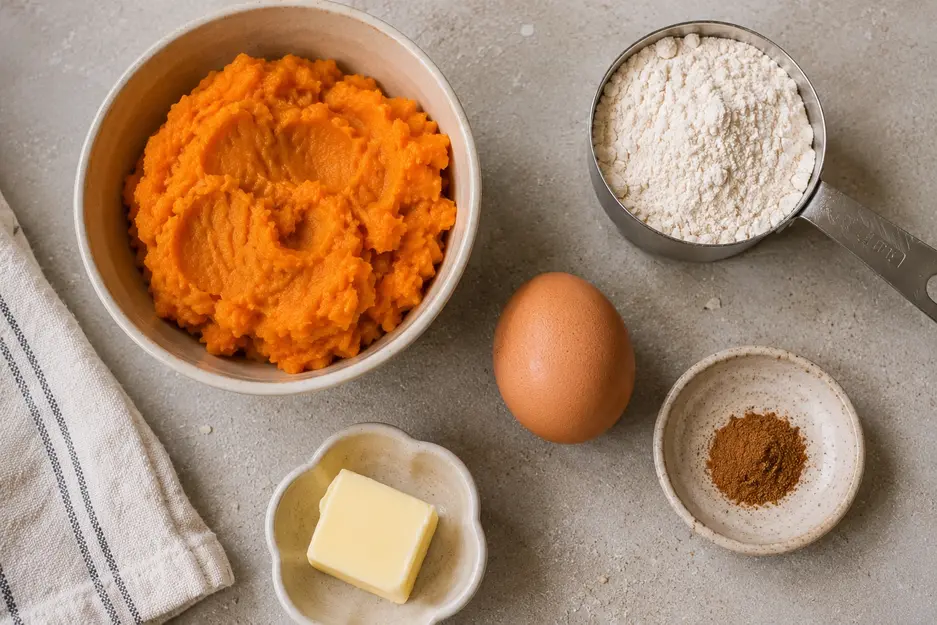
Main Ingredients
- 1 cup mashed sweet potato (about 1 medium sweet potato, cooked and mashed)
- 1 large egg
- 1/4 cup whole wheat flour, all-purpose flour, or oat flour
- 1/4 teaspoon cinnamon, optional
Optional
- A small splash of milk if the batter is too thick to scoop
- A small amount of unsalted butter or neutral oil for the pan
Sweet potato provides moisture and natural sweetness; egg helps bind the batter; flour provides structure; and cinnamon adds flavor without added sugar.
Ingredient Substitutions
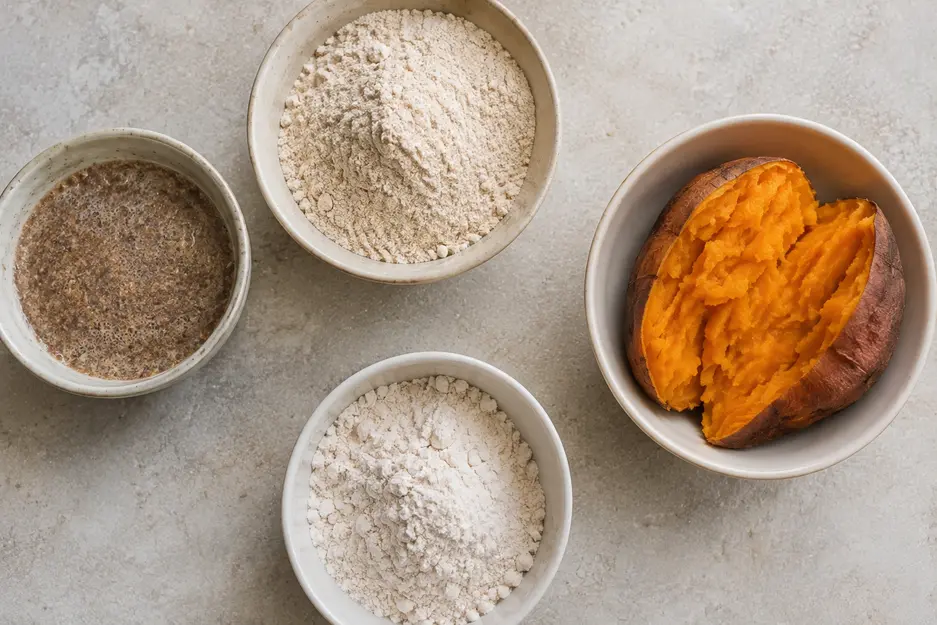
For an egg-free variation, you can try a flax egg made with 1 tablespoon ground flaxseed and 3 tablespoons water, rested for about 5 minutes until thickened. Because flax does not behave exactly like cooked egg protein, expect a softer, more delicate pancake and handle it gently when flipping. If you need the recipe to be gluten-free, use certified gluten-free oat flour or a suitable 1:1 gluten-free baking flour blend. Almond flour and coconut flour are not direct 1:1 substitutes because they absorb moisture differently. Sweet potato can be steamed or roasted; roasting usually produces a deeper, sweeter flavor.
How to Make Sweet Potato Pancakes for Baby Led Weaning
Step 1: Cook and Mash the Sweet Potato
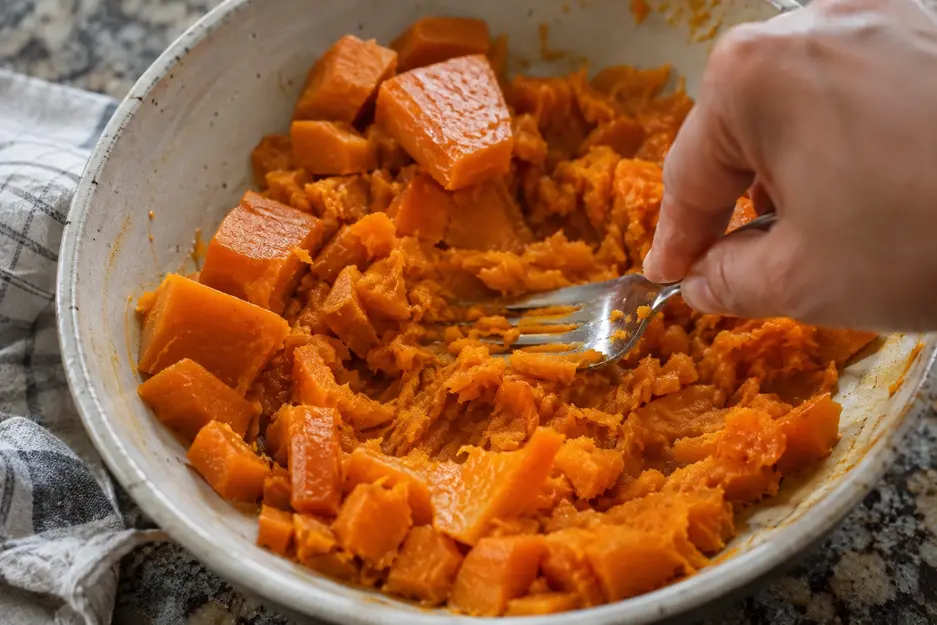
Peel and cube the sweet potato, then steam for about 12 to 15 minutes, or roast at 400°F (about 200°C) until completely fork-tender. Mash thoroughly until smooth.
Step 2: Combine the Wet Ingredients
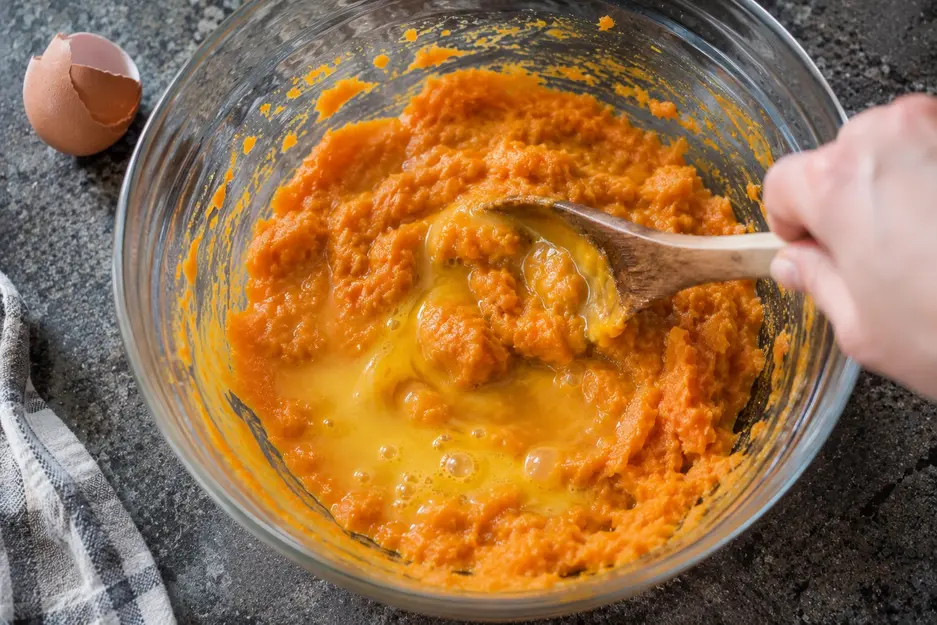
Stir the mashed sweet potato and egg together until evenly combined.
Step 3: Add the Dry Ingredients
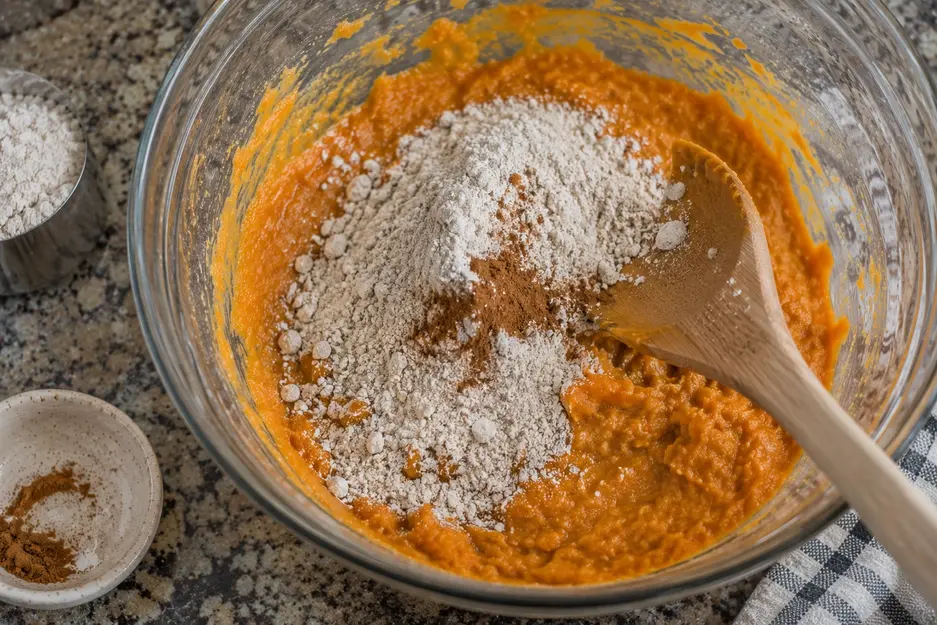
Add the flour and cinnamon and stir just until combined. The batter should be thick and scoopable rather than pourable.
Step 4: Check the Consistency
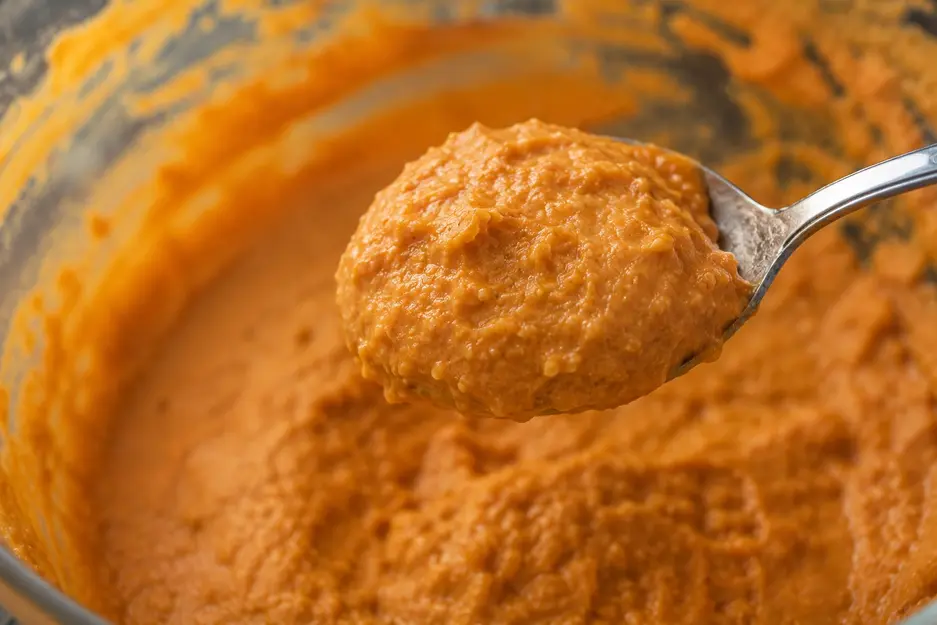
Lift a spoonful of batter. It should mostly hold its shape instead of running off the spoon. If it is too stiff to scoop, add milk a teaspoon or tablespoon at a time. If it is too loose, add a little more flour.
Step 5: Heat the Pan
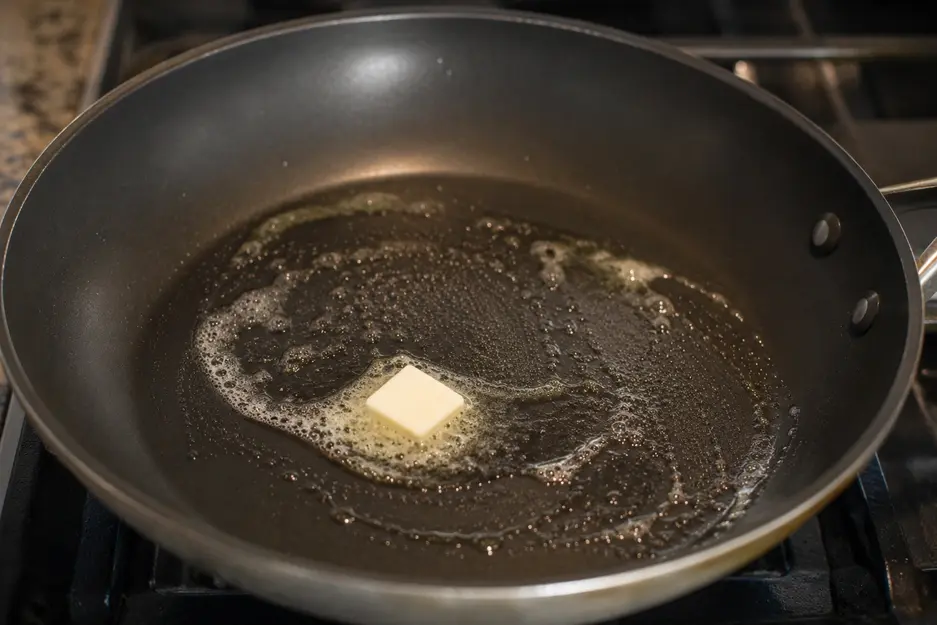
Warm a non-stick skillet over medium-low heat and lightly grease it with unsalted butter or neutral oil.
Step 6: Shape and Cook
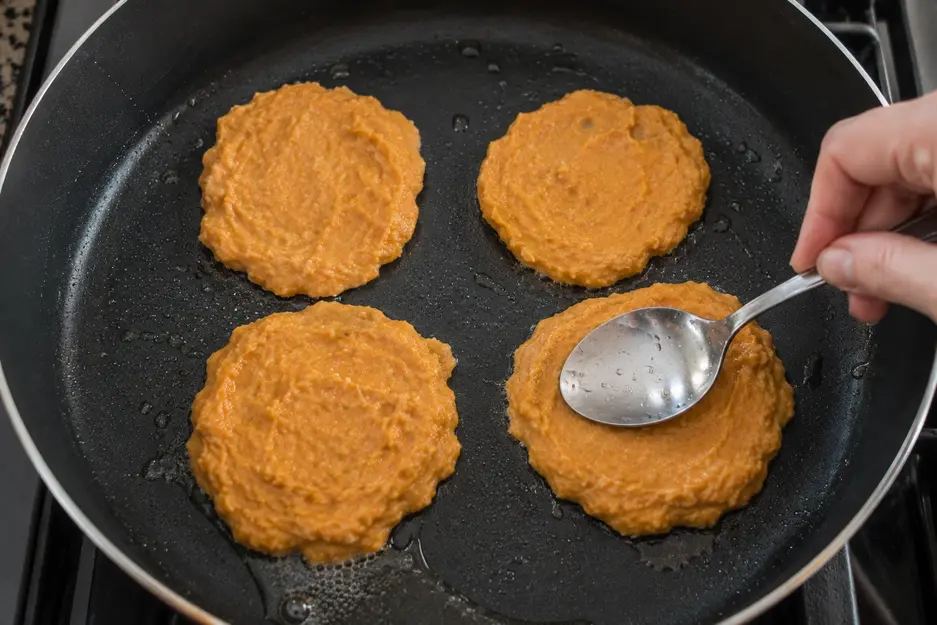
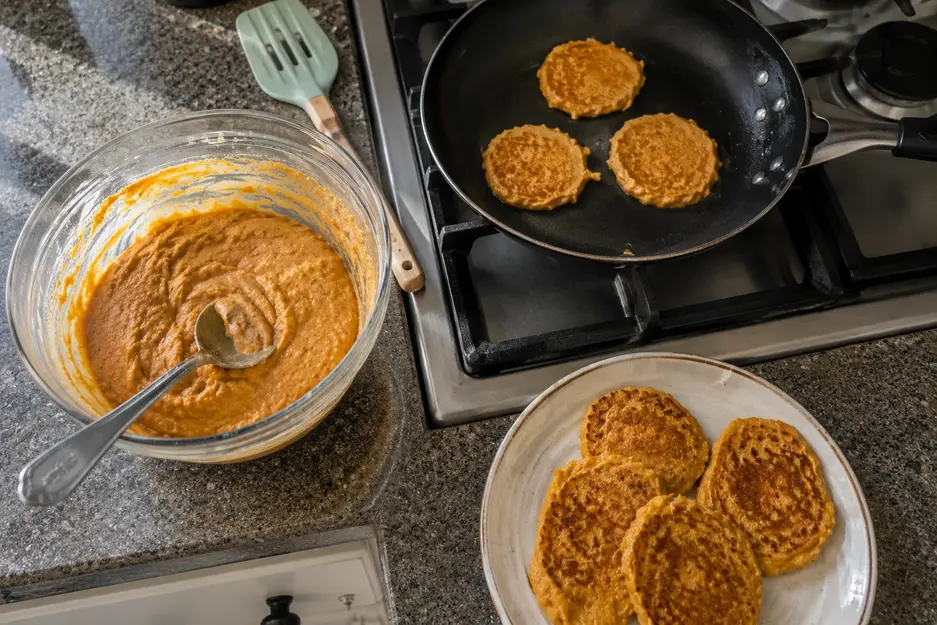
Scoop a heaping tablespoon of batter for each pancake and flatten it gently with the back of a spoon. Cook for about 2 to 3 minutes, until the edges look set and the pancake releases from the pan.
Step 7: Flip and Finish
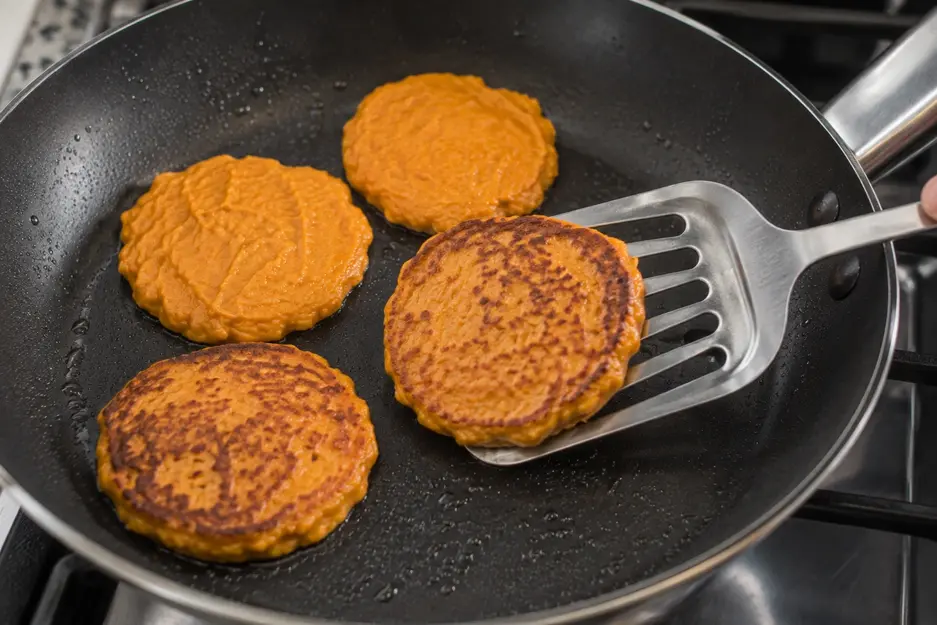
Flip gently with a thin spatula and cook the second side for another 1 to 2 minutes, or until cooked through and lightly golden.
Step 8: Cool Before Serving
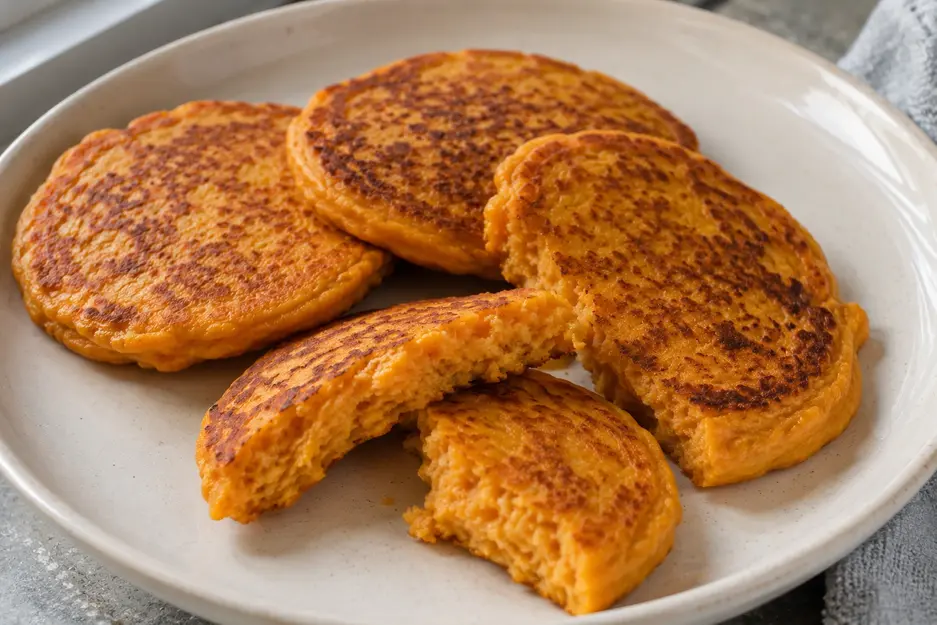
Transfer the pancakes to a plate and allow them to cool to a comfortable temperature before serving.
Texture & Consistency Guide
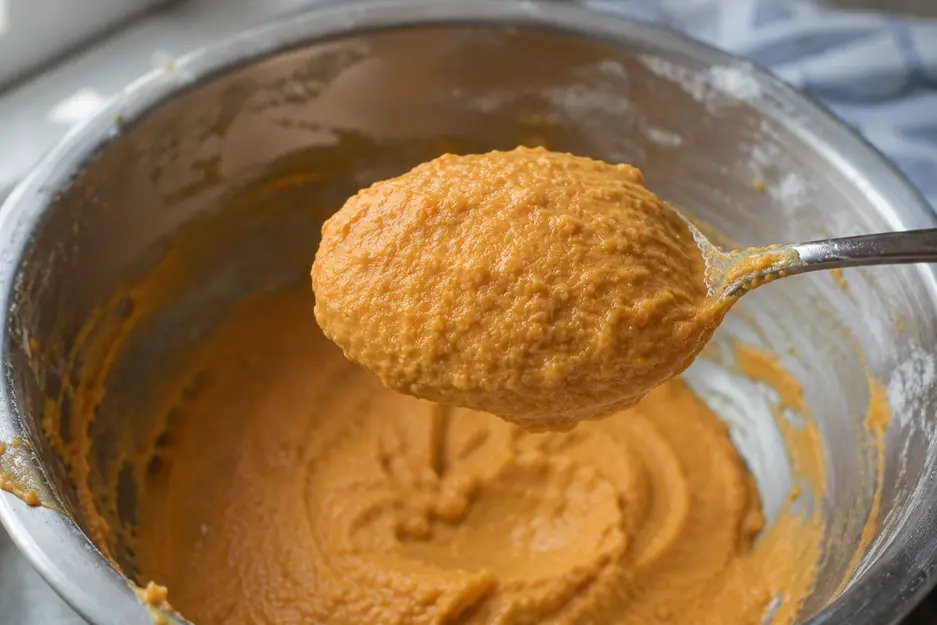
The batter should be thick enough to keep its shape when spooned onto the pan. If it spreads immediately into a thin puddle, it is too loose; add a little flour. If it is difficult to scoop or flatten, add a small amount of milk. Once cooked, the pancake should be soft and easy to compress between your fingers rather than dry, hard, or crisp.
How to Serve for Baby Led Weaning
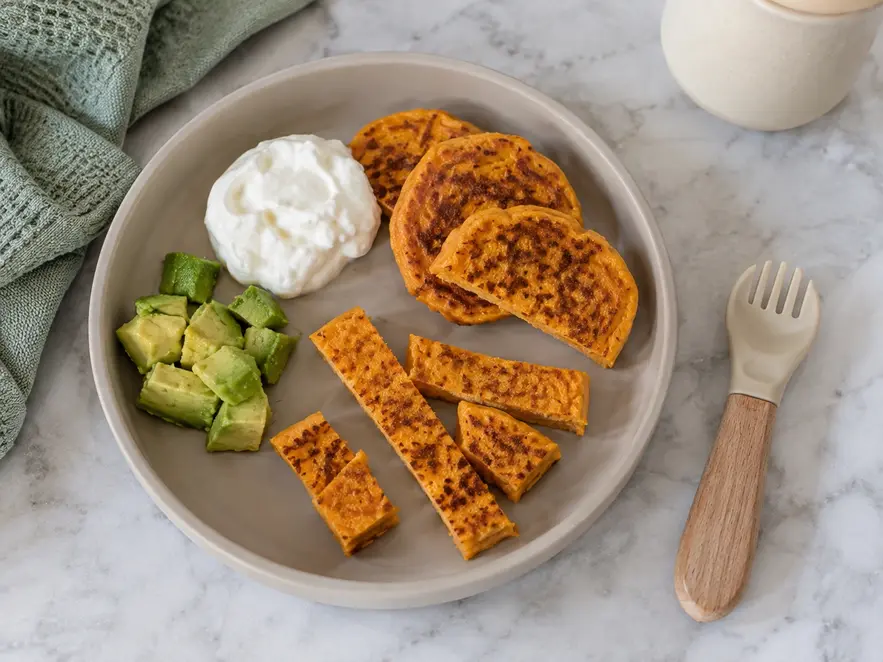
Serve the pancakes in a shape and size that matches your baby’s current grasp and self-feeding skills. Babies who use a whole-hand grasp often manage larger, easy-to-hold pieces better, while babies developing more precise finger control may manage smaller pieces. Always supervise your baby while eating, seat them upright, and make sure the pancake is soft and appropriately prepared for their feeding ability.
For another naturally sweet vegetable option, try our Carrot Puree for Baby.
Serving Ideas
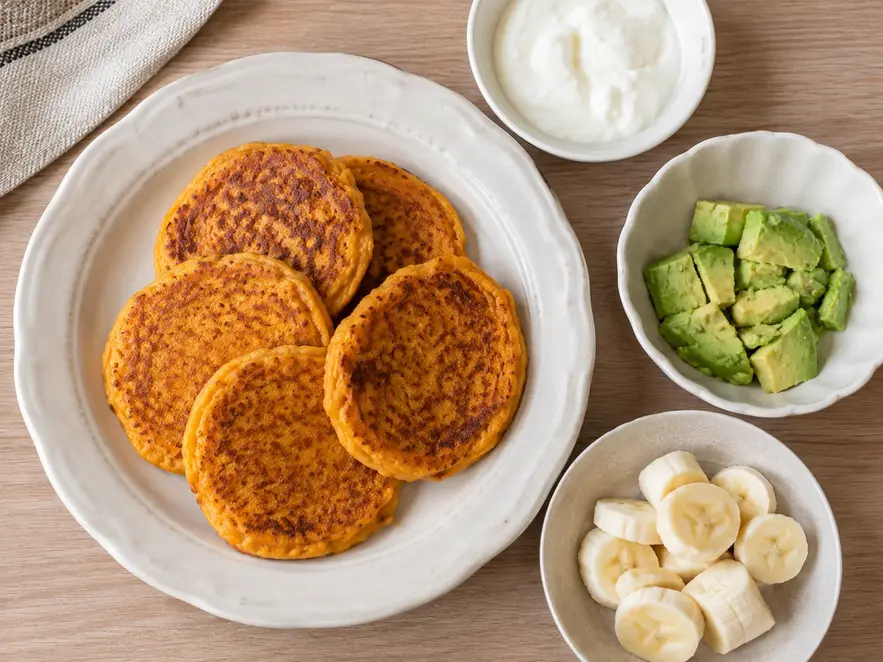
- Serve plain while your baby becomes familiar with the flavor and texture.
- Pair with plain full-fat yogurt for dipping if dairy has already been introduced and tolerated.
- Serve with soft fruit or avocado.
- Add another suitable food to create a more varied meal.
Recipe Variations
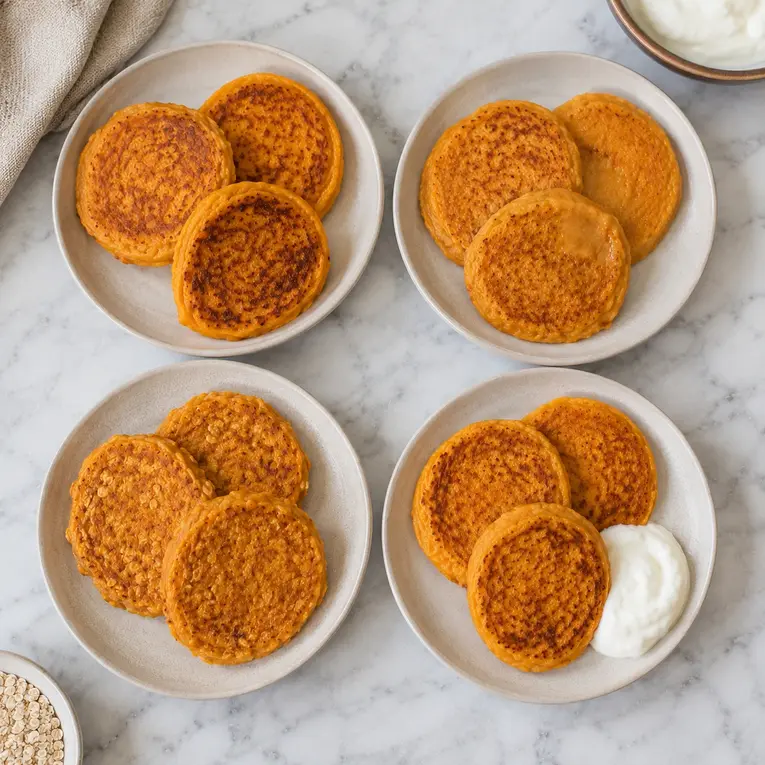
- Apple: Stir in about 2 tablespoons unsweetened applesauce. Add a little extra flour if the batter becomes too loose.
- Oat Flour: Replace wheat flour with oat flour. Use certified gluten-free oat flour when a gluten-free recipe is required.
- Yogurt: Add a spoonful of plain full-fat yogurt for a slightly softer batter, adjusting the flour if needed.
- Family Style: Keep the baby’s portion prepared without added sugar or excess salt, then season or top portions for older children and adults separately.
Troubleshooting
Why did my pancakes fall apart? The batter may have been too loose, the pancake may have been flipped before the first side had set, or the sweet potato may have contained more moisture than expected. Make sure a spoonful of batter holds its shape before cooking.
Why is the center too soft? The pancakes may be too thick or the heat may be too high. Flatten them slightly and cook over medium-low heat so the center has time to cook.
Why do they taste less sweet than expected? Sweet potatoes naturally vary in sweetness. Roasting generally gives a deeper, sweeter flavor than steaming.
Why is the batter too sticky to shape? Add flour a little at a time until the batter becomes easier to scoop and flatten.
Why did the outside brown too quickly? Sweet potato contains natural sugars that can brown quickly. Lower the heat and allow the pancakes to cook more gradually.
Storage, Freezing & Reheating
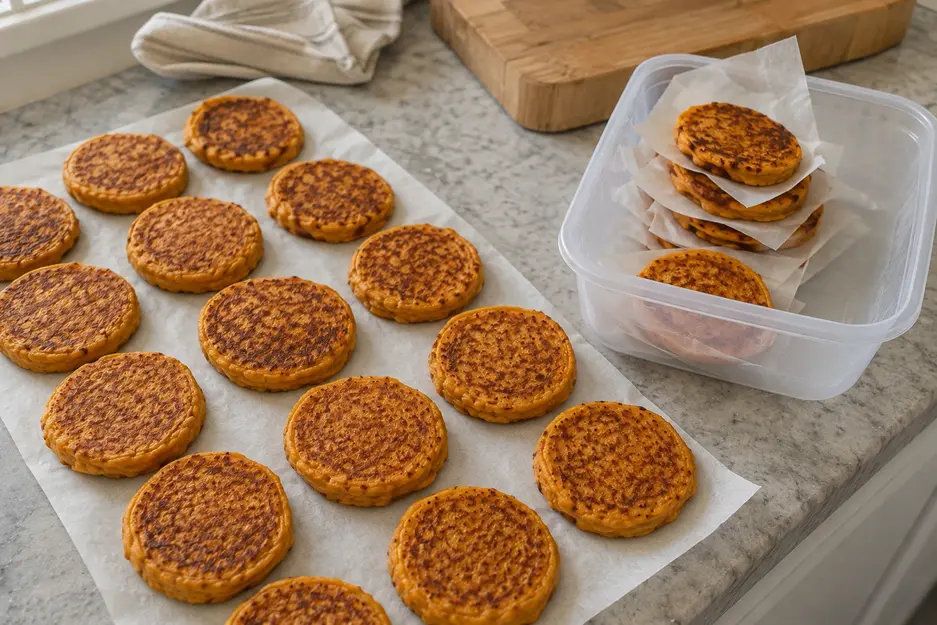
Cool the pancakes promptly and store them in a covered container in the refrigerator. For longer storage, freeze them in a single layer before transferring them to a freezer-safe container or bag so they do not stick together. Reheat until warmed through, using a skillet or microwave as convenient. Microwave times vary by appliance, pancake size, and quantity, so use short intervals rather than relying on one exact time. Stir, turn, or rest food as appropriate and always check the temperature carefully before serving it to a baby.
A Note on Egg and Food Allergies
Egg is a common food allergen. If egg is new to your baby, follow current guidance from your child’s healthcare professional, especially if your baby has eczema, a known food allergy, a previous reaction, or another reason for an individualized allergy-introduction plan. When introducing any allergenic food, offer an age-appropriate form and watch for signs of a reaction. Seek urgent medical help for symptoms of a severe allergic reaction.
Recipe Card
Sweet Potato Pancakes for Baby Led Weaning
Age/Readiness: Around 8+ months as a general guide, once developmentally ready for soft finger foods
Prep Time: About 15 minutes | Cook Time: About 10 minutes | Yield: About 10-12 small pancakes
Ingredients
- 1 cup mashed sweet potato
- 1 large egg
- 1/4 cup whole wheat, all-purpose, or oat flour
- 1/4 teaspoon cinnamon, optional
- Unsalted butter or neutral oil for the pan, as needed
Instructions
- Cook the sweet potato until fork-tender and mash until smooth.
- Stir in the egg until fully combined.
- Add the flour and cinnamon and mix into a thick, scoopable batter.
- Heat a lightly greased non-stick skillet over medium-low heat.
- Scoop a heaping tablespoon of batter per pancake and flatten gently.
- Cook for about 2-3 minutes, until the first side is set and releases easily.
- Flip and cook the second side for about 1-2 minutes, or until cooked through.
- Cool to a comfortable temperature before serving.
Recipe Note: The batter should be thick enough to hold its shape on a spoon. Sweet potato moisture varies, so small adjustments with flour or milk may be needed.
How to Prepare Sweet Potato for the Best Pancake Texture
The amount of moisture in cooked sweet potato can change the batter more than most parents expect. Steamed sweet potato is usually very soft and can hold more surface moisture, while roasted sweet potato tends to be drier and more concentrated in flavor. Either method works, but the final mash should be smooth and thick rather than watery. If you steam the cubes, let excess steam escape for a few minutes before mashing. If you roast the potato, scoop out the soft flesh and mash it thoroughly so there are no large pieces that could make the pancakes break unevenly.
Measure the mashed sweet potato after cooking rather than estimating from the size of the raw potato. One medium sweet potato can vary considerably in size, so measuring one cup gives a more consistent batter. Avoid adding milk automatically. Mix the sweet potato, egg, and flour first, check the texture, and add liquid only if the batter is genuinely too stiff to scoop. This small step makes the recipe easier to repeat successfully from one batch to the next.
Making a Batch Ahead for Busy Mornings
These pancakes are useful for meal preparation because the basic batter is simple and the cooked pancakes can be portioned before storage. After cooking, place the pancakes on a clean plate or rack and allow them to cool. Once cooled, separate portions according to what your child is likely to eat at one sitting. This avoids repeatedly warming a larger batch when only a small amount is needed.
For freezing, place the pancakes in a single layer until firm and then transfer them to a freezer-safe container or bag. Parchment between layers can make individual pancakes easier to remove. Labeling the container with the preparation date also makes it easier to keep track of stored food. When reheating, warm only the amount you need and check the center as well as the surface before serving. The goal is a pancake that is warmed through but then cooled to a comfortable serving temperature for your baby.
What a Successful Batch Should Look and Feel Like
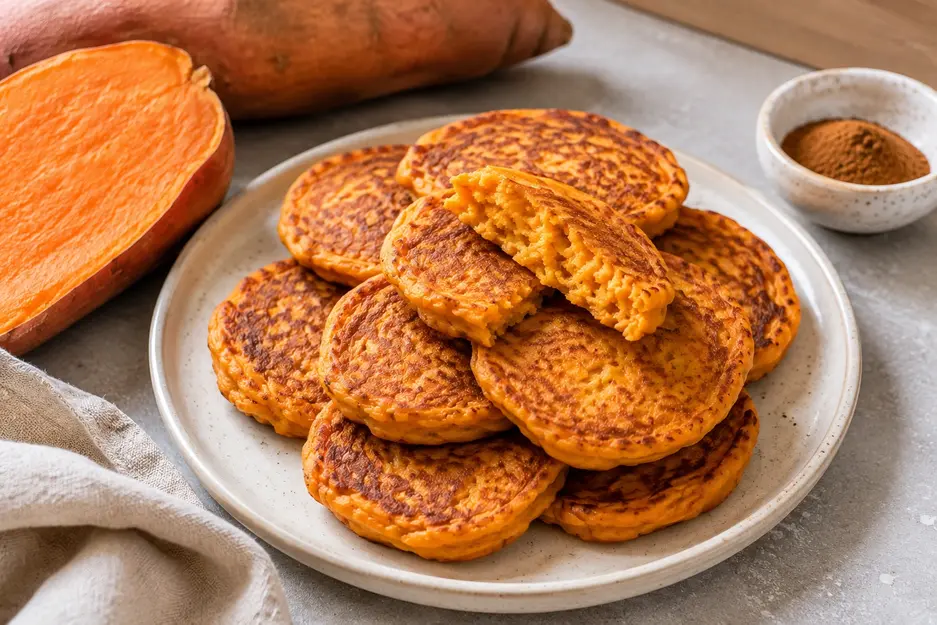
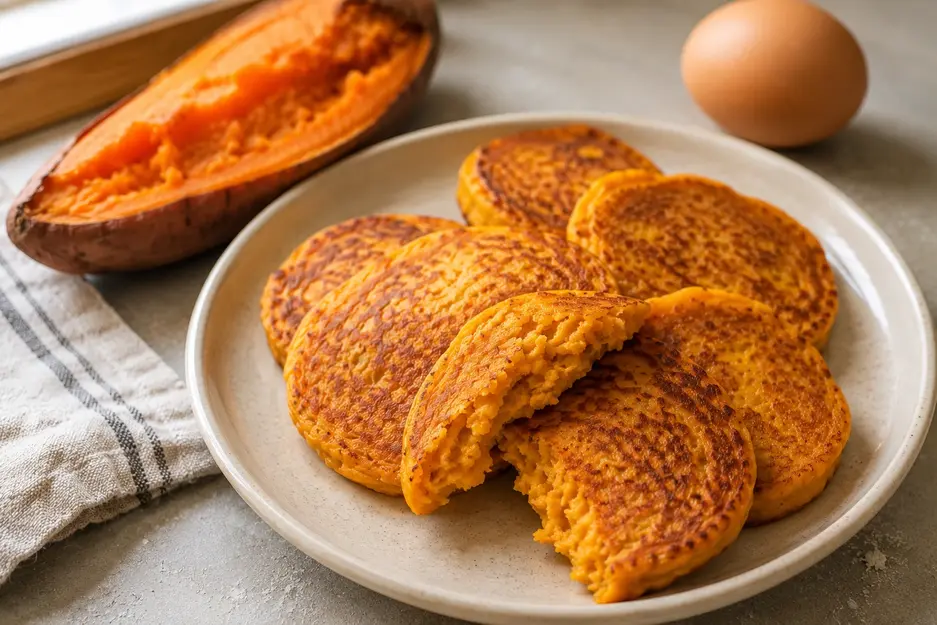
A successful sweet potato pancake does not need to look perfectly round. Homemade batches often have slightly uneven edges, especially because this batter is intentionally thick and is shaped with a spoon. What matters is the texture. The outside should be set and lightly golden rather than crisp, and the center should look cooked and moist rather than wet or gummy. When you gently press a cooled pancake between your fingers, it should compress easily without immediately crumbling into dry pieces.
If the first pancake does not turn out as expected, use it as a test pancake before cooking the rest of the batch. A pancake that spreads too much suggests the batter needs a little more flour. A pancake that is difficult to flatten may need a small amount of milk. If the outside colors before the center is cooked, reduce the heat. Making these small adjustments after the first pancake is more reliable than changing several ingredients at once.
Conclusion
These sweet potato pancakes work best when the batter is thick enough to hold together but the finished pancake remains soft. Egg and flour provide structure while sweet potato keeps the pancakes moist and naturally sweet. Pay more attention to batter consistency and your baby’s developmental feeding skills than to a rigid age rule. Once the basic recipe works well for your family, try simple variations such as oat flour, applesauce, or yogurt.
Want another easy BLW breakfast? Try these Blender Carrot Pancakes for Baby next
Disclaimer:
This article provides general food and feeding information and is not a substitute for individualized medical advice. Babies develop feeding skills at different rates. If you have concerns about readiness for solids, swallowing, growth, allergies, or your baby’s individual needs, consult your pediatrician or another qualified healthcare professional.
FAQ’s
Q.1 Can I make sweet potato pancakes without egg?
You can try a flax egg, but the pancakes will usually be more delicate because flax does not bind in exactly the same way as egg. Handle them gently and adjust the flour if needed.
Q.2 What age can babies eat these pancakes?
They are written with babies around 8 months and older in mind, but developmental readiness matters more than a fixed age. A baby should already be ready for solids and able to manage appropriately prepared soft finger foods.
Q.3 Can I freeze sweet potato pancakes?
Yes. Cool them completely, freeze them separately until firm, and then transfer them to a freezer-safe container or bag.
Q.4 Why do sweet potato pancakes fall apart?
The most common causes are batter that is too loose, excess moisture in the sweet potato, or flipping before the first side has set. A thick, scoopable batter is easier to cook successfully.
Q.5 Can toddlers eat the same recipe?
Yes. The basic pancakes can also work for toddlers and older children, with serving size and optional toppings adjusted for age and individual needs.