Oatmeal for Babies: Easy Recipe + 10 Flavor Combinations
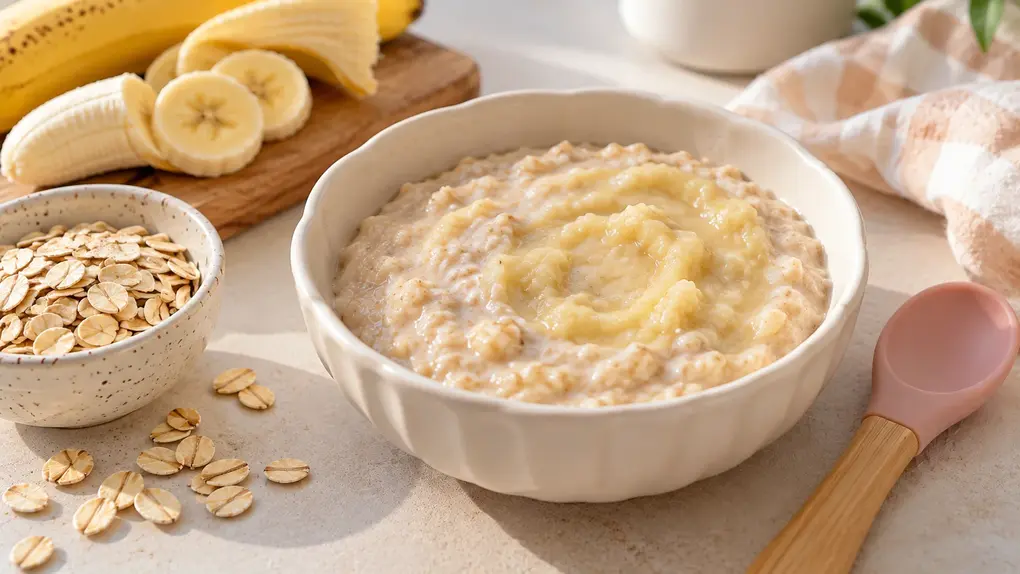
Oatmeal for babies is an easy breakfast to adapt as your little one learns to eat solids. Start with a simple bowl of soft, fully cooked oats, then change the flavor with mashed banana, cooked apple, pumpkin, or another baby-friendly ingredient. You do not need ten separate recipes: one plain base can become ten different breakfasts.
New to solids? Explore our First Foods for Baby at 6 Months guide before introducing oatmeal.
Quick Baby Oatmeal Recipe (At a Glance)
| Quick fact | Details |
| Main ingredient | ¼ cup plain oats |
| Cooking liquid | ¾ cup water |
| Cook time | About 5–8 minutes |
| Texture | Soft; adjust to baby’s skills |
Prep: 2 minutes | Cook: approximately 5–8 minutes | Yield: about 2 small starter servings
Ingredients: ¼ cup plain rolled or quick oats; ¾ cup water, plus more if needed. Optional: a little expressed breast milk or correctly prepared infant formula, added after cooking.
1. Grind the oats for a smoother texture if needed. 2. Bring water to a gentle simmer and whisk in oats. 3. Stir and cook until thoroughly soft, approximately 5–8 minutes. 4. Cool, adjust the consistency, and serve lukewarm from a bowl with a spoon.
Important: Introduce solids around six months when your baby shows readiness signs. This homemade recipe is not iron-fortified; include appropriate iron-rich foods in your baby’s diet.
Why Oatmeal Works for Babies
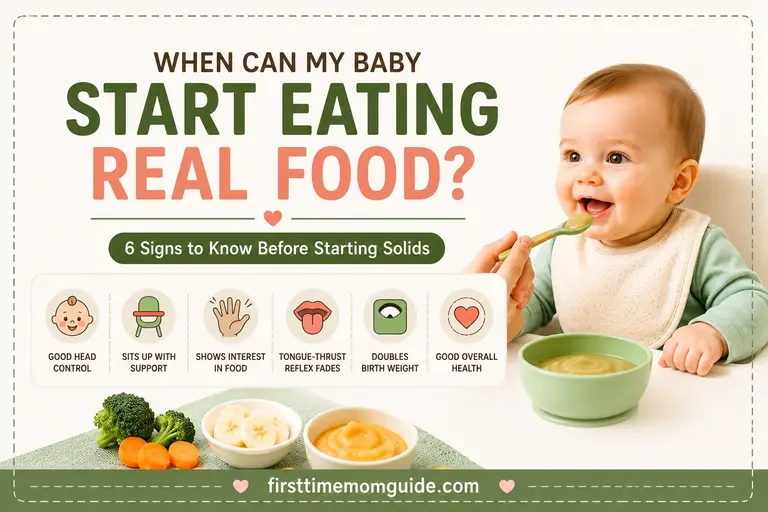
Oats provide carbohydrate for energy, fiber, and small amounts of minerals such as zinc and iron. Their mild taste pairs well with savory or sweet ingredients, and their texture can change from smooth porridge to a thicker, spoon-friendly meal. Plain oats also contain no added sugar or salt. Most babies are ready to start solids around six months, when they can sit with support, control their head, show interest in food, and swallow food rather than pushing it out. Age alone is not the test. Breast milk or infant formula remains an important source of nutrition throughout the first year.
Ingredients and the Best Oats to Choose
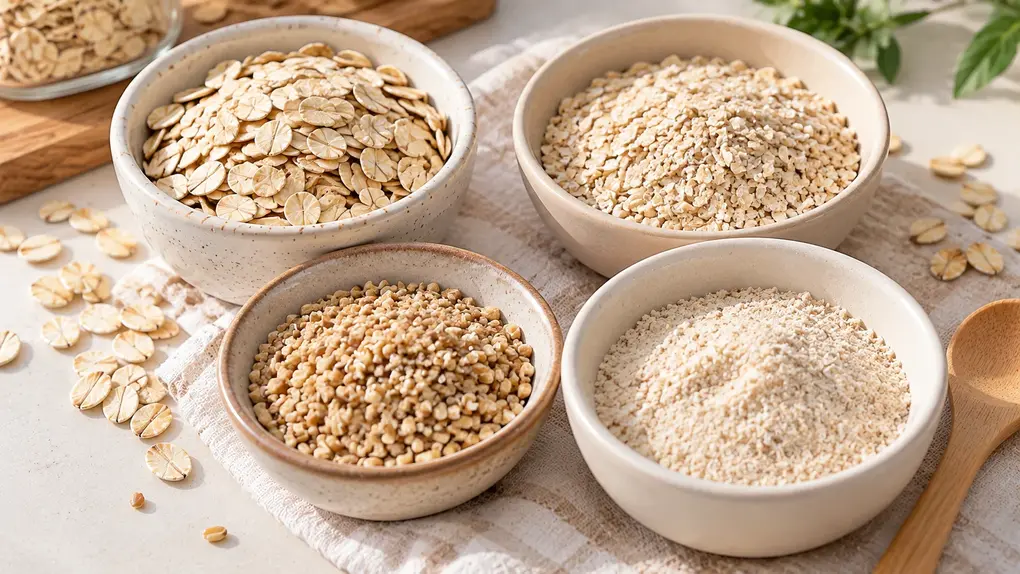
| Oat type | Best use / key point |
| Rolled oats | Grind for a smoother beginner bowl or cook thoroughly for a soft texture. |
| Quick oats | Convenient, smaller flakes; choose plain, unsweetened oats. |
| Steel-cut oats | Require longer cooking; blend well if a smoother texture is needed. |
| Fortified infant oatmeal | Can supply added iron; follow the package preparation directions. |
For approximately two small starter portions, use ¼ cup plain rolled oats or quick oats and ¾ cup water. Keep additional water ready for thinning. Once the porridge has cooled to a suitable temperature, you can stir in a little expressed breast milk or correctly prepared infant formula for familiar flavor.
Choose oats labeled certified gluten-free if your child needs to avoid gluten cross-contact. Oats themselves are naturally gluten-free, but processing can introduce wheat, barley, or rye.
How to Make Smooth Baby Oatmeal
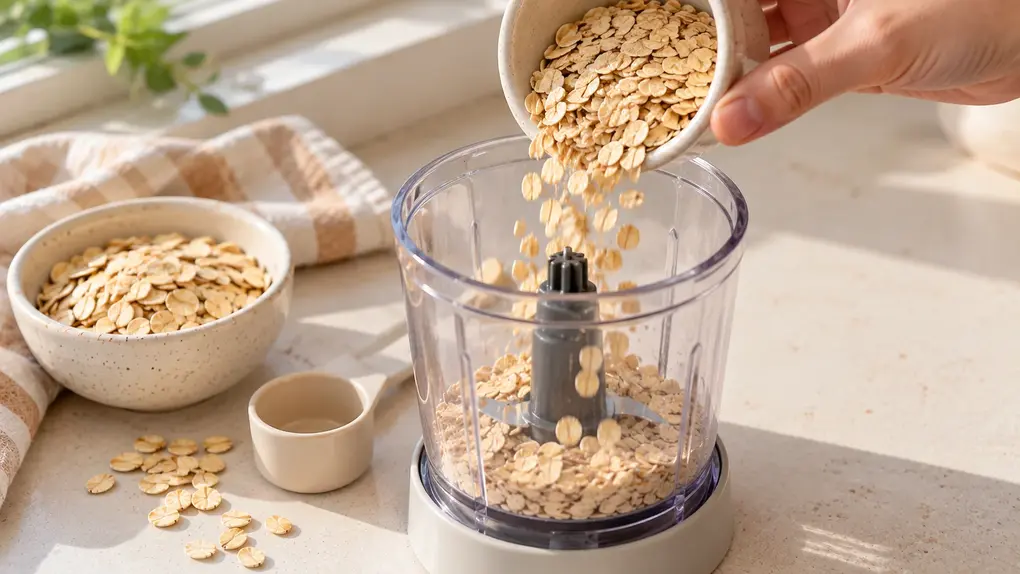
Step 1. Prepare the oats:
For a fine texture, pulse ¼ cup rolled oats in a clean blender until the flakes resemble coarse flour. Quick oats can often be cooked without grinding. Avoid creating airborne oat dust around your baby.
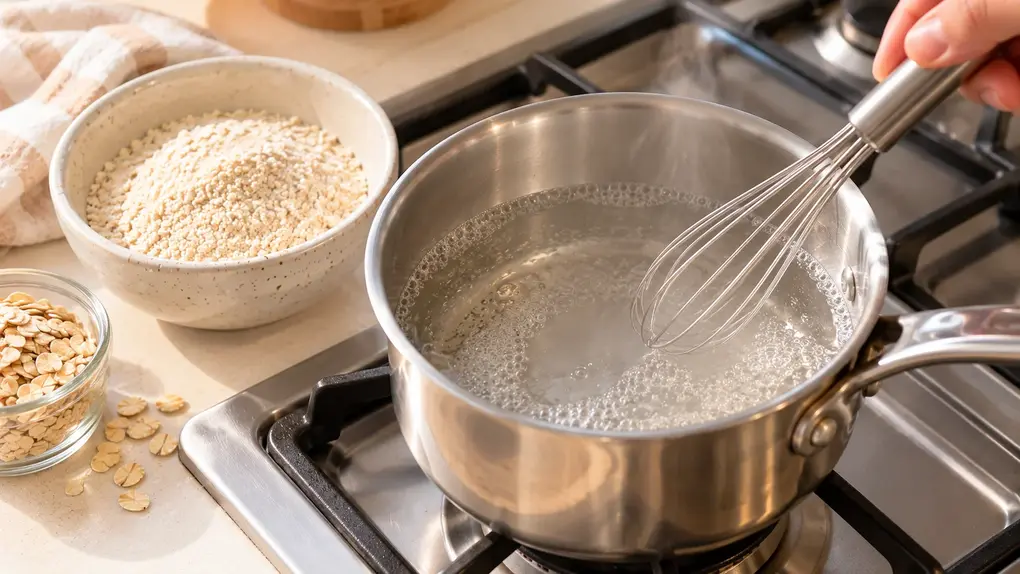
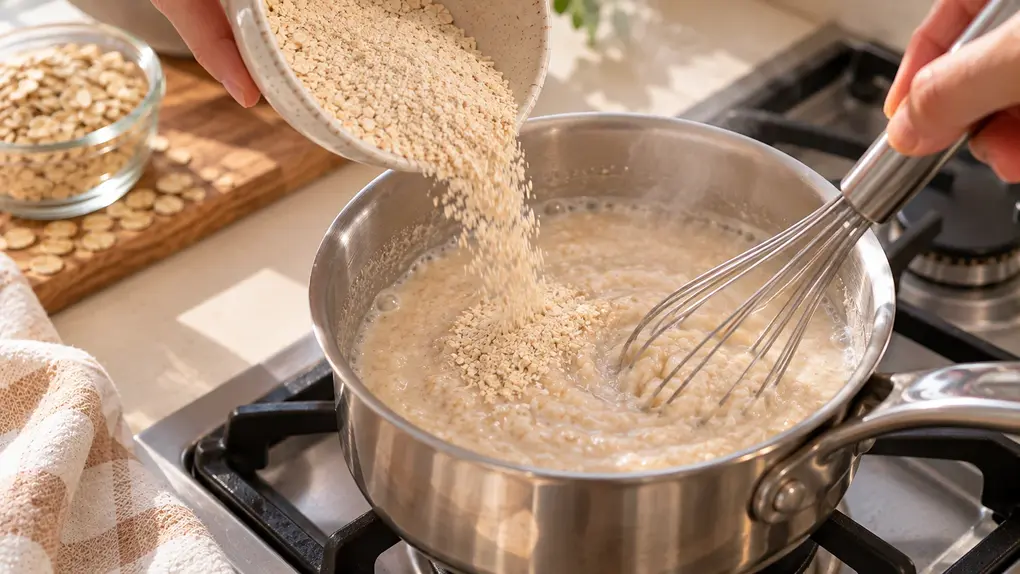
Step 2. Heat the water:
Bring ¾ cup water to a gentle simmer in a small saucepan. Sprinkle in the oats while whisking so they do not form dry lumps.
Step 3. Cook until soft:
Lower the heat and stir often for roughly five to eight minutes, adding water if needed. Quick oats may finish sooner; follow the texture rather than a rigid timer. The mixture should be thoroughly cooked, soft, and free of dry pieces.
Step 4. Cool and adjust:
Remove from the heat. Let the oatmeal cool, then add small splashes of water, expressed breast milk, or formula prepared according to its instructions. Do not boil prepared formula or expressed breast milk as part of this recipe.
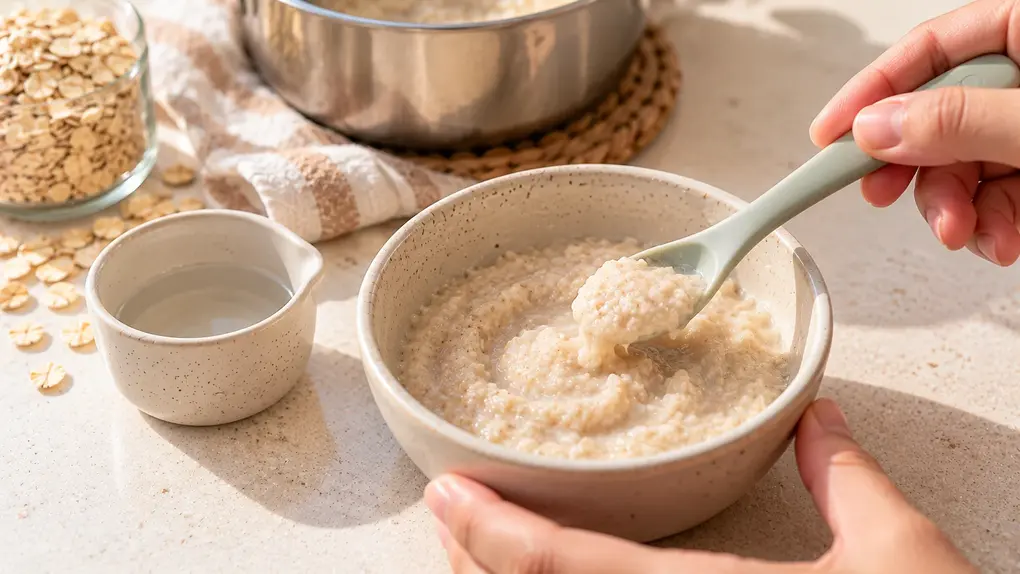
Step 5. Serve safely:
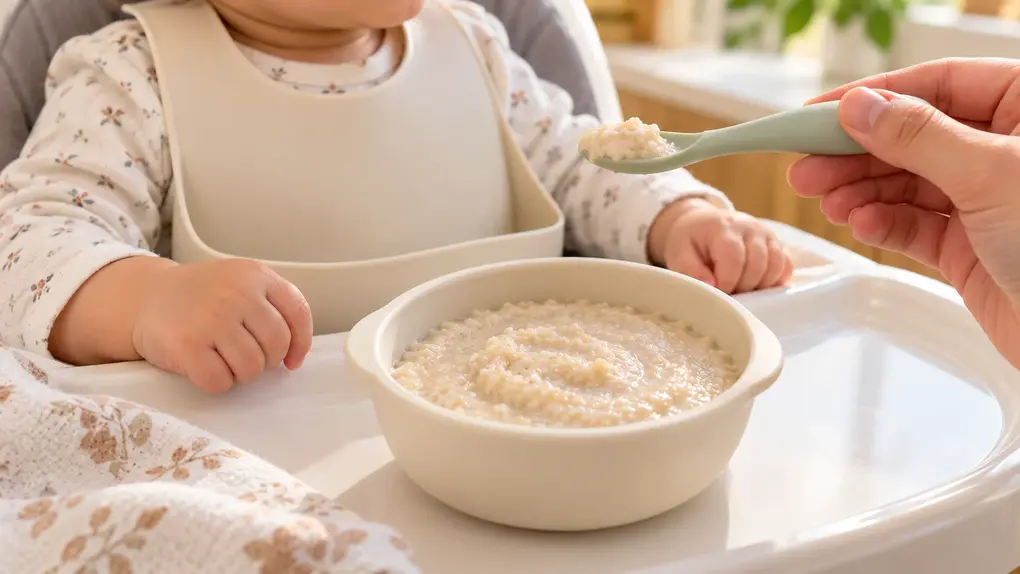
Stir thoroughly, check that the food is lukewarm, and offer a small amount in a bowl with a spoon. Sit your baby upright and supervise the entire meal. Never put oatmeal cereal into a bottle unless a clinician specifically directs you to do so.
Baby Oatmeal Texture by Age
| Stage | Serving texture |
| Around 6 months | Very soft, moist oatmeal; smooth or gently mashed as appropriate. |
| Around 9 months | Thicker, spoon-clinging oatmeal with soft mashed fruit. |
| 12 months and older | Soft family-style porridge with age-appropriate fruit pieces. |
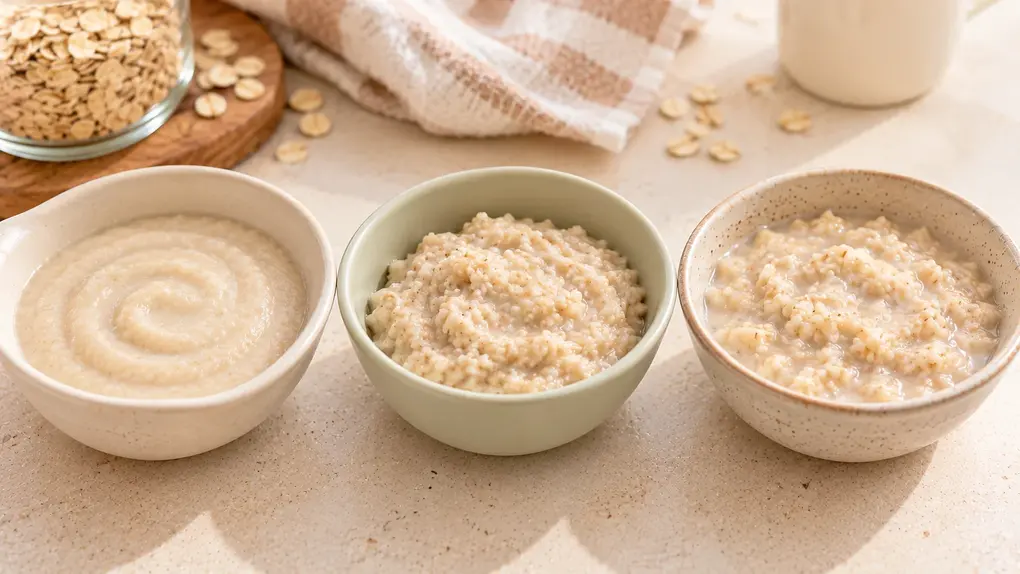
These are broad examples, not developmental deadlines. If your baby gags repeatedly, struggles to manage the texture, or has feeding difficulties, ask a qualified healthcare professional for individualized guidance.
10 Easy Oatmeal Flavor Combinations
Each idea below flavors one small serving, not the entire two-portion batch. Quantities are flexible starting points; babies vary in appetite. Try each new ingredient on its own before offering a mixed combination, particularly when introducing a common allergen. Do not add honey for babies under twelve months.
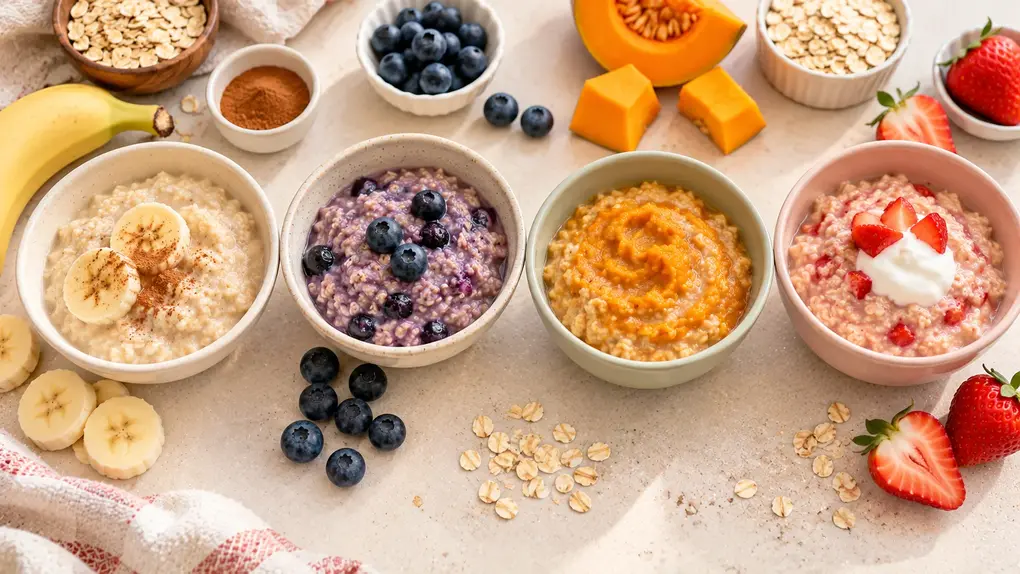
1. Banana + Cinnamon
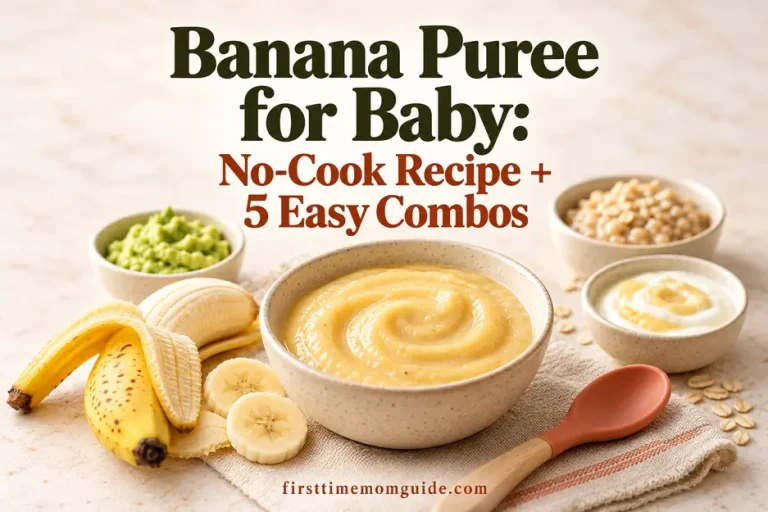
Mash 2 tablespoons ripe banana into one small serving of cooked oatmeal. Add a tiny pinch of cinnamon, if desired. Mix well until there are no large banana chunks. This combination tastes naturally sweet without added sugar.
2. Blueberry + Vanilla
Cook or crush 1 tablespoon blueberries until their skins are broken and the fruit is soft. Stir into a small bowl of oatmeal with a drop of alcohol-free vanilla flavoring, or skip vanilla entirely. Never leave whole round berries in a beginner bowl.
3. Apple + Cinnamon
Add 2 tablespoons unsweetened cooked apple puree and a light pinch of cinnamon. Raw apple chunks can be difficult for young babies, so use soft cooked apple. A slightly thicker base balances the extra moisture in the puree.
4. Pumpkin + Nutmeg
Stir in 2 tablespoons plain cooked pumpkin puree and, optionally, the faintest pinch of nutmeg. Use pure pumpkin rather than sweetened pumpkin-pie filling. If the puree is watery, simmer the oatmeal a little longer before combining.
5. Peanut Butter + Banana
Blend 1 teaspoon smooth peanut butter thoroughly into warm oatmeal with enough water to make it loose and non-sticky. Add 1 tablespoon mashed banana. Never offer a thick spoonful of peanut butter. Introduce peanut safely, with medical advice first for babies with severe eczema or egg allergy.
6. Avocado + Pear
Mash 1 tablespoon ripe avocado with 1 tablespoon soft cooked pear puree. Fold into cooled oatmeal for a creamy finish. Serve promptly because avocado can darken after mixing; color change alone does not necessarily mean the food has spoiled.
7. Sweet Potato + Cinnamon
Mix 2 tablespoons fully cooked, smooth sweet potato puree into a serving of oatmeal. Add a tiny pinch of cinnamon if previously tolerated. Sweet potato thickens the mixture, so stir in extra water until it is easy for your baby to manage.
8. Mango + Coconut
Mash 2 tablespoons very ripe, soft mango until smooth. Stir into oatmeal with 1 teaspoon unsweetened coconut milk as an optional flavor ingredient. Coconut milk is not a replacement for breast milk or infant formula as a main drink.
9. Carrot + Ginger
Use 2 tablespoons thoroughly cooked carrot puree and a very small pinch of ground ginger, if desired. Stir until evenly mixed. There is no special need to wait until eight months for ginger; focus on readiness, tiny amounts, and tolerance.
10. Strawberry + Yogurt
Mash 1 tablespoon ripe strawberry thoroughly and mix with 1 tablespoon plain, pasteurized, unsweetened whole-milk yogurt. Stir into lukewarm oatmeal. Dairy yogurt is a common allergen food, so introduce it thoughtfully and watch for reactions.
For more fruit pairing inspiration, try these 10 Banana Baby Food Combinations.
Iron, Allergens, and Other Nutrition Notes
Homemade oats are a useful grain, but they should not be treated as an iron supplement. Iron needs rise in the second half of infancy, particularly for breastfed babies. Rotate oatmeal with iron-fortified infant cereal and iron-rich foods, and ask your pediatrician about iron if your baby was premature or has other risk factors.
Peanut and dairy can be introduced in developmentally appropriate forms once a baby starts solids; delaying them without a medical reason does not generally prevent allergies. For severe eczema, known egg allergy, or previous reactions, seek individualized advice before peanut introduction. A food reaction may involve hives, swelling, vomiting, coughing, or breathing difficulty; breathing symptoms require emergency help.
Skip honey before the first birthday because of infant botulism risk. Avoid added sugar and excess salt. Oat milk and other plant drinks should not replace breast milk or infant formula during infancy, even when a small amount is used as a recipe ingredient.
Oatmeal vs. Rice Cereal
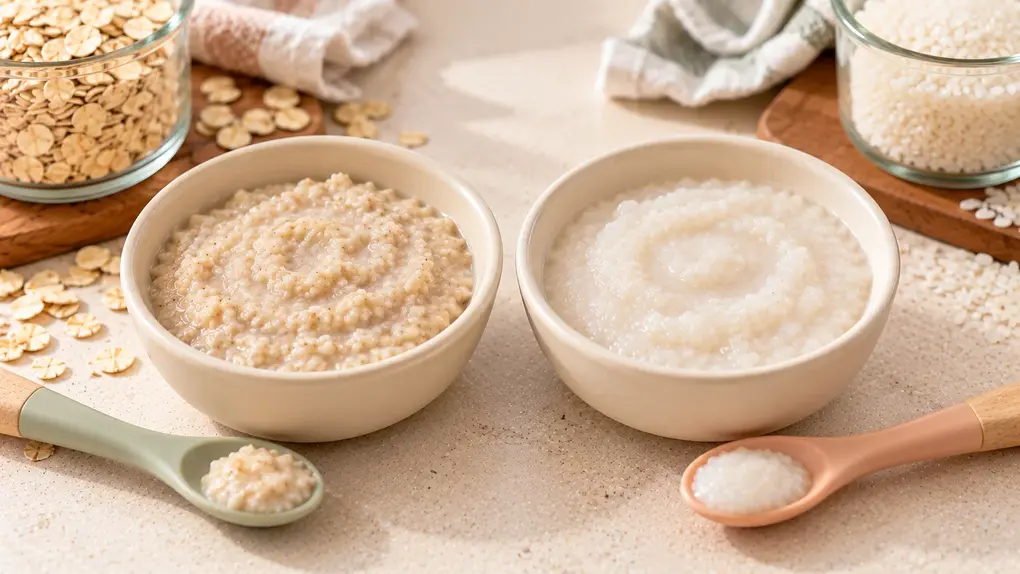
| Feature | Oatmeal cereal | Rice cereal |
| Grain variety | One useful option in a varied diet | Can also be offered in rotation |
| Arsenic consideration | Generally lower concern than rice-based cereal | Avoid relying on rice cereal alone |
| Iron | Check whether the product is fortified | Check whether the product is fortified |
Both oatmeal cereal and rice cereal can be offered as part of a varied diet. Rice-based foods can contribute more inorganic arsenic exposure, so relying exclusively on rice cereal is not recommended. Oat, barley, and multigrain infant cereals offer alternatives. Check labels: the iron content of fortified infant cereals is not the same as the iron content of ordinary cooked oats.
There is no requirement to serve infant cereal as the first food. Soft vegetables, fruits, legumes, and iron-rich proteins can all play a role when prepared safely. Variety matters more than declaring a single grain the winner.
How to Store, Freeze, and Reheat
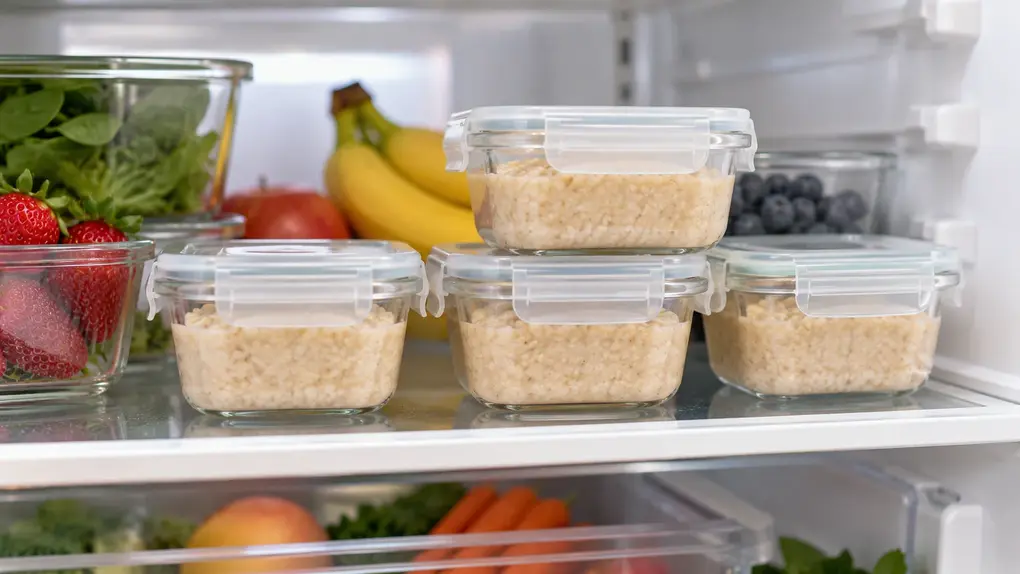
Refrigerate untouched homemade oatmeal promptly in a clean, covered container. For a conservative baby-food approach, use refrigerated homemade portions within one to two days. Freeze plain cooled portions in small freezer-safe containers for best quality within one to two months. Label each portion with its preparation date. Thaw frozen oatmeal in the refrigerator or reheat from frozen until thoroughly hot, then stir and cool before serving. Reheated oats often need extra water to loosen them. Do not reheat food repeatedly. Discard oatmeal left in a bowl after a baby has eaten from it; saliva can introduce bacteria.
For portions mixed with prepared formula or expressed breast milk, follow the stricter handling and discard guidance for that milk rather than assuming the plain-oatmeal storage window applies. When in doubt, prepare a fresh small portion.
Common Mistakes and Quick Fixes
- Too thick: Add warm water a teaspoon at a time and stir. Thick oatmeal is not automatically unsafe, but it should match your baby’s feeding ability.
- Too watery: Cook briefly longer or mix in a little more cooked oatmeal. Do not stir raw oat flour into a finished bowl without cooking it.
- Lumpy: Whisk the oats into simmering water gradually, then blend after cooking if needed. Never serve hard or dry clumps.
- Too hot: Stir thoroughly and let the food cool before offering it. Microwave heating can create hot spots.
- Too many new toppings: Introduce unfamiliar ingredients separately first. This makes it easier to identify possible reactions.
- Overly sweet: Skip flavored instant oatmeal packets, syrup, and honey. Ripe fruit is enough to vary the taste.
Serving Sizes and Appetite
At the beginning, a few spoonfuls may be enough. Some babies eat more, and others mainly explore the smell and texture. Offer milk feeds as usual and let your baby signal when they are finished. Turning away, closing the mouth, or pushing the spoon away can mean it is time to stop. A small serving reduces waste and makes it easier to use fresh toppings.
Making the Base Ahead
For an efficient morning, measure dry oats into a clean jar the night before, or grind a small dry batch and keep it tightly sealed. Cook only what you expect to use soon. If you want several flavors, divide the freshly cooked plain oatmeal into clean bowls before adding fruit or other toppings. This prevents a peanut or dairy ingredient from accidentally entering a portion intended to be allergen-free.
What to Serve Alongside Oatmeal
Oatmeal does not have to be the entire meal. Depending on your baby’s age and abilities, you can pair it with soft fruit, a vegetable puree, or an iron-rich food served separately. A varied menu across the day.
Recipe Card: Basic Baby Oatmeal
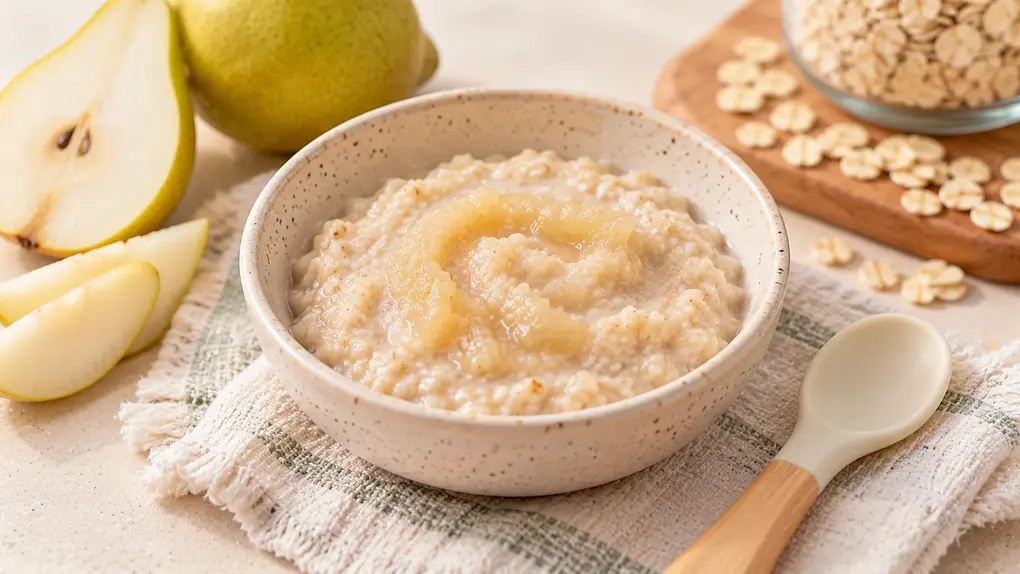
Prep time: 2 minutes | Cook time: about 5–8 minutes | Yield: about 2 small starter servings
Ingredients: ¼ cup plain rolled oats or quick oats; ¾ cup water, plus more as needed; optional expressed breast milk or correctly prepared formula after cooling.
Method: (1) Grind oats if a smooth texture is needed. (2) Bring water to a simmer. (3) Whisk in oats and cook gently, stirring, until completely soft. (4) Cool and adjust texture with water or milk as appropriate. (5) Check temperature and serve under supervision.
Notes: Flavor individual portions with one of the ten ideas above. Do not add honey under twelve months. Use clean utensils and discard food left in the feeding bowl.
Conclusion
A plain bowl of baby oatmeal is only the beginning. With one simple cooking method and ten flexible combinations, you can offer new tastes without complicated preparation. Keep the texture suitable for your baby, introduce allergens safely, and make iron-rich foods part of the wider menu. The goal is not a perfect breakfast every day; it is a calm, varied introduction to eating.
Want to include oatmeal in your baby’s routine? Follow our 7-Day Baby Food Meal Plan.
Disclaimer
This article provides general educational information and is not a substitute for advice from your child’s pediatrician or registered dietitian. Babies develop feeding skills at different rates. Introduce solids when developmentally ready, typically around six months; always supervise eating and adapt food texture to your child’s abilities. For food allergies, severe eczema, swallowing difficulties, prematurity, or medical conditions, seek individualized advice. Breast milk or correctly prepared infant formula remains an important source of nutrition throughout the first year.
FAQ’s
Q.1 When can babies eat oatmeal?
Most babies can try safely prepared oatmeal when they are developmentally ready for solids, usually around six months.
Q.2 Do I need to grind rolled oats?
No. Grinding makes a smoother bowl, but fully cooked soft rolled oats can work for babies who manage texture.
Q.3 Can I use formula in oatmeal?
Yes. Prepare formula exactly as directed, then mix a small amount into cooked, cooled oatmeal. Follow formula handling rules.
Q.4 Is baby oatmeal a good iron source?
Iron-fortified infant oatmeal often is; ordinary oats contain less iron and should be paired with other iron-rich foods.
Q.5 Can babies eat oatmeal every day?
Oatmeal can be a regular food, but rotating grains and other food groups supports a varied diet.