When Can My Baby Start Eating Real Food? 6 Signs to Know
Your sister-in-law started her baby on rice cereal at 4 months. Your mother insists you started solids “way earlier than that, and you turned out fine.” Your pediatrician mentioned something about 6 months at the last appointment, but your baby is already watching every bite you take with what looks suspiciously like hunger.
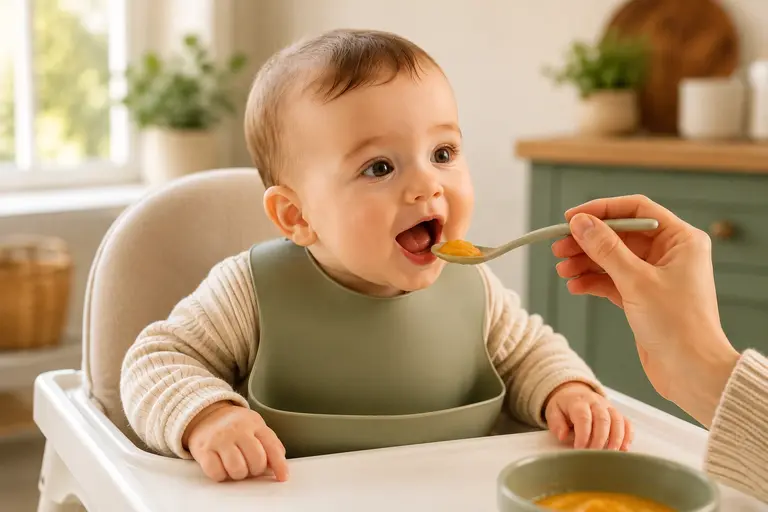
Everyone around you seems to have a different opinion, and somewhere in the middle of all that noise is a genuine question with a genuine answer: when can my baby start eating real food?
This guide cuts through the conflicting advice and gives you the exact, observable signs that tell you your baby’s body is actually ready not just old enough on a calendar, but developmentally prepared to safely handle solid food. Every sign here comes from pediatric guidance, not guesswork, and by the end you will know exactly what to look for instead of relying on someone else’s opinion.
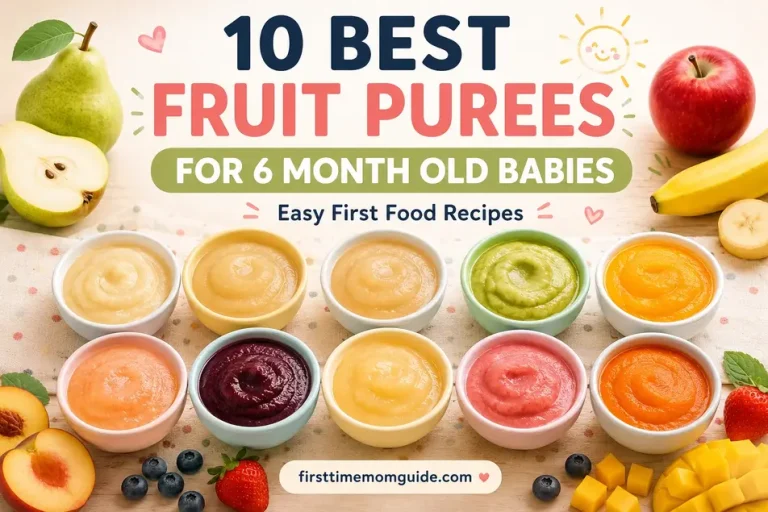
Looking for first foods? Read our complete guide to fruit purees for babies to make starting solids easier.
When Can a Baby Start Eating Real Food? The Short Answer
Most babies are developmentally ready to start solid food somewhere between 4 and 6 months, with the American Academy of Pediatrics and the World Health Organization both specifically recommending around 6 months as the target for most full-term babies. By this point, most babies stop using their tongues to automatically push food out of their mouths, and instead begin using their tongues to move food toward the back of the mouth to swallow.
That said, the question of when can my baby start eating real food does not have a single answer that applies to every baby on the same date. Most full-term babies are ready around 6 months of age, though some are ready a little earlier and some a few weeks later. What matters far more than the number on the calendar is whether your specific baby is showing the physical signs of readiness covered in detail below.
There is also a real difference between “old enough” and “ready.” Most babies younger than 6 months do not yet have the necessary motor skills for starting solids and are not physiologically ready to swallow anything besides breast milk or formula. A baby can be 4 months old and still be weeks away from the coordination needed to manage a spoonful of puree safely.
Why Timing Actually Matters (Not Just a Rule to Follow)
It is tempting to treat “when can my baby start eating real food” as a box to check off a list, but the timing genuinely affects your baby’s health in both directions. Starting too early and starting too late both carry real, documented downsides.
Starting solid food too early can cause:
Allergies, stomach upset, constipation or diarrhea, and an increased risk of becoming overweight. Research published in the journal Pediatrics has also linked early introduction of solid foods with conditions including diabetes, eczema, and celiac disease. A CDC researcher noted that babies younger than 4 months do not yet have the proper gut bacteria needed to safely process solid food.
Beyond the physical risks, there is a developmental piece that is easy to miss. When babies are fed before they are ready from a motor standpoint, they often become passive participants in eating the caregiver feeds spoonful in, but the baby cannot actively participate in the meal the way a developmentally ready baby can.
Starting solid food too late can mean:
Missing the window where your baby’s iron stores from birth begin to run low, and where introducing iron-rich solids becomes nutritionally important. It can also mean a narrower window for introducing common allergens, which current guidance now recommends doing earlier rather than later in babies without a known allergy history.
Neither extreme is the goal. The goal is recognizing the real signs covered next that tell you your individual baby’s body is ready right now.
The Exact Signs Your Baby Is Ready for Real Food
This is the part that actually answers when can my baby start eating real food not with a date, but with a checklist of physical signs that, together, tell you your baby’s body is prepared. No single sign on its own is enough. Look for these appearing together.
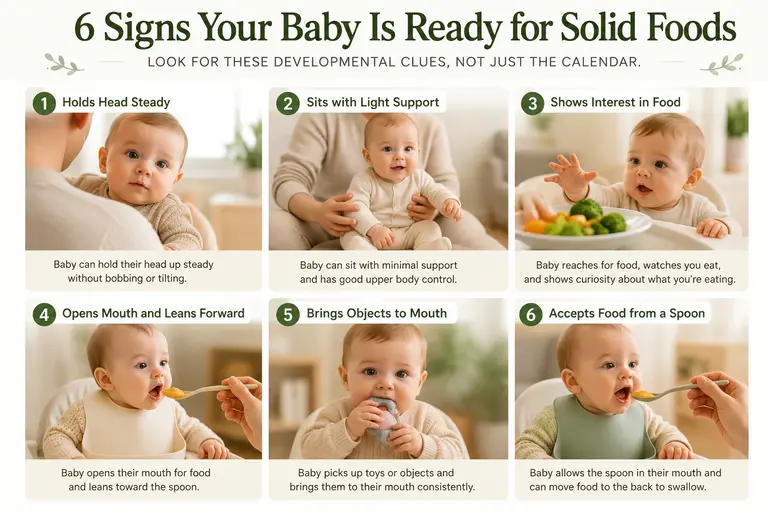
Sign 1. Your Baby Can Hold Their Head Up Steadily:
Your baby should be able to sit in a high chair, feeding seat, or infant seat with good head control. This is not occasional head control during a good moment it means your baby’s neck is strong enough to hold their head steady and upright consistently, without it bobbing, flopping forward, or falling to the side.
Head control matters because swallowing safely requires a stable, upright airway position. A baby whose head is still wobbling does not yet have the muscular control needed to coordinate swallowing safely.
Sign 2. Your Baby Can Sit with Minimal Support:
Your baby can keep their head and neck stable while sitting upright without flopping forward, immediately falling to the side, or hunching back when seated in a high chair or on your lap. A little support a hand at the hips, a rolled towel, or a small pillow is fine. What matters is that your baby is not relying on both arms planted on a surface just to stay upright.
This sign connects directly to safety. A baby who cannot sit with reasonable stability does not yet have the core strength to safely manage food in their mouth without a higher risk of choking.
Sign 3. The Tongue Thrust Reflex Has Faded:
The tongue-thrust reflex is a neurological reflex that causes a baby to push a spoon or food back out of their mouth not because they dislike it, but because their tongue automatically moves to protect the airway. Once these reflex fades, babies begin using their tongues differently moving food from the front of the mouth to the back in order to swallow it, rather than pushing everything back out.
You will notice this sign directly during early feeding attempts. If most of what goes onto the spoon ends up back on your baby’s chin every single time, the tongue-thrust reflex may still be active, and it is worth waiting another week or two before trying again.
Sign 4. Your Baby Shows Real Interest in Food:
Babies may be ready if they watch you eating, reach for your food, and seem eager to be fed. This kind of food-cue watching is one of the clearest signals parents notice leaning toward food, opening the mouth, or even trying to grab a spoon off a parent’s plate.
This sign is about genuine curiosity directed at food specifically not generalized babbling or excitement that happens around every new object in the room.
Sign 5. Your Baby Can Bring Objects to Their Mouth:
Being able to bring a hand or an object to the mouth is an important readiness sign, because the same hand-to-mouth coordination will soon be needed for self-feeding. If your baby regularly brings toys, teethers, or their own hands to their mouth with reasonable accuracy, this hand-eye-mouth coordination is developing in the right direction.
Sign 6. Your Baby Has Roughly Doubled Their Birth Weight:
Generally, when infants double their birth weight typically at about 4 months of age and weigh about 13 pounds or more, they may be ready for solid foods. This sign is more of a general marker than a strict rule, and it works best alongside the developmental signs above rather than on its own.
Signs Your Baby Is NOT Ready Yet
Just as important as knowing the green lights is recognizing when it is genuinely better to wait. These signs tell you your baby is not ready for real food yet, even if they are technically old enough by age alone.
- Head still wobbles or flops when seated, even with support
- Cannot sit with minimal assistance needs both hands constantly planted to stay upright
- Pushes the spoon back out immediately, every time a strong, consistent tongue-thrust reflex
- Shows no interest in food turns away, closes the mouth, or seems uninterested when others eat nearby
- Gags excessively on small amounts placed in the mouth, beyond a normal occasional gag reflex
- Is under 4 months old regardless of any other sign present, this is simply too early
If your baby is showing little to no interest in solids even close to or past 6 months, the advice from experienced parents and professionals alike is consistent: do not stress, hold off, and try again in a week or two. Readiness is not a race, and a short delay causes no harm.
When Can My Baby Start Eating Real Food By Age
Understanding what changes at each age stage helps you place your own baby’s signs in context.
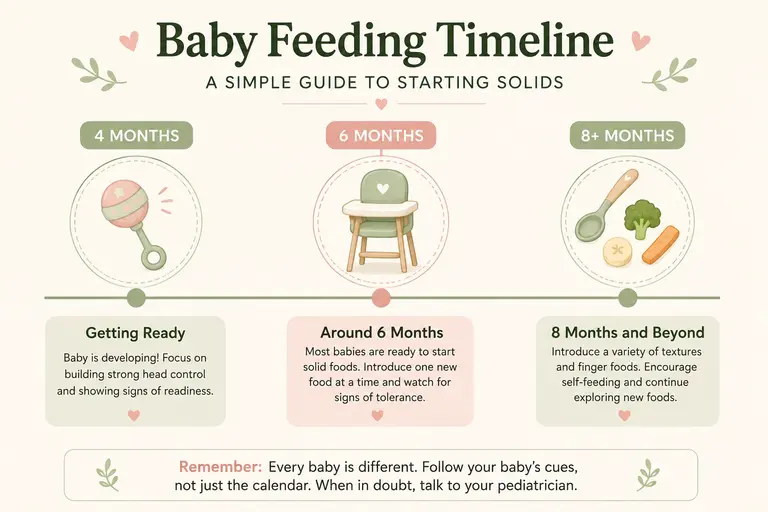
4 months:
This is the earliest point at which some babies begin showing readiness signs, though most are not yet ready. There is no nutritional reason to introduce anything besides breast milk or formula before 4 months. If your baby is showing every single sign above clearly and consistently at 4 months, a conversation with your pediatrician is the right next step this is not the moment to start independently based on age alone.
6 months:
The AAP recommends starting solid foods around 6 months old, which is typically when babies show all of the developmental readiness signs together. The WHO aligns with this recommendation, advising exclusive breastfeeding or formula for the first six months, with solids beginning around this point alongside continued milk feeds. This is the age where the majority of babies tick every readiness box clearly.
7 to 8 months
Some babies, particularly those born slightly early or who develop core strength more gradually, are not fully ready until closer to 7 or 8 months. This is completely normal full-term babies are most often ready around 6 months, though some need a few extra weeks.
What to Do Once You See the Signs
Recognizing readiness is only the first step. Once your baby is showing the signs above, start with a single-ingredient food, offered one at a time, waiting 3 to 5 days before introducing the next new food. This spacing lets you clearly identify any reaction to a specific food rather than guessing among several new ingredients at once.
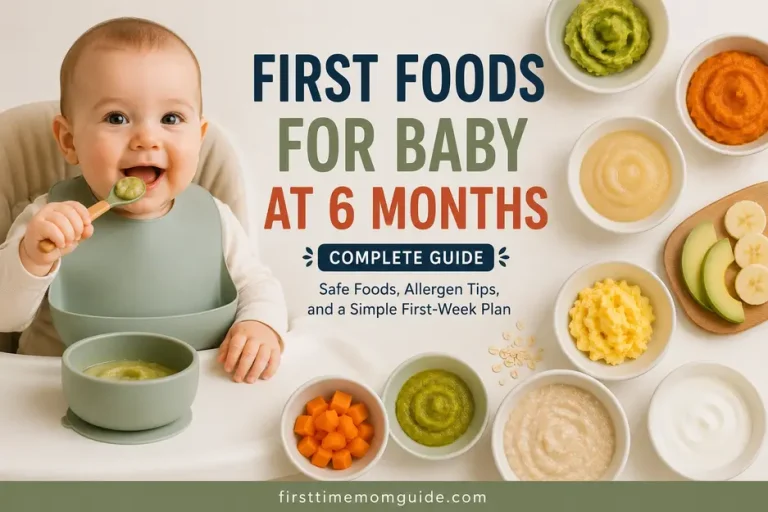
A good first solid is typically a smooth, single-ingredient puree or an iron-fortified infant cereal, introduced when both you and your baby are well rested and unhurried. Whether you choose purees, baby-led weaning, or a mix of both, prioritizing foods rich in iron matters once solids begin, since a baby’s birth iron stores naturally start declining around this age.
- Choose a calm, unhurried time of day not right before a nap or when your baby is overtired
- Offer one new single-ingredient food at a time, with a 3-to-5-day gap before the next
- Watch closely for any signs of a reaction rash, vomiting, unusual fussiness, or swelling
- Keep offering breast milk or formula as the primary source of nutrition at this stage solids are practice, not a replacement
- Stop and consult your pediatrician immediately if you notice any signs of an allergic reaction
Not sure which vegetables to introduce first? Check out our beginner-friendly vegetable purees guide for safe first foods.
Comparison Table Ready vs Not Ready for Real Food
This side-by-side comparison answers when can my baby start eating real food in the clearest possible format matching specific signs to what they actually mean.
| Sign Observed | Ready for Solids? | What It Means |
| Holds head steady without support | ✅ Ready | Airway control needed for safe swallowing |
| Sits with minimal support, no flopping | ✅ Ready | Core strength needed to manage food safely |
| Pushes spoon out every single time | ❌ Not yet | Tongue-thrust reflex still active |
| Leans toward food, reaches for your plate | ✅ Ready | Genuine food interest, key behavioral cue |
| Brings toys or hands to mouth accurately | ✅ Ready | Hand-eye-mouth coordination developing |
| Head still bobs or wobbles when seated | ❌ Not yet | Neck muscles not yet strong enough |
| Doubled birth weight, around 13+ lbs | ✅ Supporting sign | General growth marker, not used alone |
| Shows no interest when others eat nearby | ❌ Not yet | Behavioral readiness not yet present |
| Under 4 months old, any other sign present | ❌ Not yet | Too early regardless of other signs |
5 Common Mistakes Parents Make With Solid Food Timing
Mistake 1. Starting Because of Age Alone, Not Readiness:
In a CDC survey of over 1,300 mothers, the most common reason given for starting solids early was simply believing the baby was “old enough.” Age is a guide, not a guarantee the signs matter more than the calendar.
Mistake 2. Believing Solids Help Babies Sleep Through the Night:
This is one of the most persistent myths around starting solids, and it is not supported by evidence starting solids sooner does not lead to longer stretches of night sleep. It was also one of the top reasons mothers gave for introducing solids too early in CDC research.
Mistake 3. Using Rice Cereal in a Bottle:
Adding cereal to a bottle is a common piece of well-meaning but outdated family advice, and it is not recommended it bypasses the spoon-feeding process entirely and removes the chance for a baby to practice the skills solids are meant to build.
Mistake 4. Pushing Through When Baby Shows No Interest:
If a baby is close to or even past 6 months and showing little interest, the right response is patience, not pressure trying again gently in a week or two, rather than forcing the issue.
Mistake 5. Introducing Multiple New Foods at Once:
Giving more than one new food at a time makes it far harder to identify which specific food caused a reaction if one occurs a 3 to 5 day gap between new foods is the safer, clearer approach.
Once your baby is comfortable with single foods, try these nutritious baby food combinations for more variety and flavor.
You Will Know When the Time Is Right
There is no single magic date that applies to every baby, and that uncertainty can feel uncomfortable when everyone around you seems to have a confident opinion. But the answer to when can my baby start eating real food was never really about a date in the first place it was always about watching your own baby closely enough to notice the signs their body gives you.
A steady head. A baby who sits without toppling. A spoon that finally stays in instead of coming back out. Hands reaching for your plate with real curiosity instead of random baby grabbing. When these signs start appearing together, your baby is telling you something clearly, and it is worth more than anyone else’s calendar.
Trust what you are seeing. Talk to your pediatrician if anything feels uncertain. And when the signs line up, that first spoonful messy, slow, and probably ending up more on your baby’s face than in their mouth will be exactly the right moment.
DISCLAIMER:
This article is for informational purposes only and reflects guidance from the American Academy of Pediatrics (AAP), the World Health Organization (WHO), and Mayo Clinic as of 2024-2025. Every baby develops at their own pace, and prematurity or health conditions can change this timeline. Always talk to your baby’s pediatrician before starting solid foods, particularly if your baby was born early or has any health concerns.
FAQ’S
Q1. What is the earliest age a baby can start eating real food?
There is no nutritional reason to introduce any food besides breast milk or formula before 4 months of age. Most babies are ready when they double their birth weight, typically around 4 months and 13 or more pounds, but this is a general marker, not a standalone rule. The AAP specifically recommends around 6 months as the target for most full-term babies, since this is typically when all the developmental readiness signs appear together. A baby showing every readiness sign clearly at exactly 4 months is uncommon most babies need the full window to reach genuine readiness.
Q2. What happens if I start my baby on solids too early?
Starting solid food too early can increase the risk of allergies, stomach upset, constipation or diarrhea, and contribute to babies becoming overweight. Research published in the journal Pediatrics has linked early solid food introduction with a higher risk of conditions including diabetes, eczema, and celiac disease later in life. Babies under 4 months also may not yet have the gut bacteria needed to safely process solid food. Beyond physical risk, babies fed before they are developmentally ready often become passive participants in eating rather than active ones, which can affect how they learn to self-regulate hunger and fullness.
Q3. How do I know if my baby has lost the tongue-thrust reflex?
The tongue-thrust reflex causes a baby to automatically push a spoon or food back out of the mouth — not from dislike, but because the tongue is protecting the airway by reflex. Once this reflex fade, babies instead use their tongue to move food from the front of the mouth toward the back in order to swallow. In practice, this means offering a small amount on a spoon and watching what happens: if food consistently comes straight back out every time over several attempts, the reflex is likely still active, and waiting another one to two weeks before trying again is the right approach.
Q4. Does starting solid food help my baby sleep through the night?
No. Contrary to popular belief, starting solids sooner does not lead to a baby sleeping through the night any earlier. This belief was actually one of the most common reasons mothers gave for introducing solids too early in a CDC study of over 1,300 mothers, despite there being no evidence to support it. Night sleep is driven by separate developmental and behavioral factors, not by the introduction of solid food.
Q5. My baby is 6 months old and shows no interest in food should I worry?
Six months is the minimum recommended age to introduce solids, and if your baby is showing no interest at this point, the typical advice is not to stress simply hold off and try again when they show readiness. Every baby develops at a slightly different pace, and a few extra weeks of waiting causes no harm. If your baby continues to show no interest well past 6 to 7 months, or if you are noticing other developmental concerns alongside it, this is worth raising directly with your pediatrician at your next visit rather than waiting for the next scheduled checkup.