Fruit Purees for 6 Month Old Babies: 10 Easy First Food Recipes
Is Your Baby Ready for Fruit Purees at 6 Months?
Your baby has just turned 6 months old, and suddenly everyone seems to have advice about first foods. One family member says start with banana. Another recommends apple. Someone else insists avocado is best.
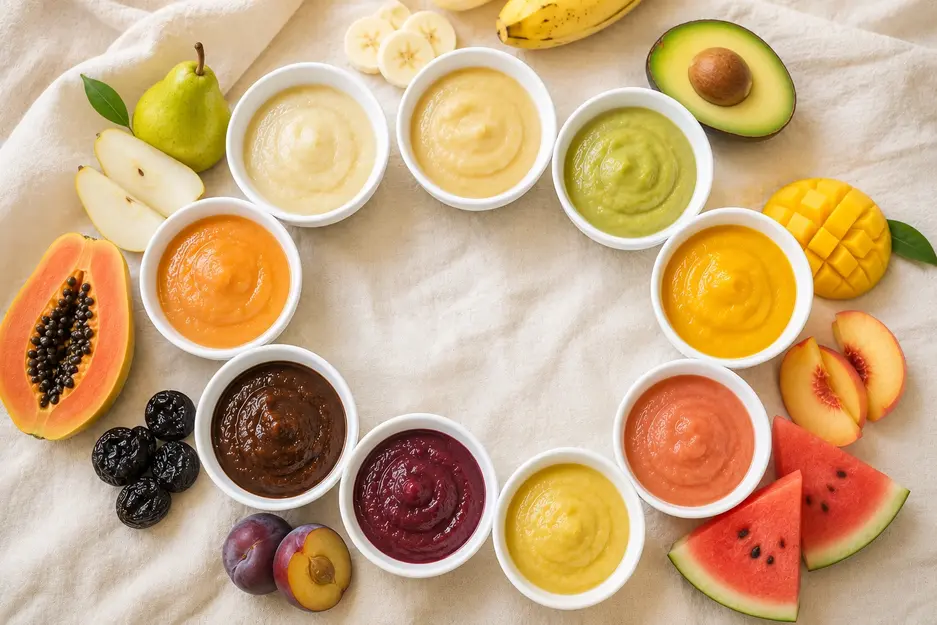
This guide covers 10 of the best fruit purees for 6 month old babies, including simple homemade recipes, nutritional benefits, storage tips, and practical advice for common concerns such as constipation, food refusal, and digestion. Whether this is your first baby or your third, these fruit purees will help you start solids with confidence.
Here are few vegitable purees which may help you to feed you baby.
How to Introduce Fruit Purees Safely
Before jumping into recipes, here are a few rules that keep your baby safe and comfortable:
Start with one ingredient at a time. Introduce each new fruit on its own for 2–3 days. This way, if your baby reacts — rash, tummy upset, excessive gas — you know exactly which fruit caused it.
Keep it smooth and thin. At 6 months, purees should be the consistency of yogurt — smooth with no chunks. You can thin any puree using breast milk, formula, or plain boiled water.
Start small. Begin with 1–2 teaspoons per sitting. There is no rush. Your baby is learning what food feels like, not trying to eat a full meal.
No honey, no added sugar, no salt. Honey can cause infant botulism in babies under 12 months. Added sugar and salt stress a baby’s kidneys and build unhealthy taste preferences early on.
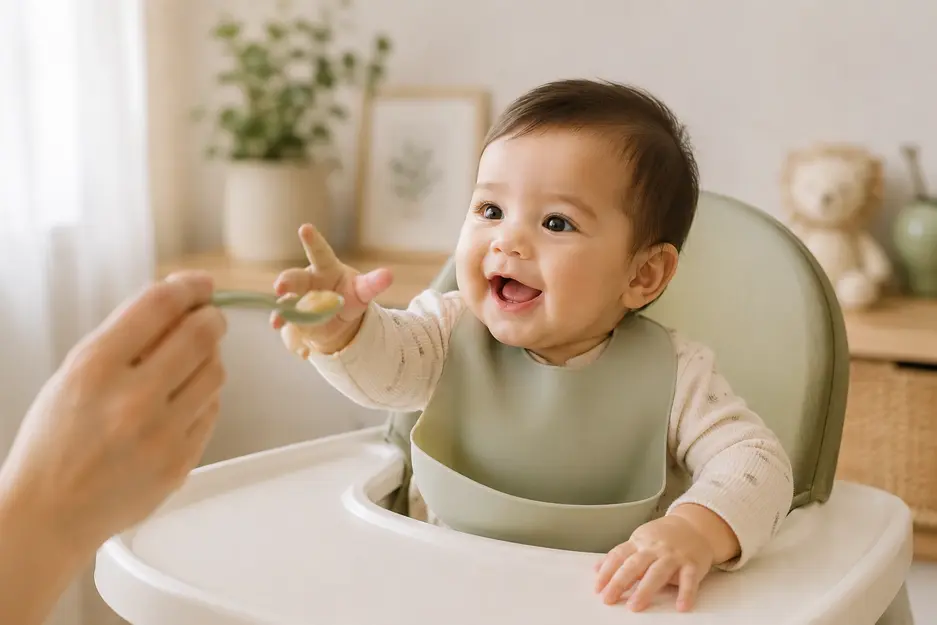
Always feed upright. Sit your baby in a high chair or on your lap with their back straight. Never feed a reclining baby — this is a choking risk
10 Best Fruit Purees for 6 Month Old Babies
Which Fruit Puree Should You Start With?
Many parents worry about choosing the right first fruit. The good news is that several fruits make excellent first foods.If your baby is prone to constipation, pear puree is often the best place to start. If you want something quick and simple, banana works well because it requires no cooking. Avocado is ideal for babies who need extra healthy fats, while apple puree is one of the most widely accepted first foods around the world.
There is no perfect order. Start with one fruit, offer it for 2–3 days, watch for any reaction, and then gradually introduce another.
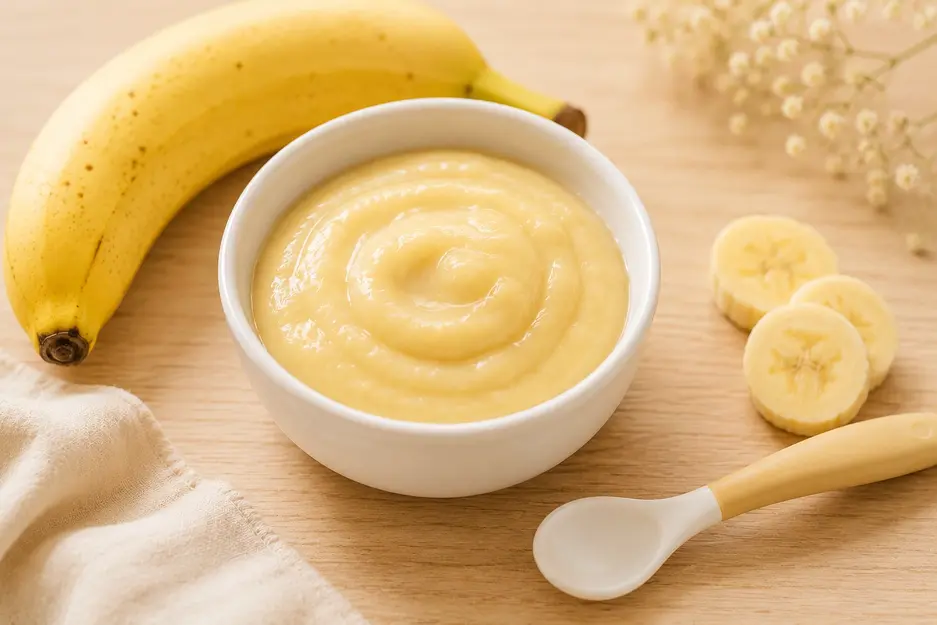
1. Banana Puree
Banana is one of the easiest first foods you will ever make no cooking needed. It is naturally sweet, incredibly smooth when ripe, and gentle on a baby’s digestive system. Ripe bananas are soft enough to mash with just a fork in under a minute. Most babies take to banana immediately because its sweetness is familiar breast milk is naturally sweet too. It is a go-to first fruit for parents around the world.
How to Make
- 1 ripe banana (the riper, the sweeter and easier to digest)
- 1–2 tablespoons breast milk or formula to thin (optional)
Peel the banana. Mash well with a fork until completely smooth. Add breast milk or formula if needed for a thinner consistency. Serve immediately.
Benefits
- Rich in potassium, which supports heart and muscle development
- Contains vitamin B6 for brain development
- Easy to digest gentle on sensitive tummies
- No cooking required fastest puree on this list
⚠️ Precaution
Do not store mashed banana for long — it browns quickly. Always use a fresh, fully ripe banana. Unripe bananas can cause constipation in some babies.
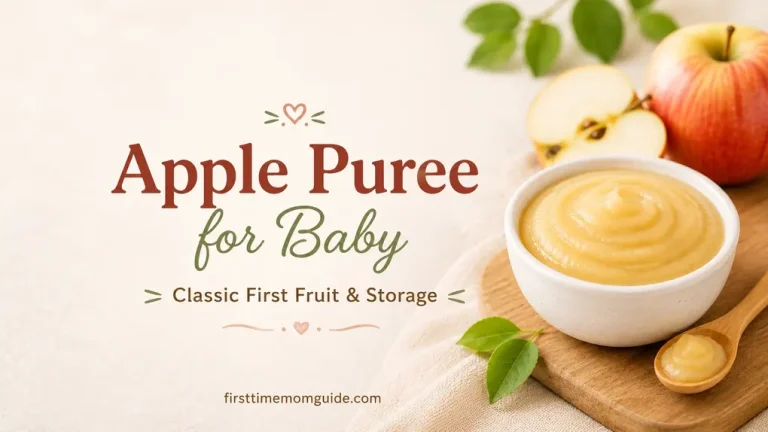
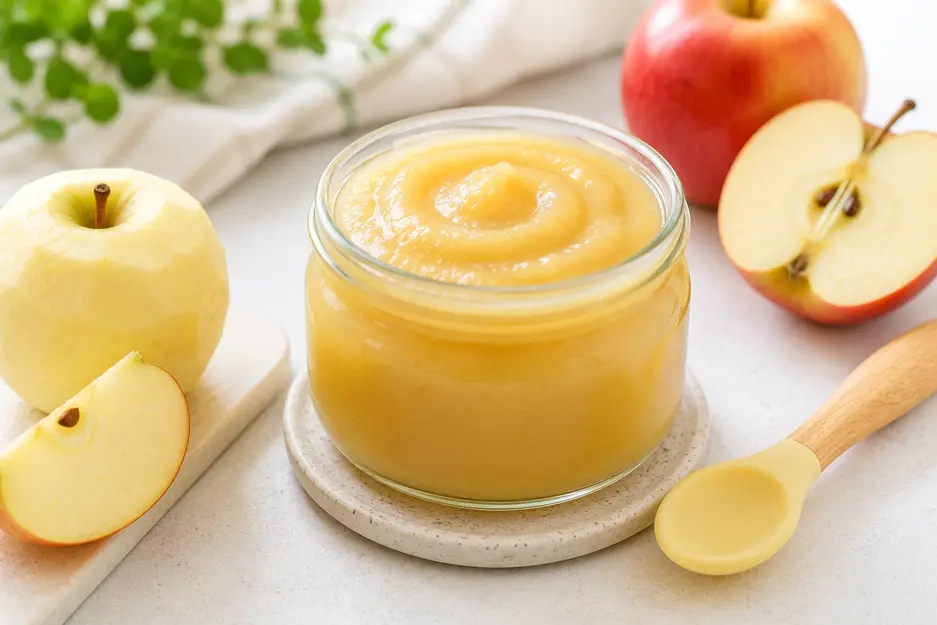
2. Apple Puree
Apple puree is one of the most recommended first foods by pediatricians worldwide. It is mild, slightly sweet, and rich in dietary fiber which keeps digestion moving smoothly. Cooking the apple makes it much easier for tiny tummies to process. Choose sweeter apple varieties like Gala, Fuji, or Golden Delicious for the best flavor without any bitterness.
How to Make
- 1 medium apple (Gala or Fuji work best)
- 2–3 tablespoons water
Peel, core, and dice the apple into small cubes. Steam or boil until completely soft (about 8–10 minutes). Cool slightly. Blend until smooth, adding water as needed for consistency.
Benefits
- High in dietary fiber supports healthy digestion and prevents constipation
- Contains vitamin C, which supports immune function
- Mild flavor easy for most babies to accept on the first try
- Can be combined later with pear or sweet potato for variety
⚠️ Precaution
Always peel apples completely before pureeing — the skin can make the puree grainy and is harder to digest. Never add honey or sugar for sweetness.
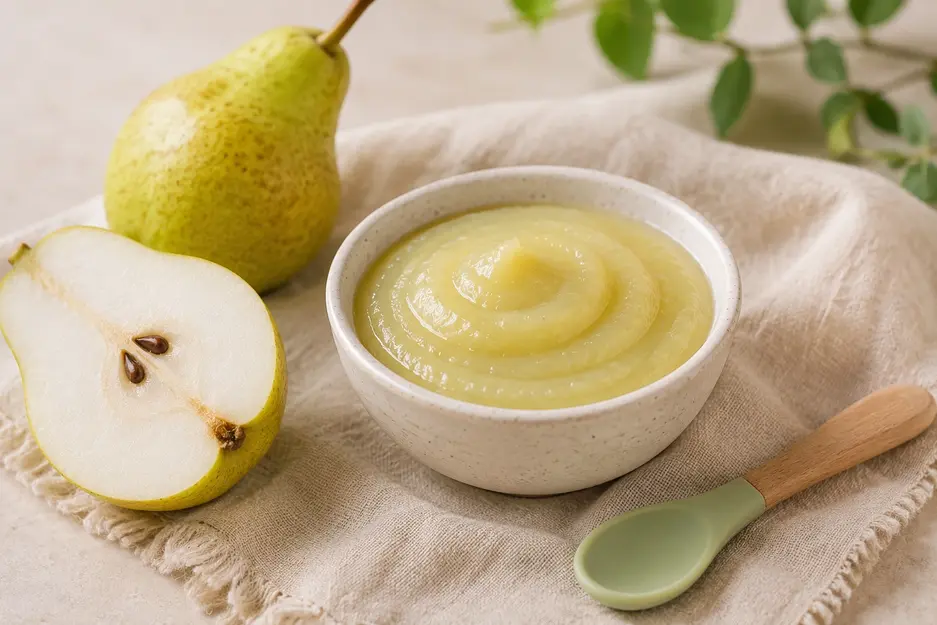
3. Pear Puree
Pear puree is a pediatrician favorite especially for babies who struggle with constipation. Pears contain sorbitol, a natural compound that gently softens stools and keeps digestion comfortable. The flavor is mild, slightly sweet, and very easy for babies to enjoy right away. It is one of the smoothest purees you can make, which is why it works beautifully as a first food.
How to Make
- 1 ripe pear
- 2 tablespoons water or breast milk
Peel, core, and dice the pear. Steam until soft (6–8 minutes). Blend until completely smooth. Add water or breast milk to adjust consistency.
Benefits
- Sorbitol content naturally relieves and prevents baby constipation
- High in vitamin C and potassium
- Very low allergy risk safe for nearly all babies
- Smooth texture blends easily without lumps
⚠️ Precaution
Use ripe pears only — unripe pears are harder to digest and less sweet. Pear puree can cause loose stools if given in large amounts — start with just 1–2 teaspoons.
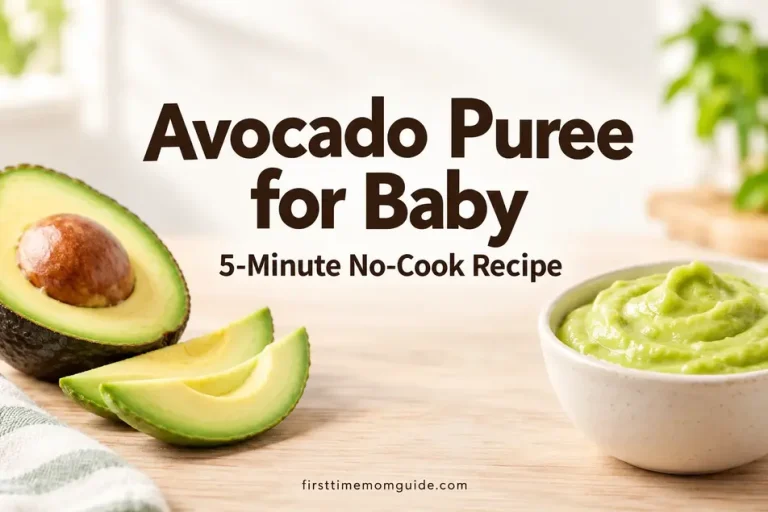
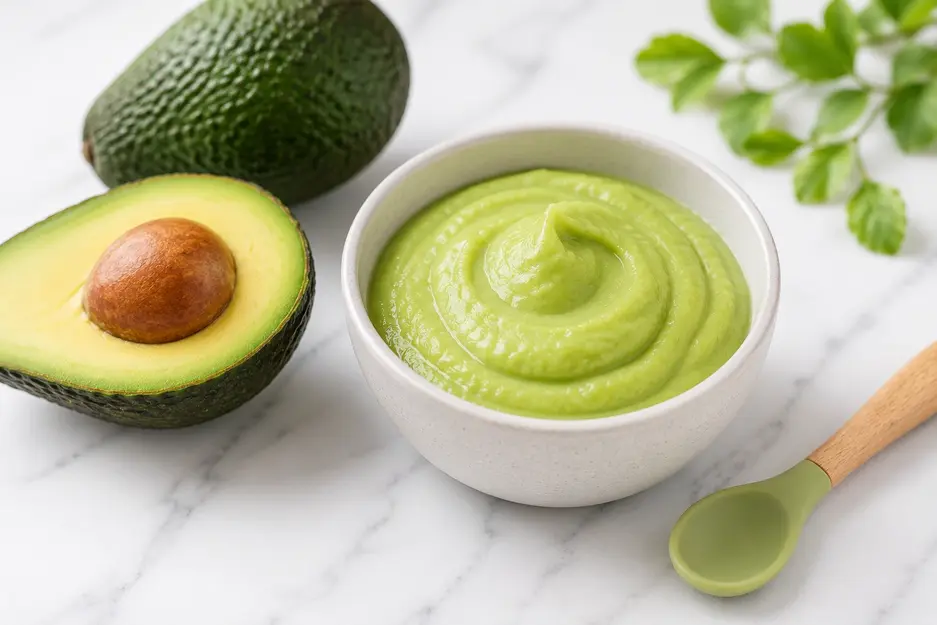
4. Avocado Puree
Avocado is technically a fruit, and it might be the most nutrient-dense first food on this entire list. It is loaded with healthy monounsaturated fats the same type of fats found in breast milk which are essential for brain development and healthy weight gain in infants. No cooking is needed. Just scoop, mash, and serve. It has a creamy, buttery texture that most babies find easy to swallow.
How to Make
- ½ ripe avocado
- 1–2 tablespoons breast milk or formula (optional)
Scoop the avocado flesh into a bowl. Mash with a fork until smooth. Add breast milk or formula if you want a thinner consistency. Serve immediately.
Benefits
- Healthy monounsaturated fats support brain and nervous system development
- Contains folate, potassium, and vitamins K, C, and B6
- Creamy texture is easy to swallow with no cooking required
- Keeps baby feeling full and satisfied
⚠️ Precaution
Avocado browns very quickly once mashed. Use immediately and do not store leftovers. Buy just what you need — half an avocado is enough for a 6-month-old serving.
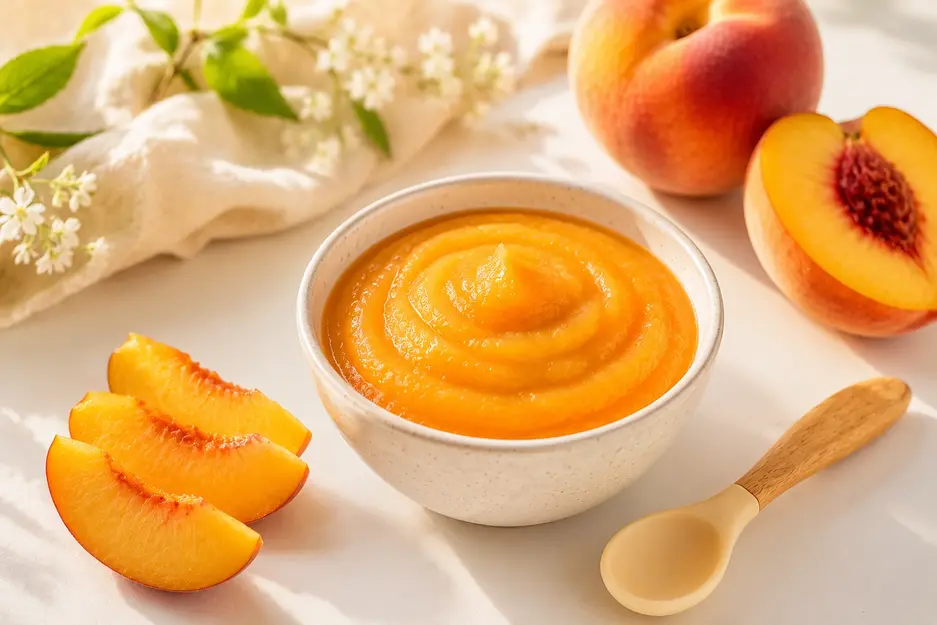
5. Peach Puree
Peach puree has a bright, sweet flavor that most babies love on the very first try. Peaches are part of what pediatricians call the “P fruits” along with pear, prune, and plum which are known for supporting gentle, regular digestion in infants. Peaches are also rich in beta-carotene, which the body converts to vitamin A for healthy vision and immune function.
How to Make
- 1 ripe peach
- 2 tablespoons water
Peel the peach and remove the pit. Dice into small pieces. Steam for 5–7 minutes until soft. Blend until smooth. Thin with water as needed.
Benefits
- Natural sorbitol content supports smooth digestion
- Beta-carotene converts to vitamin A for eye and immune health
- Bright sweet flavor high acceptance rate among babies
- Low in calories, easy on tiny digestive systems
⚠️ Precaution
Remove the skin completely before steaming peach skin can be tough to blend smooth. Always remove the pit fully before cooking.
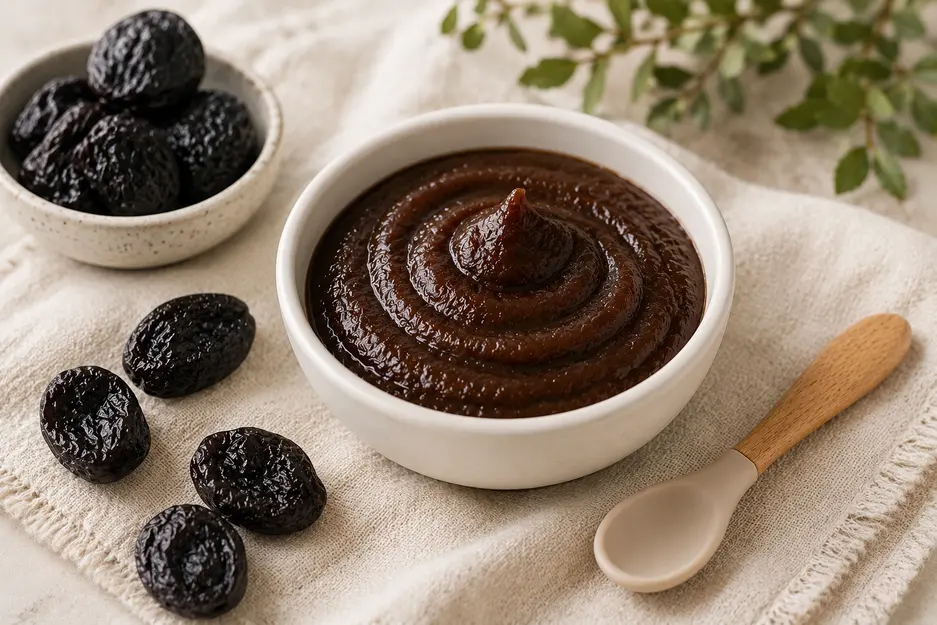
6. Prune Puree
Prune puree is the gold standard remedy when your baby is constipated and it works fast. Prunes are extremely high in sorbitol and fiber, which naturally stimulate bowel movements without any medication. You do not need to wait for constipation to introduce prune puree though it is a nutritious fruit full of iron, potassium, and antioxidants. Start with very small amounts, as prunes are powerful.
How to Make
- 4–5 dried prunes (pitted)
- ½ cup water
Soak prunes in warm water for 30 minutes to soften. Blend with the soaking water until completely smooth. Add more water if needed for a thin, pourable consistency.
Benefits
- Most effective natural remedy for baby constipation
- Rich in iron important for babies transitioning from breast milk
- High in antioxidants that protect developing cells
- Contains potassium for muscle and heart health
⚠️ Precaution
Start with just 1 teaspoon and observe your baby for 24 hours. Too much prune puree can cause diarrhea. Use prune puree as needed not as an everyday staple until your baby’s digestive system is more mature.
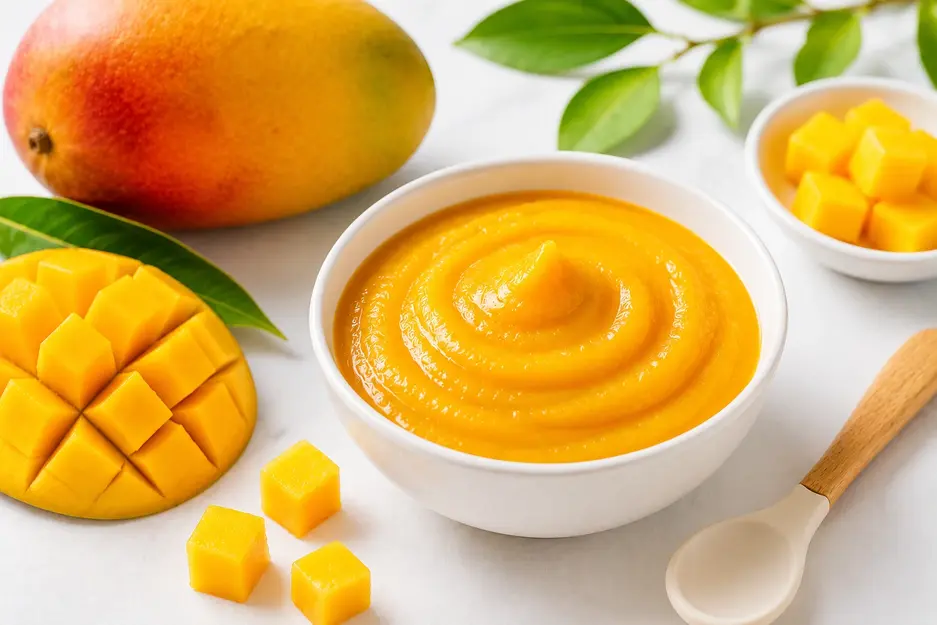
7. Mango Puree
Mango puree is sweet, vibrant, and packed with nutrients that support your baby’s growing immune system. It is one of the few fruits naturally rich in both vitamin C and vitamin A two nutrients that work together to protect against infections. The smooth, silky texture of ripe mango blends beautifully without cooking. Most babies take to mango with great enthusiasm because of its naturally sweet, tropical flavor.
How to Make
- ½ ripe mango
- 1–2 tablespoons breast milk or water (optional)
Peel the mango and cut the flesh away from the pit. Blend the flesh until completely smooth. No cooking required if the mango is fully ripe and soft.
Benefits
- One of the richest fruit sources of vitamin A and vitamin C
- Supports immune system development and healthy vision
- Smooth texture requires no cooking when fully ripe
- Contains folate important for cell growth
⚠️ Precaution
Mango belongs to the same plant family as poison ivy. While rare, some babies may develop a rash around the mouth from mango skin contact. Always peel mango fully and wash your hands after handling the skin.
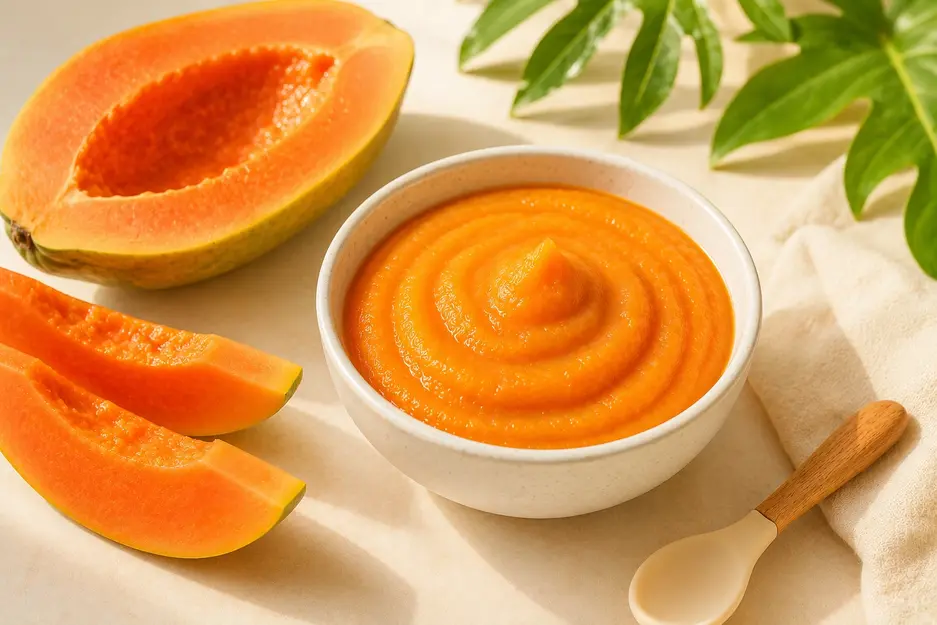
8. Papaya Puree
Papaya is one of the most digestion-friendly fruits you can give a 6-month-old baby. It contains papain a natural digestive enzyme that helps break down food and soothe the gut. Ripe papaya is so soft it does not even need cooking just scoop, blend, and serve. It is mild in flavor, easy to digest, and a great source of vitamin C and folate for growing babies.
How to Make
- ½ ripe papaya (seeds fully removed)
- 1 tablespoon water or breast milk (optional)
Peel the papaya and remove all seeds. Scoop the flesh and blend until smooth. No cooking needed for ripe papaya.
Benefits
- Papain enzyme supports digestion and reduces gas and bloating
- Rich in vitamin C, folate, and beta-carotene
- Extremely soft texture no cooking needed
- Gentle on sensitive infant digestive systems
⚠️ Precaution
Remove every seed before blending papaya seeds are not safe for babies. Choose only fully ripe papaya with orange-yellow flesh. Unripe papaya is too hard and contains compounds not suitable for infants.
9. Plum Puree
Plum puree is sweet, slightly tangy, and one of the most colorful first foods your baby will try. Like pear and prune, plums are a natural digestion supporter gentle but effective. The deep purple color comes from anthocyanins, powerful antioxidants that protect growing cells. Plum puree pairs well with apple or pear once your baby is ready for simple combinations.
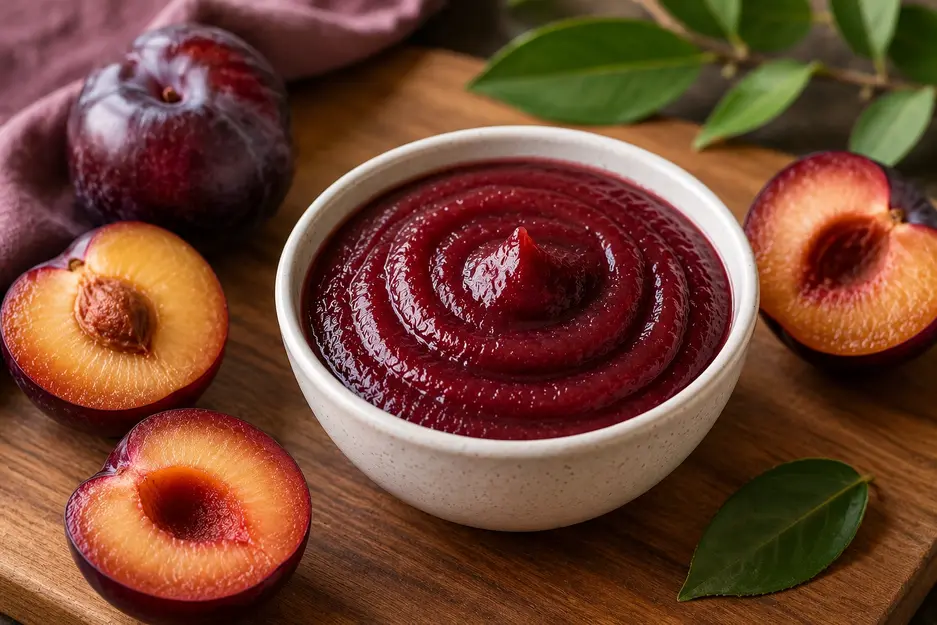
How to Make
- 2 ripe plums
- 2 tablespoons water
Wash, peel, and remove pits from the plums. Steam for 5–7 minutes until soft. Blend until smooth. Add water as needed.
Benefits
- Anthocyanin antioxidants support immune and cellular health
- Natural sorbitol content aids gentle digestion
- Rich in vitamin C and vitamin K
- Can be combined with apple or pear for more complex flavors later
⚠️ Precaution
Always remove the pit completely before cooking. Plum skin can make the puree tart — peel plums before steaming for a smoother, milder flavor that babies prefer.
10. Watermelon Puree
Watermelon is one of the most hydrating first foods you can offer a baby, made up of over 90% water. It requires zero cooking, is naturally sweet, and blends into a smooth, thin puree in seconds. Watermelon is a great choice during warmer months when babies may need extra hydration alongside breast milk or formula. Its light flavor is easy for most babies to enjoy from the very first spoonful.
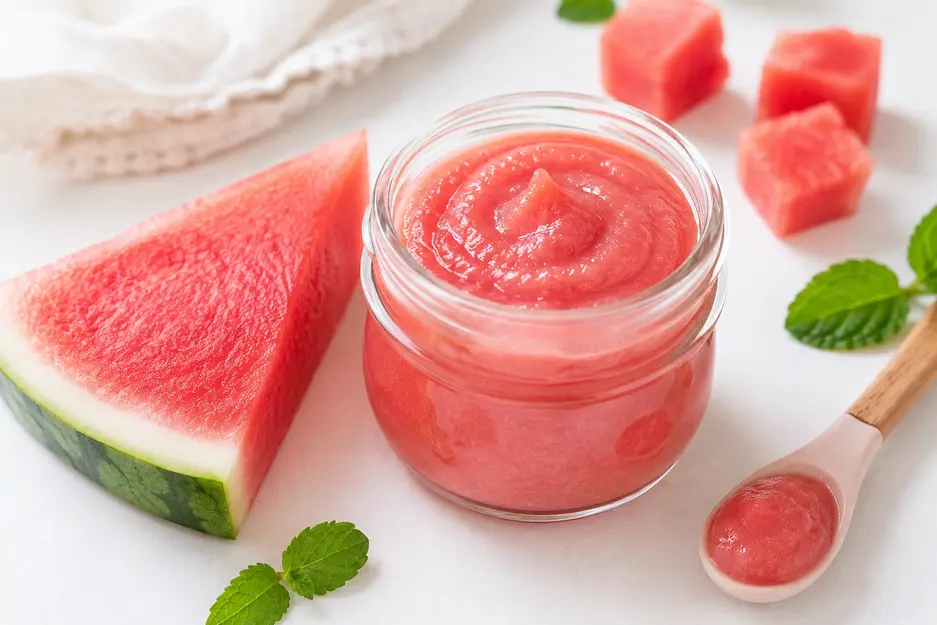
How to Make
- 1 cup seedless watermelon flesh (seeds fully removed)
Remove all seeds. Blend the flesh until smooth. No water or cooking needed — watermelon is naturally liquid enough. Serve immediately.
Benefits
- Over 90% water content supports hydration in hot months
- Contains lycopene, a powerful antioxidant for cellular health
- Zero preparation time no cooking, no peeling issues
- Naturally sweet with a very mild flavor
⚠️ Precaution
Check every piece carefully for seeds before blending even small seeds are a choking hazard. Only use seedless watermelon varieties. Because watermelon is high in water and low in calories, it should complement other purees rather than replace them as a main meal.
Quick Comparison Table: 10 Fruit Purees at a Glance
| Fruit Puree for 6 Month Old Baby | Cooking Needed | Best For | Key Nutrient |
| Banana | No | First food, quick prep | Potassium, B6 |
| Apple | Yes (steam) | Digestion, everyday use | Fiber, Vitamin C |
| Pear | Yes (steam) | Constipation relief | Sorbitol, Vitamin C |
| Avocado | No | Brain development | Healthy fats, folate |
| Peach | Yes (steam) | Sweet flavor, digestion | Beta-carotene, Vitamin A |
| Prune | Soak only | Constipation remedy | Iron, fiber |
| Mango | No (if ripe) | Immunity support | Vitamin A and C |
| Papaya | No | Digestion and gut health | Papain enzyme, folate |
| Plum | Yes (steam) | Antioxidants, digestion | Anthocyanins, Vitamin C |
| Watermelon | No | Hydration, hot months | Lycopene, water content |
All 10 fruit purees for 6 month old babies are single-ingredient, free of added sugar, and safe when introduced one at a time following your pediatrician’s guidance.
Storage Tips for Homemade Baby Purees
Making purees in batches saves time and keeps things fresh all week. Here is what works:
Ice cube tray method: Pour freshly made puree into an ice cube tray and freeze. Once frozen, transfer the cubes into a labeled zip-lock bag. Each cube is roughly 1 ounce perfect for portioning. Frozen purees stay fresh for up to 1 month.
Refrigerator storage: Keep fresh puree in a sealed container in the fridge for up to 48 hours. Always smell and check before serving.
Never refreeze thawed puree. Once defrosted, use it within 24 hours.
Label everything with the fruit name and date you will thank yourself later.
Final Thoughts
Starting solid foods is one of the most exciting milestones in your baby’s first year. These 10 fruit purees provide a safe, practical, and nutritious place to begin.
The best fruit puree for your baby is not necessarily the most popular one. It is the one your baby enjoys, digests comfortably, and accepts happily. Watch your baby’s cues, introduce foods one at a time, and focus on building positive feeding experiences.
Over time, you will discover your baby’s favourites and create a flexible menu that supports healthy growth, digestion, and development.
Disclaimer
This article is for informational purposes only and is not a substitute for professional medical advice. Always consult your pediatrician before introducing solid foods to your baby, especially if your baby has any health conditions, allergies, or was born prematurely. The AAP recommends starting solids at around 6 months, but readiness signs matter more than age alone.
FAQ’s
Q1. What fruit should I introduce first to my 6 month old?
Banana, avocado, and pear are the most recommended starting fruits because they are naturally soft, easy to digest, and very low risk for allergic reactions. Banana and avocado need no cooking at all.
Q2. Do I need to cook fruit before making baby puree?
Not always. Banana, avocado, mango, papaya, and watermelon can be pureed raw when fully ripe. Apple, pear, peach, and plum should be steamed first to soften them enough for a smooth, safe puree.
Q3. How much fruit puree should a 6 month old eat per day?
Start with 1–2 teaspoons once a day. Breast milk or formula is still the main nutrition source at 6 months. Slowly increase to 2–4 tablespoons over several weeks as your baby gets comfortable with solids.
Q4. Can I mix two fruits together for my 6 month old?
Yes — but only after introducing each fruit separately first. Once you confirm your baby tolerates banana and pear individually, you can combine them. Simple combinations like apple and pear or banana and avocado are popular first mixes.
Q5. How do I know if my baby is allergic to a fruit puree?
Watch for symptoms within 30 minutes to a few hours after feeding: skin rash, hives around the mouth, vomiting, unusual fussiness, or swelling. Stop feeding the fruit and contact your pediatrician. True fruit allergies in babies are uncommon but do occur introducing one new food at a time makes it much easier to identify any reaction.