25 Stage 1 Baby Purees: Easy First Foods for 6 Months
Starting solids can feel complicated. Which food comes first? How smooth should a puree be? What about iron, allergens, freezing, and moving to thicker textures? This guide puts the essentials in one place.
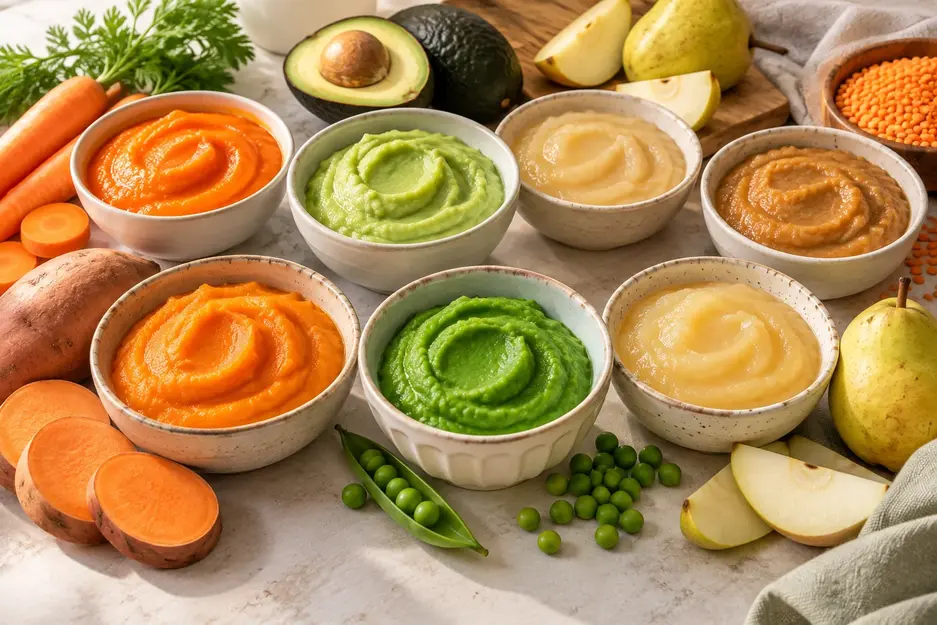
These 25 Stage 1 baby purees are simple foods for a baby who is developmentally ready to begin solids, usually around 6 months. For every food, you will see what to cook, how to blend it, and the texture detail that matters most, followed by iron, allergen, storage, safety, and texture-progression guidance in one place.
One important note before we begin: “Stage 1” is a common baby-food term, not a developmental rule every baby must follow. Some babies start with smooth purees, some manage mashed foods or safe finger foods, and many families use a combination. The goal is to match food texture to your baby’s skills and gradually move forward as those skills develop.
Quick Start: What a First Puree Should Look Like
- Start solids when your baby is developmentally ready, generally around 6 months, rather than choosing a date alone.
- For a first spoon-fed puree, blend the food until smooth and easy to swallow. Adjust thickness to your baby’s current skills.
- Include iron-rich foods early instead of building the entire first-food rotation around fruit.
- Introduce new foods in a way that lets you notice reactions, and discuss an individual plan with your pediatrician if your baby has severe eczema, an existing food allergy, or other allergy concerns.
Is Your Baby Ready for Stage 1 Purees?
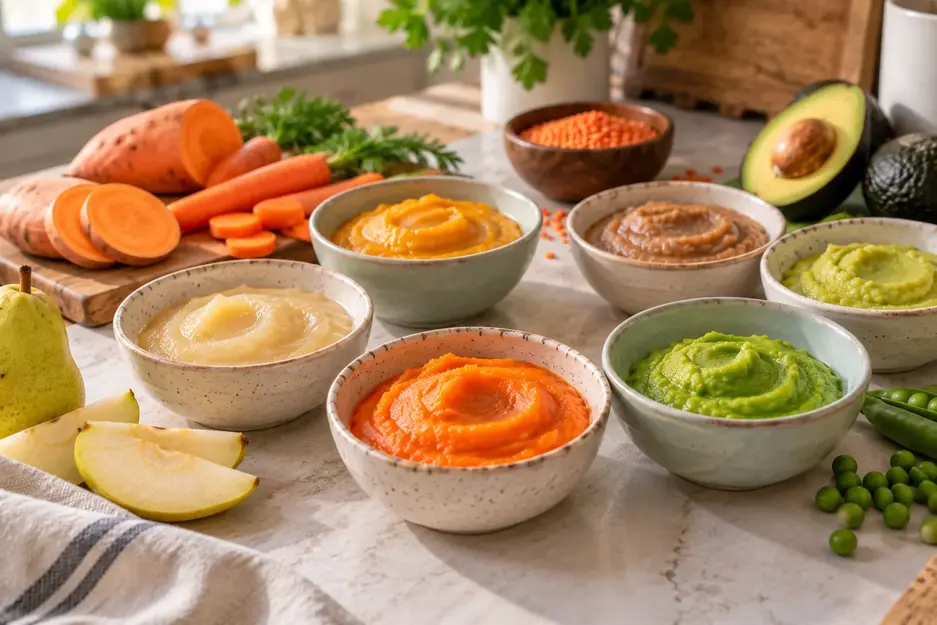
Most babies begin complementary foods at about 6 months, but readiness signs matter. Look for good head and neck control, the ability to sit upright with support, interest in food, opening the mouth when food is offered, and the ability to swallow food instead of automatically pushing it back out. Starting solids before 4 months is not recommended by the CDC.
At first, your baby may eat only a tiny amount, and that is normal. Feeding is also a new skill. Offer food, watch hunger and fullness cues, and do not pressure your baby to finish.
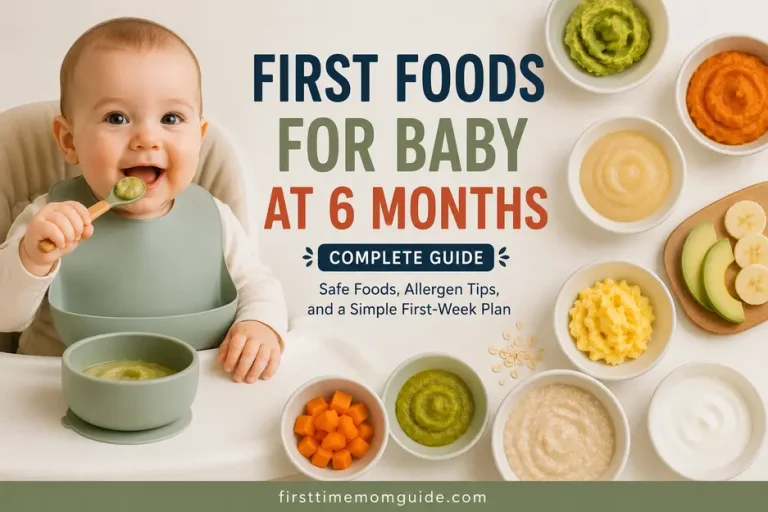
Not sure your baby is ready? Read our complete guide to First Foods for Baby at 6 Months.
| Quick readiness check | What to look for |
| Head & neck | Good head and neck control. |
| Sitting | Can sit upright alone or with support. |
| Interest | Opens mouth or shows interest when food is offered. |
| Swallowing | Swallows food instead of immediately pushing it back out. |
| Timing | Usually around 6 months; do not start before 4 months. |
How to Make a Basic Stage 1 Baby Puree
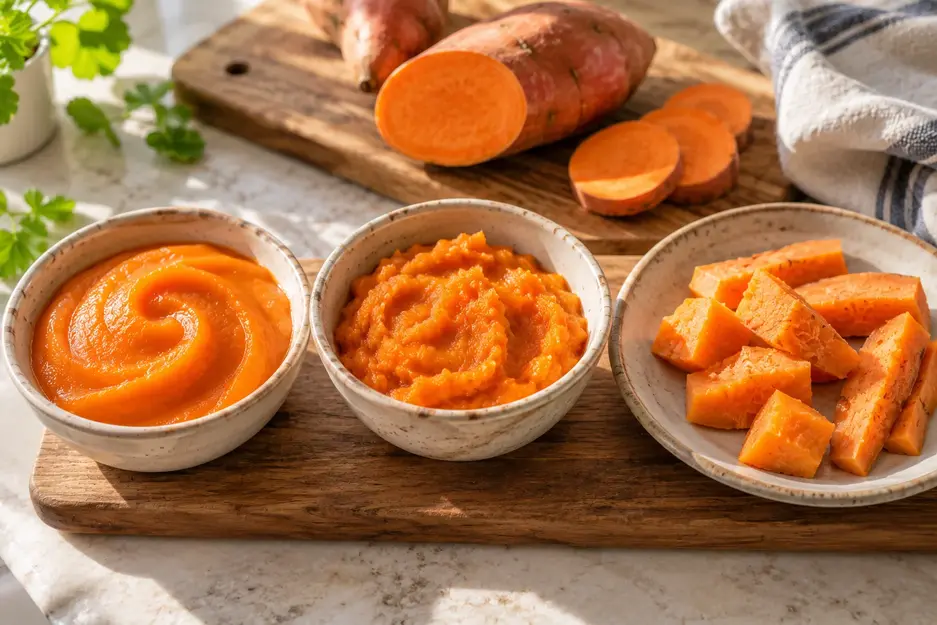
1. Prepare the ingredient. Wash produce well. Peel, pit, deseed, or trim when appropriate, then cut into even pieces.
2. Cook until very soft. Steam, roast, simmer, or bake vegetables and firmer fruits until they crush easily with a fork. Naturally soft foods such as ripe banana and avocado do not need cooking.
3. Blend. Puree the food in a blender or food processor. Add a little water, breast milk, or prepared infant formula as needed to reach an easy-to-swallow texture.
4. Check the texture and temperature. For a baby just learning to eat from a spoon, start smooth. Cool cooked food before serving and test the temperature yourself.
5. Progress when ready. Smooth does not need to mean watery, and it should not become a permanent stage. As your baby handles food confidently, gradually offer thicker and more textured foods.
| If you see this | What to do |
| Puree is too thick | Add a small splash of water, breast milk, or prepared formula; blend again. |
| Puree is too thin | Use less liquid next time; naturally watery foods can stay looser. |
| Fibrous skins remain | Blend longer or strain for a very new eater. |
| Baby manages smooth puree well | Gradually move toward thicker, mashed, lumpy, then safe finger-food textures. |
| Food is hot | Cool and test temperature before serving. |
25 Stage 1 Baby Purees to Try
HOW TO USE THIS LIST: “Steam” means cook until the food crushes easily with a fork. Add liquid gradually; watery produce may need none. For meat, remove skin, fat and bones. Never add honey, sugar, or unnecessary salt.
There is no required order for first foods. This list is organized to make shopping and meal prep easier.
| Category | Easy options in this guide | Why include it |
| Vegetables | Sweet potato, carrot, peas, squash, zucchini, broccoli, cauliflower, green beans | Flavor variety and nutrient-dense choices. |
| Fruits | Banana, avocado, apple, pear, peach, plum, mango, blueberry, prune | Naturally soft or easy to cook and puree. |
| Iron/protein | Beef, chicken, lentils, beans, egg | Helps bring iron, zinc, protein and variety into first foods. |
| Grain/dairy | Iron-fortified oat cereal, oatmeal, plain full-fat yogurt | Useful texture variety; fortified cereal adds iron. |
Vegetable Purees
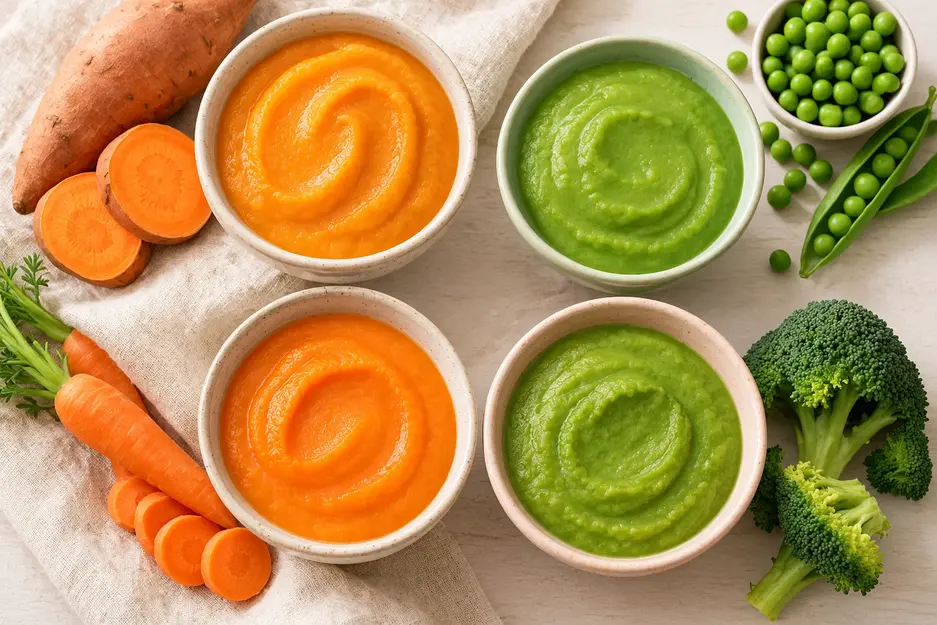
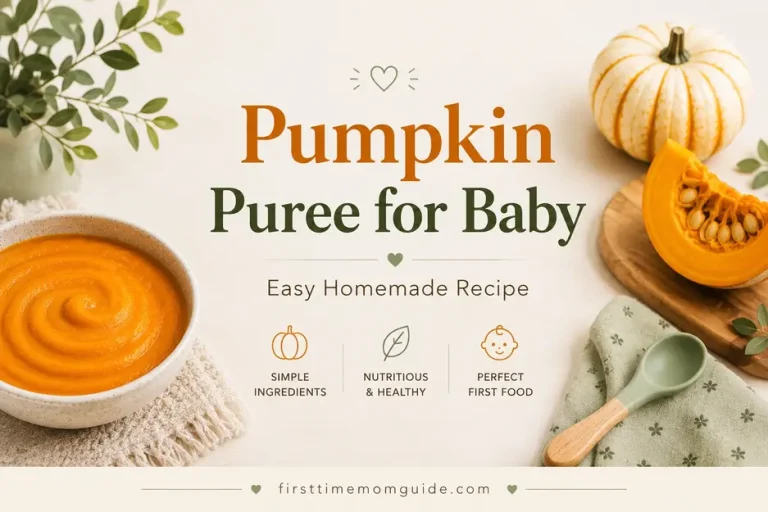
1. Sweet Potato Puree: Peel and cube; steam about 12–15 minutes or roast until collapsing-soft. Blend, adding liquid a little at a time. Aim for a creamy, spoonable puree.
2. Carrot Puree: Peel and slice; steam about 15–20 minutes until very soft, then blend. Add liquid gradually. Never offer hard raw carrot pieces to a beginning eater.
3. Pea Puree: Steam peas about 5–7 minutes and blend thoroughly. If skins leave a coarse texture, blend longer or strain for an early spoon-fed puree.
4. Butternut Squash Puree: Steam cubes or roast halved squash until soft, scoop the flesh, and blend. Roasted squash is naturally thicker, so add liquid slowly.
5. Zucchini Puree: Steam sliced zucchini about 5–8 minutes. Blend before adding liquid because zucchini releases plenty of water and naturally makes a looser puree.
6. Broccoli Puree: Steam florets and tender stem pieces until very soft, then blend thoroughly with enough liquid to make the texture comfortable for your baby. Offering less-sweet vegetables early can help expose babies to a wider range of flavors.
7. Cauliflower Puree: Steam florets until they break apart easily, then blend smooth. Cauliflower has a mild flavor and works well as a simple first vegetable before you later begin combining already-tolerated foods.
8. Green Bean Puree: Trim and steam green beans until very tender. Blend well; if the puree remains fibrous, continue blending or strain it for an early spoon-fed texture.
Fruit Purees
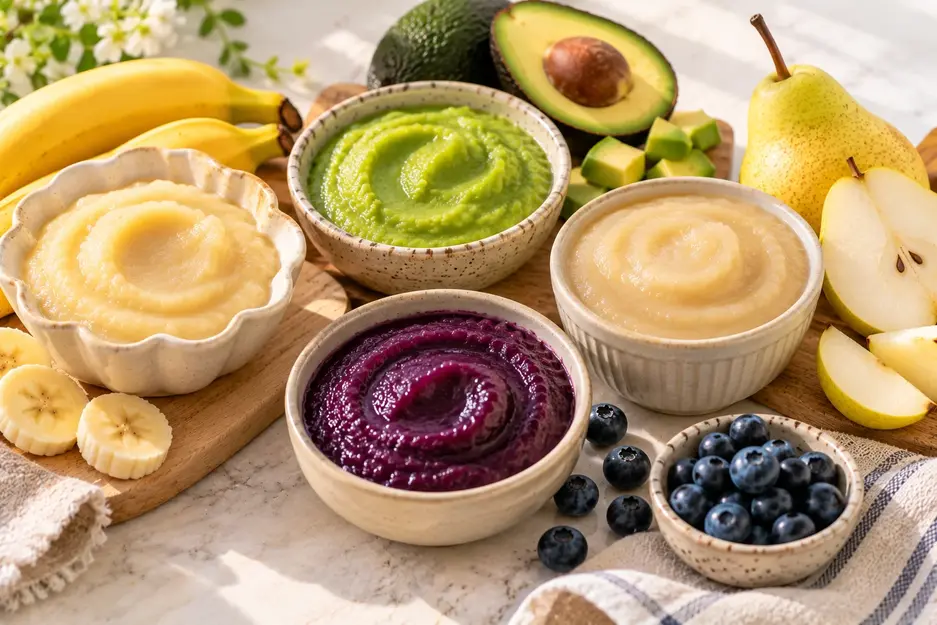
9. Banana Puree: Mash a very ripe banana until completely smooth or blend briefly. No cooking is needed. Browning after exposure to air is normal.
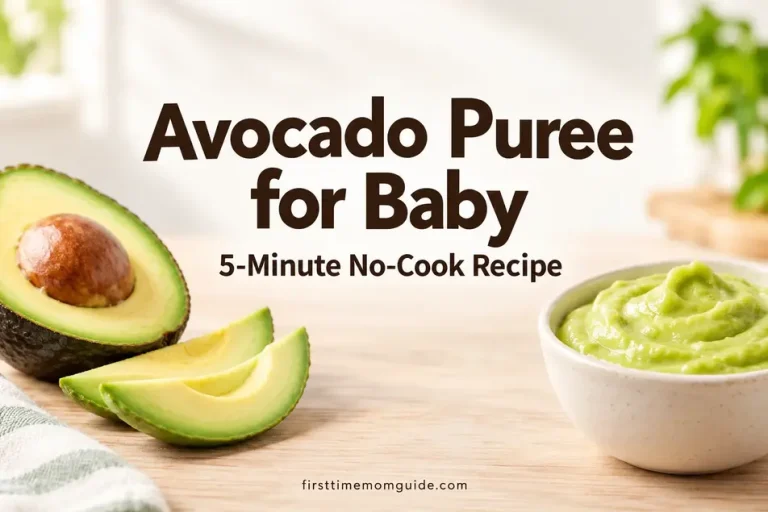
10. Avocado Puree: Mash or blend ripe avocado; thin only if needed. No cooking is required. Prepare close to serving because avocado darkens quickly.
11. Apple Puree: Peel, core, chop, and steam or simmer about 10–15 minutes until fork-soft. Blend smooth. Hard raw apple pieces are a choking hazard.
12. Pear Puree: Peel, core, and steam firmer pears until tender. A very ripe pear may need minimal cooking. Blend until smooth and adjust the consistency with a small amount of liquid.
13. Peach Puree: Use a ripe peach, remove the pit, and peel if the skin makes the puree coarse. Very ripe peach can be blended directly; firmer fruit can be lightly steamed first.
14. Plum Puree: Remove the pit, soften the plum by steaming if needed, and blend. The skin can be removed for a smoother early puree. Plums vary in tartness, so do not add sugar.
15. Mango Puree: Use fully ripe, soft mango. Remove the peel and pit and blend the flesh until smooth. No sweetener is needed. Check carefully for any stringy fibers before serving.
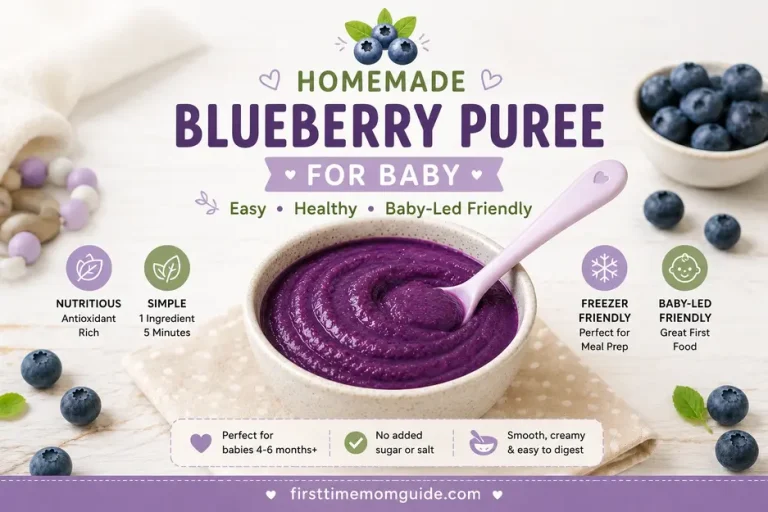
16. Blueberry Puree: Cook blueberries briefly until soft, then blend thoroughly. Their skins can create texture, so blend well for a beginning eater. The deep purple color can stain bibs and spoons.
17. Prune Puree: Soak or gently simmer dried prunes until very soft, then blend with some of the cooking liquid. Prune puree has a naturally intense flavor, so start with a small serving.
Want more fruity ideas? Explore our 10 Easy Fruit Purees for 6-Month-Old Babies.
Iron-Rich and Protein Foods
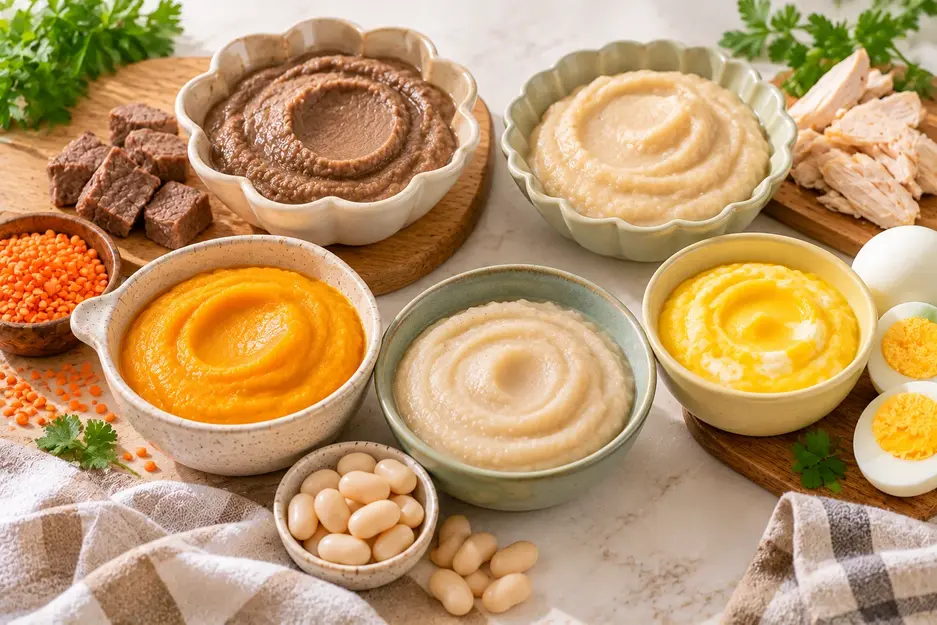
18. Beef Puree: Cook lean beef fully until tender, remove visible fat, then blend very thoroughly with warm water or another suitable liquid. Beef provides iron and zinc.
19. Chicken Puree: Cook boneless, skinless chicken thoroughly with no added salt. Blend while moist with enough liquid for a smooth texture.
20. Lentil Puree: Simmer lentils in water until extremely soft and breaking down, then blend. Lentils add plant protein and iron.
21. Bean Puree: Use thoroughly cooked, unsalted beans such as black, cannellini, or pinto beans. Blend with liquid until smooth. If skins remain noticeable, blend longer or strain for a beginning texture.
22. Well-Cooked Egg: Cook egg thoroughly, then mash or blend a small amount to a soft infant-safe consistency. Egg is a common allergen; current guidance does not support unnecessary delay once baby is ready for solids.
Grain and Dairy Options
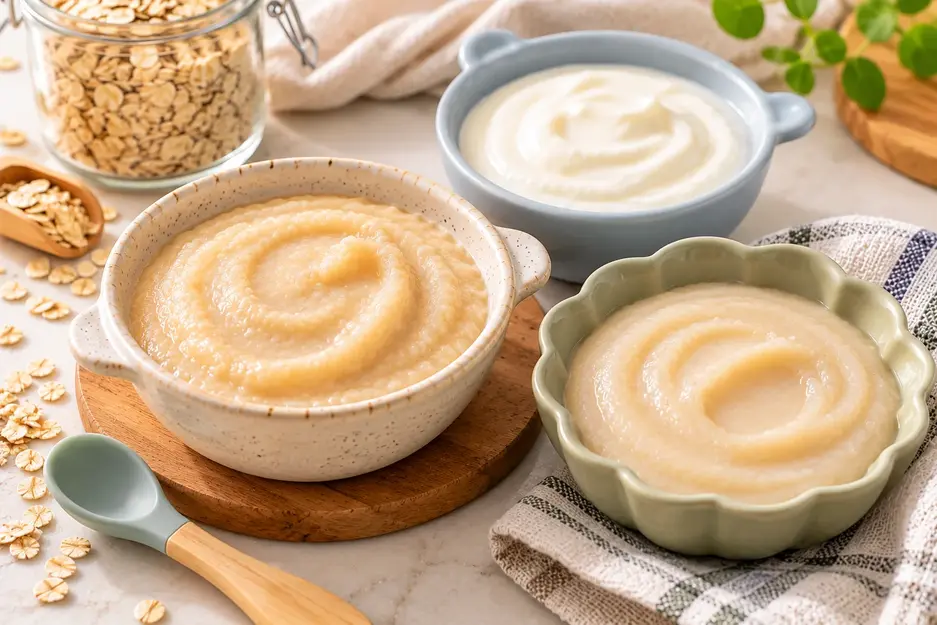
23. Iron-Fortified Infant Oat Cereal: Prepare according to the package with breast milk, prepared formula, or water as directed. Start smooth and adjust thickness as feeding skills improve.
24. Plain Oatmeal Puree: Cook plain oats until very soft, then blend to remove coarse texture for a beginning eater. Do not add sugar or honey. As your baby develops eating skills, you can gradually stop blending it completely.
25. Plain Full-Fat Yogurt: Choose pasteurized, plain, unsweetened full-fat yogurt. No cooking is needed. Dairy is a common allergen, so introduce thoughtfully and watch for a reaction.
Iron Matters When Solids Begin
Fruit and vegetable purees are useful for flavor variety, but they should not be the whole plan. The American Academy of Pediatrics advises including foods that provide iron and zinc, such as meat and iron-fortified cereal. Lentils and beans can also contribute iron. Rotating an iron-rich food alongside vegetables and fruits makes the first-food menu more nutritionally purposeful.
If you are concerned about your baby’s iron intake, growth, prematurity, or supplements, ask your pediatrician for individualized advice rather than relying on a general feeding chart.
What About Allergens?
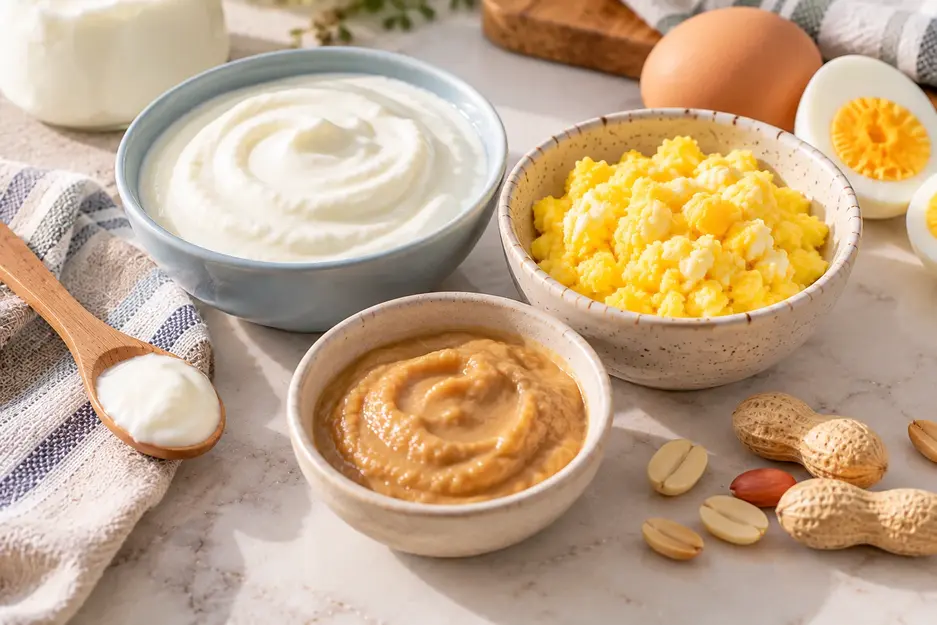
Common allergenic foods do not need to be routinely delayed once a baby is ready for solids. Egg and dairy can be introduced in safe, age-appropriate forms, and other allergens such as peanut, wheat, sesame, soy, fish, and shellfish can also be introduced appropriately. Introduce allergenic foods one at a time in small amounts so a reaction is easier to identify.
If tolerated, allergenic foods should remain part of the diet in developmentally appropriate forms. A baby with severe eczema, an existing food allergy, or another reason for increased allergy risk may need a specific introduction plan. Never give whole nuts to a baby, and do not offer a thick spoonful of nut butter because it can be a choking hazard.
| Allergen example | Baby-safe form | Key point |
| Egg | Well-cooked egg, mashed or blended | Introduce in an age-appropriate texture. |
| Dairy | Plain pasteurized full-fat yogurt | Cow’s milk as the main drink waits until after 12 months. |
| Peanut | Smooth peanut butter thinned into puree/cereal | Never whole nuts or a thick spoonful of nut butter. |
| Higher allergy risk | Individual clinician-guided plan | Especially severe eczema or existing food allergy. |
ALLERGY SAFETY: Stop the new food and seek medical advice if a reaction is suspected. Breathing difficulty, tongue or throat swelling, collapse, or rapidly worsening symptoms require emergency medical care. This guide cannot diagnose a food allergy.
How Much Should a 6-Month-Old Eat?
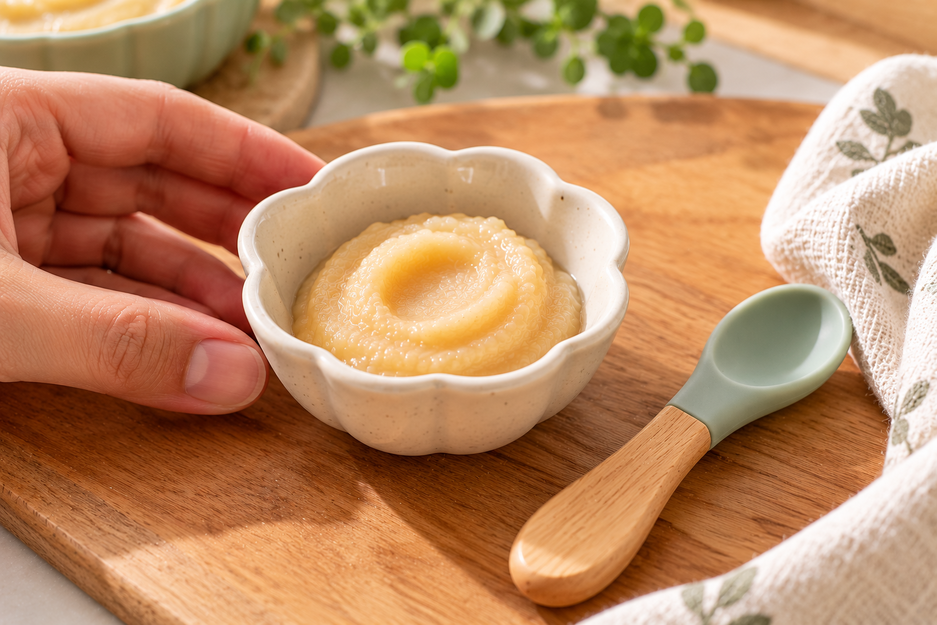
Think in tastes rather than adult-sized portions. At first, your baby may eat only a small amount. Appetite varies from day to day, and responsive feeding matters more than persuading a baby to finish a measured portion. Continue breast milk or infant formula while complementary foods are introduced.
Storage, Freezing, and Reheating
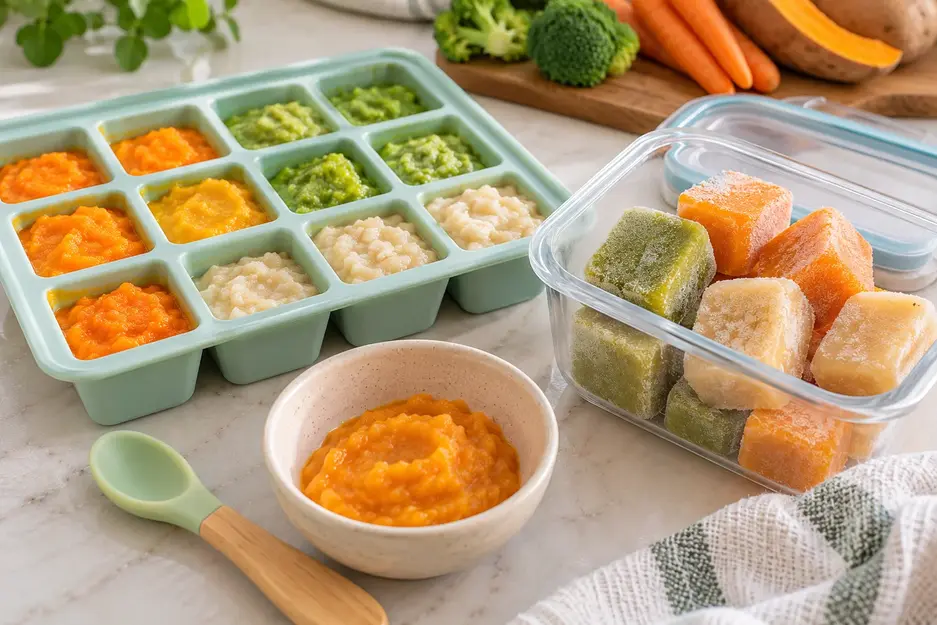
Homemade puree is convenient to batch-prep, but food safety matters. Cool cooked food promptly, store it in clean covered containers, and refrigerate or freeze it rather than leaving it at room temperature. Freeze small portions so you can thaw only what you need. Storage times vary by ingredient and preparation method, so follow reliable food-safety guidance for the specific food.
Thaw puree safely in the refrigerator or reheat it directly. Stir well and check for hot spots. Do not save food from a bowl or spoon that has been in your baby’s mouth because saliva can introduce bacteria.
| Situation | Quick guidance |
| After cooking | Cool promptly and transfer to a clean covered container. |
| Batch prep | Freeze in small portions so you thaw only what you need. |
| Thawing | Thaw in the refrigerator or reheat directly using a safe method. |
| Reheating | Stir thoroughly and check for hot spots before serving. |
| Baby has eaten from the bowl | Discard the leftover portion; do not return it to storage. |
Foods and Habits to Avoid
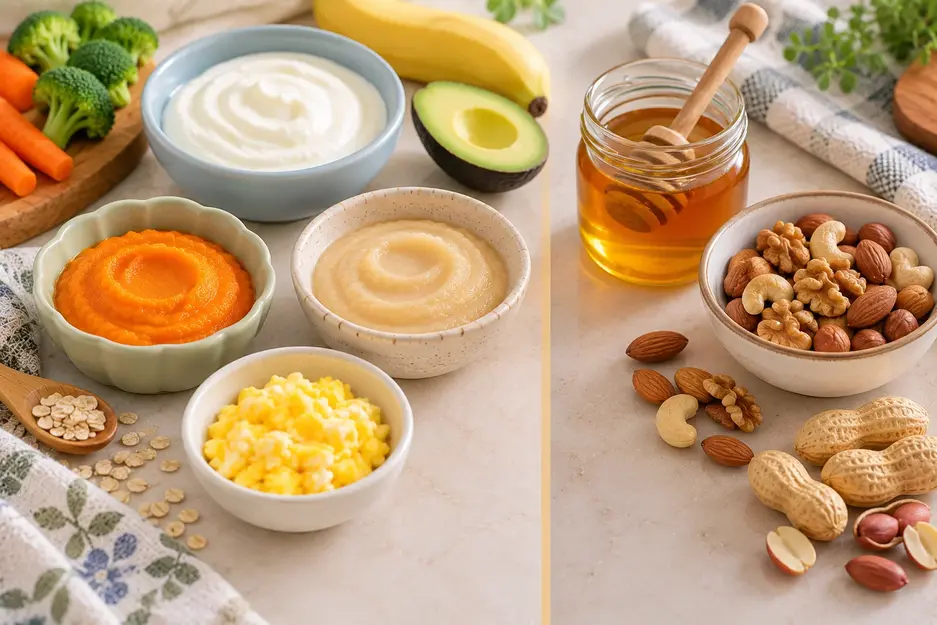
- Honey before 12 months because of the risk of infant botulism.
- Added sugar and unnecessary added salt.
- Unpasteurized milk, yogurt, cheese, or juice.
- Whole nuts and other hard foods that are choking hazards.
- Cow’s milk as the main drink before 12 months, although pasteurized yogurt and cheese can be offered earlier in age-appropriate forms.
- Keeping a baby on only thin, completely smooth purees after they are ready to manage more texture.
When to Move Beyond Stage 1 Purees
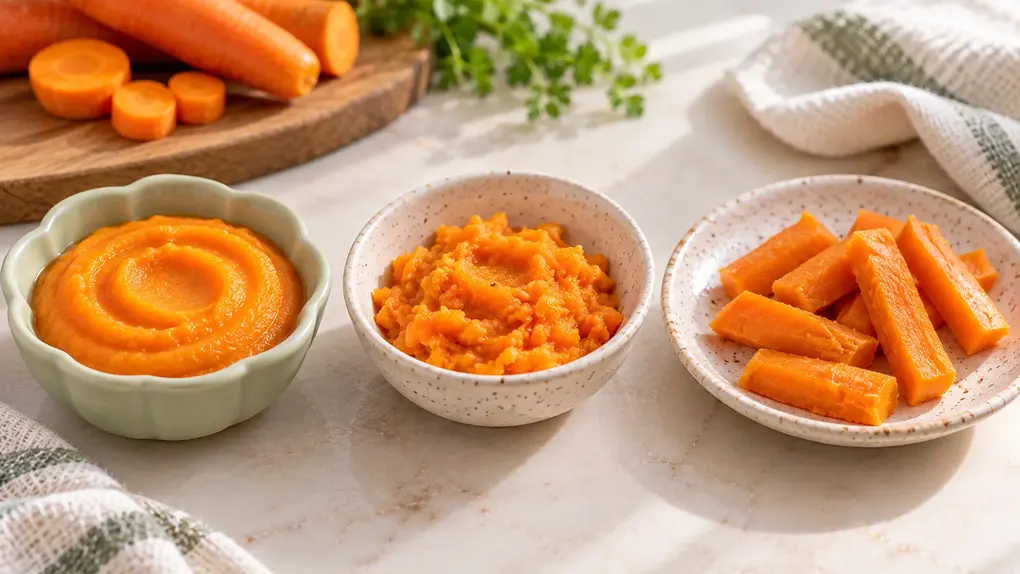
Do not wait for a particular birthday or an empty jar labeled “Stage 1.” Watch your baby. Once smooth puree is handled comfortably, gradually make foods thicker, then move toward mashed and lumpy textures and appropriately prepared finger foods. The NHS recommends moving on from pureed or blended foods to mashed, lumpy, or finger foods as soon as a baby can manage them.
This progression helps babies practice moving food around the mouth, chewing, and swallowing. If your baby repeatedly struggles with texture, feeding, swallowing, or growth, discuss it with your pediatrician rather than simply making every meal thinner.
Ready for the next step? Try these 15 Baby Food Combo Purees for 6–12 Months.
Quick Reference: 25 First Purees
| Category | Foods |
| Vegetables | Sweet potato, carrot, peas, butternut squash, zucchini, broccoli, cauliflower, green beans |
| Fruits | Banana, avocado, apple, pear, peach, plum, mango, blueberry, prune |
| Iron/Protein | Beef, chicken, lentils, beans, well-cooked egg |
| Grains/Dairy | Iron-fortified infant oat cereal, plain oatmeal, plain full-fat yogurt |
conclusion
Starting solids does not require a perfect schedule or 25 bowls prepared at once. Begin when your baby is ready, choose simple foods, include iron-rich options, introduce allergens thoughtfully, and keep milk feeds in the picture. These Stage 1 baby purees give you a practical starting library, not a checklist your baby must finish.
Most importantly, let texture grow with your baby. A smooth puree can be an excellent first step, but it is only a first step. With safe preparation, variety, and responsive feeding, those first tiny spoonfuls can gradually become the skills your baby needs to join family meals.
Medical disclaimer
This article is for general educational information and is not a substitute for medical advice. Babies with feeding difficulties, poor growth, prematurity, severe eczema, known or suspected food allergy, or other medical concerns should receive individualized guidance from their pediatrician or qualified feeding professional.
FAQ’s
Q.1 Are Stage 1 purees only for exactly 6-month-old babies?
No. “Stage 1” is a convenient description for smooth beginner purees, not a strict age category. Readiness and feeding skills are more useful guides than the label.
Q.2 Do I have to wait 3 to 5 days after every new food?
CDC and AAP parent guidance commonly advises offering one new single-ingredient food at a time and waiting several days when first introducing foods so reactions are easier to identify. Allergy-specific guidance can differ by risk and allergen, so follow your pediatrician’s advice when your baby has allergy concerns.
Q.3 Can I use frozen fruits and vegetables?
Yes. Plain frozen produce without added salt, sugar, or sauces can be a practical option. Cook when needed and prepare it to a texture that matches your baby’s skills.
Q.4 Can I mix two purees together?
Yes, after your baby has already tried the individual ingredients. Combining familiar foods can add variety while still making it easier to know which foods have been tolerated.
Q.5 Can I give my baby the same puree every day?
Yes, you can repeat a familiar puree, especially while your baby is getting used to solids. However, gradually offering a variety of vegetables, fruits, iron-rich foods, grains, and allergen-containing foods helps your baby experience different flavors and textures. You do not need to introduce a completely new food every day.