The Baby Food Combinations That Make Babies Ask for More
You spent twenty minutes steaming and blending a perfect single-ingredient broccoli puree. Your baby took one bite, made a face you will remember for years, and turned their head away for the rest of the meal. Sound familiar?
Here is what almost nobody tells new parents at the start of solids: the problem is rarely the food itself. It is the food alone. A baby who refuses plain broccoli will very often eat broccoli blended with apple and pear without a single complaint. The difference is not the nutrition it is the combination.
This guide covers the baby food combinations that make babies ask for more, built on real flavor science, not guesswork. You will learn exactly which pairings work and why, how to build your own combinations from ingredients you already have, and how to turn a meal your baby tolerates into one they genuinely look forward to.
Looking for simple starter recipes? Explore these nutritious Fruit Purees for 6 Month Old Babies that pair perfectly with many baby food combinations.
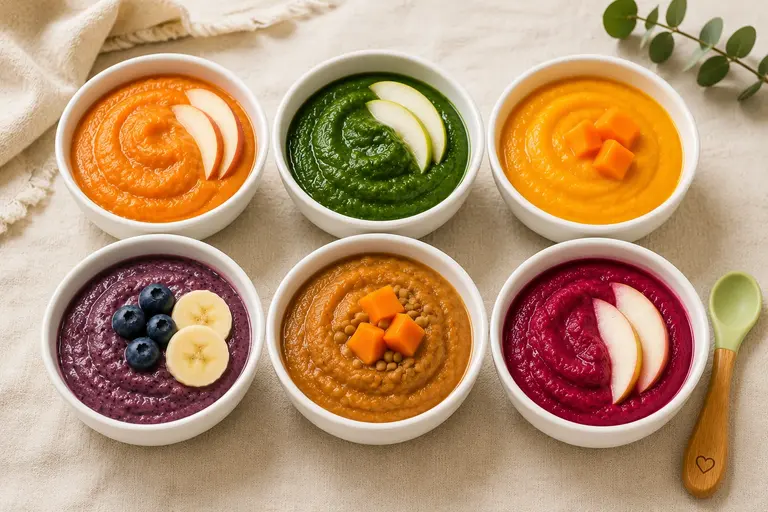
Why Some Baby Food Combinations Babies Love And Others They Refuse
Most parents assume picky eating is simply something babies do, an unavoidable phase to survive. But there is a real, observable reason certain baby food combinations that make babies ask for more work so consistently, while single-ingredient versions of the same vegetable get refused over and over.
Babies are born with a natural preference for sweet tastes this is biological, not a bad habit you created. A naturally sweet ingredient like apple, pear, sweet potato, or banana paired with a milder or stronger-flavored ingredient creates balance, so the overall flavor reads as pleasant rather than bitter or sharp. This is exactly why a plain broccoli puree often gets rejected while the same broccoli blended into apple and pear is eaten without protest.
There is also a window of opportunity most parents do not know about. Babies are most open to trying new foods during the period between roughly 4 and 6 months of age, often described as a flavor window. Introducing varied, well-paired flavors during this stage is associated with babies who grow into more adventurous eaters later, rather than the rigid pickiness that develops when only bland, single-note foods are offered for too long.
The Flavor Science Behind Baby Food Combinations Babies Love
Understanding why certain pairings work means you can build your own combinations confidently, rather than only following a recipe list. There are three principles behind almost every baby food combination babies genuinely enjoy.
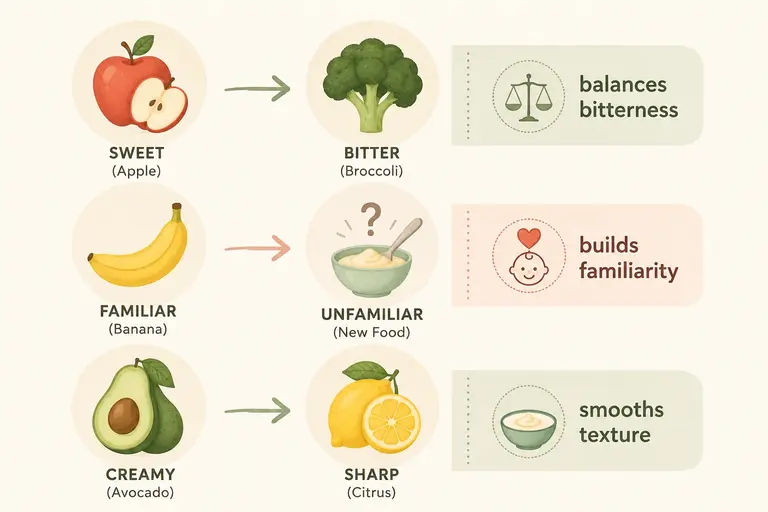
Sweet balances bitter or sour
Vegetables like broccoli, spinach, and kale carry a natural bitterness that many babies instinctively resist, since bitterness can signal “unsafe” at a biological level. Pairing them with apple, pear, or sweet potato softens that bitter edge enough that the vegetable becomes approachable rather than off-putting.
Familiar carries unfamiliar
A baby who already loves banana is far more likely to accept a brand-new ingredient say, avocado or oat when it is blended into that familiar banana base. The known flavor acts as a bridge, making the unknown one feel safer.
Texture and creaminess smooth out sharpness
Ingredients like avocado, yogurt, and well-cooked sweet potato add a creamy mouthfeel that rounds out anything with a sharper, thinner texture, like citrus or tomato-based purees, making the overall bite gentler.
Baby Food Combinations That Make Babies Ask for More By Category
These combinations are grouped by what they are designed to solve a refusing baby, an iron gap, a texture transition so you can pick the right one for what your baby actually needs right now, rather than guessing.
For Babies Who Refuse Vegetables
A baby refusing vegetables is one of the most common feeding frustrations parents search for, and it is also one of the easiest problems to solve through combination.
Need more vegetable ideas? Browse our complete guide to Vegetable Purees for Baby and discover easy ways to introduce healthy flavors.
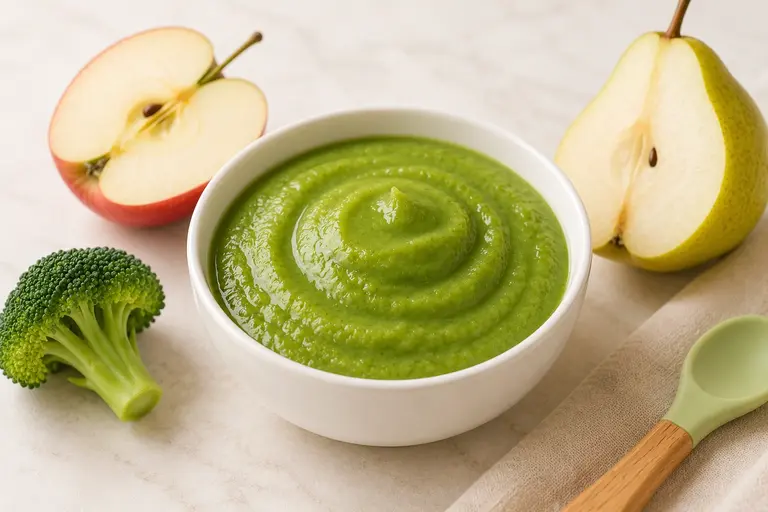
- Broccoli + apple + pear: The bitterness of broccoli softened completely by two sweet fruits, a reliable starting combination for the most resistant vegetable eaters
- Spinach + mango: Earthy spinach balanced by mango’s bright tropical sweetness, plus a meaningful vitamin C boost that helps the body absorb spinach’s iron more efficiently
- Cauliflower + apple + a pinch of ginger: A more sophisticated pairing for slightly older babies, where the warmth of ginger adds interest without any real heat
- Pumpkin + pear: Naturally sweet on its own, this pairing works well as a gentle bridge toward other orange vegetables like squash
For Iron and Nutrient Boosting
Iron needs rise sharply once a baby starts solids, since stores from birth begin declining around 6 months. These baby food combinations that make babies ask for more also happen to maximize nutrient absorption at the same time
- Sweet potato + chicken: A classic pairing where iron-rich chicken gets balanced by the natural sweetness and creamy texture of sweet potato
- Lentil + pumpkin: Plant-based iron from lentils paired with the mild sweetness of pumpkin, ideal once your baby has tried both ingredients individually
- Pear + pea: A gentle, reliable combination that introduces peas in a far more approachable form than on their own
- Apple + carrot: Apple’s vitamin C content alongside carrot’s beta-carotene, one of the most consistently accepted starting combinations across babies
For Building a More Adventurous Palate
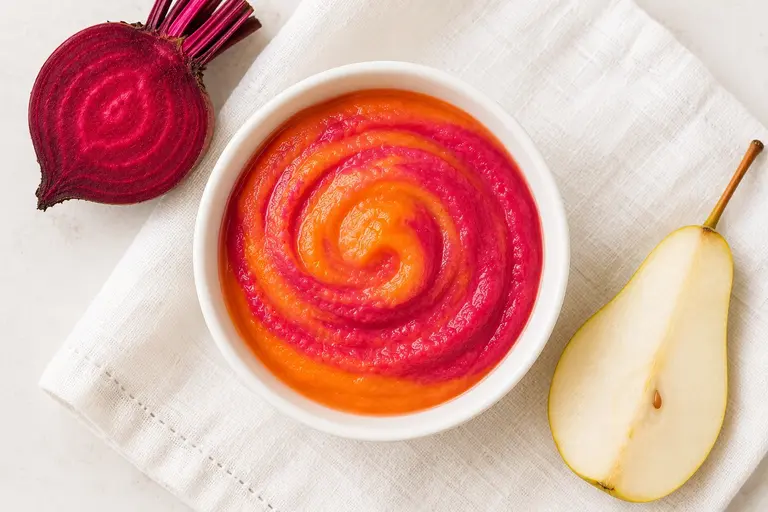
- Beet + blueberry: A bold, vividly colored pairing that introduces deep, earthy sweetness alongside antioxidant-rich blueberry
- Sweet potato + coconut + a mild curry spice: Exposes babies to global flavor profiles early, building familiarity with spices that many families enjoy at the dinner table
- Cherry + spinach: An unexpected but well-balanced pairing that softens spinach’s earthiness with cherry’s natural tartness and sweetness
For Creamy, Calorie-Dense Combinations
- Avocado + banana: Naturally creamy avocado paired with sweet banana, a favorite among babies who need extra healthy fats for steady weight gain
- Banana + yogurt: Adds protein and probiotics alongside banana’s familiar sweetness, useful as babies move toward thicker textures
- Avocado + thinned peanut puree (once peanut has been introduced safely as a single ingredient) a calorie-dense, protein-rich pairing many babies enjoy
How to Build Your Own Baby Food Combinations
Once you understand the logic above, you do not need a recipe for every single meal. Most reliable baby food combinations that make babies ask for more follow a simple, repeatable formula using ingredients many households already have on hand.
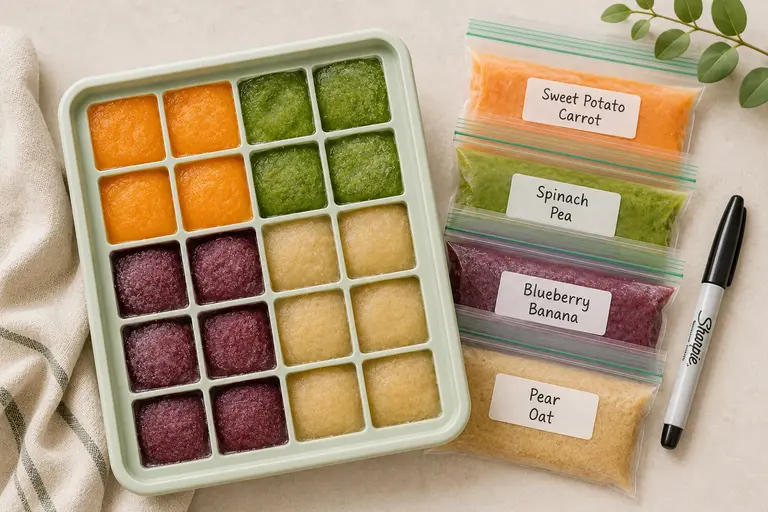
Step 1. Choose a base:
Pick a naturally sweet, well-tolerated ingredient your baby already eats happily. Apple, banana, pear, and sweet potato are the most versatile and forgiving starting bases.
Step 2. Add the target ingredient:
This is the food you actually want your baby to accept a vegetable, a protein, or something iron-rich. Start with a small ratio, roughly one-part new ingredient to three- or four-parts familiar base.
Step 3. Cook properly to preserve nutrients and texture:
Steaming retains the most nutrients for most vegetables, while roasting can deepen and sweeten flavors like sweet potato, carrot, or pumpkin even further before blending.
Step 4. Taste and adjust:
If a combination tastes too tart or sharp even to your own palate, add more of the sweeter base, or stir in a small amount of plain whole-milk yogurt or a pinch of cinnamon for warmth. Never use honey to sweeten anything before 12 months, due to the risk of infant botulism.
Step 5. Batch and freeze for convenience:
Freeze base purees individually in silicone ice cube trays, with each cube roughly equal to one serving. At mealtime, thaw two or three cubes of different bases and combine them fresh, adjusting the ratio to whatever your baby seems to prefer that week.
Comparison Table Baby Food Combinations That Work vs Combinations to Avoid
This table makes the baby food combinations that make babies ask for easier to apply at a glance, alongside pairings that are best avoided for safety or flavor reasons.
| Combination | Works Well Because | Best For |
| Broccoli + apple + pear | Sweetness fully balances bitterness | Vegetable refusal |
| Spinach + mango | Vitamin C boosts iron absorption, sweetness balances earthiness | Iron-rich meals |
| Sweet potato + chicken | Creamy sweetness balances savory iron-rich protein | Iron and growth |
| Avocado + banana | Creamy texture, calorie-dense, naturally sweet | Healthy weight gain |
| Beet + blueberry | Bold but balanced, color appeal builds curiosity | Adventurous palate building |
| Plain spinach alone | No sweetness to offset bitterness | Often refused outright |
| Honey-sweetened anything | Risk of infant botulism under 12 months | Never recommended |
| Cow’s milk as a main drink | Not recommended as primary drink before 12 months | Avoid before 1 year |
5 Mistakes Parents Make with Baby Food Combinations
Mistake 1. Giving Up After One Refusal:
A single rejected meal does not mean a baby dislikes a food permanently. Research consistently shows that repeated, low-pressure exposure sometimes eight to ten attempts or more is often what it actually takes before a new flavor is accepted.
Mistake 2. Relying Only on Sweet Fruit Pouches:
Pouches that lean heavily on fruit can quietly train a baby’s palate to expect sweetness in every bite, making plain vegetables harder to accept later rather than easier. Balancing fruit-forward combinations with genuinely vegetable-forward ones matters for long-term palate development.
Mistake 3. Combining Before Single Ingredients Are Tested:
Skipping the single-ingredient introduction step to jump straight to combinations makes it far harder to identify the source if an allergic reaction occurs. Each new ingredient still needs its own 3-to-5-day solo introduction first.
Mistake 4. Using the Same Three Combinations Every Week:
Repeating only a small handful of go-to combinations limits flavor exposure during the window when babies are naturally most receptive to variety, potentially narrowing rather than expanding what they will accept later
A baby’s palate does not need added salt or sugar to find food appealing natural flavor pairing does that job. Added salt places unnecessary strain on a baby’s developing kidneys, and added sugar builds a sweetness expectation that works against long-term healthy eating habits.
Why This Approach Pays Off Long After Babyhood
The baby food combinations that make babies ask for more are not a trick or a shortcut they are simply working with your baby’s biology instead of against it. A baby is not being difficult when they refuse plain broccoli. They are responding exactly the way their developing palate is wired to respond, and a thoughtful pairing is often all it takes to turn refusal into genuine enthusiasm.
What you build now, one combination at a time, becomes the foundation of how your child eats for years. The toddler who grew up on apple-softened broccoli and mango-balanced spinach is far more likely to sit at the family table later and actually try what is on their plate, rather than pushing it away on sight.
Start with one combination this week. Watch what your baby responds to. Adjust the ratio, try the next pairing, and let your baby’s reactions guide the rest. You are not just feeding a meal you are building a palate that will serve them for a lifetime.
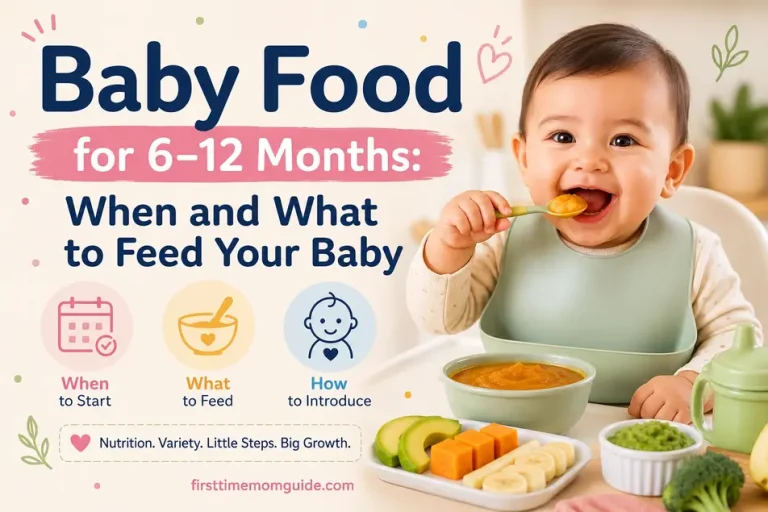
Not sure what foods to introduce next? Read our complete Baby Food for 6–12 Months Guide for age-appropriate feeding recommendations.
FAQ’S
Q1. What are the best baby food combinations for a picky eater?
The most reliable starting combinations for a picky eater pair a naturally sweet base with the resisted food broccoli, apple, and pear together is one of the most consistently effective pairings for vegetable refusal. Spinach blended with mango works similarly well for leafy greens. The key principle is balancing bitterness or sharpness with natural sweetness rather than removing the disliked ingredient entirely, since the goal is gradually building acceptance of that flavor, not avoiding it indefinitely.
Q2. Can I combine fruits and vegetables in the same baby food meal?
Yes, and it is actually one of the most effective strategies for building acceptance of vegetables. Pairing a vegetable with a complementary fruit sweet potato with apple, carrot with apple, or spinach with mango softens the vegetable’s natural bitterness while still delivering its full nutritional value. The fruit does not cancel out the vegetable’s benefit; both nutrient profiles remain in the meal, simply balanced in flavor.
Q3. How do I know if my baby is ready for combination purees?
Your baby should have already tried each individual ingredient on its own, with no signs of allergic reaction, before combining it with anything else. This typically means combination purees become appropriate a few weeks into starting solids, once a handful of single ingredients have been safely introduced one at a time over 3-to-5-day windows. Combining ingredients before this single-ingredient testing is complete makes it significantly harder to identify the cause if a reaction does occur.
Q4. My baby refuses a food every time should I keep offering it
Yes, in most cases. A single refusal, or even several refusals, does not mean a food will never be accepted. Many babies need repeated, pressure-free exposure to a new flavor before they accept it, and combining the resisted food with a familiar favorite rather than offering it alone significantly increases the odds of eventual acceptance. If refusal continues alongside signs of distress, gagging, or genuine discomfort rather than simple dislike, that is worth discussing with your pediatrician.
Q5. Are unusual baby food combinations like beet and blueberry actually safe?
Yes, as long as both ingredients have already been introduced individually and tolerated well. Babies are often far more open to bold or unusual flavor combinations than adults expect, and there is no nutritional or safety reason to limit a baby’s diet to bland, single-note flavors. Globally inspired combinations, including mild spices like ginger or curry introduced in small amounts, are increasingly recommended as a way to build a more adventurous, accepting palate from an early age.