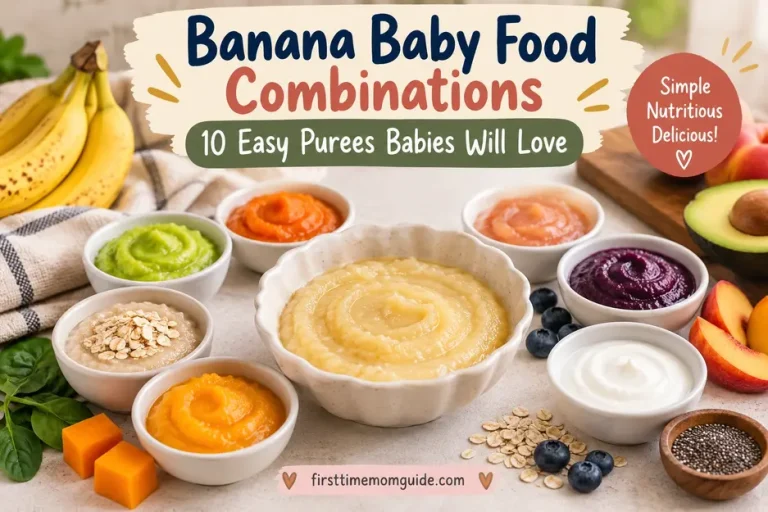
Pumpkin Puree for Baby Easy Homemade Recipe
Fall has one vegetable that belongs on every baby’s plate and pumpkin puree for baby deserves far more credit than it usually gets.
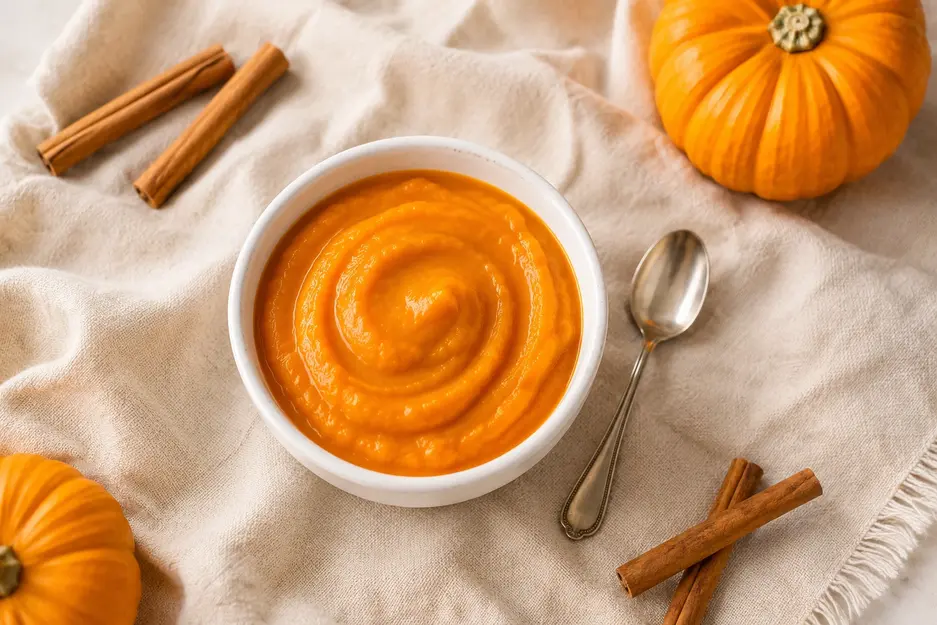
Most parents know pumpkin as a seasonal decoration or pie filling. But from a nutrition standpoint, pumpkin is genuinely impressive for babies. It delivers iron, zinc, vitamin A, and fiber in a single naturally sweet spoonful. That combination is rare in any one vegetable, and it makes pumpkin one of the most well-rounded first foods available.
Looking for another colourful first food? Try our smooth and naturally sweet Blueberry Puree for Baby
The good news is pumpkin is also one of the easiest purees to make. You can bake it, steam it, or use canned pumpkin when fresh is not in season and every method works beautifully.This guide covers everything from choosing the right type of pumpkin (this part matters more than most articles tell you), to exact cooking times, flavor combinations, storage rules, and what the research actually says about pumpkin’s nutrition for babies.
Suitable age:
Pumpkin puree is safe to introduce from 4 to 6 months once your pediatrician approves solid foods.
Pumpkin is one of the best first foods for babies starting solids see the complete first foods guide.
Why You’ll Love This Puree
- Iron AND zinc in one food most first vegetable purees offer one or the other, not both
- Three cooking methods bake, steam, or use canned whatever fits your day
- Naturally sweet babies accept pumpkin at extremely high rates
- Freezes for 3 months batch cook once, sorted for weeks
- Year-round with canned not just a fall recipe when you know which canned product to pick
- Pairs with almost everything apple, banana, chicken, lentils, cinnamon, ginger
Health Benefits of Pumpkin Puree for Baby
Pumpkin puree for baby is one of the few vegetables that delivers both iron and zinc — two minerals that become critically important after 6 months, when breast milk alone can no longer meet the baby’s growing demand.
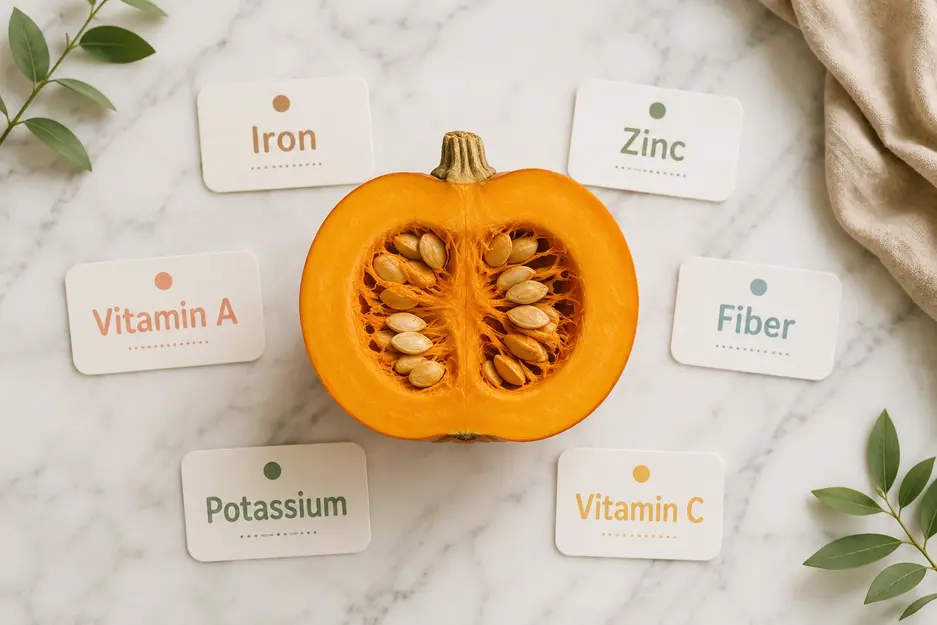
Key Nutrients in Pumpkin (per 100g, cooked)
| Nutrient | Amount | Baby Benefit |
| Beta-Carotene | 3,100 mcg | Converts to Vitamin A eye and immune health |
| Vitamin A (RAE) | 426 mcg | Vision development, skin, immunity |
| Iron | 0.8 mg | Red blood cell production, brain development |
| Zinc | 0.32 mg | Immune function, growth, wound healing |
| Fiber | 0.5 g | Gentle digestion, helps prevent constipation |
| Vitamin C | 9 mg | Boosts iron absorption from plant sources |
| Potassium | 340 mg | Heart and muscle function |
Why iron and zinc together matter at 6 months?
A 2017 review in Nutrients journal confirmed that iron and zinc deficiency are among the most common nutritional gaps in infants transitioning to solid foods. Unlike spinach, which provides iron but very little zinc, pumpkin delivers both making it an unusually complete first vegetable.
Vitamin C works as a booster: Pumpkin’s own vitamin C content partially boosts absorption of its iron. Pairing pumpkin puree with a fruit like apple or mango amplifies this effect significantly.
Honest note: Pumpkin iron is non-heme iron (plant-based), which absorbs less efficiently than heme iron from meat. Rotating pumpkin with iron-rich animal proteins like chicken or lentils gives the most complete iron intake across the week.
The Pumpkin Type That Actually Matters
This is the one thing most pumpkin puree articles skip and it changes everything about the flavor.
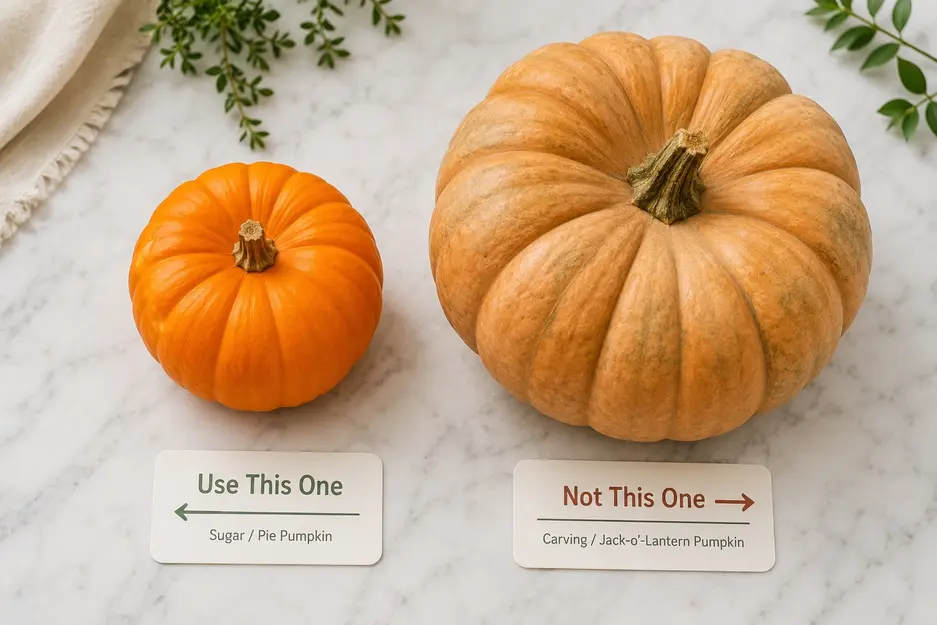
Sugar pumpkins (also called pie pumpkins):
These are small, 4-to-8-pound pumpkins with deep orange flesh and high natural sugar content. They roast into a silky, sweet puree. This is what you want for baby food.
Jack-o-lantern pumpkins (carving pumpkins):
These are large, pale-fleshed, watery, and stringy inside. They exist for decoration, not eating. Using one for baby puree gives you a watery, bland result.
Canned pumpkin:
100% pure canned pumpkin (not pumpkin pie filling check the label) is actually an excellent option year-round. It is already cooked, consistently smooth, and some studies show canned pumpkin retains more beta-carotene than fresh because the canning process breaks down cell walls. Just ensure the label reads “100% pure pumpkin” with no added sugar, spice, or salt.
Ingredients You’ll Need
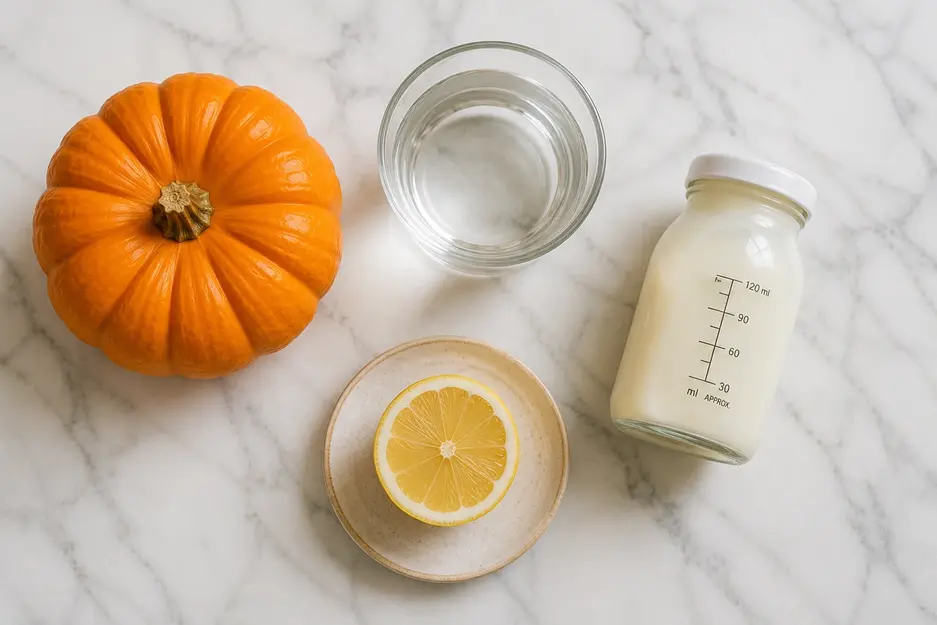
Main Ingredient
- 1 small sugar pumpkin (about 2 lbs / 900g) yields approximately 2 cups of puree
- OR one 15 oz can of 100% pure pumpkin (no pie filling)
Optional Add-Ins
- 2–4 tablespoons water, breast milk, or formula
- Pinch of cinnamon (7 months+)
- Pinch of ground nutmeg (8 months+)
- Pinch of ground ginger (8 months+)
- 1 teaspoon olive oil or coconut oil (adds healthy fat, helps fat-soluble vitamin A absorb better)
Never add: salt, sugar, honey, butter, or cow’s milk for babies under 12 months.
Ingredient Notes & Buying Tips
Choosing fresh sugar pumpkins:
Look for ones that feel heavy for their size, have firm skin with no soft spots, and range from 4 to 8 pounds. Avoid anything larger flavor deteriorates with size. Smaller pumpkins are sweeter
Shelf life of fresh pumpkin:
Uncut pumpkin keeps for 2 to 3 months at cool room temperature. Once cut, use within 3 days from refrigerator.
Which canned brand?
Libby’s 100% Pure Pumpkin is the most widely available and consistently tested brand. Always read the label “pumpkin pie mix” and “100% pure pumpkin” sit right next to each other on shelves and look nearly identical.
Organic vs regular:
Pumpkin is not on the EWG Dirty Dozen list, meaning pesticide residue is generally low. Regular pumpkin is a safe and budget-friendly choice.
Kitchen Equipment Needed
- Baking sheet and oven (for roasting method)
- Steamer basket and pot (for steaming method)
- Sharp knife and spoon for scooping seeds
- Blender or food processor
- Fine mesh strainer (optional for babies under 6 months)
- Silicone ice cube tray
- Airtight glass jars
Step-by-Step Instructions: 3 Cooking Methods
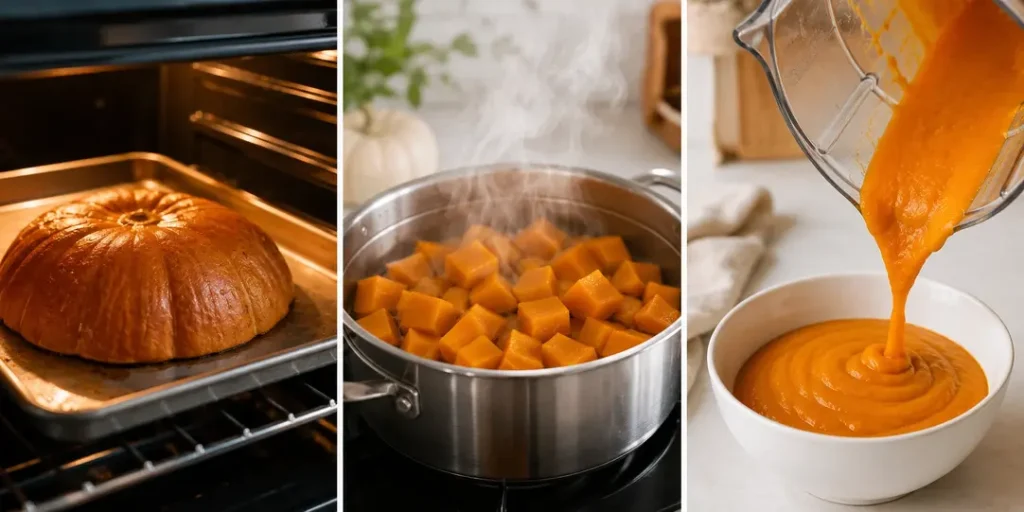
METHOD 1: Roasting (Best Flavor)
- Preheat oven to 400°F / 200°C.
- Wash pumpkin. Cut in half from stem to base. Scoop out seeds and strings with a large spoon.
- Place cut-side down on a lightly oiled baking sheet.
- Roast for 35 to 45 minutes until skin is easily pierced and flesh feels very soft.
- Cool for 10 minutes. Scoop flesh away from skin.
- Blend on high with 2 tablespoons liquid for 60 to 90 seconds until completely smooth.
Best for: Most flavorful, slightly caramelized sweetness. Worth the extra time.
METHOD 2: Steaming (Best Nutrition Retention)
- Peel pumpkin with a vegetable peeler. Cut into 1-inch cubes.
- Steam over boiling water for 12 to 15 minutes until completely soft.
- Cool 5 minutes. Blend with 2 tablespoons liquid until smooth.
Best for: Fastest nutrient retention steaming keeps more water-soluble vitamins than roasting.
METHOD 3: Canned Pumpkin (Fastest)
- Open can of 100% pure pumpkin.
- Scoop into blender. Add 1 to 2 tablespoons breast milk, formula, or water.
- Blend briefly until desired consistency. Done.
Best for: Weeknight convenience. Nutritionally comparable to fresh when using a clean-label product.
Adjust Consistency
- Too thick: Add liquid one tablespoon at a time
- Too thin: Very rare with pumpkin, but blend uncovered briefly to release steam
- For babies under 6 months: Press through a fine mesh strainer after blending
Texture by Baby’s Age
| Age | Texture | How to Get There |
| 4–6 months | Very smooth, thin | Blend fully, strain, add extra liquid |
| 6–8 months | Smooth, medium thick | Blend well, skip straining |
| 8–10 months | Slightly thicker, soft lumps okay | Blend briefly |
| 10–12 months | Rough mash | Fork-mash roasted pumpkin |
Recipe Tips
- Roast cut-side DOWN flesh touching the pan caramelizes naturally, deepening sweetness. Cut-side up dries out.
- Do not skip cooling blending hot pumpkin builds steam pressure inside a sealed blender fast. Always cool 10 minutes.
- Olive oil is worth adding vitamin A is fat-soluble. A teaspoon of olive oil in the puree increases beta-carotene absorption measurably.
- Reserve roasting liquid the liquid that pools on the baking sheet after roasting is packed with flavor. Use it to thin the puree instead of plain water.
- Taste it first fresh pumpkin puree should smell like autumn and taste naturally sweet. If it tastes bland, the pumpkin was too large or not fully ripe.
Flavor Combinations & Variations
Once your baby has had plain pumpkin puree for 3 to 5 days with no reactions, these combinations are excellent next steps:
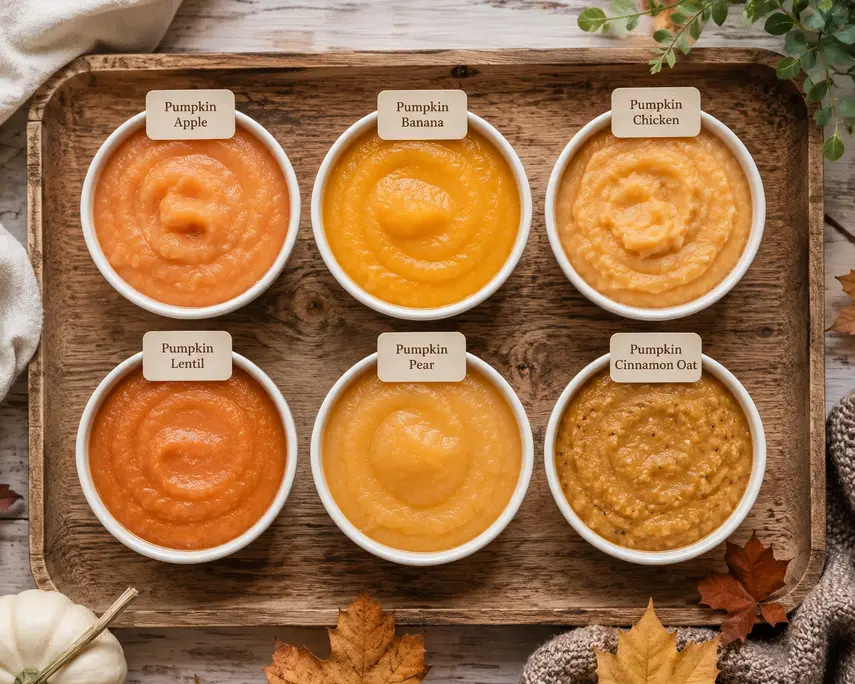
- Pumpkin + Apple classic fall pairing, vitamin C boosts iron absorption, bright flavor
- Pumpkin + Banana thick, very sweet, babies consistently love this combination
- Pumpkin + Chicken a complete iron-zinc-protein meal in one bowl, 7 months+
- Pumpkin + Lentil double iron combo, plant-based protein, very filling, 7 months+
- Pumpkin + Pear gentle on digestion, the pear’s fiber adds constipation-prevention
- Pumpkin + Cinnamon + Oatmeal iron-rich breakfast bowl, warming fall flavor, 7 months+
- Pumpkin + Carrot double beta-carotene and vitamin A, a deep orange power puree
- Pumpkin + Sweet Potato naturally very sweet, thick, great for underweight babies needing calories
Pumpkin Puree for Baby: Combination Comparison Table:
| Combo | Best Age | Key Benefit | Texture |
| Pumpkin + Apple | 6 months+ | Vitamin C boosts iron absorption | Smooth, bright |
| Pumpkin + Banana | 6 months+ | Energy-dense, very sweet acceptance | Thick, smooth |
| Pumpkin + Chicken | 7 months+ | Heme + non-heme iron, full protein | Medium thick |
| Pumpkin + Lentil | 7 months+ | Double iron, plant protein | Thick, savory |
| Pumpkin + Pear | 6 months+ | Gentle digestion, fiber boost | Smooth, mild |
| Pumpkin + Sweet Potato | 6 months+ | Calorie-dense, double vitamin A | Very thick |
Storage Instructions
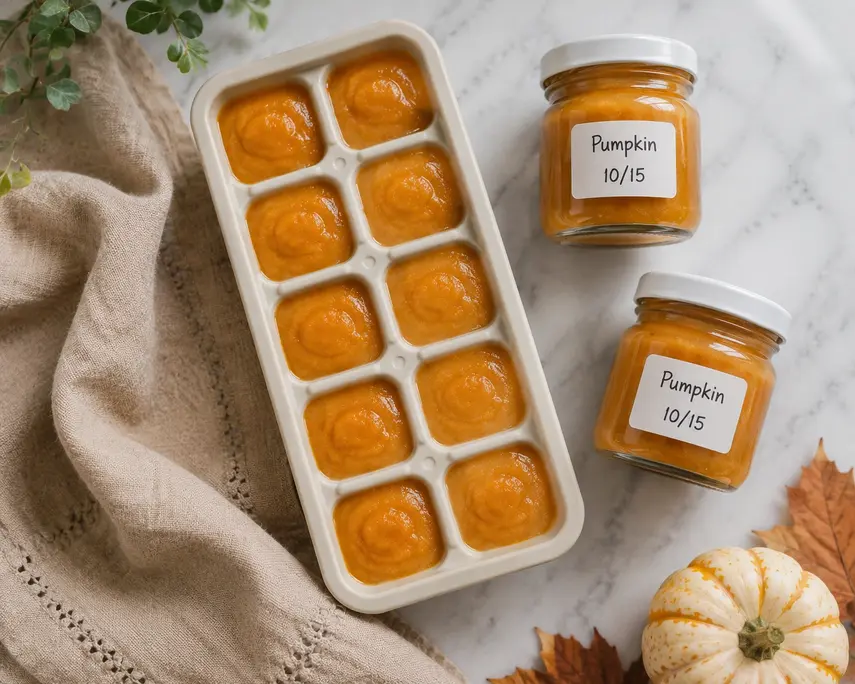
Refrigerator: Airtight glass jar, up to 3 days. Always use a clean spoon each time.
Freezer: Pour into silicone ice cube tray immediately after cooking. Freeze 4 to 6 hours until solid. Transfer cubes into a labeled zip-lock freezer bag.
- Freezer life: Up to 3 months
- Each cube = approximately 1 to 2 tablespoons one baby serving
Canned pumpkin once opened: Transfer any unused portion into a glass jar and refrigerate. Use within 3 days. Do not store in the open can.
Never refreeze thawed pumpkin puree.
How to Reheat
From refrigerator: Set jar in a bowl of warm (not boiling) water for 5 to 8 minutes. Stir thoroughly. Test temperature on the inside of your wrist before serving.
From frozen: Thaw overnight in the refrigerator. Then warm using the warm water bath method above.
Microwave (refrigerated only): 10-second bursts at 50% power. Stir between every burst without exception. Pumpkin puree holds heat unevenly stirring is not optional.
Can Babies Eat Pumpkin Puree?
Yes pumpkin is one of the safest and most well-tolerated first vegetables.
- Safe starting age: 4 to 6 months with pediatrician approval
- Allergy risk: Pumpkin is not a known allergen. Reactions are extremely rare.
- Orange skin tint (carotenemia): Same as with carrots if baby eats significant amounts of orange vegetables, a harmless yellow-orange tint can appear on skin. It fades when intake is balanced and does not affect the whites of the eyes.
- Constipation: Pumpkin puree is actually mildly helpful for digestion due to its fiber content. Unlike some starchy vegetables, it rarely causes constipation.
- Canned pumpkin safety: 100% pure canned pumpkin with no additives is completely safe for babies from 4 months onward.
- Start with 1 to 2 teaspoons for the first feeding and wait 3 to 5 days before introducing a new food.
If your baby refuses pumpkin puree, try these simple feeding tips that worked for many parents.
Pediatric guidance: The American Academy of Pediatrics (AAP) supports introducing vegetables like pumpkin as part of a diverse first foods diet from 6 months onward. Always follow your individual pediatrician’s guidance for your baby’s specific needs and developmental readiness.
Serving Suggestions
- Alone plain pumpkin puree for the first 3 to 5 days to watch for reactions
- Mixed with iron-fortified oatmeal an iron-rich fall breakfast bowl
- Stirred into plain full-fat yogurt for babies 8 months and older (orange yogurt that babies find visually exciting)
- As a pasta sauce base thinned pumpkin puree over soft pasta pieces at 10 months+
- On a preloaded spoon excellent for early self-feeding practice at 8 to 9 months
- Mixed with chicken puree a complete protein and iron dinner at 7 months+
Expert Tips & Mistakes to Avoid
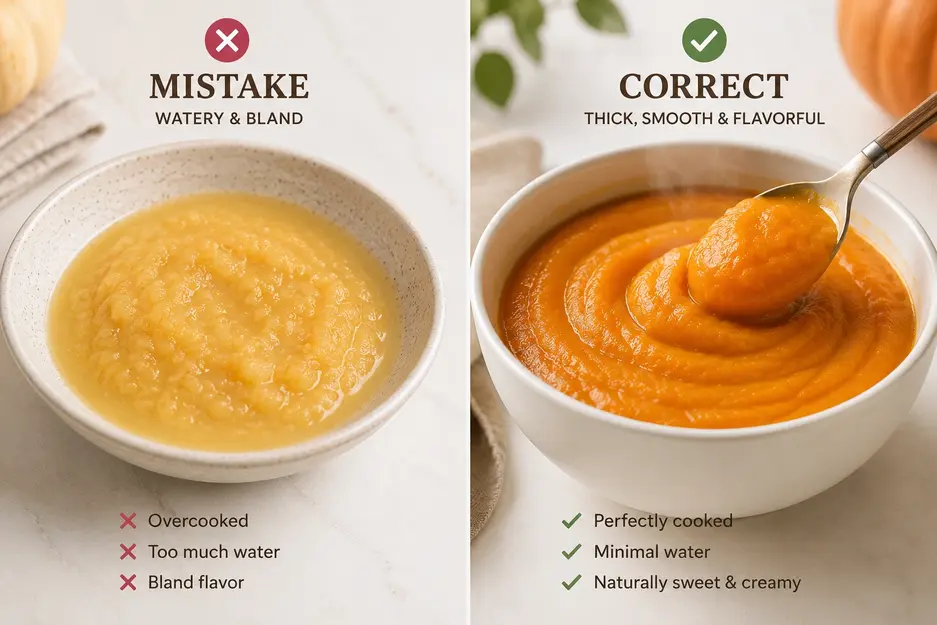
Using a carving pumpkin instead of a sugar pumpkin
This is the most common mistake. Jack-o-lantern pumpkins are watery and stringy. Sugar pumpkins or pie pumpkins give you the deep orange, naturally sweet puree you see in recipe photos.
Roasting cut-side up
Flesh facing up dries out and forms a crust. Always place cut-side down the steam trapped between the flesh and the pan does the work.
Blending immediately after roasting
Pumpkin holds heat very well. Blending hot causes steam pressure buildup. Always cool 10 minutes minimum with oven-roasted pumpkin.
Using pumpkin pie filling instead of pure pumpkin
Pumpkin pie filling contains sugar, spices, and sometimes condensed milk. It is not appropriate for babies. Always check the label “100% pure pumpkin” with no other ingredients.
Storing opened canned pumpkin in the can
Once opened, transfer to a glass jar immediately. Storing in the open can affects taste and introduces metal contact. Use within 3 days.
Recipe Card
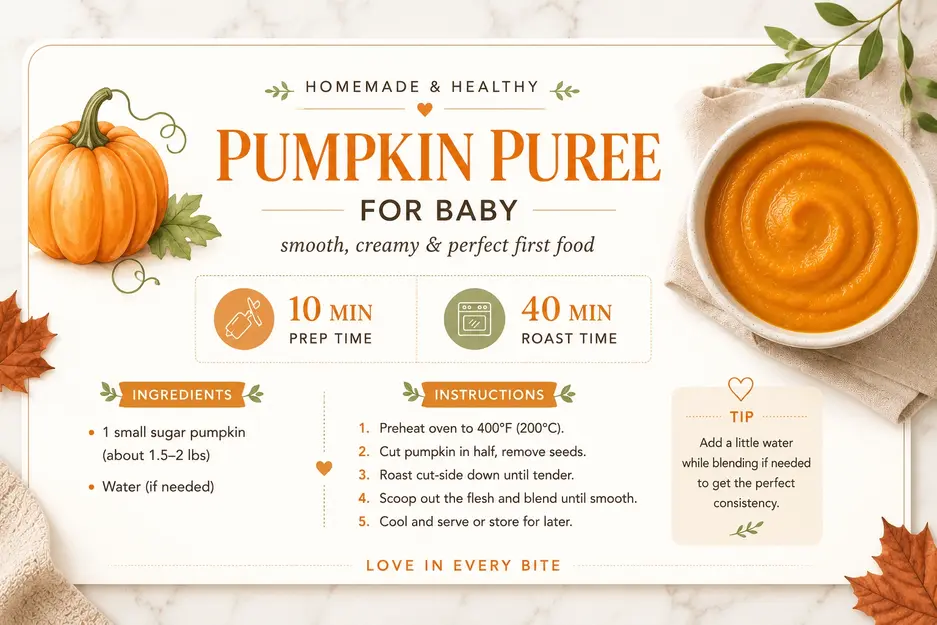
Pumpkin Puree for Baby 🎃
Prep Time: 10 minutes Cook Time: 40 minutes (roast) / 15 minutes (steam) / 2 minutes (canned) Total Time: 50 minutes (roast) / 25 minutes (steam) / 5 minutes (canned) Servings: 8–10 portions Suitable Age: 4 to 6 months and up
Ingredients:
- 1 small sugar pumpkin (2 lbs / 900g), OR one 15oz can 100% pure pumpkin
- 2–4 tablespoons water, breast milk, or formula
Optional: 1 tsp olive oil · Pinch of cinnamon (7 months+) · Pinch of nutmeg (8 months+)
Instructions (Roasting Method):
- Preheat oven to 400°F / 200°C.
- Wash pumpkin. Cut in half, scoop out seeds and strings.
- Place cut-side down on lightly oiled baking sheet.
- Roast 35 to 45 minutes until flesh is completely soft.
- Cool 10 minutes. Scoop flesh away from skin.
- Blend on high 60 to 90 seconds with 2 tablespoons liquid.
- Strain through fine mesh for babies under 6 months.
- Serve immediately or store.
Notes:
- Always use sugar/pie pumpkins not carving pumpkins
- Never use pumpkin pie filling only 100% pure pumpkin
- Add 1 tsp olive oil to boost fat-soluble vitamin A absorption
- No salt, sugar, honey, or cow’s milk under 12 months
- Introduce alone first for 3 to 5 days
Estimated Nutrition Per Serving (~2 tablespoons, plain roasted):
| Nutrient | Per Serving |
| Calories | ~15 kcal |
| Beta-Carotene | ~775 mcg |
| Vitamin A (RAE) | ~107 mcg |
| Iron | ~0.2 mg |
| Zinc | ~0.08 mg |
| Fiber | ~0.13 g |
| Vitamin C | ~2.25 mg |
Conclusion
Pumpkin puree for baby earns its reputation as a fall favorite but the reasons go well beyond the season. Iron and zinc together in one vegetable is genuinely rare. Add beta-carotene, vitamin C, fiber, and a natural sweetness that babies accept without resistance, and you have one of the most complete first foods available.
Get the pumpkin type right (sugar pumpkin, not carving pumpkin), use the right cooking method for your schedule, and store it properly and you will have a puree that is bright orange, silky smooth, and nutritionally delivers on every level.
Disclaimer
This article is for informational purposes only and does not replace advice from a licensed pediatrician or registered dietitian. Always consult your baby’s doctor before introducing any new food. Nutritional information is based on current USDA FoodData Central data and guidelines from the American Academy of Pediatrics (AAP). Individual babies may have different health conditions, developmental timelines, or nutritional requirements that affect dietary decisions.
FAQ’s
1. Can I freeze pumpkin puree for baby?
Yes pumpkin puree freezes extremely well, better than most vegetable purees. Pour into a silicone ice cube tray right after cooking or opening the can, freeze until completely solid (4 to 6 hours), then transfer cubes to a labeled freezer bag. Stays good for up to 3 months. Thaw only what your baby needs for one feeding in the refrigerator overnight. Never refreeze thawed puree.
2. Can I use canned pumpkin for baby puree?
Yes 100% pure canned pumpkin with no added ingredients is completely safe and nutritious for babies. Check the label: it should say only “pumpkin” in the ingredient list. Do not use pumpkin pie filling it contains sugar, spices, and sometimes condensed milk. Libby’s 100% Pure Pumpkin is the most widely available clean-label option.
3. Do I need to peel pumpkin for baby puree?
It depends on your cooking method. If roasting, you do not need to peel the skin lifts off easily after roasting and you simply scoop the flesh. If steaming, you must peel first because the skin does not soften enough to separate cleanly. Either way, no skin goes into the final puree.
4. How long does homemade pumpkin puree last?
Refrigerator: up to 3 days in an airtight glass jar. Freezer: up to 3 months in a labeled freezer bag. Opened canned pumpkin stored in a glass jar: up to 3 days in the refrigerator. Always check for any change in smell or color before serving.
5. Can pumpkin puree cause constipation in babies?
No pumpkin is one of the few starchy vegetables that is unlikely to cause constipation. Its fiber content actually supports gentle, regular digestion. If your baby develops harder stools after introducing pumpkin, the issue is more likely related to the overall diet mix for example, too much rice cereal alongside pumpkin, without enough fruit fiber to balance. Pumpkin itself is not a constipating food.