Avocado Puree for Baby: Easy 5-Minute, No-Cook First Food
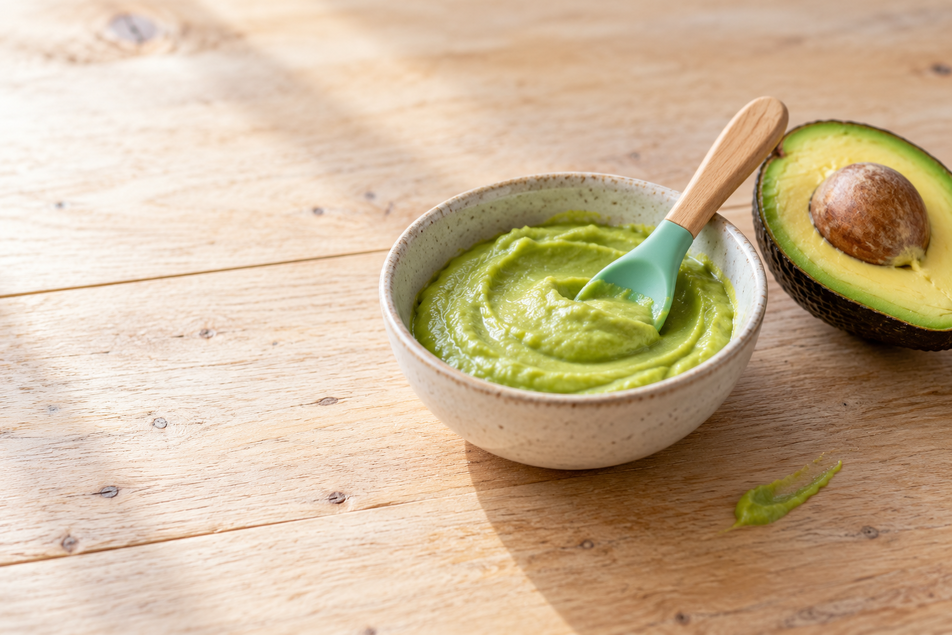
Avocado puree for baby is the easiest first food you will ever make: one ripe avocado, a fork and about five minutes, with no cooking and almost no cleanup. It turns out creamy and mild, and many babies enjoy it from the first spoonful. Avocado is mostly healthy unsaturated fat, which supports your baby’s fast growth alongside breast milk or formula. Your baby can try it from around six months, once readiness signs appear. Below you will learn how to pick a ripe avocado, mash it to the right texture, serve it safely at each stage, and freeze plain portions so nothing goes to waste.
Try our banana puree for baby for another creamy, no-cook option.
Avocado puree for baby at a glance
| Detail | Quick answer |
| Starting age | Around 6 months, when your baby shows readiness signs |
| Time | 5 minutes prep, no cooking |
| Yield | About 1/3 cup from half an avocado (estimate) |
| Best served | Fresh, right after mashing |
| Storage | About 24 hours in the refrigerator, up to 3 months frozen |
Why You’ll Love This Avocado Puree for Baby
- No cooking at all: ripe avocado is already soft, so the whole recipe takes about five minutes.
- Naturally creamy: the texture is smooth without a blender, which suits first spoonfuls.
- A source of healthy fats: avocado is mostly unsaturated fat, which fits an infant’s high energy needs.
- Grows with your baby: the same fruit becomes a mash, a spoon-loaded snack and a soft finger food.
- Easy to carry: pack a whole avocado, a spoon and a container for meals away from home.
Ingredients You’ll Need
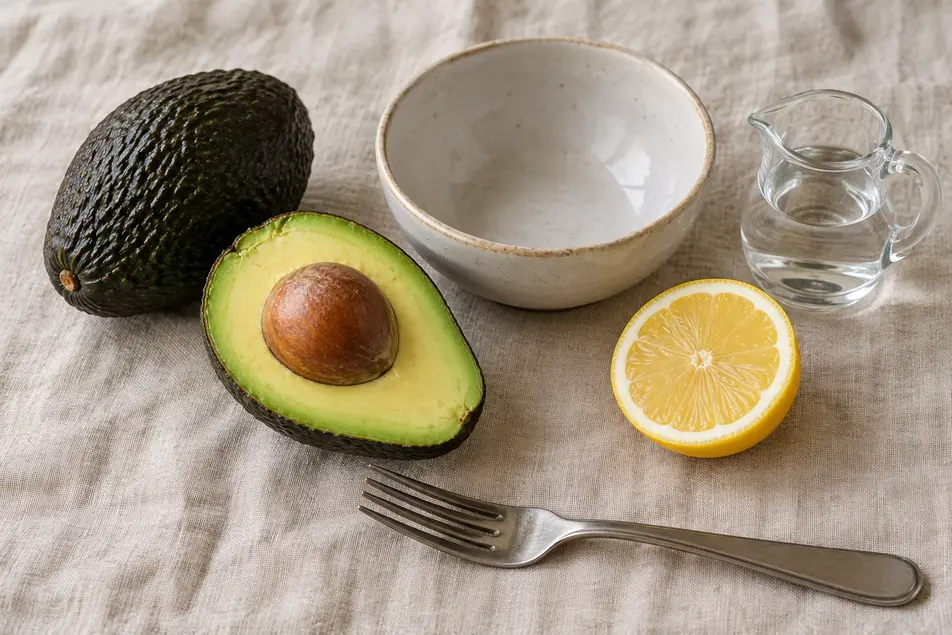
- 1/2 ripe avocado: this makes roughly 1/3 cup of puree, or two to three baby portions.
- 1 to 2 teaspoons of breast milk, formula or water: optional, for a thinner texture, added only to the portion you serve.
- A few drops of lemon juice: optional, to slow browning. Skip it if your baby has not tried citrus yet.
How to Choose a Ripe Avocado
Ripeness decides everything. Press gently with your palm. A ripe avocado gives slightly without feeling mushy, while a rock-hard one is not ready and will be dry and hard to mash. To ripen a hard avocado, leave it at room temperature for a few days, or place it in a paper bag with a banana or apple. Once ripe, move it to the refrigerator to slow further ripening.
If the fruit is very soft or dented, cut it open and check the flesh. Brown spots or dark stringy patches mean it is overripe. Throw away any avocado that smells sour or shows mold.
Easy Substitutions
- Thicker puree: stir in a spoonful of prepared infant oatmeal.
- No avocado: mashed ripe banana or soft, well-cooked pear has a similar texture.
How to Make Avocado Puree for Baby
You only need a ripe avocado, a bowl and a fork. The whole process takes about five minutes and needs no cooking.
Step 1: Choose and Wash a Ripe Avocado
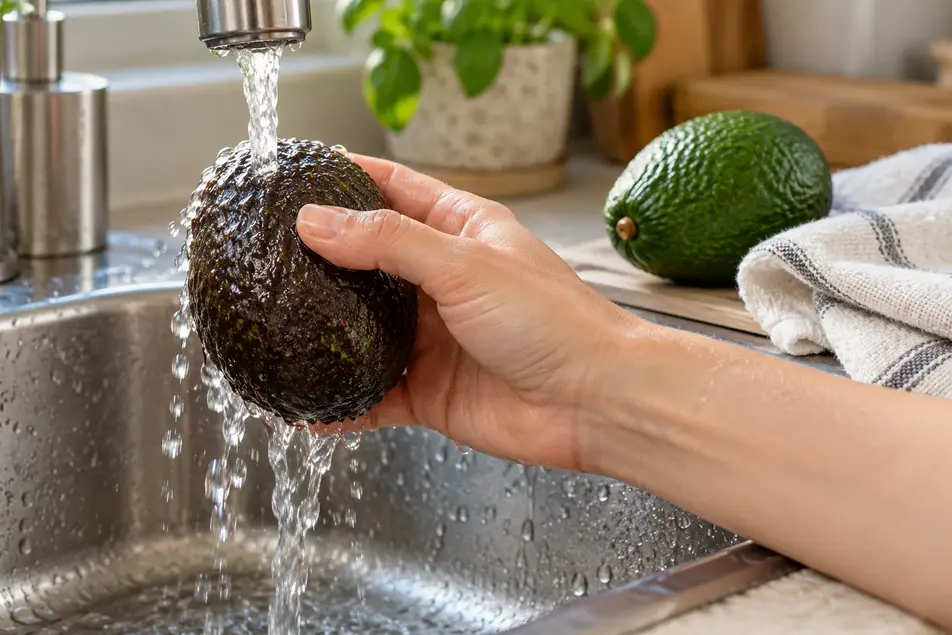
Press the avocado gently in your palm. It should give slightly without feeling mushy. Rinse the skin under running water and dry it, because a knife can carry bacteria from the skin into the flesh.
Step 2: Cut Around the Pit and Remove It
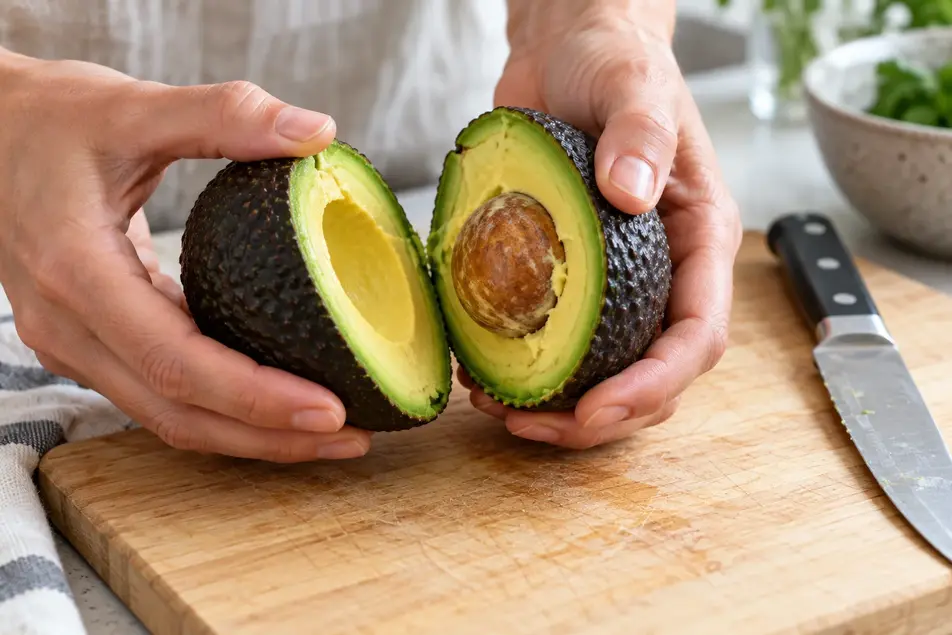
Slice lengthwise around the avocado until the knife meets the pit, then twist the halves apart. Lift the pit out with a spoon and keep it well away from your baby.
Step 3: Scoop and Mash With a Fork
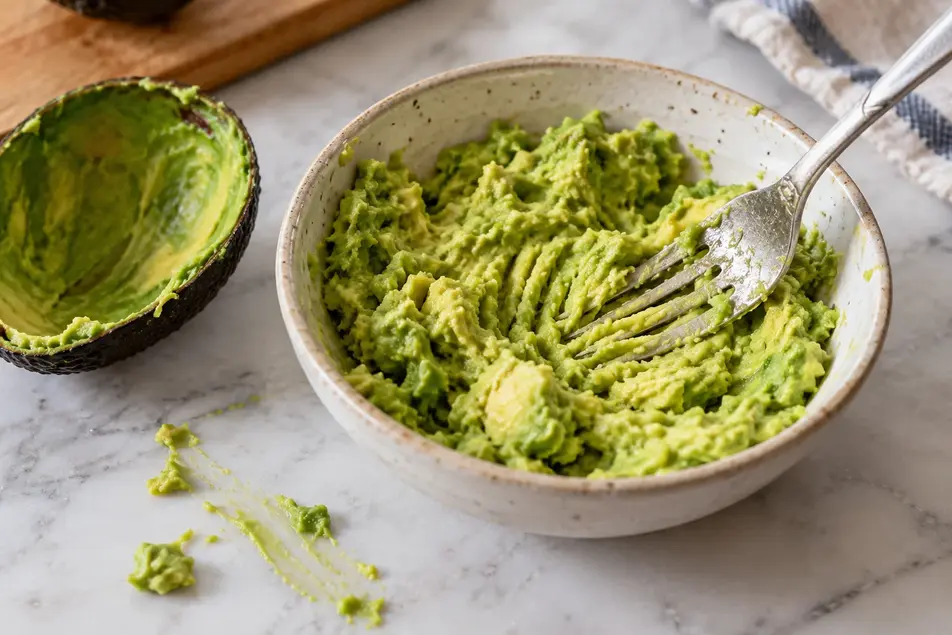
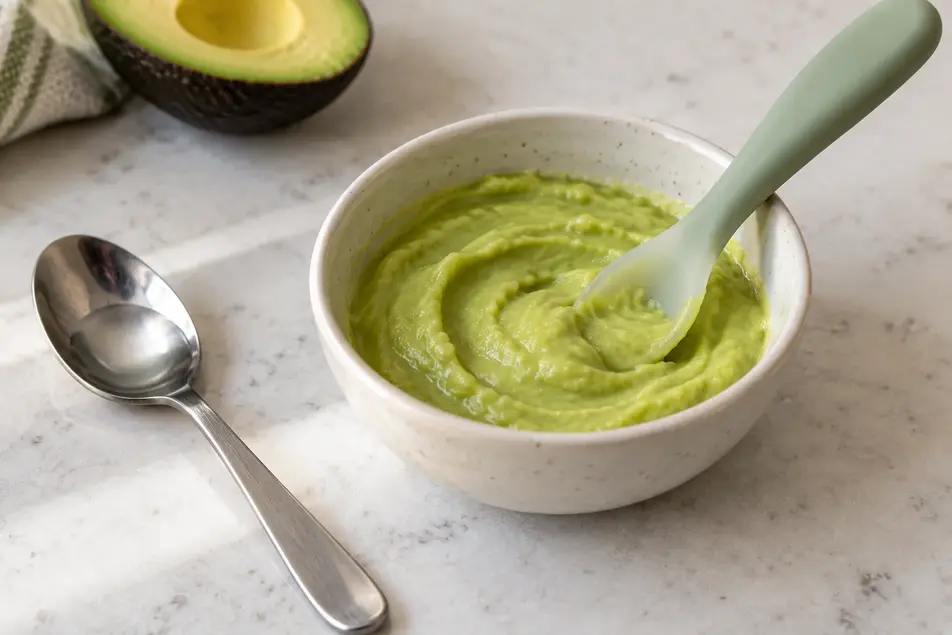
Scoop half the flesh into a small bowl, scraping the softer green layer next to the skin. Mash with a fork for about 30 seconds until no firm bits remain, or blend for 10 to 15 seconds for a very smooth result.
Step 4: Adjust the Texture and Serve Fresh
If the puree feels thick, stir in breast milk, formula or water one teaspoon at a time until it falls slowly off the spoon. Serve right away, because avocado browns within minutes.
Getting the Texture Right
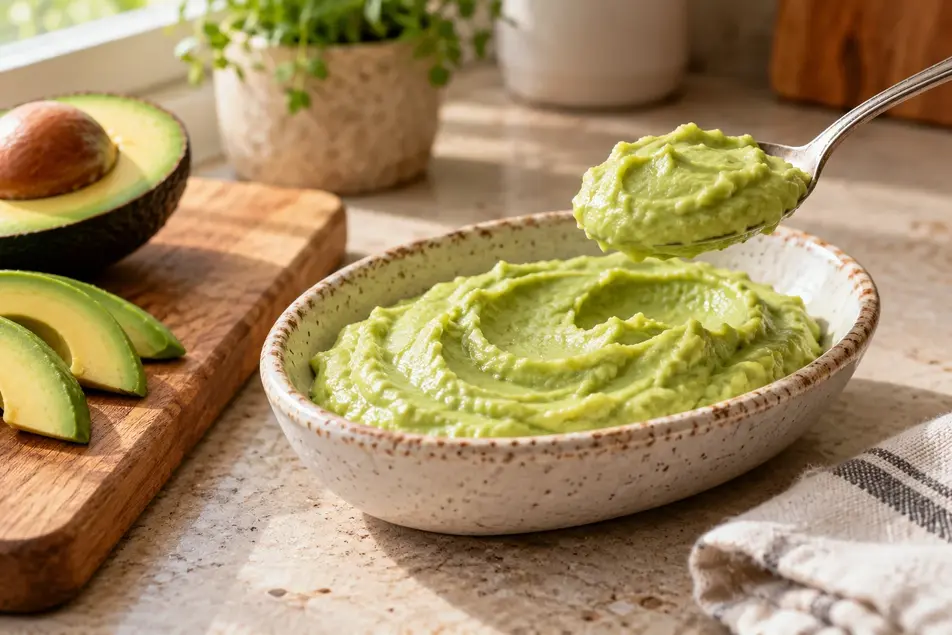
Good avocado puree is creamy, smooth and thick enough to stay on a spoon. Most problems come from ripeness rather than technique.
- Lumpy: the avocado is probably underripe, so mash longer, add 1 teaspoon of liquid or use a blender.
- Too thin: you added too much liquid. Mash in more avocado or stir in infant oatmeal.
- Stringy: this can mean an overripe or older avocado, so try another one.
- Bitter or grassy: an underripe fruit often tastes this way. Wait a day or two.
- Turning brown: this is oxidation from air. A few drops of lemon juice or plastic wrap pressed on the surface slows it.
How to Serve Avocado to Baby
- Around 6 months: offer smooth puree on a spoon, a few teaspoons at a time, or a thick spear of ripe avocado to hold. Rolling a slippery spear in infant cereal powder or crushed oats improves grip.
- Around 9 months: mash with a fork and leave soft lumps. As your baby develops a pinch grasp, offer small, soft, bite-sized pieces.
- 12 months and beyond: serve spears, small pieces or mash on toast strips, and let toddlers scoop from a ripe half with a spoon.
A good first serving is small. Two or three spoonfuls count as a real meal when your baby is just learning, and a messy face is a normal part of the process. Watch for fullness cues such as turning away, closing the mouth or pushing the spoon, and stop when you see them.
Ripe, soft avocado is generally considered a lower choking risk, but any food can cause choking. Remove the pit and skin, seat your baby upright and stay within arm’s reach. Start with a teaspoon or two, and let your baby decide when to stop.
Avocado puree for baby: puree vs. mash vs. spears
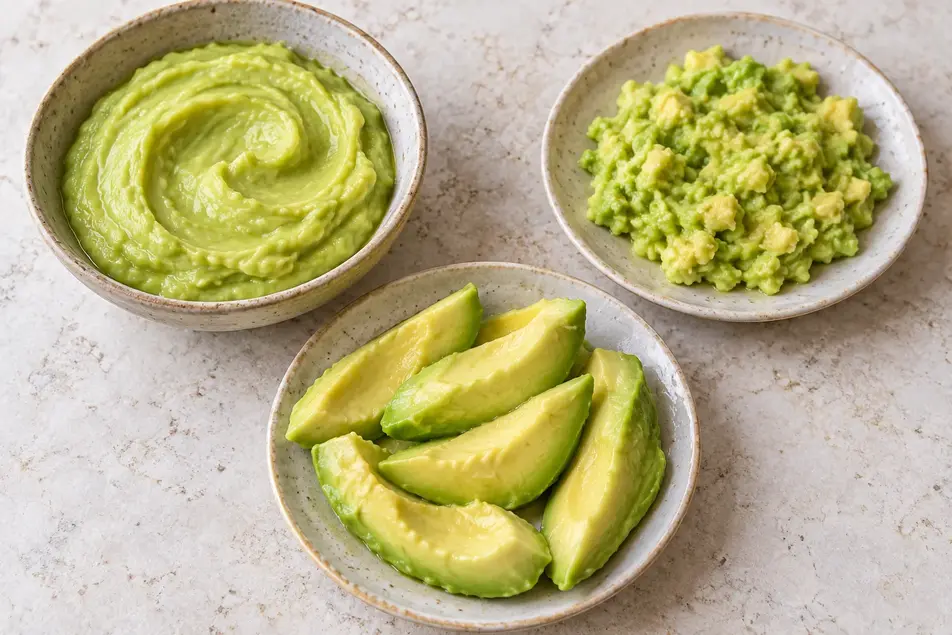
| Style | Texture | Typical stage | How to offer |
| Smooth puree | Silky, creamy | First spoonfuls, around 6 months | Spoon, a few teaspoons |
| Mashed avocado | Soft lumps | Around 8 to 9 months | Preloaded spoon or toast strip |
| Spears or small pieces | Soft pieces | Self-feeding stage | Tray, supervised |
Avocado Puree Variations and Combinations
Once your baby has tried avocado on its own, mix it with other foods they already eat.
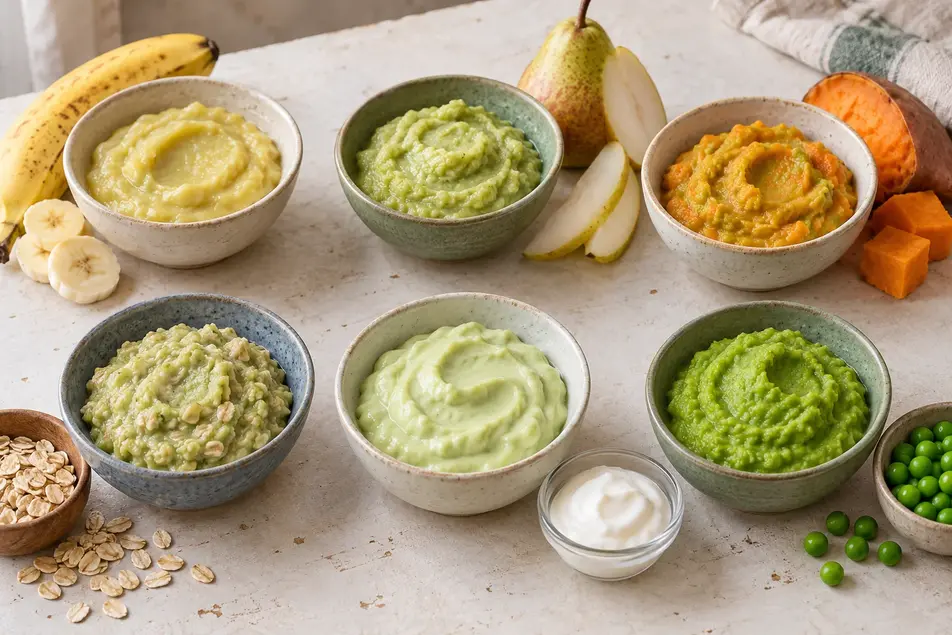
- Avocado and banana: mash equal parts for a sweet, creamy mix.
- Avocado and pear: add soft, well-cooked pear for a juicy, mild puree.
- Avocado and sweet potato: blend with steamed sweet potato for a thicker, orange-tinted mash.
- Avocado and oatmeal: stir into warm prepared infant oatmeal for a creamy breakfast.
Follow our oatmeal for babies recipe for a creamy avocado breakfast.
- Avocado and yogurt: mix with plain, unsweetened, pasteurized whole-milk yogurt.
- Avocado and peas: mash with well-cooked, crushed peas for a savory green puree.
- Avocado and lentils: mash with soft red lentils to add plant iron.
Introduce each new ingredient alone first, so a reaction is easy to trace. Guidance on spacing differs, and the CDC suggests waiting three to five days between new single-ingredient foods.
Allergies and Reactions to Watch For
Avocado is not one of the most common food allergens, but reactions are possible. People with latex allergy may also react to avocado, along with banana, kiwi and chestnut, because of shared proteins. Ask your pediatrician before offering avocado if latex allergy runs in your family.
Avocado is also a recognized trigger for FPIES, a delayed reaction with repeated vomiting and sometimes diarrhea a few hours after eating. Contact your doctor if that happens. Seek emergency care for hives, facial swelling or trouble breathing, and offer new foods in a small amount when you can watch your baby afterward.
Storage, Freezing and Reheating
Avocado puree is best served fresh. Browning comes from air exposure and is mostly cosmetic, but flavor and texture also decline with time.
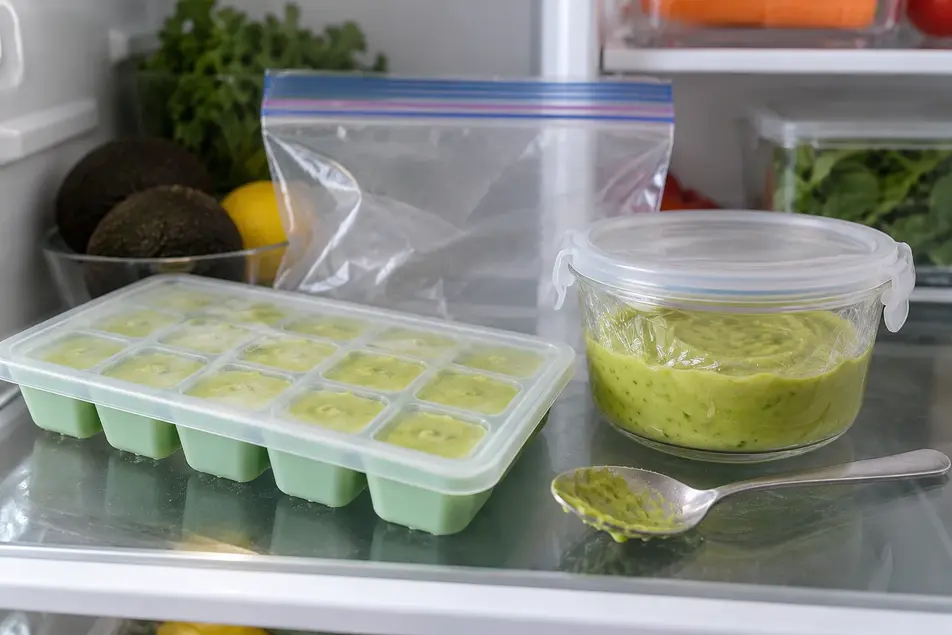
- Refrigerator: store in a small, airtight container with plastic wrap pressed onto the surface, and use within about 24 hours.
- Freezer: freeze plain puree in clean ice cube trays, then move the cubes to a labeled freezer bag. Use within about 3 months. Add breast milk or formula to the serving after thawing, not before freezing.
- Thawing: thaw in the refrigerator in a sealed container, use within 24 hours, and stir well.
- Reheating: avocado needs no heating, so serve it chilled or at room temperature.
- Leftovers: throw away anything your baby does not finish, because saliva on the spoon speeds spoilage.
Thawed avocado can turn slightly watery or grainy, so it works best stirred into combination purees.
Recipe Success Tips
- Ripen ahead: buy avocados two or three days early.
- Use the green layer: the flesh nearest the skin is softest.
- Mash only what you need: keep the rest in its skin, cut side covered.
- Pair it with iron: mix with lentils, beans or meat for a more balanced meal.
- Pack it whole on outings: cut and mash just before serving, and keep it cool.
Common Mistakes to Avoid
- Using an underripe avocado: it tastes bitter and mashes poorly, so wait until it gives slightly.
- Making a big batch for the week: fresh avocado loses quality fast, so freeze small portions instead.
- Adding salt, sugar or honey: avocado does not need them, and honey is never safe before age one.
- Leaving skin or pit within reach: remove both before serving.
- Treating it as a complete meal: avocado adds fat but not much iron, so offer other foods too.
Recipe Card: Avocado Puree for Baby
A one-ingredient, no-cook puree ready in about five minutes.
Prep time: 5 minutes
Cook time: 0 minutes
Total time: 5 minutes
Yield: About 1/3 cup, or 2 to 3 baby portions (an estimate, not a tested yield)
Ingredients: 1/2 ripe avocado; 1 to 2 teaspoons breast milk, formula or water (optional); a few drops of lemon juice (optional)
Instructions: Wash and dry the avocado, cut it in half and remove the pit. Scoop half of the flesh into a bowl. Mash with a fork for about 30 seconds, or blend 10 to 15 seconds. Stir in liquid 1 teaspoon at a time. Serve immediately, or freeze plain portions for up to 3 months.
Notes: Offer a few spoonfuls at first. Do not return a used spoon to leftover puree.
Conclusion
Avocado puree for baby is a rare first food that needs no cooking, no special equipment and almost no time. Choose an avocado that gives slightly, mash it to a texture your baby can handle, serve it fresh, and freeze plain portions for later. As your baby grows, move from puree to mash and soft spears, and keep pairing avocado with iron-rich foods.
Explore 25 Stage 1 baby purees for more first-food ideas.
Disclaimer
This article on avocado puree for baby is general information only and does not replace advice from your pediatrician. Every baby develops differently, so consult your baby’s doctor about readiness, allergies, choking risks or any feeding concerns.
FAQ’s
Q.1 When can babies eat avocado?
Most guidance supports starting solids at about six months, once your baby shows readiness. Avocado is a common early food.
Q.2 Do I need to cook avocado for baby?
No. A ripe avocado is soft enough to mash raw.
Q.3 Can I freeze avocado puree?
Yes. Freeze plain puree in small portions and use within about 3 months. Expect a softer texture after thawing.
Q.4 Why does avocado puree turn brown?
Air oxidizes the flesh. It is usually safe if it smells and tastes normal, but serve it fresh for the best color and taste.
Q.5 How much avocado should a baby eat?
Start with one to two teaspoons and increase gradually. Follow your baby’s hunger and fullness cues.