Asparagus Puree for Baby: Easy First Food Recipe
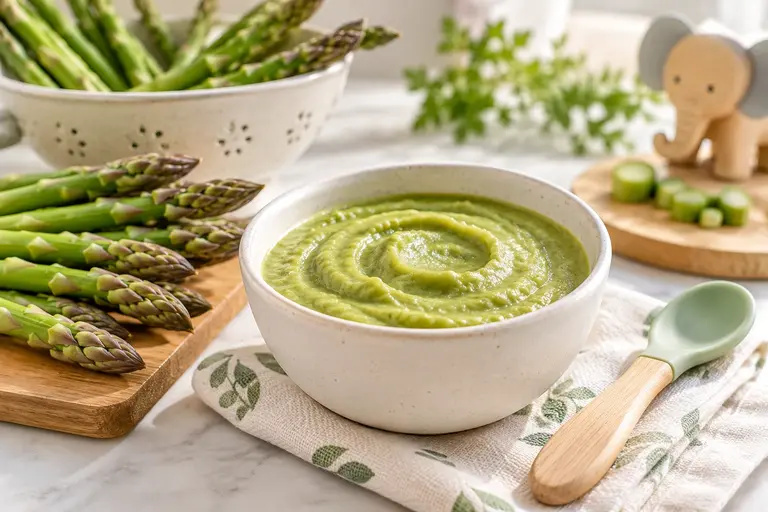
Asparagus may not be the first vegetable that comes to mind for baby food, but it can make a surprisingly smooth, fresh-tasting puree when it is cooked and blended the right way. The secret is simple: trim the woody ends, steam the spears until exceptionally soft, and blend long enough to break down their natural fibers. This asparagus puree for baby is easy to batch, freezer-friendly, and flexible enough to serve alone or pair with gentler flavors such as pear, apple, potato, or peas. If you have ever wondered why asparagus puree turns stringy, when to strain it, or which combinations taste best, this guide walks you through every step so your next batch comes out soft, spoonable, and baby-friendly.
Our First Foods for Baby at 6 Months guide has more simple ideas to help you get started.
Quick Recipe at a Glance
• Age: Around 6 months+ when baby is developmentally ready for solids
• Ingredients: 1 bunch fresh asparagus + breast milk, prepared formula, or water as needed
• Prep: About 5 minutes
• Cook: About 8-10 minutes, until very soft
• Blend: 60-90 seconds, or until smooth
• Makes: About 4-6 small baby portions
• Best texture: Smooth and spoonable for beginners
• Freezer-friendly: Yes
Why You’ll Love This Recipe
- Just one main ingredient, with minimal prep beyond trimming and steaming
- A genuinely underused vegetable that adds real variety to a rotation full of the usual sweet potato and carrot
- Provides fiber and several vitamins and minerals, including folate
- Freezes well, making it easy to keep a small batch on hand
- Asparagus is not considered one of the major common food allergens, but any new food can cause a reaction, so watch your baby after introduction
- Works well blended into other purees for babies who need a milder introduction to its flavor
Ingredients You’ll Need
Main Ingredient:
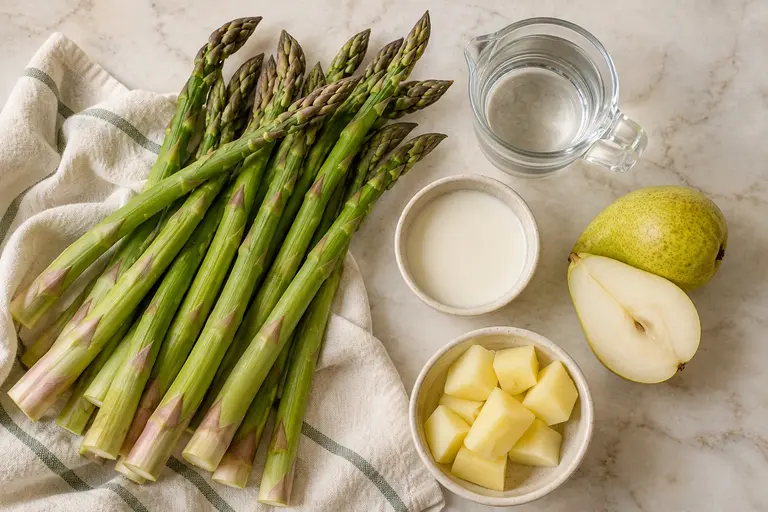
1 bunch fresh asparagus (about 12-15 spears)
Optional Additions:
- A splash of breast milk, formula, or water, to adjust consistency
- A small amount of a milder puree, like pear or potato, for babies who need help accepting the flavor at first
Why asparagus needs a bit more prep than some vegetables:
The stalks contain tough, fibrous strands that don’t break down completely even after steaming, which is why trimming and thorough blending both matters more here than they do with a vegetable like zucchini or sweet potato.
Substitutions:
If fresh asparagus isn’t available, frozen asparagus works as a reasonable substitute, though it tends to have a slightly softer texture once cooked, which can actually make blending easier for a smoother final puree.
How to Make Asparagus Puree for Baby
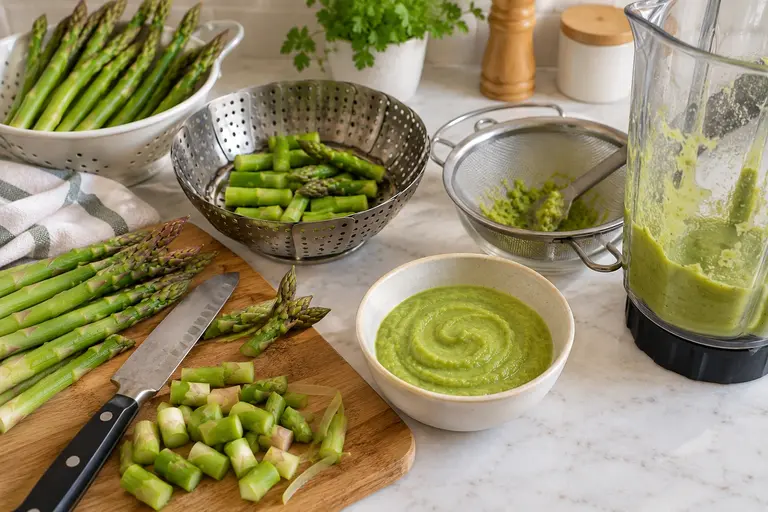
Step 1: Trim the Tough Ends
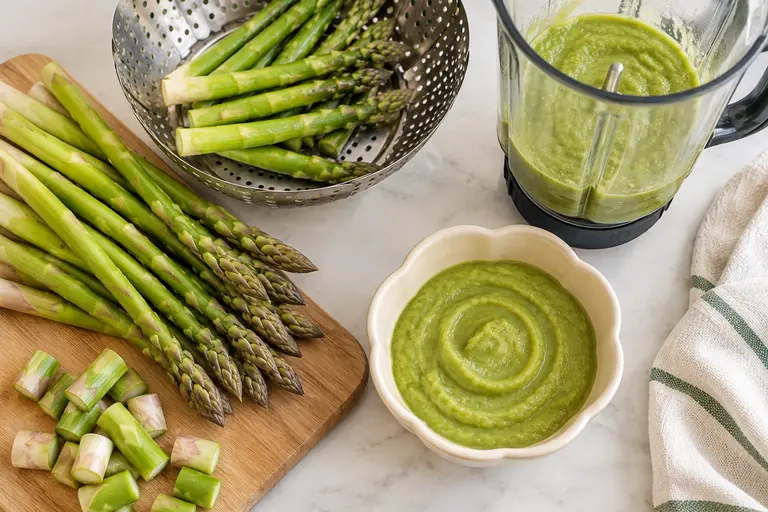
Snap or cut off the bottom inch or two of each asparagus spear, where the stalk is naturally woodier and won’t soften properly even with steaming.
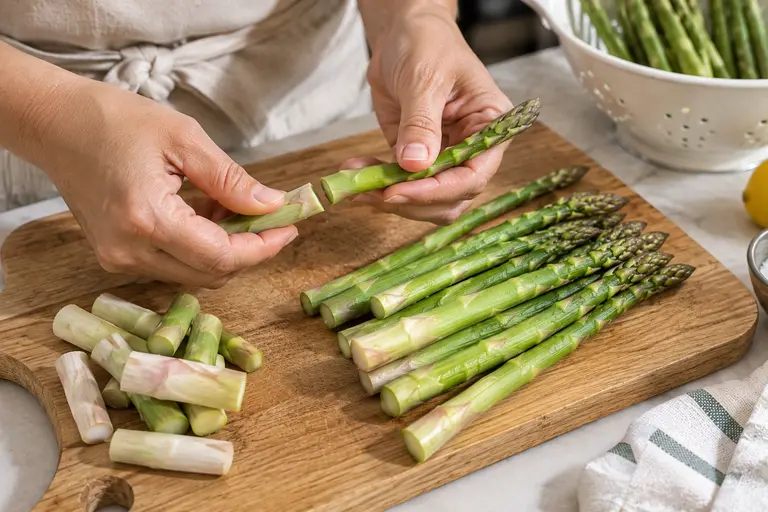
Step 2: Steam Until Very Soft
Steam the trimmed spears for about 8 to 10 minutes, until they’re noticeably softer than you’d cook asparagus for an adult meal a fork should pass through with no resistance at all.
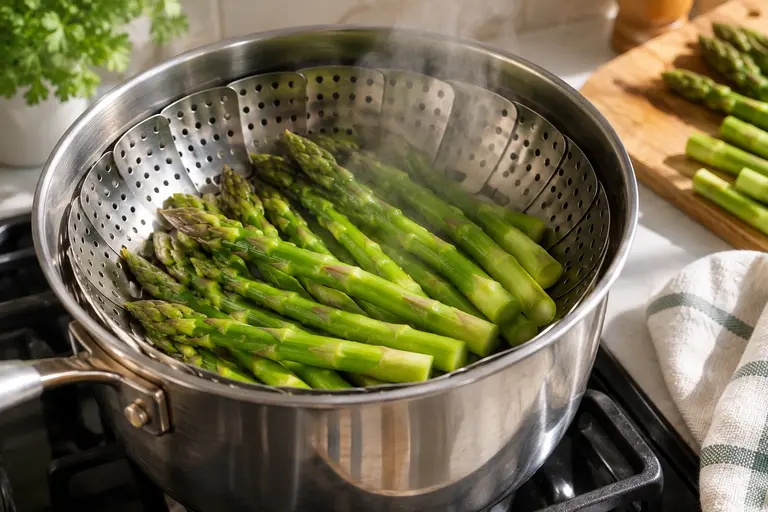
Step 3: Cool Slightly
Let the steamed asparagus cool for a few minutes before blending, since very hot vegetables can create pressure inside a sealed blender.
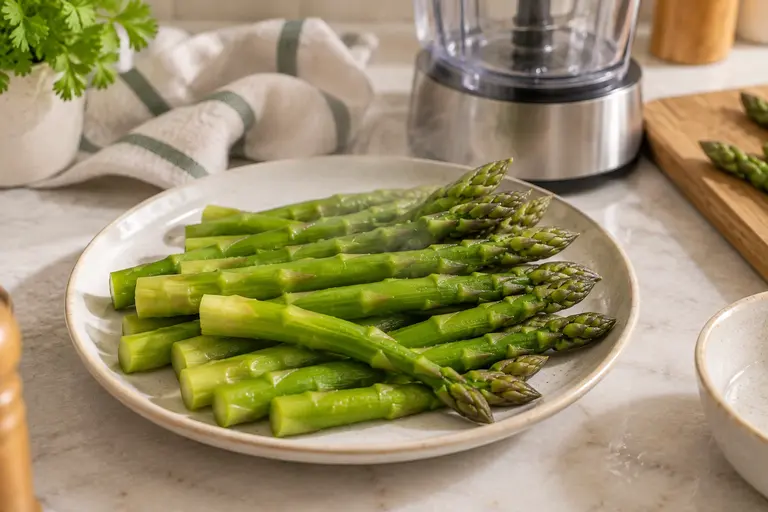
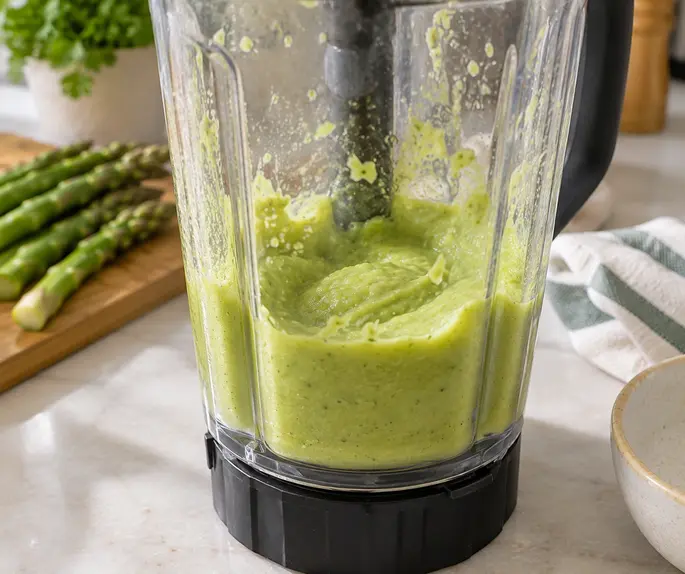
Step 4: Blend Thoroughly
Blend the asparagus with a small splash of breast milk, formula, or water for at least 60 to 90 seconds, longer than you’d blend most other vegetables, since asparagus’s fibrous strands take extra time to fully break down.
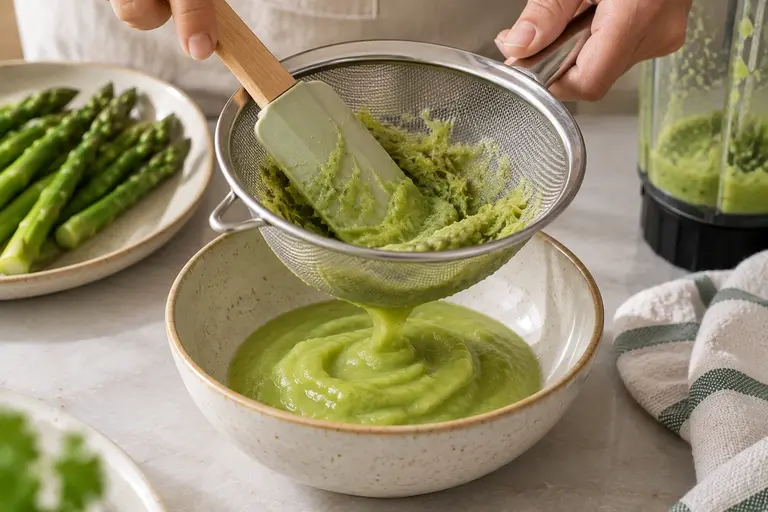
Step 5: Strain if Needed
If any stringy fibers remain after blending, pressing the puree through a fine mesh strainer removes them, which matters more for asparagus than for most other vegetable purees.
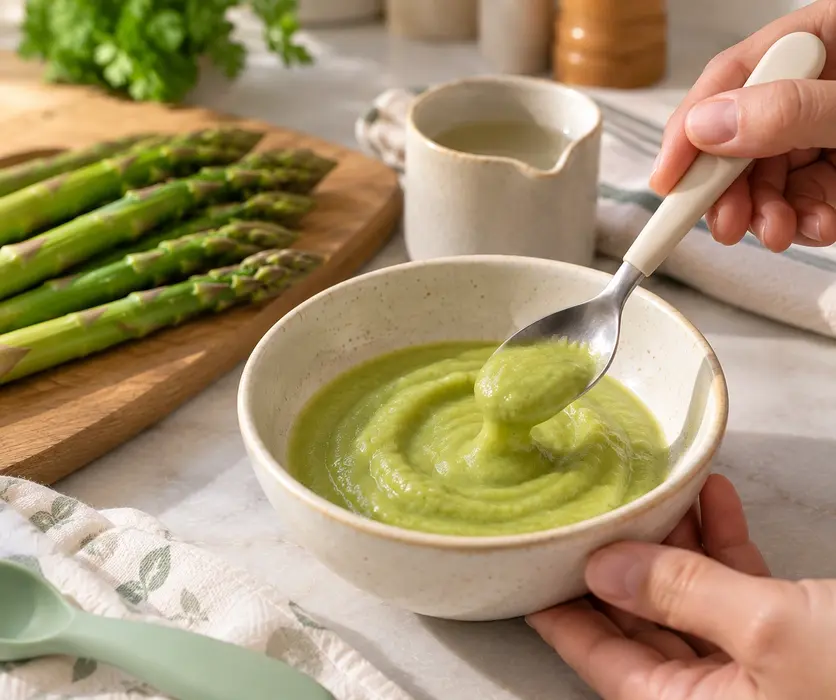
Step 6: Adjust and Cool
Adjust the final consistency with a bit more liquid if needed, then let it cool to a safe temperature before serving.
Getting the Texture Right
Asparagus is one of the few vegetables where blending time genuinely matters more than usual. Even after a full minute of blending, small fibrous threads can remain, especially from the lower half of the stalk, which is exactly why straining is worth doing here even if you skip it for smoother vegetables like squash or potato. If the puree still feels grainy after straining, it usually means the asparagus wasn’t steamed quite long enough a few extra minutes of steaming makes the fibers noticeably easier to break down. If the puree turns out too thin, a spoonful of a thicker puree like potato or pear, stirred in afterward, brings the texture back without needing to start over.
How to Serve It to Baby
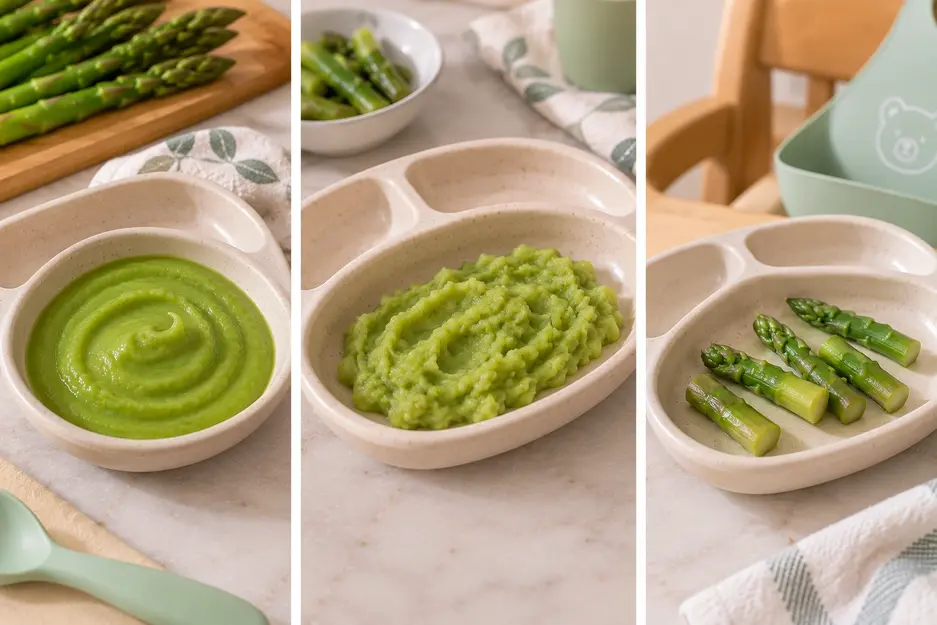
Starting Solids
Blend the asparagus until smooth. If noticeable fibrous strands remain, pass the puree through a fine-mesh strainer. Offer a small amount while your baby is seated upright and ready for solids.
As Eating Skills Develop
Gradually move toward thicker, mashed, or more textured asparagus preparations as your baby becomes comfortable managing different textures.
For Finger Feeding
Very soft cooked asparagus can also be offered in an age- and developmentally appropriate shape for finger feeding. Make sure it is soft enough to mash easily and supervise your baby closely while eating.
These are developmental examples rather than fixed age rules. Babies progress through textures at different rates, so follow your baby’s readiness and eating skills.
Recipe Variations
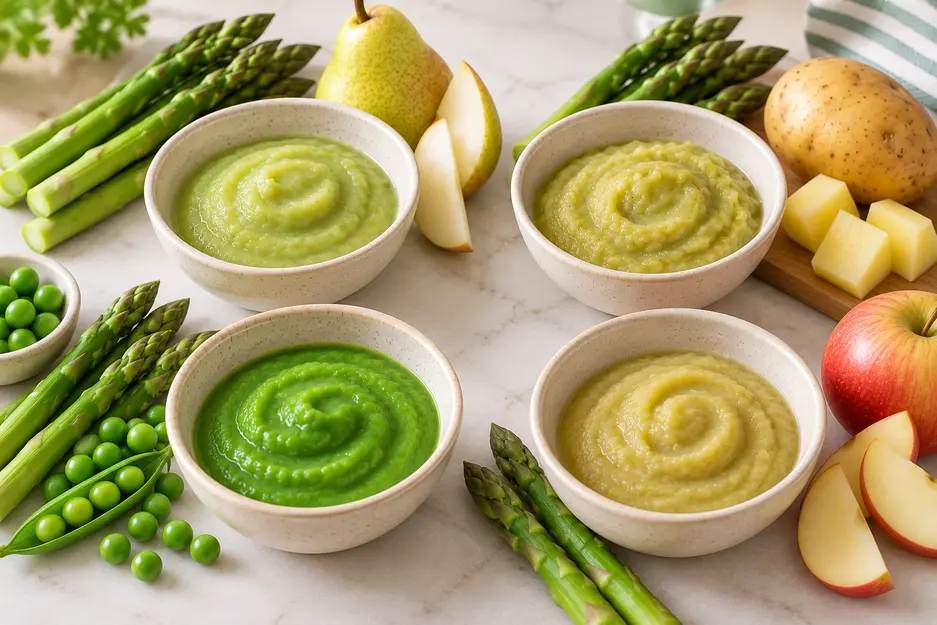
- Asparagus + Pear: Blend cooked asparagus with soft ripe pear for gentle sweetness that balances asparagus’s grassy flavor. This is a useful combination when baby is still getting used to stronger-tasting vegetables. Keep the asparagus fully cooked and prepare the pear in a texture appropriate for your baby’s stage.
- Asparagus + Potato: Mix asparagus with very soft cooked potato for a thicker, creamier puree. Potato tones down the stronger green-vegetable taste and gives the mixture more body, making it especially helpful when a batch of asparagus puree has turned a little thin.
- Asparagus + Pea: Blend asparagus with well-cooked peas for a deeper green vegetable combination. The flavors are more noticeable than fruit-based pairings, so this works nicely for babies already comfortable with savory vegetables. Blend thoroughly and strain only if noticeable skins or fibers remain.
- Asparagus + Apple: Combine asparagus with soft cooked apple for a lightly sweet, fresh-tasting puree. Apple can make the flavor easier to accept without overpowering the asparagus. Use plain cooked apple with no added sugar and adjust the consistency with a little water, breast milk, or prepared formula if needed.
- Asparagus + Sweet Potato: Blend with very soft cooked sweet potato for a naturally creamy, slightly sweet combination. The thicker texture is useful when you want a more substantial spoonable puree, while the mild sweetness can soften asparagus’s stronger flavor.
- Asparagus + Zucchini: Pair with steamed zucchini for a light vegetable blend with a softer flavor profile. Because zucchini contains plenty of water, add extra liquid only after blending and checking the consistency so the puree does not become too runny.
Want another naturally sweet green option? Try our Pea Puree for Baby recipe.
Storage, Freezing & Reheating
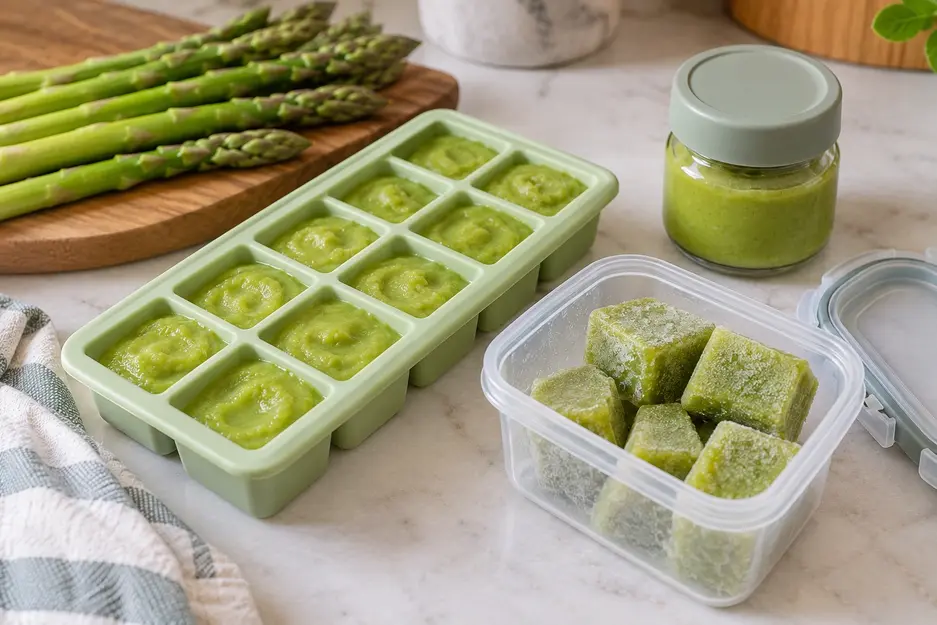
Refrigerator: Store cooled asparagus puree in an airtight container for up to 2 days.
Freezer: Freeze in an ice cube tray for up to 2 months, then transfer the frozen cubes to a labeled freezer bag once solid.
Thawing: Thaw a portion overnight in the refrigerator rather than at room temperature.
Reheating: Warm gently in a saucepan over low heat or in short microwave bursts, stirring between each interval, and always check the temperature yourself before serving.
After feeding: Discard puree left in the baby’s bowl rather than returning it to the refrigerator.
Common Mistakes to Avoid
Under-blending. Asparagus is naturally fibrous, so a very quick blend can leave thin strands in the puree. Blend until the mixture looks consistently smooth, scrape down the sides of the blender if needed, and check a spoonful before serving. If fibers remain, blend again or pass the puree through a fine-mesh strainer.
Skipping the trim. The lower ends of asparagus can stay woody even after cooking. Remove the tough portion before steaming so those fibers do not end up in the finished puree. If a spear still feels firm near the base after cooking, use only the softer portion for blending.
Expecting baby to love the flavor immediately. Asparagus has a distinct savory taste, and a baby may need repeated, pressure-free exposure before accepting it. You can serve a small amount on its own or combine it with a familiar food such as pear, potato, apple, or sweet potato while keeping the asparagus flavor present.
Not cooking it until truly soft. Asparagus for puree should be softer than asparagus prepared for an adult meal. If the fork meets resistance, keep steaming. Proper softness makes blending easier and helps create a smoother texture without needing excessive added liquid.
Adding too much liquid at the start. Begin with only a small splash of water, breast milk, or prepared formula. You can always add more after blending, but correcting a watery puree is harder. Add liquid gradually until the texture is smooth and spoon able.
Making a large batch before baby has tried it. For a first introduction, a smaller batch is practical because babies vary in flavor preferences. Once you know the puree is accepted, prepare a larger freezer-friendly batch and portion it into convenient serving sizes.
Asparagus Puree vs. Broccoli Puree: What’s the Difference?
Both asparagus and broccoli can add vegetable variety to a baby’s diet. The main differences are their flavor and texture, so preparation should match your baby’s developmental stage and eating skills.
Recipe Card
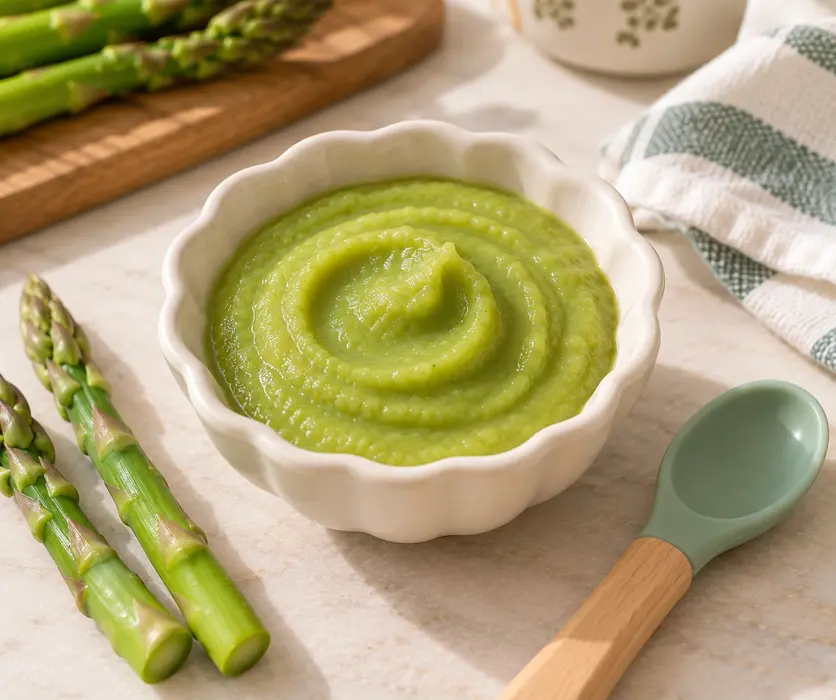
Asparagus Puree for Baby
A smooth vegetable puree made from very soft steamed asparagus, blended thoroughly to manage its naturally fibrous texture.
Prep Time: 5 minutes Cook Time: 10 minutes Total Time: 15 minutes Servings/Yield: About 4-6 baby portions
Ingredients
- 1 bunch fresh asparagus (12-15 spears), tough ends trimmed
- Breast milk, formula, or water, as needed for consistency
Instructions
- Trim the tough bottom ends off each asparagus spear.
- Steam until very soft and easily pierced or mashed with a fork, about 8-10 minutes depending on spear thickness.
- Cool slightly before blending.
- Blend thoroughly for 60-90 seconds with a splash of liquid.
- Strain if fibrous strands remain.
- Cool completely before serving.
Notes
Blend longer than you would for most vegetables, since asparagus fibers take extra time to break down. Pairing with a milder puree like pear or potato can help ease the introduction for babies who are hesitant about its stronger flavor.
Conclusion
Asparagus puree for baby earns its place in a rotation not because it’s the easiest vegetable to prepare, but because the extra blending time is a small trade-off for real nutrition many parents overlook. Once you’ve steamed and blended it thoroughly, the strong flavor softens enough for most babies to accept it, especially when paired with a milder fruit or vegetable at first. Keep a batch in the freezer, and it becomes just as easy to reach for as any other vegetable puree in your rotation.
Ready to add more vegetables to your baby’s menu? Try our Carrot Puree for Baby for another naturally sweet and easy homemade option.
Disclaimer:
This article is for general informational purposes and does not replace guidance from your pediatrician. Always confirm your baby’s readiness for new foods, and consult your pediatrician about introducing asparagus puree for baby or any other new ingredient if you have concerns about allergies or digestion.
FAQ’s
Q.1 Why does my baby’s urine smell different after eating asparagus?
This is a harmless, common effect caused by a compound in asparagus called asparagusic acid, which breaks down into sulfur-containing byproducts not everyone notices the smell, since the ability to detect it is linked to genetics, but it isn’t a sign of a problem.
Q.2 Is asparagus a common allergen for babies?
No, asparagus isn’t considered one of the top allergenic foods, though it can occasionally cause a mild skin reaction on contact or, rarely, a more significant allergic reaction, so introducing it like any new food and watching for a reaction is still worthwhile.
Q.3Why does my asparagus puree still feel stringy after blending?
This usually means the stalks weren’t blended long enough or weren’t steamed until fully soft extending both the steaming and blending time, or straining the finished puree, usually resolves it.
Q.4 Can asparagus cause gas in babies?
Some babies may seem gassier after eating fiber-rich foods such as asparagus. Every baby responds differently, so start with a small amount and watch how your baby tolerates it.
Q.5 What age can babies start eating asparagus?
Asparagus can be introduced from around 6 months when a baby is developmentally ready for solid foods. Cook it until very soft and prepare a texture and shape that match your baby’s eating skills.