Green Bean Puree for Baby: Easy First Food Recipe

Green bean puree for baby is a simple way to introduce a green vegetable when starting solids. Three steps do the job: trim, steam, blend. The result is a smooth, mild puree that is easy to prepare and freeze in small portions. One pound of beans makes about two cups enough to fill an ice cube tray and stock two weeks of small servings. Below are the details that decide whether your batch turns out silky or stringy: which beans to buy, how soft is soft enough, and how to keep serving green beans as your baby grows.
If your baby is just starting solids, see our First Foods for Baby at 6 Months guide.
Why You’ll Love This Green Bean Puree for Baby

This one earns its place in the freezer rotation for practical reasons.
- Ready in about 25 minutes, with one pot and one blender.
- It freezes well. Green beans hold color and texture after thawing better than most green vegetables.
- The flavor is mild but still savory, giving your baby practice before stronger greens.
- It stretches into other meals. Stir a cube into oatmeal, dal, mashed potato or yogurt.
- Green beans bring real nutrition. USDA data shows vitamin C, vitamin K, folate and fiber modest per spoonful, but meaningful across a varied diet.
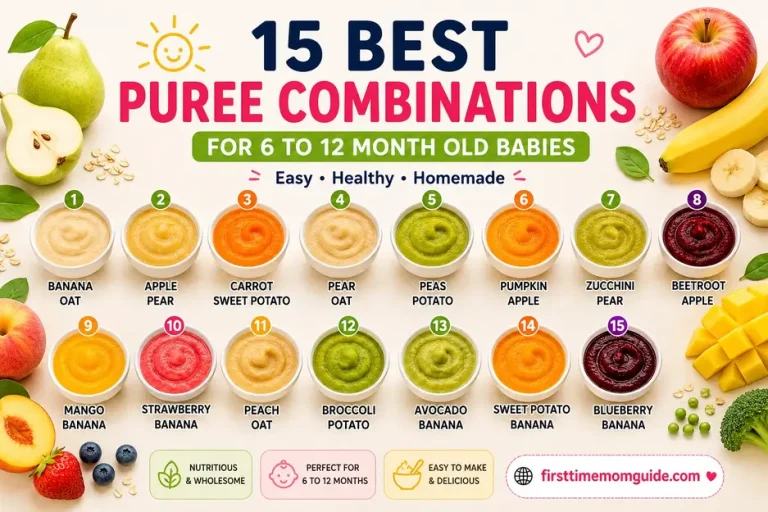
For another mild green option, try our Pea Puree for Baby.
Ingredients You’ll Need

- Green beans (1 pound / 450 g). Fresh or frozen both work. For fresh beans, choose firm, bright pods and trim the stem ends before cooking. Frozen green beans can go straight into the steamer.
Frozen cut green beans are the more reliable choice here. They’re picked young, already trimmed, and they cook down soft without guesswork.
- Liquid (as needed, usually about 1/4 to 1/2 cup). Reserved steaming water or cooled boiled water works well. Breast milk or prepared formula can also be used when thinning the puree.
- Olive oil (1 teaspoon, optional). A small amount can add flavor and fat, but the puree also works well without it.
- Fresh herbs (optional). A small amount of basil, parsley or mint can be blended in for variety. For a simple first taste, you can make the puree with green beans alone.
Substitutions
- No steamer basket? Simmer the beans in an inch of water in a covered pan, then blend with that liquid.
- Canned green beans: choose no-salt-added and rinse well. Regular canned beans carry too much sodium for infants.
- Runner or flat beans: fine, but slice off both edges their seams are tougher.
How to Make Green Bean Puree for Baby
Step1. Wash and trim
Rinse the beans and snap off the stem ends. Run your thumbnail down the seam of one or two if a fiber peels away, pull it off the rest as well. Cut into 1-inch pieces so they cook evenly and blend faster.

Step2. Set up the steamer
Bring 2 inches (5 cm) of water to a boil in a medium saucepan over medium-high heat. Set a steamer basket above the water line and add the beans in an even layer.

Step3. Steam until very soft. Cover
Cover and cook fresh beans 10 to 12 minutes, or frozen beans 8 to 10 minutes straight from the bag. Ignore the crisp-tender standard you’d want at dinner. They’re ready when the color dulls from bright to deep green and one bean crushes to mush between your thumb and finger with no resistance.

Step4. Reserve the water, cool the beans
Ladle out 1/2 cup of steaming liquid. Let the beans sit 3 to 4 minutes so your blender doesn’t build pressure.

Step5. Blend
Tip the beans into a blender with 1/4 cup of the reserved liquid and the olive oil, if you’re adding it. Run it 60 to 90 seconds, scrape down the sides, then add more liquid one tablespoon at a time until smooth and pourable.

Step6. Sieve (optional)
For a baby’s first spoonfuls, press the puree through a fine-mesh strainer to catch skin flecks and stray fibers.

Step7. Cool and serve
Bring it to lukewarm, then dab a little on your wrist before it goes near your baby.

Getting the Texture Right
A finished green bean puree for baby should coat the back of a spoon, then slide off slowly in a thick ribbon. Not soupy, not stiff like mashed potato. Once your baby swallows confidently, go thicker rather than thinner thick purees are easier to move around the mouth.

Too thin? Blend in a few more cooked beans, or a tablespoon of mashed potato, oatmeal or avocado.
Too thick? Add liquid one tablespoon at a time, blending 10 seconds between additions. Half a cup at once is how a good batch turns to soup.
Stringy or fibrous? The beans were too mature, or they left the pot early. Steam another 3 to 4 minutes, blend longer, then push it through a sieve.
Gritty or flecked? Usually the blender, not the beans. Small jugs struggle with low volumes, so blend in the narrowest container that fits.
Watery after thawing? Normal ice crystals separate in the freezer. Stir hard once warmed and it comes back together.
How to Serve It to Baby
Most babies are ready for solids around 6 months, but skills matter more than the calendar. The CDC lists the key signs as sitting up with support, steady head and neck control, opening the mouth for the spoon, and swallowing food instead of pushing it back out. Green beans can join the rotation as soon as those signs appear first foods have no required order.
Start with a small amount and let your baby’s appetite and hunger/fullness cues guide how much they eat. Breast milk or formula remains an important source of nutrition during the first year as your baby gradually learns to eat a wider variety of foods.
| Stage | Texture | How to serve | Portion |
| Around 6 months | Thin, smooth, sieved | Spoon-fed, or loaded onto a self-feeding spoon. For baby-led weaning, offer a whole cooked bean — long pods are easier to grip | 1–2 tsp, building to 2 tbsp |
| Around 9 months | Thicker, lightly textured | Spread on the tray for scooping, or as a dip with soft toast strips. Chopped soft beans suit a pincer grasp | 2–4 tbsp |
| 12+ months | Barely thinned | Stirred through rice, pasta, dal or yogurt | 4 tbsp or more, appetite-led |
Every baby develops differently. This article is general information, not medical advice. Talk to your pediatrician about your baby’s readiness, allergies or feeding concerns.
Recipe Variations and Flavor Combinations
Green beans work well as a base they take other ingredients without disappearing.

- Green bean and potato. A boiled potato turns the puree creamy and much milder the classic fix for a baby unsure about green.
- Green bean and pear. Natural sweetness that softens the vegetal edge, no added sugar.
- Green bean, pea and mint. Bright, fresh and still fully green.
- Green bean and sweet potato. Adds body, color and vitamin A.
- Green bean and red lentil. Cook the lentils soft and blend them in for protein and iron.
- Green bean and avocado. No extra cooking, and the fat makes it silky.
- Warm spice. A pinch of cumin or chopped dill adds real flavor. Babies don’t need bland food just food without salt.
You can also pair it with our creamy Potato Puree for Baby.
Storage, Freezing and Reheating

Refrigerate the puree within two hours of cooking. FoodSafety.gov advises keeping homemade baby food 1 to 2 days in the fridge and 1 to 2 months in the freezer stricter than store-bought guidance, because home purees aren’t pasteurized.
Green bean puree for baby freezes best in an ice cube tray: fill it, cover, and let it set solid. Pop the cubes into a labeled freezer bag with the date. One cube is about one ounce, which makes portioning simple.
Thaw overnight in the fridge, or stand the sealed container in a bowl of cool water. Never defrost purees on the counter, and don’t refreeze anything already thawed.
Reheat gently on the stove or in short microwave bursts, stir to break up hot spots, then check the temperature yourself. Reheat each portion once only.
One habit worth keeping: spoon out what your baby will eat into a separate bowl. Saliva carried back into the container introduces bacteria and shortens safe storage.
Recipe Success Tips
- Buy the thinnest beans on the shelf. Thickness predicts stringiness better than anything else.
- Steam instead of boiling. Boiling washes flavor and water-soluble vitamins into the pot and draws out the sulfur notes babies dislike.
- Cook past the point that looks right. Dinner beans are done at 5 minutes. Baby beans need 10 to 12.
- Reserve the cooking water. It blends better than fresh water and returns some nutrients.
- Blend longer than feels necessary. Ninety seconds sounds excessive until you compare it against thirty.
Common Mistakes to Avoid
Pulling the beans off the heat too early. Undercooked beans never blend smooth, however long the machine runs. Steam longer instead of adding more water.
Adding all the liquid at once. Thin puree is harder to correct than thick. Start with 1/4 cup and build.
Seasoning from the family pan. Avoid adding salt to your baby’s portion. Set aside the baby’s serving before seasoning food for the rest of the family.
Feeding straight from the storage container. It contaminates the whole batch and forces you to throw away good food.
Quitting after one rejection. A scrunched face isn’t refusal. Babies often need many tastings before accepting a new flavor, so offer it again next week.
Recipe Card

Green Bean Puree for Baby
A smooth, mild, freezer-friendly green vegetable puree made from steamed green beans and nothing else. Suitable from around 6 months.
- Prep: 5 minutes | Cook: about 10 minutes | Total: about 20 minutes
- Yield: about 2 cups (16 oz), roughly 16 servings of 2 tablespoons
- Age: around 6 months and up
Ingredients – 1 lb (450 g) fresh or frozen green beans – About 1/4 to 1/2 cup reserved steaming water, cooled boiled water, breast milk or prepared formula, as needed – 1 tsp olive oil (optional) – A small amount of fresh basil, parsley or mint (optional)
Instructions 1. Rinse fresh beans, trim the stem ends and cut into roughly 1-inch pieces. 2. Bring about 2 inches of water to a boil in a medium saucepan and place the beans in a steamer basket above the water. 3. Cover and steam for about 10 minutes, or until very tender and easily pierced with a fork; start checking frozen beans at about 8 minutes. 4. Reserve some steaming water and let the beans cool slightly. 5. Transfer to a blender or food processor and blend for 1 to 2 minutes, adding about 1/4 cup liquid to start and more gradually as needed. Add optional olive oil or herbs if desired. 6. For an extra-smooth puree, press through a fine-mesh sieve if needed. 7. Cool to a safe serving temperature before serving.
Notes – No salt, sugar or honey. Honey is unsafe under 12 months. – Refrigerate up to 2 days, or freeze in ice cube trays up to 2 months. – One frozen cube equals roughly 1 ounce, a useful single portion.
conclusion
Green bean puree for baby comes down to two things: cooking the beans further than you think you should, and blending them longer than feels reasonable. Get those right and you’ll have a mild green vegetable your baby recognizes long before the picky years arrive. Make a full batch, freeze it in cubes, and you’re set for weeks.
Ready for another green first food? Try our Broccoli Puree for Baby next.
Disclaimer
his article is for general informational and educational purposes only and is not a substitute for medical advice. Every baby develops differently. Always follow your baby’s developmental readiness and hunger/fullness cues when starting solids, supervise your baby while eating, and prepare foods in an age-appropriate texture. If you have concerns about allergies, choking, feeding difficulties, or your baby’s individual nutritional needs, consult your pediatrician or a qualified healthcare professional.
FAQ’s
Q.1 Can I use frozen green beans for baby puree?
Yes, and they’re often better. Frozen beans are picked and blanched young, so they blend smoother than out-of-season fresh ones. Steam from frozen for 8 to 10 minutes.
Q.2 What age can babies have green bean puree?
Around 6 months, once your baby shows all the readiness signs — sitting with support, steady head control, opening the mouth for the spoon, and swallowing rather than pushing food out.
Q.3 Do green beans cause gas or constipation in babies?
Green beans are high in fiber, so some babies get mild gas when the food is new. It usually settles within a week or two, and small portions at first ease the transition. Ongoing discomfort or hard stools deserve a call to your pediatrician.
Q.4 Are green beans a common allergen?
Green beans are legumes, but they are not among the major food allergens and reactions are uncommon. When first introducing foods, offer one single-ingredient food at a time and leave a few days before introducing another new food so a possible reaction is easier to identify. Families with a history of legume allergy or concerns about reactions should speak to their pediatrician.
Q.5 Why does my green bean puree taste bitter?
Overcooking in an uncovered pot of boiling water is the usual cause. Steam with the lid on, blend in a teaspoon of olive oil, and pair with potato or pear if it still reads sharp.