Parsnip Puree for Baby the Underrated Root Vegetable Babies Love
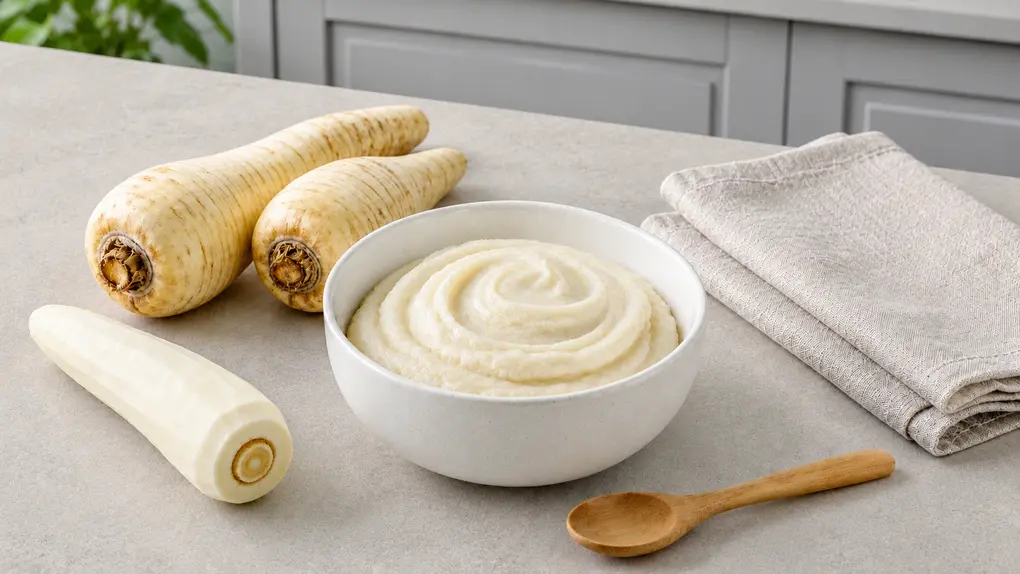
Sweet potato and carrot usually get all the attention when a baby starts solids, but parsnip deserves a closer look. Under its pale, rather ordinary skin is a naturally sweet root vegetable that turns soft, creamy, and delicately nutty when cooked. That combination makes parsnip puree for baby an appealing way to bring a new flavor and texture into early meals without making the recipe complicated. It needs only a few basic ingredients, takes about twenty minutes to prepare, and can be thinned or mashed as your baby’s eating skills develop. In this guide, you will learn when parsnip can be offered, how to choose the right texture, how to make a genuinely smooth puree, and how to store it safely. Parsnip is not a cure for digestive problems or a nutritionally complete meal by itself, but it can be one useful part of a varied complementary-feeding routine once your baby is developmentally ready.
Why Parsnip Puree for Baby Deserves a Spot in Your Kitchen
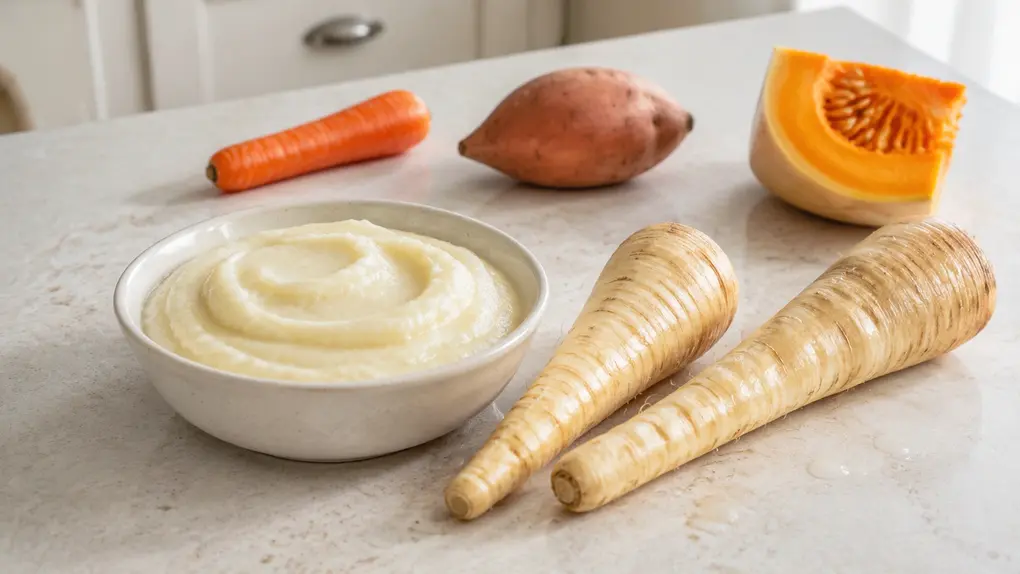
Most parents start their baby’s vegetable journey with the usual lineup: carrot, sweet potato, squash. Parsnip gets left out simply because it is less familiar on a grocery list. That is a missed opportunity, because parsnip brings something genuinely different to the table.
There is a practical reason to like it too. Because parsnip has a fairly neutral, tame taste, it works as a base for other flavors later. Once your baby has tried it plain, you can build on that base with herbs, spices, or other purees without starting from scratch on a new food.
When to Introduce Parsnip Puree to Your Baby
Parsnip can be introduced around the same time most babies start solids, generally close to six months of age. As with any first food, the exact number on the calendar matters less than whether your baby shows real signs of readiness. These signs include sitting upright with support, holding their head steady without wobbling, showing interest in food during family meals, and no longer pushing food back out automatically with their tongue.
If you are planning your baby’s complete starting-solids menu, explore these first foods for baby at 6 months
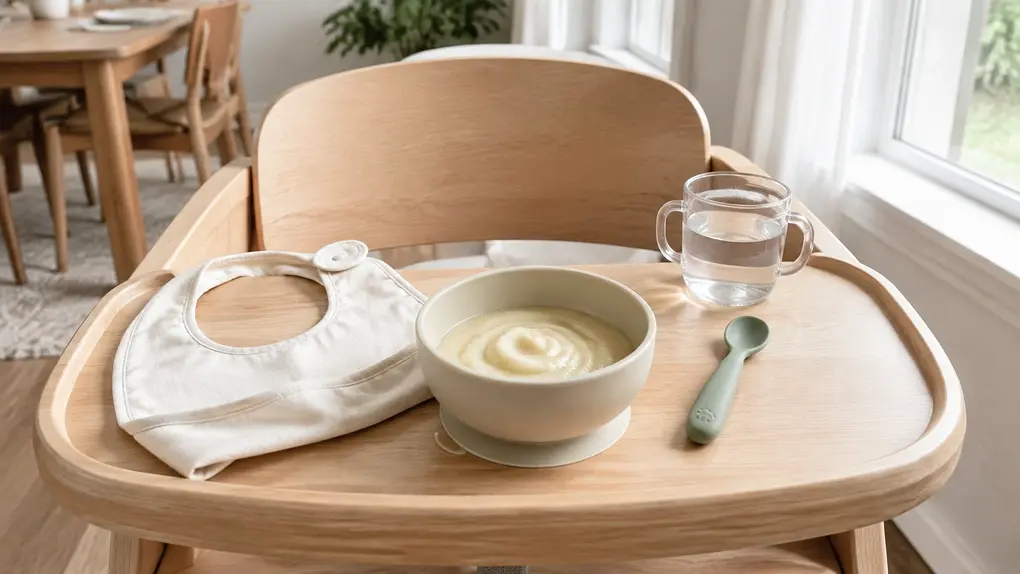
When your baby is first trying foods, introduce parsnip as a single ingredient and watch for any reaction before combining it with other new ingredients. CDC guidance advises starting with one single-ingredient food at a time and waiting three to five days between new foods.
Nutrition Facts: What’s Actually Inside a Parsnip
Parsnips are a root vegetable, closely related to carrots and parsley, though they taste quite different once cooked. Despite their plain appearance, they carry a solid nutritional profile worth knowing about.
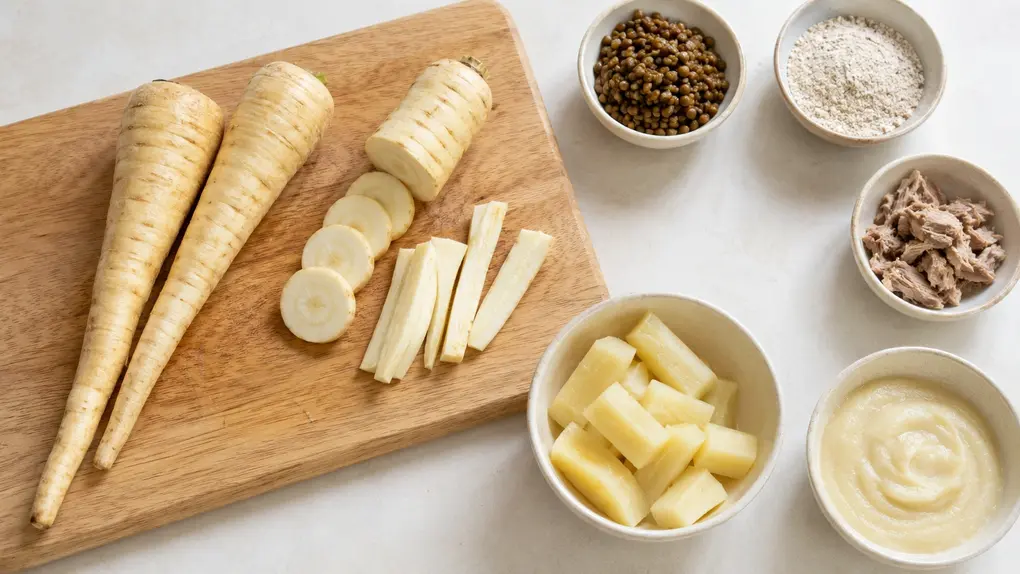
Parsnips provide vitamin C, folate, potassium, and fiber. Fiber contributes to normal bowel function as part of a varied diet, but parsnip puree should not be described as a treatment or guaranteed remedy for constipation.
Parsnip is only one option—discover more vegetable purees for baby to add variety to your baby’s meals.
Texture by Baby’s Age
Not every baby needs the same consistency, and parsnip adjusts easily as your baby grows through the early months of solids.
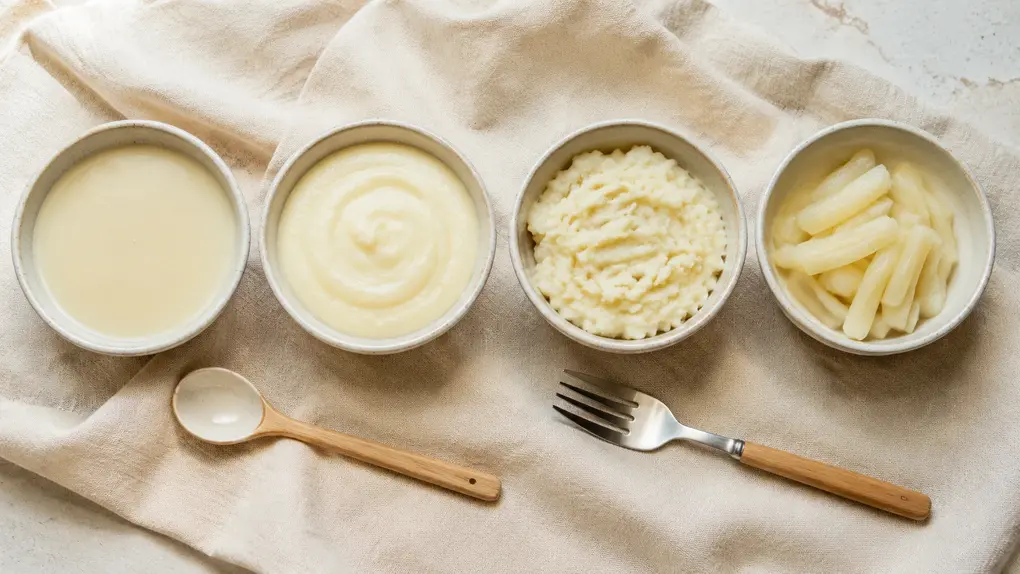
| Baby’s Age | Texture Goal | How to Get There |
|---|---|---|
| 6 to 7 months | Thin, fully smooth puree | Blend fully, add extra liquid until pourable |
| 7 to 8 months | Slightly thicker puree | Blend well, use less added liquid |
| 8 to 9 months | Soft mash with small lumps | Mash with a fork instead of blending fully |
| 9 to 12 months | Soft chunks or finger-food strips | Cook until fork-tender, cut into long, soft strips |
Moving through these stages gradually helps a baby build the chewing and tongue-control skills they need before moving on to more textured family meals.
How to Make Parsnip Puree for Baby at Home
This is a simple, practical puree made from properly cooked parsnips and a small amount of liquid. The recipe makes roughly six to eight small starter portions, depending on the size of the parsnips and how thin you blend it. Preparation takes about five minutes, and steaming usually takes 15 to 18 minutes. Begin with a small serving and store untouched portions separately so food from the baby’s spoon is not returned to the main batch.
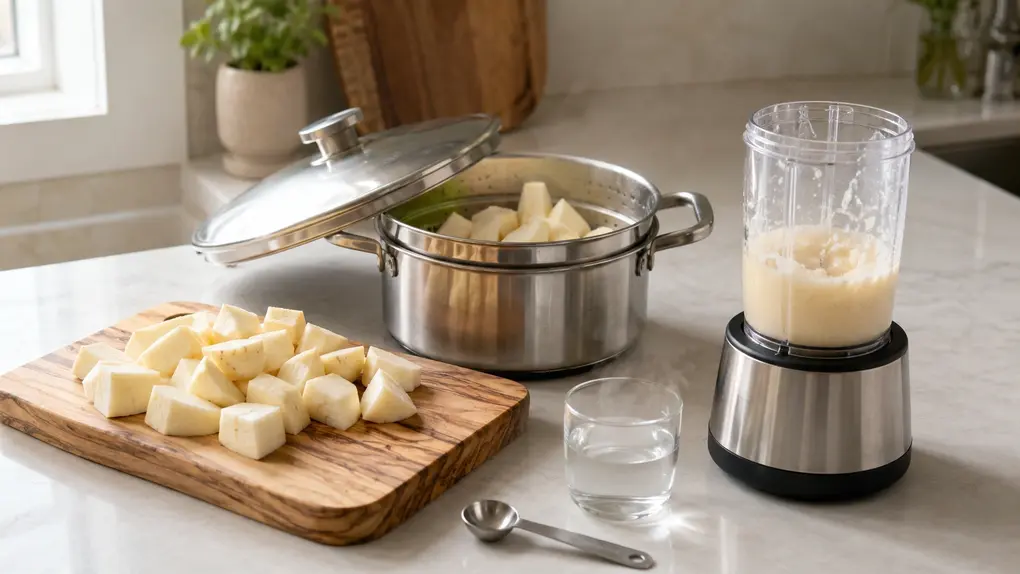
What you need:
- 2 to 3 medium parsnips, peeled and cut into 1-inch chunks
- Water for steaming, plus 2 to 6 tablespoons of steaming water for blending
- A blender, food processor, or hand blender
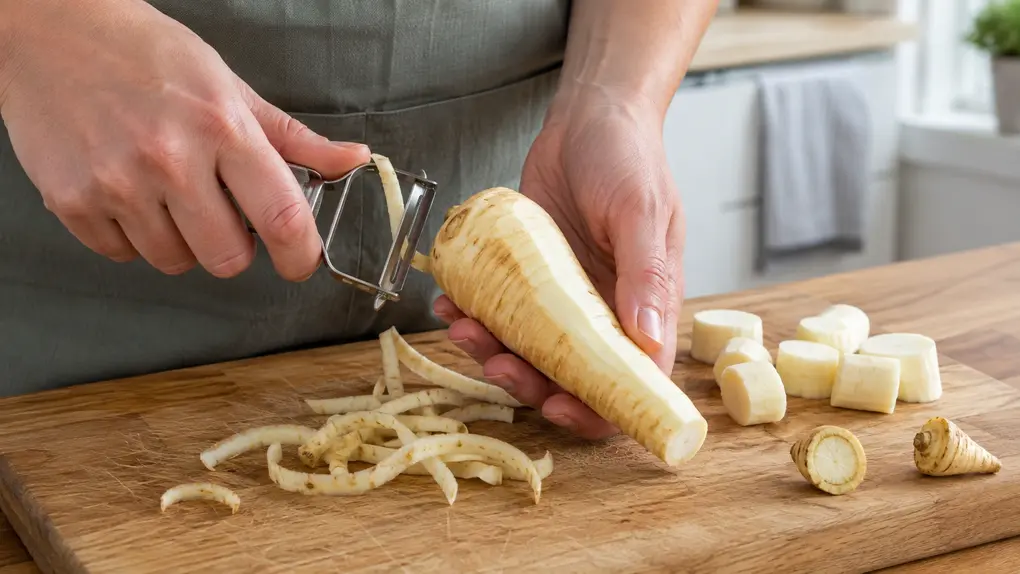
Step 1: Peel and Cut the Parsnips
Peel the parsnips with a vegetable peeler, trim both ends, and cut them into small, even chunks so they cook at the same rate.
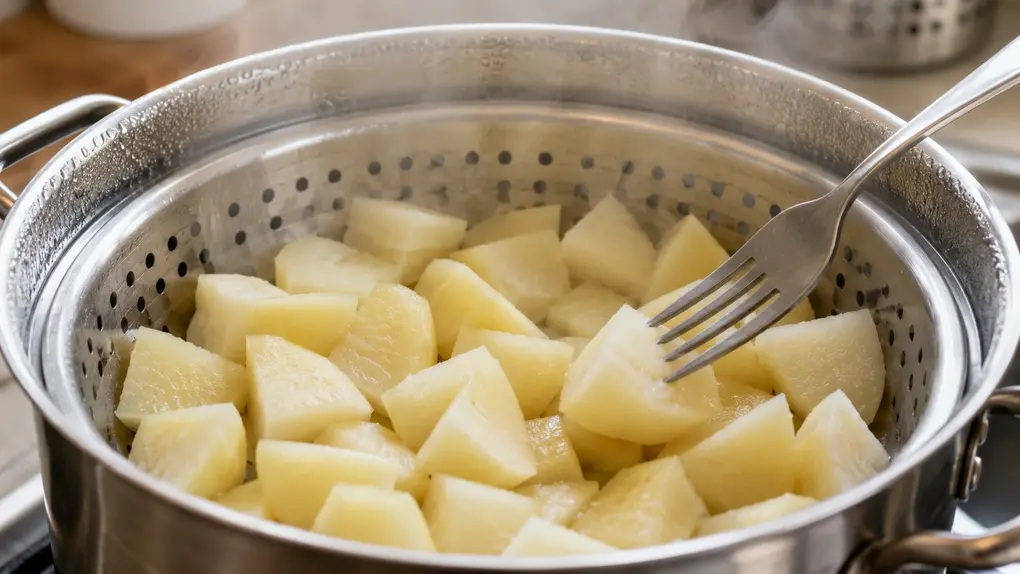
Step 2: Steam Until Very Soft
Place the chunks in a steamer basket over simmering water. Cover and steam for 15 to 18 minutes, or until a fork slides through without resistance.
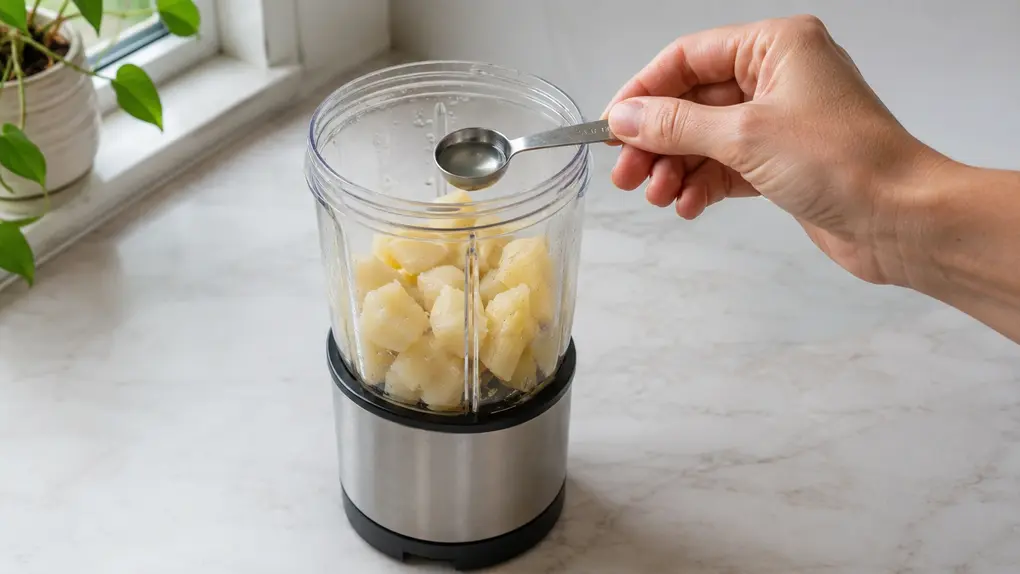
Step 3: Transfer and Add Liquid
Transfer the cooked parsnip pieces to a blender. Add a small splash of steaming water, prepared infant formula, or breast milk to help the mixture blend smoothly.
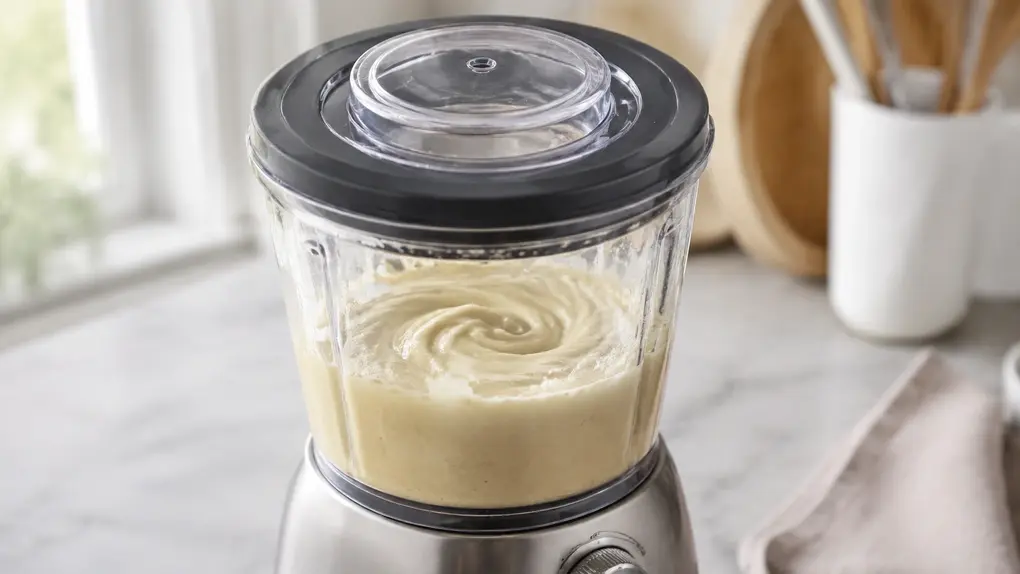
Step 4: Blend to the Right Texture
Blend until smooth, stopping to scrape down the sides as needed. Adjust the texture to your baby’s eating skills by adding liquid a little at a time.
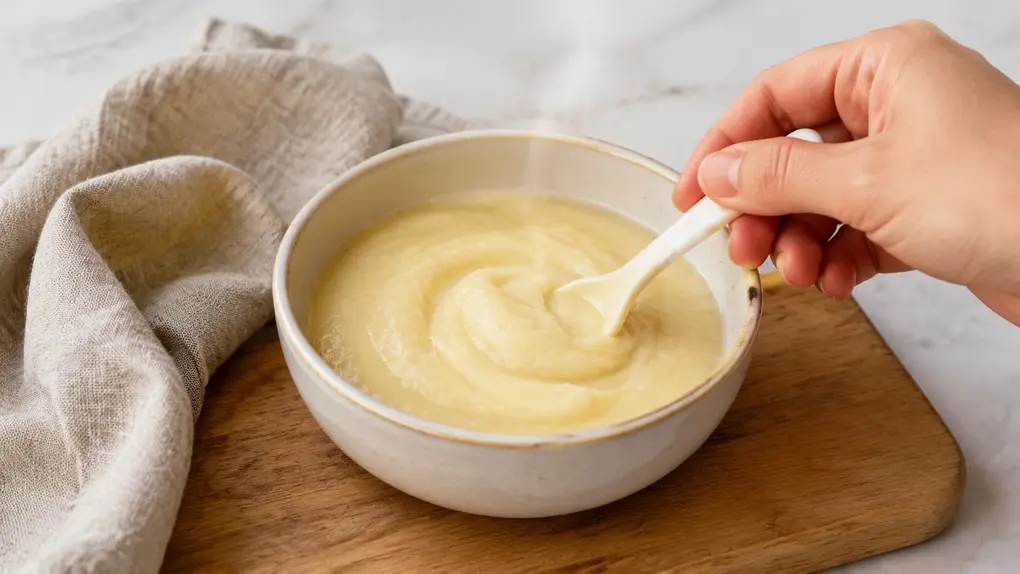
Step 5: Cool and Serve Safely
Allow the puree to cool before serving. Stir well and check that it is lukewarm, with no hot spots.
Do not add salt or salty stock. Suitable herbs and mild spices can be introduced in small amounts during complementary feeding; keep them separate from the advice to limit added salt.
Steaming vs. Boiling vs. Roasting: Which Method Wins?
The cooking method you choose changes how parsnip puree for baby turns out, both in nutrition and in texture. Here is how the three common methods compare.
| Cooking Method | Effect on Nutrients | Texture Result | Best For |
| Steaming | Limits nutrient loss into cooking water; retention still depends on time and temperature | Soft, blends smoothly with minimal added liquid | A convenient method for smooth parsnip puree for baby |
| Boiling | Some water-soluble nutrients can move into the cooking water; using some liquid in the puree may reduce waste | Very soft, sometimes needs extra thickening | A practical backup method when a steamer is unavailable |
| Roasting | Nutrient retention varies with temperature and cooking time; roasting deepens flavor | Firmer, needs more liquid to reach a smooth blend | Older babies or thicker textures, when prepared safely |
For a baby just starting out, steaming is a convenient choice because it produces a soft texture and limits the loss of water-soluble nutrients into cooking water. Nutrient retention varies with the nutrient, cooking time, temperature, and whether any cooking liquid is used in the puree.
Flavor Pairings That Work Well
Because parsnip has such a tame, sweet base flavor, it blends easily with a wide range of other first foods. A few combinations worth trying:
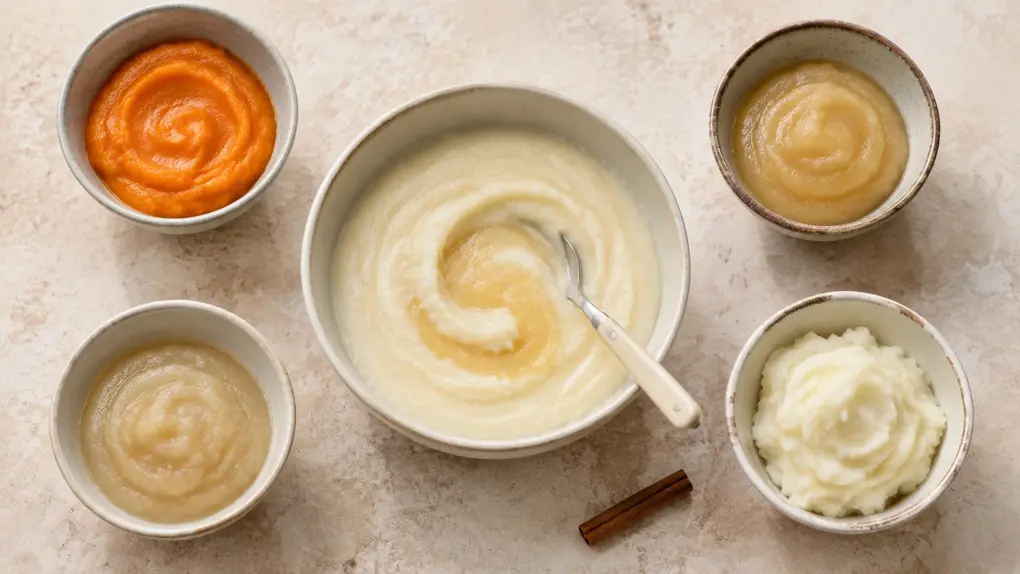
- Parsnip and carrot, which leans into a natural sweetness both vegetables share
- Parsnip and pear, softening the earthy note even further for a very young baby
- Parsnip and potato, adding a heartier, thicker texture
- Parsnip and apple, balancing the vegetable’s mild flavor with a fruity brightness
- Parsnip blended with a touch of cinnamon, once your baby is a little older and ready for gentle spices
These pairings offer an easy way to keep meals interesting without asking too much of a baby’s still-developing palate, and they show just how flexible parsnip puree for baby can be once your little one is ready to explore beyond a single flavor.
For more flavors beyond parsnip, try these easy baby food combinations.
Storage and Freezing Guide
Homemade parsnip puree for baby stores well, which makes it worth cooking in a larger batch when you have the time.
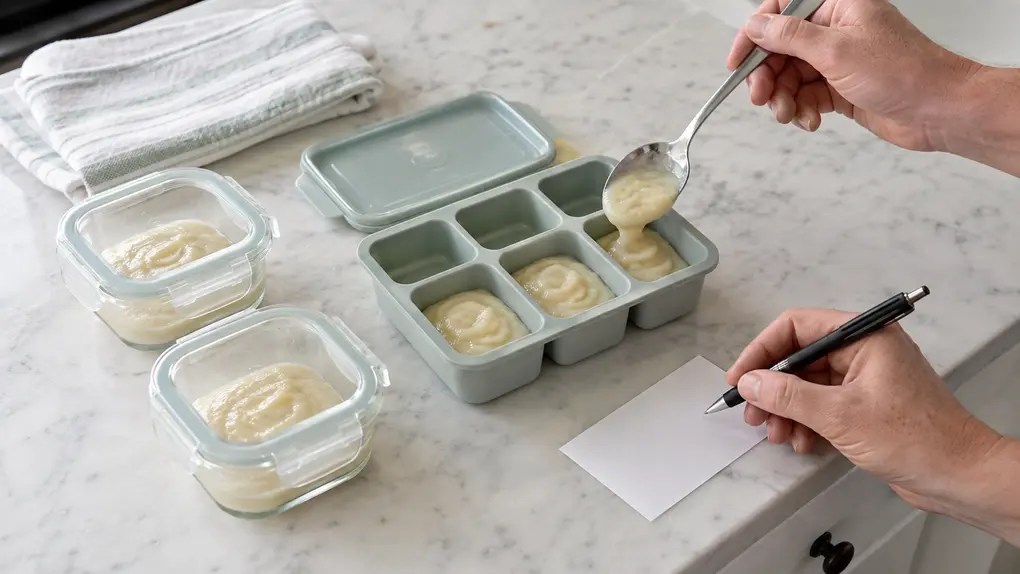
- Refrigerator: Store promptly in a clean, airtight container and use within one to two days, following current FoodSafety.gov guidance for homemade baby food.
- Freezer: Spoon the cooled puree into a clean ice cube tray, cover and freeze until solid, then transfer the cubes to a dated airtight freezer container. Use within one to two months, following current FoodSafety.gov guidance for homemade baby food.
- Thawing: Move a portion to the fridge the night before, or thaw it gently in a bowl of warm water. Avoid microwaving puree directly in plastic containers.
- Reheating: Warm only the portion you need, stir thoroughly to remove hot spots, let it stand briefly, and make sure it is lukewarm before serving.
- Never refreeze a portion that has already been thawed once.
Mistakes to Avoid
A handful of small errors show up again and again with first-time parents making parsnip puree for baby:
- Skipping the peel. Parsnip skin can be tough and slightly bitter, especially on larger, older parsnips. Always peel before cooking.
- Undercooking the chunks. Parsnip needs a longer cook time than softer vegetables. Rushing this step leaves a puree with stubborn fibrous bits.
- Adding salt or salty stock. Babies need only a small amount of sodium, so avoid adding salt to homemade puree. Suitable herbs and mild spices can add flavor without added salt.
- Confusing it with parsley root at the store. The two look almost identical but taste different, so check the label carefully.
- Giving up after one refusal. Babies often need several attempts before accepting a new food. One turned-up nose does not mean it is off the table for good.
Conclusion
Parsnip puree for baby is not as familiar as sweet potato or avocado, but its mild sweetness and versatility make it worth trying as part of a varied early diet. It is simple to cook, easy to adjust from a smooth puree to a soft mash, and pairs well with many other foods. Offer it without pressure and let your baby decide whether to eat and how much.
Disclaimer:
This article is for general informational purposes only and does not replace professional medical advice. Every baby develops at their own pace, and starting solids, including parsnip puree for baby, should be discussed with your pediatrician, especially if your baby has any known health condition or a family history of food allergies.
FAQ’s
Q.1 Can I use frozen parsnips instead of fresh ones?
Fresh parsnips are the more common choice for homemade puree, but pre-peeled and chopped fresh parsnips from the produce section work just as well as whole ones and can shorten your prep time.
Q.2 How long does homemade parsnip puree last in the fridge?
It stays fresh for about two to three days when stored in a sealed container in the refrigerator, and considerably longer in the freezer.
Q.3 What can I mix parsnip puree with for more flavor?
Carrot, pear, apple, and potato all pair naturally with parsnip’s mild, sweet base, and a small pinch of cinnamon works well once your baby is ready for gentle spices.
Q.4 Is parsnip the same as a carrot or a parsley root?
This mix-up comes up often. Parsnip is pale, almost ivory in color, and shaped similarly to a carrot, but the two are different vegetables with different flavors. It is also sometimes confused with parsley root, which looks nearly identical but tastes distinctly different. When shopping, look for the label to confirm you are picking up the right one, since a mislabeled bunch at the store is more common than most parents expect.
Q.5 Can I serve parsnip as a finger food instead of a puree?
Yes, once your baby is ready for baby-led weaning or has moved past the smooth-puree stage. Cook parsnip until it is fully fork-tender, then cut it into long, soft strips that are easy for small hands to hold and gum down on. This approach works well alongside spoon-fed purees, and many families do both depending on the meal.