
Celery Root Puree for Baby: Easy, Mild and Creamy
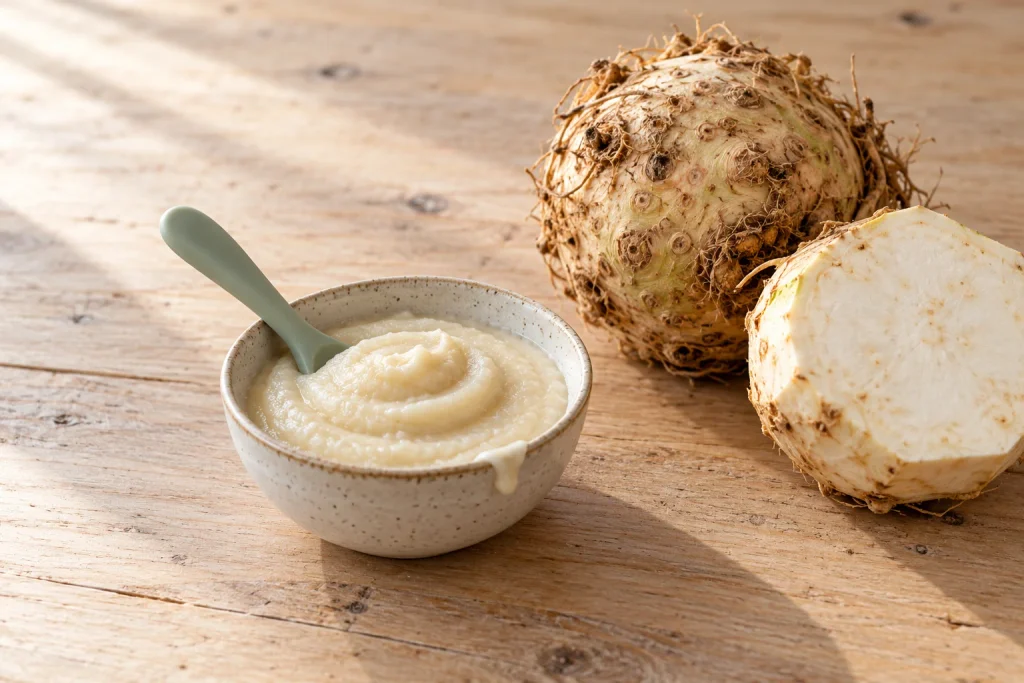
Celery root puree for baby is the best-kept secret of the vegetable aisle. This knobby, unglamorous root, also called celeriac, cooks into a pale, velvety puree with a gentle, slightly nutty flavor that is much milder than celery stalks. Peel it, steam it until very soft, blend it with a little water, and you have a creamy first vegetable ready in about thirty minutes. Your baby can try it from around six months, once readiness signs appear. Because celery is a known allergen, this guide also covers what to watch for, how to serve it safely, and how to freeze extra portions.
For more ideas as your baby starts solids, explore our guide to first foods for baby at 6 months.
Celery root puree for baby at a glance
| Detail | Quick answer |
|---|---|
| Starting age | Around 6 months, once your baby shows readiness signs |
| Time | 10 minutes prep, about 15 to 20 minutes steaming |
| Yield | About 1 cup from half a small celery root (estimate) |
| Best texture | Smooth and creamy for first spoonfuls, thicker as your baby grows |
| Storage | About 48 hours in the refrigerator, 1–2 months frozen |
Why You’ll Love This Celery Root Puree for Baby
- Gentle flavor: cooked celery root tastes mild and slightly nutty, not like strong celery stalks.
- Naturally creamy: it blends silky smooth with just a little cooking water.
- One main ingredient: celery root and water, with no added sugar or salt.
- Freezer friendly: cooked puree freezes well in small portions.
- A new flavor for babies: it adds variety beyond the usual carrot, sweet potato and apple.
- Easy to mix: it blends well with potato, apple, pear and other mild foods.
What Is Celery Root, and Is It Good for Babies?
Celeriac is a variety of celery grown for its enlarged root rather than its stalks. It has rough, hairy brown skin that must be peeled away, and pale flesh that is firm when raw and soft once cooked. It belongs to the same plant family as carrots, parsley and fennel.
Celery root contains fiber and small amounts of vitamins and minerals, and its mild flavor suits babies learning new tastes. It is one vegetable among many, though, not a miracle food. Public-health guidance from the NHS and CDC supports starting solids at about six months, when your baby sits with support, holds their head steady and swallows food instead of pushing it out. Offer iron-rich foods such as lentils, meat or fortified infant cereal alongside vegetables, and keep breast milk or formula as the main source of nutrition through the first year.
Ingredients You’ll Need
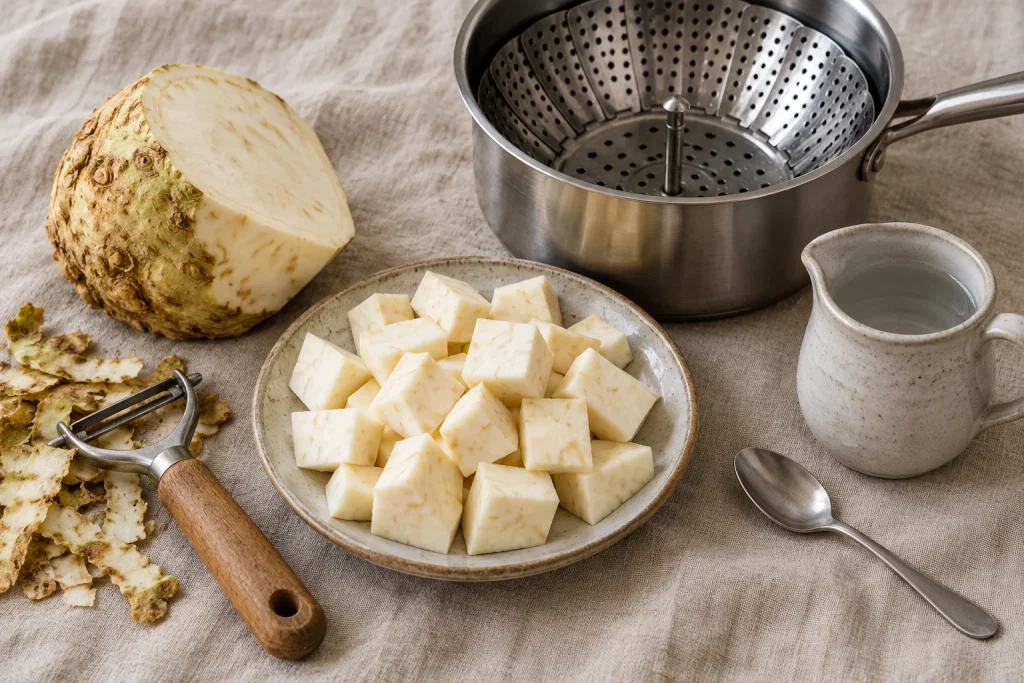
- 1/2 small celery root (about 8 ounces or 225 g): choose one that feels heavy and firm, with no soft spots.
- Water for steaming, as required by your steamer, plus a few tablespoons for thinning. Skip stock, because it often contains salt.
- 1 to 2 teaspoons breast milk or formula: optional, for a familiar flavor.
How to Choose and Store Celery Root
Pick a root that is firm and heavy for its size, without soft or moldy patches. Smaller roots are usually easier to peel and less woody. Store it unwashed in the refrigerator, where it keeps for a couple of weeks, and peel it just before cooking.
Easy Substitutions
- Thinner puree: add cooking water, breast milk or formula.
- Thicker puree: blend in a small cooked potato.
- No celery root: cooked cauliflower, parsnip or potato has a similar mild, creamy feel.
How to Make Celery Root Puree for Baby
You only need a knife, a peeler, a steamer or saucepan and a blender or fork.
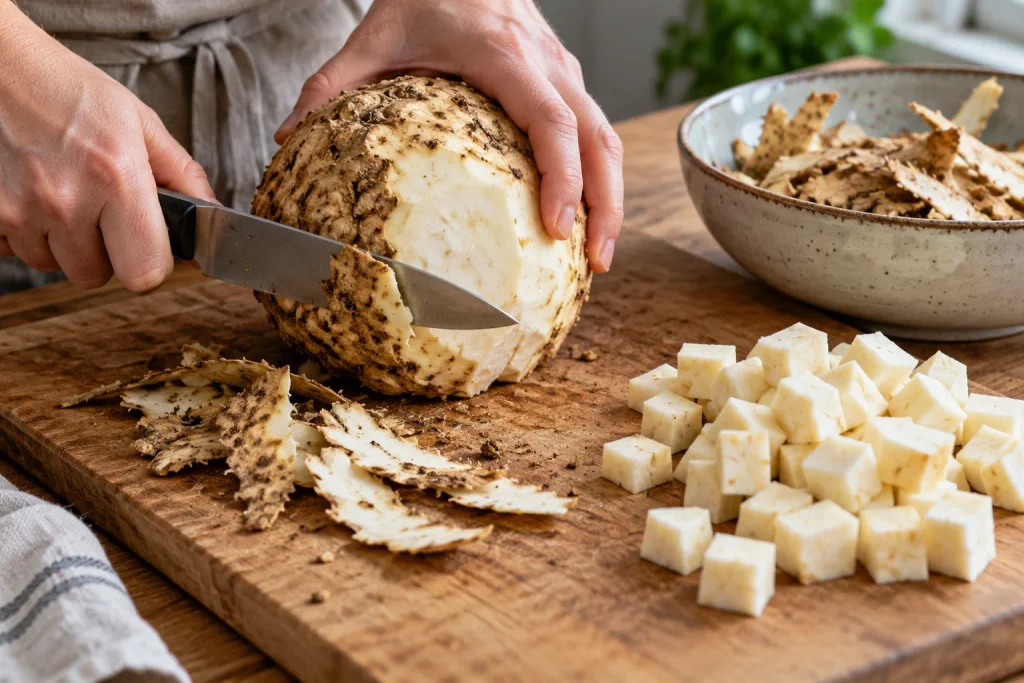
Step 1: Scrub, Peel and Cube
Scrub the root under running water. Cut off the top and bottom, then slice away the thick skin with a sharp knife or peeler, removing any dark spots. Cut the flesh into small, even cubes.
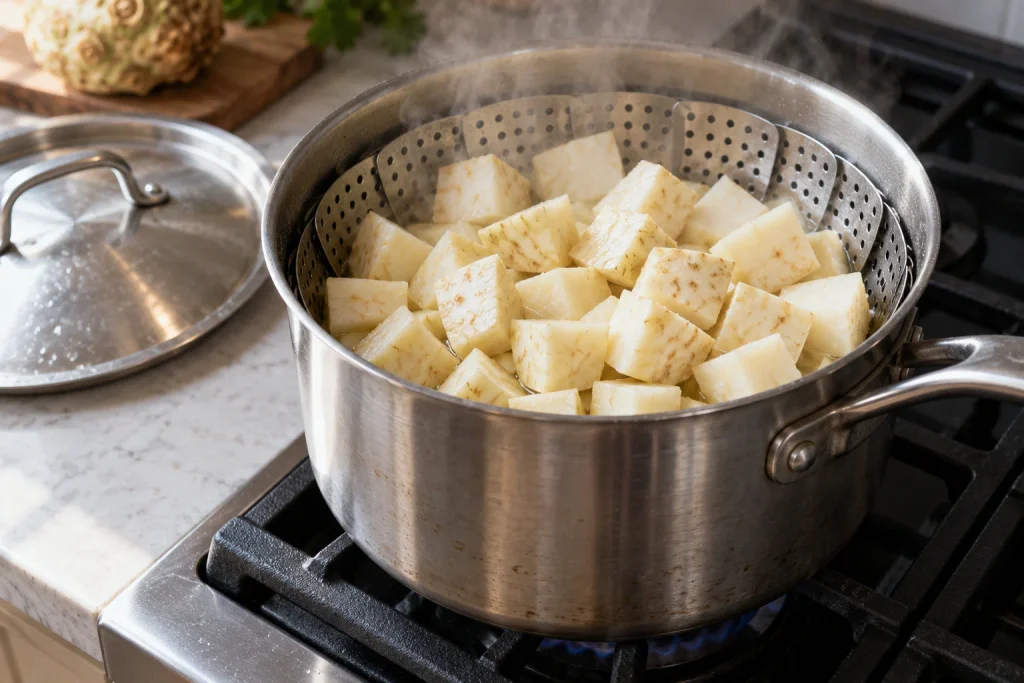
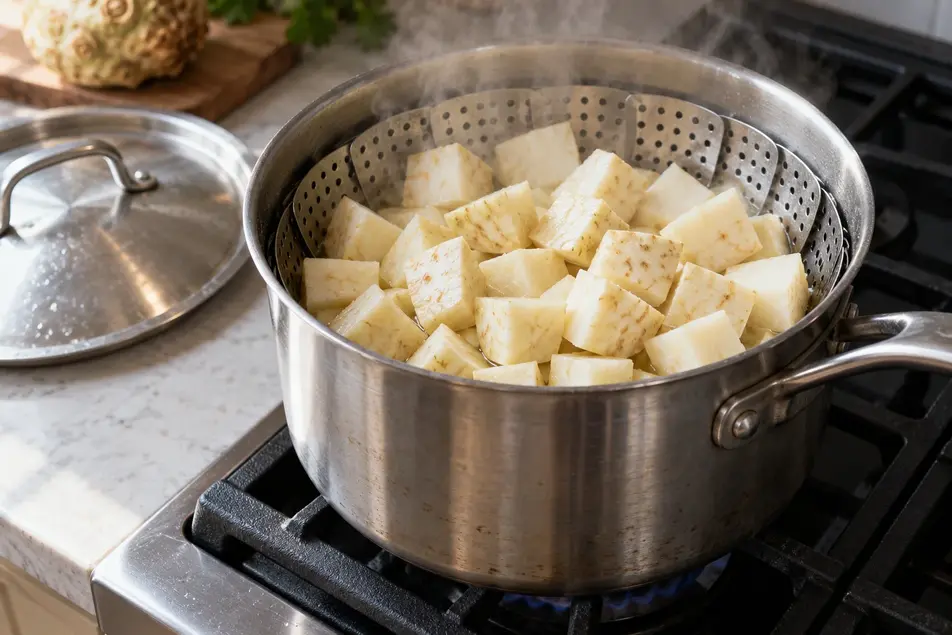
Step 2: Steam Until Very Soft
Steam the cubes over simmering water, or simmer them in a covered saucepan with a few tablespoons of water. Cook for about 15 to 20 minutes, until a fork slides in with almost no resistance. Celery root is firm, so do not stop early.
Step 3: Blend Until Smooth
Move the cooked cubes to a blender with a few spoonfuls of the cooking water and blend until completely smooth. Scrape down the sides and blend again, because any stringy bits show up in the texture.
Step 4: Adjust the Texture and Serve
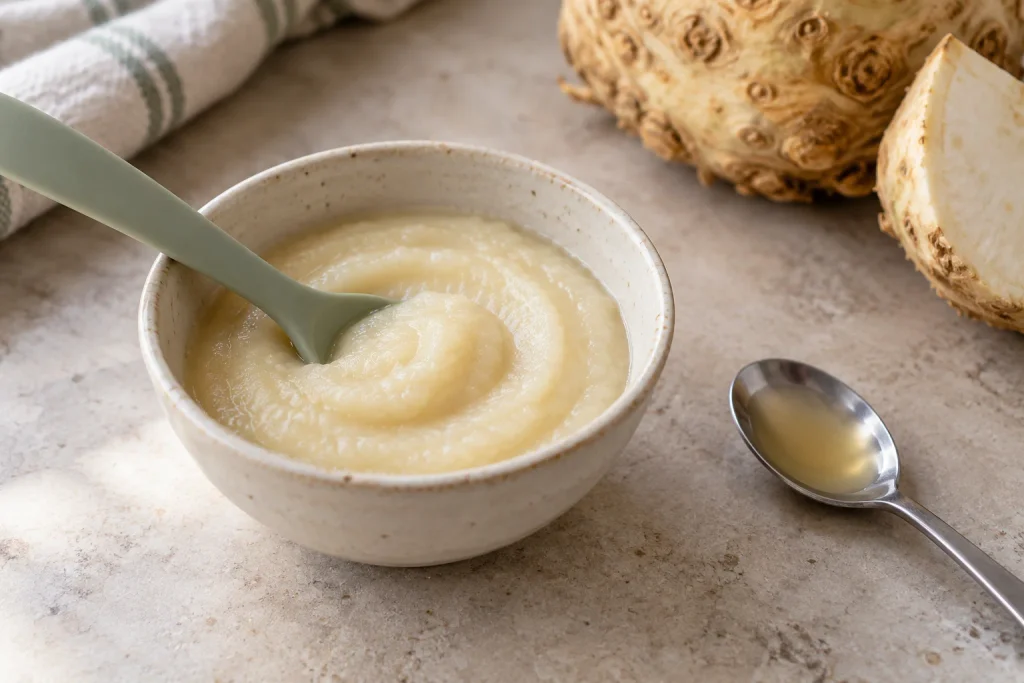
Add water, breast milk or formula one teaspoon at a time until the puree falls slowly off the spoon. Cool it, check the temperature on your wrist and offer a few spoonfuls. Throw away any puree left in the feeding bowl.
Getting the Texture Right
Good celery root puree is smooth, creamy and thick enough to stay on a spoon. Most problems come from undercooking.
- Grainy or fibrous: the root was undercooked or old. Cook longer, blend longer and press through a sieve.
- Too thin: simmer the puree gently for a few minutes, or blend in a little cooked potato.
- Too thick: add water, breast milk or formula, one teaspoon at a time.
- Bitter or sharp taste: an older or very large root can taste stronger. Try a smaller one or mix with potato.
- Darkening: cut celery root browns with air, so peel and cook it soon after cutting.
How to Serve Celery Root to Baby
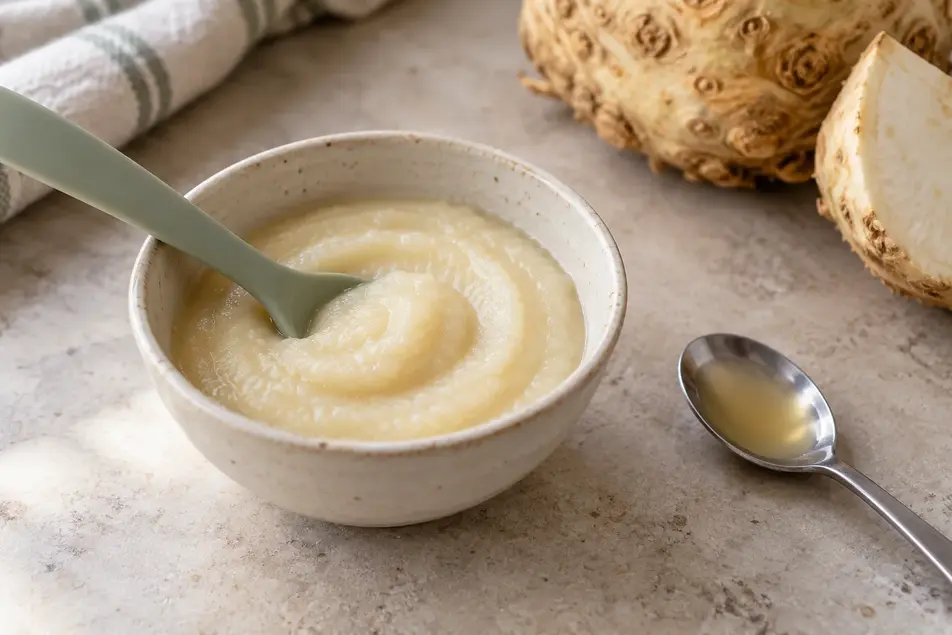
- Around 6 months: offer smooth puree on a spoon, or large soft cooked sticks about the size of two adult fingers, steamed until they mash easily between your fingers.
- As your baby develops: gradually offer thicker puree and soft mash. Once your baby can pick up and manage small pieces, offer small pieces of well-cooked celery root.
- 12 months and beyond: serve soft cooked pieces, mash or roasted wedges, and let toddlers practice with a spoon.
Raw or underdone celery root is very firm and can be slippery, so always cook it until fully soft. Seat your baby upright, stay within arm’s reach and start with a teaspoon or two. Let your baby decide when to stop.
Celery root puree for baby: puree vs. mash vs. soft sticks
| Style | Texture | Typical stage | How to offer |
|---|---|---|---|
| Smooth puree | Silky, thick | First spoonfuls, around 6 months | Spoon, a few teaspoons |
| Fork mash | Soft lumps | As skills develop | Spoon or on a toast strip |
| Soft cooked sticks | Tender pieces | Self-feeding stage | Tray, supervised |
Celery Root Puree Variations and Combinations
Once your baby has tried celery root on its own, mix it with other familiar foods.
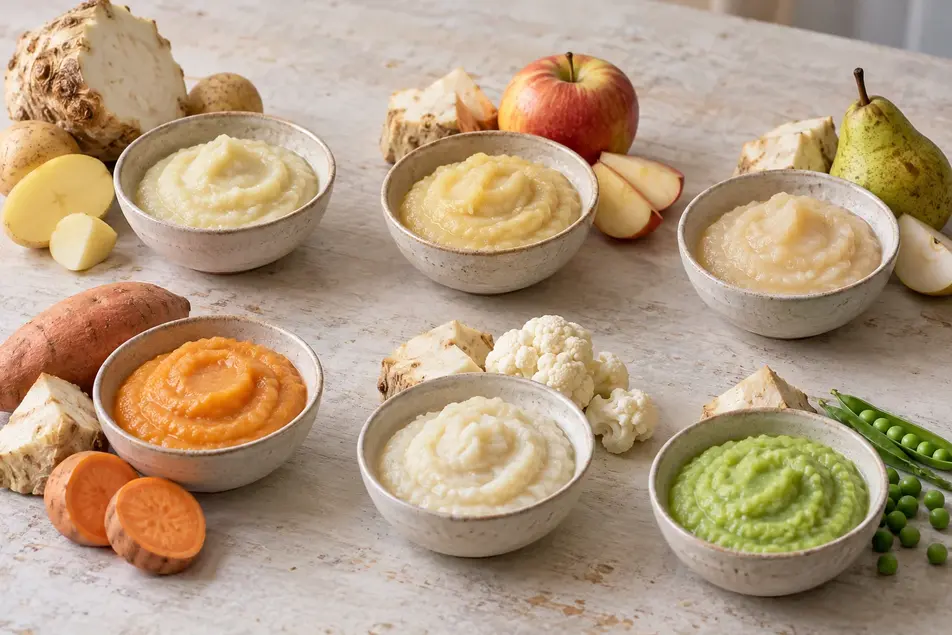
- Celery root and potato: blend with steamed potato for a creamier, thicker mash.
- Celery root and apple: steam with apple for a naturally sweeter puree.
- Celery root and pear: add soft cooked pear for a mild, juicy mix.
- Celery root and sweet potato: blend for a richer color and a thicker texture.
- Celery root and cauliflower: steam together for a pale, savory puree.
- Celery root and peas: mix with soft cooked peas for a green, savory blend.
Introduce each new ingredient alone first, so a reaction is easy to trace. Guidance on spacing differs, and the CDC suggests waiting three to five days between new single-ingredient foods. If your baby has eczema or a diagnosed food allergy, or you are concerned about a family history of allergies, ask your pediatrician for guidance.
For another creamy vegetable option, try our potato puree for baby
Celery Allergy and Reactions to Watch For
Celery, including celery root, can cause allergic reactions, even after cooking. Introduce a small amount on its own so you can identify a possible reaction. If your baby has eczema or a diagnosed food allergy, or you are concerned about family allergies, ask your pediatrician for guidance before introducing new foods.
If you notice a possible reaction, stop offering the food. For a mild reaction, such as a few hives without other symptoms, seek prompt medical advice and watch closely for worsening symptoms. Call emergency services immediately if your baby has trouble breathing, swelling of the tongue or throat, becomes pale or floppy, or has rapidly worsening symptoms. Repeated vomiting or symptoms affecting more than one body system may also signal a serious reaction. Follow your child’s allergy action plan and use prescribed adrenaline if directed.
Storage, Freezing and Reheating
Celery root puree can be refrigerated or frozen, and freezing in small portions keeps waste low. The guidance below follows NHS refrigerator and thawing advice and FoodSafety.gov freezer guidance for homemade baby food. Never return a used spoon to the container, because saliva speeds spoilage.
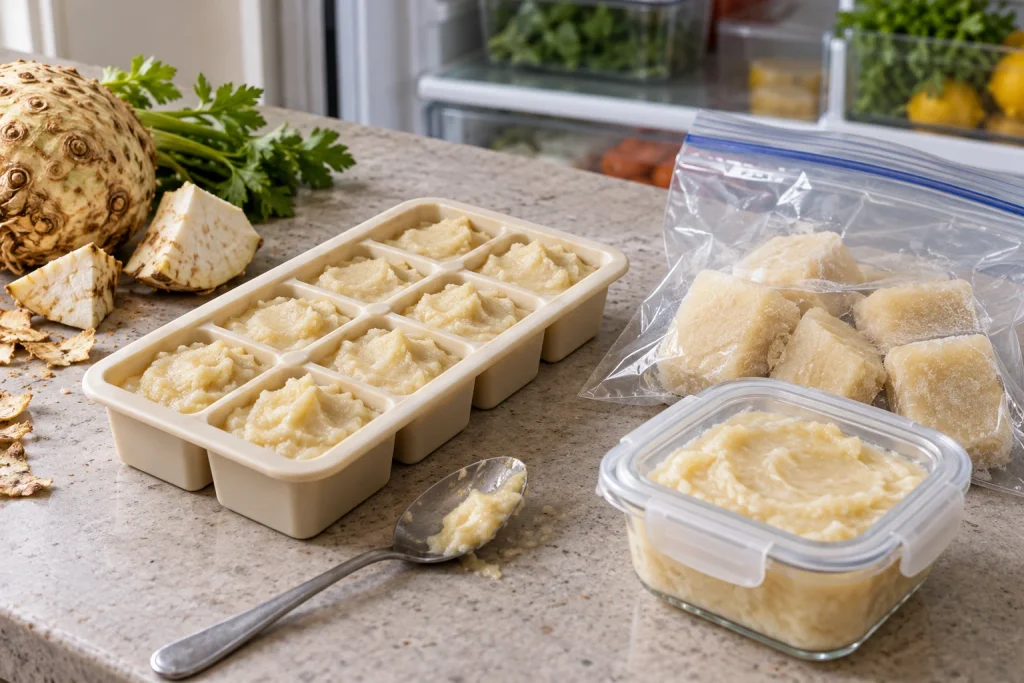
- Refrigerator: cool quickly and store in a small airtight container for no more than about 48 hours.
- Freezer: spoon into clean ice cube trays, freeze until firm, then move the cubes to a labeled freezer bag. Use within 1–2 months for best quality.
- Thawing: thaw in the refrigerator in a sealed container, use within 24 hours and stir well.
- Reheating: warm gently until steaming hot, then cool, stir and check the temperature before serving. Reheat only once.
- Milk or formula: store the plain puree first. Add appropriately stored breast milk or freshly prepared formula to the individual portion just before serving.
- Leftovers: throw away anything left in your baby’s bowl.
Recipe Success Tips
- Peel thickly: the skin is rough and the layer just beneath it can be woody.
- Cut evenly: matching cubes cook at the same speed.
- Save the cooking water: it thins the puree and keeps the flavor.
- Freeze in cubes: freeze in small portions so you can thaw only what you need.
- Pair with iron: serve alongside lentils, meat or fortified infant cereal.
Common Mistakes to Avoid
- Undercooking: firm celery root is a choking risk and blends gritty, so cook it fully soft.
- Skipping the peel: the skin is rough, hairy and not suitable for puree.
- Using salted stock or seasoning: babies do not need added salt, and honey is never safe before age one.
- Ignoring allergy concerns: ask your pediatrician for guidance if your baby has eczema or a diagnosed food allergy, or you are concerned about family allergies.
- Skipping iron-rich foods: vegetables add variety but not much iron, so offer other foods too.
Recipe Card: Celery Root Puree for Baby
A simple, gently steamed vegetable puree ready in about thirty minutes.
Prep time: 10 minutes
Cook time: 15 to 20 minutes
Total time: About 30 minutes
Yield: About 1 cup, or 4 to 6 baby portions (an estimate, not a tested yield)
Ingredients: 1/2 small celery root (about 8 ounces); water for steaming and thinning; breast milk or prepared formula (optional, added to individual portions before serving)
Instructions: Scrub, peel and cube the celery root. Steam or simmer for 15 to 20 minutes until very soft. Blend with a few spoonfuls of cooking water until completely smooth, then thin with water, breast milk or formula as needed. Cool, check the temperature and serve. Freeze extra in cubes for within 1–2 months.
Notes: Offer a few spoonfuls at first. Do not return a used spoon to leftover puree.
Conclusion
Celery root puree for baby is a mild, creamy way to add variety to your baby’s first vegetables. Peel it thoroughly, steam it until very soft, blend until smooth and freeze the extra in small portions. Start with a tiny amount, watch for reactions and ask your pediatrician if you have allergy concerns. As your baby grows, move from puree to mash and soft cooked pieces.
You can also make this mild cauliflower puree for baby on its own
Disclaimer
This article on celery root puree for baby is general information only and does not replace advice from your pediatrician. Every baby develops differently, so consult your baby’s doctor about readiness, allergies, choking risks or any feeding concerns.
FAQ’s
Q.1 When can babies eat celery root?
Most guidance supports starting solids at about six months, once your baby shows readiness. Celery root can be introduced in a small amount, cooked until very soft.
Q.2 Does celery root taste like celery?
Cooked celery root has a mild, slightly nutty flavor that is gentler than celery stalks.
Q.3 Do I need to peel celery root for baby?
Yes. The skin is thick, rough and hairy, so peel it before cooking.
Q.4 Can I freeze celery root puree?
Yes. Freeze it in small portions and use within 1–2 months.
Q.5 Is celery root a common allergen?
It is not among the most common allergens, but celery allergy exists and cooking does not always remove the risk. Ask your pediatrician if your baby has eczema or a diagnosed food allergy, or you are concerned about family allergies.