
Prune Puree for Baby: Easy Constipation Relief Recipe
When your baby is straining, crying, and going days without a proper bowel movement, you want answers and you want them fast.
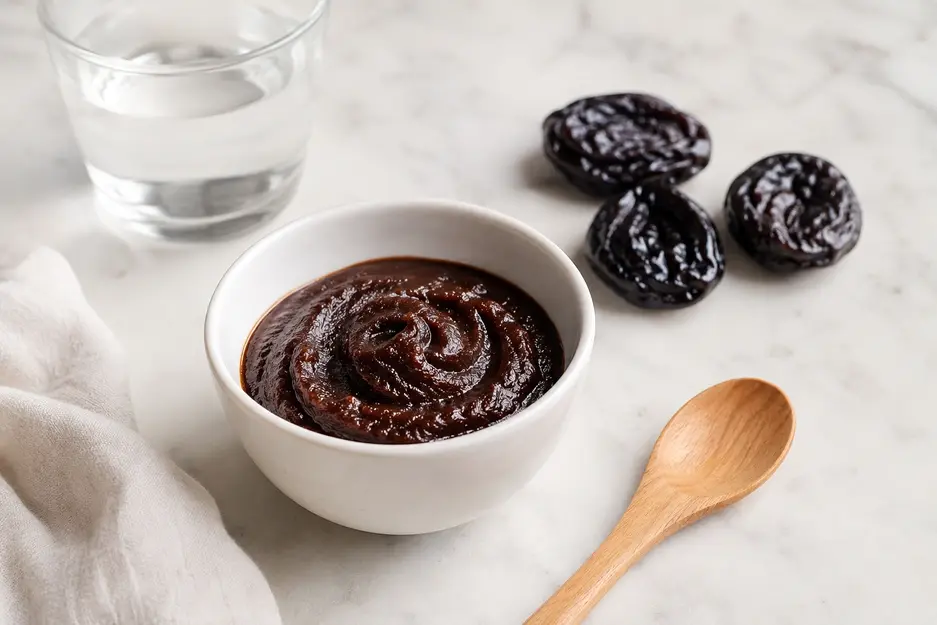
Prune puree for baby is the most evidence-backed natural remedy for infant constipation. Prunes (dried plums) are rich in fiber, sorbitol, and natural compounds that gently stimulate the digestive system without harsh laxatives or medication. Pediatricians across the world recommend them. Parents who try them almost always come back for more.
But there is a right way and a wrong way to use prunes for babies. Too much too fast causes loose stools and stomach cramps. Too little and you will not see results. The serving size, the age of your baby, and the consistency of the puree all matter.
If your baby is just starting solids, see our First Foods for Baby at 6 Months guide for more age-appropriate first-food ideas
Suitable Age: Prune puree can be introduced from 4 to 6 months once your pediatrician approves starting solids. For constipation relief specifically, most pediatricians recommend starting with just 1–2 teaspoons per day and increasing slowly based on your baby’s response.
Why You’ll Love This Puree
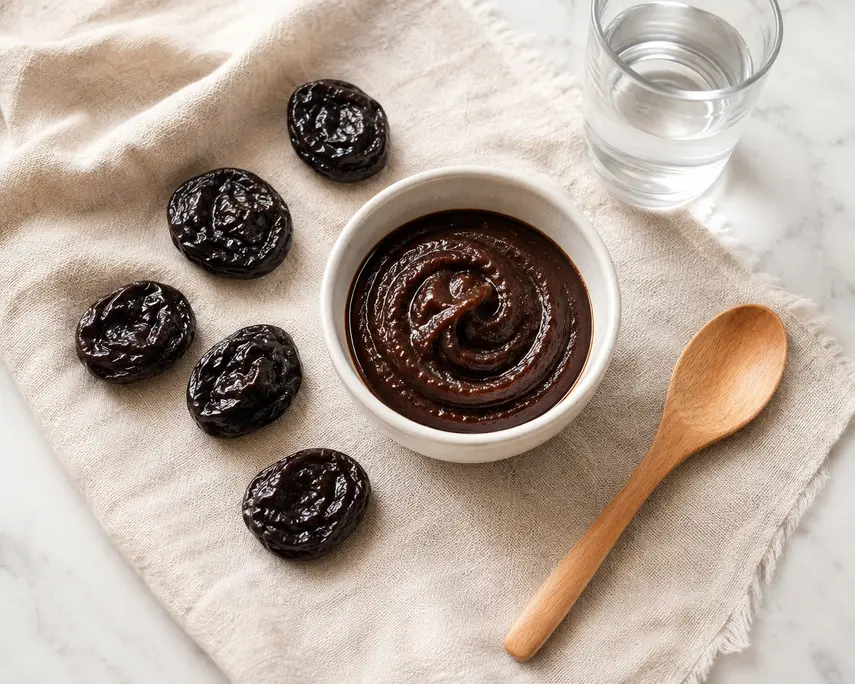
- Works for constipation sorbitol in prunes draws water into the intestine, softening stools naturally
- Takes under 15 minutes soak, blend, done
- No added sugar needed prunes are naturally sweet and intensely flavorful
- Freezer-friendly make a batch and freeze in small cubes for instant use
- Budget-friendly a bag of dried prunes costs very little and yields many servings
- Mixes well pairs beautifully with apple, pear, oatmeal, and banana
- Pediatrician-recommended not a folk remedy, actual clinical guidance backs this
Health Benefits of Prune Puree for Baby
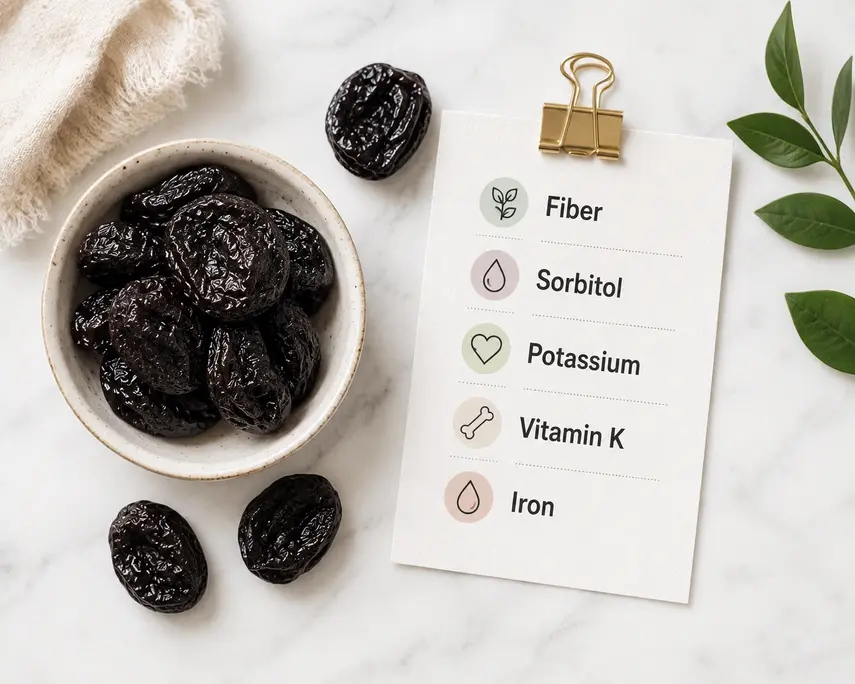
Prunes are far more than a constipation fix. They deliver genuine nutrition for growing babies.
Key Nutrients in Prunes (per 100g, stewed/pureed):
| Nutrient | Amount | Baby Benefit |
| Dietary Fiber | 7.1 g | Promotes healthy bowel movements |
| Sorbitol | ~6.1 g | Natural laxative effect, draws water into intestine |
| Potassium | 745 mg | Heart function, fluid balance |
| Vitamin K | 59.5 mcg | Bone strength, blood clotting |
| Iron | 0.93 mg | Red blood cell production |
| Vitamin B6 | 0.21 mg | Brain development, nerve function |
| Vitamin A | 39 mcg RAE | Eye development, immunity |
| Magnesium | 41 mg | Muscle and enzyme function |
Why these nutrients matter:
Sorbitol is the key player. It is a naturally occurring sugar alcohol found in prunes that the gut does not fully absorb. As it moves through the intestine, it pulls water along with it this softens stools and triggers bowel movement. A 2011 randomized controlled trial published in Alimentary Pharmacology & Therapeutics confirmed prune juice to be more effective than psyllium fiber for constipation in adults. For babies, the same principle applies at much smaller doses.
Fiber in prunes is both soluble and insoluble. Soluble fiber forms a gel in the gut that softens stool. Insoluble fiber adds bulk and keeps things moving. Together, they address constipation from two directions at once.
Vitamin K is present in notable amounts. Babies at this age are building bone density rapidly, and vitamin K plays a direct role in bone mineralization.
Potassium supports healthy heart rhythm and helps regulate fluid levels in a baby’s cells important during a phase of rapid growth.
Honest note: Prunes are high in natural sugar (about 38g per 100g). For constipation relief, small servings are used typically 1–4 teaspoons per day so total sugar intake remains minimal and appropriate. This is not a food to give in large amounts daily.
Ingredients You’ll Need
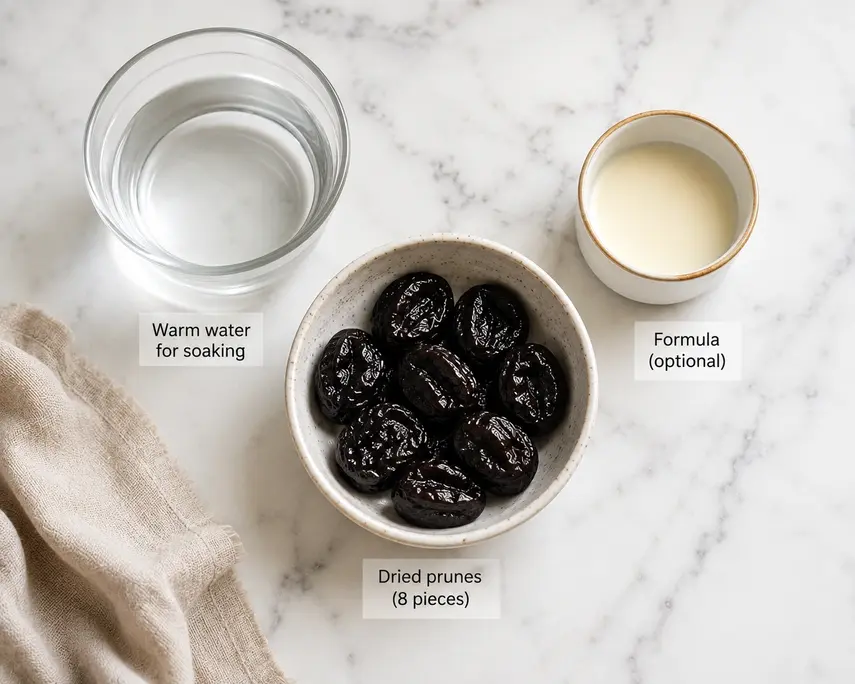
Main Ingredient
- 6–8 dried prunes (pitted, unsweetened, no added preservatives)
- OR ½ cup prune juice (100% pure, no added sugar for a quicker method)
Optional Add-Ins
- ¼ cup warm water (for soaking and blending)
- Breast milk or formula (for creamier texture)
- ¼ ripe pear or apple (pairs well, adds extra fiber)
- ¼ ripe banana (thickens texture, balances flavor)
Do not add:
sugar, honey, corn syrup, salt, or any sweetener. Prunes are already intensely sweet on their own.
Ingredient Notes & Buying Tips
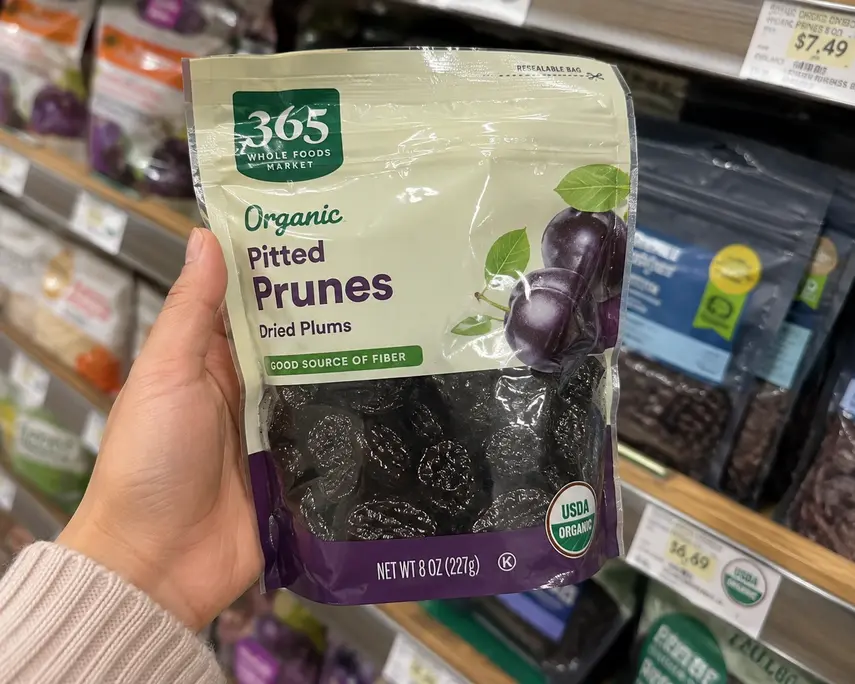
Choosing the Right Prunes
- Always buy pitted prunes to avoid any pit fragments
- Look for bags labeled “no added sugar” and “no sulfites” some brands add sulfur dioxide as a preservative, which is unnecessary and potentially irritating for babies
- Organic is preferred for baby food since prunes can carry pesticide residue
- The prunes should feel soft and slightly sticky bone-dry, rock-hard prunes are old stock and harder to blend smoothly
- Check the ingredient list: it should say only “prunes” or “dried plums” nothing else
Organic vs. Regular
Plums and prunes are not consistently on the EWG Dirty Dozen list, but pesticide testing has found residues on dried plums. For baby food where concentration matters, organic is the safer and more worthwhile choice.
What About Prune Juice for Babies?
Prune juice is a faster option and works well for constipation. However, it contains less fiber than whole prune puree and more concentrated sugar per serving. The American Academy of Pediatrics (AAP) advises limiting juice for babies under 12 months and suggests only 1–2 ounces of 100% fruit juice if used. Whole prune puree is generally a better option than juice for babies eating solids.
Fresh Plums vs. Dried Prunes
Fresh plums can be pureed, but they contain significantly less sorbitol and fiber than dried prunes. For constipation relief specifically, dried prunes are far more effective. For everyday nutrition variety, fresh plum puree is a great option but it will not produce the same bowel movement results.
Kitchen Equipment Needed
Simple tools are all you need:
- Small bowl or cup for soaking prunes in warm water
- Blender or food processor a standard blender works; high-powered blenders give the silkiest texture
- Fine mesh strainer for babies under 7 months, to remove any remaining skin bits
- Small pot only needed if you choose to simmer prunes instead of soaking
- Silicone ice cube tray for freezing individual servings
- Airtight glass jars for refrigerator storage
Step-by-Step Instructions
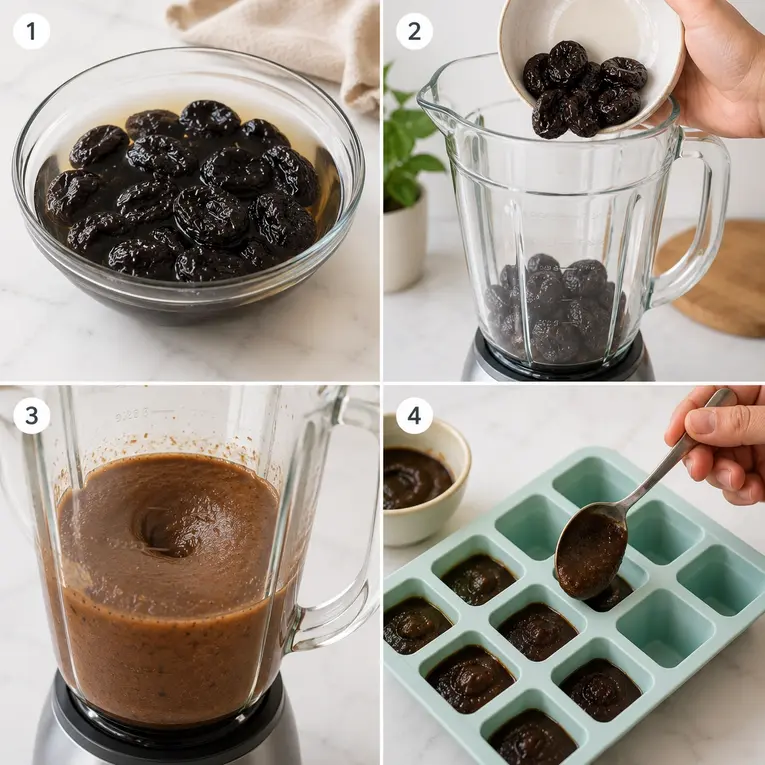
Step 1. Choose Your Method
Soaking Method (Preferred preserves maximum nutrients): Place 6–8 pitted prunes in a bowl. Cover with warm water. Soak for 20–30 minutes until prunes are plump and very soft.
Simmering Method (Faster): Place prunes in a small pot with ½ cup water. Bring to a gentle simmer. Cook on low heat for 10 minutes until prunes are very soft and starting to break apart. Remove from heat and cool completely.
Step 2. Reserve the Soaking/Cooking Liquid
Do not throw this water away. It contains sorbitol and soluble fiber that leached out of the prunes. Use it to thin your puree it adds to the constipation-relieving effect.
Step 3. Blend
Add softened prunes to blender along with 2–3 tablespoons of the soaking liquid. Blend on high for 60–90 seconds until completely smooth.
Step 4. Check Consistency
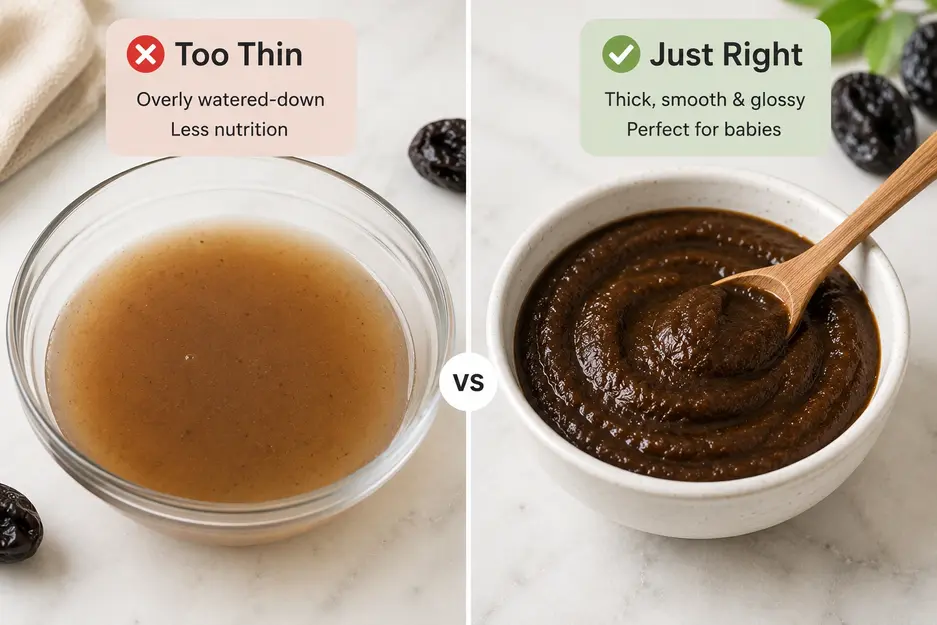
Prune puree is naturally thick. For younger babies (4–6 months), add more liquid one tablespoon at a time until the puree flows easily off a spoon. For older babies (8+ months), a thicker consistency is fine.
Step 5. Strain (Optional, for Babies Under 7 Months)
Press through a fine mesh strainer to remove any remaining skin fragments. This creates a silky-smooth texture that is easiest for very young babies.
Step 6. Cool and Serve or Store
Serve at room temperature or slightly warm. Never serve hot. Store as directed below.
Texture by Baby’s Age
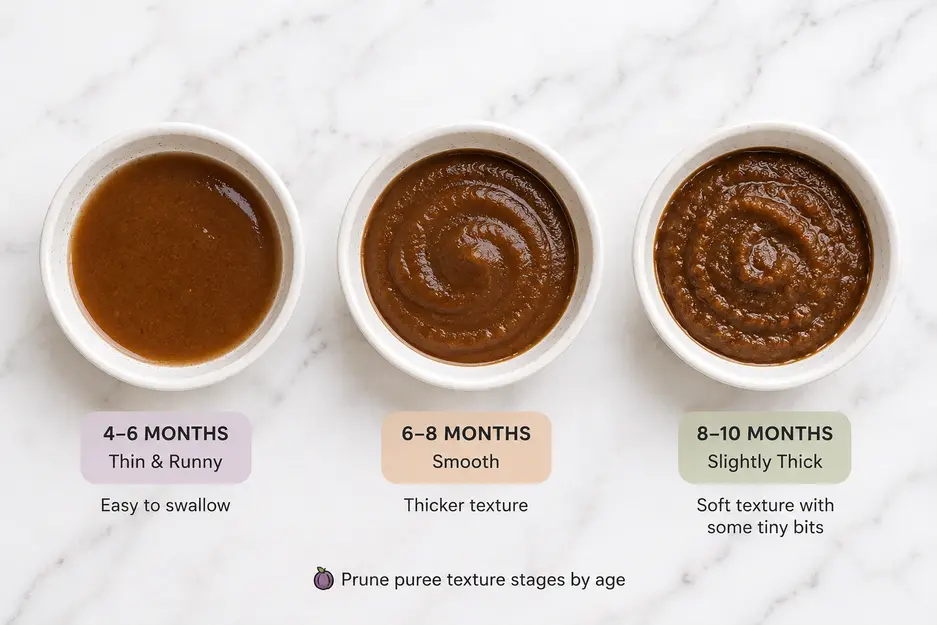
| Age | Texture Goal | How to Achieve It |
| 4–6 months | Very smooth, almost liquid | Blend fully, strain, add extra liquid |
| 6–8 months | Smooth, slightly thicker | Blend well, skip straining |
| 8–10 months | Medium thick | Less liquid added, blend normally |
| 10–12 months | Thick mash, some texture fine | Mash with fork or short blend |
Serving amounts for constipation relief by age:
| Age | Starting Amount | Maximum Per Day |
| 4–6 months | 1 teaspoon | 2–4 teaspoons |
| 6–8 months | 1–2 teaspoons | 1–2 tablespoons |
| 8–12 months | 2 teaspoons | 2–3 tablespoons |
Always start small. Too much prune puree too fast causes loose stools, stomach cramps, and discomfort. Build up gradually.
Recipe Tips
- Use the soaking water. Do not blend with plain tap water if you soaked the prunes use that liquid. It carries sorbitol and soluble fiber.
- Do not over-simmer. If using the cooking method, 10 minutes is enough. Cooking longer reduces some water-soluble nutrients.
- Blend longer for younger babies. Prune skins blend well but need full processing time. Give it 90 seconds on high.
- Start with just 1 teaspoon. For constipation relief, more is not better at the start. Observe your baby’s response for 24 hours before increasing.
- Room temperature works best. Slightly warm puree is easiest for babies to accept but never serve it straight from the fridge in the first few weeks.
- Pair with pear or apple for extra fiber and a flavor combination babies consistently enjoy.
Flavor Combinations & Variations
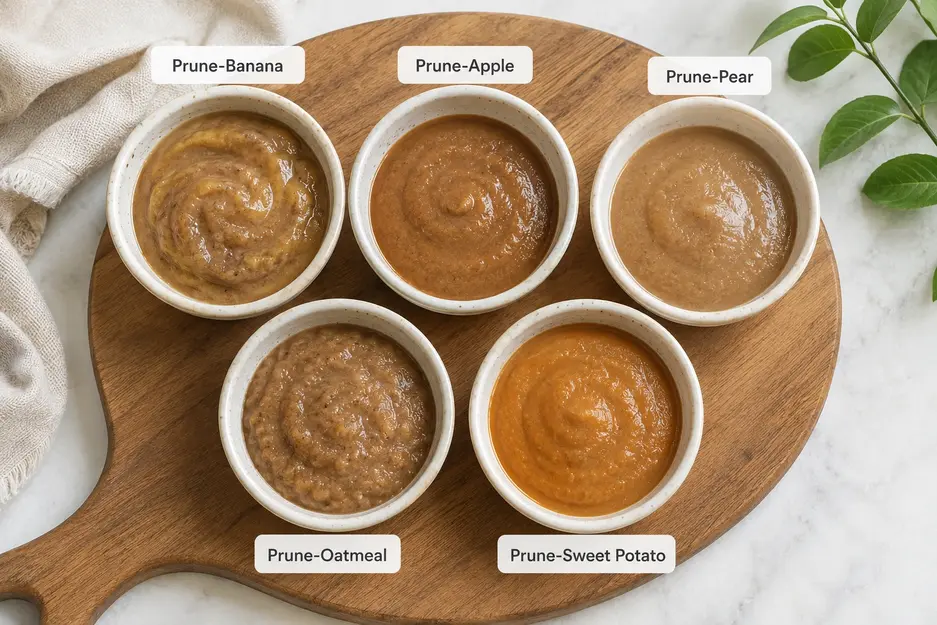
Once your baby has had plain prune puree for 2–3 days, these combinations add variety and amplify benefits:
- Prune + Pear classic constipation combo. Both contain sorbitol. Double the fiber, double the effect. Gentle and very sweet.
- Prune + Apple the “P-A” combo is one of the most recommended by pediatric dietitians for infant constipation. High pectin content in apple adds bulk.
For another naturally sweet fruit option, try our Apple Puree for Baby recipe which also pairs beautifully with prunes
- Prune + Banana banana thickens the texture and adds potassium. Better for mild constipation very ripe banana is fine, but unripe banana can worsen constipation.
- Prune + Oatmeal adds iron and soluble fiber (beta-glucan) from oats. A very filling, nutrient-rich combination for 6 months+.
- Prune + Sweet Potato earthy, naturally sweet, and high in fiber. A satisfying meal combination for 6–7 months+.
- Prune + Peas unusual but effective. Peas add protein, iron, and fiber. Works well for babies 7 months+.
Combination Comparison Table Prune Puree for Baby:
| Combo | Best Age | Key Benefit | Constipation Effect |
| Prune + Pear | 4 months+ | Double sorbitol, gentle | Strong |
| Prune + Apple | 4 months+ | Pectin + sorbitol, vitamin C | Strong |
| Prune + Banana | 6 months+ | Potassium, thick texture | Moderate |
| Prune + Oatmeal | 6 months+ | Iron, soluble fiber | Moderate-Strong |
| Prune + Sweet Potato | 6 months+ | Beta-carotene, fiber | Moderate |
| Prune + Peas | 7 months+ | Protein + iron + fiber | Moderate |
Storage Instructions
Refrigerator
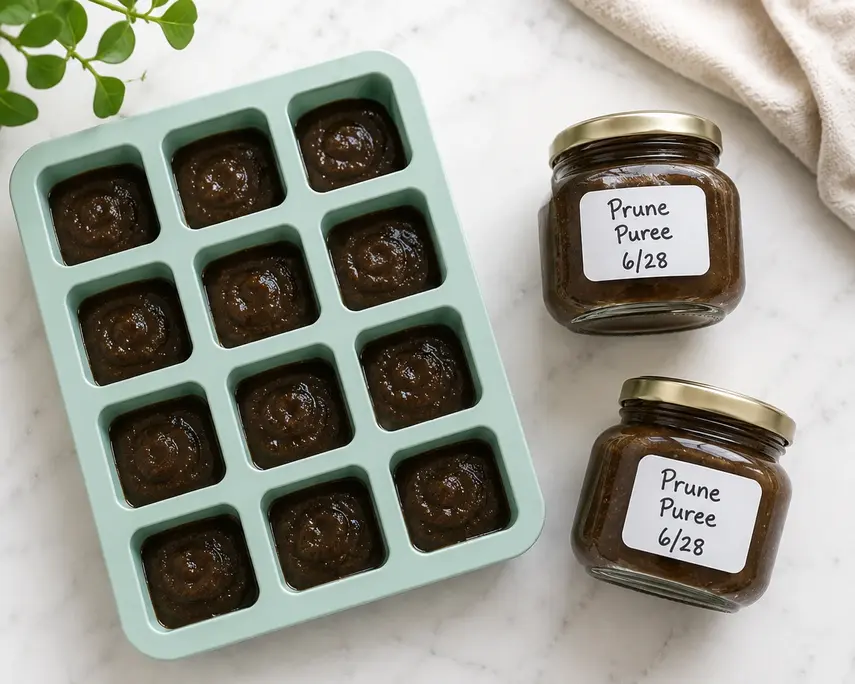
Store in an airtight glass jar for up to 3 days. Always use a clean spoon double-dipping introduces bacteria that shortens shelf life.
Freezer
Prune puree freezes exceptionally well. Pour into a silicone ice cube tray immediately after making. Freeze for 4–6 hours until solid, then transfer to a labeled freezer-safe zip-lock bag.
- Freezer life: Up to 3 months
- Each cube = approximately 1–2 tablespoons (one small serving)
- Pull out individual cubes as needed thaw in the refrigerator overnight or in warm water
Ice Cube Tray Method
This is the most practical approach. A single batch of 8 prunes yields 8–10 cubes. That is 8–10 individual servings ready to go whenever your baby needs them.
Never refreeze thawed prune puree. Thaw only what your baby will eat at one sitting.
How to Reheat
From the refrigerator: Place the jar in a bowl of warm water for 5–8 minutes. Stir well. Test on the inside of your wrist it should feel neutral, not warm or cool.
From frozen: Thaw overnight in the refrigerator. Then use the warm water method above. Never microwave frozen cubes directly.
Microwave method (refrigerated only): Heat on 50% power in 10-second bursts. Stir between each interval very thoroughly. Prune puree is thick and can develop hot spots. Always stir and test temperature before serving.
Stovetop method: Place puree in a small saucepan over very low heat. Stir constantly for 1–2 minutes until just warm. Remove from heat and cool slightly before serving.
Can Babies Eat Prune Puree?
Yes and for constipated babies, it is one of the most recommended options by pediatricians.
Here is the complete picture:
- Safe starting age: 4–6 months with pediatrician approval for solids
- For constipation: Can also be given as diluted prune juice (1–2 oz in water) to babies as young as 2–3 months under direct pediatrician guidance but puree is only appropriate once solids are started
- Allergy risk: Prunes are not a top-9 allergen. Reactions are rare. Start with a small amount and watch for 24–48 hours
- Digestive effects: Expect softer stools or a bowel movement within 12–24 hours. If stools become very loose or watery, reduce the amount
- Natural sugar content: Prunes are high in natural sugars. Keep serving sizes appropriate — this is a functional food used in moderation, not a daily large-portion food
- Do not give daily long-term without a pediatrician’s guidance. Once constipation resolves, return to a varied diet with fiber from multiple sources
Pediatric Guidance: The American Academy of Pediatrics acknowledges prunes and prune juice as a well-established dietary approach for infant constipation. Many pediatric gastroenterologists recommend prune puree as a first-line dietary intervention before considering any medication. Always work with your baby’s doctor to identify the cause of constipation and confirm the right approach for your specific situation.
Serving Suggestions
- Alone start with 1 teaspoon of plain prune puree for 2–3 days before mixing
- Mixed with oatmeal a classic iron + fiber breakfast for babies 6 months+
- Stirred into apple puree the “P+P+A” combo (prune, pear, apple) is legendary in parenting communities for constipation
- Layered in yogurt for babies 8 months+, a swirl of prune in plain full-fat yogurt adds probiotics alongside the fiber
- As a spread on soft toast fingers for babies 10–12 months transitioning to finger foods
- Mixed with a grain puree prune over barley or rice puree adds sweetness and fiber to an otherwise bland cereal
Expert Tips & Mistakes to Avoid
Mistake 1. Giving too much too soon
This is the most common error. Parents see constipation and give 3–4 tablespoons immediately. The result is explosive loose stools and a very uncomfortable baby. Start with 1 teaspoon. Wait 24 hours. Increase slowly.
Mistake 2. Using prune juice instead of puree for older babies
Juice for babies under 12 months is limited by the AAP. Whole prune puree delivers more fiber, more nutrients, and less concentrated sugar per serving. It is the better option once solids are started.
Mistake 3. Throwing away the soaking water
That liquid is where much of the sorbitol went during soaking. Discarding it and blending with fresh water reduces the constipation-relieving effect of the puree significantly.
Mistake 4. Using prunes with added sugar or sulfites
Some store-bought dried prunes contain sulfur dioxide (sulfites) as a preservative. Sulfites can cause reactions in sensitive individuals. Always read the label and choose unsweetened, sulfite-free prunes for baby food.
Mistake 5. Not blending long enough
Prune skin is tough. A quick 20-second blend leaves fibrous threads that are not appropriate for young babies. Blend on high for at least 60–90 seconds.
Mistake 6. Giving prunes for constipation every single day without a break
Prunes is a short-term dietary tool. If your baby needs prune every day to have a bowel movement, that is a signal to speak with your pediatrician about the underlying cause.
Recipe Card
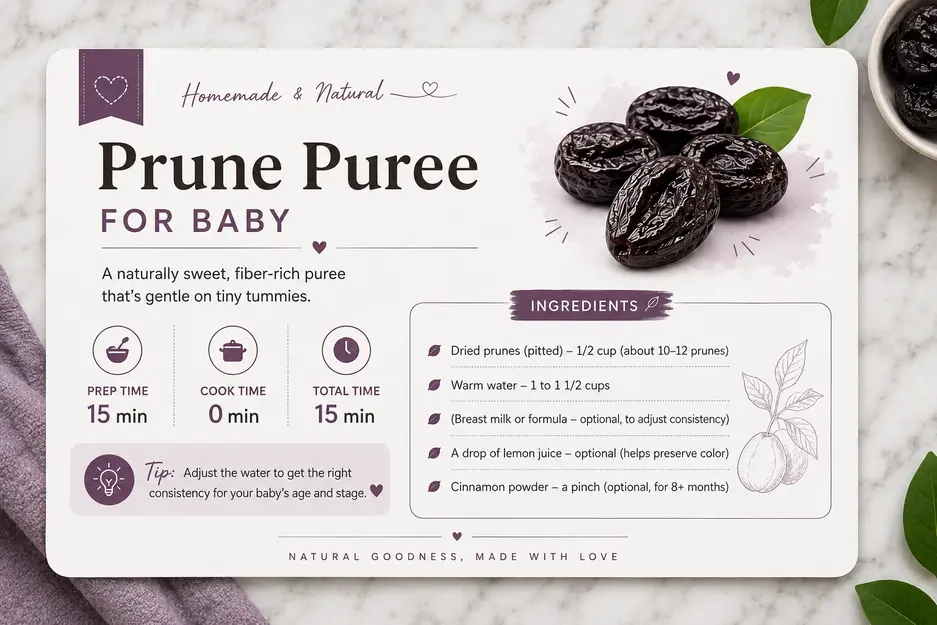
🍑 Prune Puree for Baby
Prep Time: 5 minutes Soak Time: 20–30 minutes (or 10 minutes simmer) Total Time: 25–35 minutes Servings: 8–10 small portions (one ice cube tray) Suitable Age: 4–6 months and up (with pediatrician approval for solids)
Ingredients:
- 6–8 dried prunes, pitted, unsweetened, no sulfites
- ½ cup warm water (for soaking reserve for blending)
Optional:
- Breast milk or formula (for creamier texture)
- ¼ ripe pear or apple puree (for extra fiber)
- ¼ ripe banana (thickener and flavor balance)
Instructions:
- Place pitted prunes in a small bowl. Cover with warm water.
- Soak for 20–30 minutes until prunes are soft and plump.
- Do NOT discard the soaking water transfer prunes and liquid to blender.
- Blend on high for 60–90 seconds until very smooth.
- Strain through a fine mesh strainer for babies under 7 months.
- Add more soaking water one tablespoon at a time until you reach the right consistency for your baby’s age.
- Serve immediately or pour into ice cube tray and freeze.
Notes:
- Start with just 1 teaspoon for constipation relief and increase slowly
- Store in the refrigerator for up to 3 days or freeze for up to 3 months
- Never add sugar, honey, or salt
- For babies under 4 months, speak to your pediatrician before using prunes in any form
- If constipation continues despite dietary changes, consult your doctor it may have a non-dietary cause
Conclusion
Prune puree for baby is not just a folk remedy passed down through generations it is a scientifically supported, pediatrician-recommended dietary tool for relieving infant constipation naturally. The combination of sorbitol, both types of fiber, and natural sugars makes prunes uniquely effective in a way that most other foods are not.
The key is getting the preparation and the serving amount right. Start small. Use the soaking water. Freeze what you do not use. And always keep your pediatrician informed if constipation is persistent or severe. Made correctly and used wisely, prune puree is one of the most genuinely useful foods in any baby’s first-year kitchen.
Want more flavor ideas? Explore our Baby Food Combo Purees for easy combinations for babies 6–12 months
Disclaimer
This article is for informational and educational purposes only. It is not a substitute for professional medical advice, diagnosis, or treatment from a licensed pediatrician or healthcare provider. Infant constipation can have multiple causes, including formula type, dietary transitions, illness, and in some cases, underlying conditions that require medical evaluation. Do not use prune puree as a replacement for a doctor’s assessment. Serving amounts and age guidance in this article are general recommendations only always follow your pediatrician’s specific advice for your baby. If your baby shows signs of severe constipation, blood in stool, vomiting, or extreme distress, seek medical attention immediately.
FAQ’s
1. How much prune puree should I give my constipated baby?
Start with just 1 teaspoon once per day and wait 24 hours to see how your baby responds. If no bowel movement occurs and your baby seems comfortable, you can increase to 2–4 teaspoons per day for babies 4–6 months old, or 1–2 tablespoons for babies 6–8 months old. Always increase gradually. Giving too much too fast causes loose stools, gas, and stomach discomfort. If constipation does not improve within 2–3 days, speak with your pediatrician.
2. Can I freeze prune puree for my baby?
Yes and freezing is one of the best ways to store it. Pour freshly made puree into a silicone ice cube tray, freeze until solid, then transfer cubes to a labeled zip-lock freezer bag. Each cube gives you one ready-to-use serving. Frozen prune puree stays good for up to 3 months. Thaw overnight in the refrigerator and never refreeze after thawing.
3. Can I use prune juice instead of prune puree for my baby?
Prune juice is an option for very young babies under 4 months who are constipated but only under direct pediatrician guidance, given as 1–2 ounces diluted with water. For babies 4 months and older who are eating solids, whole prune puree is a better choice. It delivers more fiber, less concentrated sugar, and greater nutritional value than juice. The AAP recommends limiting all juice for babies under 12 months.
4. How long does homemade prune puree last?
? In the refrigerator: up to 3 days in a sealed glass jar. In the freezer: up to 3 months in a labeled freezer bag. Prune puree is naturally high in sugar, which acts as a mild preservative, so refrigerator shelf life is slightly longer than spinach puree. However, always smell and check before serving if anything looks or smells off, discard it.
5. Do I need to peel prunes before making baby puree?
No peeling is needed. Dried prune skins are soft enough to blend completely with a standard blender. However, if you are using fresh plums, the skin can be tougher and more bitter in that case, blanching in boiling water for 30 seconds then peeling before blending gives a smoother, milder result for young babies.