Sweet Potato Puree for Baby — The Perfect First Vegetable Recipe
The first time a baby tastes something truly orange and sweet from a spoon, their face does something extraordinary. Sweet potato puree for baby is one of the most universally accepted first foods not by coincidence, but because of the natural sweetness, smooth texture, and impressive nutritional content that land exactly right on a developing palate.
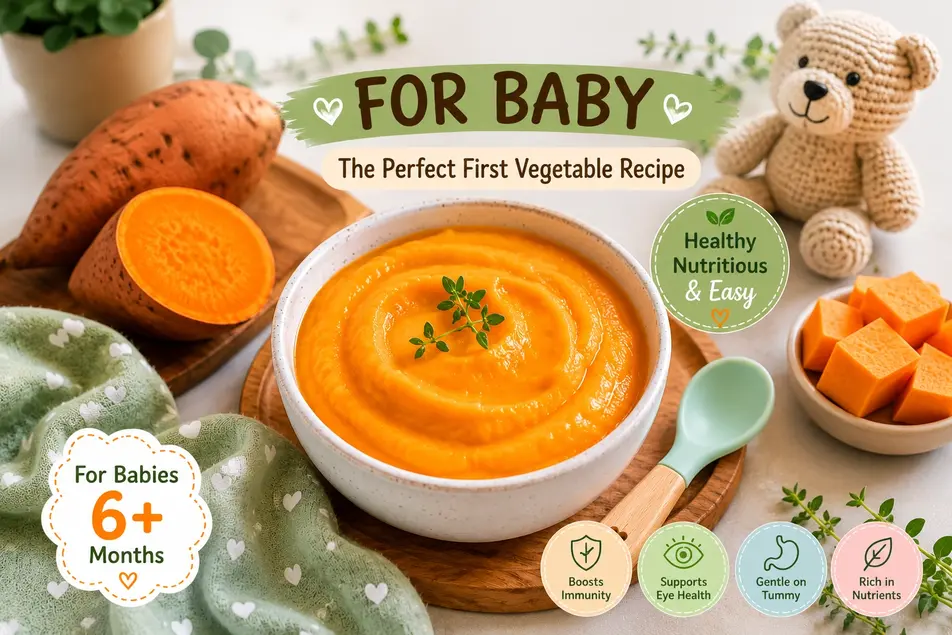
It is recommended by pediatric dietitians as one of the safest, most nutrient-dense first vegetables, suitable from around 6 months when solid food readiness signs appear. This guide covers everything: exact steps, texture by age, storage, flavor pairings, expert tips, and a full recipe card so the first spoonful goes smoothly.
If you want more purees for baby then check Baby Food Combinations.
Why Trust This Guide
- Nutritional facts drawn from verified sources including Solid Starts, mylittleeater.com, and NIH nutritional data
- No sponsored product links or brand placements
- Recipe and guidance reviewed against current AAP recommendations, June 2026
Recipe Card
Sweet Potato Puree for Baby
- Prep Time: 5 minutes
- Cook Time: 15 minutes
- Total Time: 20 minutes
- Servings: 8 portions (approximately 2 tablespoons each)
- Age: 6 months and up
Ingredients:
- 2 medium orange-fleshed sweet potatoes (approximately 400–500g)
- 2–6 tablespoons reserved steaming water, breast milk, or prepared formula (to adjust consistency)
Instructions:
- Scrub sweet potatoes under cold running water. Peel and chop into even 2–3 cm cubes.
- Place in a steamer basket over a pot of boiling water. Cover and steam for 12–15 minutes until completely fork-tender.
- Reserve the steaming liquid. Set sweet potato aside to cool for 3–5 minutes.
- Transfer to a blender or blend in the pot with a hand blender. Add 2 tablespoons of steaming liquid.
- Blend for 30–60 seconds until completely smooth.
- Add more liquid one tablespoon at a time until the puree reaches the right consistency for your baby’s age.
- Serve immediately or cool fully before storing.
Notes:
- For 4–6 months: thin to a pourable consistency
- For 6–8 months: medium thick, smooth
- For 8–10 months: thick and slightly lumpy (mash with a fork)
- Do not add salt, sugar, honey, or cow’s milk
- Freeze in ice cube trays for up to 3 months
Why Sweet Potato Puree for Baby Is the Perfect First Vegetable
Sweet potato is not just an easy first food. It is one of the most consistently recommended first vegetables by pediatric feeding specialists and dietitians across every major resource. Here is why it earns that reputation.

Easy to Make
The entire process takes under 20 minutes from start to finish. Peel, chop, steam, blend four steps, one pot, one blender. No complex technique, no special skills, and no experience with baby food required to get a perfectly smooth result.
Naturally Sweet and Baby Approved
Babies are born with a preference for sweet tastes. That is biological, not a preference parents created. Sweet potato’s natural sweetness from its complex carbohydrates lands exactly right without any added sugar. Parents across feeding communities consistently report that sweet potato is one of the foods their babies accept immediately on the first offer.
Freezer Friendly
Sweet potato puree freezes exceptionally well. One batch fills an ice cube tray with individual portions ready for the weeks ahead less cooking on busy days, no compromise on freshness.
Naturally Smooth Texture
Sweet potato blends into a naturally creamy, lump-free puree without sieving silky smooth with minimal effort, even with a basic handheld blender.
Highly Nutritious for a Developing Baby
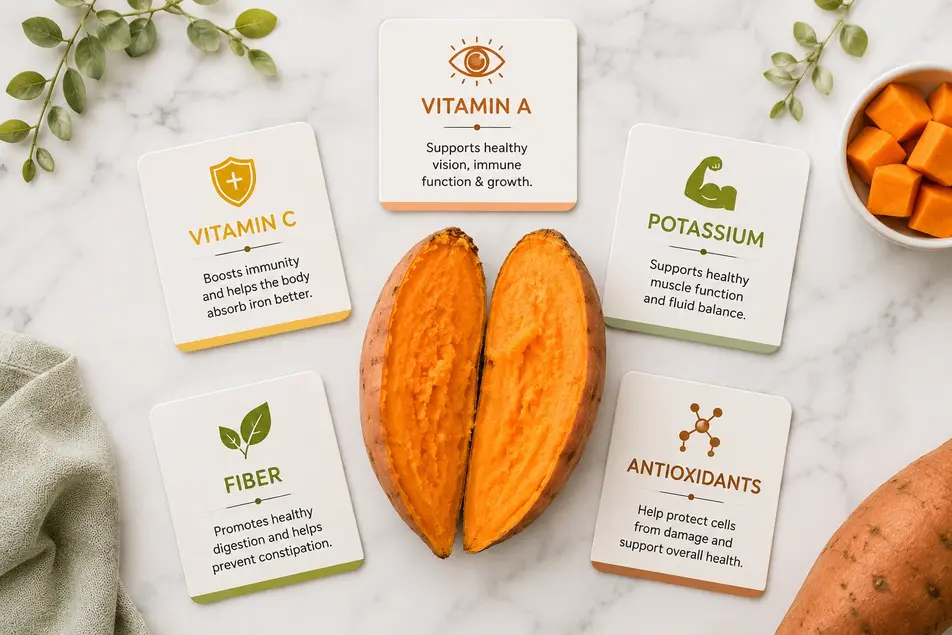
Every tablespoon carries meaningful amounts of beta-carotene, vitamin C, potassium, and fiber nutrients that directly support a baby’s immune system, vision development, digestion, and muscle function during one of the fastest growth periods of their life.
Health and Nutritional Benefits
Sweet potato is one of the most nutrient-dense first foods available for a baby. Here is what the research and verified nutritional data confirm it contains and why each nutrient matters.
Beta-Carotene and Vitamin A
Orange-fleshed sweet potatoes are particularly rich in beta carotene an antioxidant that converts to vitamin A in the body, supporting the immune system and eye health. Vitamin A is critical during infancy for the development of healthy vision, skin integrity, and a strong immune response. Sweet potato is one of the richest plant based sources of beta-carotene available, which makes it an unusually powerful choice for a first vegetable.
Vitamin C
Vitamin C, another antioxidant found in sweet potato, makes it a good food to pair with plant-based sources of iron such as beans, lentils, and tofu because vitamin C supports iron absorption. In practical terms, this means that sweet potato puree served alongside an iron-rich food increases the amount of iron the baby actually absorbs from that meal.
Potassium
Potassium supports healthy muscle function, nerve transmission, and fluid balance in the body. Sweet potatoes are rich in carbohydrates, fiber, potassium, and zinc all together supporting energy for growth and play, a flourishing gut microbiome, immunity, metabolic processes, and many other important bodily functions.
Fiber for Digestion
The natural fiber in sweet potato supports healthy digestion and regular bowel movements a genuine benefit for babies starting solids, who often experience temporary constipation as their digestive system adjusts to new foods.
Allergy Profile
Sweet potato is not a common allergen. Sweet potatoes rarely cause allergic reactions, making them an exceptionally safe first food choice. However, any new food should still be introduced one at a time, with observation in the days following the first offer. If hives, swelling, vomiting, or difficulty breathing appear after any new food, stop and contact your pediatrician immediately.
Ingredients You Will Need
Main Ingredient
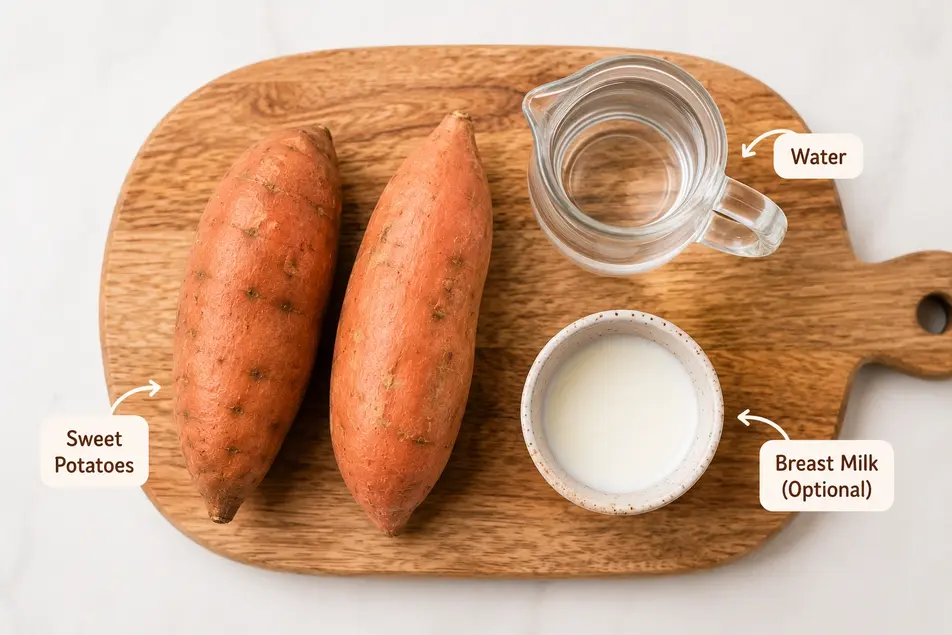
- 2 medium orange-fleshed sweet potatoes about 400–500g total, which makes approximately 6–8 servings
Optional Ingredients for Consistency
- 2–4 tablespoons of water from the steaming liquid, to thin as needed
- 2 tablespoons of breast milk or prepared formula adds familiarity for babies who are hesitant about new textures (both are optional)
What to Skip
Do not add salt, sugar, honey, or cow’s milk. Salt overloads a baby’s developing kidneys. Honey carries a botulism risk before 12 months. Cow’s milk as a drink or cooking liquid is not recommended as a main ingredient for babies under 12 months.
Ingredient Notes and Buying Tips
How to Choose the Best Sweet Potato
Look for firm, smooth-skinned sweet potatoes with no soft spots, cracks, or sprouts. Smaller to medium sweet potatoes tend to be sweeter and less fibrous than very large ones. The skin should feel tight, not wrinkled or shrunken.
Orange vs. White or Purple Flesh
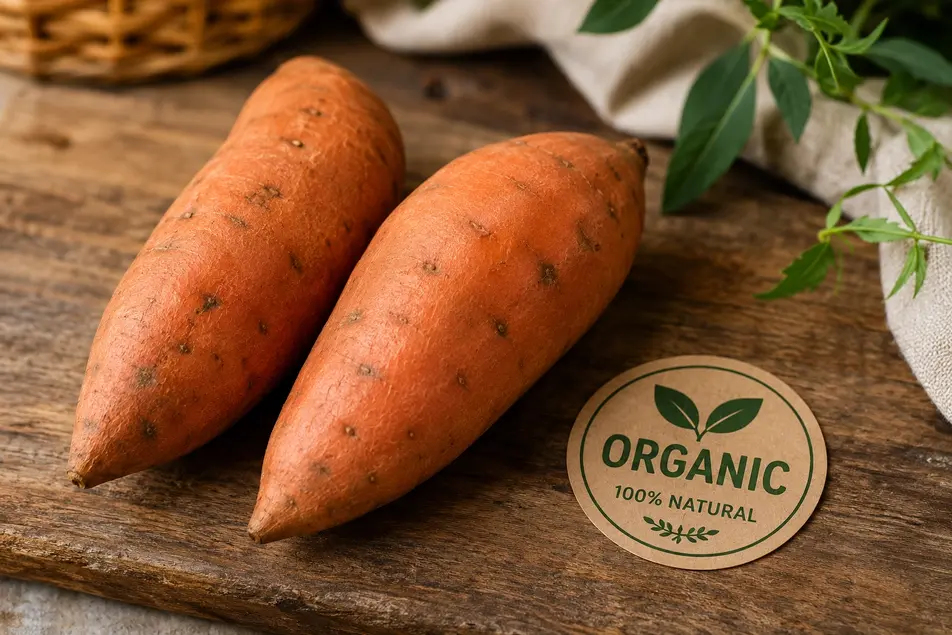
For baby food, choose orange-fleshed sweet potatoes specifically. Orange sweet potatoes, along with carrots, are one of the best food sources of beta-carotene. White or cream-fleshed varieties are still nutritious but contain significantly less beta-carotene. Purple sweet potatoes are high in different antioxidants (anthocyanins) but are less commonly available and produce a dramatically coloured puree that some parents find surprising.
Organic vs. Conventional
Both organic and conventional sweet potato are nutritious and widely recommended first foods. If organic is within budget, it is a reasonable preference. If not, conventional sweet potato is an equally valid choice for baby food.
Fresh vs. Frozen
Fresh sweet potatoes are ideal for baby puree as they give more control over texture and ripeness. Frozen sweet potato chunks are a practical alternative they are already peeled and chopped, steam well, and retain most of their nutritional value through the freezing process.
Kitchen Equipment Needed
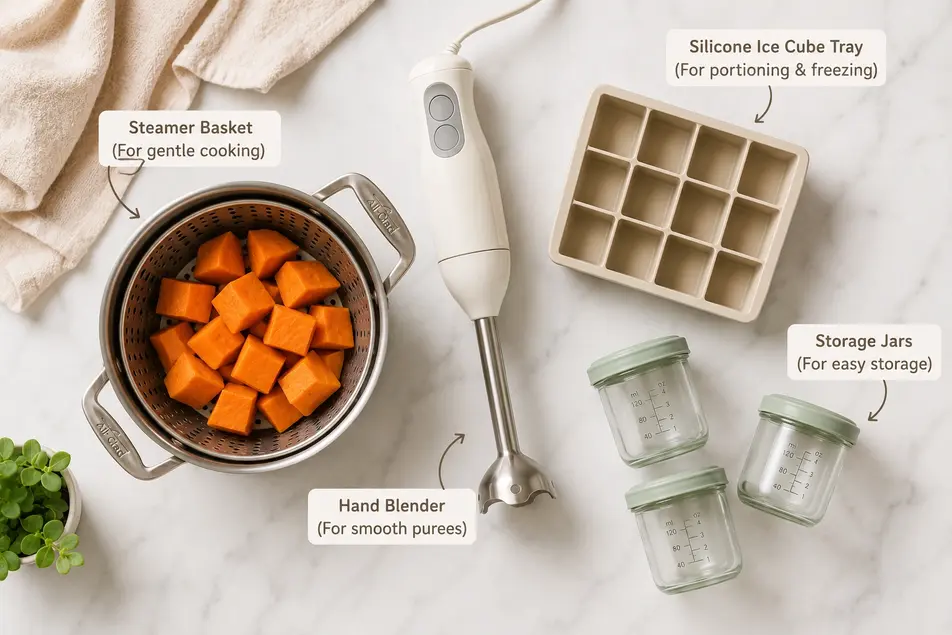
- Steamer basket and pot steaming preserves more nutrients than boiling
- Hand blender or food processor a basic handheld blender works perfectly
- Chopping board and sharp knife
- Silicone ice cube tray for portioning and freezing
- Small airtight glass jars for refrigerator storage
How to Make Sweet Potato Puree for Baby (Step by Step)
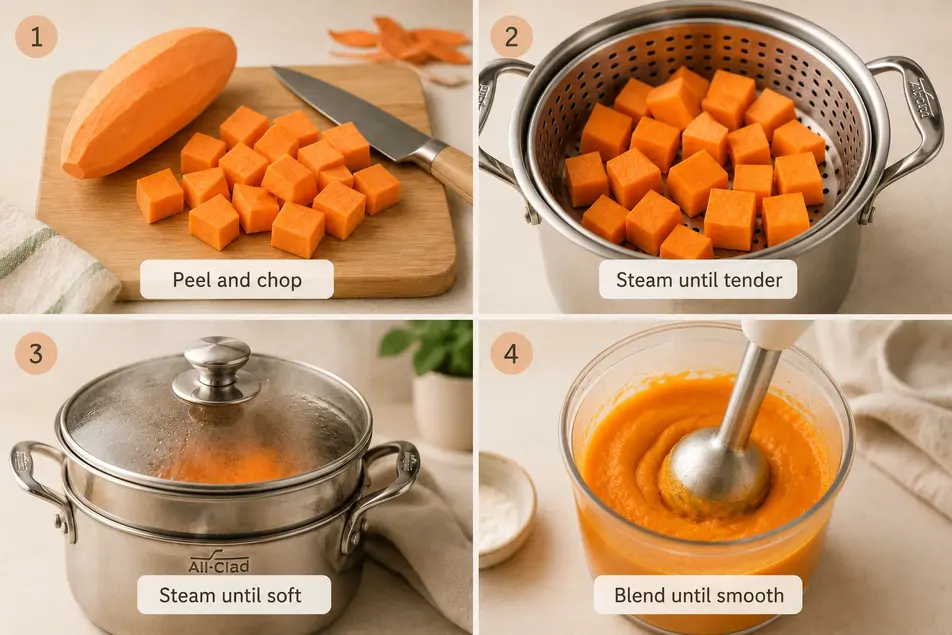
Step 1. Wash
Scrub the outside of the sweet potatoes under cold running water even if you plan to peel them. This removes surface bacteria and soil before the knife touches the flesh.
Step 2. Peel and Chop
Peel the sweet potatoes with a vegetable peeler. Chop into even 2–3 cm (roughly 1 inch) cubes. Even-sized pieces cook at the same rate, which prevents some pieces being overcooked and mushy while others remain underdone.
Step 3. Steam
Place the cubes in a steamer basket over boiling water. Cover with a lid and steam for 12–15 minutes, until the flesh is completely tender and pierces easily with a fork. Reserve the steaming liquid it is nutrient-rich and ideal for adjusting the puree consistency.
Step 4. Cool Slightly
Remove from heat and allow the sweet potato to cool for 3–5 minutes before blending. Blending very hot food in an enclosed blender creates steam pressure that can be dangerous.
Step 5. Blend
Transfer the steamed sweet potato to a blender or blend directly in the pot with a hand blender. Add 2–3 tablespoons of the reserved steaming liquid. Blend until completely smooth about 30–60 seconds for a hand blender, less for a high-powered food processor.
Step 6. Adjust Consistency
Add more steaming liquid, one tablespoon at a time, until the puree reaches the right texture for your baby’s age and current stage. For very young babies (4–6 months), it should pour slowly off a spoon. For older babies, a thicker consistency works well.
Texture by Baby’s Age
4 to 6 Months. Very Smooth and Thin
At this stage, the puree should be almost liquid. Add extra steaming water until it slides off the spoon easily. The baby’s swallowing reflex is still developing, and a thin consistency prevents any gagging or difficulty swallowing. Always confirm with your pediatrician before introducing solids, as the AAP currently recommends waiting until around 6 months and developmental readiness signs appear.
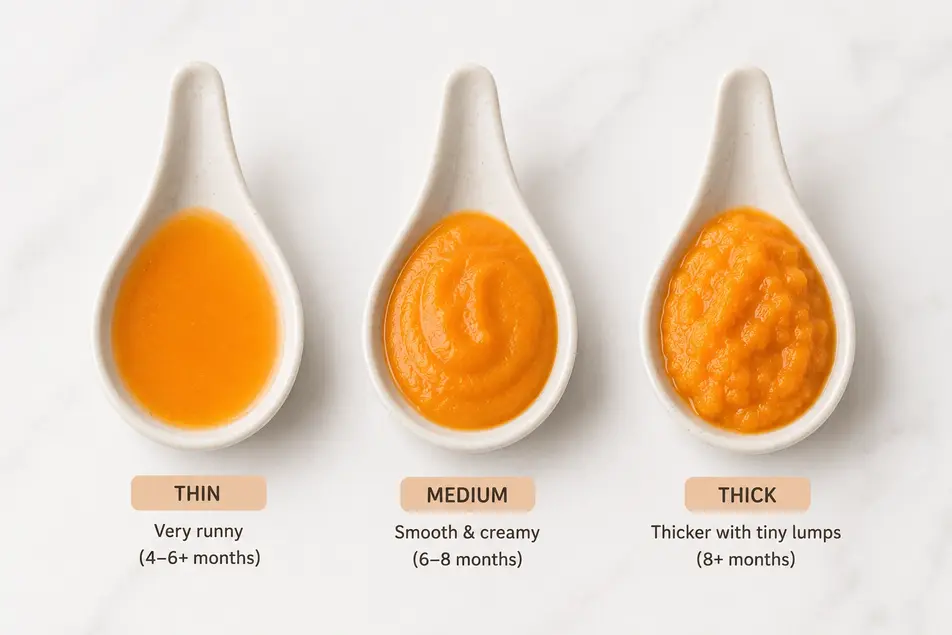
6 to 8 Months. Smooth and Medium
A thicker, smoother puree works well at this stage. The sweet potato puree for baby at this age should hold its shape on a spoon but still be fully smooth with no lumps. Reduce the amount of liquid added during blending.
8 to 10 Months. Mashed and Slightly Lumpy
Begin transitioning from a perfectly smooth puree to a fork-mashed texture with small soft lumps. This stage builds the chewing muscles in preparation for finger foods. Mash with a fork rather than blending, or blend briefly and leave some texture in the mix.
Recipe Tips for the Perfect Puree
How to Get a Perfectly Smooth Puree
Steam rather than boil. Boiling makes sweet potato waterlogged and harder to blend smoothly. Steaming keeps the flesh firm enough to break down cleanly in a blender. Add liquid gradually too much at once makes the puree thin and difficult to recover.
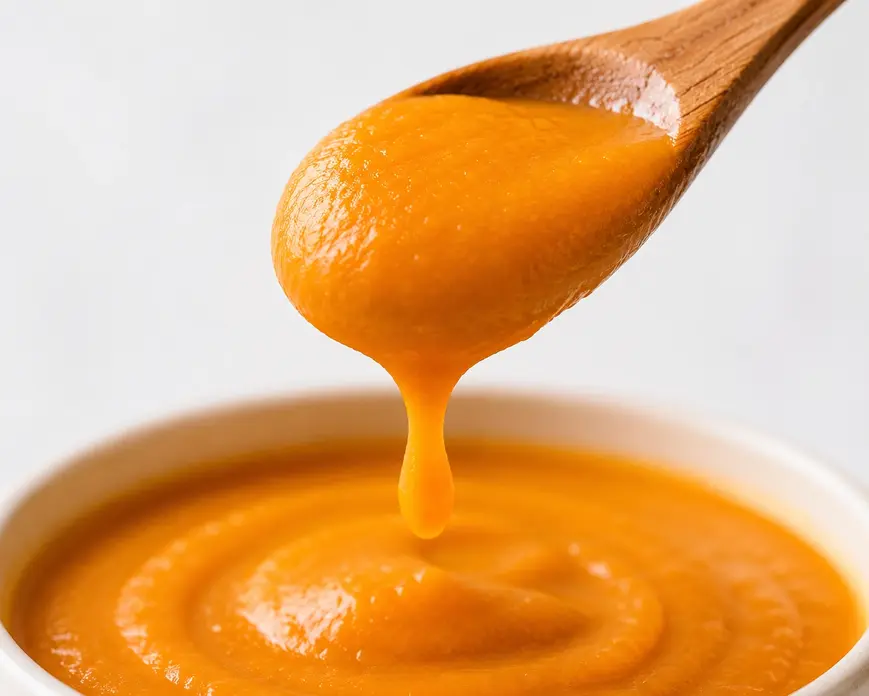
How Much Water to Add
Start with 2 tablespoons and add more one tablespoon at a time. The steaming liquid from the pot is the best choice it carries some of the nutrients that transferred out of the sweet potato during cooking. Breast milk or prepared formula can be stirred in at the end for a flavour the baby already recognizes.
Avoid Overcooking
Overcooked sweet potato becomes stringy and develops an odd flavour. Steam just until fork tender when a fork slides in without resistance. That is the right point. Going past it does not make the puree smoother, it makes the flavour less appealing.
Batch Cooking Tip
One batch makes roughly 8 ice cube portions. Cook on the weekend and freeze single serve amounts ready for the full week.
Flavor Variations and Combination Ideas
Sweet Potato + Apple
A classic pairing. Apple adds brightness and a slight tartness that balances the earthy richness of sweet potato. Steam both together and blend. Ratio: 2 parts sweet potato to 1 part apple.
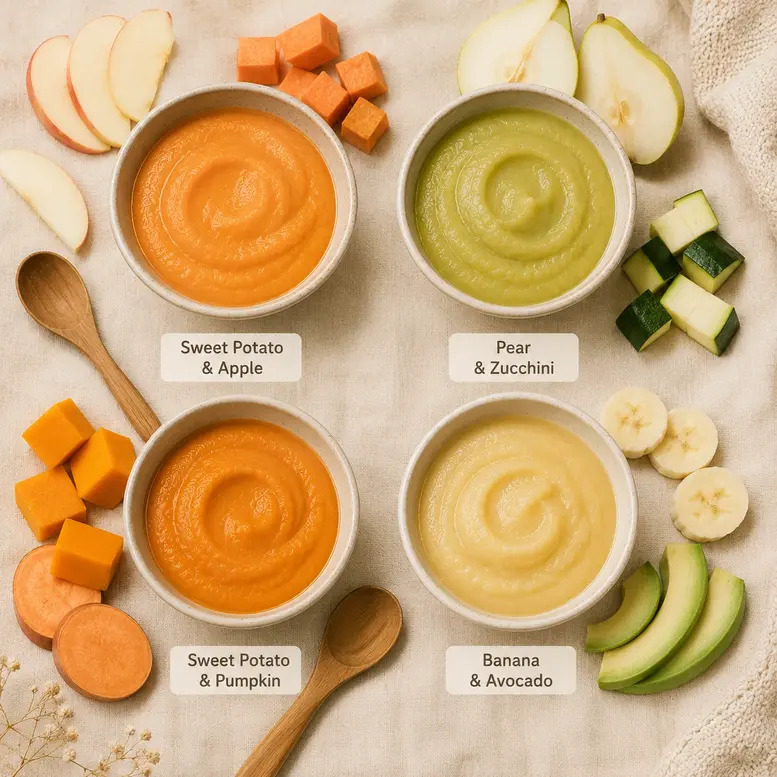
Sweet Potato + Pumpkin
Both are naturally sweet orange vegetables with similar textures. Combining them deepens the beta carotene content and gives a slightly milder, creamier result. Particularly good for babies who already accept both foods individually.
Sweet Potato + Carrot
Another beta carotene rich pairing. The result is a bright, sweet puree that is consistently well-accepted. Carrot takes slightly longer to soften than sweet potato, so add it to the steamer 5 minutes earlier.
Sweet Potato + Lentil
Once the baby is 7–8 months and has been introduced to individual legumes, blending soft-cooked red lentils into sweet potato puree creates an iron-rich, protein carrying combination. The sweet potato’s vitamin C content boosts iron absorption from the lentils making this a genuinely smart nutritional pairing.
Storage Instructions
Refrigerator
Store freshly made sweet potato puree in a small airtight glass jar or sealed container in the refrigerator for up to 48 hours. Beyond 48 hours, the risk of bacterial growth increases even in the refrigerator, particularly for food made for a young baby.
Freezer
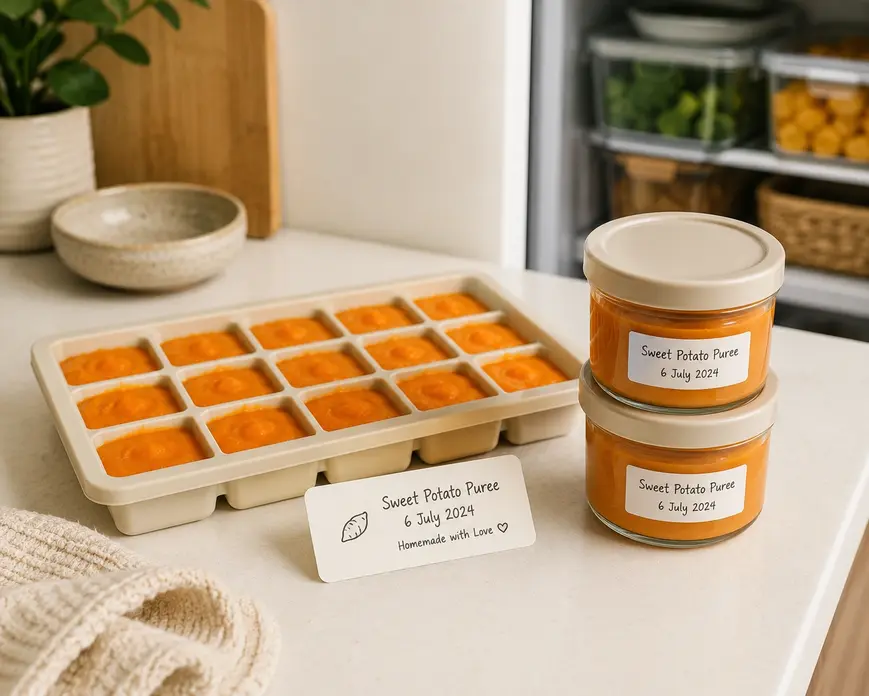
Sweet potato puree freezes for up to 3 months without significant nutrient loss or texture change. Spoon the fresh puree into a silicone ice cube tray immediately after making while still warm but not hot. Cover the tray with cling film or a lid and freeze until solid, then transfer the cubes to a sealed freezer bag or container. Label with the date.
Ice Cube Tray Method
Each compartment holds approximately 1–2 tablespoons roughly one serving. Remove the cubes needed for one meal, thaw, and serve. No waste, no guessing.
How to Reheat Safely
Microwave Method
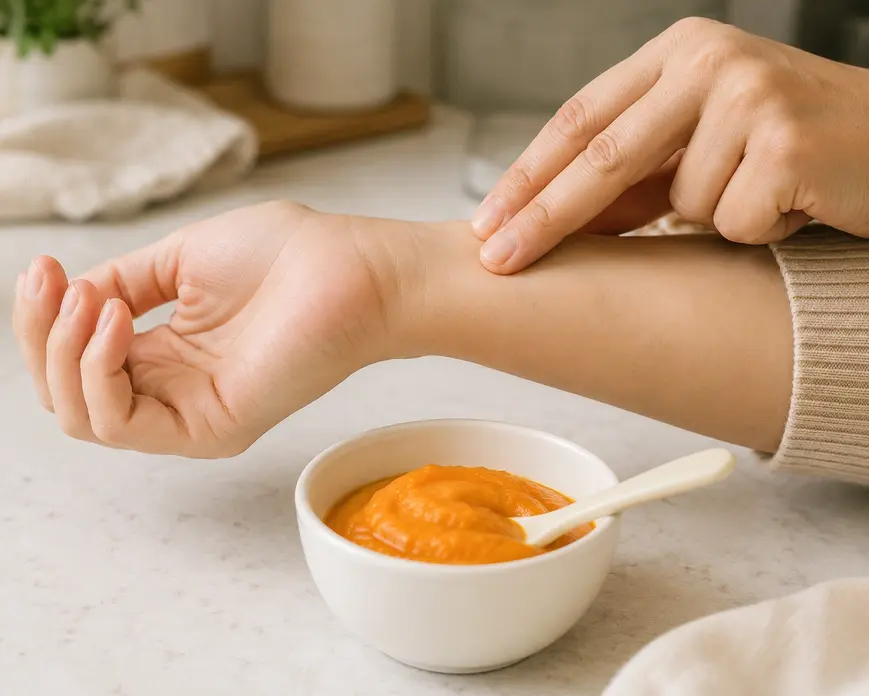
Transfer one to two frozen cubes to a microwave-safe bowl. Microwave on high for 30–45 seconds. Stir thoroughly microwaves heat unevenly and hot spots can form that are not visible on the surface. Always test the temperature on the inside of your wrist before offering to your baby. It should feel neutral to slightly warm, never hot.
Warm Water Method
Place the sealed container in a bowl of warm (not boiling) water for 10–15 minutes. This is the gentlest method on texture and nutrients. Test temperature before serving.
Important
Never refreeze puree that has already been thawed. Discard any uneaten puree from the bowl after the meal bacteria from a baby’s saliva can contaminate the remaining food.
Serving Suggestions
Alone as a First Food
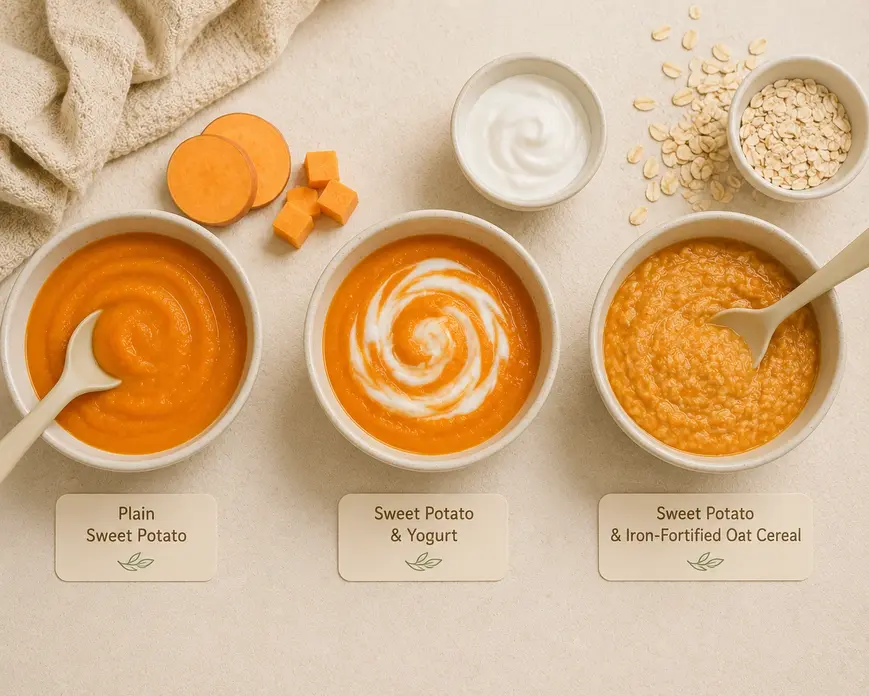
Plain sweet potato puree with nothing added is the ideal first offer. The baby gets to taste the vegetable on its own building flavour familiarity and any reaction is easy to identify.

Mixed With Iron-Fortified Oat Cereal
Stirring one to two teaspoons of iron-fortified oat cereal into the puree adds iron to the meal. This combination addresses both the sweetness preference and the iron needs that rise sharply from 6 months onward.
Mixed With Plain Whole-Milk Yogurt
From around 7–8 months, a small spoonful of plain whole-milk yogurt stirred through warm sweet potato puree adds protein, calcium, and a slight tang. This combination is consistently well-received by babies already familiar with the individual components.
As a Finger Food Transition
From around 9–10 months, offer thick mashed sweet potato in small soft mounds on the tray. Babies at this stage enjoy self-feeding, and the soft texture is safe without teeth.
Expert Tips and Mistakes to Avoid
Mistake 1. Adding Too Much Water
The most common error. Adding too much water at once produces a watery, flavorless puree that is difficult to thicken again. Add liquid one tablespoon at a time and blend between additions.
Mistake 2. Not Blending Long Enough
A hand blender needs 30–60 seconds of continuous blending to achieve a truly smooth result. Stopping early leaves small fibrous threads that babies can feel on their tongues and often reject. Blend past the point where it looks smooth continue for another 15–20 seconds to be certain.
Mistake 3. Boiling Instead of Steaming
Boiling leaches vitamins into the water and makes sweet potato waterlogged. Steaming keeps nutrients in the vegetable and gives a better texture for blending. If boiling is the only option, keep the lid on and cook in minimal water.
Mistake 4. Storing in a Single Large Container
Portion into individual small jars or freeze in individual cubes. Every time a lid comes off a large batch, the remaining puree gets exposed to air and potential bacterial transfer from a spoon.
Disclaimer:
This sweet potato puree for baby recipe is for general informational purposes only and is grounded in current AAP and pediatric dietitian guidance. It is not medical advice. Always confirm your baby’s readiness for solids with your pediatrician before beginning. Every baby develops at their own pace. Stop offering any new food and contact your doctor if signs of an allergic reaction appear.
FAQ’s
1. Can I freeze sweet potato puree for baby?
Yes, sweet potato puree freezes well for up to 3 months. Spoon fresh puree into a silicone ice cube tray, freeze until solid, then transfer the cubes to a sealed freezer bag. Thaw only the amount needed for each meal, and never refreeze thawed puree.
2. Can I make this with frozen sweet potato?
Yes, Frozen sweet potato chunks work well they are already peeled and cut, steam easily, and retain most of their nutritional value through the freezing process. Steam from frozen, adding a few extra minutes to the cooking time until completely tender.
3. Do I need to peel sweet potato for baby puree?
Yes, for baby puree. The skin is tough and does not blend smoothly even in a high powered blender, and it carries a higher chance of containing surface contaminants. Peeling before steaming gives a smoother, cleaner result.
4. How long does homemade sweet potato puree last?
In the refrigerator: up to 48 hours in an airtight container. In the freezer up to 3 months. Do not leave puree at room temperature for more than 2 hours. Discard any puree that has been in contact with a baby’s saliva after the meal rather than storing it again.
5. Can I add spices to sweet potato puree for baby?
Yes, from around 6–7 months. Mild warming spices like cinnamon, nutmeg in very small amounts, or a tiny pinch of ginger are safe and a great way to introduce flavour variety. Skip salt entirely it overloads a baby’s kidneys. Avoid chilli or strong pepper. Always introduce one spice at a time and watch for any reaction.