Mango Puree for Baby: Easy No-Cook Recipe (6 Months+)
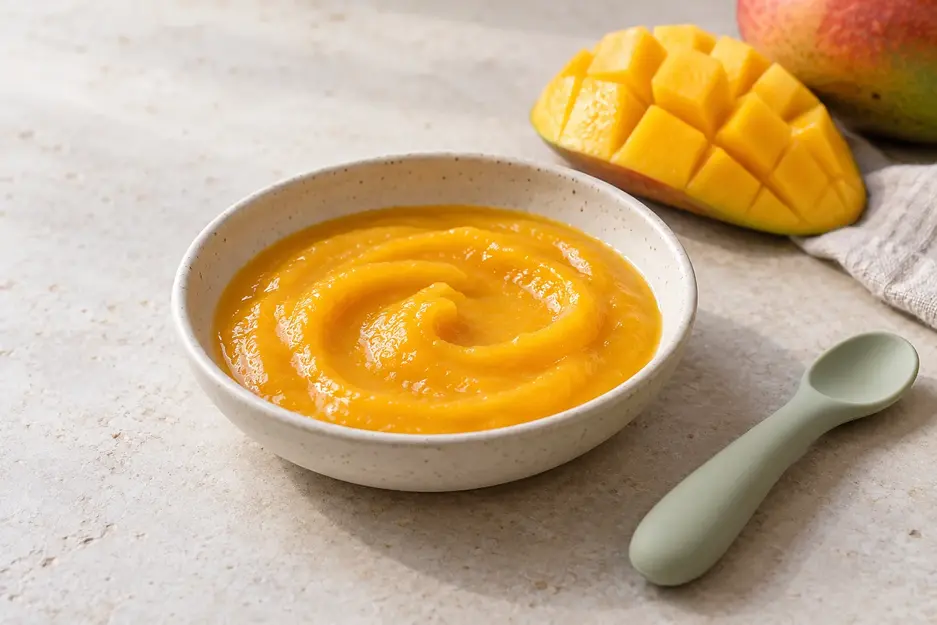
Mango puree for baby is one of the easiest fruit purees to make: peel a ripe mango, blend the soft flesh, and you have a naturally sweet puree with no added sugar. Fresh, fully ripe mango needs no cooking, and plain frozen mango works too if you follow the package directions. Below you will find the quick recipe, step-by-step instructions, texture fixes, easy combinations, serving ideas and storage tips. Mango also adds vitamin C, which supports iron absorption from plant foods eaten at the same meal. Start solids around 6 months when your baby shows the signs of readiness, not by age alone.
For more first-food ideas, explore our 25 stage 1 baby purees.
Quick Mango Puree Recipe
Prep time: 10 minutes
Cook time: None for fresh, ripe mango
Total time: 10 minutes
Yield: About 3/4 cup of puree, or roughly six 2-tablespoon servings. The amount varies with the mango and any added liquid.
Ingredients: 1 cup peeled, diced, ripe mango (about 1 medium mango); water only if needed, a teaspoon at a time.
Method: Blend the mango until smooth, scrape down the sides, then blend again. Add water a teaspoon at a time only if the blades struggle or the texture is too thick.
To serve: Transfer a small amount to a clean bowl. Offer a teaspoon or two to begin with and follow your baby’s cues.
Notes: For batch storage, keep the puree mango-only. Add breast milk or correctly prepared formula to the individual serving just before feeding, if desired. Do not add dry formula powder directly to the puree.
When Can Babies Eat Mango?
Mango can be offered from around 6 months as part of a varied diet. The NHS describes three signs of readiness that should appear together:
- Sitting: your baby can stay sitting and hold their head steady.
- Coordination: they can coordinate their eyes, hands and mouth to pick up food and bring it to their mouth.
- Swallowing: they can swallow food rather than push it back out.
- Swallowing: they can swallow food rather than push it back out.
Mango does not need to wait until your baby has tried milder fruits. Continue breast milk or infant formula alongside solids. If your baby was premature or has feeding difficulties, ask their healthcare professional about starting solids.
Why You’ll Love This Mango Puree for Baby
This recipe suits busy days and first-time cooks alike.
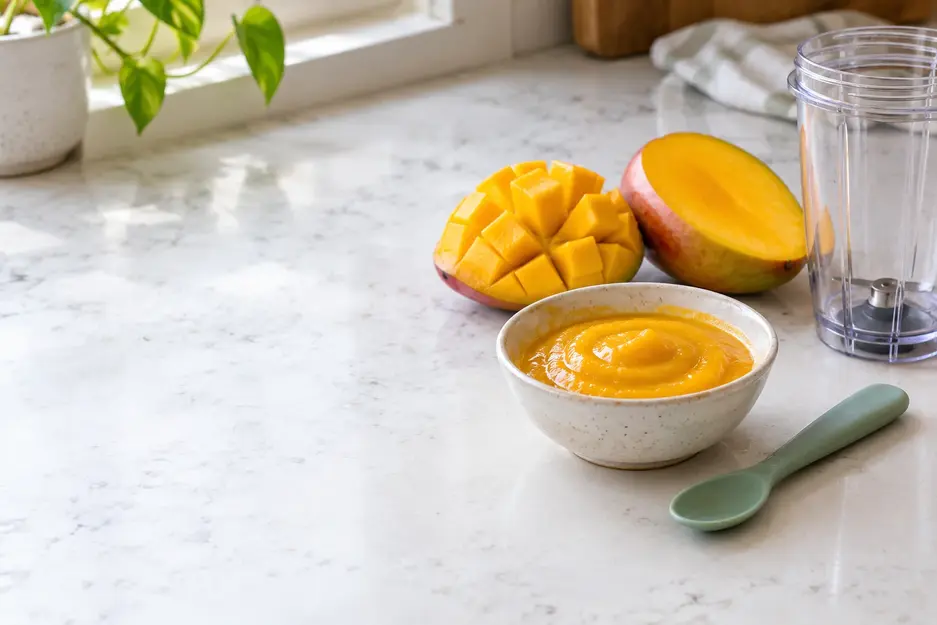
- Truly simple: one ingredient, one blender cup and about ten minutes.
- No cooking for fresh mango: a ripe one is already soft.
- Naturally sweet: no sugar, syrup or honey is needed.
- Easy to mix: it blends into banana, avocado, yogurt, oatmeal and more.
- Freezer-friendly: small portions store well when handled safely.
What Mango Adds to a Meal
- Vitamin C: supports the absorption of iron from plant foods eaten at the same meal.
- Fiber and variety: mango adds a different fruit, flavor and texture to your baby’s diet.
- Natural sweetness: there is no need for sugar, syrup or honey.
Mango is not an iron-rich food. Try a little alongside lentils or iron-fortified infant cereal. It is one part of a meal, rather than a replacement for iron-rich foods or milk feeds.
Ingredients and Choosing Your Mango
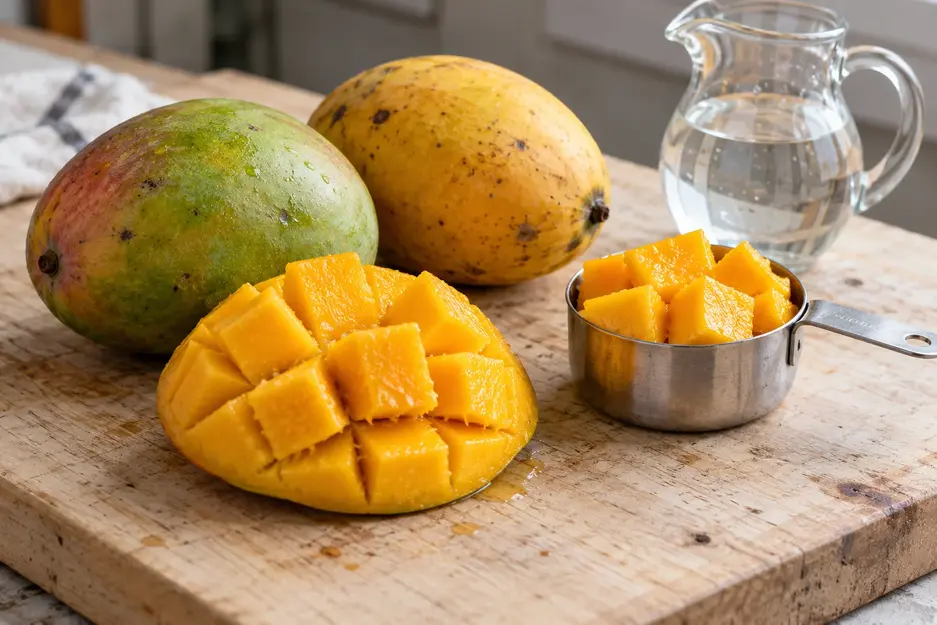
- Mango: measure 1 cup of peeled, diced flesh. Choose fruit that gives gently when pressed and smells pleasantly sweet near the stem.
- Water: optional, added a teaspoon at a time. Many ripe mangoes blend without it.
- No lemon required: keep the first batch simple; lemon is not needed to make or store this puree safely.
Skin color is not a reliable ripeness test, because some varieties stay partly green when ripe. Avoid fruit with mold, a fermented smell or badly spoiled flesh. A firm mango can ripen on the counter; once ripe, refrigerate it until you are ready to use it.
Easy Substitutions
- Fibrous mango: blend longer or use a fine sieve. A naturally less fibrous variety is easier, but no special variety is needed.
- No fresh mango: use plain frozen mango, following the package directions.
- Thicker puree: stir in a spoonful of prepared infant oatmeal.
Fresh or Frozen Mango
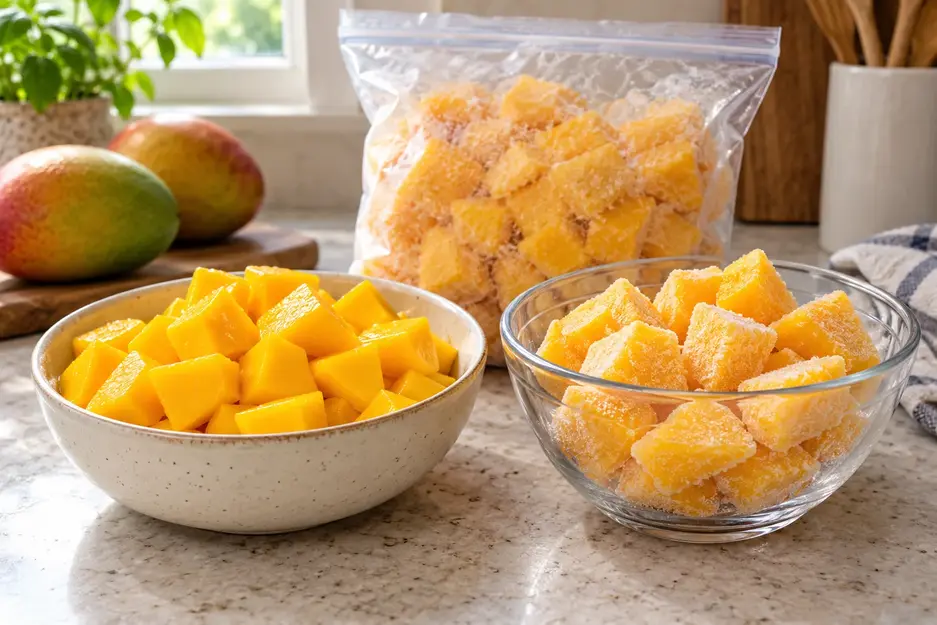
- Fresh: wash, peel and remove the pit. Ripe flesh can be blended without cooking.
- Frozen: choose plain mango with no added sugar. Read and follow any cooking instructions on the package before blending.
- Ready to eat without cooking: thaw in a covered container in the refrigerator, then blend.
- Cooking required: cook as directed, cool promptly and blend. Do not assume every frozen fruit product is ready to eat.
For the simplest freezer batch, use fresh mango. With previously frozen fruit, follow the package’s storage and refreezing instructions rather than applying the fresh-mango directions automatically.
How to Make Mango Puree for Baby
You need a clean cutting board, knife, blender or mini food processor, and a serving bowl. A narrow blender cup can work better than a large jug for a small batch.
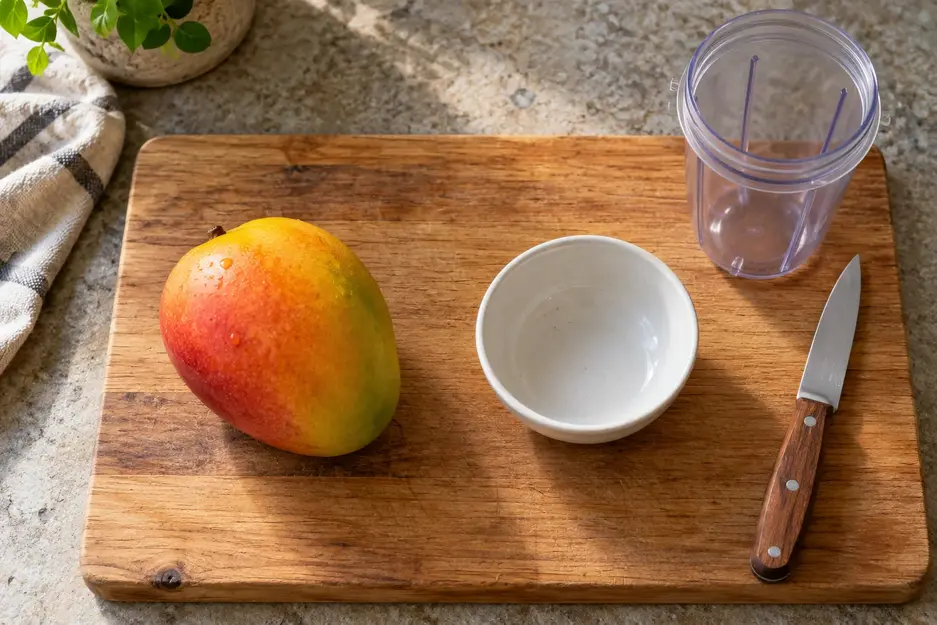
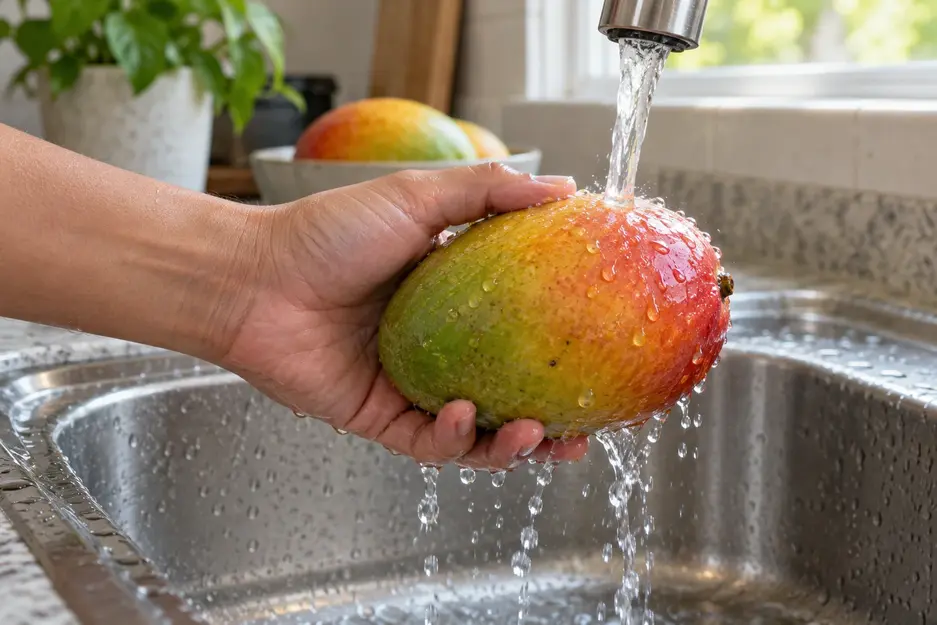
Step 1: Wash the mango
Wash your hands and rinse the whole mango under running water. Dry it before cutting. Washing the outside keeps dirt from transferring to the flesh when you slice through the skin.
Step 2: Remove the skin and pit
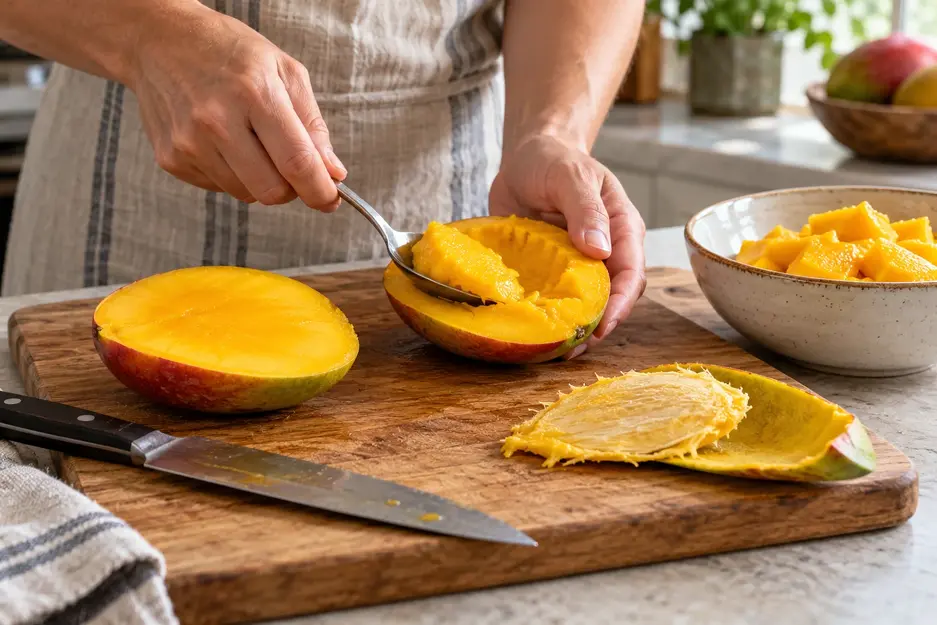
On a stable board, cut the cheeks away from the large flat pit. Scoop the flesh out of the skin with a spoon, then trim any usable flesh around the pit. Keep all peel and pit out of the puree.
Step 3: Dice and measure
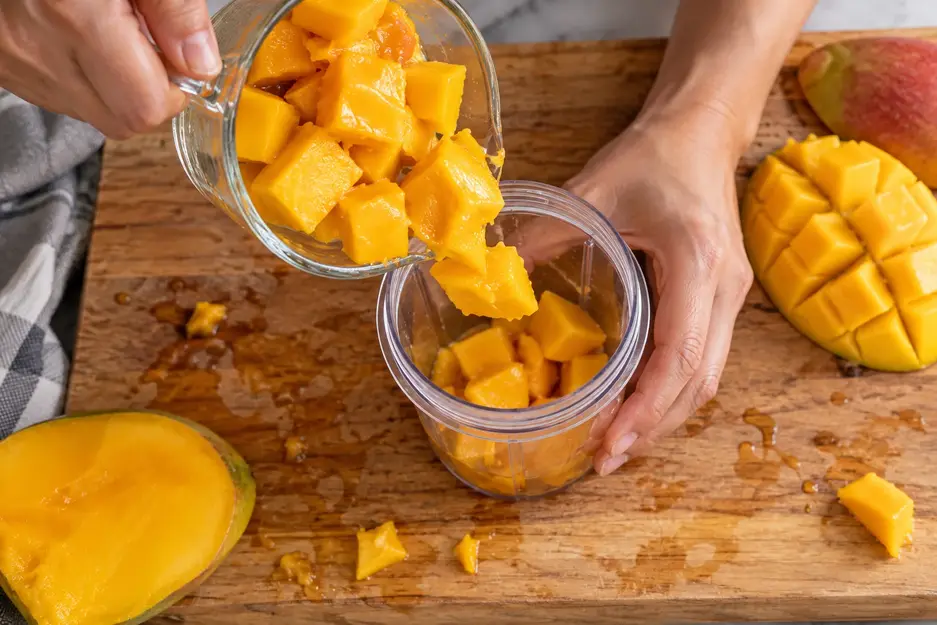
Cut the flesh into small chunks and measure 1 cup. The pieces do not need to match perfectly, because they are going into the blender. Put them in the blender cup.
Step 4: Blend until smooth
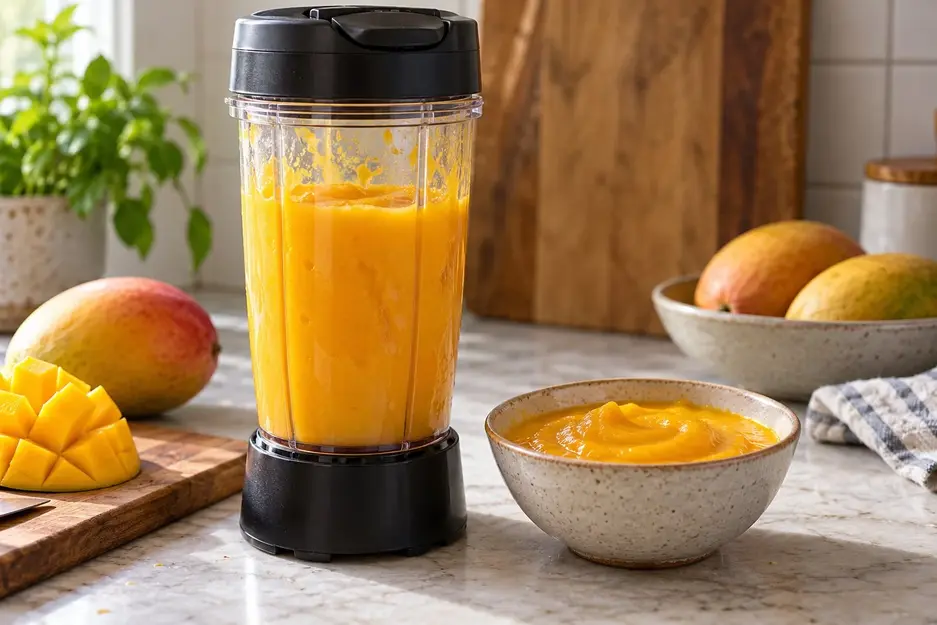
Blend until the fruit looks smooth, pausing to scrape down the sides with the motor off. Time varies by blender and mango variety. If the blades struggle, add water one teaspoon at a time.
Step 5: Check the texture
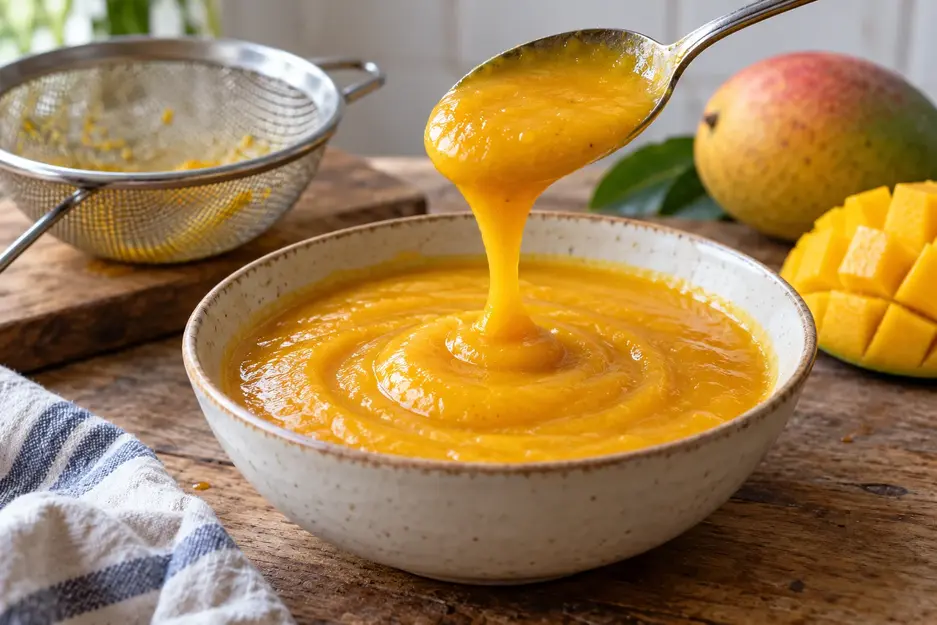
Stir and check for long fibers or pieces of peel. For a smooth puree, blend again or press through a fine sieve if needed. The puree should sit softly on the spoon and be easy for your baby to manage.
Step 6: Portion and serve
Spoon a little into a separate clean bowl. Feed your baby upright and stay within reach. Refrigerate or freeze the untouched remainder promptly, and discard food left in the feeding bowl.
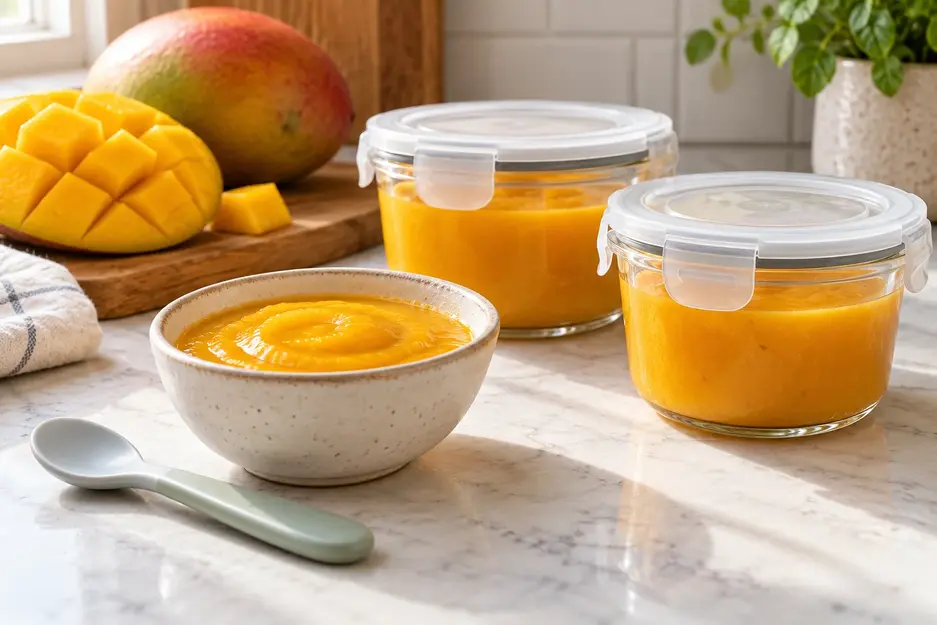
Getting the Texture Right: Stringy, Thick or Runny Puree
- Stringy: blend longer, then use a fine sieve if fibers remain.
- Too thick: stir in a little water. Add breast milk or prepared formula only to the portion being served.
- Too runny: blend in a little more ripe mango or stir a small amount into familiar infant oatmeal.
- Too sour: use a riper mango next time. Do not cover the taste with sugar.
- Blender not catching: use a smaller blender cup, stop and scrape the sides, or make a larger batch within the appliance’s minimum-fill guidance.
How to Serve Mango Puree, Mash and Finger Foods
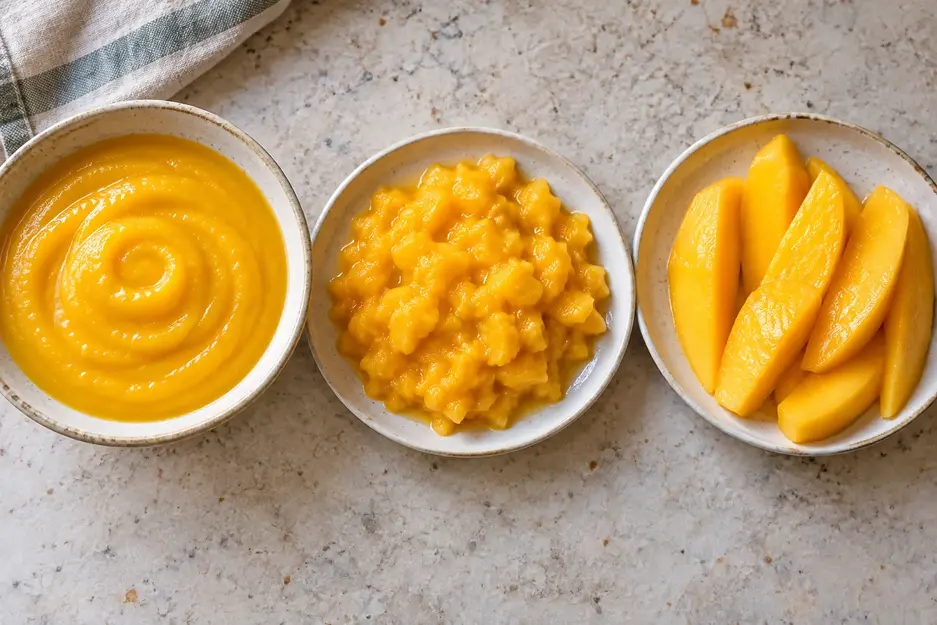
- Starting solids: offer smooth puree or soft mashed mango on a spoon. Let your baby set the pace.
- As feeding skills grow: offer a thicker mash with soft lumps rather than staying with smooth puree indefinitely.
- For self-feeding: soft ripe mango spears can be offered in a shape appropriate to your baby’s skills. The flesh should squash easily between finger and thumb.
- Once the pincer grasp develops, often around 9 months: offer small, very soft pieces. Development matters more than a fixed birthday.
Firm mango and slippery pieces can pose a choking risk. Remove the skin and pit, seat your baby upright and supervise throughout the meal. Stop when they turn away, close their mouth or show they have had enough.
| Style | Texture | Typical Stage | How to Offer |
| Mango puree for baby | Smooth, spoonable | First spoonfuls, around 6 months | Spoon, a teaspoon or two |
| Fork-mashed mango | Soft lumps | As skills grow | Preloaded spoon |
| Ripe mango spears | Very soft, squashes easily | Self-feeding stage | Tray, supervised |
| Small soft pieces | Bite-sized, very soft | Pincer grasp, often around 9 months | Tray or fork, supervised |
Easy Mango Puree Combinations
Once mango and the other ingredients have been tolerated, try these small mixes. The amounts are starting ratios; adjust the texture to your baby’s skills.
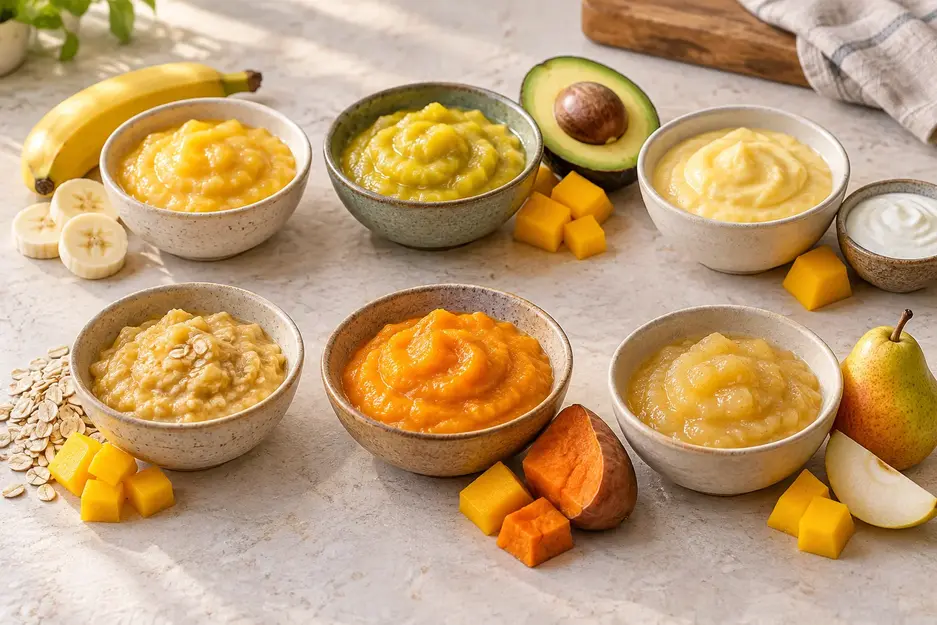
- Mango and banana: 1 tablespoon mango puree + 1 tablespoon mashed ripe banana.
- Mango and avocado: 1 tablespoon mango puree + 1 tablespoon mashed ripe avocado.
- Mango and yogurt: 1 tablespoon mango puree + 2 tablespoons plain, pasteurized, full-fat yogurt.
- Mango and oatmeal: 1 tablespoon mango puree stirred into 2 tablespoons prepared infant oatmeal. Let hot cereal cool before serving.
For preparation steps, see our oatmeal for babies guide.
- Mango and sweet potato: 1 tablespoon mango puree + 1 tablespoon smooth, fully cooked sweet potato.
- Mango and pear: 1 tablespoon mango puree + 1 tablespoon soft, well-cooked pear puree.
Yogurt contains milk, a common allergen. Introduce a new allergen separately, in a small amount, so it is easier to identify a reaction. Do not introduce several new ingredients in the same mixture.
Mango Skin and Possible Reactions
Mango is not a common allergen, but reactions are possible. The peel and sap can also irritate sensitive skin. Wash and peel the fruit, and wash your hands after handling it.
- Offer a small amount the first time, when you can watch your baby afterward.
- A rash around the mouth can be irritation or a reaction; stop serving the food and ask a healthcare professional if it persists, recurs or concerns you.
- Get urgent medical help for breathing difficulty, tongue or throat swelling, collapse, or a rapidly worsening reaction.
- People with latex allergy or certain pollen allergies sometimes react to mango, so mention any family history to your baby’s healthcare professional.
- Cashew or pistachio allergy does not automatically mean an allergy to mango flesh. Mango seed and pit are a separate issue. Follow your baby’s allergist’s individual advice rather than excluding mango solely because the plants are related.
Storing and Freezing Mango Puree
These directions are for untouched mango-only puree. Milk, formula and other mix-ins can change the storage limits, so add them to an individual serving just before feeding.
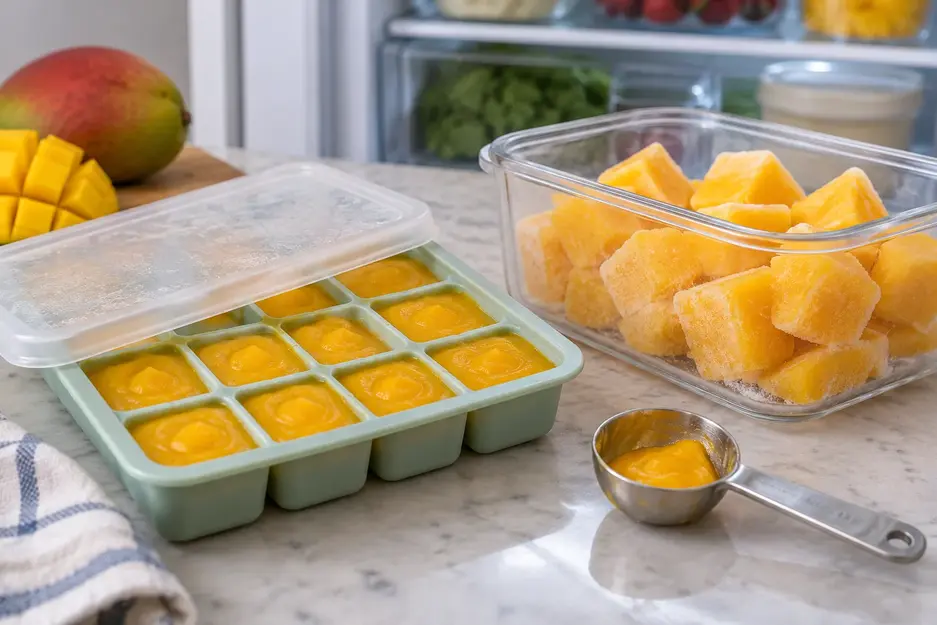
- Refrigerate: promptly, in a clean, covered container. Use within 2 days, or sooner if a package instruction requires it.
- Freeze: for fresh-mango puree, freeze small portions in a clean covered tray. Once solid, transfer to a freezer-safe container and date it. Aim to use within about 3 months for quality.
- Measure the tray: a cube is not a standard serving size. You can fill each compartment with 1 tablespoon for easy portioning.
- Thaw: in a covered container in the refrigerator. Use within 24 hours of defrosting; do not thaw on the counter.
- Serve: cool or at room temperature shortly after taking it out. Mango puree does not need reheating. Stir after thawing because some separation is normal.
- Discard: half-eaten portions. Keep a serving spoon separate from the storage container.
Recipe Success Tips
- Ripen ahead: buy mango two or three days early and let it soften on the counter.
- Start with the cheeks: the flesh away from the pit is often smoother and less fibrous.
- Taste first: a ripe mango smells sweet near the stem and tastes pleasantly sweet before you blend.
- Clean the blender promptly: mango pulp dries sticky and is harder to wash later.
- Pick a calm time: offer a new food early in the day so you can watch for any reaction.
- Date the tray: note the freezing date so you know when to use the cubes.
Common Mistakes to Avoid
- Choosing by color alone: press the fruit instead, because skin color is unreliable.
- Leaving fibers or peel in: check the texture and blend longer or sieve.
- Mixing milk into the whole batch: add it only to the portion you are serving.
- Serving firm cubes: firm or slippery mango can pose a choking risk, so keep pieces very soft and supervised.
- Assuming frozen mango is ready to eat: read the package, and cook it first if the instructions say so.
Conclusion
Mango puree for baby is a quick, flexible way to add a bright, naturally sweet fruit once your baby is ready for solids. Choose a ripe mango, peel it, blend until smooth, and fix any fibers with a longer blend or a sieve. Offer a small amount fresh, store untouched portions promptly, and keep iron-rich foods in the meal.
Another simple no-cook option is papaya puree for baby.
Disclaimer
This article on mango puree for baby provides general feeding information and does not replace individual medical advice. Ask your baby’s healthcare professional about readiness, premature birth, allergies or feeding difficulties, and supervise every meal.
FAQ’s
Q.1 Do I need to cook mango for my baby?
Fresh, fully ripe mango can be blended raw after washing, peeling and removing the pit. Frozen mango may have different preparation instructions, so check the package.
Q.2 Can mango be a first food?
Yes, from around 6 months when your baby is developmentally ready. Offer a varied diet that also includes iron-rich foods.
Q.3 Can I freeze mango puree?
Yes. Freeze fresh-mango puree in small portions and use within about 3 months. Thaw in the refrigerator and use within 24 hours.
Q.4 Can I add breast milk or formula?
Yes, to the individual serving if needed. Prepare formula correctly first and never add dry powder directly. Store the main batch as mango-only puree.
Q.5 Is mango puree the same as mango juice?
No. This recipe blends the fruit flesh into a spoonable food. Do not thin it into a drink or put puree in a bottle.