
Fig Puree for Baby: 5 Easy Combos & Simple Recipe
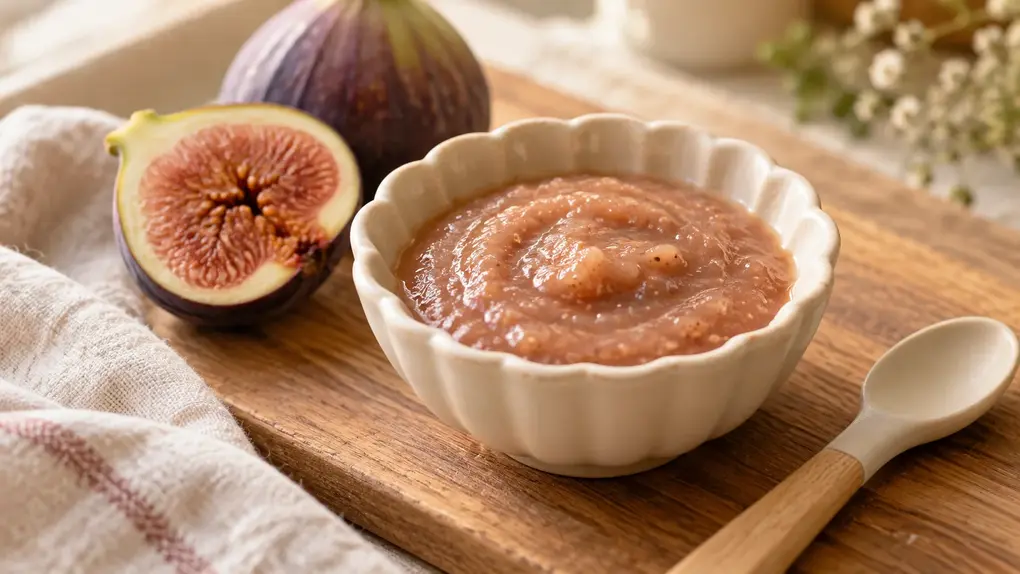
A soft, ripe fig can become baby food with little more than a spoon and a small bowl. Dried figs take a little longer, but you can turn them into a moist puree when fresh fruit is unavailable. The key is choosing the right preparation for the figs you have.
This fig puree for baby recipe covers both methods, with clear texture checks, five easy combinations, and a simple storage guide. There is no added sugar, no need for a large batch, and no pressure for your baby to finish a bowl. Make a little, offer a taste, and save the clean remainder for another meal.
New to solids? Explore our first foods for baby at 6 months guide.
Quick recipe guide
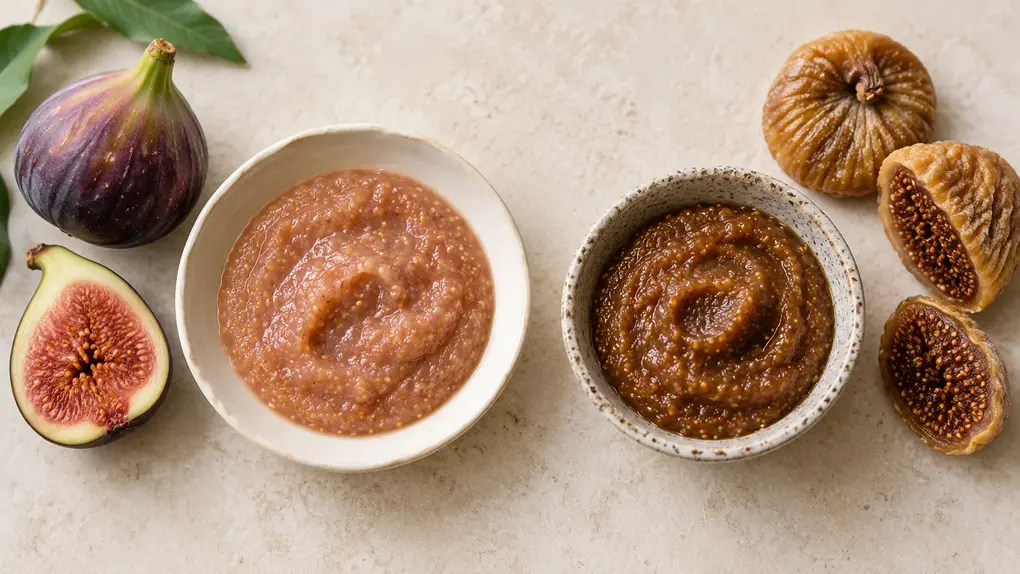
| Recipe detail | Fresh fig puree | Dried fig puree |
| Fruit amount | 150 g trimmed ripe figs | 40 g trimmed plain dried figs |
| Water | 1–2 teaspoons if needed | About 150 mL for cooking; extra as needed |
| Preparation | About 5–10 minutes | About 10 minutes plus cooking and cooling |
| Cooking | Usually unnecessary for soft ripe flesh | Simmer until easily crushed; check after 10 minutes |
| Equipment | Fork or small blender | Small saucepan and blender |
| Estimated yield | About ½ cup | About ⅓–½ cup |
| First taste | Offer a small amount | Offer a small amount |
The quantities above make a small batch, rather than one feeding. Yields and timings are estimates because fig size, ripeness, skin removal, and added water change the result. Use the texture checks below to decide when your puree is ready.
Why this recipe fits everyday baby meals
- Two practical options: use ripe fresh figs in season or plain dried figs from your cupboard.
- Naturally sweet flavor: there is no need for sugar, syrup, or honey.
- Flexible serving: offer a little on its own, then try it with foods your baby already knows.
- Small batch preparation: portion the puree so you only take out what you need.
- Simple ingredients: figs and water are enough to begin.
Figs bring another fruit flavor to your baby’s meals. Think of this puree as one option in a varied diet, alongside vegetables, grains, and suitable protein foods. A fruit puree does not need to be a complete meal to have a useful place at the table.
When can babies try fig puree
Babies can generally begin complementary foods at about six months, when they show developmental readiness. Look for steady head control, sitting with support, and the ability to swallow food rather than consistently pushing it out. Ask your baby’s clinician if you are unsure about readiness.
Start with a texture your baby can manage. This recipe uses soft fresh flesh or thoroughly cooked and blended dried figs; it does not suggest handing a baby whole dried fruit. Keep your baby upright and supervise eating closely.
Breast milk or infant formula remains part of your baby’s usual feeding routine. Offer fig puree as food from a spoon, not as a drink in a bottle. A small first taste is a chance to explore a new flavor, rather than a serving target.
Ingredients and equipment
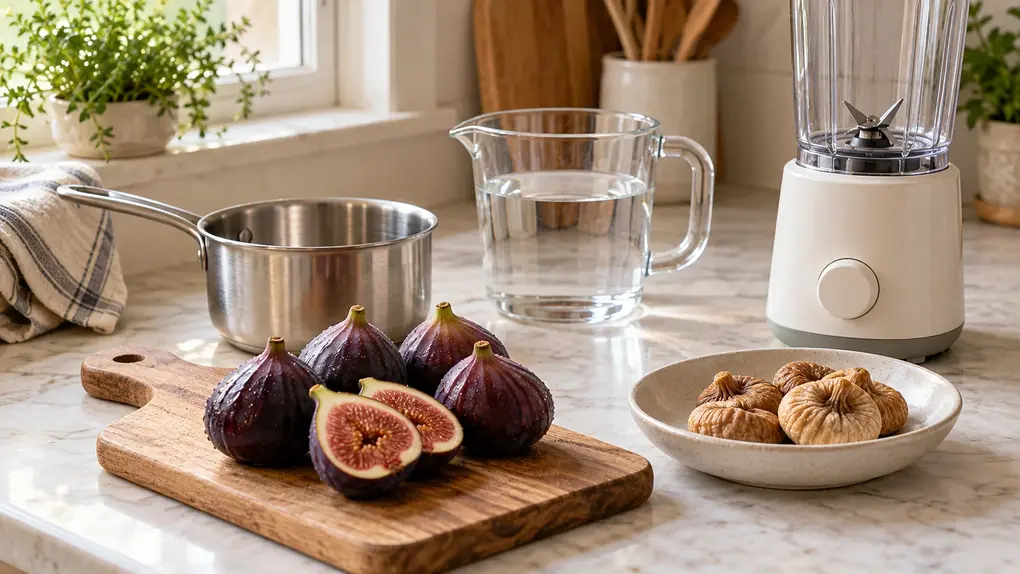
For the fresh version, weigh about 150 g of ripe figs after trimming. Depending on their size, this may be roughly three or four figs. Have a little safe drinking water ready, but add it only if the fruit needs help blending.
For the dried version, use about 40 g of plain dried figs with the stems removed. Start with approximately 150 mL of water in a small saucepan, adding more if the pan begins to dry out before the fruit softens.
- Choose fresh figs that feel gently yielding, with no mold, sour smell, or leaking spoiled flesh.
- Choose plain dried figs and check the ingredient list for added sweeteners.
- Use a small blender for tiny batches; a large jug may leave fruit stuck above the blades.
- Keep a clean bowl, spoon, saucepan, and covered storage container within reach.
Different fig varieties produce different colors. Your puree may be beige, pinkish brown, or muted purple. Color is not a reliable test of ripeness or readiness; the condition of the fruit and the final texture matter more.
How to make fresh fig puree
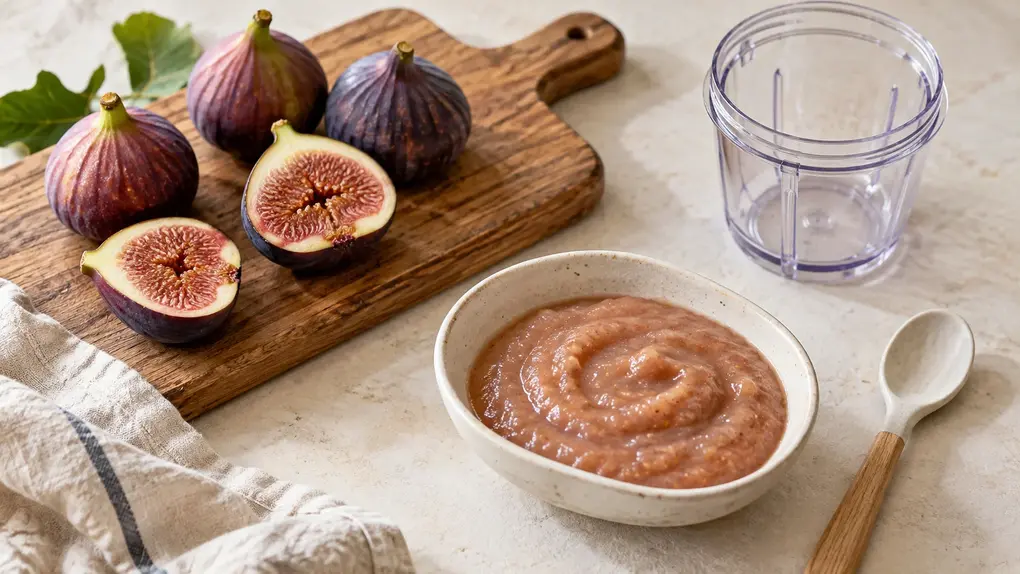
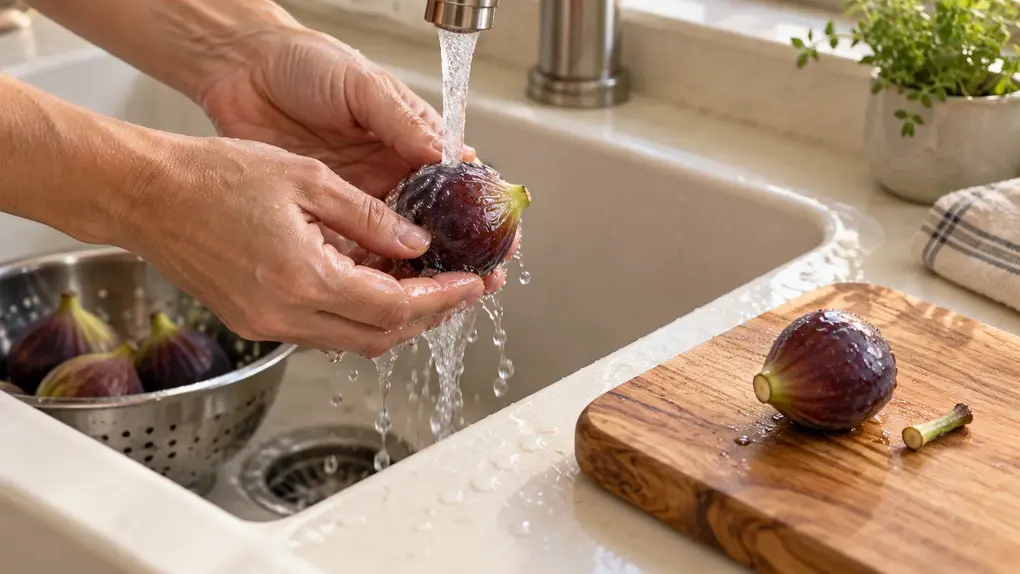
Step 1. Wash and trim
Wash your hands and rinse the figs under running water. Remove the stems and cut the fruit open. Check the inside before using it. Discard spoiled fruit rather than trimming away a visibly moldy patch and using the rest.
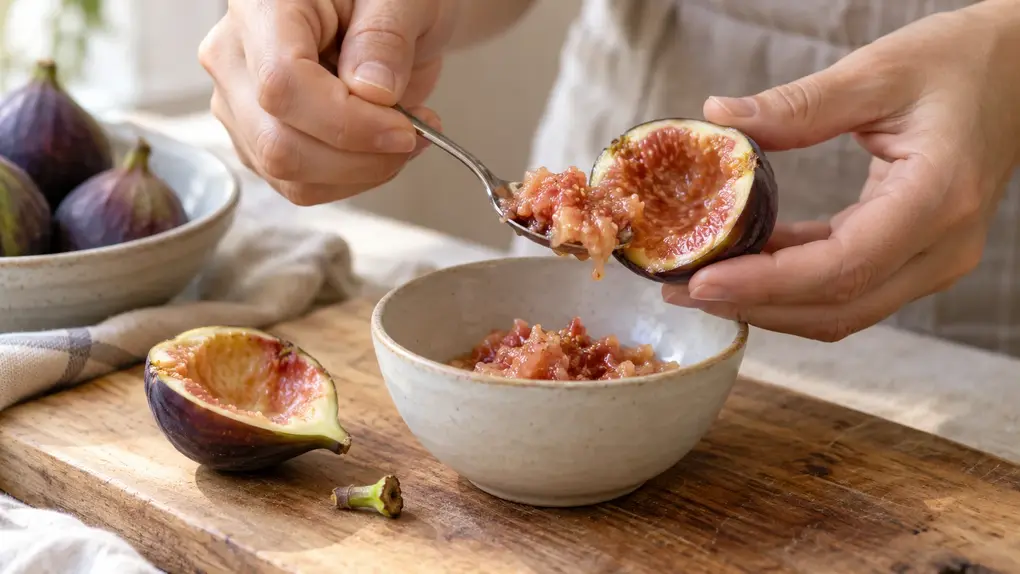
Step 2. Scoop or peel
Scoop out the soft flesh with a spoon. For an easy first puree, leave any tough skin behind. If the skin is tender and you blend it, inspect the finished puree for remaining strips. Removing stubborn pieces is easier than trying to hide them in another food.
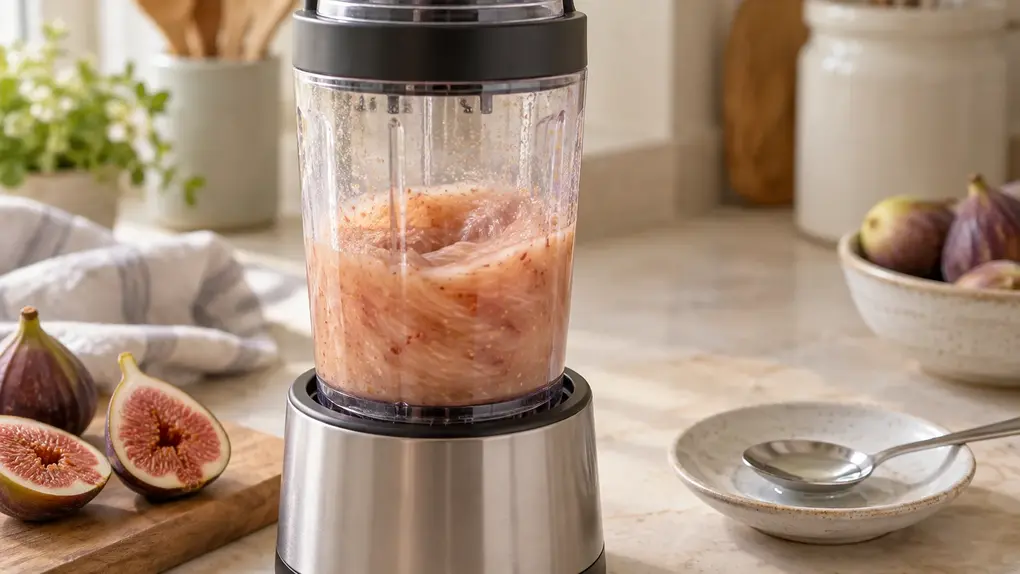
Step 3. Mash or blend
Mash the flesh thoroughly with a fork or process it in a small blender. Add water one teaspoon at a time if necessary. Ripe figs are already moist, so begin without extra liquid and adjust gradually. Aim for a soft puree that moves easily from the spoon.
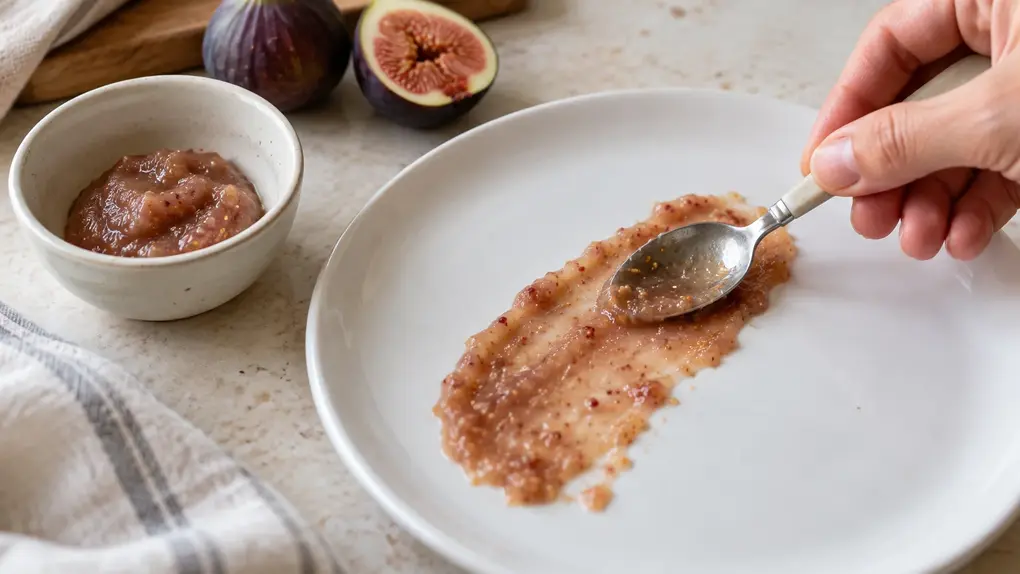
Step 4. Check and serve
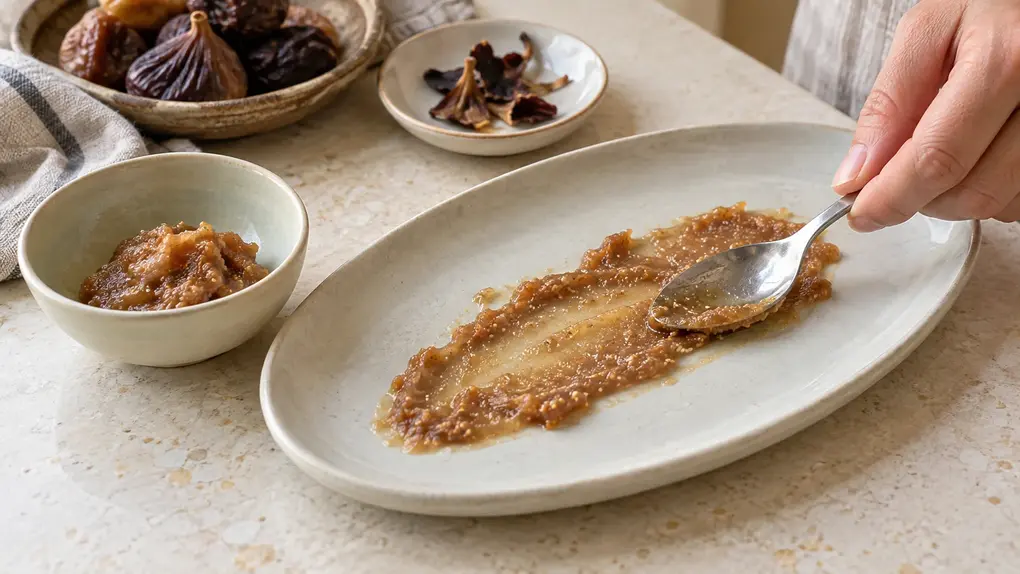
Spread a little puree across a plate and check for firm pieces or skin fragments. Spoon a small portion into a separate feeding bowl. Fresh puree can be served without warming; refrigerate the clean batch promptly if you are saving it.
If your figs are too firm to mash smoothly, cook the trimmed flesh with a little water until soft, then cool and blend. You do not need to force an underripe fig through the blender to make this method work.
How to make dried fig puree
Step 1. Rinse and cut
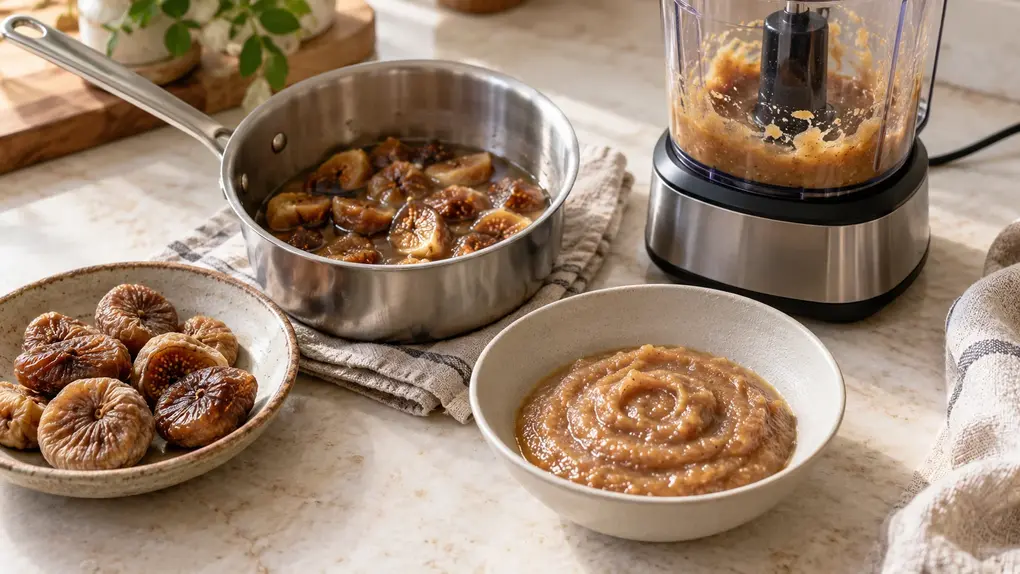
Rinse the dried figs, remove the tough stems, and cut the fruit into quarters. Cutting helps the water reach the flesh during cooking. It does not make uncooked dried fig pieces appropriate for a baby to eat.
Step 2. Simmer until soft
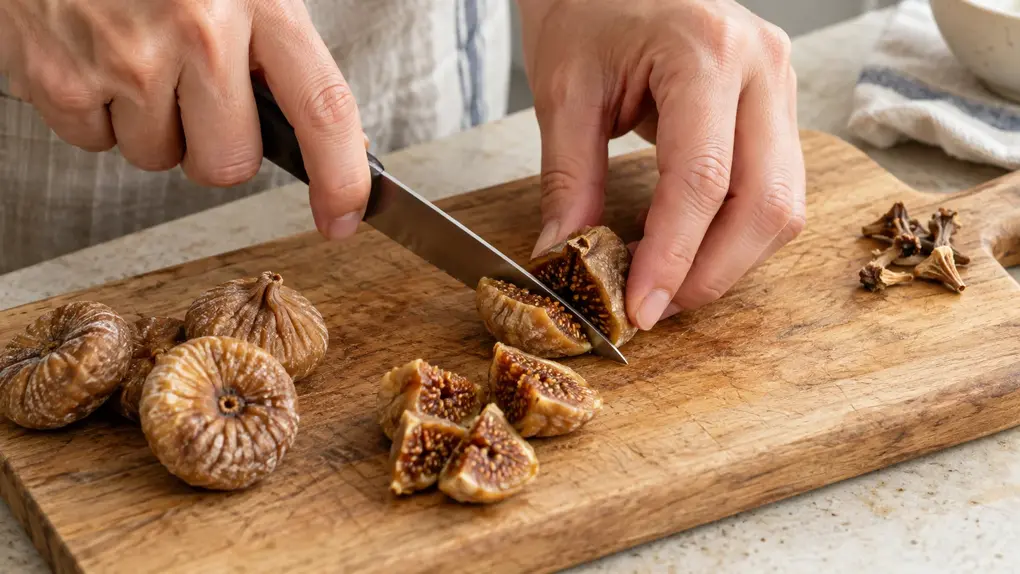
Place the figs and water in a small saucepan. Bring to a gentle simmer, then reduce the heat. Check after about ten minutes, stirring occasionally and adding water as needed. Continue until the flesh crushes readily with a fork. Older or especially dry figs may take longer.
Step 3. Cool and blend
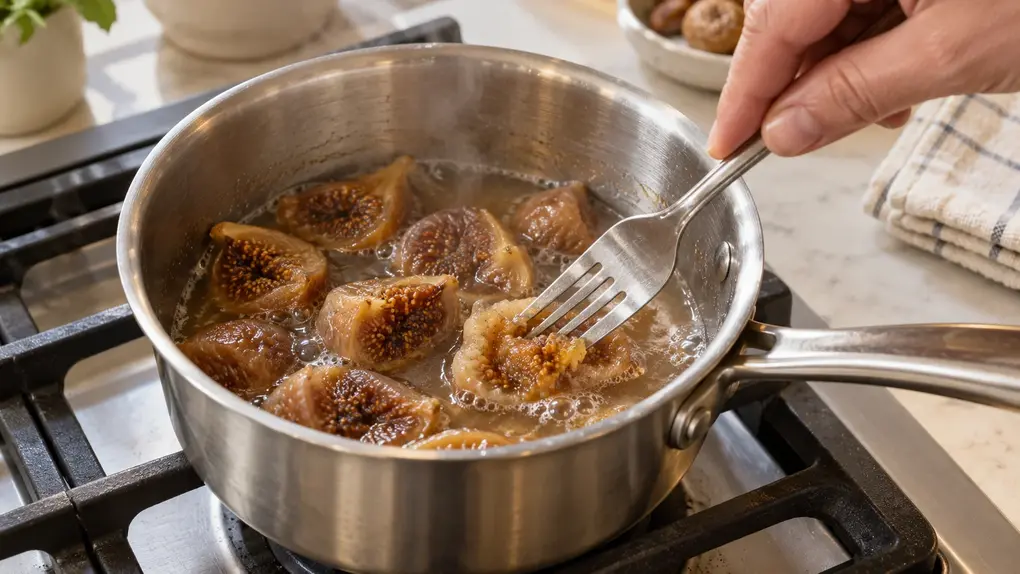
Let the cooked figs cool enough for your blender’s instructions. Transfer the fruit with a little cooking liquid and blend thoroughly. Add more water in small amounts if the mixture clings in a thick, sticky mound. You want a moist puree, rather than a dense dried fruit paste.
Step 4. Inspect carefully
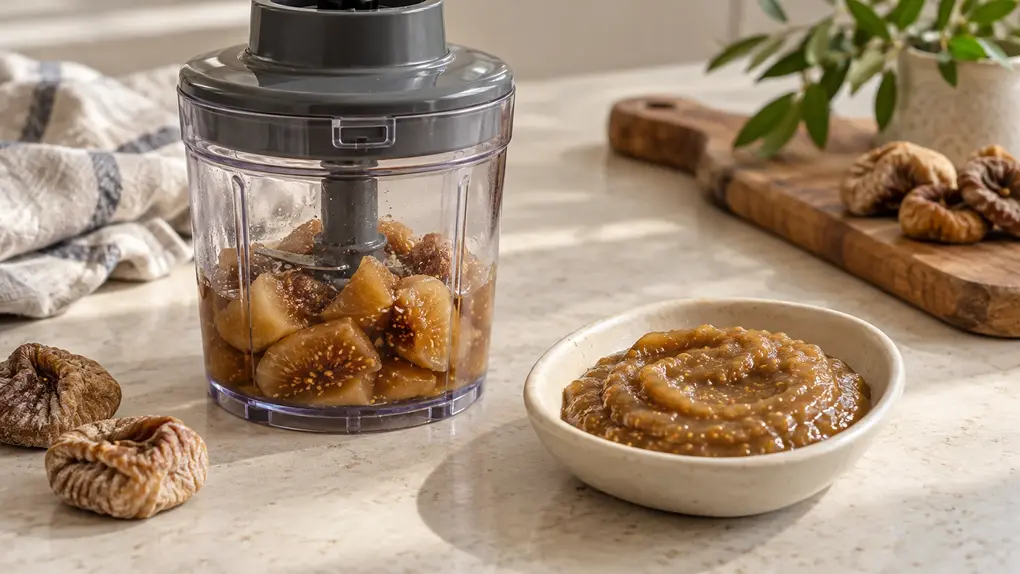
Check for chewy fragments, tough skin, or pieces that resist crushing. Return insufficiently softened fruit to the pan with water and cook longer. Blend again after cooling. A smoother appearance alone does not prove that every firm piece has softened.
Soaking can soften dried figs before cooking, but it is not the only texture check. For this method, simmer the fruit and assess the result directly. Do not offer uncooked dried figs or sticky chunks; dried fruit can be a choking hazard.
Five easy fig puree combinations
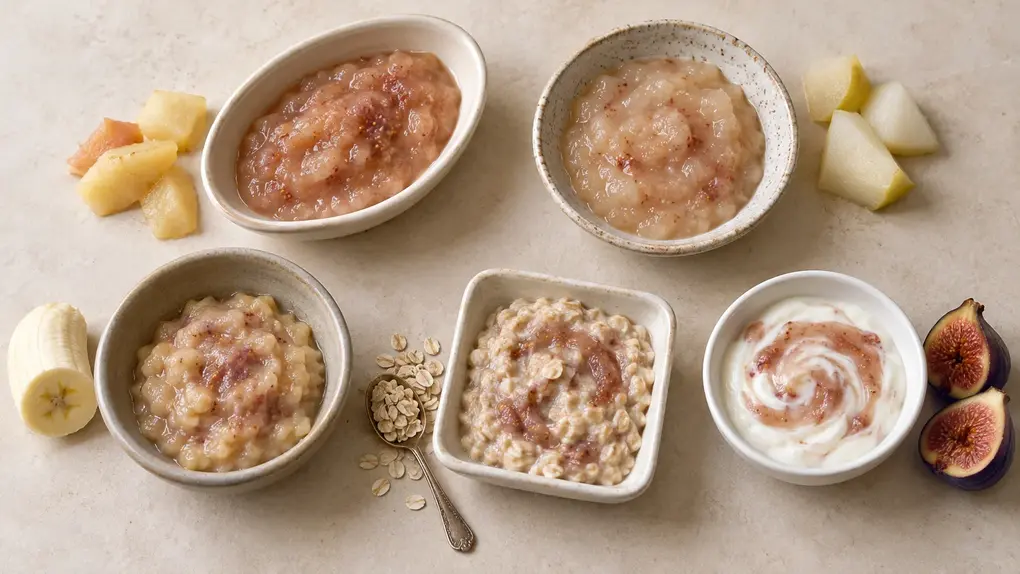
Once your baby has tried the ingredients individually, mix a little fig puree into a familiar food. Begin with more of the familiar ingredient and less fig, then adjust to your baby’s response. These are serving ideas, not fixed nutrition formulas.
For more pairing ideas, try these banana baby food combinations.
| Combination | How to prepare it | Texture to aim for |
|---|---|---|
| Fig and apple | Stir into cooked apple puree | Soft and evenly blended |
| Fig and pear | Mix with soft pear puree | Moist with no firm pear pieces |
| Fig and banana | Combine with thoroughly mashed ripe banana | Easy to lift from a spoon |
| Fig and oatmeal | Stir into prepared, cooled baby oatmeal | Moist; thin if it thickens |
| Fig and yogurt | Mix into plain pasteurized yogurt | Smooth and spoonable |
Use unsweetened yogurt and introduce dairy appropriately; yogurt can be offered before twelve months even though cow’s milk should not replace breast milk or formula as a drink before that age. If your baby has a known dairy allergy, choose a different combination and follow their clinician’s guidance.
For a gentle breakfast variation, add just a little fig puree to oatmeal you have already prepared. Stir well so the flavor is distributed throughout. For a fruit combination, cooked apple can soften the intensity of dried fig puree without requiring added sugar.
How much puree should you offer
One or two teaspoons can be a practical amount for a first taste. This is a starting suggestion, not a prescribed dose or a rule for every baby. Offer more if your baby wants it, and stop when they close their mouth, turn away, or lose interest.
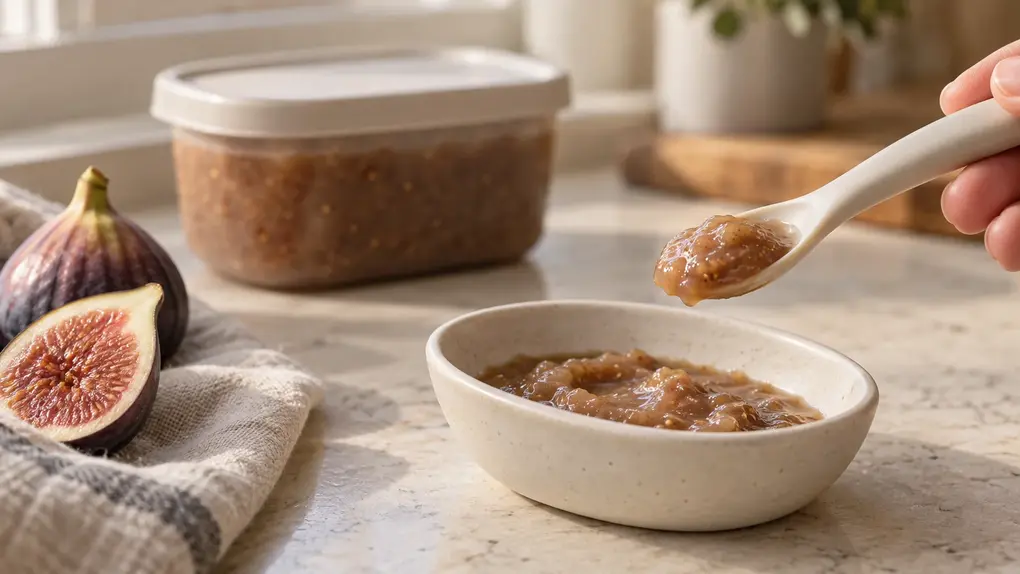
Avoid using the batch yield as a serving size. A container holding half a cup may provide several small servings, depending on what your baby eats. Portion first, then put the clean container away before feeding begins.
If your baby refuses figs, try again another day without pressure. A new flavor may take time to become familiar. You can also offer a small amount alongside a food they already enjoy, once both ingredients have been introduced.
Storage and freezing guide
| Situation | What to do |
|---|---|
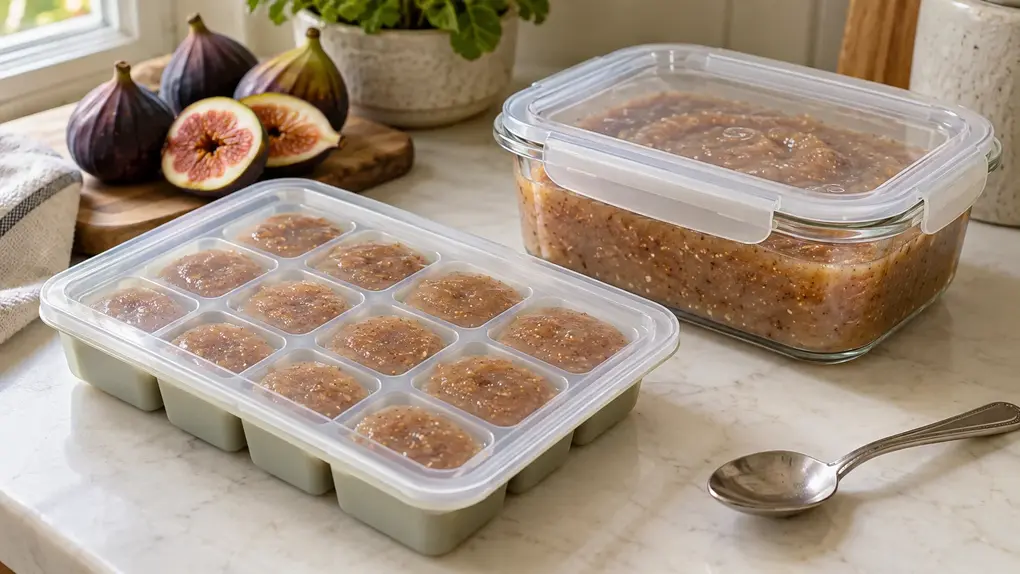
| Plain puree in the refrigerator | Cover and use within 1–2 days; keep at 4°C or below |
| Plain puree in the freezer | Freeze covered portions; use within 1–2 months |
| Thawing a frozen portion | Thaw in the refrigerator rather than on the counter |
| Food left in the feeding bowl | Discard after the feeding; do not return to the batch |
| Adding milk or formula | Add to the serving just before feeding; follow milk storage limits |
The refrigerator and freezer periods above follow FoodSafety.gov’s guidance for homemade baby foods. Label each container with the preparation date. Freeze in small covered portions, then move the frozen portions to a suitable sealed freezer container.
Use a clean spoon to transfer food into the feeding bowl. A spoon that has touched your baby’s mouth should not go back into the batch you plan to store. Saliva can contaminate the remaining food, even if you refrigerate it afterward.
Refrigerate promptly rather than leaving the saucepan on the counter for hours. If you are taking puree out with you, keep it chilled with a cold source. FDA guidance says perishable baby food left without refrigeration or a cold source for more than two hours should not be used.
There is no need to warm fig puree if your baby accepts it chilled. If you warm a serving, stir thoroughly and check that it is comfortably lukewarm before feeding. Avoid repeatedly warming and cooling the same portion.
For easier meal preparation, keep one portion in the refrigerator and freeze the remainder while it is still within the storage window. Choose containers sized for small amounts so you can take out less and add more if needed. This approach also helps you avoid thawing a large batch when your baby only wants a few spoonfuls at that meal.
Troubleshooting your fig puree
- Too thick: add water one teaspoon at a time, then blend or stir again. Adjust the serving rather than automatically diluting the whole batch.
- Too runny: mix a small amount into prepared oatmeal or another familiar thicker food. Use less blending liquid next time.
- Tough skin remains: remove the fragments. Scoop fresh flesh more carefully or cook dried figs longer before blending again.
- Blender will not catch the fruit: stop the appliance, scrape the sides safely, and check whether a smaller blending cup would work better.
- Puree looks darker than expected: check the ingredients and condition of the fruit. Different varieties and dried figs naturally give different results.
A few tiny fig seeds may remain visible after blending. Focus on removing hard stems, firm fruit pieces, and tough skin. If you cannot achieve a texture your baby manages comfortably, choose another suitable puree and try figs another time.
Conclusion
Fig puree for baby is a simple way to introduce another fruit flavor to your little one’s meals. Use soft, ripe fresh figs for quick preparation, or cook dried figs until tender before blending them into a moist puree. Start with a small taste, check the texture carefully, and follow your baby’s appetite. Once the ingredients are familiar, try mixing fig puree with apple, pear, banana, oatmeal, or plain yogurt. Save this recipe for your next small batch of homemade baby food.
Looking for more variety? Explore our baby food combo purees.
Disclaimer
This article is for general informational purposes and does not replace advice from your baby’s pediatrician or healthcare professional. Offer foods appropriate for your baby’s developmental readiness, prepare suitable textures, and supervise every feeding. Fig puree is not a proven treatment for infant constipation. Seek individual guidance if your baby has allergies, feeding difficulties, or persistent digestive concerns.
FAQ’s
Q.1 Can fig puree help with constipation?
Figs contain fiber, but this recipe is not a proven treatment for infant constipation. Hard, painful stools deserve attention, especially if the problem persists. Contact your baby’s clinician rather than repeatedly increasing the amount of figs or offering fig soaking water as a remedy.
Q.2 Can babies be allergic to figs?
A reaction to any food is possible. Stop offering the food if you notice a suspected reaction and seek medical advice. Breathing difficulty or swelling of the mouth or throat needs emergency help. If your baby has previously reacted to figs, ask their clinician before trying them again.
Q.3 Do fresh figs need cooking?
Fully ripe, soft flesh can usually be mashed or blended without cooking for this recipe. Firm flesh needs softening first. Wash the fruit, remove the stem, and inspect the puree before serving; choosing a fresh method does not remove those preparation steps.
Q.4 Can I add breast milk or formula?
Yes, you can add a little breast milk or correctly prepared formula to the individual serving just before feeding. Prepare formula according to its label, rather than adding dry powder directly to fruit. Keep the stored batch plain so you can manage its storage separately.
Q.5 Can I make the puree ahead?
Yes. Prepare a small plain batch, refrigerate promptly, or freeze clean portions. Add banana, yogurt, or other ingredients to the serving when needed. That makes it easier to vary the flavor without committing your whole batch to one combination.