Pea Puree for Baby Smooth, Naturally Sweet & Protein-Rich
Green vegetables can take time for babies to get used to, but peas offer a naturally mild, slightly sweet flavor that can make them an approachable green food when starting solids.
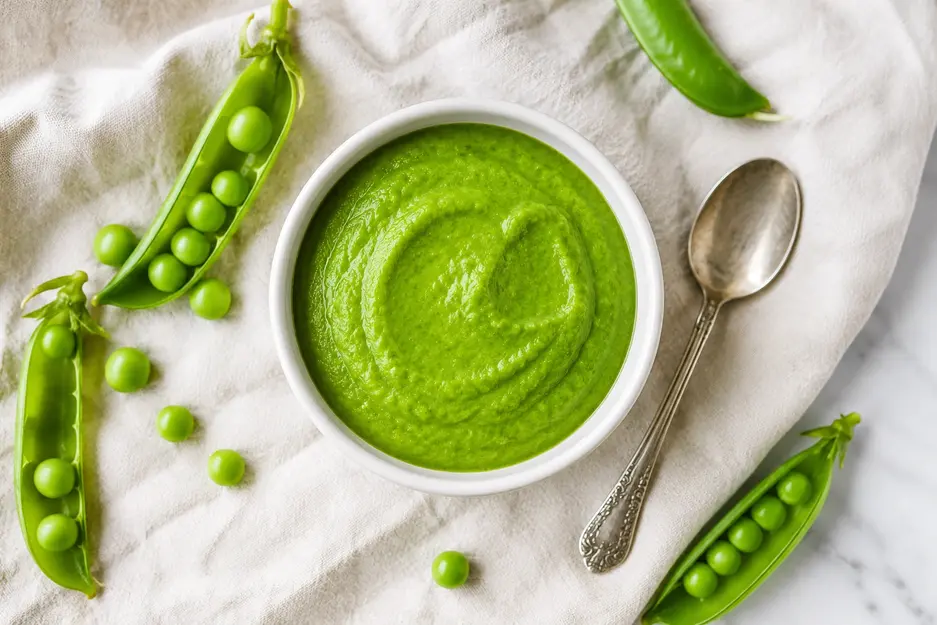
Pea puree for baby has a naturally mild, slightly sweet flavor and blends into a silky, bright green puree. That gentle taste can make peas an approachable way to introduce green foods while giving baby experience with a new flavor and texture. Peas stand out because they provide more plant-based protein than many commonly offered first vegetables. They also contribute fiber, folate, zinc, vitamin C, and some iron. Around 6 months, babies begin needing a wider variety of nutrients from complementary foods alongside breast milk or formula, and peas can be one useful part of that variety.
This guide covers the one straining step that turns grainy pea puree into restaurant-smooth green, fresh versus frozen, flavor combos that work, and storage rules that actually extend shelf life correctly.
New to solids? Start with our complete First Foods for Baby at 6 Months guide to learn the safest foods, textures, and signs your baby is ready.
Suitable age: Pea puree is safe to introduce from 4 to 6 months once your pediatrician approves starting solids.
Why You’ll Love This Puree
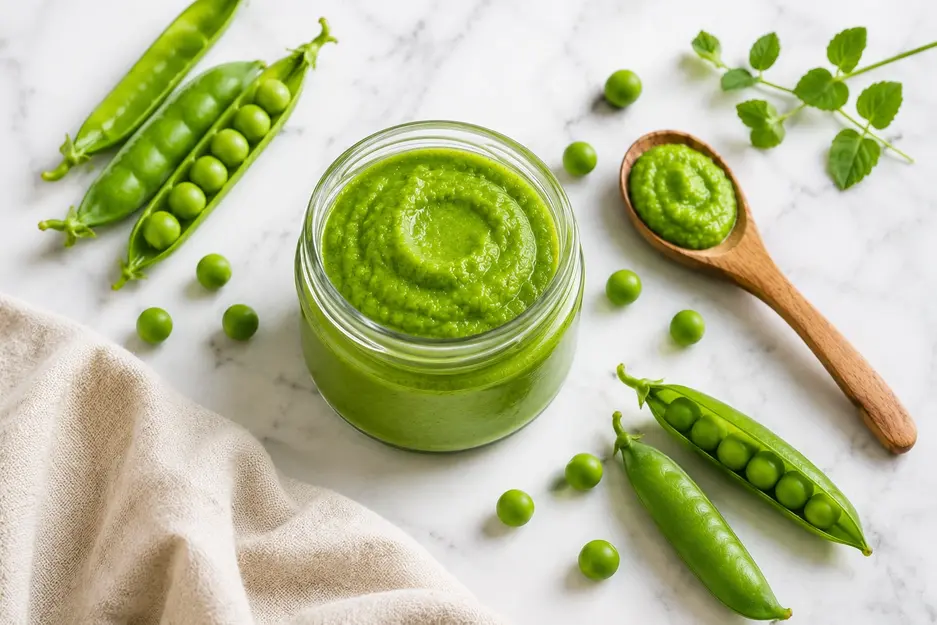
- Higher in protein than many commonly offered first vegetables
- Naturally mild and slightly sweet an approachable green food for starting solids
- Fresh or frozen both work frozen peas are a practical year-round option
- Bright green color visually exciting for babies and appealing for photos
- Freezer-friendly make one batch, freeze for 3 months
- Pairs with almost anything mint, apple, avocado, sweet potato, lentil, and more
Health Benefits of Pea Puree for Baby
Pea puree for baby provides a useful mix of nutrients, including plant protein, fiber, folate, zinc, vitamin C, and some iron.
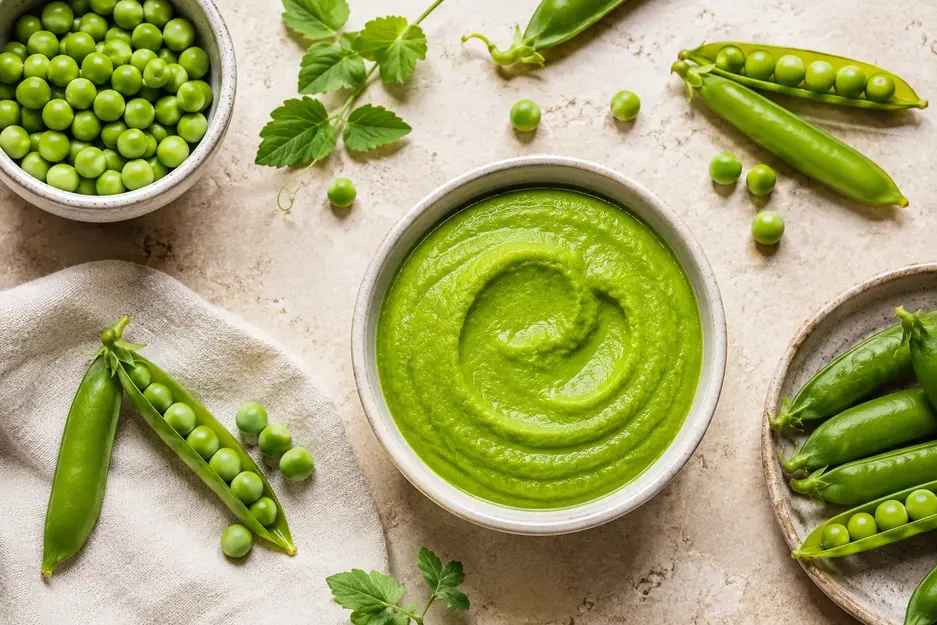
Key Nutrients in Peas (per 100g, cooked)
| Nutrient | Amount | Baby Benefit |
| Protein | 5.4 g | Muscle growth, tissue development |
| Iron | 1.5 mg | Red blood cell production, brain development |
| Zinc | 1.2 mg | Immune function, growth, enzyme activity |
| Folate | 65 mcg | Brain and spinal cord development, DNA synthesis |
| Vitamin C | 14.2 mg | Boosts iron absorption, immune support |
| Vitamin K | 24.8 mcg | Bone strength, blood clotting |
| Fiber | 5.1 g | Digestive health, gut microbiome support |
| Vitamin A (RAE) | 38 mcg | Eye development, immunity |
Why peas can be useful around 6 months:
As complementary feeding begins, babies start exploring a wider variety of foods alongside breast milk or formula. Peas contribute plant protein and several micronutrients, making them a useful ingredient within a varied diet.
Peas are legumes:
Green peas belong to the legume family. Their nutrient profile is different from many other foods commonly treated as vegetables, including a relatively useful amount of plant protein. They also pair easily with grains, vegetables, fruits, and other protein foods.
Vitamin C can support non-heme iron absorption:
Peas contain both plant-based iron and vitamin C. Vitamin C can improve the body’s absorption of non-heme iron from plant foods, which makes vitamin-C-rich foods useful partners for plant sources of iron.
The Straining Step
If you want an especially silky pea puree, a fine-mesh strainer can make a noticeable difference by removing some of the fibrous pea skins.
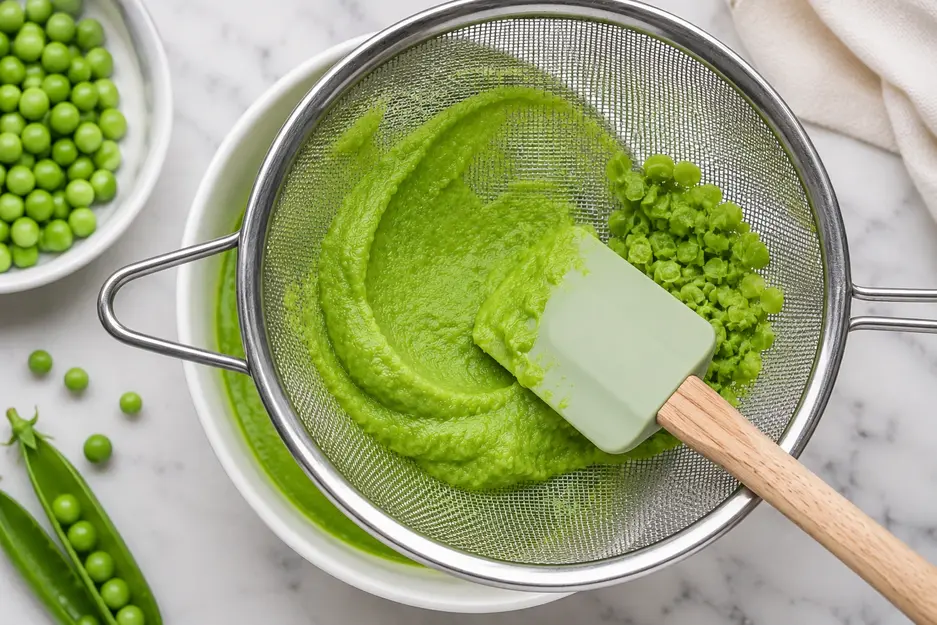
Peas have thin, fibrous outer skins. Even after blending, small pieces of skin can remain and give the puree a slightly grainy texture. Some babies who are just beginning with smooth purees may prefer a silkier consistency. For an extra-smooth result, press the blended puree through a fine-mesh strainer using a rubber spatula in circular motions. Some of the fibrous skins remain in the strainer while the puree becomes smoother and silkier.
This takes only a couple of minutes and is useful when you want a very smooth first-puree texture.
When can you skip straining?
Straining is optional rather than a safety requirement. As baby becomes comfortable with thicker and more textured foods, you can gradually leave the puree less smooth and follow baby’s developmental readiness.
Fresh vs Frozen Peas Which Is Better for Baby Puree?
Most parents assume fresh peas are the superior choice. The reality is more nuanced.
Frozen peas are blanched immediately after harvest at peak ripeness. This locks in nutrients and partially breaks down the outer skin making frozen peas blend more smoothly and require less straining. Research from UC Davis found that frozen vegetables often retain comparable or superior vitamin content to fresh produce that has been in transit for several days.
Fresh peas have a slightly brighter, sweeter flavor when perfectly in-season. But shelling takes time and the freshness window is very short.
Verdict for baby puree: Frozen peas are often the most practical choice because they are available year-round, require no shelling, and blend easily. Fresh peas are also a good option when they are in season. Both can work well for homemade baby puree.
Ingredients You’ll Need
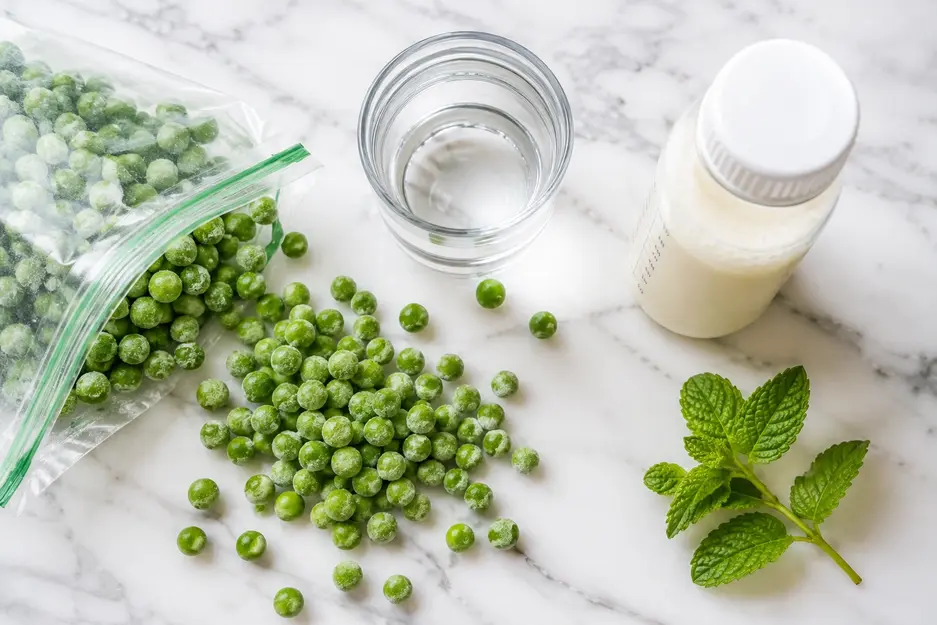
Main Ingredient:
- 1 cup frozen peas (about 150g) yields approximately 6 to 8 baby servings
- OR 1 cup freshly shelled peas (if in season)
Optional Add-Ins:
- 2 to 4 tablespoons water, breast milk, or formula
- 1 to 2 small fresh mint leaves, optional, for gentle flavor
- Quarter ripe avocado (adds healthy fats, creamier texture)
- A small squeeze of fresh lemon juice, optional, for flavor
- Plain full-fat yogurt, once dairy has been introduced appropriately
Do not add honey before 12 months. Avoid added salt and sugar. Cow’s milk should not replace breast milk or formula as baby’s main drink before 12 months; age-appropriate dairy foods can be introduced with solids.
Ingredient Notes & Buying Tips
Choosing frozen peas:
Look for bags labeled “sweet peas” or “garden peas” with no added salt or sauces. Small bright green peas produce a sweeter puree than large starchy ones
Organic vs regular:
Peas are not on the EWG Dirty Dozen list. Regular frozen peas are a safe, budget-friendly choice.
Fresh peas in season:
Look for bright green pods that feel full and firm. Once shelled, use within 1 to 2 days fresh peas lose sweetness quickly after picking.
Kitchen Equipment Needed
- Pot with steamer basket
- Blender or food processor
- Fine mesh strainer optional, for an extra-smooth texture
- Rubber spatula for pressing through strainer
- Silicone ice cube tray
- Airtight glass jars
Step-by-Step Instructions
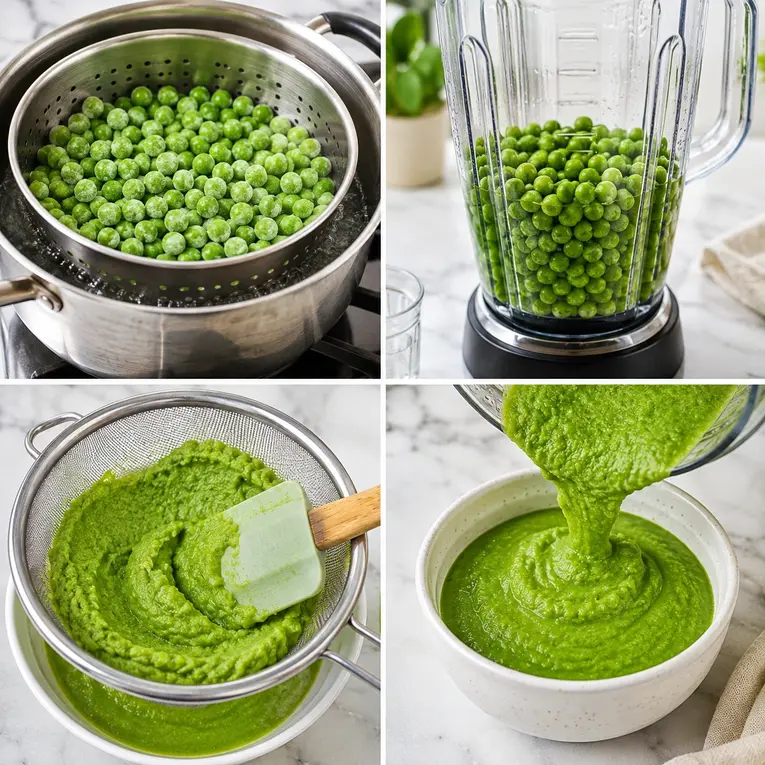
Step 1:
No Thawing Needed If using frozen peas, go straight from freezer to steamer. No thawing required.
Step 2:
Steam Add 2 inches of water to pot. Bring to a boil. Place peas in steamer basket. Cover and steam for exactly 3 to 4 minutes. Do not go longer peas cook fast and over-steaming kills the bright green color and sweetness.
Do not boil directly in water. Boiling leaches vitamin C and folate directly into the cooking water.
Step 3:
Cool Briefly Cool 3 to 4 minutes. Peas cool quickly.
Step 4:
Blend Add peas and 2 tablespoons of liquid to blender. Blend on high for 90 seconds.
Step 5:
Strain for an Extra-Smooth Texture (Optional) Press through a fine-mesh strainer with a rubber spatula if you want a silkier puree. As baby progresses with textures, this step can be skipped.
Step 6:
Adjust Consistency Add liquid one tablespoon at a time. Pea puree thickens as it cools, so make it slightly thinner than needed.
Texture by Baby’s Age
| Age | Texture | How to Get There |
| Around 6 months | Very smooth and thin, if preferred | Blend fully; strain if desired; add liquid |
| Around 6–8 months | Smooth, gradually thicker | Blend well; adjust with liquid; straining optional |
| Around 8–10 months | Smooth with more texture | Blend to baby’s preferred texture |
| Around 10–12 months | Rough mash with small pieces | Fork-mash or pulse blend briefly |
Recipe Tips
- Steam only 3 to 4 minutes longer turns peas from bright green to dull grey and shifts flavor from sweet to starchy
- Strain if you want an extra-smooth puree some babies beginning with smooth textures may prefer the silkier consistency
- Puree thickens as it cools always make it slightly thinner than needed right after blending
- Try a small amount of mint for flavor variety herbs can gently introduce baby to new tastes
- Pair peas with vitamin-C-rich foods vitamin C can support absorption of non-heme iron from plant foods
- Reserve steaming water contains water-soluble nutrients and is the best thinning liquid for this puree
Flavor Combinations & Variations
Once peas have been introduced and tolerated, try combining them with other familiar foods:
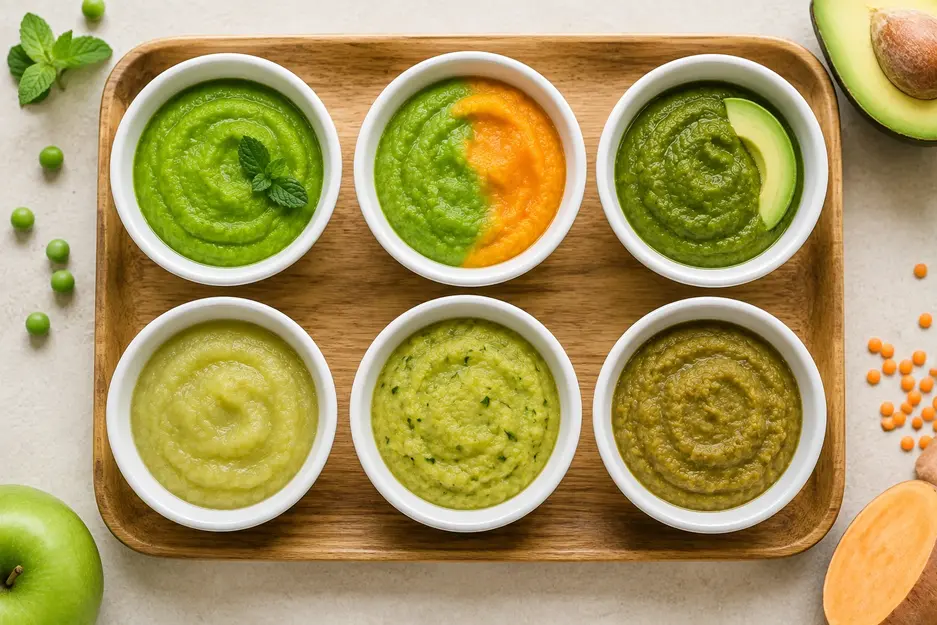
- Pea + Mint gentle flavor variation, around 6 months+ when ready for solids
- Pea + Sweet Potato plant protein plus beta-carotene, around 6 months+
- Pea + Avocado plant protein plus healthy fats with a creamy texture, around 6 months+
- Pea + Apple mild sweetness with vitamin C, around 6 months+
Want another naturally sweet first food? Try this smooth Apple Puree for Baby recipe next.
- Pea + Zucchini two mild vegetables with a soft texture, around 6 months+
- Pea + Lentil combines two plant foods that provide protein and iron
- Pea + Spinach combines two nutrient-rich green foods
- Pea + Chicken combines peas with an iron- and protein-containing animal food
Pea Puree for Baby Combination Comparison Table:
| Combo | Best Age | Key Benefit | Texture |
| Pea + Mint | 6 months+ | Palate development, gentle flavor | Smooth, bright green |
| Pea + Sweet Potato | 6 months+ | Protein plus Vitamin A, very filling | Medium thick |
| Pea + Avocado | 6 months+ | Plant protein plus healthy fats | Creamy, rich |
| Pea + Apple | 6 months+ | Contains vitamin C alongside plant iron | Smooth, slightly sweet |
| Pea + Lentil | 7 months+ | Two plant sources of protein and iron | Thick, savory |
| Pea + Spinach | 7 months+ | Two nutrient-rich green foods | Smooth, deep green |
Storage Instructions
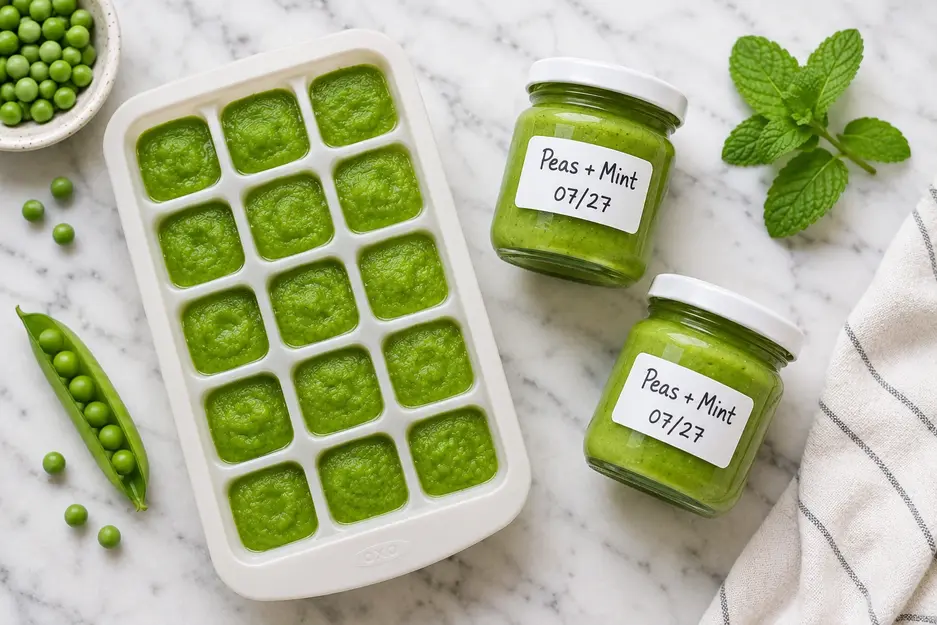
Refrigerator:
Store promptly in a clean, covered container in a refrigerator at 40°F/4°C or colder and use within about 2 to 3 days. Slight color darkening can occur during storage. Discard any puree that has been served from baby’s bowl or contacted a used spoon.
Freezer:
Pour into silicone ice cube tray immediately after making. Freeze 4 to 6 hours. Transfer to labeled freezer bag.
- Freezer life: Up to 3 months
- Each cube = approximately 1 to 2 tablespoons
Color note: Thawed pea puree may look slightly duller or greyer than freshly made puree. Color change alone does not necessarily mean spoilage; discard food with an off smell or other signs of spoilage.
Thaw only the amount you need. For best food-safety practice, do not refreeze puree that has been fully thawed or served.
How to Reheat
From refrigerator: Place jar in warm water for 5 to 8 minutes. Stir well. Test on inside of wrist before serving.
From frozen: Thaw overnight in refrigerator. Then warm with water bath method.
Microwave (refrigerated only): 10-second bursts at 50% power. Stir between every burst pea puree reheats unevenly.
Can Babies Eat Pea Puree?
Yes. Cooked peas can be an appropriate first food when baby is developmentally ready for solids and the peas are prepared in an age-appropriate texture.
- Starting age: Around 6 months, once baby shows signs of readiness for solids; follow your pediatrician’s guidance
- Allergy note: Peas are legumes. They are not one of the major U.S. food allergens, but allergic reactions can still occur. Introduce new foods in a way that makes reactions easier to identify and seek medical advice for concerning symptoms.
- Digestive response: Peas contain fiber, and individual babies may respond differently as they get used to solids. Start with a small amount and increase gradually according to appetite and tolerance.
- Green stools: Completely normal after eating peas or any green vegetable.
- Whole frozen peas are a choking hazard always cook and puree or mash before serving.
Pediatric guidance: Complementary foods are generally introduced around 6 months when a baby shows developmental readiness. Peas can contribute protein, folate, zinc, fiber, and other nutrients as part of a varied diet. Always follow your pediatrician’s individual guidance.
Serving Suggestions
- Alone useful when first introducing peas so you can easily recognize how baby responds
- Stirred into oatmeal protein-boosted iron-rich breakfast bowl
- Mixed with sweet potato puree green and orange swirl babies find visually engaging
- On a preloaded spoon self-feeding practice at 8 to 9 months
- As a dip base thicker pea puree on a tray for finger food dipping at 10 months+
- Mixed into pasta thinned pea puree as protein-rich green sauce at 10 months+
Expert Tips & Mistakes to Avoid
Over-steaming the color killer:
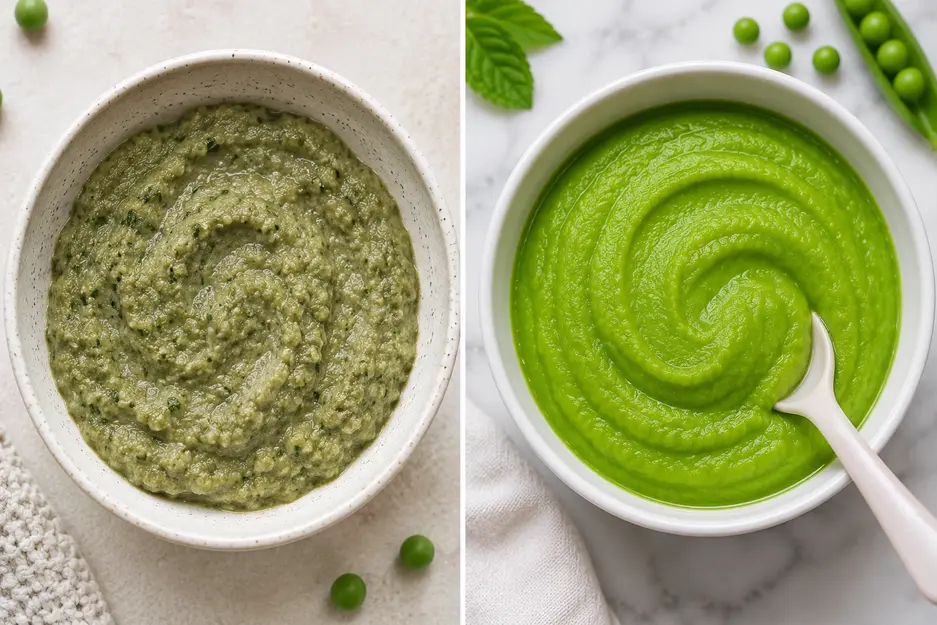
More than 5 minutes turns peas from vivid green to dull grey-olive. Chlorophyll breaks down and sweetness shifts to starchiness. Steam exactly 3 to 4 minutes.
Skipping the strainer:
This is not a safety problem, but pea skins can make puree slightly grainy. If baby prefers very smooth purees, press it through a fine-mesh strainer; gradually offer more texture as baby develops.
Using large starchy peas:
Jumbo or marrowfat peas are mealy and noticeably more bitter. Always choose bags labeled “sweet peas” or “garden peas.”
Thawing frozen peas before steaming: Usually unnecessary. Frozen peas can go straight from the freezer to the steamer, following the package cooking directions as needed.
Not accounting for thickening:
Pea puree thickens significantly as it cools. Make it thinner than needed and let it thicken naturally in the bowl.
Recipe Card
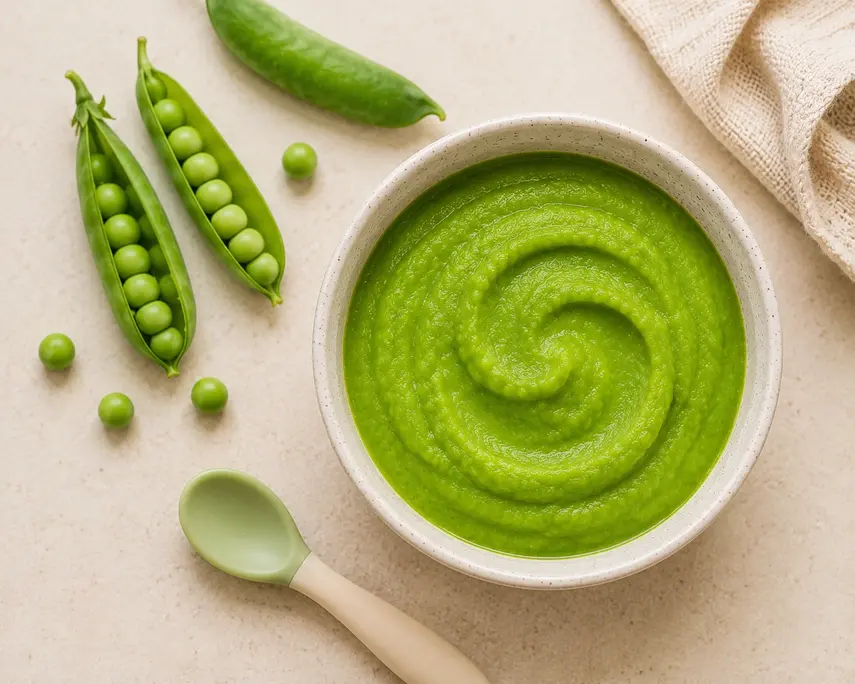
Pea Puree for Baby
Prep Time: 2 minutes | Cook Time: about 4 minutes | Total Time: about 6 minutes | Servings: 6 to 8 portions | Age: Around 6 months+, when developmentally ready for solids
Ingredients:
- 1 cup (150g) frozen sweet peas no thawing needed
- 2 to 4 tablespoons water, breast milk, or formula
- Optional: 1 to 2 small mint leaves | a small squeeze of lemon for flavor | quarter ripe avocado
Instructions:
- Add 2 inches of water to pot. Bring to a boil.
- Place frozen peas directly into steamer basket. Cover and steam 3 to 4 minutes.
- Cool for 3 to 4 minutes.
- Add peas and 2 tablespoons liquid to blender.
- Blend on high for 90 seconds until smooth.
- Press through a fine-mesh strainer if an extra-smooth texture is desired.
- Add liquid one tablespoon at a time if needed.
- Serve immediately or store.
Notes:
- Straining is optional use it when you want an extra-smooth texture
- Steam exactly 3 to 4 minutes longer kills the green color
- Puree thickens as it cools make it slightly thinner than needed
- No honey before 12 months; avoid added salt and sugar; cow’s milk should not replace breast milk or formula as the main drink before 12 months
- When introducing a new food, offer it in a way that makes any reaction easier to identify before mixing several unfamiliar ingredients
Estimated Nutrition Per Serving (approx. 2 tablespoons, plain):
| Nutrient | Per Serving |
| Calories | ~22 kcal |
| Protein | ~1.4 g |
| Iron | ~0.38 mg |
| Zinc | ~0.3 mg |
| Folate | ~16 mcg |
| Vitamin C | ~3.6 mg |
| Fiber | ~1.3 g |
Conclusion
Pea puree for baby is a simple green first food that provides plant protein along with fiber, folate, zinc, vitamin C, and some iron. Its mild flavor and naturally bright color also make it easy to combine with many other foods as baby becomes comfortable with solids. Technique still matters. Cook the peas until tender without overcooking, blend to a texture that matches baby’s developmental stage, and use a fine-mesh strainer only when an especially silky puree is wanted. As baby progresses, gradually offer thicker and more textured versions.
Ready to introduce another green food? Try our easy Broccoli Puree for Baby for more variety in your baby’s first-food rotation.
Disclaimer
This article is for informational purposes only and does not replace advice from a licensed pediatrician or registered dietitian. Always consult your baby’s doctor before introducing any new food, including peas. While pea allergy is uncommon, peas are legumes and parents of babies with known legume sensitivities should seek medical guidance before introducing. Nutritional data sourced from USDA FoodData Central. Guidelines referenced from the American Academy of Pediatrics (AAP) and SolidStarts.
FAQ’s
1. Can I freeze pea puree for baby?
Yes pea puree freezes well. Pour into silicone ice cube tray right after making, freeze until solid (4 to 6 hours), transfer to labeled freezer bag. Good for up to 3 months. Color may darken slightly to olive-green after thawing normal and safe. Thaw only what is needed and never refreeze.
2. Can I use frozen peas instead of fresh?
Yes. Frozen peas are a convenient year-round option and work very well for puree. Fresh peas can also be used when available. Frozen peas usually do not need to be thawed before steaming.
3. Why does my pea puree look grey instead of bright green?
Over-steaming is almost always the cause. Chlorophyll breaks down quickly with excess heat. Steam exactly 3 to 4 minutes and stop. Thawed pea puree also naturally darkens slightly this is normal enzyme activity, not spoilage.
4. How long does homemade pea puree last?
Refrigerator: up to 3 days in an airtight glass jar. Freezer: up to 3 months in a labeled freezer bag. If it smells off or looks unusually dark, discard.
5. My baby keeps spitting out pea puree what am I doing wrong?
Babies may need repeated exposure to a new flavor or texture. If the puree seems grainy, try pressing it through a fine-mesh strainer for a silkier texture. You can also adjust thickness and temperature, then offer it again another day without pressure.