Baby Food Chart 6 to 12 Months: What to Feed and When
When my daughter turned six months, I opened three different apps, four websites, and one parenting book and walked away more confused than before. What should she eat first? How much? What about allergies? When do finger foods start? Every source said something slightly different, and none of them showed me a clear, month-by-month picture in one place.
That is exactly what this baby food chart does. It covers every stage from six months through twelve, built on current AAP and CDC guidelines not trends or guesswork. Whether you are starting purees, doing baby-led weaning, or combining both, this guide gives you a clear answer for every month so mealtime feels like a plan, not a panic.
What the Baby Food Chart Covers: A Quick Overview
Before the month-by-month breakdown, here is what the baby food chart shows at a glance:
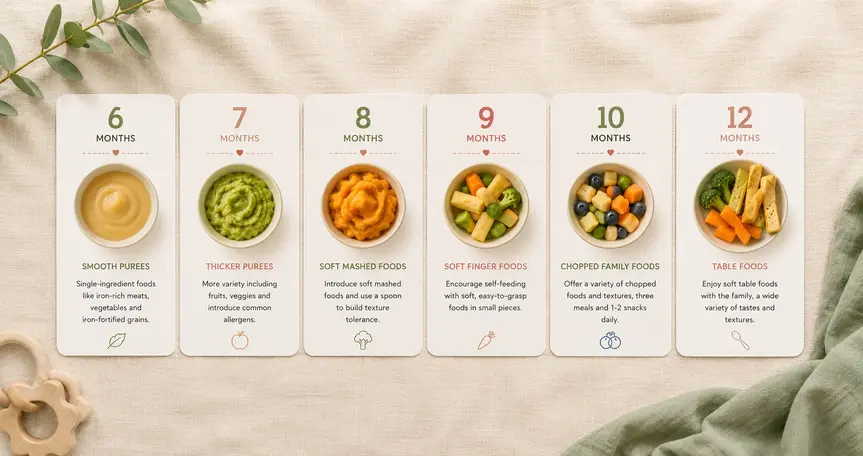
The window between six and twelve months is one of the most important feeding periods in a child’s life. By around six months, a baby’s iron stores from birth begin to decrease, which is why iron-rich foods are the first priority, not just fruit purees. Textures shift dramatically over these six months from thin, smooth purees at six months to small pieces of soft family food by twelve months. Every baby moves at their own speed through these stages, and some naturally progress faster or slower than the chart suggests. The chart is a guide, not a checklist.
Month by Month Baby Food Chart: 6 to 12 Months
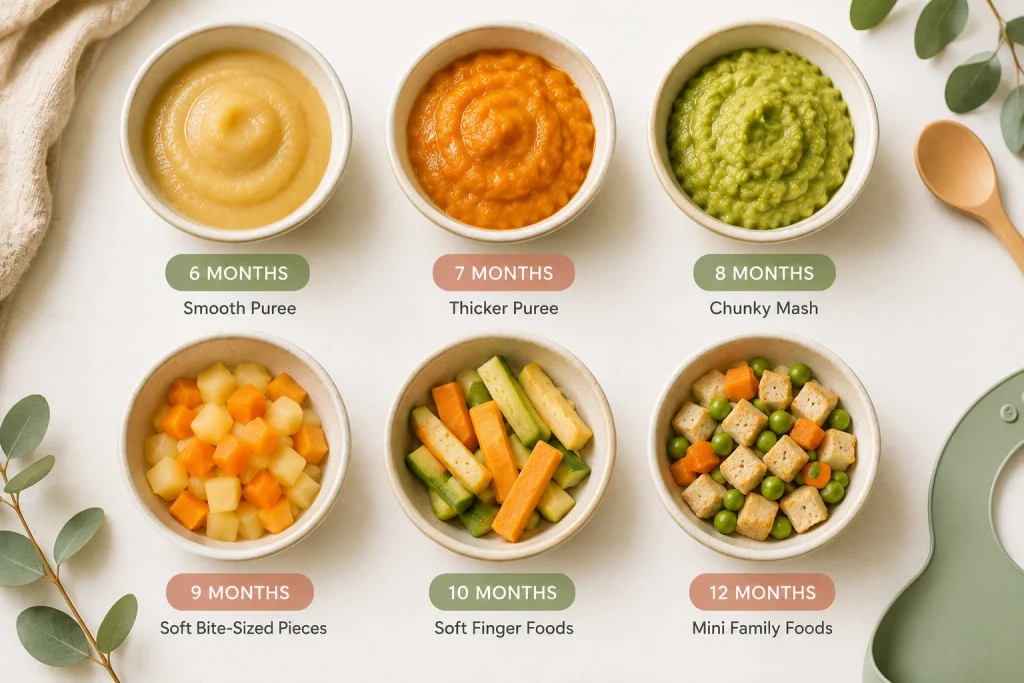
6 Months Starting Solids:
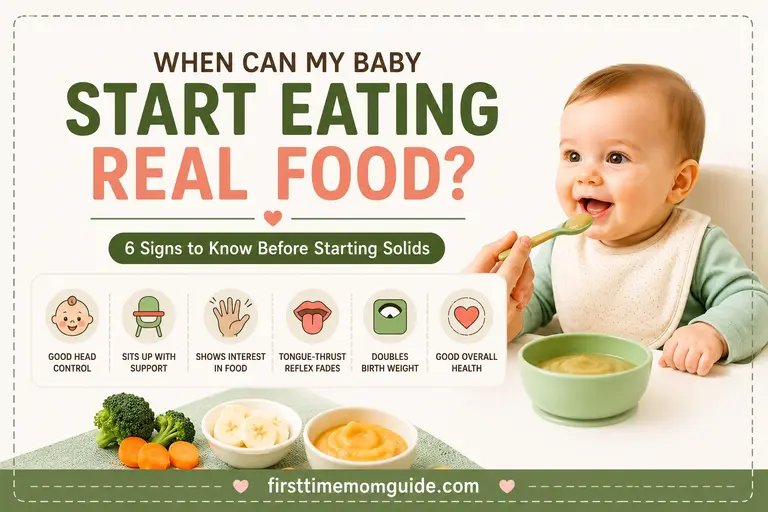
Readiness signs to look for first:
- Sits with minimal support and holds head steady
- Shows interest when others eat
- Opens mouth when food approaches
- No longer pushes food out with tongue automatically
Not sure whether your baby is ready for solids? Read our guide on When Can My Baby Start Eating Real Food? 6 Signs to Know before starting the first foods.
What to offer:
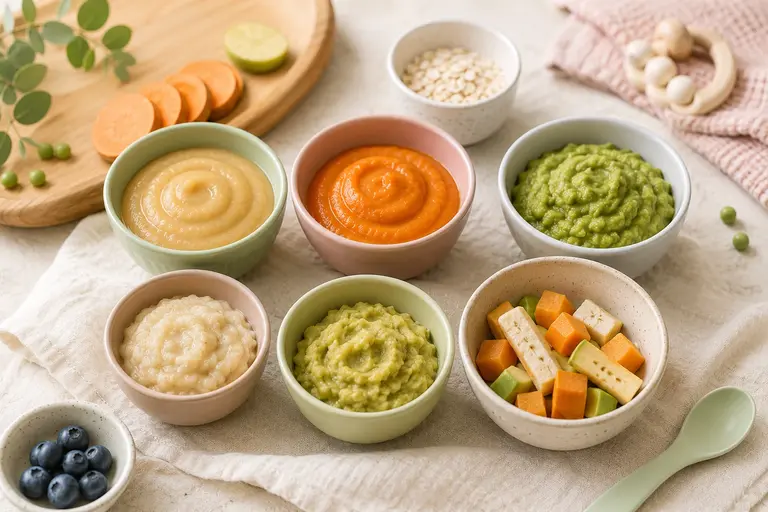
Iron is the priority at this stage because natural stores start declining around six months, according to the AAP. Start with smooth, thin, single-ingredient purees. Good first choices include pureed beef or chicken (both high in iron), iron-fortified oat or barley cereal, pureed sweet potato, pea puree, and mashed avocado. Offer one new food at a time and wait three to five days before introducing the next. This window makes it possible to spot a reaction before the foods are combined.
How much:
Start with one to two teaspoons per feeding, once a day. The goal at this stage is exploration and learning, not volume. Breast milk or formula remains the main source of nutrition.
What to avoid:
Honey in any form (risk of infant botulism), cow’s milk as a drink, fruit juice, added salt or sugar, and any foods that present a choking risk.
7 Months: Expanding Flavors
What to offer:
Continue single-ingredient testing while gradually widening the range. Pureed fruits like pear, apple, and mango are good additions alongside vegetables already accepted. The AAP’s current allergen guidance encourages introducing common allergens (including well-cooked egg and thinned smooth peanut butter) alongside other foods at this stage, unless your pediatrician has advised otherwise. Introduce one allergen food at a time with a few days between each.
Texture:
Still smooth purees, but slightly thicker than month six as your baby becomes more comfortable swallowing.
How much:
Two to three tablespoons per feeding, one to two times daily.
8 Months: Thicker Textures Begin
What to offer:
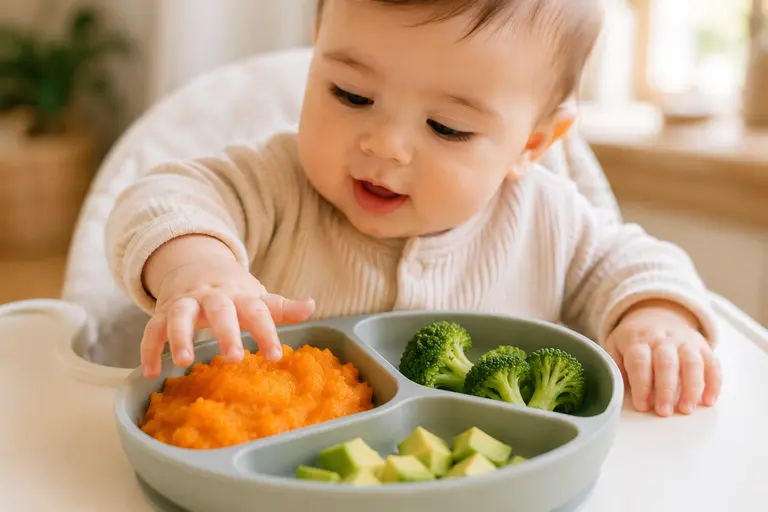
The baby food chart at eight months shows a meaningful shift in texture. Move from thin purees to thicker mashes and soft lumps. Foods like mashed banana, soft-cooked lentils, mashed chickpeas, and thicker vegetable purees all work well. Soft-cooked vegetables like carrot, courgette, and sweet potato mashed with a fork (not blended) let your baby start getting familiar with small pieces of food.
Texture:
Mashed and lumpy rather than smooth. This stage builds the chewing muscles even before teeth arrive, since babies rely on their gums effectively.
How much:
Three to four tablespoons at each of two to three meals daily.
Looking for simple meal ideas? Try these Baby Food Combo Purees 15 Best Recipes for 6–12 Months to add variety to your baby’s menu.
9 Months: First Finger Foods
What to offer:
By nine months, most babies develop what is known as a pincer grasp — the ability to pick up small objects between thumb and forefinger. This is the signal that soft finger foods are appropriate. Good options include small pieces of soft ripe banana, well-cooked pasta pieces, soft steamed broccoli florets, small shreds of cooked chicken, small cubes of soft cheese, and well-cooked scrambled egg pieces.
How much:
Three meals daily, with portions around four to five tablespoons. Breast milk or formula continues alongside solids but typically reduces naturally as solid intake grows.
Baby food chart tip at this stage:
All finger foods should squish easily between your own thumb and forefinger before going on the tray. If you cannot crush it easily, it is not soft enough yet.
Shapes matter at this stage.
Before the pincer grasp fully develops, offer foods in finger-length sticks so your baby can grab with their whole fist. Once the pincer grasp is working well, smaller pea-sized pieces become easier to pick up and less frustrating. Changing the shape of a food before changing the food itself is a common trick for getting past texture resistance at this stage.
How Much Milk Should a Baby Have Between 6 and 12 Months?
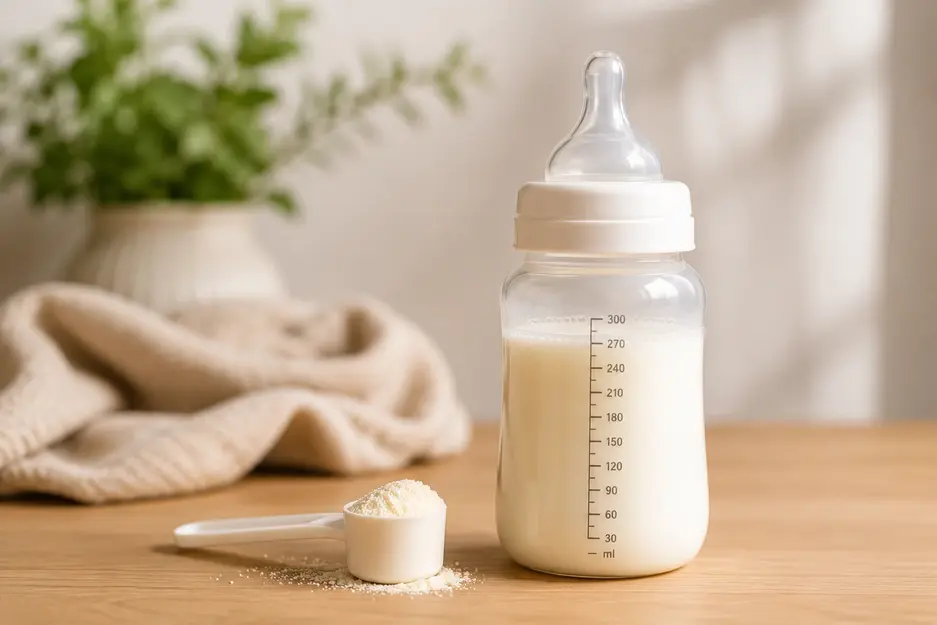
One of the most common questions parents bring to a pediatrician alongside the baby food chart question is: how much milk should my baby still be getting? The short answer, based on AAP guidance: breast milk or infant formula remains the primary source of nutrition through the entire first year. Solid food during this period is complementary it teaches texture, flavor, and eating skills, but it does not replace milk as the main calorie source until closer to twelve months.
A rough general pattern that many pediatricians describe:
At six to seven months, most babies still take around four to five milk feeds daily, with one or two small solid meals. At eight to nine months, this often shifts to three to four milk feeds with two solid meals. By ten to twelve months, many babies naturally settle into three solid meals and two to three milk feeds daily. These numbers vary by baby, and volume matters less than your baby’s growth, energy, and overall contentment. If you have specific questions about your baby’s milk intake, your pediatrician’s growth charts tell a more accurate story than any general number can.
10 to 11 Months: Table Food Transition

What to offer:
This is the stage the baby food chart shows the biggest leapfrom baby-specific foods toward real family meals. The CDC guidance recommends exposing babies to a wide variety of nutrient-dense foods including soft pieces of meat, fish, vegetables, fruits, whole grains, full-fat yogurt, cheese, and legumes. Prepare food without added salt, remove the baby’s portion first, then season the adult plates.
Texture:
Small, chopped, or shredded pieces. Foods should still be soft enough to mash between fingers, but pieces no longer need to be pureed or mashed smooth.
Meals:
Three solid meals daily, with one or two planned snacks.
As your baby moves toward family meals, these Baby Food Combinations That Make Babies Ask for More can introduce new flavors and textures.
12 Months: Almost at the Family Table
What to offer:
By twelve months, the baby food chart reaches its endpoint: most babies eat three solid meals and two snacks daily, with foods increasingly similar to what the rest of the family eats, adjusted for safe texture and size. This is also the age when cow’s milk (whole milk) can be introduced as a drink, replacing formula, according to AAP guidance. Breast milk continues for as long as both mother and baby wish.
What changes at 12 months:
- Cow’s milk as a drink: now appropriate
- Formula: no longer the primary drink (transition to whole milk)
- Textures: small chopped pieces, no longer needing special preparation for most soft foods
- Juice: still not recommended by the AAP until at least twelve months
Foods to Avoid Completely Before 12 Months
This section of the baby food chart is not optional it is based on firm safety guidelines:
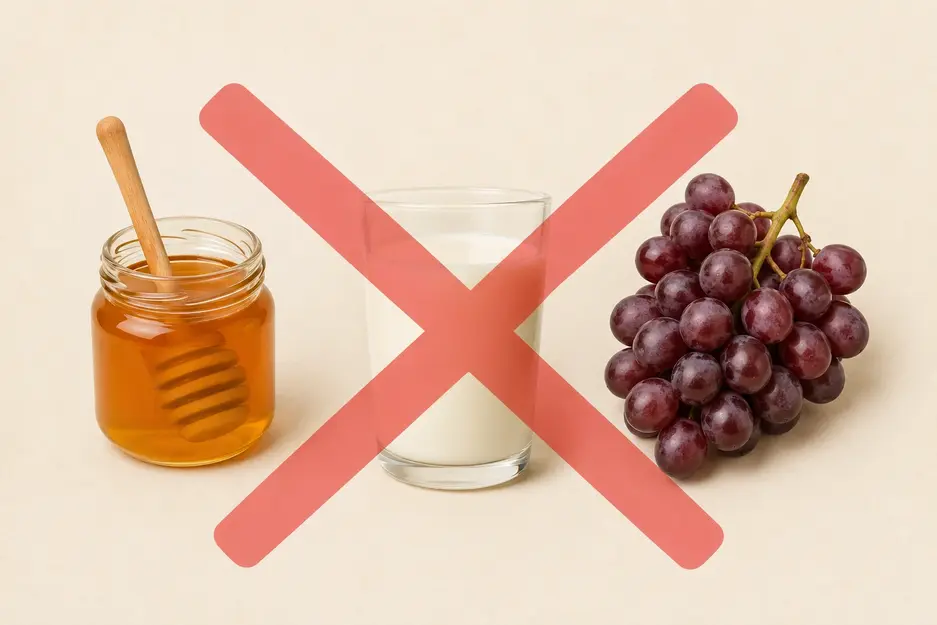
- Honey: in any form, including in baked goods or cooked foods risk of infant botulism, a serious illness that can be life-threatening in babies under twelve months
- Cow’s milk as a drink: the protein and mineral content is too high for a baby’s kidneys before twelve months; yogurt and cheese are fine in small amounts
- Fruit juice not recommended before twelve months per AAP guidance
- Added salt and sugar: places strain on developing kidneys and builds a sweetness dependence that works against healthy eating later
- Choking hazards: whole grapes, whole cherry tomatoes, raw hard vegetables, whole nuts, hot dogs, large chunks of meat, thick globs of nut butter, and large pieces of bread
| Food | Why to Avoid Before 12 Months |
| Honey | Risk of infant botulism — no exceptions |
| Cow’s milk as a drink | Too high in protein and minerals for a baby’s kidneys; lacks iron |
| Fruit juice | High in sugar, low in nutrition, not needed |
| Added salt | Strains developing kidneys |
| Added sugar | Builds unhealthy expectations without nutritional value |
| Whole grapes | Choking hazard always cut into quarters |
| Hot dogs, whole nuts | Choking hazard |
| Rice cereal only | Risk of arsenic exposure with exclusive rice cereal; offer a variety of fortified cereals such as oat, barley, and multigrain instead. |
Real Mom Example: How Sarah Applied This Baby Food Chart
Sarah, a first-time mother from the parenting community at firsttimemomguide.com, started her daughter on solids at six months following this exact month-by-month approach. Her biggest fear at the start was allergens she had read conflicting things about when to introduce peanut butter. Following current AAP guidance (introduce early, alongside other foods, unless a doctor has advised otherwise), she offered thinned peanut butter at seven months with no reaction. By ten months, her daughter was eating soft pieces of whatever the family was having for dinner. “The chart took the guesswork out completely,” Sarah said. “I stopped wondering whether I was doing it right and just followed the next stage.”

Her one honest addition: every baby is different. Her daughter moved through the texture stages faster than the chart suggested. The chart gave Sarah a confident starting point adjusting the pace was the easy part once she knew where to begin.
What also surprised Sarah was how quickly the pressure she felt at the start faded once she understood the real goal of the first six months of solids. She had assumed solid food needed to replace milk feeds quickly. Once she understood that solids at this stage are about learning not calories the whole approach became calmer. Less food on the tray, less anxiety. More exploration, more success.
Baby Food Chart Comparison: What Works vs. What to Skip
This baby food chart comparison shows a clear pattern: the most effective approach combines iron-rich foods from the start, single-ingredient introductions for allergy tracking, and a gradual texture progression that follows your baby’s actual development rather than a fixed calendar.
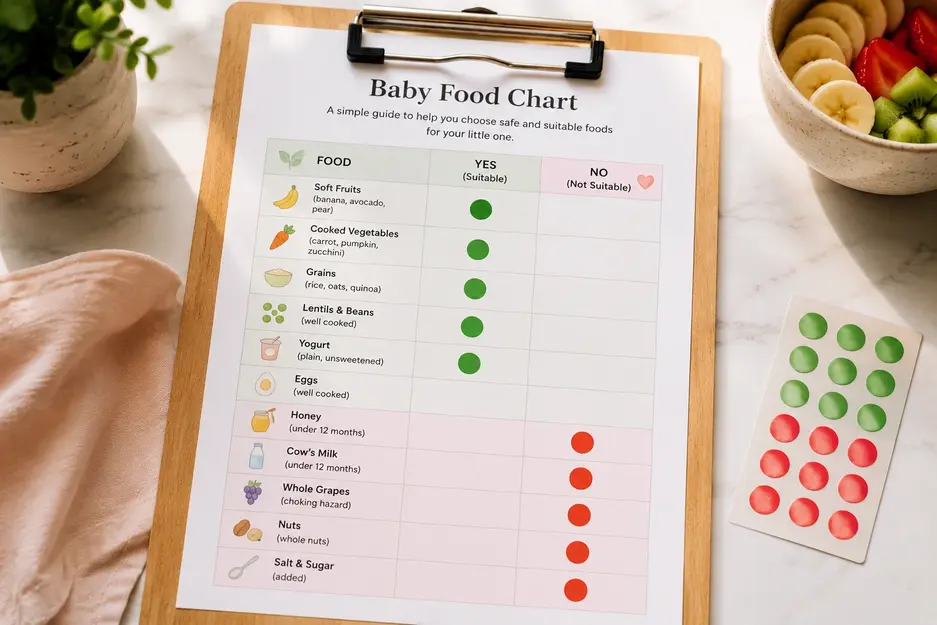
| Food / Approach | Age Appropriate | Why It Works | Avoid Until |
| Iron-rich purees (beef, chicken, lentils) | 6 months | Iron stores decline at 6 months — priority nutrient | No restriction after 6 months |
| Single-ingredient purees | 6 months | Identifies allergic reactions clearly | Combine only after each tested |
| Smooth peanut butter (thinned) | 7 months | Early introduction lowers allergy risk per AAP | Avoid if doctor advised delay |
| Soft finger foods | 9 months (pincer grasp) | Builds self-feeding and motor skills | Before 6 months |
| Family table food (soft, unsalted) | 10–11 months | Expands palate, builds family mealtime habits | With added salt/sugar at any age |
| Cow’s milk as a drink | 12 months | Baby food chart endpoint — nutrient balance suits 12+ months | Before 12 months |
| Honey in any form | Never before 12 months | — | Always avoid under 12 months |
| Fruit juice | After 12 months only | — | Before 12 months per AAP |
5 Common Mistakes on the Baby Food Chart
Mistake 1. Skipping iron-rich foods early
Iron stores from birth start depleting around 6 months. Offering fruit purees only, without iron-rich options like pureed meat, lentils, or fortified cereals, creates a nutritional gap right when the need is highest.
Mistake 2. Staying on smooth purees too long
Most babies are ready for thicker textures by 7 to 8 months. Staying on smooth purees past 9 or 10 months makes the texture transition significantly harder a window that is worth not missing.
Mistake 3. Delaying allergen introduction
Current guidance recommends introducing common allergens like peanut and egg from around 6 to 7 months, not avoiding them. Early introduction is associated with lower allergy risk in babies without a known allergy history.
Mistake 4. Offering juice as a drink
Fruit juice adds sugar without fiber and is not a nutritional requirement at any point in the first year. Water in a straw cup alongside meals is the appropriate drink alongside milk feeds.
Mistake 5. Treating the chart as a strict schedule
The timings above are developmental guides, not daily targets to hit. A baby who is not ready for finger foods at 8 months exact is not behind the ranges overlap, and individual readiness varies.
When to Call Your Pediatrician

Most babies move through the baby food chart stages without issues. Call your pediatrician if:
- Your baby shows signs of a food allergy: hives, swelling around the mouth or eyes, repeated vomiting, or any difficulty breathing after a new food
- Your baby refuses all solids consistently beyond seven months with no sign of interest
- Your baby gags or chokes at nearly every meal (occasional gagging is normal choking is not)
- You notice little or no weight gain over several weeks
- You have any questions about allergen introduction, especially if your baby has severe eczema
Final Thoughts
The baby food chart from six to twelve months is not a strict test to pass it is a framework that gives you a confident starting point and a clear direction. Iron-rich first foods, single-ingredient introductions, early allergen exposure, gradual texture progression, and family mealtime by twelve months: these six principles, grounded in current AAP guidance, cover everything a new parent needs to get started without second-guessing every meal.
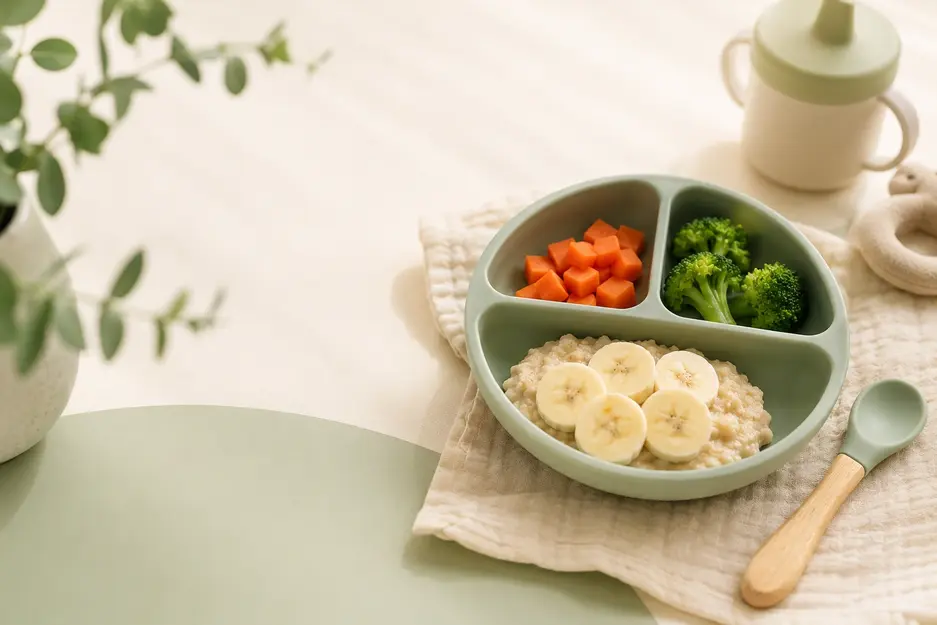
The baby food chart also does something equally important: it tells you what to skip entirely before twelve months, so the list of things to avoid is just as clear as the list of things to offer.
Pin this guide for the next stage, bookmark it for the month you are in right now, and go back to your pediatrician whenever something specific to your baby needs a more personalized answer.
Disclaimer:
This baby food chart is for general informational purposes only and is grounded in current AAP and CDC guidance. It is not medical advice and does not replace your pediatrician’s recommendations. Every baby develops at their own pace. If your baby shows signs of a food allergy, has a history of severe eczema, or you have any concerns about their feeding progress, speak with your doctor before introducing new foods.
FAQ’S
1. What should I feed my baby first at 6 months?
The AAP recommends starting with iron-rich foods since natural iron stores begin declining around six months. Good first choices are pureed beef, chicken, or iron-fortified oat cereal, alongside vegetables and fruits introduced one at a time with three to five days between each. There is no required order for fruits versus vegetables both are appropriate first foods.
2. When can babies start eating finger foods?
Most babies are ready for soft finger foods around nine months, when the pincer grasp develops. All finger foods at this stage should squish easily between two fingers. Before nine months, soft mashed lumps are more appropriate than pieces that require picking up.
3. Do I need to introduce foods in a specific order?
No. The AAP’s current guidance states there is no evidence that introducing foods in a particular order provides any benefit. What matters more is variety, texture progression, and introducing iron-rich foods early.
4. When should I introduce peanut butter to my baby?
Current AAP guidance encourages early introduction of peanut butter (thinned with water or pureed fruit to a smooth consistency) alongside other foods, generally around six to seven months, unless your baby has severe eczema or a known egg allergy. In those cases, speak with your pediatrician first, since an allergy test is often recommended before introduction.
5. How do I know if my baby is eating enough solid food?
Between six and twelve months, breast milk or formula remains the main source of nutrition. Solid food is complementary during this stage, not a replacement. A baby who is gaining weight steadily, producing adequate wet diapers, and showing energy and alertness is almost always eating enough even if individual meals seem small. If you are concerned about intake or growth, your baby’s growth chart at the next pediatrician visit is the most reliable indicator.