Pear Puree for Baby: A Gentle, Naturally Sweet First Food
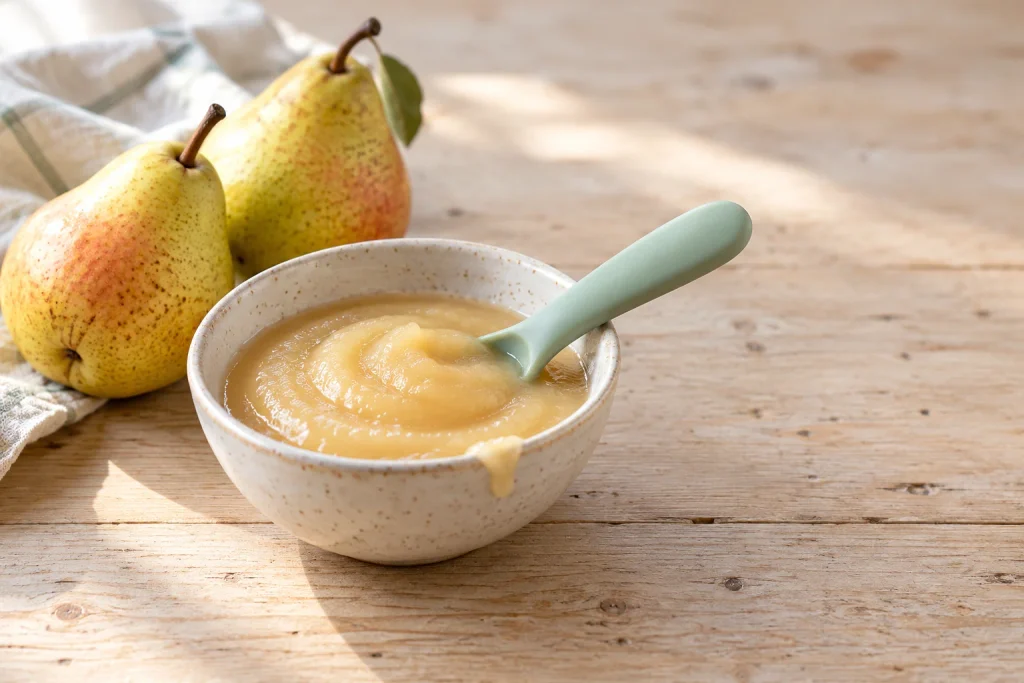
Few first foods are as simple, or as easy to love, as pear puree for baby. Two ripe pears, a little water and about fifteen minutes are all you need to make a smooth, mildly sweet puree that most babies accept. Pears are soft once cooked, easy to blend and gentle in flavor, which makes them a friendly starting point from around six months, when your baby shows readiness for solids. This guide covers how to choose ripe pears, cook them, blend to the right texture, serve them safely at every stage, and store extra portions without waste, so every spoonful stays safe and stress free.
New to homemade baby food? Start with our guide on how to make baby puree.
Pear puree for baby at a glance
| Detail | Quick answer |
| Starting age | Around 6 months, once your baby shows readiness signs |
| Time | 5 minutes prep, about 15 minutes cooking |
| Yield | About 1 cup from 2 medium pears (estimate) |
| Best texture | Smooth for first spoonfuls, thicker as your baby grows |
| Storage | About 48 hours in the refrigerator, up to 3 months frozen |
Why You’ll Love This Pear Puree for Baby
- One main ingredient: ripe pears and a splash of water, with no added sugar or salt.
- Mild and naturally sweet: the flavor is gentle, which suits new eaters.
- Quick to make: about twenty minutes from the first slice to the first spoonful.
- Freezer friendly: cooked pear freezes well in small portions for busy days.
- Easy to mix: it blends into oatmeal, yogurt, avocado, sweet potato and more.
- Grows with your baby: the same fruit becomes a mash, soft slices and finger food later.
Why Pears Make a Good Early Food
Pears are soft when ripe, mild in taste and easy to cook. They contain fiber and some vitamins, and can be offered alongside a variety of other foods. Some parents notice pear helps keep their baby’s digestion moving, but this varies from baby to baby, so talk to your pediatrician if constipation is a concern.
Fruit is only one part of a balanced start. Public-health guidance from the NHS and CDC supports starting solids at about six months, when your baby sits with support, holds their head steady and swallows food instead of pushing it out. Offer iron-rich foods such as lentils, meat or fortified infant cereal alongside fruit, and keep breast milk or formula as the main source of nutrition through the first year.
Ingredients You’ll Need
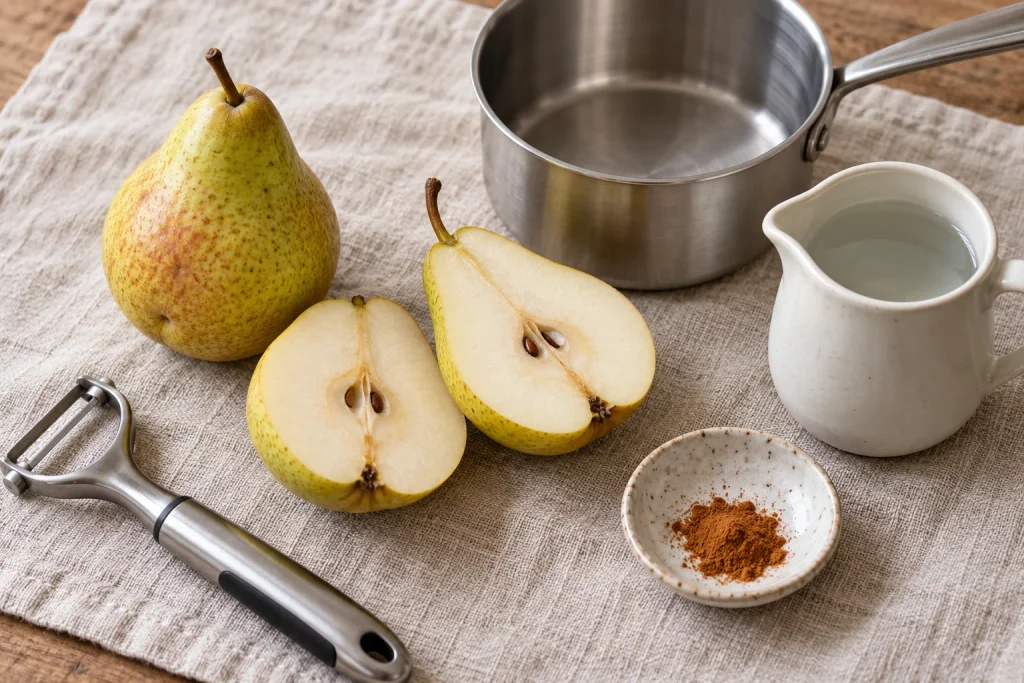
- 2 medium ripe pears: Bartlett is a popular choice, and Anjou, Bosc and Comice also work.
- Water: start with 1/4 cup for simmering and add more if needed to prevent drying. For steaming, use enough water below the basket. Reserve a little cooking liquid for blending.
- A pinch of cinnamon or ginger: optional, for babies who have already tried them.
How to Choose Ripe Pears
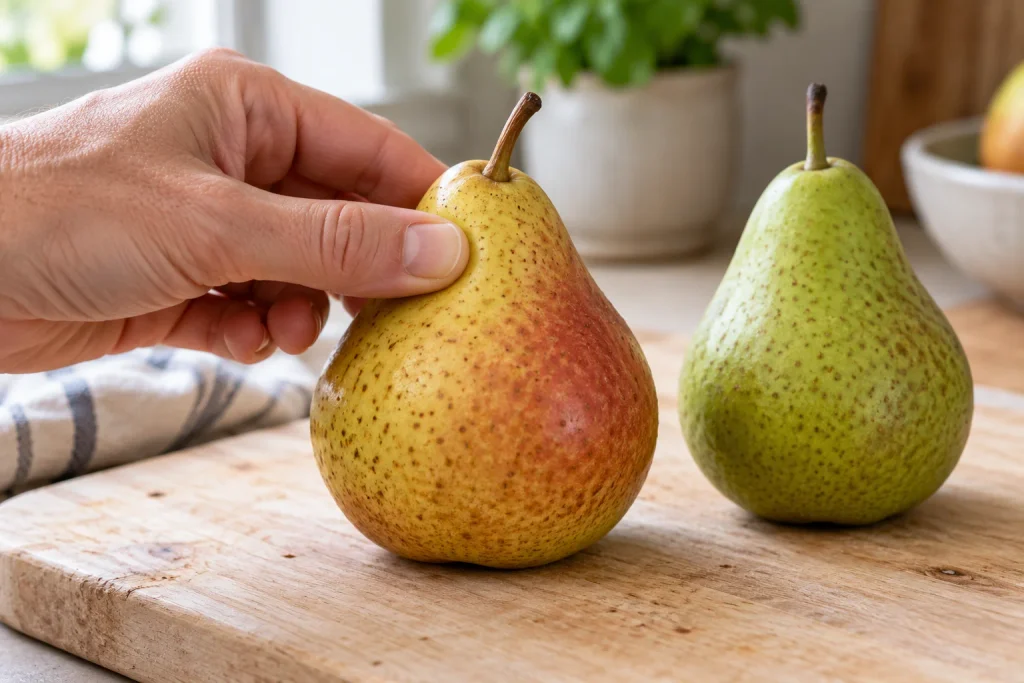
Pears ripen from the inside out, so check the neck. Press gently with your thumb near the stem. If it gives slightly, the pear is ripe. Firm pears can be cooked until soft, but very hard pears taste starchy and take longer to blend smooth. To ripen at room temperature, leave pears on the counter for a few days, then move them to the refrigerator.
Easy Substitutions
- No fresh pears: use ripe, unsweetened canned pears packed in water or their own juice, drained well.
- Thicker puree: stir in a spoonful of infant oatmeal.
- Different fruit: mash a ripe banana, or cook peeled, cored apple until very soft before blending. Apple cooking time may differ.
How to Make Pear Puree for Baby
You only need a knife, a peeler, a saucepan or steamer, and a blender or fork.
Step 1: Wash, Peel and Core the Pears
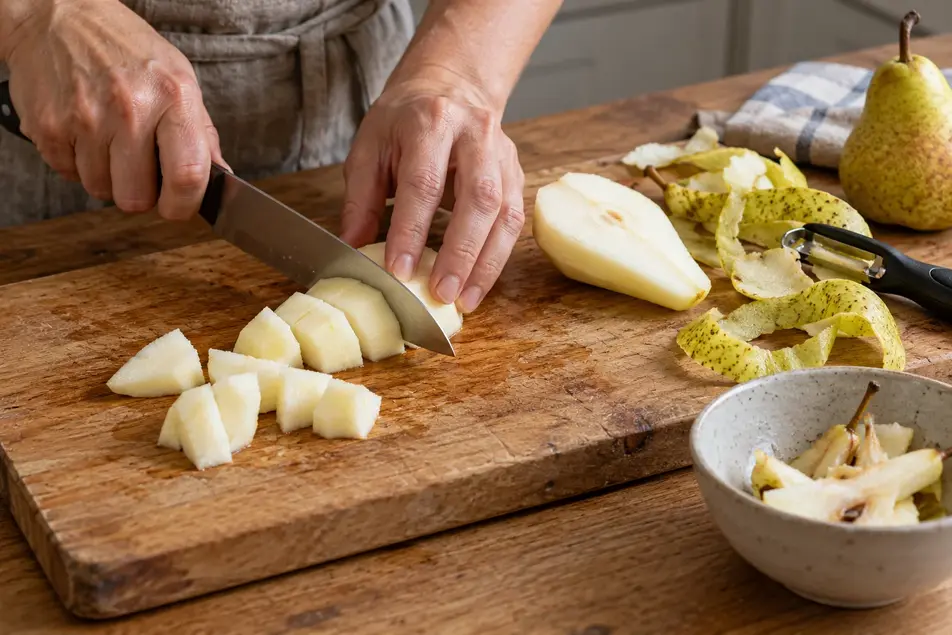
Rinse the pears under running water. Peel them for the smoothest result, then cut them in half and remove the core, seeds and stem. Cut the flesh into small, even pieces so they cook at the same speed.
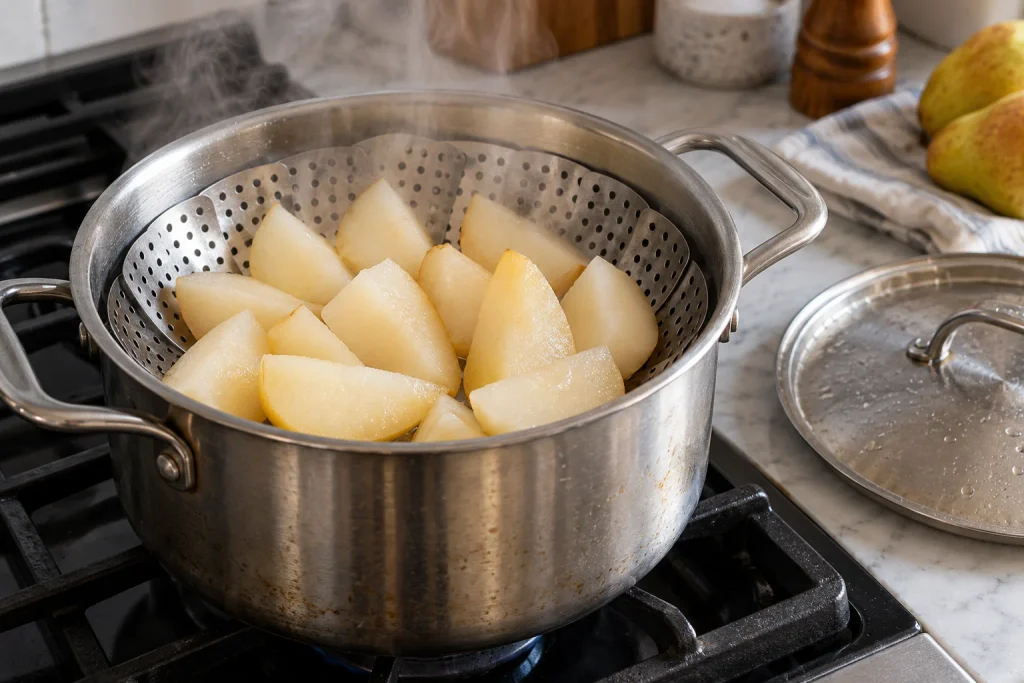
Step 2: Steam or Simmer Until Very Soft
Place the pieces in a steamer basket over simmering water, or simmer them in a covered saucepan with 1/4 cup water, adding more if needed to prevent the pan drying out. Cook for about 10 to 15 minutes, depending on ripeness, until a knife slides in with almost no resistance. Very ripe pears may need less time.
Step 3: Blend or Mash Smooth
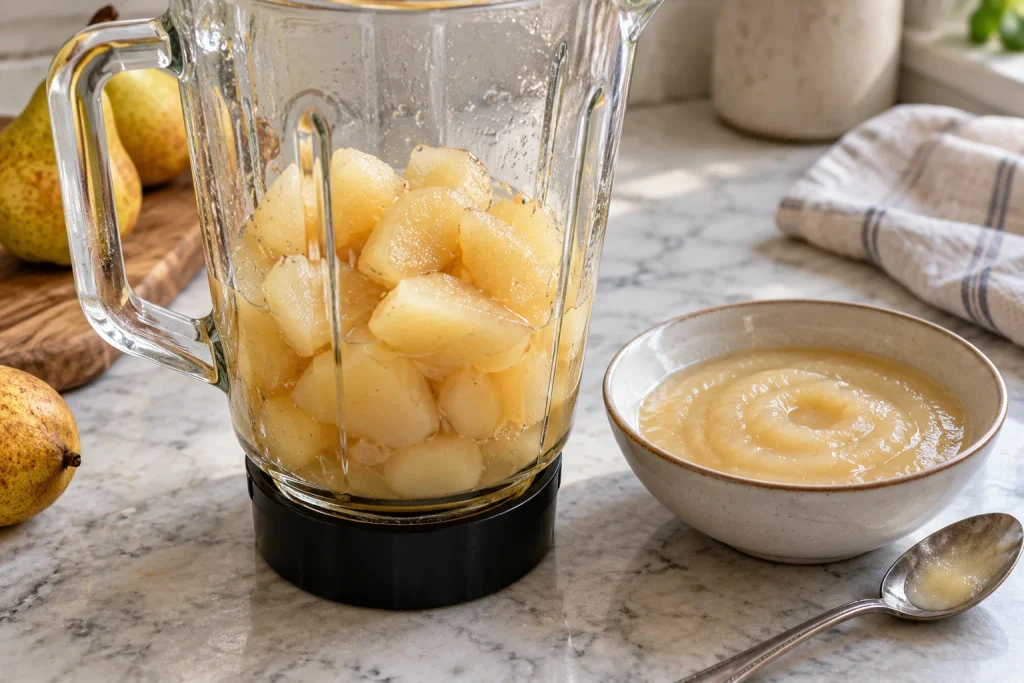
Move the pear to a blender with a spoonful of the cooking water and blend until smooth. If you have no blender, mash well with a fork and press through a fine sieve for a first-stage texture.
Step 4: Adjust the Texture and Serve
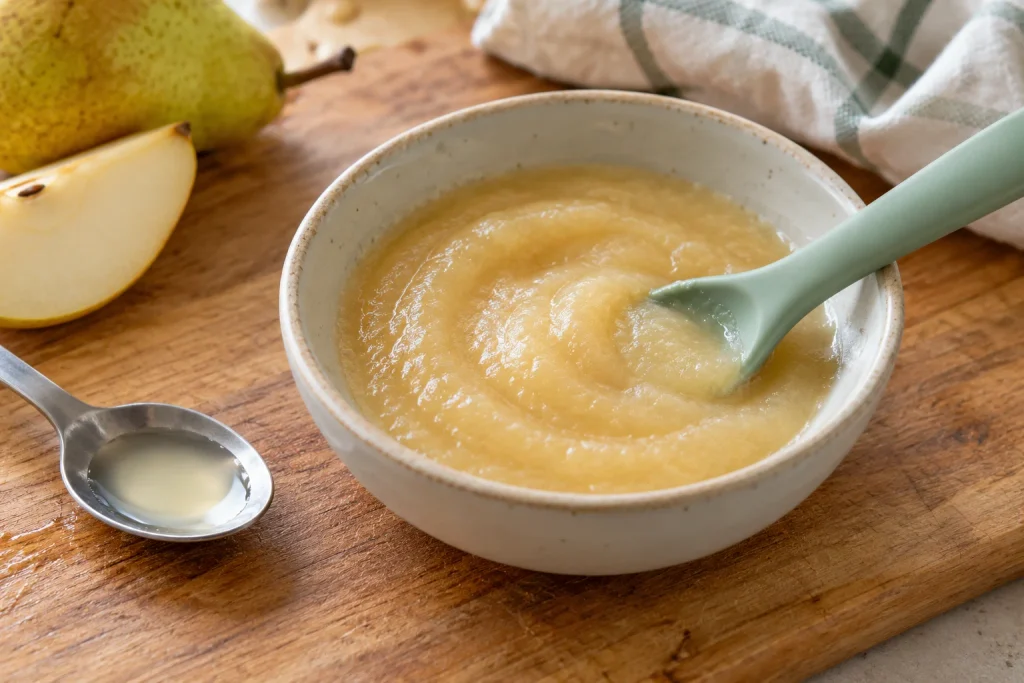
Keep the batch you plan to store as plain pear puree. Thin only the portion you are serving now, adding water, breast milk or correctly prepared formula one teaspoon at a time until it falls slowly off the spoon. Let it cool, check the temperature on your wrist, and serve a few spoonfuls. Throw away any puree left in the feeding bowl.
Getting the Texture Right
Good pear puree is smooth, slightly thick and free of grit. Most problems come from ripeness or cooking time.
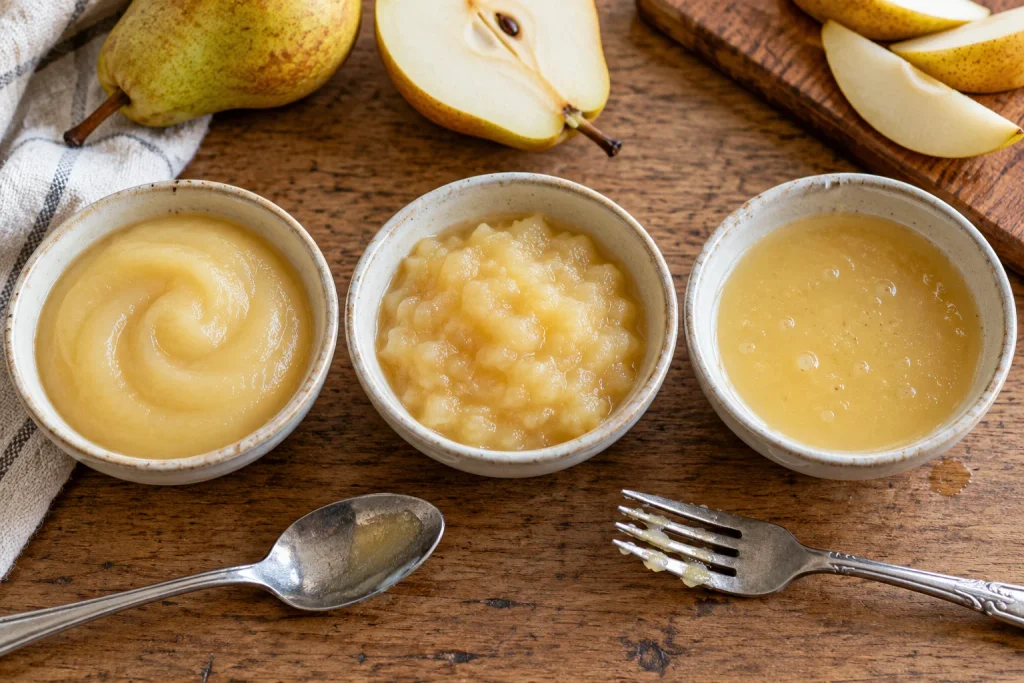
- Gritty: some pears, especially Bosc, have grainy flesh. Peel them, cook longer and blend well, or strain through a sieve.
- Too thin: simmer the puree gently for a few minutes, or stir in infant oatmeal.
- Too thick: add water to the plain puree, or breast milk or correctly prepared formula to the portion you are serving now, one teaspoon at a time.
- Stringy bits: peel the pears and blend longer.
- Turning brown: this is air exposure. Cooking before blending slows it, and a few drops of lemon juice help if your baby already eats citrus.
How to Serve Pear to Baby
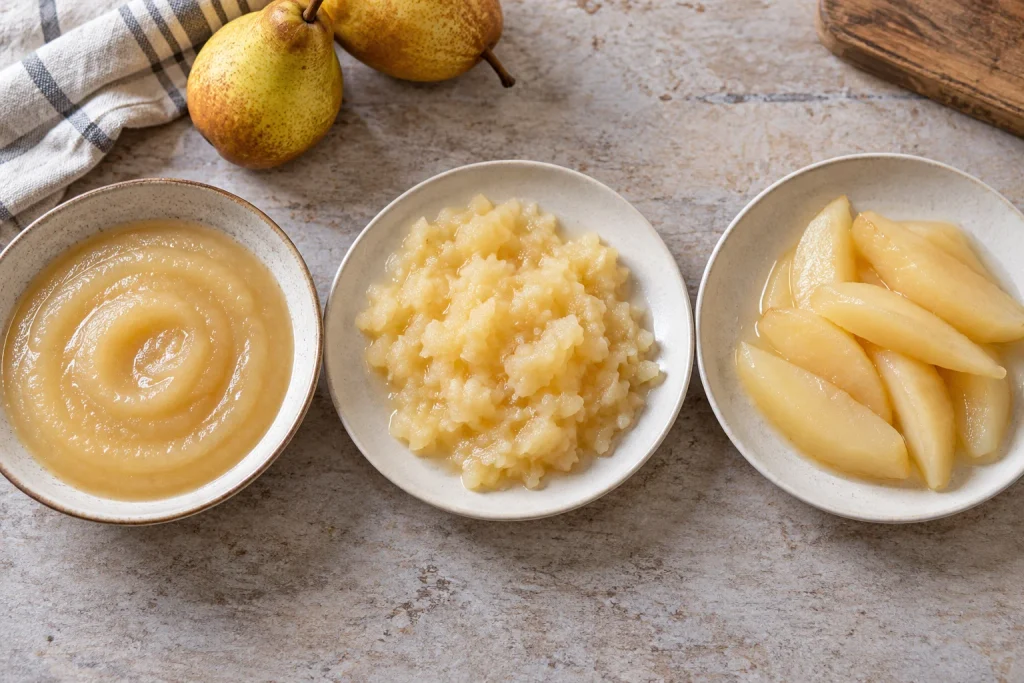
- Around 6 months: offer smooth puree on a spoon, or a large, soft, cooked pear half or spear that is easy to hold. Mash very ripe pear into warm cereal or yogurt.
- Around 9 months: mash with a fork and leave soft lumps. As your baby develops a pinch grasp, offer small, flat, soft pieces rather than hard cubes.
- 12 months and beyond: serve thin slices, quartered pear with the core and seeds removed, or soft bite-sized pieces.
Firm or underripe pear is a choking hazard, so cook or soften it fully. Remove the core, seeds and stem, seat your baby upright and stay within arm’s reach. Start with a teaspoon or two and let your baby decide when to stop.
Pear puree for baby: puree vs. mash vs. soft pieces
| Style | Texture | Typical stage | How to offer |
| Smooth puree | Silky, thick | First spoonfuls, around 6 months | Spoon, a few teaspoons |
| Fork mash | Soft lumps | Around 8 to 9 months | Spoon or on a toast strip |
| Soft cooked pieces | Tender slices | Self-feeding stage | Tray, supervised |
Pear Puree Variations and Combinations
Once your baby has tried pear on its own, mix it with other familiar foods.
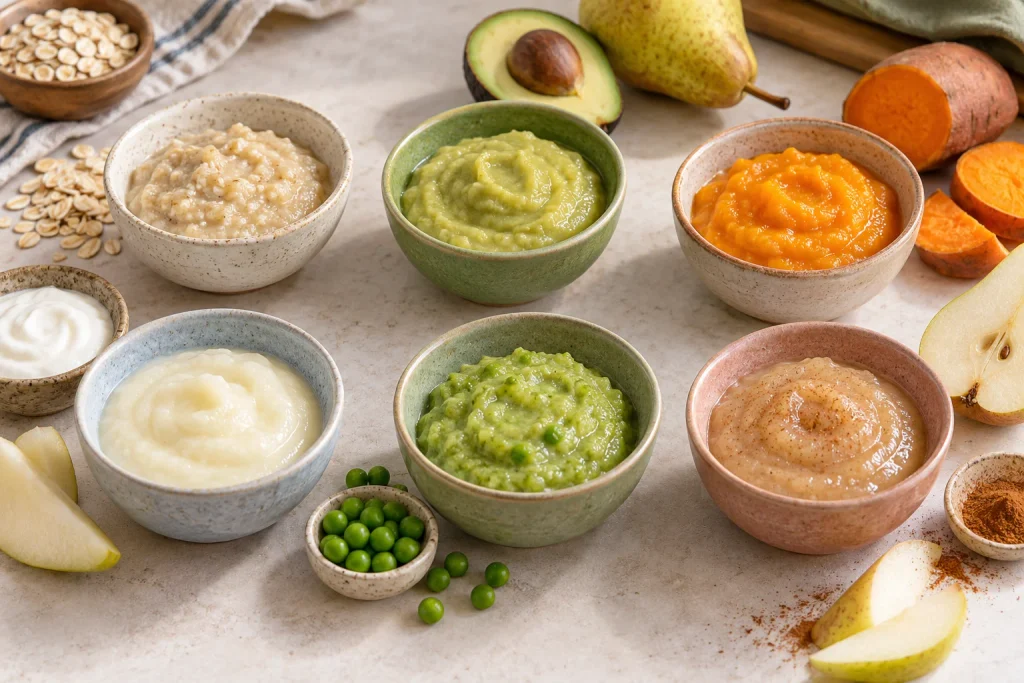
- Pear and oatmeal: stir into warm prepared infant oatmeal for a gentle breakfast.
- Pear and avocado: mash with ripe avocado for a creamy, no-cook mix.
- Pear and sweet potato: blend with steamed sweet potato for a thicker mash.
- Pear and yogurt: mix with plain, unsweetened, pasteurized whole-milk yogurt.
- Pear and peas: blend with soft cooked peas for a sweet and savory puree.
Introduce each new ingredient alone first, so a reaction is easy to trace. Guidance on spacing differs, and the CDC suggests waiting three to five days between new single-ingredient foods.
Stir pear puree into oatmeal for babies for a simple breakfast.
Allergies and Reactions to Watch For
Pear allergy is uncommon but has been reported. Some people with oral allergy syndrome, especially those sensitive to birch pollen, notice itching or tingling in the mouth after raw pear. Cooking may reduce some pollen-related reactions, but cooking or peeling does not reliably make a food safe for someone with an allergy. Do not retry a suspected trigger without advice from your baby’s clinician. Cook pear to achieve a safe, soft texture, rather than to prevent allergy.
Stop feeding the suspected food if a reaction occurs and seek medical advice. Call your local emergency service immediately for breathing difficulty, sudden swelling of the mouth, tongue or throat, or a baby who becomes limp, floppy or unusually unresponsive. Repeated vomiting, especially with pallor or lethargy, also needs urgent assessment. Offer new foods in a small amount when you can watch your baby afterward.
Storage, Freezing and Reheating
Pear puree can be refrigerated or frozen, and freezing in small portions keeps waste low. The refrigerator and thawing advice below follows NHS guidance, and the three-month freezer limit follows the FDA page listed in the sources. Official freezer recommendations vary, so check the linked pages. These instructions apply to plain pear puree.
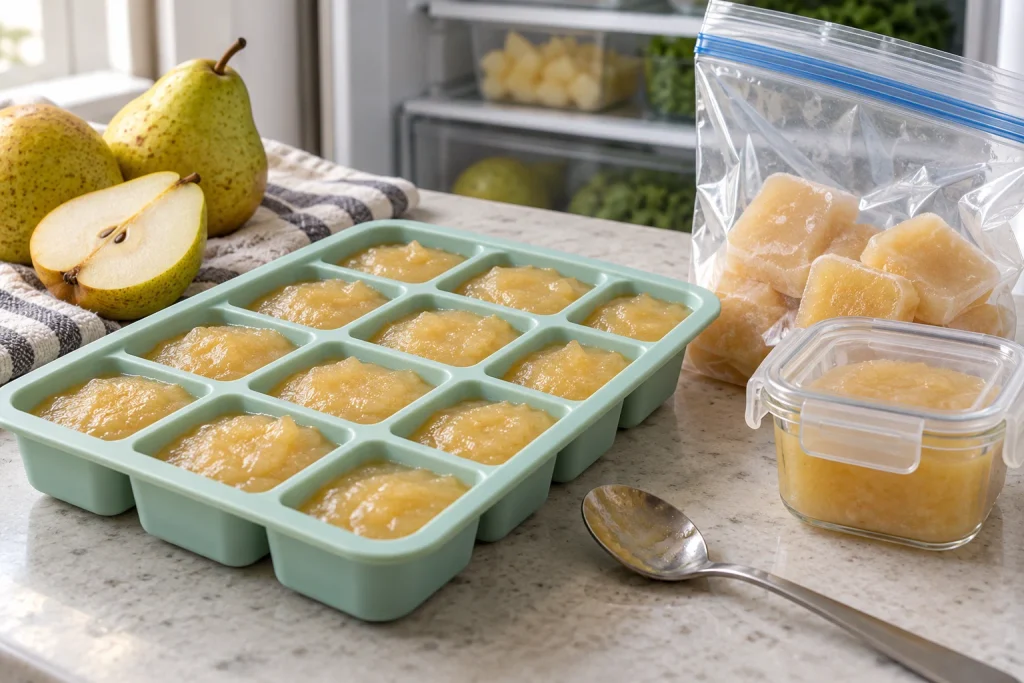
Make a batch, then portion it before your baby eats from it. Saliva on a spoon speeds spoilage, so never return a used spoon to the container.
- Refrigerator: cool promptly, then refrigerate in a small airtight container and use within 2 days.
- Freezer: spoon into clean ice cube trays, freeze until firm, then move the cubes to a labeled freezer bag. Use within about 3 months.
- Thawing: thaw in the refrigerator in a sealed container, use within 24 hours and stir well.
- Reheating: warm gently until steaming hot, then cool, stir and check the temperature before serving. Reheat only once.
- Milk or formula: add breast milk or correctly prepared formula only to the portion you are serving now. Prepare formula separately according to its label, and never add dry formula powder directly to the puree.
- Leftovers: throw away anything left in your baby’s bowl.
Recipe Success Tips
- Choose ripe fruit: the neck should give slightly, and ripe pears blend smoother.
- Peel for first stage: skin can leave flecks in a smooth puree.
- Save the cooking water: it thins the puree and keeps the flavor.
- Cook a bigger batch: freeze in cubes for easy single portions.
- Pair with iron: serve alongside lentils, meat or fortified infant cereal.
Common Mistakes to Avoid
- Using hard, underripe pears: they taste starchy, blend poorly and take longer to cook.
- Leaving seeds or core in: remove both before cooking.
- Adding sugar, honey or juice: pears are sweet enough, and honey is never safe before age one.
- Serving raw, firm pear pieces: they are a choking hazard, so cook or soften first.
- Adding milk to the whole batch: add it only to the serving portion, so stored puree stays plain.
- Skipping iron-rich foods: fruit adds variety but not much iron, so offer other foods too.
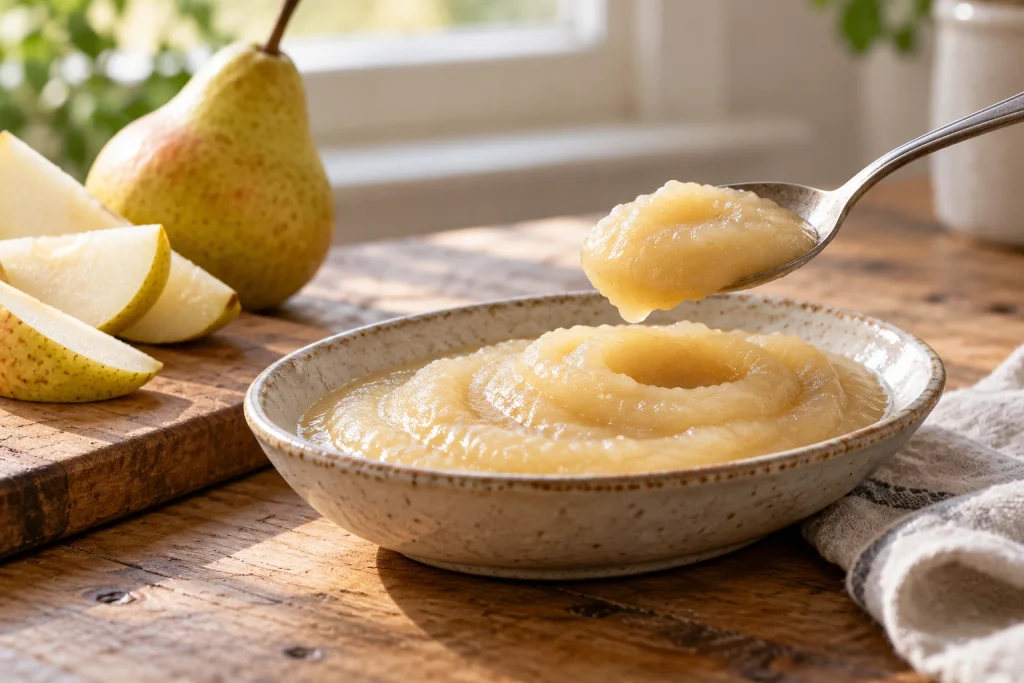
Recipe Card: Pear Puree for Baby
A simple, gently cooked fruit puree ready in about twenty minutes.
Prep time: 5 minutes
Cook time: 10 to 15 minutes
Total time: About 20 minutes
Yield: About 1 cup, depending on pear size and added water. This is an estimate, not a tested yield; portion size depends on appetite and feeding experience.
Ingredients: 2 medium ripe pears; 1/4 cup water to start for simmering, or water as required by your steamer; extra water for thinning; pinch of cinnamon or ginger (optional)
Instructions: Wash, peel and core the pears and cut them into small pieces. Steam or simmer for 10 to 15 minutes until very soft. Blend with a spoonful of cooking liquid until smooth, adding water gradually as needed. Cool and check the temperature before serving. Add breast milk or correctly prepared formula only to the portion being served immediately. Cool the remaining plain puree promptly and refrigerate for up to 2 days, or freeze in covered portions for up to 3 months.
Notes: Offer a few spoonfuls at first. Do not return a used spoon to leftover puree.
For more first-food inspiration, explore these 25 stage 1 baby purees.
Conclusion
Pear puree for baby is a gentle, affordable first fruit that you can make in about twenty minutes. Choose ripe pears, cook them until very soft, blend to a texture your baby can handle and freeze the extra in small portions. As your baby grows, move from puree to mash and soft slices, and keep pairing fruit with iron-rich foods.
Disclaimer:
This article on pear puree for baby is general information only and does not replace advice from your pediatrician. Every baby develops differently, so consult your baby’s doctor about readiness, allergies, choking risks or any feeding concerns.
FAQ’s
Q.1 When can babies eat pear?
Most guidance supports starting solids at about six months, once your baby shows readiness. Pear is a common early fruit.
Q.2 Do I need to cook pears for baby?
Cooking is the easiest route for first spoonfuls, because it softens firm pears. Very ripe pears can also be mashed raw.
Q.3 Should I peel pears for baby puree?
Peeling gives the smoothest texture for first stages. Very ripe, soft pears can keep their skin for older babies.
Q.4 Can I freeze pear puree?
Yes. Freeze it in small portions and use within about 3 months.
Q.5 Does pear puree help with constipation?
Pears contain fiber, and some parents find them helpful, but results vary. Ask your pediatrician if constipation continues.