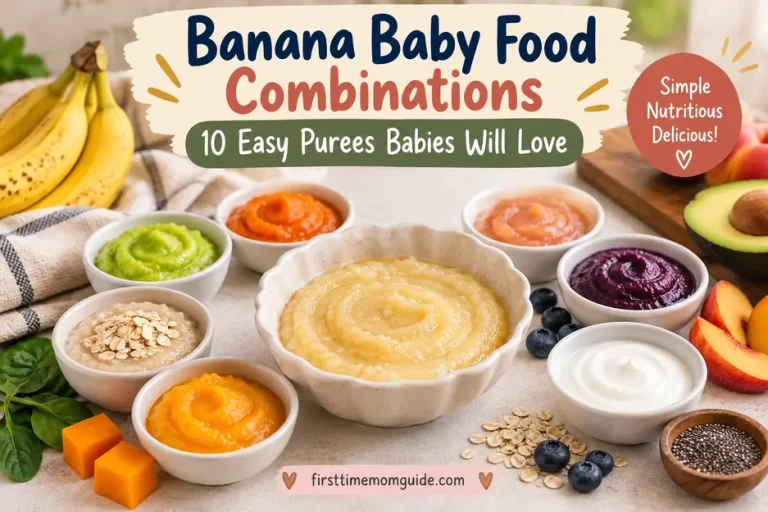
Banana Puree for Baby: Easy No-Cook Recipe + 5 Simple Combinations
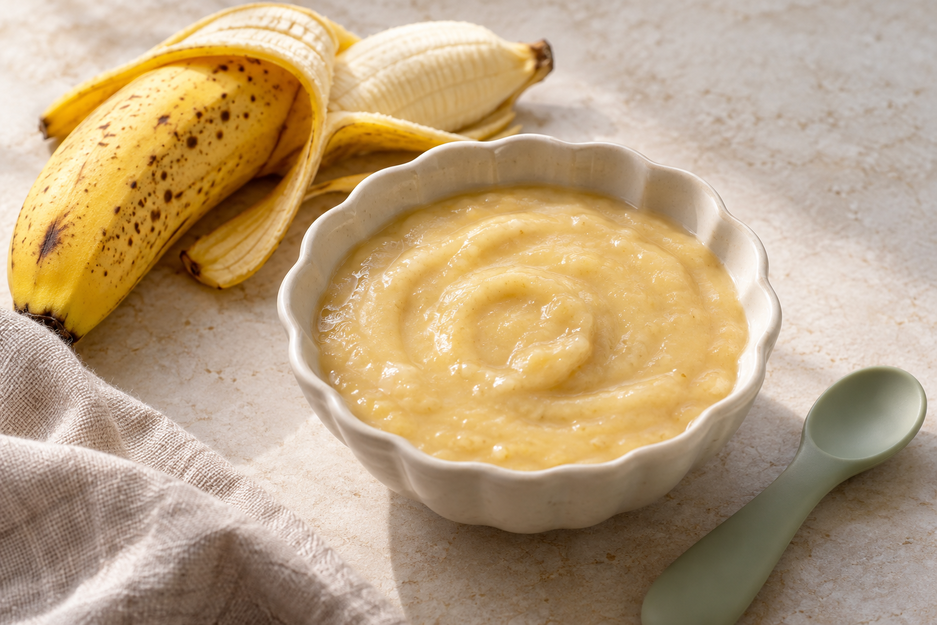
Banana puree for baby is one of the simplest ways to start fresh food: one ripe banana, a fork, and no cooking. A ripe banana mashes easily, tastes naturally sweet without any added sugar, and can be thin and creamy or soft and lumpy depending on what your baby handles comfortably. This guide is for babies around six months who show readiness signs for solids. You will learn how to choose a banana that mashes well, get the texture right, serve it safely, and try simple combinations with avocado, oatmeal or pear. You will also find clear storage and freezing instructions, so you know what to serve now and what to keep.
New to solids? Explore our first foods for baby at 6 months guide for readiness signs and suitable textures.
Recipe at a Glance
| Age | Around six months, with readiness signs. |
| Ingredients | One ripe banana; liquid is optional. |
| Method | Mash with a fork or use a small blender. |
| Cooking | No cooking needed. |
| Serving | Offer a small amount; follow your baby’s appetite. |
| Storage | Refrigerate untouched plain puree promptly; use within twenty-four hours. Freeze for up to three months. |
Why banana works for a quick baby meal
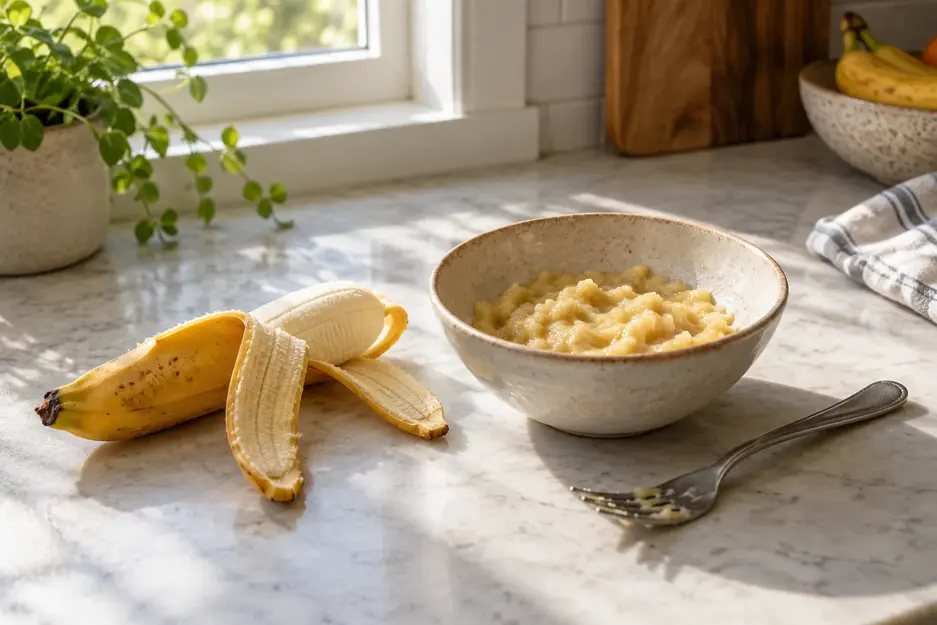
Banana is useful when you need something soft without turning on the stove. A ripe one mashes easily, and its sweetness comes from the fruit itself. There is no need for sugar, syrup, or honey. It also gives you an easy way to vary familiar foods. Stir a little into cooked infant oatmeal, combine it with avocado, or serve it plain. For a single serving, a fork usually means less washing up than a blender. Make only what you need, especially if your baby is still taking a few spoonfuls.
When your baby is ready
NHS guidance describes a baby who can stay in a sitting position with steady head control, coordinate looking at food and bringing it to their mouth, and swallow food instead of pushing it back out. Interest in your plate alone is not enough.
If your baby was born prematurely or has feeding difficulties, ask their healthcare professional for individual advice. Breast milk or infant formula continues alongside solids. Banana contributes fruit and variety, but it is not a useful replacement for iron-rich foods such as meat, lentils, or iron-fortified infant cereal. Smooth puree is an option, rather than a required first stage for every baby. Some babies can manage mashed food or suitable finger foods from the start. Choose the texture for your baby’s current skills and keep offering opportunities to practise.
Ingredients and equipment
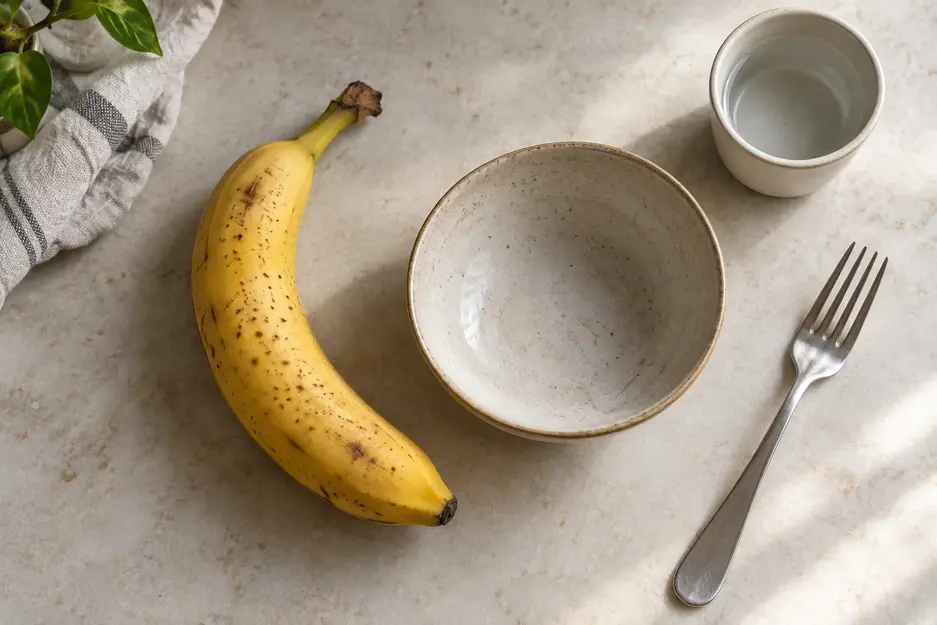
You need one ripe banana, a clean bowl, and a fork.
A small blender is optional if you want a smoother texture or are making several portions. Large blender jugs may struggle with one banana because the blades cannot reach such a small amount.
If the mash needs thinning, use water, breast milk, or correctly prepared infant formula, one teaspoon at a time. Separate any plain puree you want to store before adding milk to the serving portion. Prepare formula exactly as directed on its packaging; do not add dry formula powder directly to the puree.
Banana size varies, so the yield varies too. Serve a small amount and keep any untouched extra separate from the feeding bowl.
Choosing a banana that mashes well
Look for a yellow banana with some brown speckles. The fruit should feel soft enough to mash with gentle pressure. A green or firm banana will give you a starchier, lumpier result, so leave it to ripen first.
A dark peel does not automatically mean the fruit is spoiled. Check the banana after peeling, and discard it if there is mold, leaking liquid, or a sour or fermented smell. Avoid fruit that looks damaged or questionable. Peel it just before preparation to limit browning, and remove the strings if they make the mash feel fibrous.
How to make banana puree
For a small batch, use a fork. For a smoother result, use a small blender. The exact time depends on ripeness and your equipment; there is no cooking step.
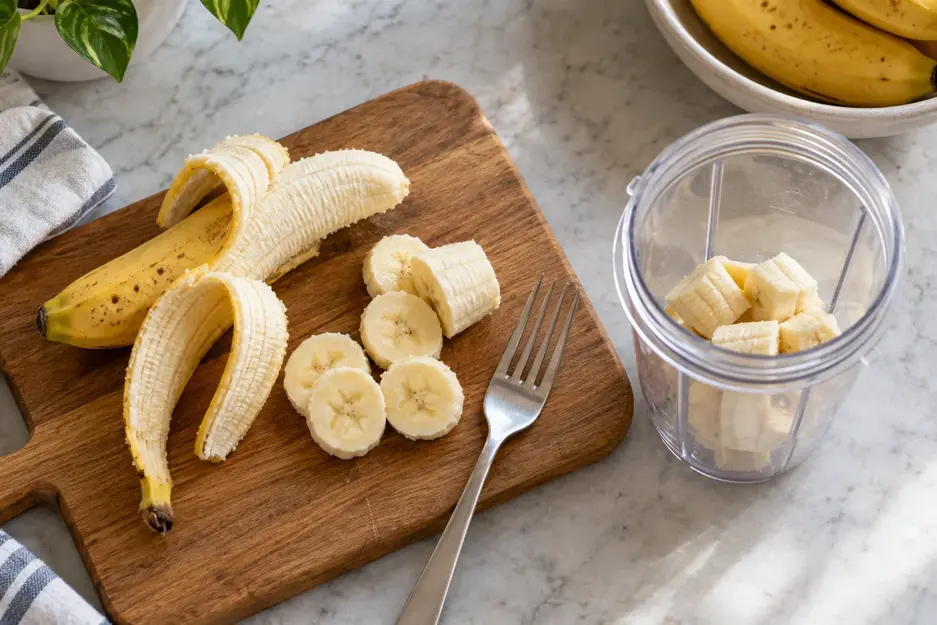
Step 1 Clean your hands and tools
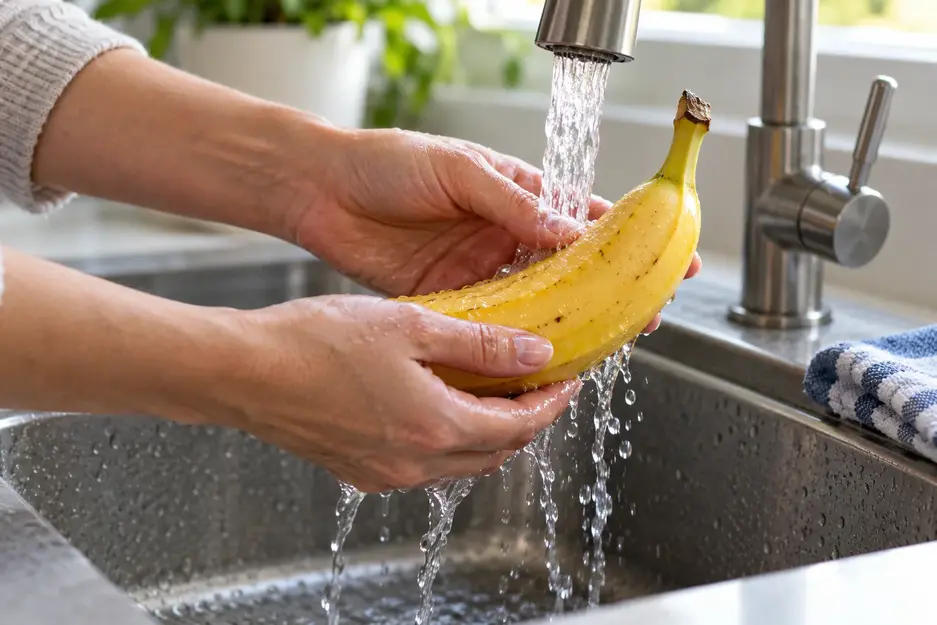
Wash your hands, bowl, fork, and work surface before starting. Rinse the banana under running water before peeling so dirt on the outside is less likely to reach the fruit. Dry it with a clean towel.
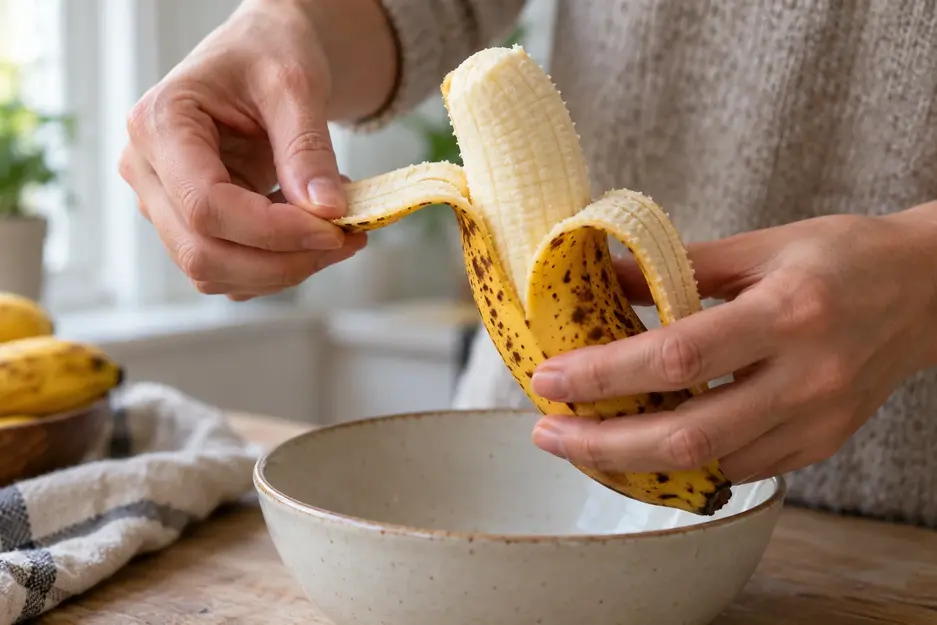
Step 2 Peel and portion the banana
Peel the banana and place the fruit in your bowl. Remove any strings you notice. Break off the amount you want to use; half a banana is often easier than preparing a whole one for a first taste.
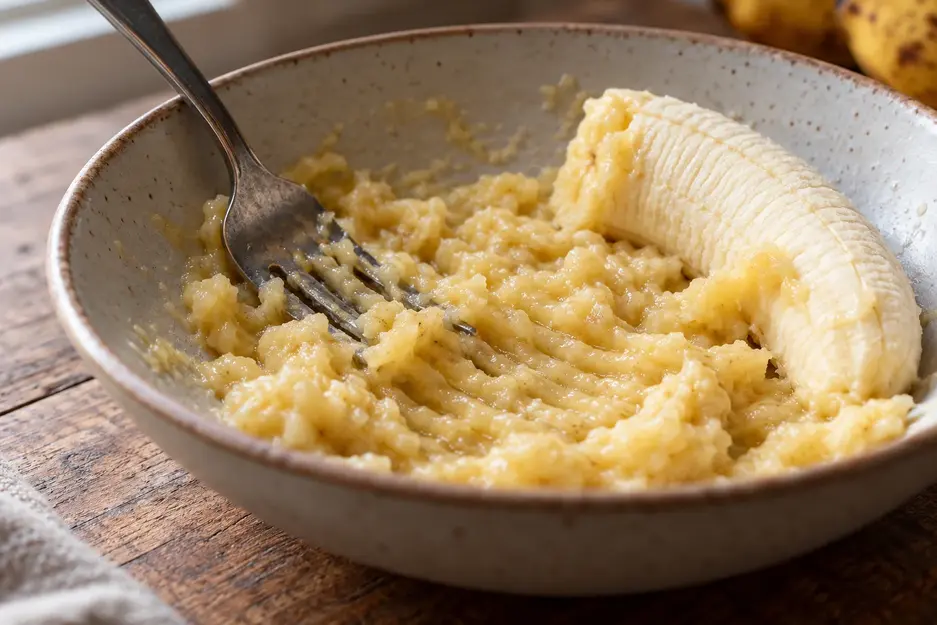
Step 3 Mash or blend
Press the banana with the back of a fork until it reaches the texture your baby manages comfortably. If blending, stop and scrape down the sides as needed. Do not leave firm pieces hidden in an otherwise smooth puree.
Step 4 Separate the serving and adjust the consistency
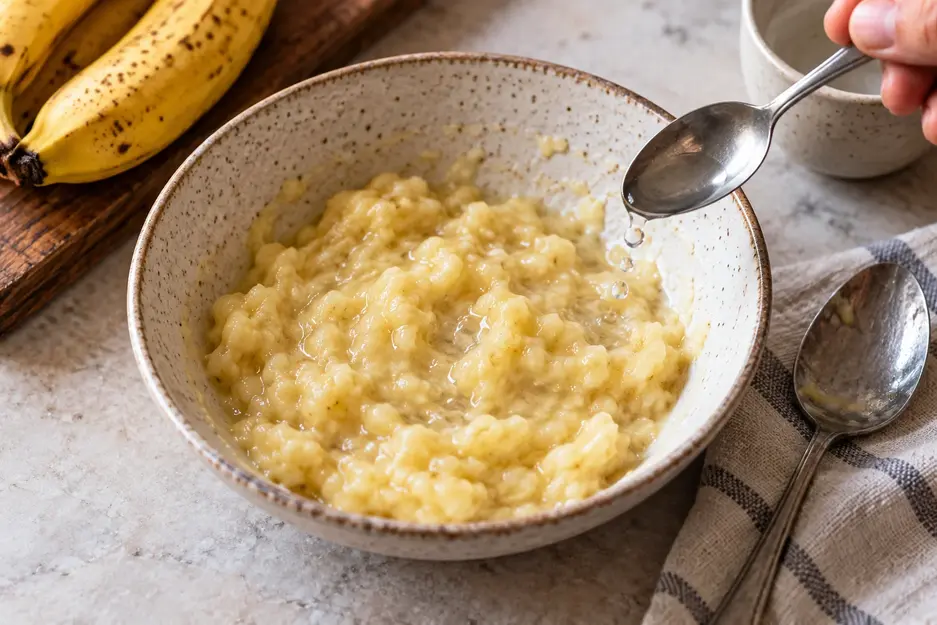
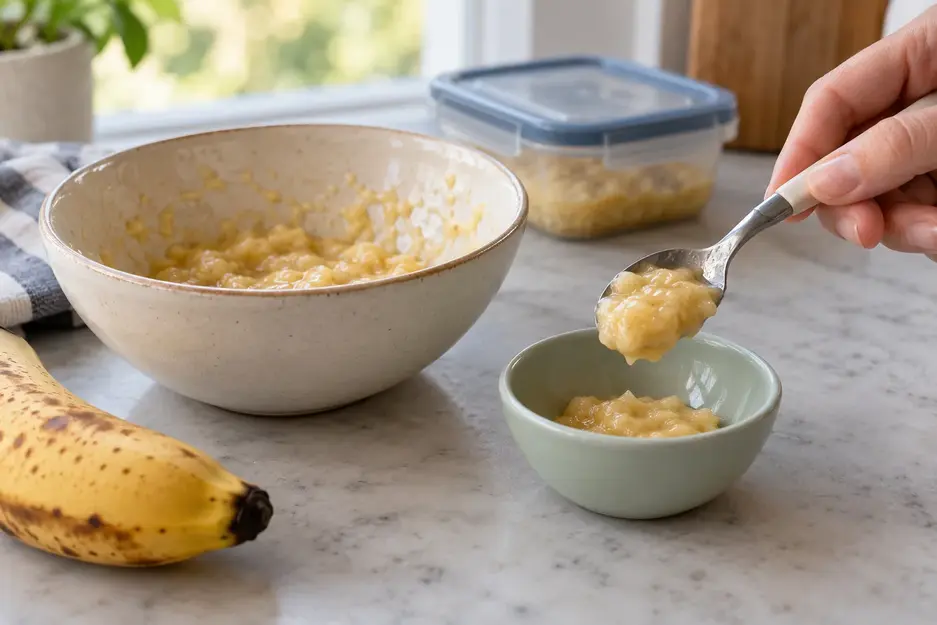
Before adding liquid, use a clean spoon to transfer a small serving into a separate feeding bowl. Set any untouched plain puree aside for prompt storage. If the serving needs thinning, stir in one teaspoon of water, breast milk, or correctly prepared formula. Add more only if needed; a ripe banana may need no extra liquid.
Step 5 Store untouched extra promptly
Refrigerate or freeze the untouched plain puree promptly in a clean, covered container. Keep the feeding spoon out of this container. Serve any portion mixed with breast milk or prepared formula immediately, following the handling limits of the milk used.
Step 6 Offer and follow your baby
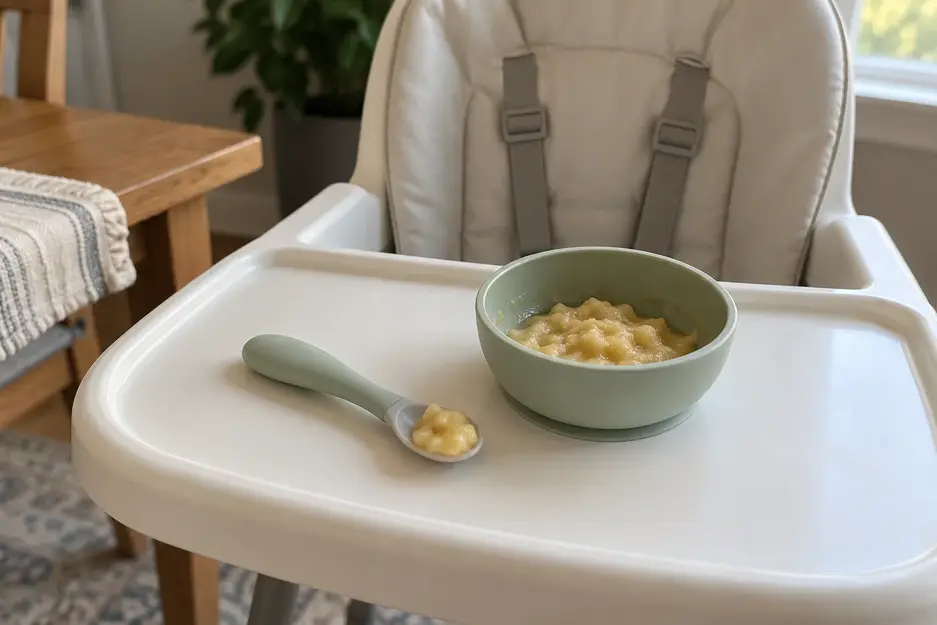
Seat your baby upright and supervise throughout the meal. Offer a little on a spoon, or let them explore a preloaded spoon. Allow them to set the pace. Stop when they turn away, close their mouth, or lose interest.
Getting the texture right
- If the serving feels pasty, stir in a teaspoon of liquid. If it becomes watery, add more mashed banana. A few soft lumps can be appropriate when your baby handles them comfortably.
- For a stringy result, remove the banana strings or blend briefly. If your baby refuses a texture, try a small amount again another day without pressure. Persistent coughing, distress, or difficulty managing food deserves advice from a healthcare professional.
- Texture progression follows your baby’s skills. Smooth puree is optional, and there is no need to wait until nine months for soft lumps or twelve months for suitable finger foods. Offer new textures as your baby becomes able to manage them.
Serving sizes and finger food options
Begin with a small taste, perhaps one or two teaspoons, and offer more if your baby is interested. This is a starting amount, not a target they must finish. Appetite changes between meals, and milk feeds continue while your baby learns to eat.
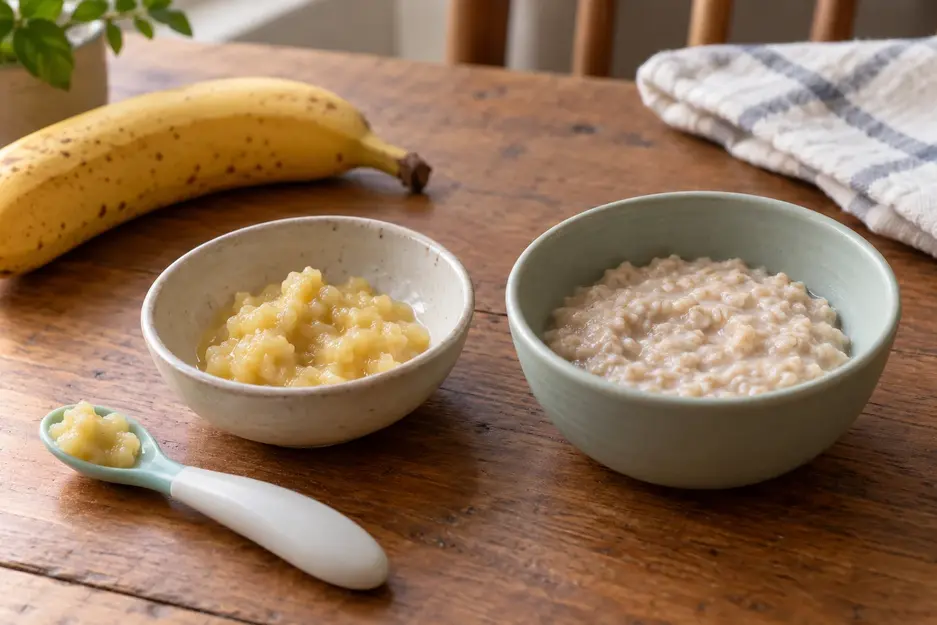
A spoonful of banana can accompany an iron-rich food rather than become the entire meal. Iron-fortified infant oatmeal is one simple option. For self-feeding, a preloaded spoon lets your baby practise with the same mash. See our oatmeal for babies recipe for another way to serve banana.
For self-feeding beyond a preloaded spoon, choose very soft banana prepared to suit your baby’s grasp and feeding skills. NHS preparation guidance recommends soft finger foods in narrow batons, with pieces long enough to hold in a fist and protrude above it. Banana is slippery, so check the preparation carefully and avoid round coin-shaped slices for beginners. Keep your baby upright and supervise throughout eating.
Simple banana combinations
Keep combinations small and practical. You do not need several fruits in one bowl to make a useful meal. Start with ingredients your baby already eats, and introduce new foods thoughtfully so reactions are easier to identify.
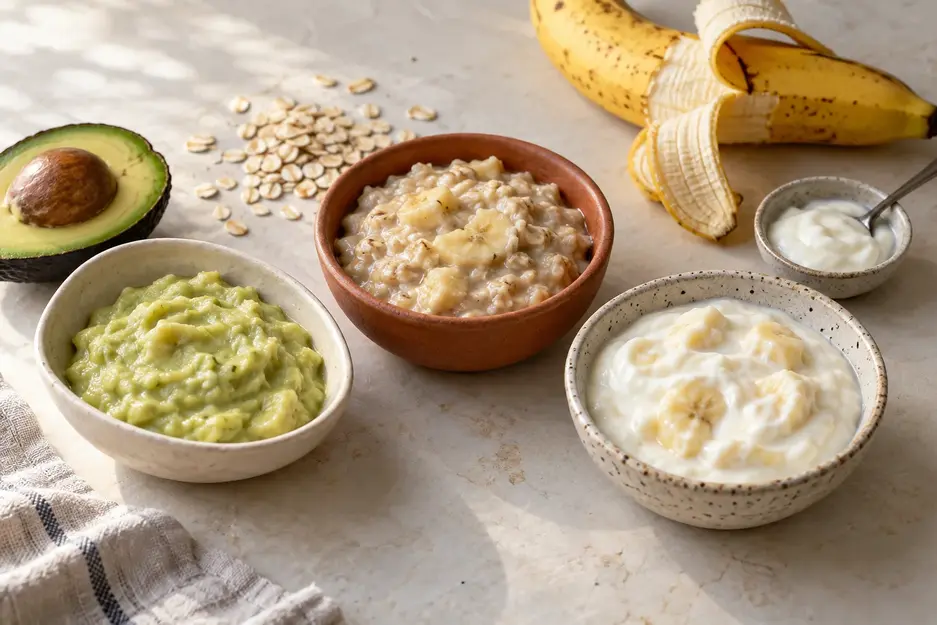
| Banana and avocado: | Mash together for a thicker, creamy mixture. Start with equal spoonfuls and adjust to taste. |
| Banana and oatmeal: | Stir mashed banana into cooked iron-fortified infant oatmeal. Let the oatmeal cool to a suitable temperature before serving. |
| Banana and yogurt: | Mix with plain, unsweetened, pasteurized whole-milk yogurt after dairy has been introduced appropriately. Yogurt contains milk, a common allergen. |
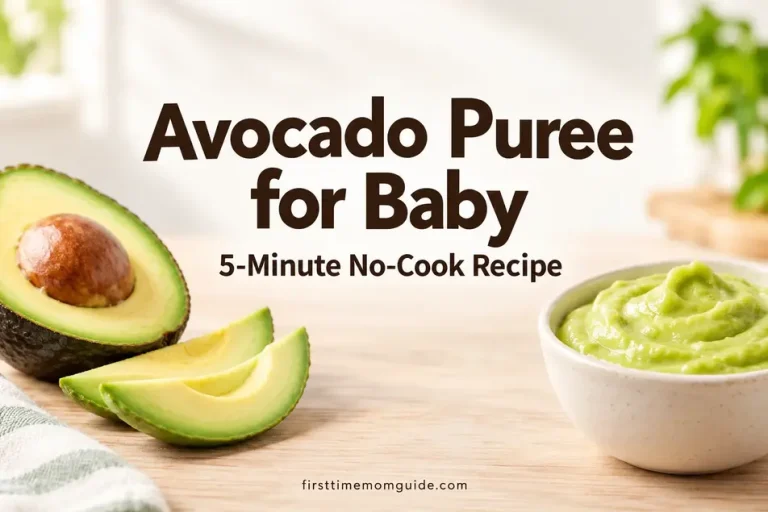
| Banana and pear: | Combine banana with soft cooked pear. Add the pear gradually because it can loosen the texture. |
| Banana and sweet potato: | Mix with cooled, thoroughly cooked sweet potato for a thicker puree. |
There is no need to sweeten these mixtures. Avoid honey before twelve months. For each combination, consider the storage requirements of every ingredient.Explore more banana baby food combinations.
Browning and safe storage
Banana browns when exposed to air. A change in color alone does not necessarily mean spoilage, but normal smell or taste cannot prove that food is safe. Consider how it was handled, how long it has been stored, and whether it stayed cold.
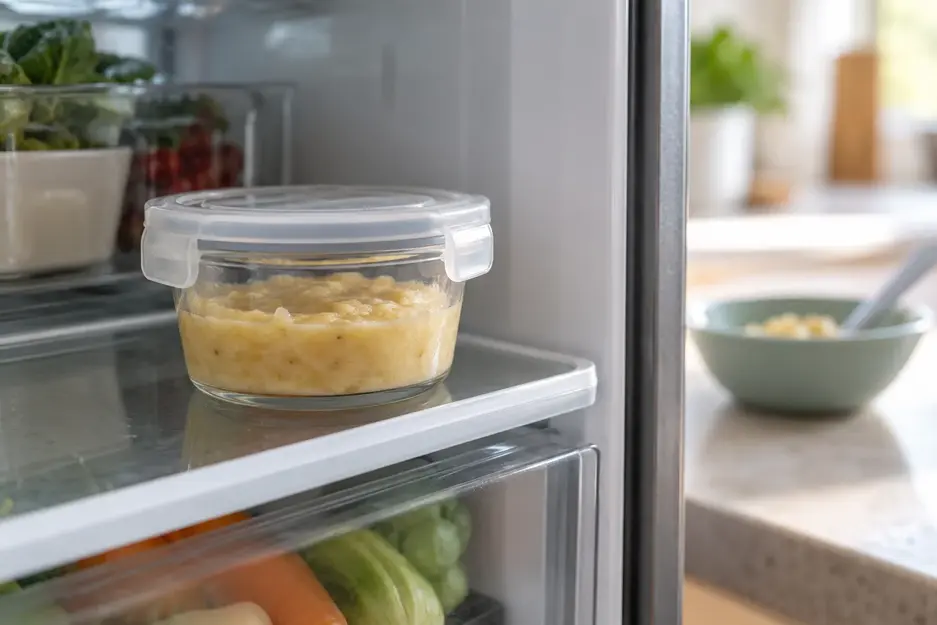
- For plain, freshly prepared banana puree, refrigerate untouched portions promptly in a clean airtight container at 4°C or below. Use within twenty-four hours as a conservative household recommendation, and make fresh whenever practical. This short window also helps preserve the texture and appearance.
- Do not leave perishable food outside refrigeration for more than two hours, or more than one hour when the temperature exceeds 32°C. These are maximum limits, not suggested waiting times. Refrigerate extra puree promptly after preparation.
- Discard puree left in the feeding bowl. Saliva transferred by a spoon can contaminate the food. Use a clean utensil to portion untouched puree, and never return a used feeding spoon to the storage container.
Freezing and thawing
Freeze plain banana puree in clean, covered small molds, then transfer the frozen portions to an airtight freezer container. Label with the preparation date and store at −18°C. FDA guidance recommends using frozen homemade baby food within three months.
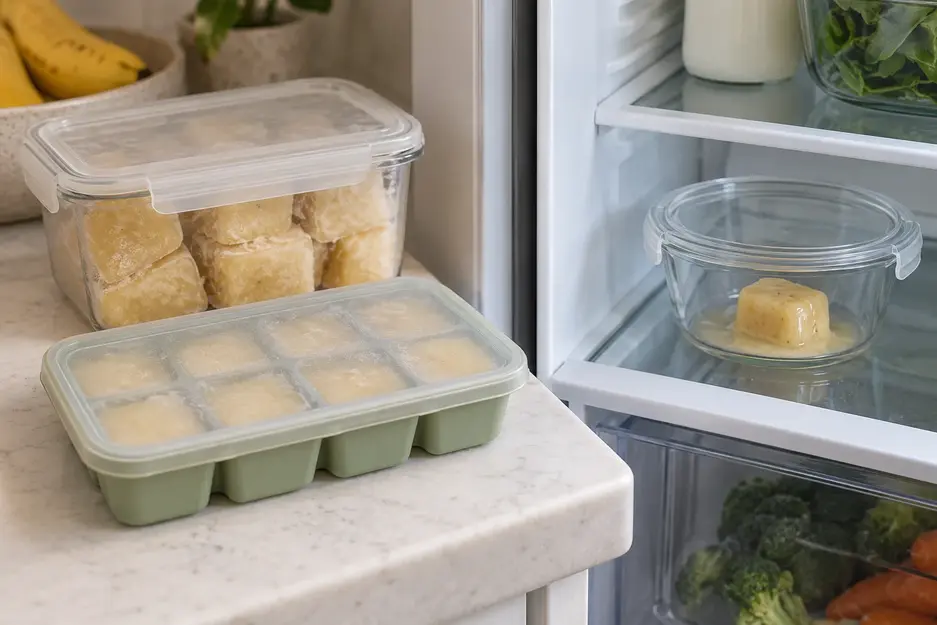
- Mold sizes vary, so one cube is not a universal serving. Freeze amounts that make sense for your baby’s appetite. Keep milk additions for the serving bowl, and check separate guidance if using previously stored breast milk.
- Thaw the portion in a covered container in the refrigerator, never on the kitchen counter. NHS guidance says to use defrosted food within twenty-four hours. Thaw only what you expect to use and discard feeding leftovers.
- Banana does not need cooking before serving. Thawed puree may darken or separate; stir it before checking the texture. There is no need to heat it just to serve it warm. If your mixture contains cooked ingredients, follow appropriate reheating guidance for those ingredients.
Allergies and feeding concerns
Any food can cause an allergic reaction, even when it is not a common allergen. Offer a small amount of a new food when you can observe your baby afterward. Watch for hives, swelling, repeated vomiting, or breathing difficulty. Breathing difficulty, collapse, or rapidly worsening symptoms need emergency help.
Discuss suspected reactions with your baby’s healthcare professional before offering the food again. If your baby has a known latex allergy, ask whether banana needs particular consideration; family history alone does not establish an allergy. Banana is not a guaranteed cause or cure for constipation. If your baby has painful, hard stools, persistent discomfort, or other concerning symptoms, seek advice rather than changing their diet based on one food.
Common mistakes to avoid
1. Using a banana that is not ripe enough
A green or firm banana is starchy and hard to mash, so the puree turns out lumpy and bland. Choose a yellow banana with a few brown speckles that gives under gentle pressure. If yours is still firm, leave it to ripen for a day or two first.
2. Making too much at once
Banana browns quickly, and the texture softens as it sits. Make a small amount, or half a banana, and serve it fresh. If you want extras, move the untouched plain puree into a clean covered container straight away and refrigerate or freeze it.
Feeding from the storage container
Saliva on the spoon can contaminate puree, so a used spoon should never go back into the container. Use a clean spoon to put a small serving into a separate feeding bowl, and keep the rest covered. Throw away whatever is left in the feeding bowl.
4. Adding milk or formula to the whole batch
Mixing breast milk or prepared formula into everything shortens how long the puree stays safe to keep. Thin only the portion you are about to serve, one teaspoon at a time, and offer it right away. Keep the plain puree separate for storage.
5. Serving banana as a complete meal
Banana adds fruit and variety, but it is not a replacement for iron-rich foods. Offer it alongside foods like iron-fortified infant oatmeal, lentils or well-cooked meat. Keep portions small and let your baby’s appetite decide how much they eat.
Banana puree recipe
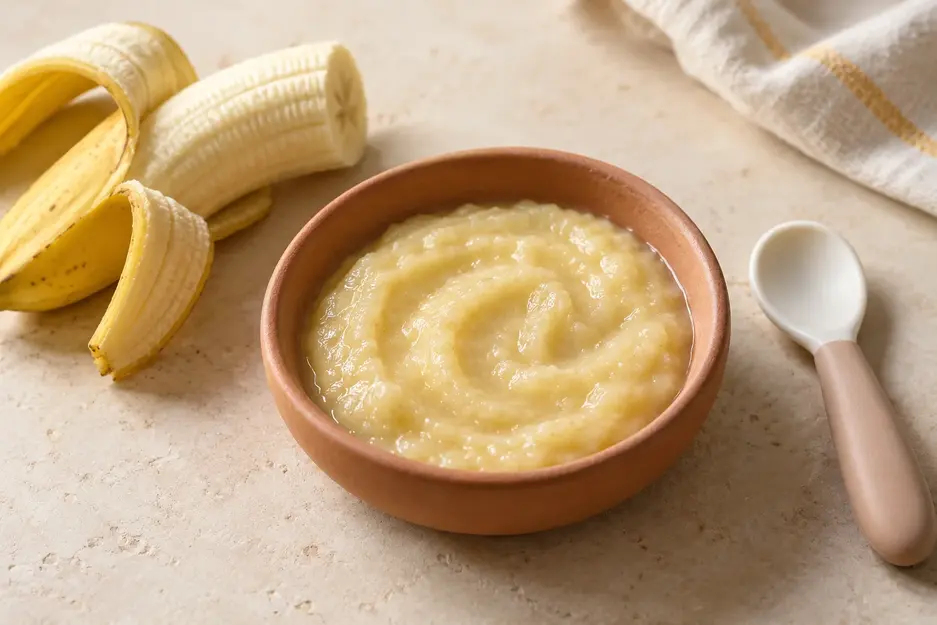
| Ingredients: | One ripe banana. Optional: a teaspoon at a time of water, breast milk, or prepared infant formula. |
| Equipment: | Clean bowl and fork; a small blender is optional. |
| Preparation: | Wash hands and tools, rinse the banana, then peel and mash or blend. Use a clean spoon to separate a small serving before adding liquid. Store untouched plain extra promptly. Thin only the serving portion if needed; add breast milk or correctly prepared formula only for immediate serving. Offer with your baby upright and supervised. |
| Cooking time: | None. Preparation time varies with ripeness and equipment. |
| Yield: | Depends on banana size. Portion according to appetite rather than a fixed number of baby servings. |
| Storage: | Refrigerate untouched plain puree promptly and use within twenty-four hours. Freeze plain portions for up to three months. Discard feeding leftovers. |
Conclusion
Banana puree is a simple way to offer fruit when your baby is ready for solids. Choose a ripe banana, prepare a texture they can manage, and start with a small fresh serving. Keep iron-rich foods in the mix, follow your baby’s cues, and store untouched leftovers promptly. A fork and a few minutes are enough to make this recipe part of an ordinary family meal.
For more meal ideas, explore our baby food weekly meal plan for 6–9 months to add variety alongside banana puree.
Disclaimer
This article offers general information and does not replace advice from your baby’s healthcare professional. Ask for individual guidance about readiness, premature birth, allergies, or feeding difficulties. Always supervise meals and use food preparation suited to your baby’s development. Seek emergency help for breathing difficulty or a severe allergic reaction.
FAQ’s
Q.1 Does banana need cooking?
No. A ripe banana can be mashed without cooking. Wash your hands and tools, rinse the fruit before peeling, and prepare an appropriate texture.
Q.2 Can I use a fork instead of a blender?
Yes. A fork works well for small amounts. A blender is helpful when you want a smoother finish, but it is not essential equipment.
Q.3 Can I add breast milk or formula?
Yes. Add a little to the serving portion and offer immediately. Use prepared formula, follow its instructions, and respect the handling limits of the milk you use.
Q.4 Is brown banana puree safe?
Browning alone can be oxidation. It does not replace checking time, temperature, and handling. Discard food when storage conditions are uncertain.
Q.5 Should my baby finish the bowl?
No. Offer small amounts and respond to hunger and fullness cues. Avoid encouraging extra bites simply to clear the dish.