Banana Oat Pancakes for Baby (No Sugar, No Egg)
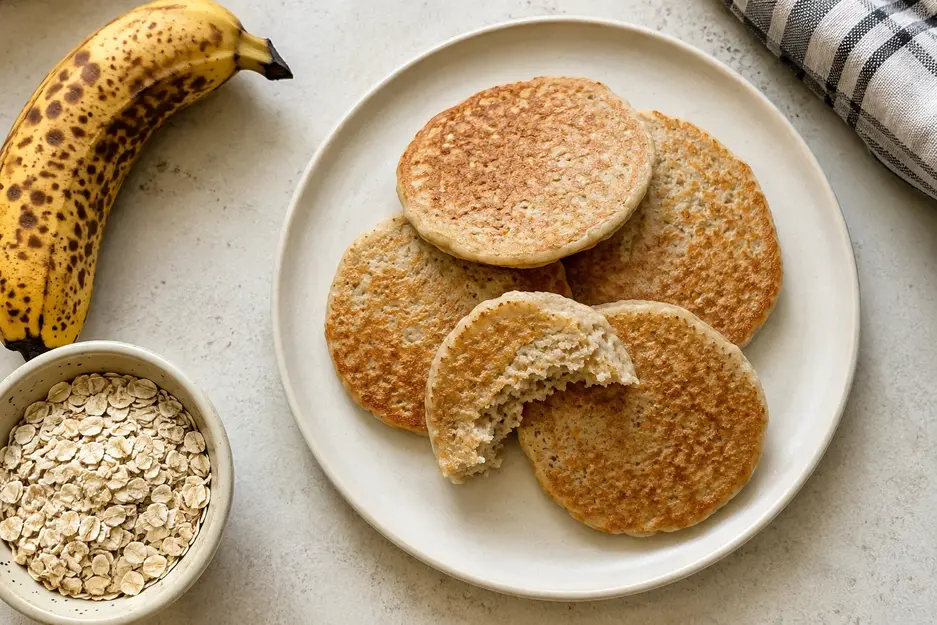
Banana oat pancakes for baby are a simple three-ingredient recipe made with ripe banana, rolled oats, and milk. The recipe skips both added sugar and egg while still producing a batter that can be cooked into small, soft pancakes. The key is using a very ripe banana, blending the oats finely, keeping the batter thick enough to hold its shape, and cooking the pancakes slowly over medium-low heat.
If you’re just getting started, see my complete guide to first foods for baby at 6 months
Why You’ll Love This Recipe
- Only three core ingredients, all easy to find.
- No added sugar ripe banana supplies the sweetness.
- Naturally egg-free.
- Ready from blender to plate in about 15 minutes.
- Freezes well for easy make-ahead breakfasts or snacks.
- Simple blender method with very little prep.
- Soft texture and mild banana-oat flavor.
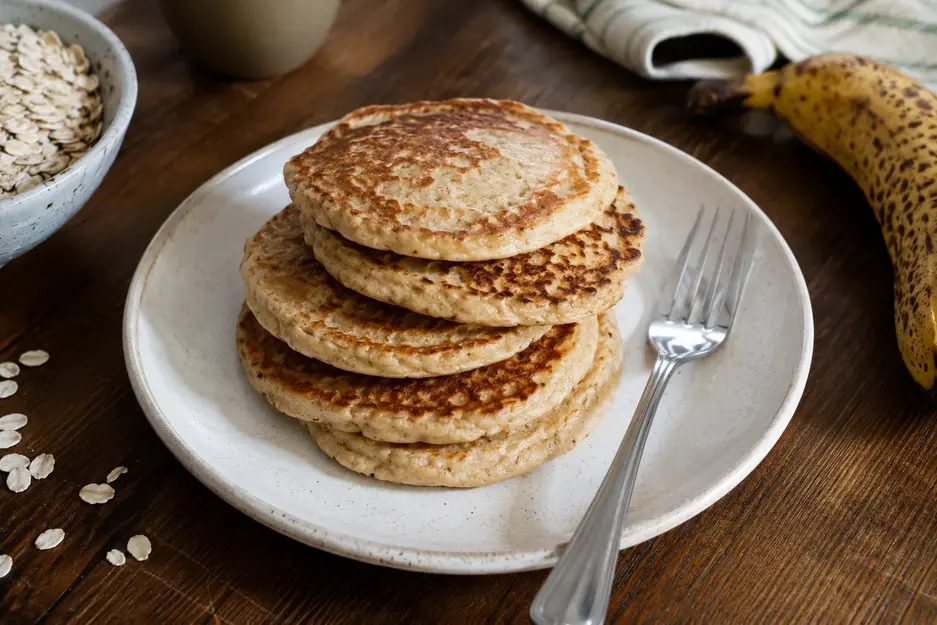
Quick Recipe Overview
This recipe uses oats as the dry base, ripe banana for sweetness and body, and milk to loosen the mixture into a thick pourable batter. The oats are blended first so the texture is smoother, then the banana and milk are added. Small pancakes cook more evenly than large ones and are easier to flip. A medium-low pan temperature gives the center time to cook without browning the outside too quickly.
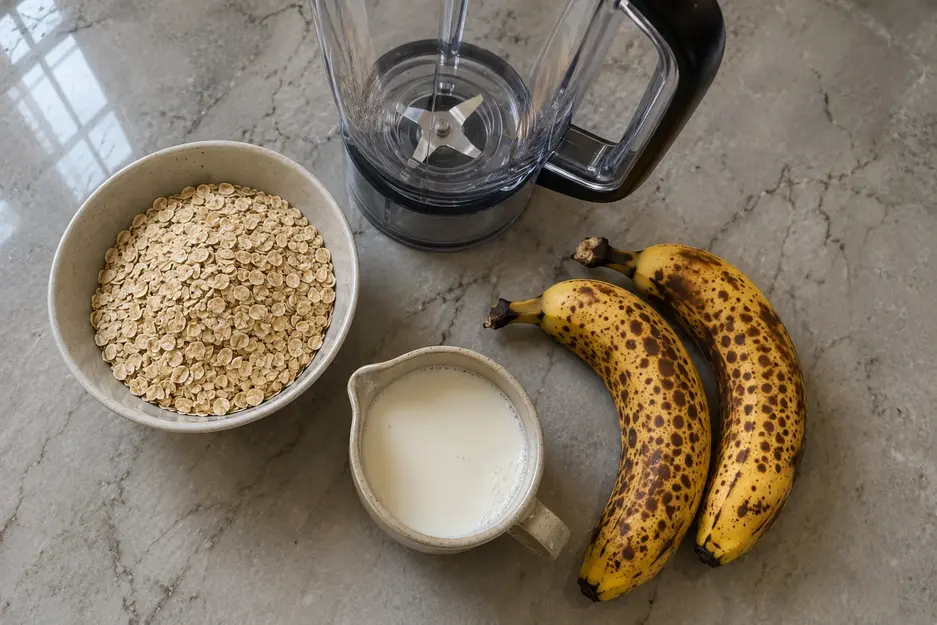
Why This Recipe Works Without Egg
Egg usually adds structure to pancakes, but this recipe does not depend on egg. Blended oats thicken the batter, while mashed ripe banana contributes moisture and a naturally sticky texture that helps the mixture hold together. The batter also firms as the oat particles absorb liquid. For that reason, the consistency of the batter and the cooking time matter as much as the ingredient ratio.
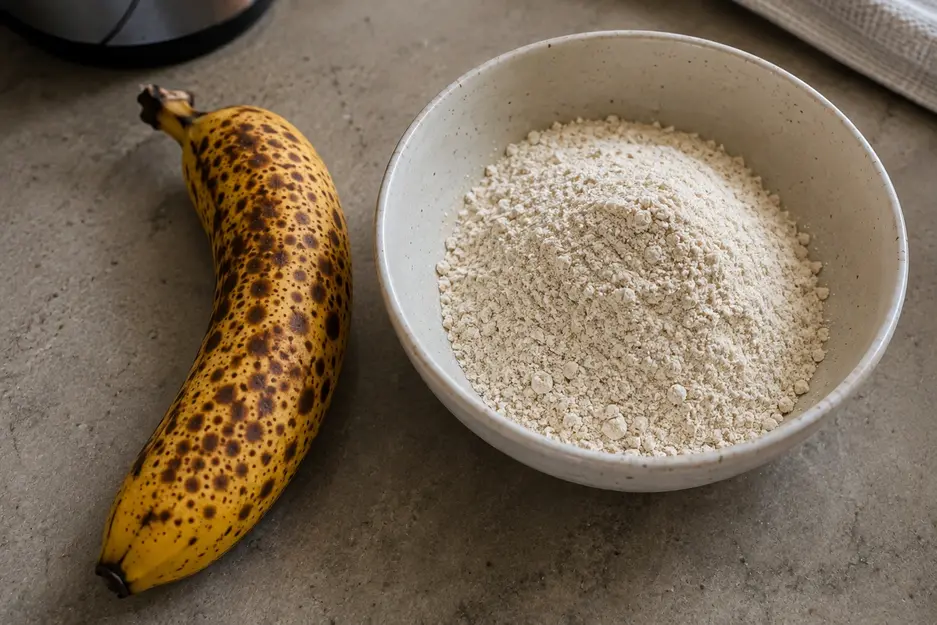
Very ripe bananas work best because they are softer, sweeter, and easier to blend evenly. A firm banana can leave the batter less smooth and may produce a drier, less cohesive pancake. Waiting until the first side looks set before flipping is another important part of keeping an egg-free pancake intact.
Ingredients You’ll Need
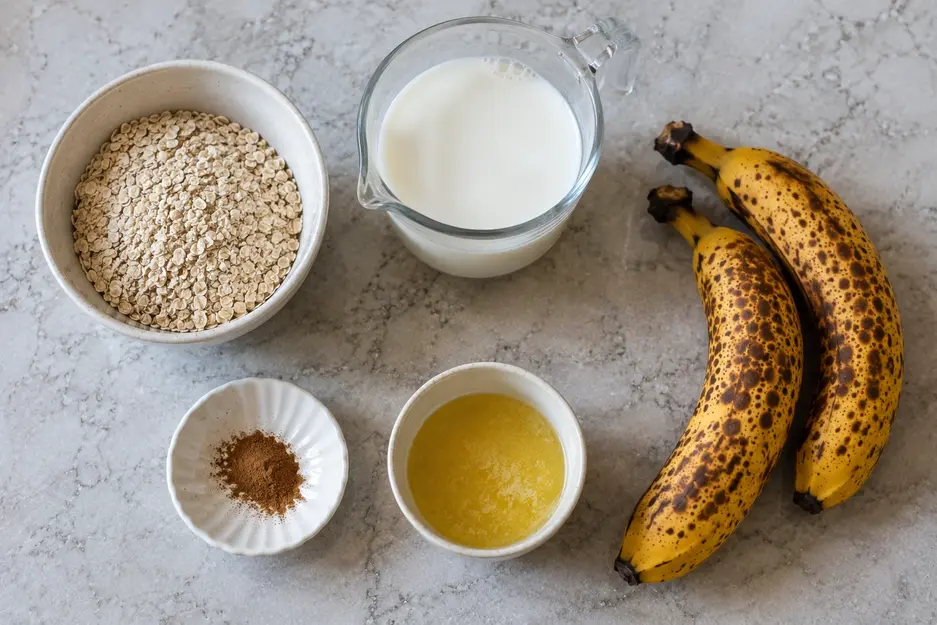
Main Ingredients
- 1 cup rolled oats
- 2 medium ripe bananas with visible brown spots
- 3/4 cup milk of choice
Optional Additions
- 1/4 teaspoon cinnamon
- A small splash of extra milk if the batter is too thick
- A little butter or neutral oil for the pan
Why each ingredient matters: the oats create the dry base once blended, the ripe banana adds natural sweetness, moisture and body, and the milk adjusts the mixture to a thick but pourable consistency.
Ingredient Substitutions
Rolled oats can be replaced with quick oats because both blend down easily. Steel-cut oats are not a good swap for this particular blender method because they are much coarser. The milk can be dairy milk or an unsweetened plant-based milk. Because different brands of oats and different banana sizes absorb liquid differently, treat the stated milk amount as a starting point and adjust only if the batter needs it.
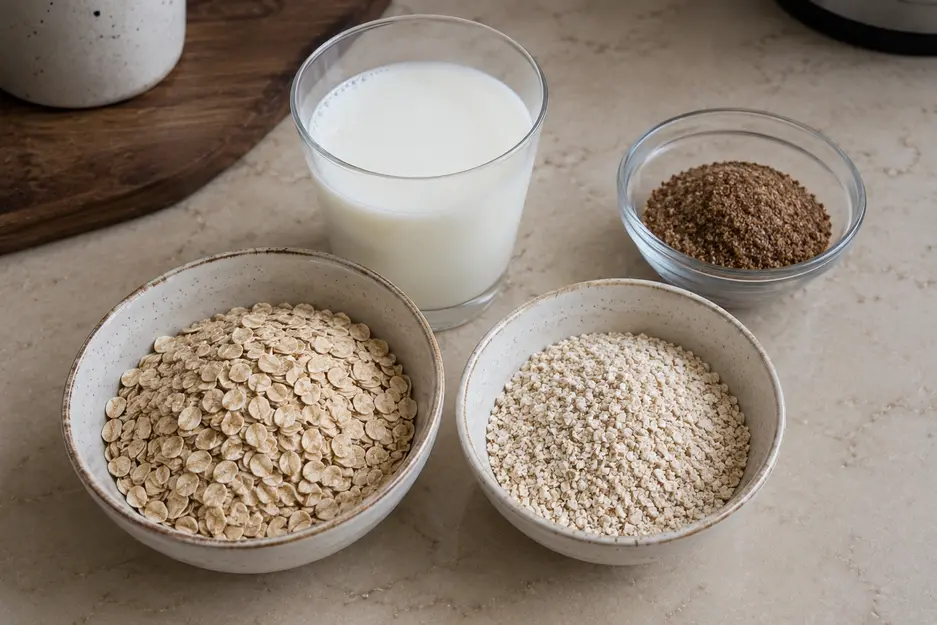
For an optional flax addition, stir 1 tablespoon ground flaxseed with 3 tablespoons water and let it stand for about 5 minutes before adding it to the batter. This will make the batter thicker, so a small amount of extra milk may be needed.
How to Make Banana Oat Pancakes for Baby
Step 1: Blend the Oats into Flour
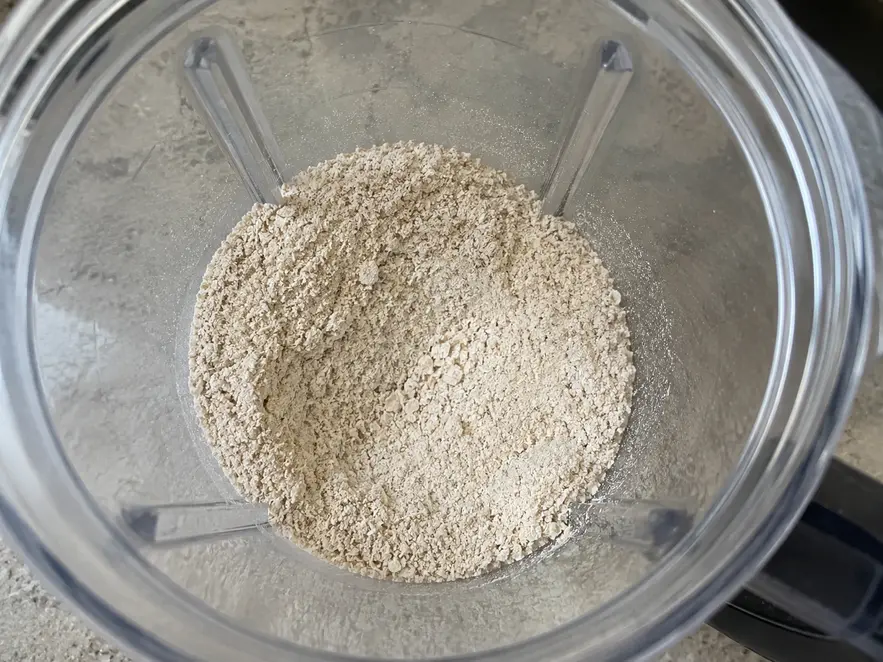
Add the rolled oats to a blender first and blend on high for about 20 seconds, or until they look fine and flour-like.
Step 2: Add the Banana and Milk
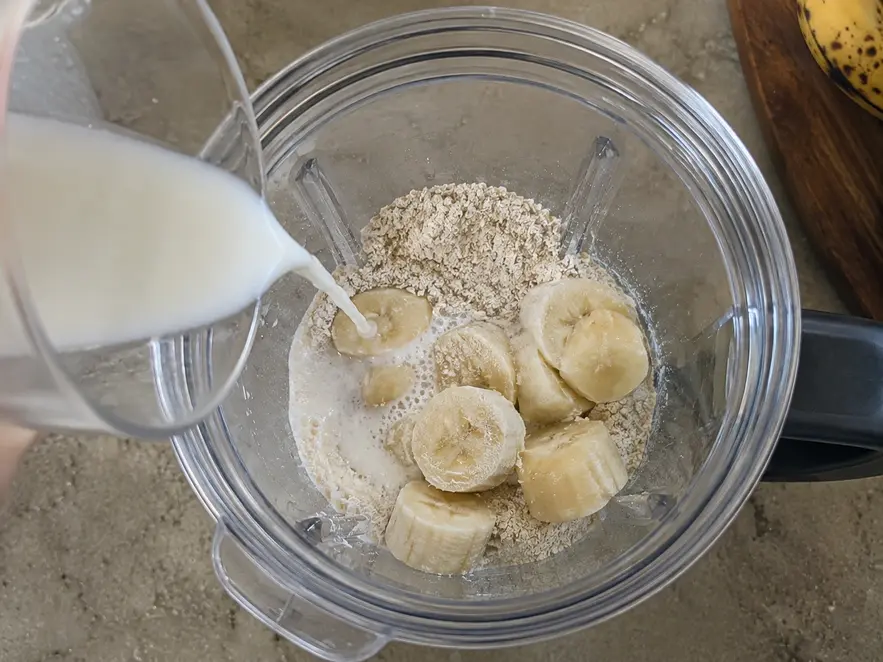
Break the ripe bananas into chunks and add them to the blender with the milk.
Step 3: Blend Until Smooth
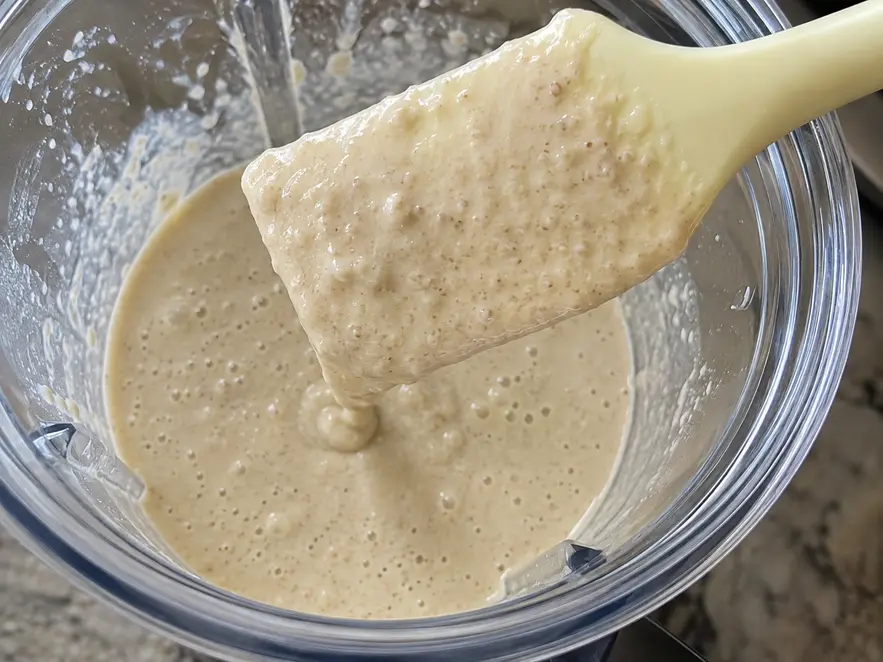
Blend for about 30 to 40 seconds, stopping once to scrape down the sides if needed. The batter should look smooth, thick, and pourable.
Step 4: Heat the Pan
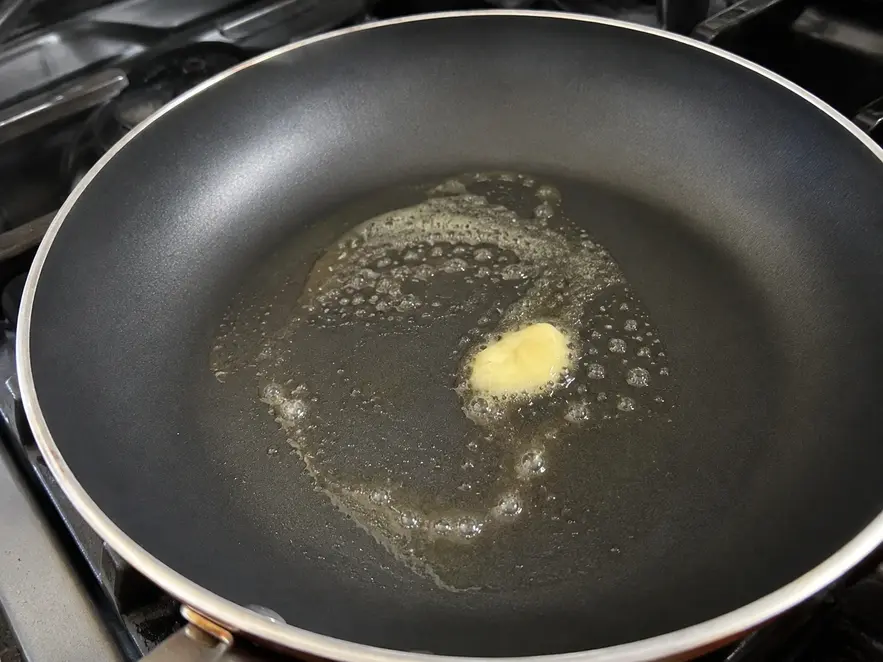
Warm a non-stick skillet over medium-low heat and add only enough butter or neutral oil to lightly coat the surface.
Step 5: Cook Small Pancakes
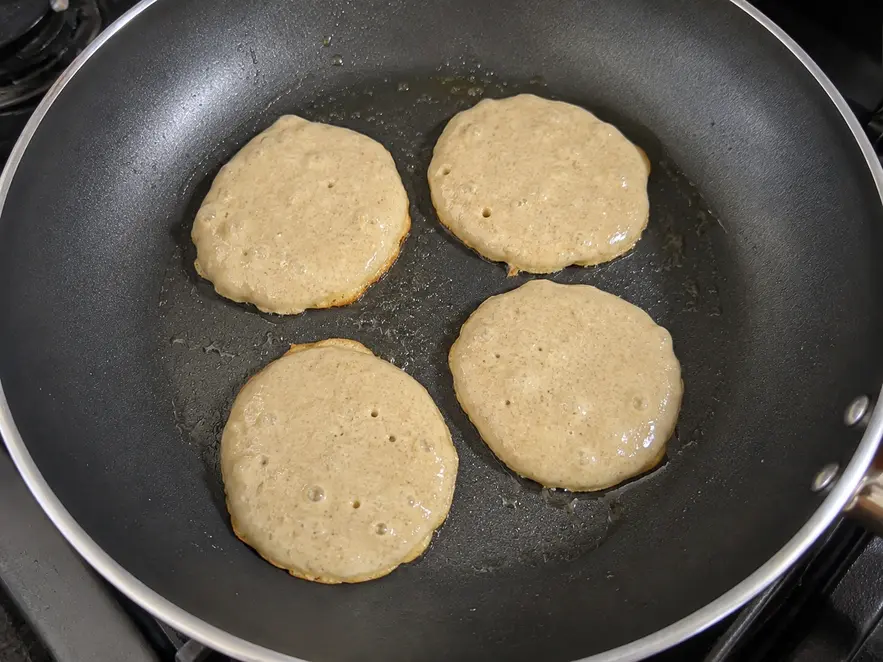
Spoon about 2 tablespoons of batter per pancake into the pan, leaving a little space between each one. Cook for about 2 to 3 minutes until the edges look set and small bubbles appear on the surface.
Step 6: Flip and Finish Cooking
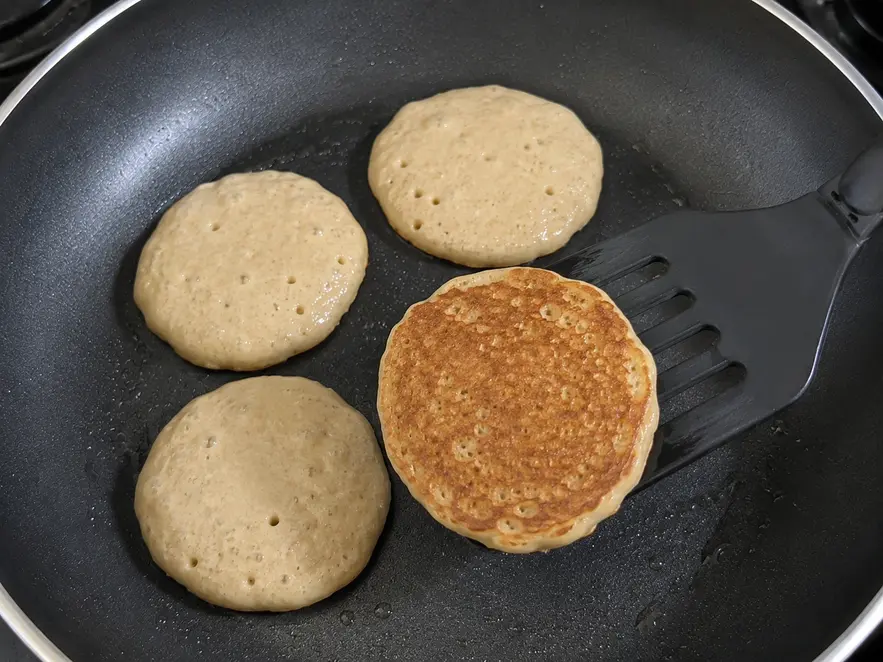
Flip gently with a thin spatula and cook the second side for another 1 to 2 minutes, until lightly golden and cooked through.
Step 7: Cool Before Serving
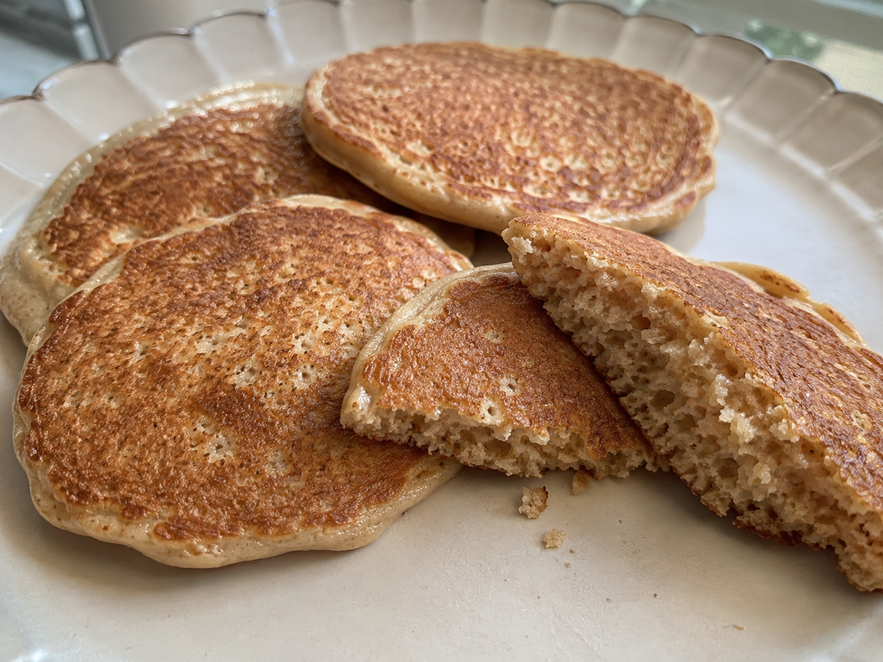
Transfer the cooked pancakes to a plate and let them cool slightly. Breaking one open is a simple way to check that the center has cooked through.
Texture & Consistency Guide
The finished batter should resemble a thick smoothie or a loose spoonable batter. It should fall from a spoon in a slow ribbon instead of running like milk. If the batter spreads flat and thin as soon as it reaches the pan, blend in an extra tablespoon of oat flour. If the batter barely spreads at all, add a small splash of milk and blend again.
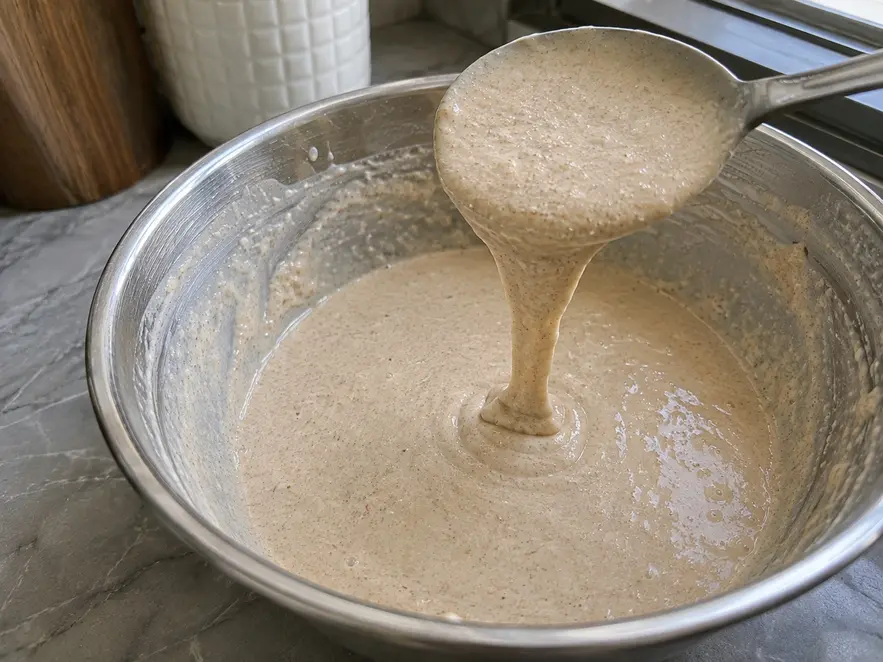
The batter may thicken slightly if it sits for several minutes because the oats continue absorbing liquid. If that happens, stir or blend in a small splash of milk before cooking the next batch.
Serving Ideas
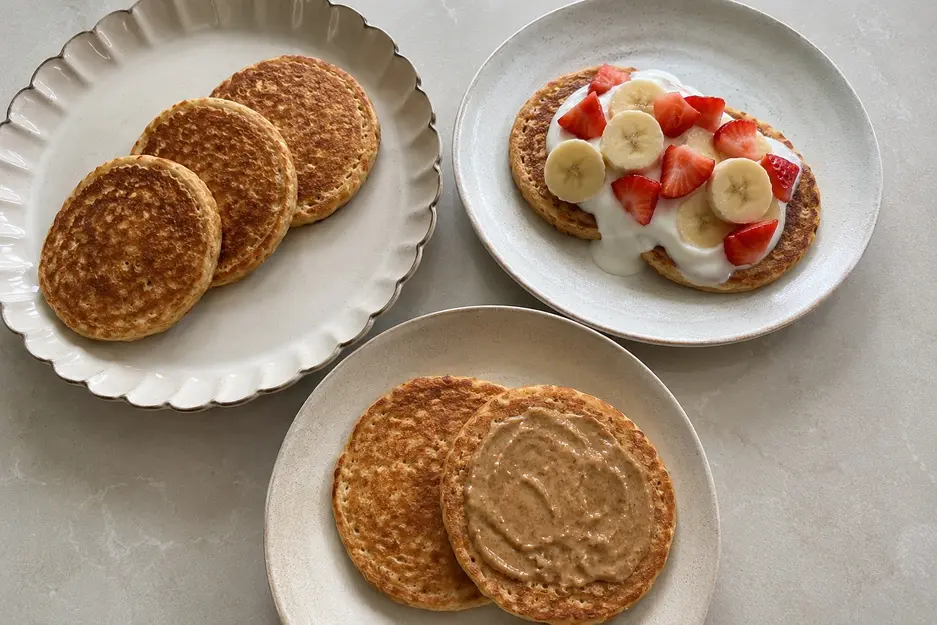
- Serve plain while still slightly warm.
- Add a spoonful of plain yogurt.
- Top with sliced banana, berries, or another soft fruit.
- Spread with a thin layer of nut or seed butter if desired.
- Add a light sprinkle of cinnamon.
- Pair with another breakfast item for a fuller meal.
You can also serve these pancakes with homemade apple puree for baby for extra natural sweetness.
Variations Worth Trying
Once the base recipe is familiar, a few simple changes can create different flavors and textures:
For another easy breakfast option, try these carrot pancakes for baby.
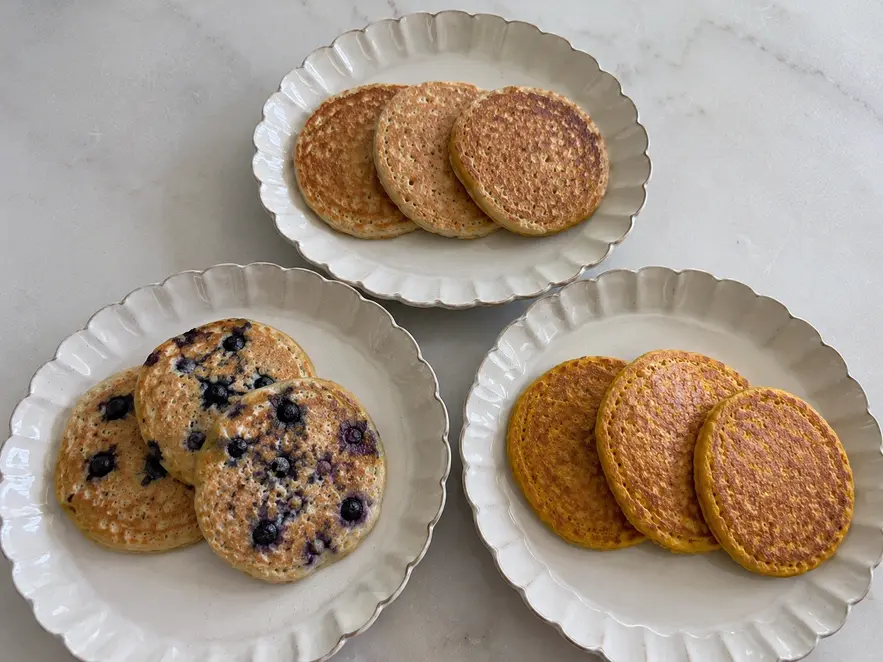
- Apple version: replace one banana with 1/2 cup unsweetened applesauce.
- Pumpkin version: replace one banana with 1/2 cup plain pumpkin puree and add a pinch of cinnamon.
- Berry version: fold a small handful of mashed or finely chopped blueberries into the blended batter.
- Yogurt version: stir in 1 tablespoon plain yogurt after blending; add a little extra oat flour if the batter becomes too thin.
- Warm-spice version: add a small pinch of cinnamon or nutmeg.
Troubleshooting
Why is my batter too thin? The bananas may be larger than expected or too much milk may have been added. Blend in oat flour one tablespoon at a time until the batter thickens.
Why is my batter too thick to pour? The oats may have absorbed more liquid. Add a small splash of milk, blend again, and check the consistency.
Why do my pancakes fall apart when I flip them? The first side may not be fully set. Wait until the edges look matte and firm and the top shows a few bubbles before flipping.
Why is the center still wet after cooking? The pancakes may be too large or the heat too high. Make smaller pancakes and lower the heat slightly so the inside has time to cook.
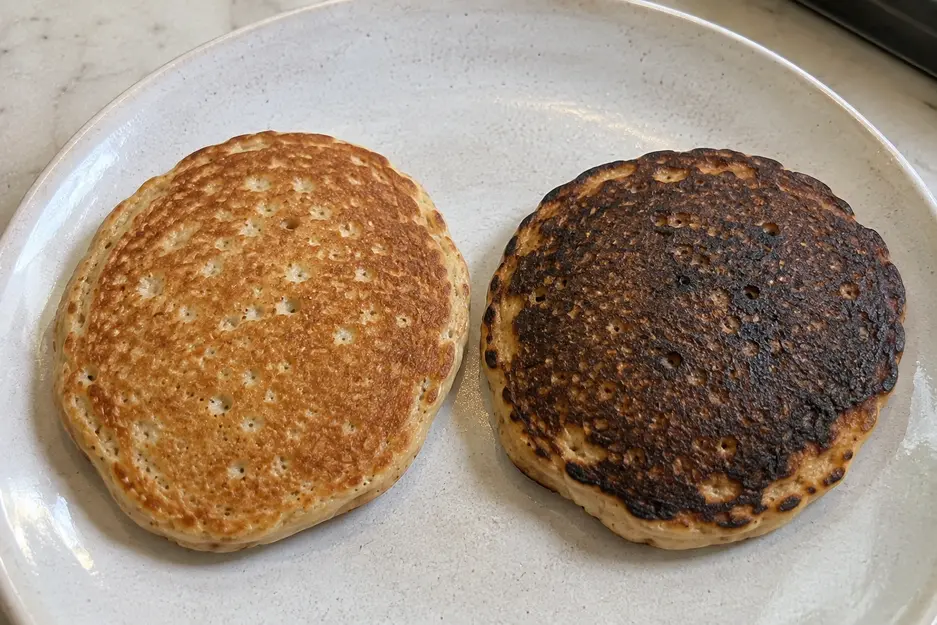
Why do the pancakes brown too quickly? The pan is probably too hot. Reduce the heat and allow the pancakes to cook more slowly.
Why does the batter taste less sweet? Banana ripeness changes the flavor. Very ripe bananas with brown spots are usually sweeter than firm yellow bananas.
Storage, Freezing & Reheating
Let the pancakes cool completely before storing them. Keep them in an airtight container in the refrigerator for up to 3 days. For freezing, arrange the cooled pancakes in a single layer on a parchment-lined tray until firm, then transfer them to a freezer-safe bag or container. This helps keep individual pancakes from freezing together.
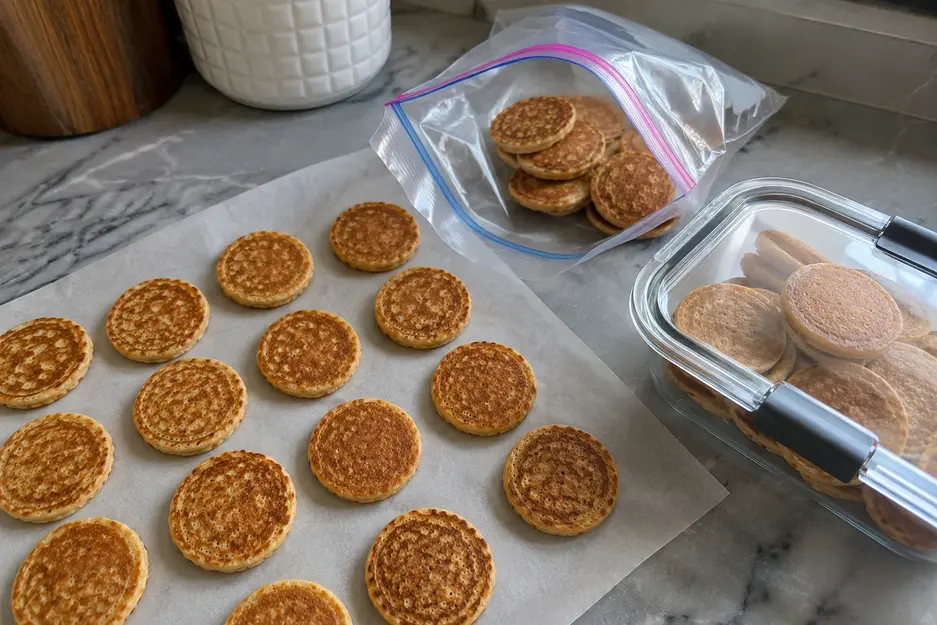
Reheat refrigerated pancakes in a dry skillet over low heat or in short microwave bursts until warmed through. Frozen pancakes can be thawed in the refrigerator or reheated from frozen in short intervals. Because microwave strength varies, use the shortest useful time and add more only if needed.
Egg-Free vs. Egg-Included Pancakes
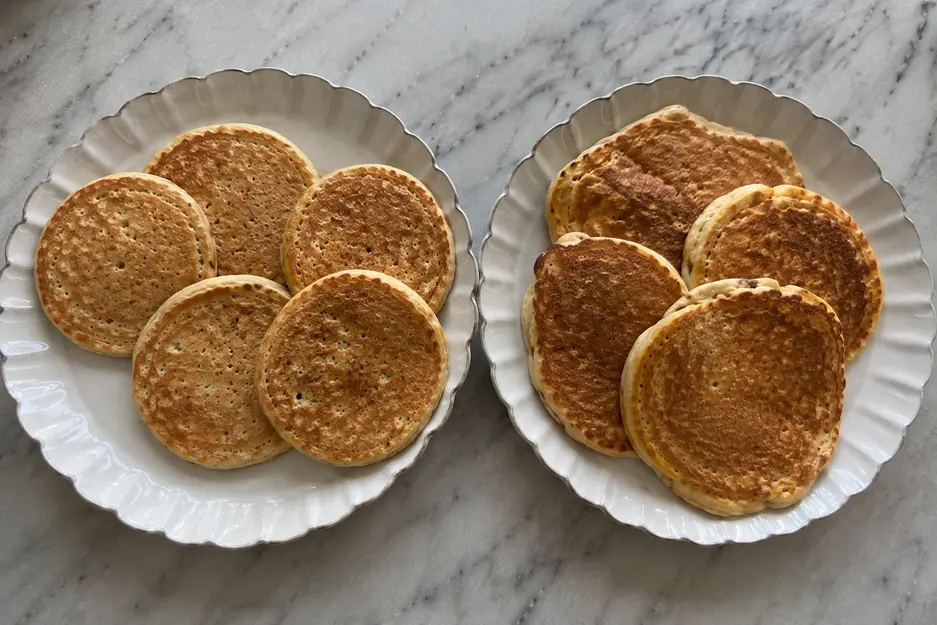
| Feature | Egg-Free Banana Oat Version | Egg-Included Version |
| Main structure | Blended oats + ripe banana | Blended oats/flour + egg |
| Texture | Soft and slightly more delicate | Usually a little firmer |
| Flavor | Banana-forward | Depends on recipe and add-ins |
| Flipping | Needs the first side to set well | Often easier to flip |
| Best reason to choose | You want an egg-free recipe | You prefer an egg-based pancake |
Neither version is automatically better. The choice simply depends on the recipe style you want. The egg-free version keeps the ingredient list short and relies more heavily on banana ripeness, batter thickness, and careful flipping.
Recipe Card
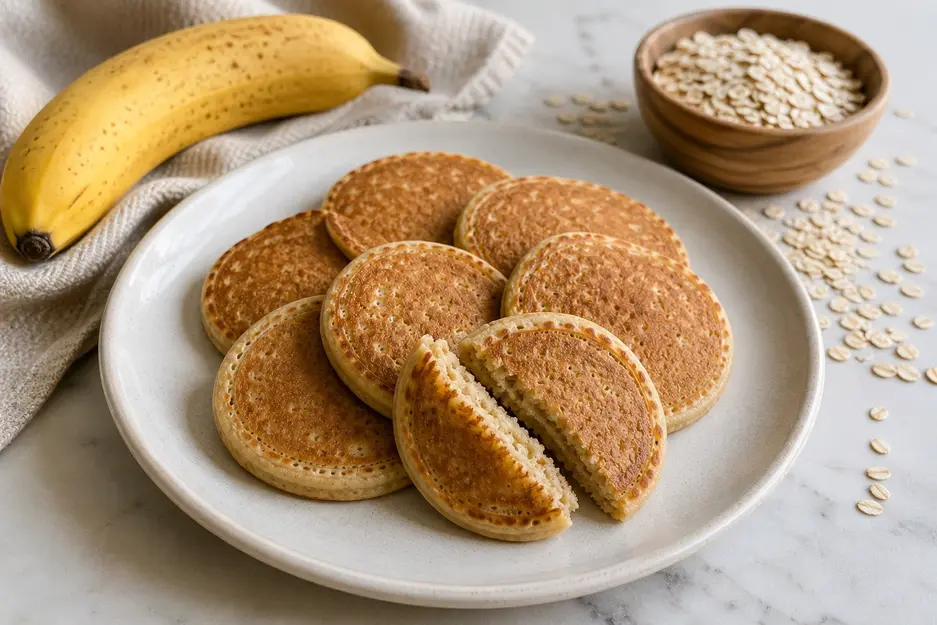
Banana Oat Pancakes for Baby
Prep Time: 5 minutes Cook Time: 10 minutes Total Time: 15 minutes Yield: About 10–12 small pancakes
Ingredients
- 1 cup rolled oats
- 2 medium ripe bananas with brown spots
- 3/4 cup milk of choice
- 1/4 teaspoon cinnamon, optional
- A small amount of butter or neutral oil for cooking
Instructions
- Blend the oats alone until they form a fine flour, about 20 seconds.
- Add the bananas and milk, then blend until smooth, about 30–40 seconds.
- Heat a lightly greased non-stick skillet over medium-low heat.
- Spoon about 2 tablespoons of batter per pancake into the pan.
- Cook for 2–3 minutes until the edges set and bubbles appear, then flip.
- Cook the second side for 1–2 minutes until lightly golden and cooked through.
- Transfer to a plate and cool slightly before serving.
Notes: Use very ripe bananas for the best flavor and texture. Rolled or quick oats work best for this blender method.
Storage: Refrigerate cooled pancakes for up to 3 days, or freeze in a single layer before transferring to a freezer-safe container.
Conclusion
Banana oat pancakes for baby are a simple egg-free recipe built around three core ingredients: oats, ripe banana, and milk. The most important details are blending the oats finely, using a very ripe banana, keeping the batter thick but pourable, and waiting until the first side has properly set before flipping. Once the basic recipe works well in your kitchen, the apple, pumpkin, berry, or yogurt variations make it easy to change the flavor without changing the overall method.
Disclaimer
This article is for general informational purposes and does not replace personalized guidance from your pediatrician. Always confirm your baby’s readiness for solids, and consult your pediatrician about allergen introduction, including egg, before making decisions about banana oat pancakes for baby or any other new food.
FAQ’s
Q1: Can babies eat oat pancakes without egg safely?
Yes, egg-free banana oat pancakes are a safe option for babies, particularly useful if egg hasn’t been introduced yet or if there’s a known egg allergy in the family.
Q2: What age can babies start eating banana oat pancakes?
? Most babies can try this recipe from around 6 months, once they’ve started solids and show readiness signs like sitting with support and reaching for food.
Q3: Can I freeze these egg-free baby pancakes?
Yes, they freeze well for up to 2 months when cooled completely and stored in a freezer-safe container or bag.
Q4: Why do my egg-free pancakes fall apart more than egg-based ones?
Egg-free batters rely on banana’s natural binding rather than egg protein, so they’re slightly more delicate using very ripe banana and waiting for the edges to fully set before flipping helps prevent this.
Q5: Can toddlers eat this same recipe?
Yes, toddlers can eat larger portions of the same pancakes, and a small pinch of cinnamon or nutmeg can be added for older kids who enjoy more flavor.