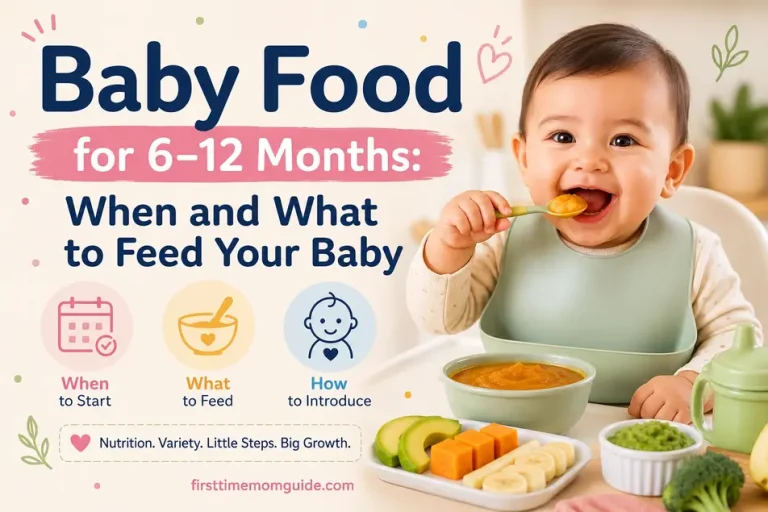
First Foods for Baby at 6 Months: Complete Guide
Everyone has an opinion about your baby’s first meal. Your mother says start with rice cereal. Your neighbor swears by sweet potato. A Facebook group you joined last month has forty-seven different answers to the same question, half of them contradicting each other.
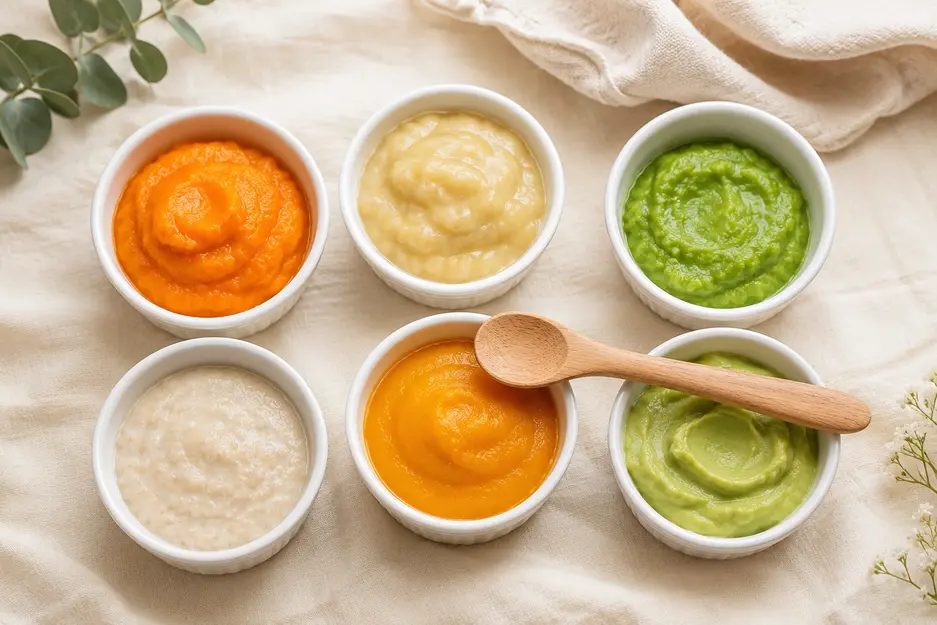
Here is the honest truth: the best first foods for baby at 6 months are not about any one food in particular. They are about starting with the right texture, prioritizing the right nutrient iron and following a simple, safe approach that is backed by the same sources pediatricians actually reference.
This guide gives you a complete, honest list of the safest first foods for baby at 6 months, explains exactly why certain foods come first, and clears up the most common confusion that sends parents down a spiral at the kitchen counter. Every single claim here is verified. Nothing is guessed.
Before choosing first foods, check your Baby Start Eating Real Food so you know they are truly ready for solids.
Are You Sure Your Baby Is Ready? The Signs That Actually Matter
Before the food list, one thing matters more than what you feed: whether your baby’s body is genuinely ready for it.
Starting solids before a baby is developmentally ready even at 6 months increases the risk of choking, digestive discomfort, and a frustrating start to mealtimes for both of you. The CDC and AAP both note that no single date guarantees readiness. The signs do.
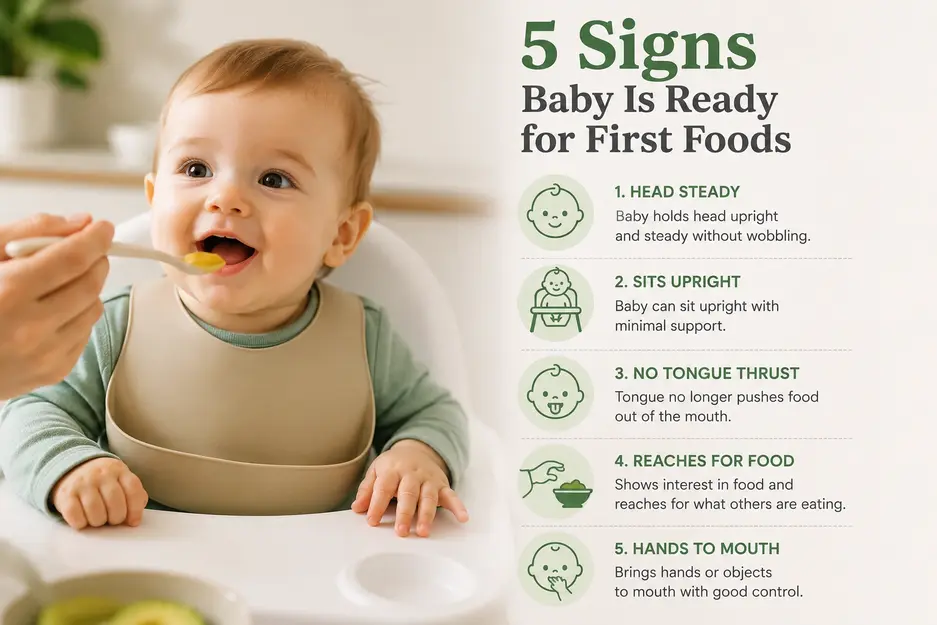
Sign 1. Steady Head Control:
Your baby holds their head upright and steady without it flopping, bobbing, or dropping to the side. This matters because safe swallowing requires a stable, upright airway. A baby whose head still wobbles is not ready for food in their mouth yet.
Sign 2. Sits With Minimal Support:
Your baby can sit upright in a high chair or on your lap without immediately slumping forward or tipping sideways. Some light support at the hips is fine. What matters is that your baby is not relying entirely on propped support just to stay in position.
Sign 3. The Tongue-Thrust Reflex Has Faded:
This reflex causes babies to automatically push everything out of their mouth with their tongue it is a protective mechanism for younger infants. Once it fades, babies begin moving food from the front of the mouth toward the back to swallow. You will notice this during first feeding attempts: if most food consistently comes back out on your baby’s chin every single time, wait another week before trying again.
Sign 4. Genuine Interest in Food:
Leaning toward food, watching intently when others eat, reaching for what is on your plate these are behavioral readiness signals worth watching for. A baby who shows real curiosity about food is far more likely to have a positive early feeding experience than one who is indifferent.
Sign 5. Brings Objects to Their Mouth:
This hand-to-mouth coordination will soon support self-feeding. If your baby regularly brings toys and hands to their mouth with reasonable accuracy, this is a developmental green light.
First Foods for Baby at 6 Months: The Complete Safest List
The most important thing to know before this list: the AAP recommends that for most children, you do not need to give food in any specific order. The idea that you must start with vegetables before fruit, or that cereals must come before meat, is outdated advice. What genuinely matters is:
- Starting with single ingredients, one at a time
- Prioritizing iron-rich foods early
- Moving through new foods with a 3-to-5-day gap per introduction
Everything below is an appropriate first food for baby at 6 months, organized by category so you can see the full picture at once.
Category 1. Vegetables:
Vegetables are an excellent starting point mild in flavor, smooth when pureed, and nutritionally solid. Babies introduced to a variety of vegetables early are commonly reported to develop more willingness to eat vegetables later.
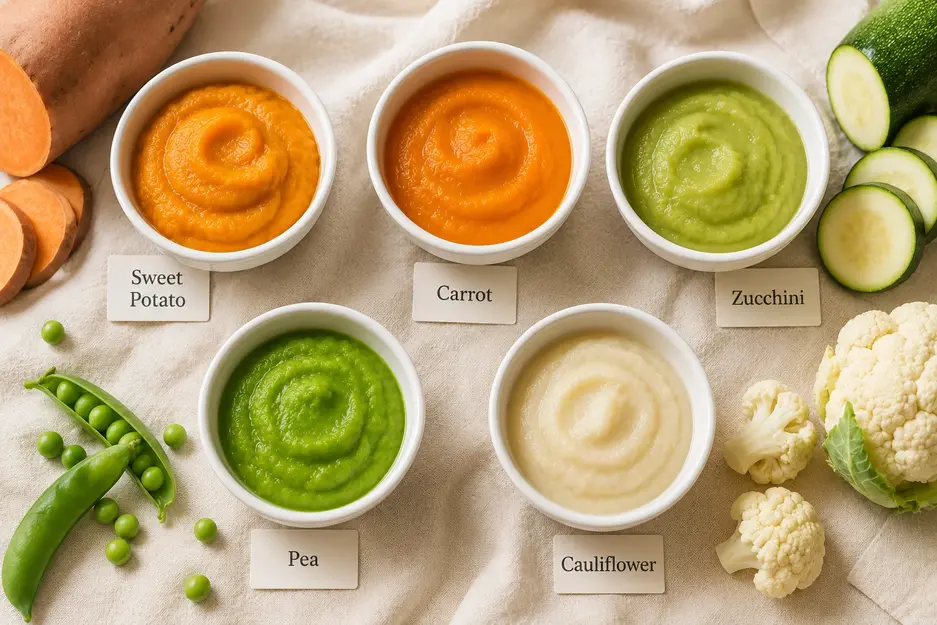
1. Sweet Potato:
One of the most universally accepted first vegetables. Naturally sweet, smooth when pureed, and rich in beta-carotene, which converts to vitamin A for eye development and immune support. Cook until very soft, then blend with a small amount of breast milk, formula, or water to reach a thin, runny consistency.
2. Carrot:
Naturally sweet and nutritionally excellent. High in beta-carotene, easy to steam and puree, and almost always accepted by babies on first offering. One note: for babies under 3 months, home-prepared carrot puree carries a small nitrate concern per the Mayo Clinic at 6 months this is not an issue, but commercial carrot purees for very young infants are sometimes recommended as a precaution. At 6 months, homemade carrot puree is appropriate.
3. Pea:
A good source of plant-based protein, fiber, and vitamin C. Pea puree tends to have a slightly more complex flavor than sweet potato or carrot, making it a useful early introduction for building palate variety. Always strain through a fine mesh sieve for babies under 8 months pea skins do not blend out and create a gritty texture young babies typically reject.
4. Zucchini:
Mild, soft, and easy to digest. Zucchini blends to a very smooth consistency and has a neutral flavor that pairs well with other vegetables and fruits. It is one of the least likely first vegetables to cause any digestive reaction.
5. Cauliflower:
Mild in flavor, smooth when cooked and pureed, and a gentle introduction to the brassica family. More versatile as a mixing base than as standalone once combinations begin, but solid as a single ingredient introduction.
6. Butternut Squash:
Naturally sweet, creamy when pureed, and rich in vitamin A. A good alternative to sweet potato for variety in the first few weeks.
Category 2. Fruits:
Fruit purees are appropriate from 6 months and do not need to be saved until after vegetables. There is no evidence that introducing fruit first creates a preference for sweet foods that makes vegetables harder to accept later this is a persistent myth with no current scientific support from major pediatric bodies.
1. Banana:
No cooking required mash a ripe banana with a fork and thin with a small amount of breast milk or formula if needed. Ready in under a minute, extremely well-tolerated, and almost universally accepted. Choose a banana with yellow skin and brown speckles fully ripe, sweeter, and more digestible than an underripe banana.
2. Avocado:
Technically a fruit and the only first food rich in healthy monounsaturated fats. These fats matter for brain development during the first year when the brain doubles in size. Mash half a ripe avocado and serve immediately avocado browns within an hour of being cut, so make fresh for each feeding.
3. Pear:
Steamed and pureed pear is one of the gentlest, most accepted first fruits. It contains sorbitol, a natural compound that gently supports bowel regularity making it particularly useful for babies who experience constipation in the first weeks of starting solids.
4. Apple:
Classic, mild, slightly sweet, and extremely well-accepted. Apple puree also contains vitamin C, which enhances iron absorption from other foods when eaten in the same meal a useful nutritional partnership to know about. Steam until soft, then blend until completely smooth.
5. Mango:
A vibrant, tropical option with one of the highest vitamin C contents of any fruit puree available. Fully ripe mango blends to a silky, naturally sweet puree that most babies accept enthusiastically. Only use fully ripe mango underripe mango contains compounds that can cause mouth tingling and is typically rejected immediately.
6. Papaya:
Contains natural digestive enzymes called papain and chymopapain that actively support protein breakdown and gentle digestion. A good option for babies with sensitive digestive systems. No cooking required scoop ripe flesh and blend.
Category 3. Iron-Rich First Foods (Priority Category):
This category is the most important one on this entire list and the most overlooked. By six months, a baby’s natural stores of iron accumulated during pregnancy begin to deplete. Between 7 and 12 months, a baby’s iron requirement rises to 11 mg per day. Breast milk is low in iron, and iron from plant-based sources absorbs significantly less efficiently than iron from animal sources without vitamin C present alongside it.
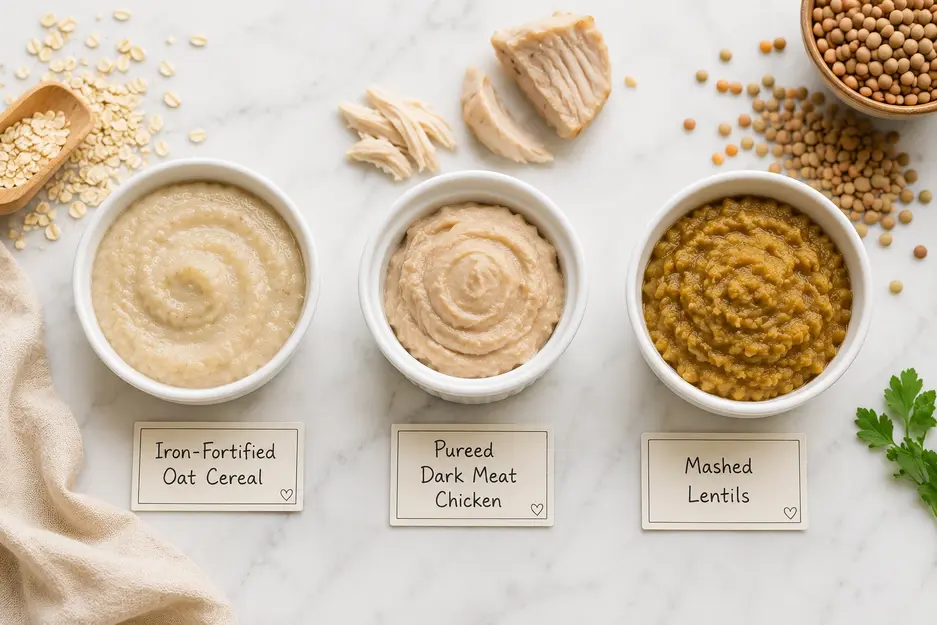
After the first six months of life, babies need an additional source of iron. Starting iron-rich first foods for baby at 6 months not saving them for later in the introduction sequence directly addresses this nutritional gap.
1. Iron-Fortified Oat or Multigrain Cereal:
One of the highest-iron first foods available. Mix with breast milk, formula, or water to a thin, runny consistency. One important note: the AAP and FDA have both flagged rice cereal as a source of arsenic exposure for infants when consumed exclusively. Oat, barley, or multigrain varieties are strongly preferred over rice cereal alone.
2. Pureed Chicken or Turkey:
Poultry provides heme iron the form of iron that absorbs significantly more efficiently than plant-based iron. Dark meat provides more iron than white meat. Poach or steam a small piece of skinless, boneless chicken until fully cooked through, allow to cool, and blend with enough liquid to reach a completely smooth, thin consistency. A small amount goes a long way as a first introduction.
3. Pureed Beef or Lamb:
Red meat provides the highest iron content of any first food, alongside zinc, which matters for immune function and healthy growth. Cook until well done, blend until completely smooth, and serve in small amounts alongside a more familiar flavor if your baby finds the taste of meat alone unfamiliar.
4. Lentils:
The most accessible plant-based iron source for first foods. Red lentils are the best choice they cook faster, blend smoother, and have a milder flavor than green or brown lentils. Cook in water until completely soft, then blend until smooth. Pair with a fruit puree containing vitamin C (apple, mango, or strawberry) in the same meal to significantly increase iron absorption.
5. Pureed Egg Yolk:
A good source of iron, fat, and protein. Hard-boil an egg, remove the yolk, mash with a small amount of breast milk or formula, and serve. Current guidance recommends introducing egg early around 6 months as part of the allergen introduction approach covered in the next section.
Category 4. Grains:
1. Oat Porridge:
Iron-fortified oat cereal or plain oat porridge cooked to a very smooth, thin consistency is an appropriate and nutritionally useful early grain. Mix with breast milk or formula to thin to the right stage 1 consistency flows slowly off a spoon like thin yogurt.
2. Barley Porridge:
Another appropriate grain option with a slightly different flavor profile. Less commonly used than oat but equally appropriate and nutritionally similar.
How to Introduce First Foods Safely: The Exact Process
Knowing what to offer is only part of the picture. How you introduce first foods for baby at 6 months matters just as much for safety, allergy identification, and long-term mealtime success.
The 3 to 5 Day Rule
Introduce one single-ingredient food at a time and wait 3 to 5 days before introducing the next new food. This window is the minimum time needed to clearly identify any allergic reaction. Signs of a reaction can appear anywhere from within minutes to 48 hours after a first exposure so three days gives you a clear observation window before moving forward.
This does not mean your baby eats only one food for three days. Once a food is established as safe, you can continue offering it alongside the next new single ingredient being introduced.
The Right Texture for 6 Months
At 6 months, the correct texture is smooth and thin similar to thin yogurt. It flows slowly off a spoon rather than sitting in a thick mound. Most parents make first purees slightly too thick. A puree that is too thick is harder for a young baby to swallow, increases the risk of gagging, and often leads to refusal.
Add liquid breast milk, formula, or cooled boiled water one tablespoon at a time until the right consistency is reached.
How Much to Offer
Start with 1 to 2 teaspoons at a single sitting. The goal of the first week of solids is learning and exploration not nutrition. Your baby’s nutrition at 6 months still comes primarily from breast milk or formula, and this does not change significantly until 8 to 10 months. Keep milk feeds consistent during the first weeks of introducing solids.
When to Offer the First Foods
Choose a time when your baby is alert, not overtired, and not frantically hungry. The middle of the day after a short nap and a small milk feed often works well, as hunger is present but not urgent. Avoid first feeding attempts when your baby is at their most exhausted.
Allergen Introduction at 6 Months: What Current Guidance Says
This section is the one most commonly missed or misunderstood in older guides, and it is genuinely important.
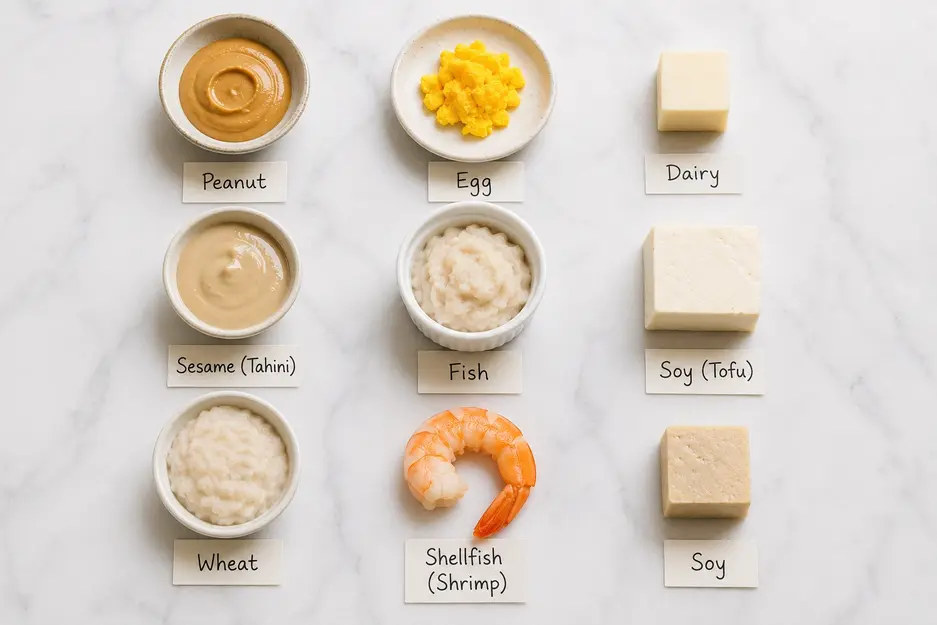
For many years, parents were advised to delay introducing common allergen foods peanut, egg, fish, dairy to reduce the risk of allergies. Current research has reversed this recommendation entirely.
The landmark LEAP study demonstrated that infants who regularly consumed peanuts experienced an 81% lower rate of peanut allergy compared to those who avoided peanuts. Early introduction, not avoidance, is now associated with lower allergy risk. The AAP now recommends introducing common allergens from around 6 months and incorporating them regularly at least 3 times per week after introduction to help prevent future allergies.
The 9 Common Allergens to Introduce Early:
- Peanut (as smooth peanut butter thinned with breast milk, formula, or water never whole nuts or chunks)
- Egg (cooked egg yolk mashed smooth, or well-scrambled soft egg)
- Dairy (plain whole-milk yogurt without added sugar, or soft cheese not cow’s milk as a drink before 12 months)
- Tree nuts (as smooth nut butter thinned appropriately)
- Wheat (as finely cooked, smooth porridge or in infant cereal)
- Fish (well-cooked, pureed white fish, checked carefully for bones)
- Shellfish (after 6 months in babies without known allergy history consult pediatrician)
- Soy (tofu pureed smooth, or edamame very well cooked and mashed)
- Sesame (tahini thinned with breast milk or water)
Foods to Avoid Completely Before 12 Months
Several foods are genuinely unsafe before 12 months not just “not ideal,” but specifically flagged by AAP, CDC, and nutrition authorities.
| Food | Why It Must Be Avoided |
| Honey | Risk of infant botulism — no exceptions, even in cooked foods |
| Cow’s milk as a drink | Protein and mineral levels too high for baby kidneys; lacks iron |
| Fruit juice | High sugar, low nutrition, not a necessary food group |
| Added salt | Places unnecessary strain on developing kidneys |
| Added sugar | Builds unhealthy expectations, no nutritional value |
| Whole grapes or cherry tomatoes | Choking hazard — always cut into quarters |
| Whole nuts | Choking hazard |
| Rice cereal as the only grain | Arsenic exposure risk — vary with oat, barley, multigrain |
| Undercooked eggs or raw meat | Foodborne illness risk |
| Raw honey (including in baked goods) | Same botulism risk as regular honey |
First Foods for Baby at 6 Months: Complete Comparison Chart
This table puts all the first foods for baby at 6 months in one place for quick reference.
| Food | Category | Cook Needed? | Iron Content | Why Start Here |
| Sweet potato | Vegetable | Yes — steam | Low | Most accepted first veg, vitamin A |
| Carrot | Vegetable | Yes — steam | Low | Sweet flavor, beta-carotene |
| Pea | Vegetable | Yes — steam, strain | Low | Protein, vitamin C, variety |
| Zucchini | Vegetable | Yes — steam | Low | Mild, gentle, easy to digest |
| Banana | Fruit | No — mash raw | Low | Fastest first food, widely accepted |
| Avocado | Fruit | No — mash raw | Low | Brain-building fats, creamy texture |
| Pear | Fruit | Yes — steam | Low | Constipation support, sorbitol |
| Apple | Fruit | Yes — steam | Low | Vitamin C, iron absorption partner |
| Mango | Fruit | No if ripe | Low | Highest vitamin C, highly accepted |
| Iron-fortified oat cereal | Grain | Yes — cook | High ✅ | Best iron-rich first grain |
| Pureed chicken | Protein | Yes — poach | High ✅ | Heme iron, most efficiently absorbed |
| Pureed beef | Protein | Yes — cook | Very High ✅ | Highest iron + zinc of any first food |
| Red lentils | Legume | Yes — boil | Medium ✅ | Best plant-based iron source |
| Egg yolk | Protein | Yes — hard boil | Medium ✅ | Iron + fat + allergen introduction |
| Plain whole-milk yogurt | Dairy | No | Low | Calcium, allergen intro, probiotics |
A Simple First Week Plan
You do not need a complicated schedule to start solids successfully. The first week of first foods for baby at 6 months is about exploration not nutrition targets.
Day 1 and 2:
Offer sweet potato puree to 2 teaspoons, thin consistency. Watch for any reaction over the full 2 days.
Day 3 and 4:
Add iron-fortified oat cereal alongside the sweet potato. Alternate between the two foods at different meals.
Day 5 and 6:
Introduce avocado or banana whichever you have on hand. Both need no cooking
Day 7:
Offer pear or apple puree as a fourth established food.
By the end of week one, your baby has four safe, established foods, and you have a base to start building combinations and introducing more variety across the following weeks.
After the first week, follow this Baby Food Chart 6 to 12 Months to know what to feed next and when.
Purees vs Baby-Led Weaning: Which Is Right at 6 Months?
This debate comes up in almost every first foods conversation, and the honest answer is that neither approach is definitively better. Current guidance does not recommend one over the other.
Traditional spoon-feeding with purees is the approach most pediatricians in the US and UK recommend as a starting point at 6 months. It allows precise portion control and makes allergen introduction more manageable.
Baby-led weaning offers soft finger-sized pieces of food from the start, allowing the baby to self-feed. Research suggests this method may not pose a higher risk compared to traditional spoon-feeding when food is presented in age-appropriate shapes and textures.
Many families find a middle ground smooth purees for iron-rich foods like meat and fortified cereals, alongside soft finger-friendly foods like avocado strips and banana pieces. Both can begin at 6 months once readiness signs are present.
Once single foods are safely introduced, try these baby food combinations to add variety and flavor.
You Are Ready to Start
The first foods for baby at 6 months are not a test, and there is no perfect order. Start with the signs of readiness. Prioritize iron early. Introduce one food at a time. Watch your baby’s reactions with patience rather than anxiety.
A baby who tries sweet potato on Tuesday and avocado on Saturday and oat cereal the following Monday is doing brilliantly. A baby who gags on a first spoonful and tries again the next day is doing exactly what first foods for baby at 6 months are supposed to look like.
You have everything you need to start.
DISCLAIMER
This article about first foods for baby at 6 months is for informational purposes only. All guidance is based on AAP 2024 complementary feeding recommendations, CDC infant nutrition guidance, and Mayo Clinic solid food guidelines. Every baby develops at their own pace. Always speak with your pediatrician before starting solids, especially if your baby was born prematurely or has a history of severe eczema, egg allergy, or known food allergies in the family.
FAQ’S
Q1. What is the very first food I should give my baby at 6 months?
There is no single required first food. The AAP states clearly that for most children, there is no need to give food in a specific order. What matters more than which food comes first is that you begin with single-ingredient foods, introduce one at a time with a 3 to 5 day gap between each new food, and prioritize iron-rich options early in the sequence. Sweet potato, pureed pea, iron-fortified oat cereal, avocado, and banana are all excellent starting points. Iron-rich foods fortified cereals, pureed meat, and lentils deserve an early spot in your first week’s rotation because iron stores from birth start depleting around 6 months.
Q2. Should I start with vegetables or fruit?
Either is appropriate. The widely repeated advice to start vegetables before fruit to prevent a preference for sweet foods is not supported by current AAP or CDC guidance. Babies are born with a natural preference for sweet tastes regardless of whether fruit or vegetables are introduced first. The most important thing is variety and consistent exposure to both across the first weeks of solids not the order in which they arrive.
Q3. Do I need to introduce allergens at 6 months?
Current guidance strongly recommends it, yes for babies without a known high-risk allergy history. The LEAP study found that early regular peanut introduction significantly lowered peanut allergy rates compared to avoidance. The AAP now recommends introducing peanut, egg, and other common allergens from around 6 months and offering them at least 3 times per week after introduction. If your baby has severe eczema, an existing egg allergy, or a strong family allergy history, speak with your pediatrician first they may recommend allergy testing before peanut introduction.
Q4. How do I know if my baby is allergic to a first food?
Introduce each food as a single ingredient and watch closely for 3 full days. Signs of an allergic reaction include hives or a rash on the face or body, facial swelling especially around the lips, vomiting within a few hours of eating, unusual fussiness or crying after a meal, or breathing difficulty. If any of these appear, stop that food and contact your pediatrician before trying it again. True food allergies in babies are not common, but first-time introduction of single ingredients rather than combinations makes any reaction far easier to trace to a specific food.
Q5. Why does my baby gag on first foods? Is it normal?
Gagging during early solids is normal and protective. A baby’s gag reflex sits further forward in the mouth than in adults, which is a developmental safety feature that helps prevent choking. Research has found that gagging occurs in a significant proportion of babies when they begin eating solid foods it is common, expected, and not the same as choking. If your baby gags, stay calm and give them time to work through it. Choking is different it is silent, involves distress, and requires immediate action. If you have not already taken a baby first aid or CPR course before starting solids, it is worth doing.