Cauliflower Puree for Baby: 7 Easy Steps to Perfect Puree
Cauliflower does not smell exciting. It does not taste sweet. It will never win a flavor contest against banana or sweet potato. And that is exactly the point. When you are choosing first foods, a mild flavor can be a practical advantage. Cauliflower puree has a mild taste and can be blended into a smooth texture, making it a simple vegetable to include in a baby’s first-food rotation. It also contains no added sugar or salt when served plain, and it can later be mixed with stronger-tasting foods as your baby becomes comfortable with a wider range of flavors and textures
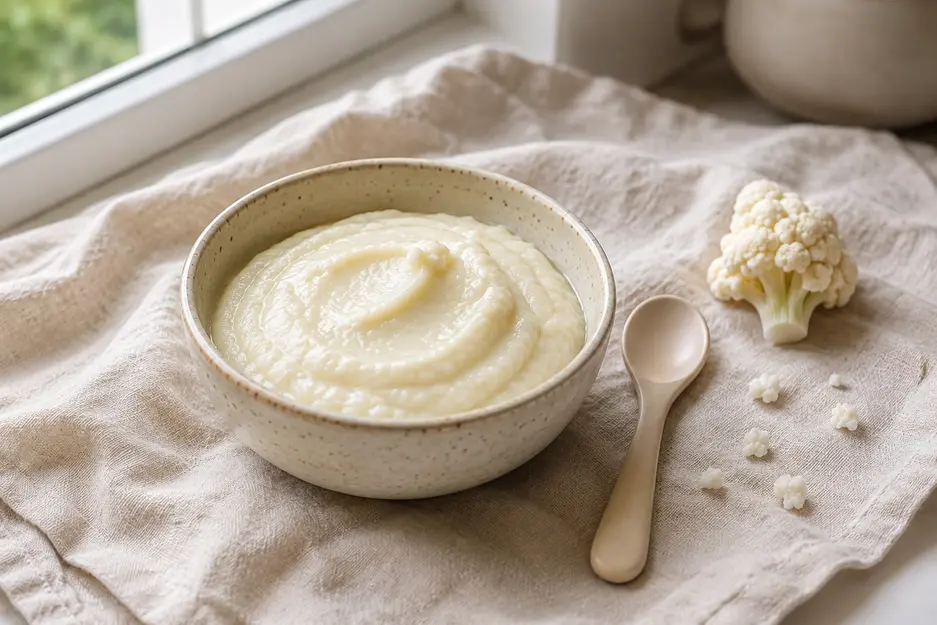
This guide explains why cauliflower can be a useful early vegetable, what it offers nutritionally, how to cook and blend it safely, and how to avoid common preparation mistakes.
New to solids? Start with our first foods for baby at 6 months guide for age-appropriate foods, textures, and an easy place to begin.
Cauliflower Puree at a Glance
This cauliflower puree for baby is,
Prep time: about 5 minutes
Cook time: about 10-12 minutes
You need: cauliflower plus a small amount of breast milk, correctly prepared infant formula, or water for thinning
Method: steam until very soft, then blend or mash
Texture: smooth puree or soft mash, depending on your baby’s feeding skills
Why Mild Cauliflower Can Work Well in Early Feeding
Babies are learning about many new tastes and textures when solids begin. A mild vegetable such as cauliflower can be one simple option during this stage, especially because it can be served without added salt or sugar. Mild foods do not need to be the only foods offered; babies can gradually experience a variety of age-appropriate flavors as their feeding skills develop. Serving cauliflower plain at first can make it easier to notice how your baby responds to the food itself. Added salt and added sugar are best avoided in early feeding, while herbs and mild spices can be introduced in age-appropriate ways as babies become familiar with a wider range of foods.
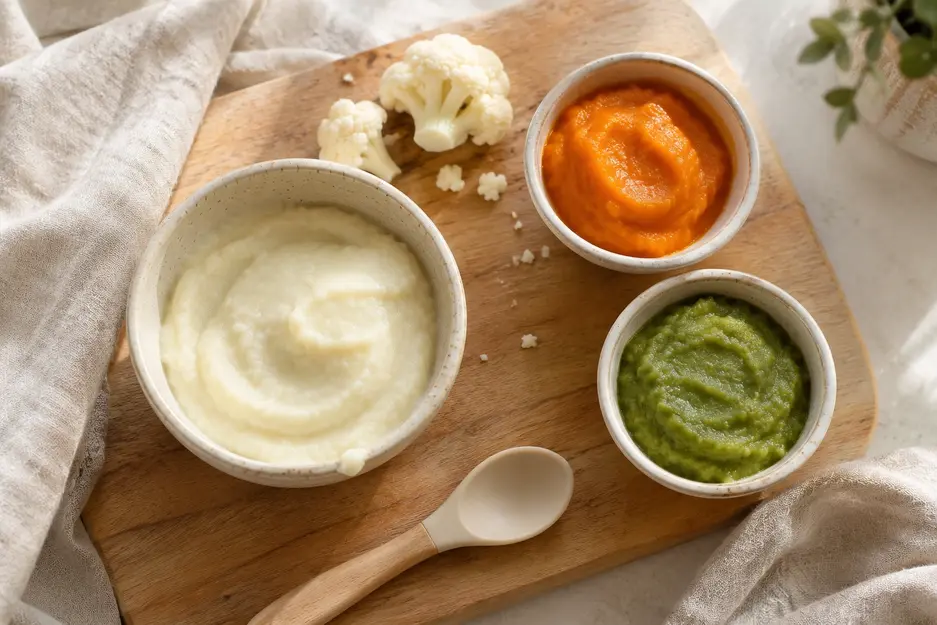
The goal is not to keep food bland, but to offer simple, nutritious foods in textures your baby can manage safely. There is a second, practical reason mild cauliflower works well. A food with almost no dominant flavor blends easily into other purees later.
Once a baby accepts a mild vegetable on its own, you can pair it with a stronger-tasting food, a protein, or an iron-rich puree without a flavor clash. This is exactly where cauliflower puree for baby earns its place in a first-foods rotation, since it disappears quietly into almost anything it is mixed with.
Cauliflower Nutrition for Babies: What Is Actually in the Bowl
Before recommending any food, it matters to know what it actually contains and, just as importantly, what it does not. Cauliflower is a cruciferous vegetable, part of the same family as broccoli and cabbage, and its raw nutrient profile is well documented. According to USDA FoodData Central, cauliflower provides vitamin C along with nutrients such as folate, vitamin B6, potassium, and choline. Vitamin C supports normal immune function, while folate is important for normal cell growth. A baby’s serving will usually be much smaller than an adult one-cup serving. Cauliflower also contains dietary fiber, which supports digestion, though a baby’s early servings are small enough that fiber intake from this one food stays modest.
Cauliflower is not considered an iron-rich food. This matters because babies begin needing reliable dietary sources of iron at around 6 months, so iron-rich foods are an important part of complementary feeding. Cauliflower can sit alongside iron-rich foods such as iron-fortified infant cereal, pureed meat, beans, or lentils rather than replacing them. Cauliflower also provides vitamin C, but it should not be treated as an iron-rich food on its own. Cooking method affects nutrient content slightly. Steaming preserves more water-soluble vitamins, including vitamin C, than boiling does, because boiling allows some nutrients to leach into the cooking water.
This is a well-established principle in food science, not specific to cauliflower, but it applies directly here.
Is Cauliflower Safe as a First Food for Baby?
Cauliflower is not one of the nine major food allergens identified by the U.S. Food and Drug Administration. Those major allergens are milk, egg, fish, crustacean shellfish, tree nuts, peanuts, wheat, soy, and sesame. Cauliflower is not considered one of the nine major food allergens in the United States, so it is not usually approached in the same way as common allergenic foods such as peanut or egg. That does not mean zero caution is needed. When introducing a new food, it can be helpful to offer it in a simple form so you can notice how your baby responds. There is no universal rule that every ordinary new food must be separated by several days. Offer new foods in a way that makes it easy to notice how your baby responds. Seek medical help promptly for concerning symptoms such as facial swelling, repeated vomiting, wheezing, or breathing difficulty.
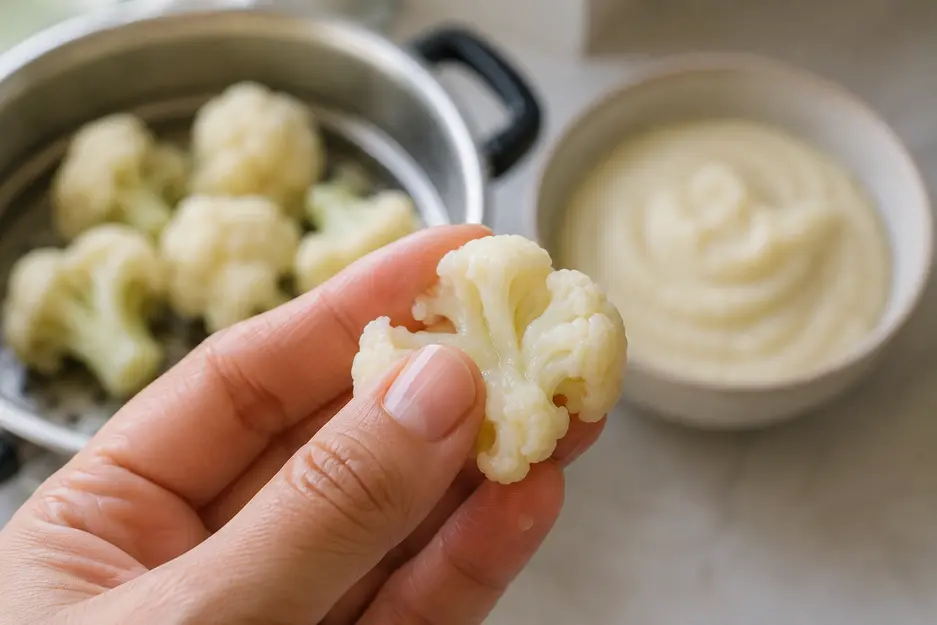
Texture is the actual safety concern with cauliflower, not allergy. Raw or undercooked cauliflower is firm and can present a choking risk if given in pieces to a young baby. For young babies, cauliflower should be cooked until very soft and served in a texture and shape that matches the baby’s feeding skills. It may be offered as a smooth puree or soft mash when solids begin, and later as very soft pieces once a baby is ready for self-feeding.
How to Make Cauliflower Puree for Baby: The Simple Method
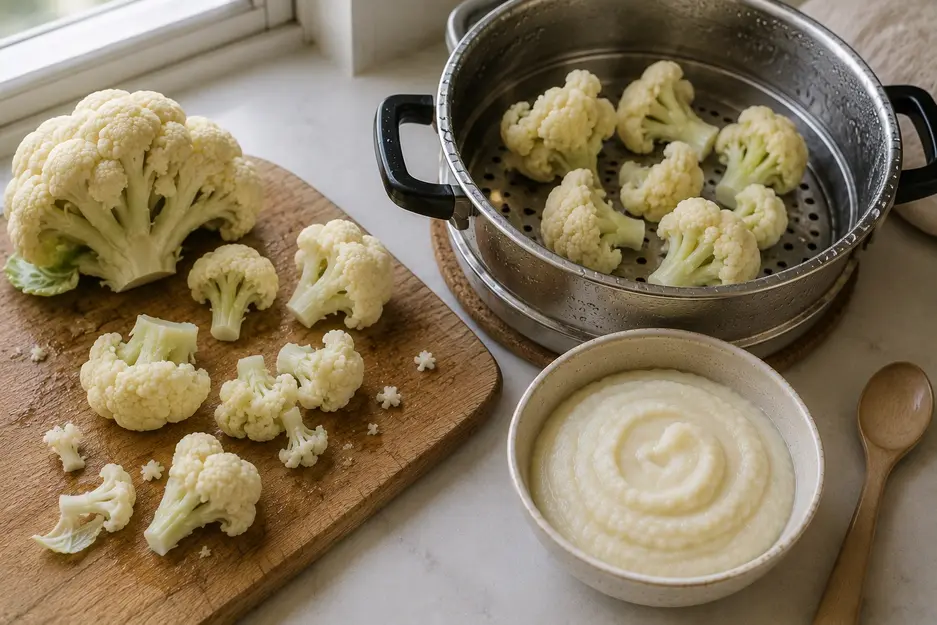
To make cauliflower puree for baby You only need cauliflower, a little liquid for thinning, and a blender or food processor. Keep each stage simple so parents can follow the recipe at a glance.
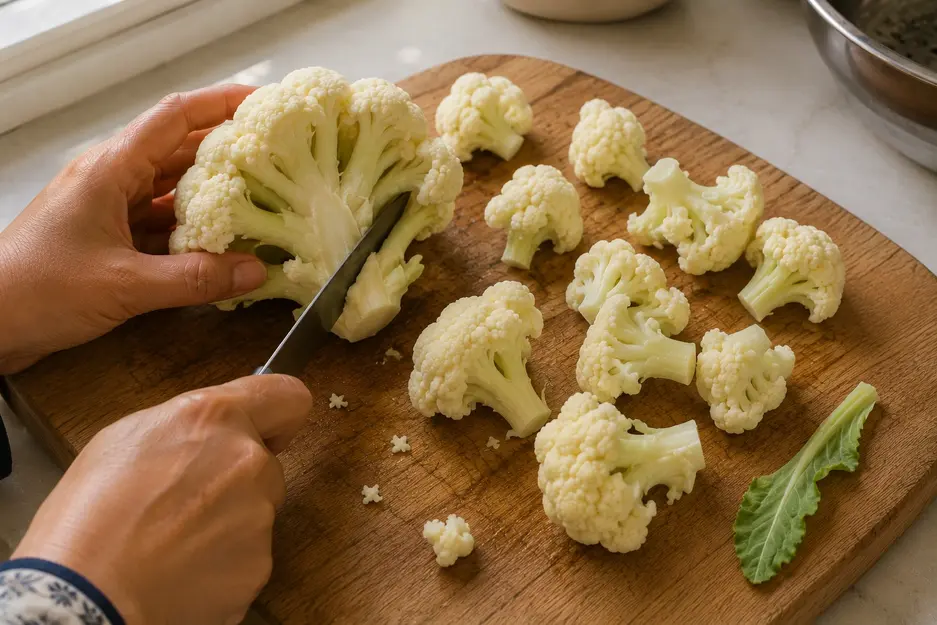
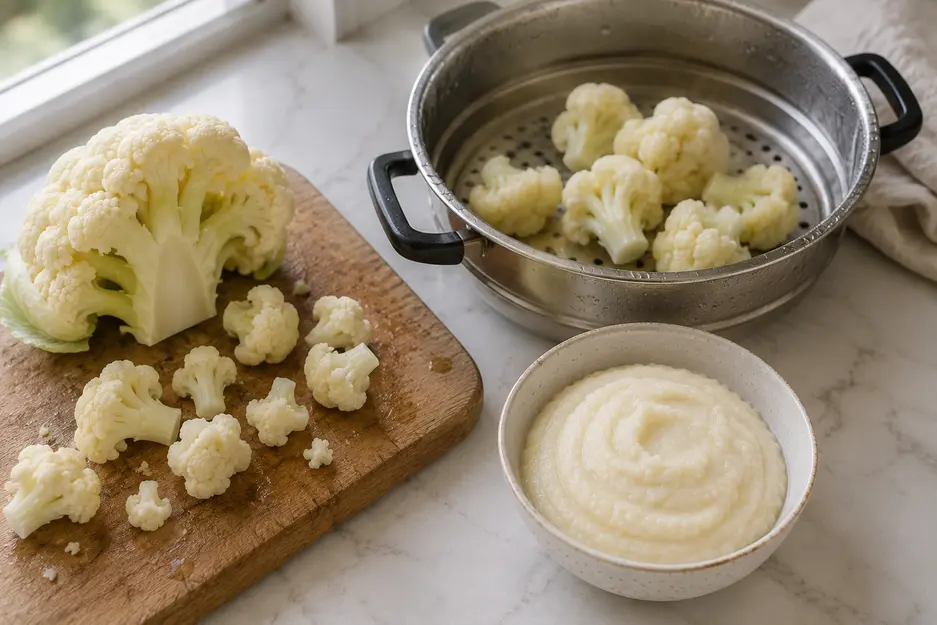
Step 1: Wash and cut the cauliflower
Remove the leaves and tough stem. Cut one small cauliflower into evenly sized florets so they cook at the same rate.
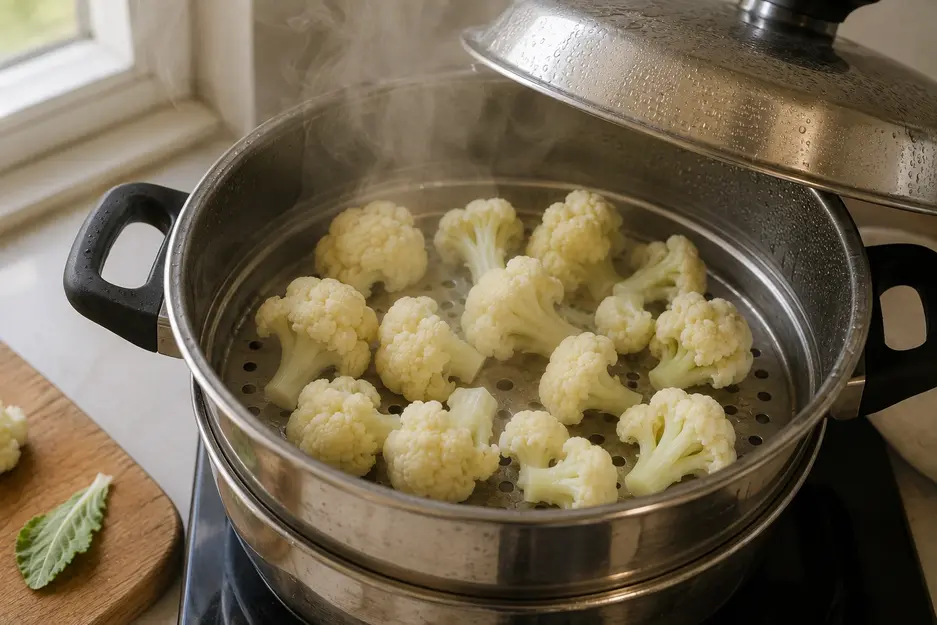
Step 2: Steam until very soft
Place the florets in a steamer over simmering water. Steam for about 10-12 minutes, until a fork slides through easily.
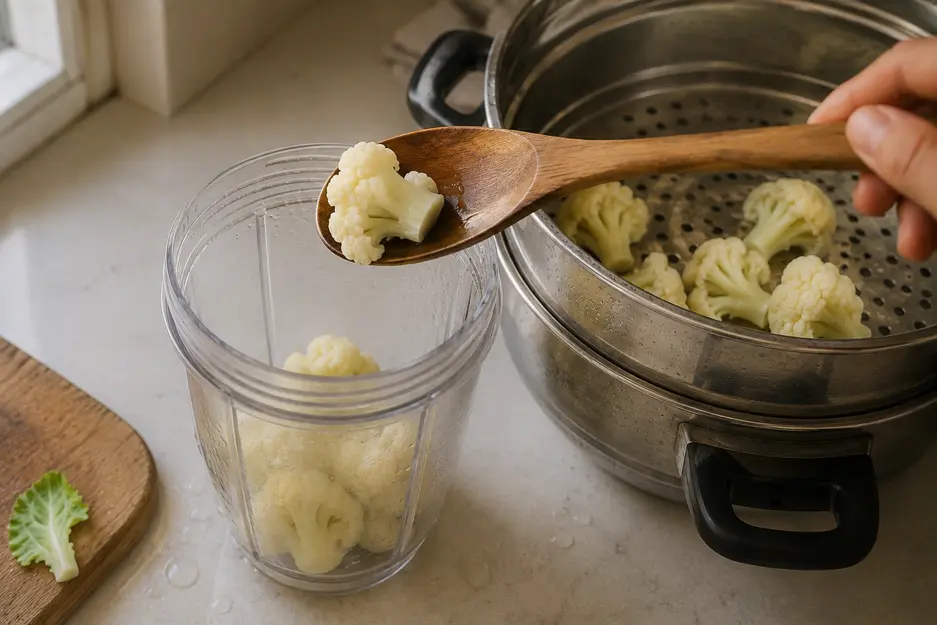
Step 3: Transfer to the blender
Move the warm, softened cauliflower to a small blender or food processor. A few drops of cooking moisture on the florets are completely normal.
Step 4: Add liquid gradually
Add a small amount of breast milk, correctly prepared infant formula, or plain water as needed for texture. Start with less liquid; you can always add a little more.
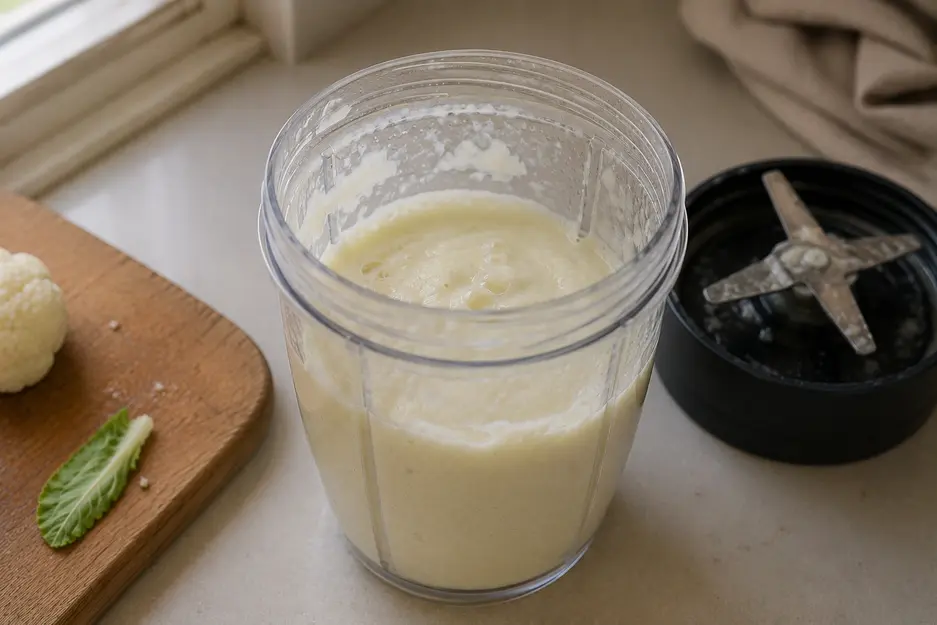
Step 5: Blend until smooth
Blend, pause, and scrape down the sides if needed. Continue until the puree is smooth and reaches a consistency your baby can comfortably manage.
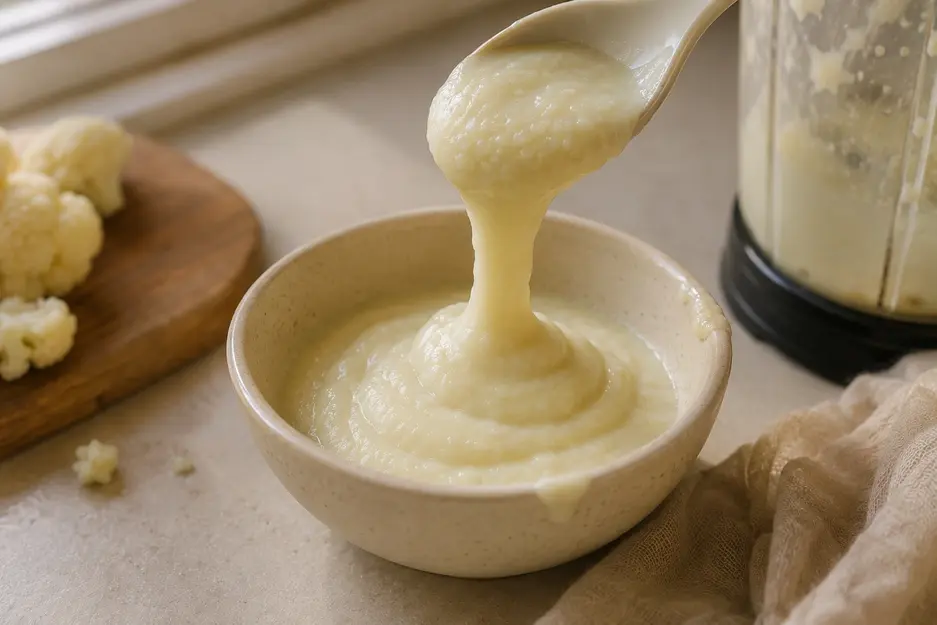
Step 6: Check the texture
Spoon a little puree into a bowl and check the consistency. If it feels too thick for your baby, blend in a small amount of liquid.
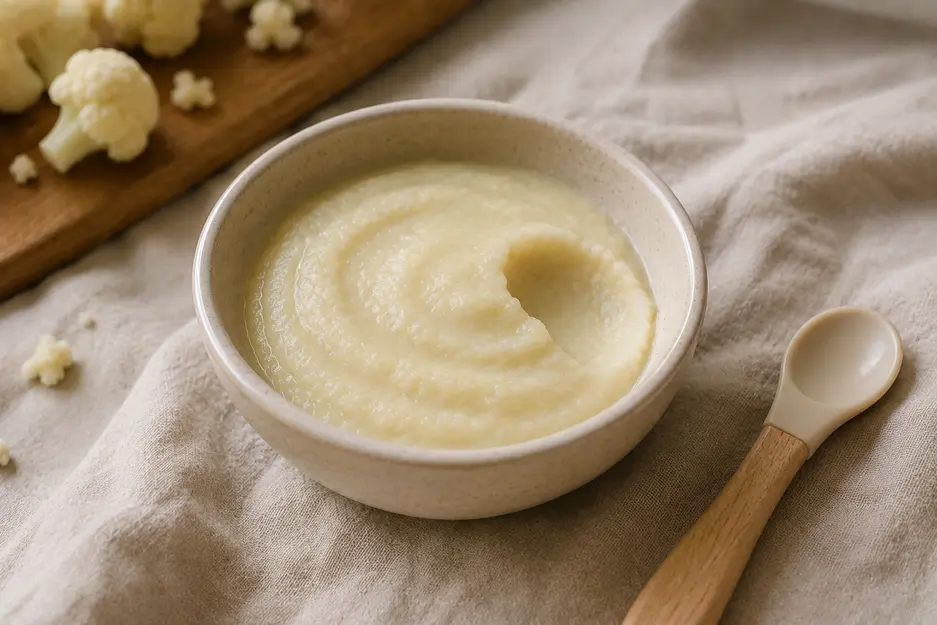
Step 7: Cool and serve
Let the puree cool to a comfortable temperature before serving. Offer a small portion and store the remaining puree safely.
Boiling also works. If you boil the cauliflower, reserve a little cooking water for thinning. Avoid adding salt or sugar to the puree.
Texture Progression: Cauliflower at Different Feeding Stages
The best texture for cauliflower puree for baby needs to change as a baby’s feeding skills develop, and cauliflower is a useful vegetable to track through each stage because it changes character so clearly with cooking time. When a baby is first starting solids, cauliflower can be served as a smooth puree or mash in a consistency the baby can manage comfortably. As feeding skills develop, the texture can gradually become thicker and lumpier rather than remaining completely smooth.
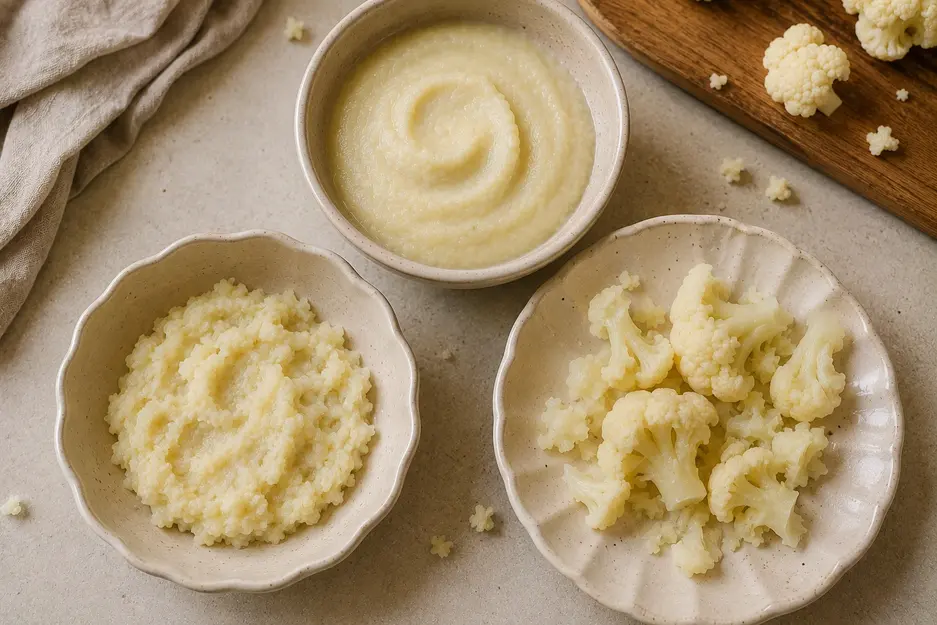
Later, well-steamed cauliflower may be offered as soft pieces suitable for self-feeding, provided each piece is soft enough to squash easily between two fingers and is prepared in an age-appropriate shape.
Every baby moves through these stages at a different pace, and readiness should guide the transition rather than age alone. Tracking cauliflower puree for baby through these three stages is a simple way to see how far feeding skills have come over just a few months.
Cauliflower Puree for Baby vs Other Common First Vegetables
| Vegetable | Flavor | Iron | Preparation notes |
| Cauliflower puree | Very mild | Not an iron-rich food | Blends smoothly when cooked until very soft |
| Sweet potato puree | Naturally sweet | Not an iron-rich food | Usually blends easily |
| Carrot puree | Naturally sweet | Not an iron-rich food | Blends smoothly when fully cooked |
| Pea puree | More distinct flavor | Not an iron-rich food | May need extra blending for a smoother texture |
| Zucchini puree | Very mild | Not an iron-rich food | Becomes very soft when cooked |
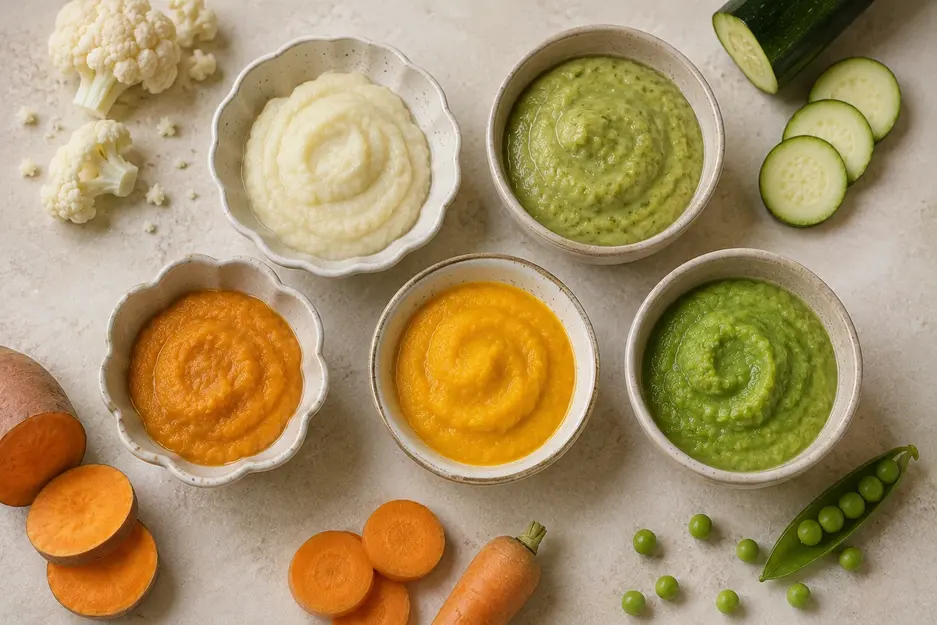
Cauliflower and zucchini are both mild-flavored vegetables that can be cooked until soft and blended easily. Sweet potato and carrot have a naturally sweeter taste, while peas have a more noticeable flavor and may need a little more blending for a smooth puree. None of these vegetables should be relied on as the baby’s main source of iron.
Ready to add another green vegetable? Try our pea puree for baby for a mild, naturally sweet option to add to your baby’s rotation.
Storing and Freezing Cauliflower Puree Safely
Store cauliflower puree for baby can be kept in a clean, covered container in the refrigerator and used within 48 hours. If you are making a larger batch, freeze small portions soon after preparation. For home-prepared infant food, USDA infant-feeding guidance recommends using frozen portions within one month.
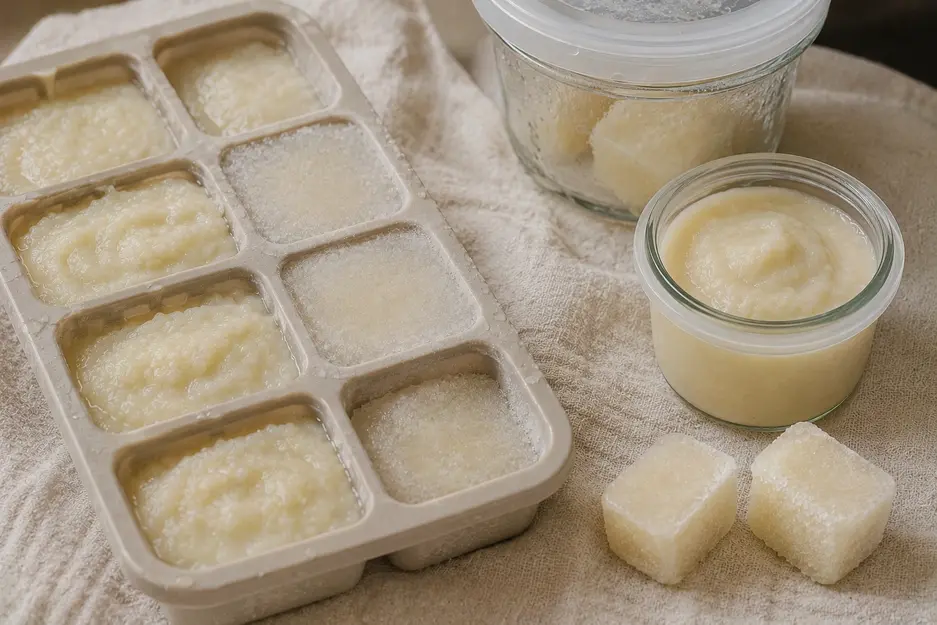
Thaw only the amount you need in the refrigerator or using another safe method, warm gently if needed, and check the temperature before serving. Do not refreeze thawed home-prepared baby food. Discard food left in the baby’s serving bowl after feeding rather than returning it to the refrigerator.
Common Mistakes Parents Make With Cauliflower
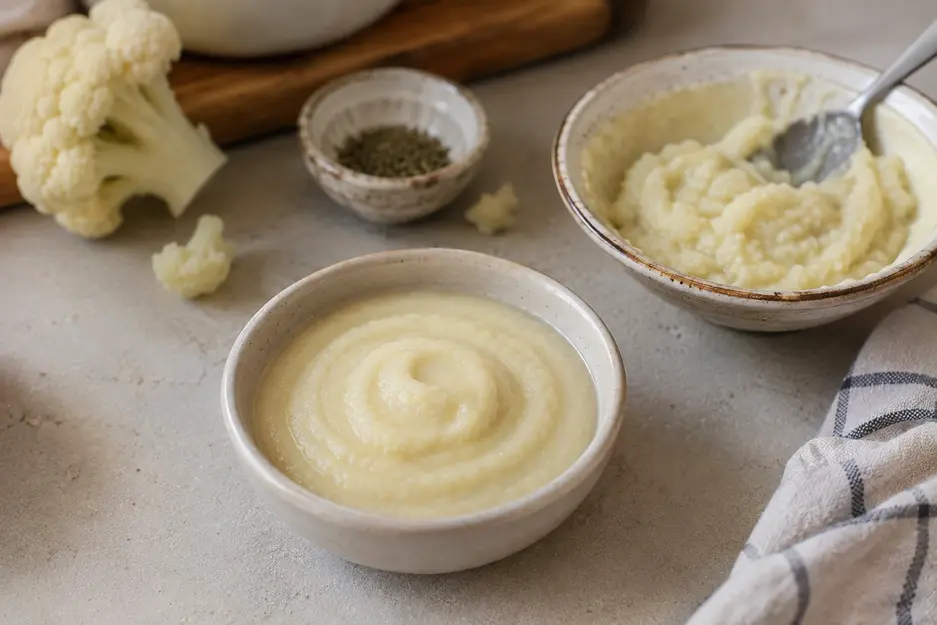
The most frequent mistake is undercooking. Cauliflower needs to be soft enough that it mashes under light pressure from a spoon, not just fork-tender.
A puree made from slightly undercooked florets can turn out grainier instead of smooth, which may make the texture harder for some babies to manage comfortably.
The second common mistake is not adjusting the texture. Cauliflower can become dense when blended on its own, so some babies may find it easier to manage when a little liquid is added.
Add breast milk, correctly prepared infant formula, or water gradually until you reach a consistency that suits your baby’s current feeding skills.
The third mistake is judging the food after one try. It can take repeated exposures before a baby accepts a new food, so one refusal does not necessarily mean the food will always be rejected.
A fourth mistake is assuming cauliflower must stay completely plain for a long time. Added salt and sugar are best avoided, but age-appropriate herbs, garlic, and mild spices can be introduced gradually as your baby becomes familiar with a wider variety of foods.
Keep the focus on safe texture, simple ingredients, and your baby’s individual readiness.
Conclusion
Cauliflower puree for baby is not going to be the food that gets the most excited reaction at the high chair. That was never its job.
Its value lies in being a mild, versatile vegetable that can be prepared in a soft texture and paired easily with stronger flavors and iron-rich foods. Bland does not have to mean better; cauliflower simply offers a gentle option that can fit well into a varied first-food routine.
For a naturally sweeter vegetable option, try our carrot puree for baby for another simple homemade first food.
Disclaimer
This article is for general informational purposes only and does not replace personalized medical advice. Every baby develops at a different pace, and concerns about readiness for solids, allergies, choking, or feeding difficulties should be discussed with your baby’s pediatrician or other qualified healthcare professional.
FAQ’s
Q1. Is cauliflower a common allergen for babies?
No. Cauliflower is not among the major food allergens commonly highlighted in pediatric guidance.It can be introduced as part of a normal first-food routine. As with any new food, watch for unexpected symptoms and seek medical advice if a reaction is suspected.
Q2. Does cauliflower cause gas or bloating in babies?
Cauliflower belongs to the cruciferous vegetable family, which is sometimes associated with gas in adults due to certain fiber compounds. Documented evidence specific to infants on this exact point is limited, so if a baby seems unusually fussy or uncomfortable after a serving, it is reasonable to note it and mention the pattern to a pediatrician rather than assuming a fixed rule.
Q3. Can I mix cauliflower puree with breast milk or formula?
Yes. You can thin cauliflower puree with a small amount of breast milk, correctly prepared infant formula, or water until it reaches a consistency your baby can manage comfortably.
Q4. What is the right texture for cauliflower puree at 6 months?
There is no single texture that suits every baby. When solids begin, cauliflower can be offered as a smooth puree or soft mash in a consistency your baby can manage comfortably. Texture should progress with feeding skills rather than age alone.
Q5. Can cauliflower replace iron-rich foods in a baby’s diet?
No. Cauliflower is not an iron-rich food and should not replace iron-rich options such as iron-fortified infant cereal, pureed meat, beans, or lentils. Iron-rich complementary foods become especially important from around 6 months, and cauliflower does not meet that need on its own.