Zucchini Puree for Baby: No Peel, Never Watery
If your baby has a sensitive stomach or you are nervous about introducing greens, zucchini puree for baby is the place to start.
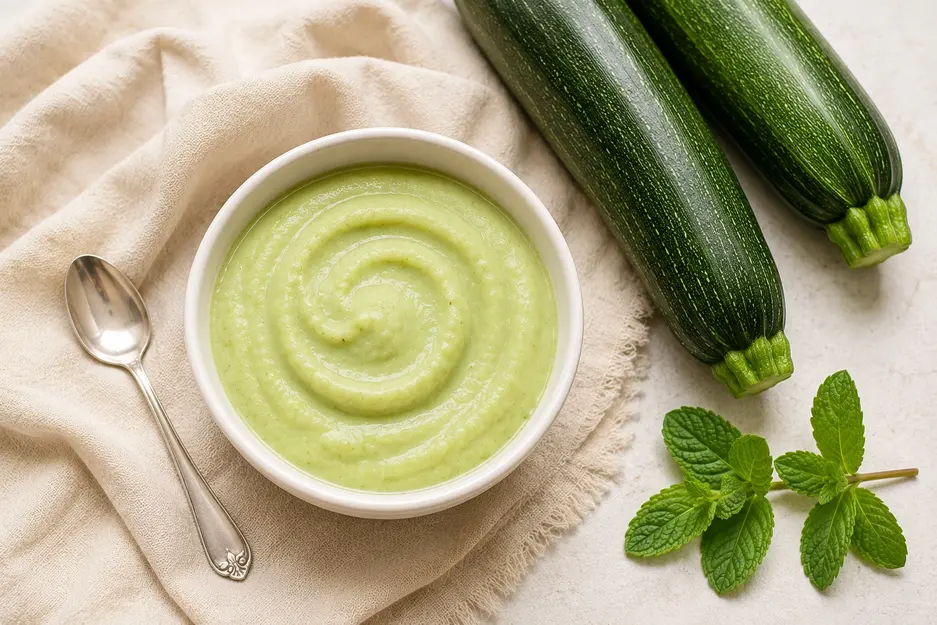
Zucchini has almost no bitter compounds, no strong flavor, and a water content so high that it blends into the smoothest, silkiest puree of any vegetable. Babies who reject broccoli, spinach, or peas almost always accept zucchini because there is nothing about it to reject. It is gentle, mild, and completely inoffensive to a brand-new palate.
But there are two things most articles get wrong about zucchini. First, the skin nearly every nutrient in zucchini lives in the dark green peel, and peeling it before cooking strips most of what makes this vegetable worth serving. Second, the water content zucchini is over 90% water, and blending without addressing this gives you a thin, watery puree that separates and lacks flavor. This guide covers both fixes.
Just starting solids? Read our complete guide to the best first foods for baby at 6 months before introducing zucchini puree.
This article also covers why zucchini is technically a fruit (this matters for how you introduce it), the exact cooking time that keeps nutrients intact, and the combination pairings that turn a plain mild puree into something genuinely exciting.
Suitable age:
Zucchini puree is safe to introduce from 4 to 6 months once your pediatrician approves solid foods.
Why You’ll Love This Puree
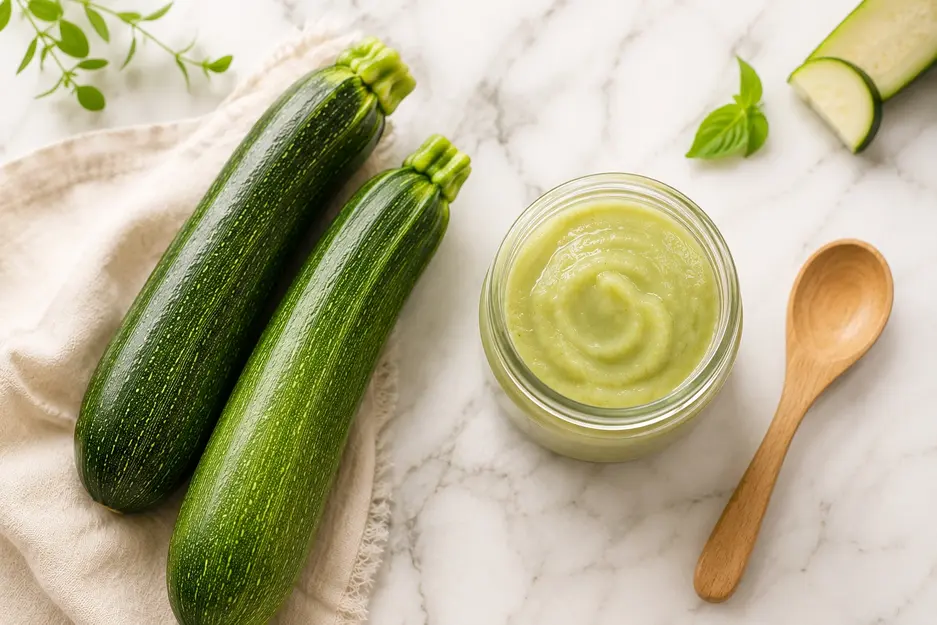
- Mildest flavor of any first vegetable zero bitterness, zero rejection
- Perfect for sensitive tummies easily digested, gentle on immature gut
- Silkiest texture high water content means naturally smooth blending
- No peeling needed the skin is where all the nutrients are
- Ready in 15 minutes steam and blend, done
- Pairs with everything potato, pear, sweet potato, avocado, apple, chicken, and more
- Year-round availability zucchini is accessible and affordable in every season
Health Benefits of Zucchini Puree for Baby
Zucchini puree for baby is not the most nutrient-dense vegetable on the list and this article will not pretend otherwise. What zucchini offers is a gentle, easily digested package of micronutrients that sensitive baby stomachs handle better than almost any other vegetable.
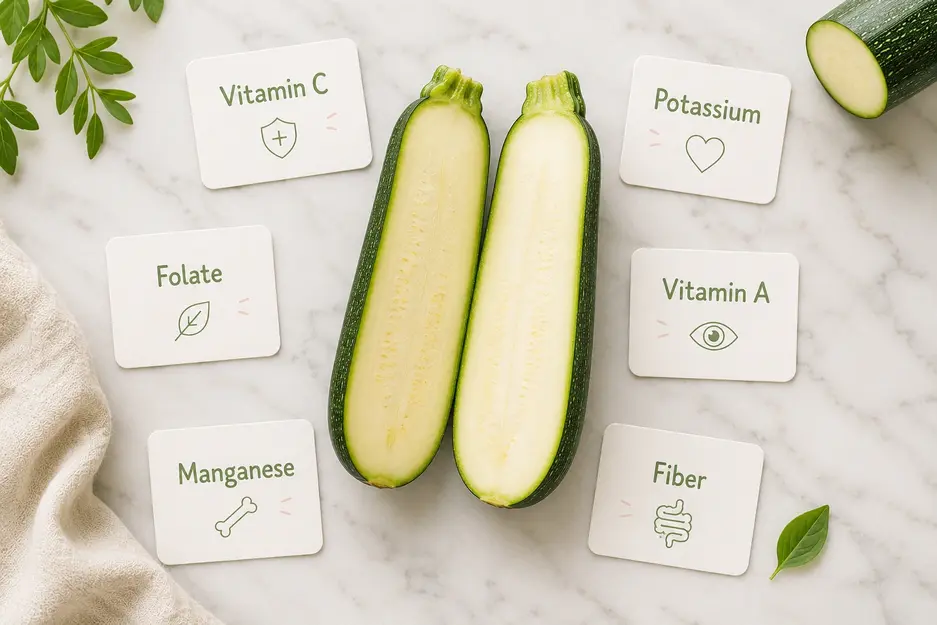
Key Nutrients in Zucchini (per 100g, cooked with skin)
| Nutrient | Amount | Baby Benefit |
| Vitamin C | 17.9 mg | Iron absorption, immune support |
| Potassium | 459 mg | Heart and muscle function |
| Folate | 29 mcg | Brain and spinal cord development |
| Vitamin A (RAE) | 19 mcg | Eye development, immunity |
| Manganese | 0.23 mg | Bone development, enzyme function |
| Fiber | 1.1 g | Gentle digestive support |
| Vitamin K | 4.3 mcg | Bone health, blood clotting |
Why the skin is non-negotiable:
Almost all of zucchini’s Vitamin A, a significant portion of its Vitamin C, and the majority of its fiber and antioxidants are concentrated in the dark green skin. A 2014 analysis in the Journal of Agricultural and Food Chemistry confirmed that zucchini skin contains substantially higher levels of phenolic compounds and carotenoids than the flesh alone. Peeling zucchini for baby food reduces it to mostly water and starch nutritionally hollow.
Honest note on nutrient density:
Zucchini is not the most iron-rich or protein-dense vegetable. Its value for babies is primarily its digestibility and high Vitamin C content, which boosts iron absorption from other foods served at the same meal. Pair it with iron-rich purees like spinach, lentil, or pea and it becomes a meaningful nutritional contributor.
Zucchini is technically a fruit:
Botanically speaking, zucchini is a fruit it grows from a flower and contains seeds. This is the same category as tomatoes, cucumbers, and squash. Nutritionally and practically, we treat it as a vegetable, but knowing this helps explain why it is so mild and low in the bitter compounds found in true vegetables like broccoli or kale.
The Watery Texture Problem And the Fix
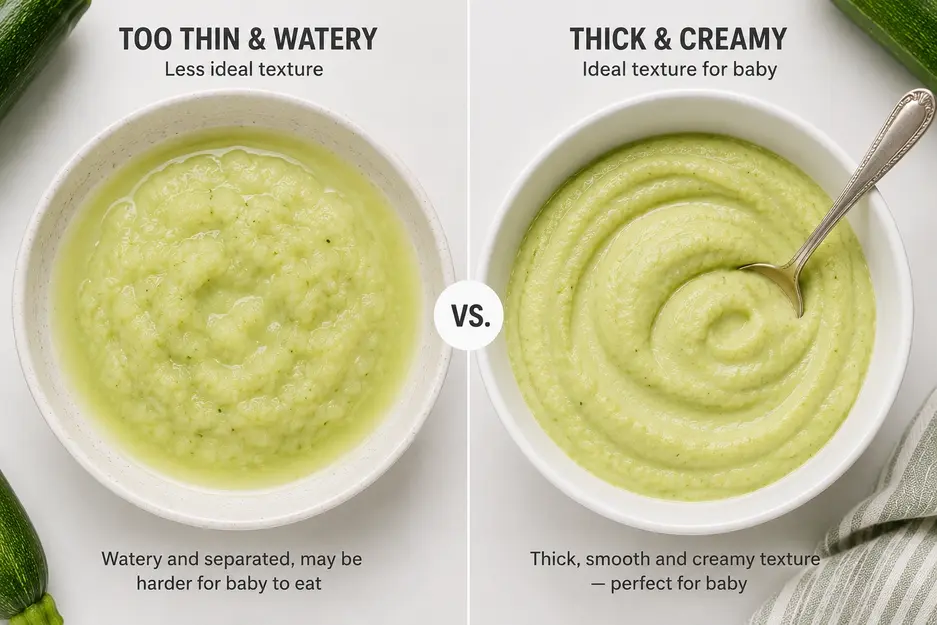
Zucchini is 93 to 95% water. This is what makes it so gentle on digestion but it also means an unsolved zucchini puree separates into a thin green liquid that lacks body, flavor, and visual appeal.
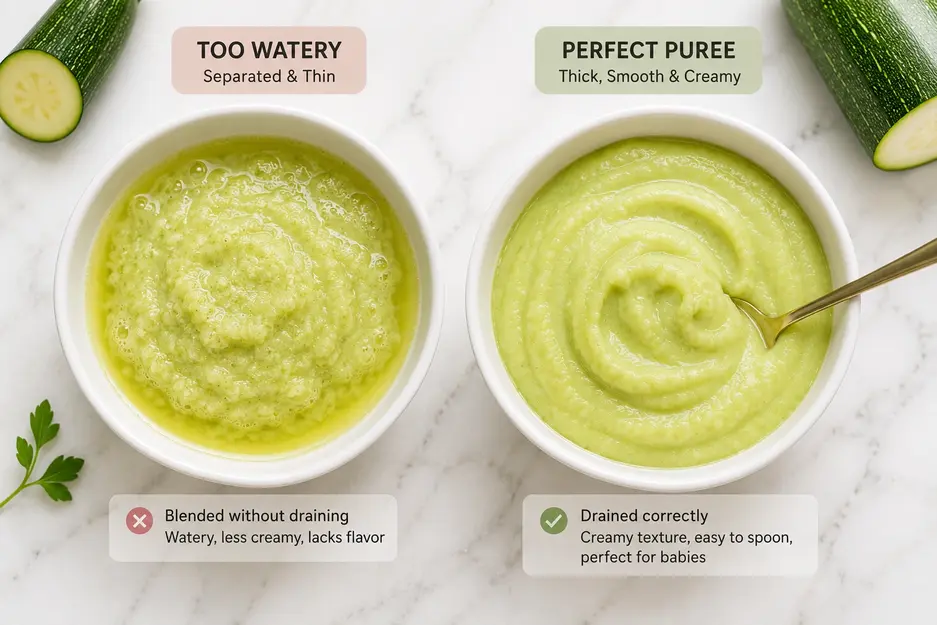
The three fixes that work:
Fix 1: Squeeze after steaming: After steaming, place zucchini pieces in a clean cloth or paper towel and squeeze firmly. Removing excess water before blending concentrates the flavor and gives the puree natural thickness without adding anything.
Fix 2: Pair with a starchy vegetable:
Blending zucchini with potato, sweet potato, or butternut squash adds natural thickness. BabyFoode’s most popular zucchini recipe uses this exact approach zucchini and potato together create a puree with the texture of a creamy soup. This is the most elegant fix and also adds nutritional depth.
Fix 3: Blend with avocado:
Avocado adds healthy fats and thick, creamy texture that binds the watery zucchini beautifully. This is the best fix for a single-vegetable base if you want to avoid starch.
Plain zucchini puree alone is fine for very young babies who need thin, runny texture the wateriness actually works in your favor at 4 to 5 months. From 6 months onward, use one of the three fixes above for better texture and flavor.
Ingredients You’ll Need
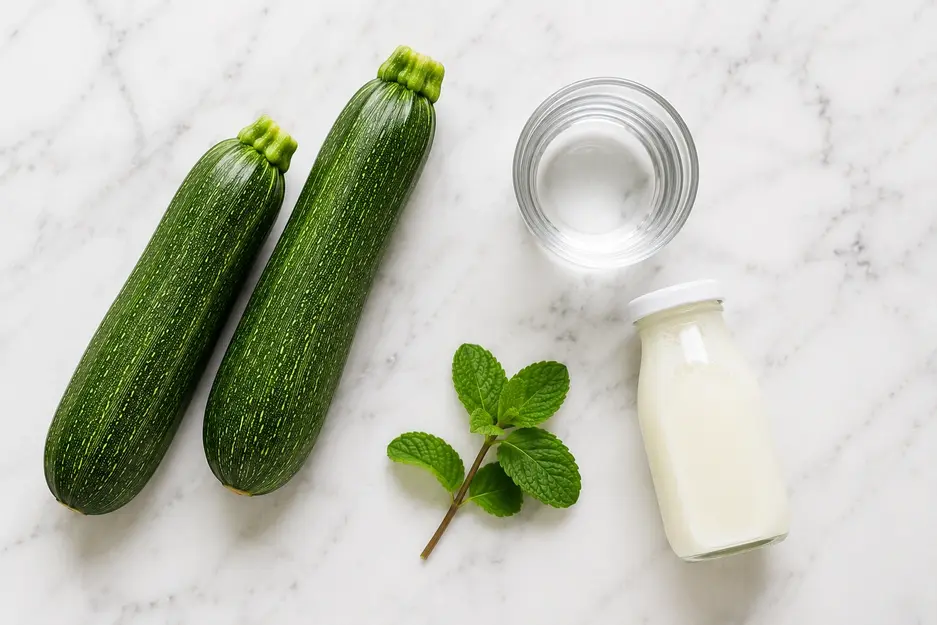
Main Ingredient
2 medium zucchinis (about 300g) do NOT peel, yields approximately 6 to 8 baby servings
Optional Add-Ins
- 2 to 4 tablespoons reserved steaming water, breast milk, or formula
- 1 small potato or ¼ cup sweet potato (for thickness)
- ¼ ripe avocado (for creaminess and healthy fats)
- 2 fresh mint leaves or fresh basil (mild herb flavor from 6 months+)
- 1 teaspoon olive oil (boosts fat-soluble vitamin absorption)
Never add: salt, sugar, honey, or cow’s milk for babies under 12 months.
Ingredient Notes & Buying Tips
Choosing fresh zucchini:
Pick zucchinis that are firm, small to medium in size (6 to 8 inches long), and have shiny, unblemished skin. Smaller zucchinis have fewer and softer seeds, more concentrated flavor, and less water content than large ones. Avoid any zucchini with a dull skin, soft spots, or visible shriveling.
Size matters for flavor:
Large zucchinis (over 10 inches) have a seedy, watery interior and noticeably blander taste. For baby puree, always choose smaller specimens they produce a naturally sweeter, more flavorful puree.
Organic vs regular:
Zucchini is not on the EWG Dirty Dozen list, meaning pesticide residue is generally low. Regular zucchini is a perfectly safe and budget-friendly choice.
Yellow zucchini:
Yellow zucchini (also called yellow squash) works identically to green zucchini in puree. The flavor is the same, it blends just as smoothly, and babies respond similarly. The puree will be pale yellow instead of green.
Seeds:
Zucchini seeds are very soft and completely safe they blend entirely with no texture issues. Do not remove them.
Kitchen Equipment Needed
- Pot with steamer basket
- Blender or food processor
- Sharp knife and cutting board
- Clean cloth for squeezing (optional but recommended from 6 months+)
- Silicone ice cube tray
- Airtight glass jars
Step-by-Step Instructions
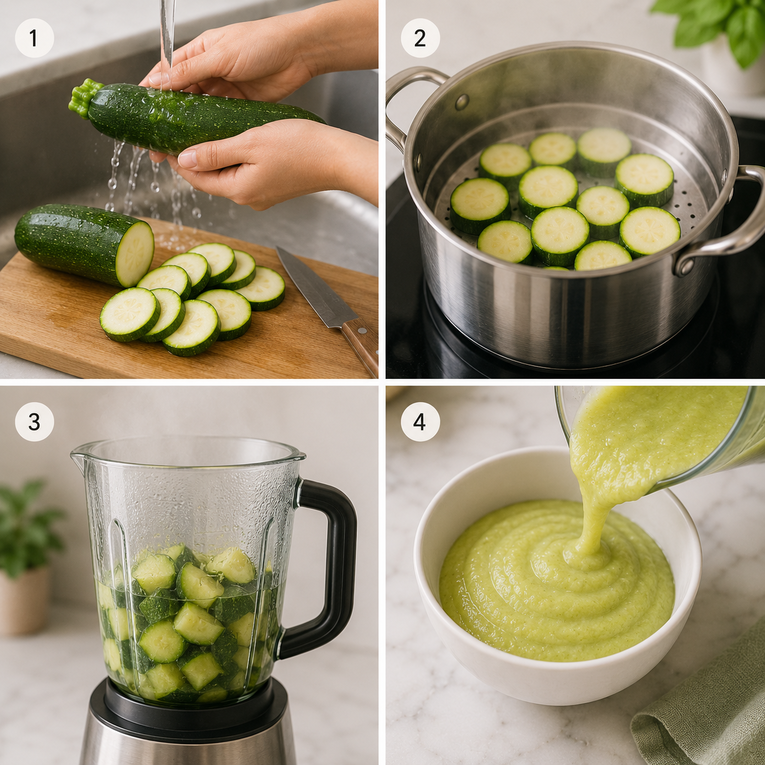
Step 1. Wash, Do Not Peel
Scrub zucchini under cold running water with a vegetable brush. Remove just the stem and blossom end. Keep the skin on completely this is not optional if you want the nutritional value.
Step 2. Chop
Cut into even ½-inch to 1-inch rounds. Uniform size ensures even cooking and consistent texture.
Step 3. Steam
Add 2 inches of water to a pot. Bring to a boil. Place zucchini rounds in a steamer basket. Cover and steam for 7 to 10 minutes until completely tender when pierced with a fork.
Why steam instead of boil? Boiling dissolves zucchini’s water-soluble vitamin C and folate directly into the cooking water. Steaming retains both in the vegetable. Reserve the steaming water for blending it contains trace nutrients and adds flavor.
Step 4. Optional Squeeze
For babies 6 months and older who need a thicker texture, transfer steamed zucchini to a clean cloth. Squeeze firmly to remove excess water. This step takes 30 seconds and makes a meaningful difference in final texture.
Step 5. Cool
Cool for 5 minutes before blending.
Step 6. Blend
Add zucchini and 2 tablespoons of liquid to blender. Blend on high for 60 to 90 seconds until completely smooth.
Step 7. Adjust Consistency
For younger babies: add more liquid one tablespoon at a time for a thinner texture. For older babies: add the optional potato or avocado before blending for more body.
Texture by Baby’s Age
| Age | Texture | How to Get There |
| 4 to 6 months | Very thin, smooth, runny | Steam, skip squeeze, add extra liquid |
| 6 to 8 months | Medium smooth, slightly thicker | Steam, light squeeze, standard liquid |
| 8 to 10 months | Thicker, soft pieces okay | Blend with potato or avocado, skip straining |
| 10 to 12 months | Rough mash with soft chunks | Fork-mash steamed rounds |
Recipe Tips
- Never peel the skin carries most of the nutrition and blends completely smooth
- Small zucchini always large zucchini are watery and bland. Under 8 inches is the rule
- Reserve steaming water it has more flavor than plain water and contains trace nutrients
- Squeeze for older babies from 6 months onward, squeezing out excess water concentrates flavor and prevents the thin, separated texture that puts parents off zucchini puree
- Olive oil is worth adding one teaspoon before blending improves mouthfeel and boosts fat-soluble vitamin absorption
- Taste before serving fresh zucchini puree should smell faintly grassy and taste mildly sweet. If it tastes like nothing, the zucchini was too large or overcooked
Flavor Combinations & Variations
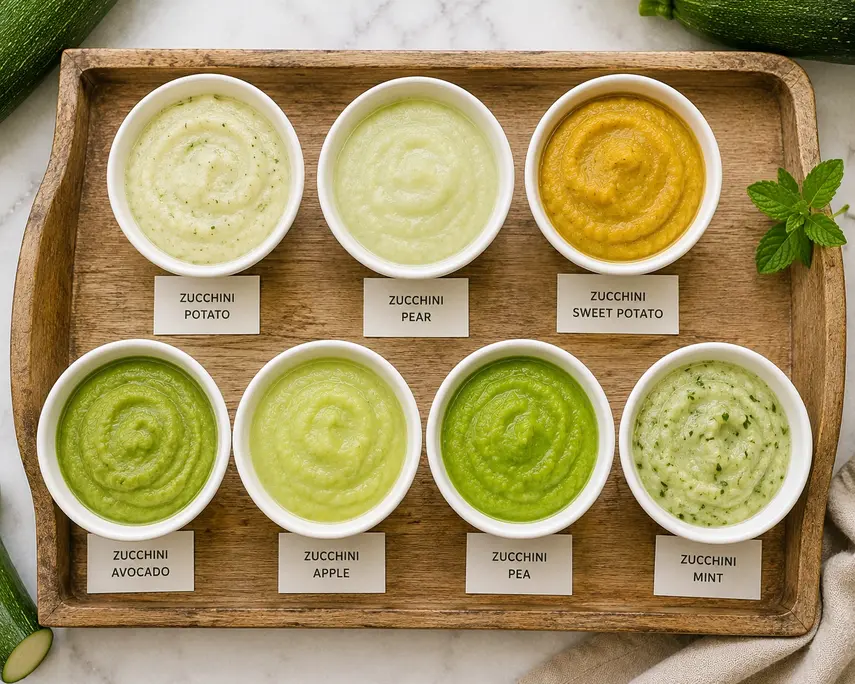
Because zucchini has almost no flavor of its own, it is one of the most versatile puree bases available. It adds smooth, creamy body to other purees without changing their flavor which is exactly why BabyFoode uses it in combination recipes so often.
Looking for more tasty ideas? Explore these baby food combinations your little one will love.
- Zucchini + Potato the classic thickness fix, silky like a soup, 6 months+
- Zucchini + Pear the mildest, most gentle combo possible, perfect for very sensitive tummies, 4 months+
- Zucchini + Sweet Potato green meets orange, vitamin A boost, naturally sweet, 6 months+
- Zucchini + Avocado healthy fats make this creamy, rich, and incredibly smooth, 6 months+
- Zucchini + Apple vitamin C from apple boosts iron from any iron-rich food served alongside, 6 months+
- Zucchini + Pea the two mildest green vegetables together, protein from peas, 6 months+
- Zucchini + Chicken a savory first protein introduction, iron and protein together, 7 months+
- Zucchini + Mint or Basil introduces herbs early for palate development, 6 months+
Zucchini Puree for Baby Combination Comparison Table:
| Combo | Best Age | Key Benefit | Texture |
| Zucchini + Potato | 6 months+ | Thickness fix, starchy energy | Creamy, medium thick |
| Zucchini + Pear | 4 months+ | Gentlest combo, great for sensitive stomachs | Very smooth, thin |
| Zucchini + Sweet Potato | 6 months+ | Vitamin A boost, naturally sweet | Medium thick |
| Zucchini + Avocado | 6 months+ | Healthy fats, brain development | Creamy, rich |
| Zucchini + Pea | 6 months+ | Protein from peas, double green mild | Smooth |
| Zucchini + Chicken | 7 months+ | Iron and protein first meat combo | Medium thick, savory |
Storage Instructions
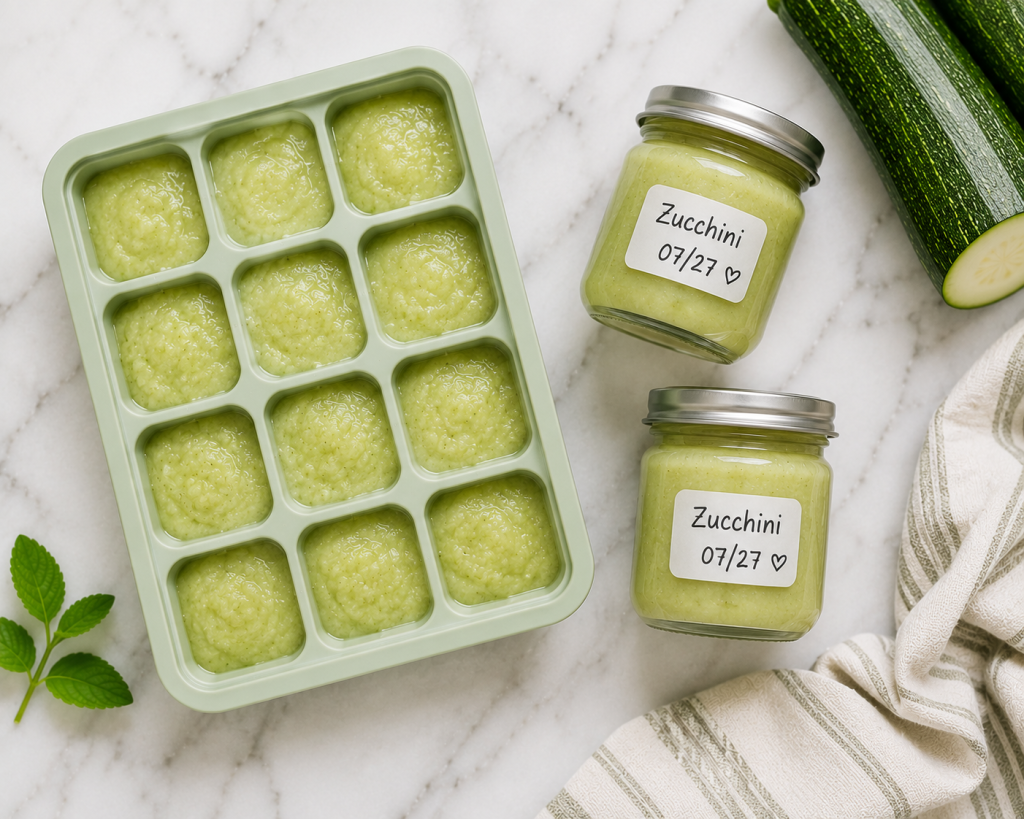
Refrigerator:
Airtight glass jar, up to 3 days. Zucchini puree may separate slightly in the fridge stir well before serving.
Freezer:
Pour into silicone ice cube tray right after making. Freeze 4 to 6 hours until solid. Transfer cubes to a labeled freezer bag.
- Freezer life: Up to 3 months
- Each cube = approximately 1 to 2 tablespoons
Thawing note:
Frozen zucchini puree becomes noticeably more watery when thawed because ice crystals break down the cell structure further. Stir well after thawing. If too thin for your baby’s age, blend in a small piece of avocado or serve alongside a thicker puree to balance.
Never refreeze thawed zucchini puree.
Not sure what to feed next? Follow our complete baby food chart from 6 to 12 months for a simple feeding plan.
How to Reheat
From refrigerator: Stir well first (zucchini puree separates). Place jar in warm water for 5 to 8 minutes. Stir again before testing temperature on inside of wrist.
From frozen: Thaw overnight in refrigerator. Stir well after thawing, then warm with warm water bath method.
Microwave (refrigerated only): 10-second bursts at 50% power. Stir between every burst. Stir very thoroughly before serving zucchini’s highwater content creates uneven heating.
Can Babies Eat Zucchini Puree?
Yes zucchini is one of the most reliably tolerated first foods available.
- Safe starting age: 4 to 6 months with pediatrician approval
- Allergy risk: Extremely low. Zucchini is not on the Top 9 allergen list and allergic reactions are very rare. Some people with oral allergy syndrome (OAS) related to grass pollen react to raw zucchini but cooking eliminates this completely. Cooked zucchini puree has no OAS risk.
- Digestibility: Zucchini is among the most easily digested first foods. Its high water and soluble fiber content is gentle on an immature digestive system. It rarely causes gas, bloating, or constipation.
- Seeds: Soft, fully blendable, no action needed.
- Gas: Unlike peas or lentils, zucchini does not cause gas in babies. It is one of the few vegetables recommended specifically for babies with reflux or colic because of its non-gassy, non-acidic profile.
Pediatric guidance:
The American Academy of Pediatrics (AAP) supports introducing a wide variety of vegetables including zucchini from 6 months onward as part of a diverse first foods diet. Always follow your pediatrician’s individual guidance for your baby’s specific needs.
Serving Suggestions
- Alone plain zucchini puree for 3 to 5 days first to watch for reactions
- Mixed with potato or sweet potato puree the best thickness and flavor balance
- Stirred into iron-fortified oatmeal adds vegetables to breakfast without changing flavor
- As a pasta sauce base thinned zucchini puree over soft pasta pieces at 10 months+
- On a preloaded spoon self-feeding practice at 8 to 9 months
- Soft steamed rounds for baby-led weaning at 6 months, sliced lengthwise into finger-sized spears
Expert Tips & Mistakes to Avoid
Peeling the zucchini:
The most common mistake. The skin is where almost all the nutrition lives. Keeping it on is not just acceptable it is essential.
Using large zucchini:
Large zucchinis have seedy, watery flesh with noticeably less flavor. Under 8 inches always produces a better puree.
Not squeezing out excess water (from 6 months+):
Without squeezing, zucchini puree is very thin and separates quickly. For babies who need more texture, the squeeze step is the single most effective improvement.
Overcooking:
More than 12 minutes of steaming makes zucchini mushy and the color fades to a dull yellow-green. The flavor also becomes more watery than sweet. Check at 8 minutes with a fork.
Expecting zucchini to taste interesting alone:
It will not and that is the point. Zucchini’s role in baby feeding is as a gentle, smooth base that carries other flavors. Accept this and pair it accordingly.
Recipe Card
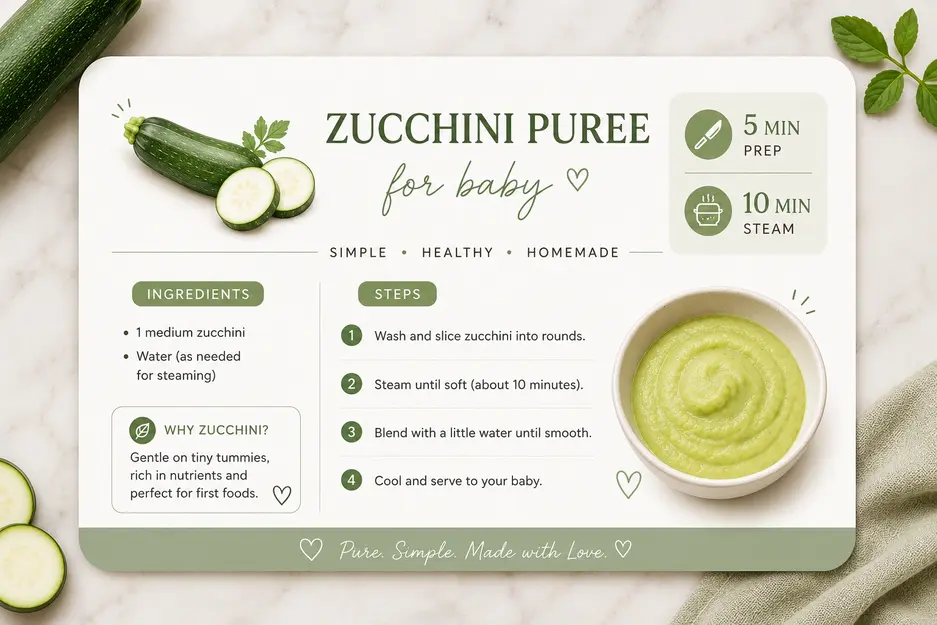
Zucchini Puree for Baby
Prep Time: 5 minutes Cook Time: 10 minutes Total Time: 15 minutes Servings: 6 to 8 portions Suitable Age: 4 to 6 months and up
Ingredients:
- 2 medium zucchinis (about 300g) do NOT peel, stem removed
- 2 to 4 tablespoons reserved steaming water, breast milk, or formula
Optional: 1 small potato or quarter ripe avocado (for thickness) | 2 fresh mint leaves | 1 tsp olive oil
Instructions:
- Wash zucchini well. Do not peel. Remove stem and blossom end.
- Cut into even ½ to 1-inch rounds.
- Steam over boiling water for 7 to 10 minutes until completely fork-tender.
- Cool for 5 minutes.
- Optional: squeeze in a clean cloth to remove excess water (6 months+).
- Add zucchini and 2 tablespoons liquid to blender.
- Blend on high for 60 to 90 seconds until smooth.
- Adjust consistency with additional liquid one tablespoon at a time.
- Serve immediately or store.
Notes:
- Never peel skin contains most nutrients and blends completely smooth
- Use small zucchini (under 8 inches) for best flavor
- Squeeze out water from 6 months onward for better texture
- No salt, sugar, honey, or cow’s milk under 12 months
- Introduce alone for 3 to 5 days before combining with new foods
Estimated Nutrition Per Serving (~2 tablespoons, plain with skin):
| Nutrient | Per Serving |
| Calories | ~8 kcal |
| Vitamin C | ~4.5 mg |
| Potassium | ~115 mg |
| Folate | ~7 mcg |
| Fiber | ~0.28 g |
| Vitamin A (RAE) | ~5 mcg |
Conclusion
Zucchini puree for baby is not the most dramatic first food on the plate. It does not deliver the highest iron or the most protein. What it delivers is something equally valuable for a sensitive baby in the early weeks of solids a completely inoffensive, silky smooth, easily digested introduction to vegetables that almost never causes rejection.
Fix the two common mistakes (peeling and skipping the squeeze), choose small zucchini, and pair it with potato or avocado and you will have a puree that is smooth, flavorful enough to be interesting, and gentle enough for even the most sensitive stomach on the first day of solids.
Disclaimer
This article is for informational purposes only and does not replace advice from a licensed pediatrician or registered dietitian. Always consult your baby’s doctor before introducing any new food. Information here is based on current published guidelines from the American Academy of Pediatrics (AAP) and nutritional data from USDA FoodData Central. The note on oral allergy syndrome is for informational awareness — cooked zucchini puree does not carry OAS risk. Individual babies may have different health needs that affect dietary decisions.
FAQ’s
1. Can I freeze zucchini puree for baby?
Yes with one important note. Zucchini puree becomes more watery after freezing and thawing because ice crystals further break down the cell walls. Stir very well after thawing. If the texture is too thin for your baby’s age, blend in a small piece of avocado or potato after thawing to restore thickness. Pour into a silicone ice cube tray right after cooking, freeze for 4 to 6 hours, then transfer to a labeled freezer bag. Good for up to 3 months.
2. Should I peel zucchini for baby puree?
No do not peel. This surprises many parents, but the dark green skin contains the majority of zucchini’s Vitamin A, phenolic compounds, and antioxidants. The flesh alone is mostly water and starch. Keeping the skin on also produces a slightly more vibrant pale-green color. The skin blends completely smooth with no texture issues when properly cooked.
3. Why is my zucchini puree so watery and thin?
Zucchini is 93 to 95% water this is its natural state. Three fixes work: squeeze out excess water in a clean cloth after steaming, blend with a starchy vegetable like potato or sweet potato, or blend with avocado for creaminess. For babies under 6 months, thin runny texture is actually fine and appropriate. From 6 months onward, use one of these fixes for better consistency.
4. How long does homemade zucchini puree last?
Refrigerator: up to 3 days in an airtight glass jar. Stir well before serving as it separates. Freezer: up to 3 months in a labeled freezer bag. Always check for any change in smell or appearance before serving.
5. Is zucchini good for babies with reflux or gas?
Yes zucchini is one of the most recommended vegetables for babies with reflux or gassy stomachs. Unlike peas, lentils, or broccoli, zucchini produces no gas and is non-acidic. Its high water content and soluble fiber are gentle on an immature digestive system. This is one of the main reasons it consistently appears on reflux-baby feeding lists alongside pear and sweet potato.