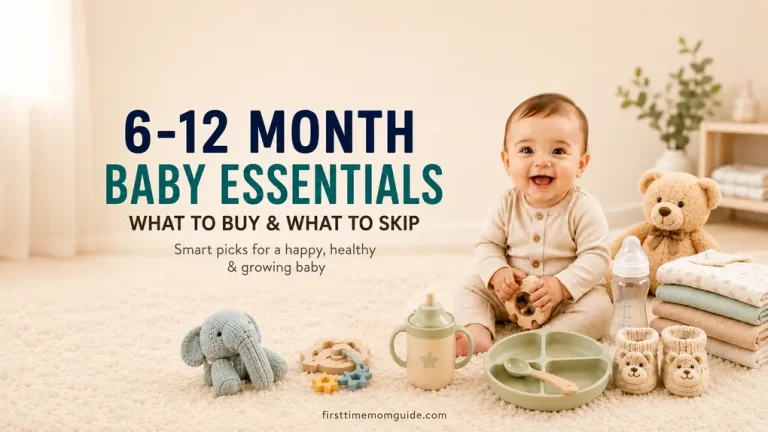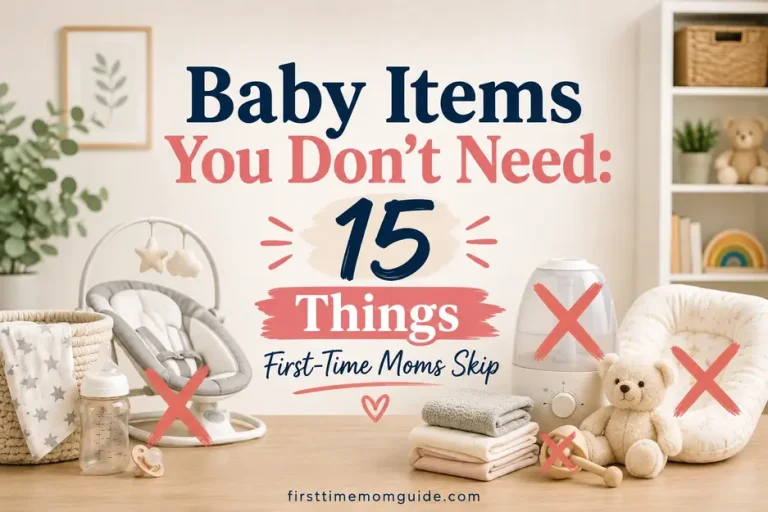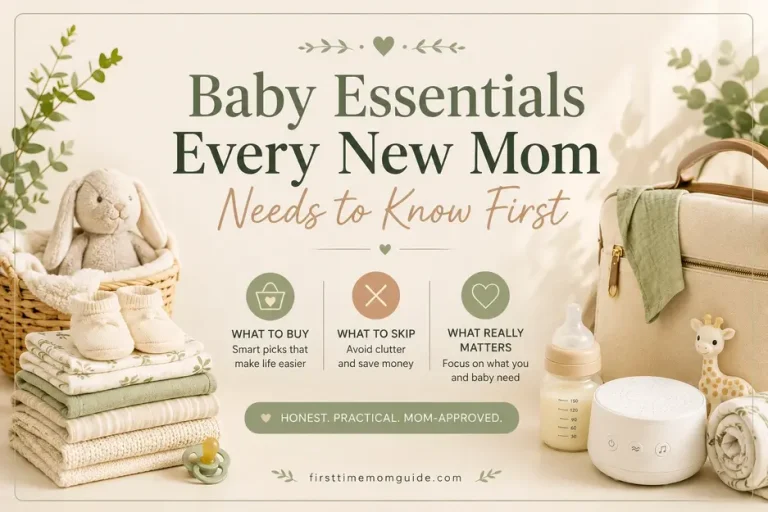
3-6 Month Baby Essentials: Life After the Fourth Trimester
The first three months with a baby are survival mode. You are figuring out feeding, sleep, and simply keeping another human alive. Then something shifts around the 12-week mark your baby wakes up. They smile on purpose. They reach for things. They get bored. And suddenly, the items that worked perfectly in month one is either redundant, outgrown, or genuinely unsafe to keep using.
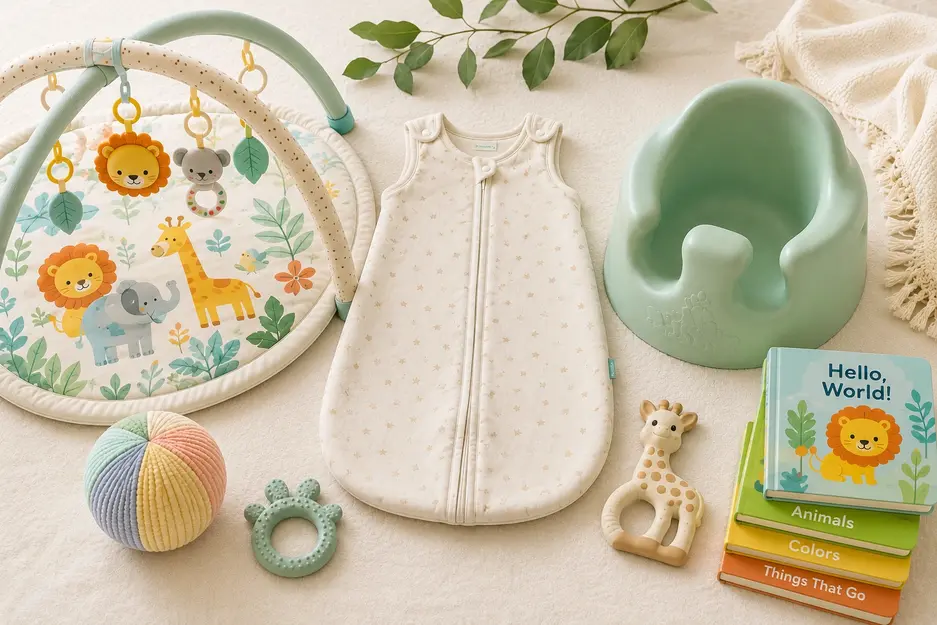
This guide covers the 3–6-month baby essentials the items that become necessary as your baby leaves the fourth trimester and enters one of the most rapid developmental phases of the first year. It also covers what to stop using, what to sell, common mistakes parents make at this stage, and what confusion most first-time moms face right now.
Everything here is based on AAP 2024 developmental guidelines and safe sleep standards. No fluff. No items added because they photograph well. Just the things your baby actually needs between 3 and 6 months.
If you are finding home outfits for new born baby then you must read home outfits for new borns.
Quick Checklist 3-6 Month Baby Essentials at a Glance
Bookmark this section and come back to it at week 11 and week 22. Every item below becomes relevant during this stage the tick marks show the approximate timing.
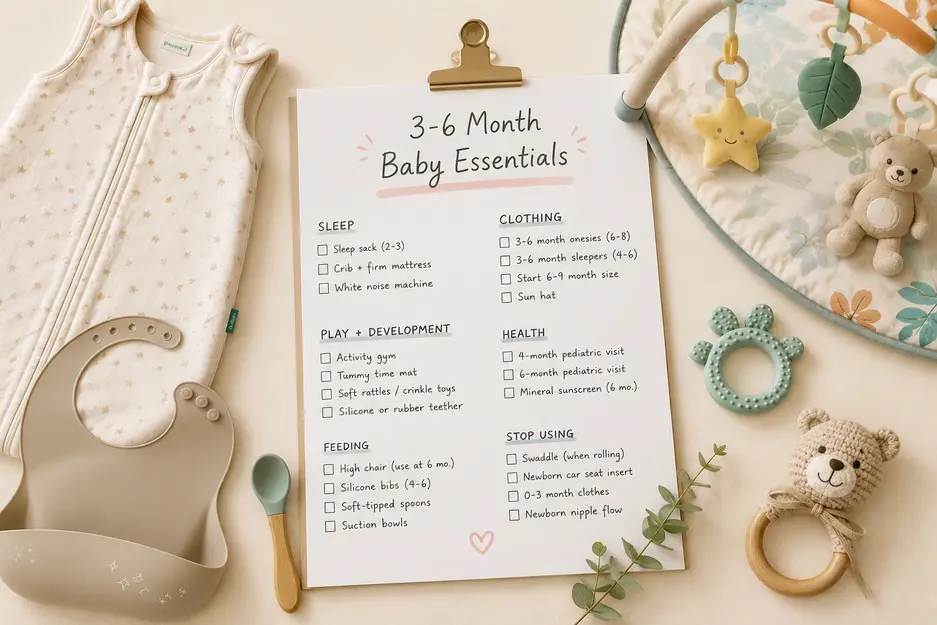
SLEEP 🛏️
PLAY + DEVELOPMENT🧸
FEEDING🍽️
CLOTHING 👕
HEALTH🏥
RETIRE THESE🚫
Tip💡
Screenshot or save this checklist. Laminate it if you are the type who forgets nothing you will still miss something without a list at 3 AM.
What the Fourth Trimester Actually Is And Why It Matters
The fourth trimester is the first 12 weeks after birth. It was popularized by pediatrician Dr. Harvey Karp, who argued that human babies are born three months earlier than their neurological development warrants compared to other mammals. During those first 12 weeks, your baby is essentially adjusting to life outside the womb: light, sound, hunger, cold, the absence of constant motion and noise.
Around 12 weeks, that adjustment completes. The nervous system matures, sleep cycles change, the startle reflex fades, and your baby becomes genuinely interactive. That developmental shift is exactly what makes the 3–6-month baby essentials list so different from the newborn one.
What Changes in Your Baby Between 3 and 6 Months
Every item on the essentials list below connects directly to a developmental milestone. This is not shopping for shopping’s sake it is responding to real biological changes in your baby’s brain and body.
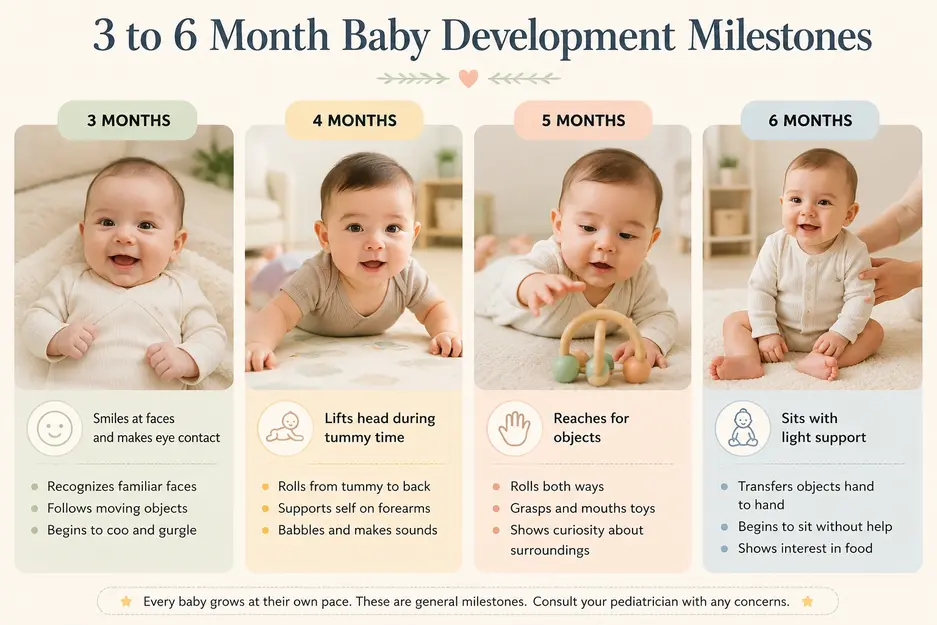
| Age | What Baby Can Do | Gear Implication |
| 3 months | Smiles intentionally, tracks objects, startle reflex fading | Stop swaddling if rolling signs appear. Start activity gym. |
| 4 months | Rolls tummy to back, reaches for objects, babbles | Transition to sleep sack. Daily tummy time essential. |
| 5 months | May roll both ways, grabs and mouths objects | Teethers needed. Soft rattles and sensory toys appropriate. |
| 6 months | Sits with support, transfers objects, ready for solids | High chair needed. Start solid foods. Sippy cup introduction. |
What to Stop Using After 3 Months The Retirement List
This section is as important as the new items list. Several things that worked well in the newborn stage become either outgrown, ineffective, or unsafe after 3 months. Knowing what to retire keeps your baby safe and clears the clutter.
Swaddling Stop When Rolling Signs Appear
Swaddling becomes dangerous the moment your baby shows any sign of rolling. The AAP states swaddling must stop at the first rolling attempt typically between 2 and 4 months. A swaddled baby who rolls onto their stomach cannot push up or turn their head, which creates a suffocation risk. Transition to an arms-free sleep sack immediately.
Safety Rule⚠️
If your baby’s arms push outward and their body rocks to one side, that is a rolling attempt. Stop swaddling that night. Do not wait for a full roll.
Other Items to Retire
- Newborn car seat insert most manufacturer limits are 8 to 11 pounds. Check your manual.
- Newborn and 0-3 month clothing most babies outgrow by 6 to 8 weeks
- Newborn nipple flow switch to medium flow by 3 to 4 months as feeding efficiency improves
- Bassinet transfer to crib by 4 to 6 months depending on manufacturer limit
- Bouncers and swings for sleep never safe as a sleep surface at any age
3-6 Month Baby Essentials Complete Category List
These are the items that become genuinely necessary between 3 and 6 months. Each one connects to a specific developmental milestone happening right now in your baby’s brain and body.
Sleep Essentials
Sleep changes significantly at 3 to 4 months. Sleep cycles mature babies’ cycle through lighter stages more frequently, causing the notorious 4-month sleep regression. The right setup reduces disruption without adding products that do not work.
Sleep becomes a major focus during this stage, and our baby sleep guide explains age-appropriate sleep routines and safe sleep practices in more detail.
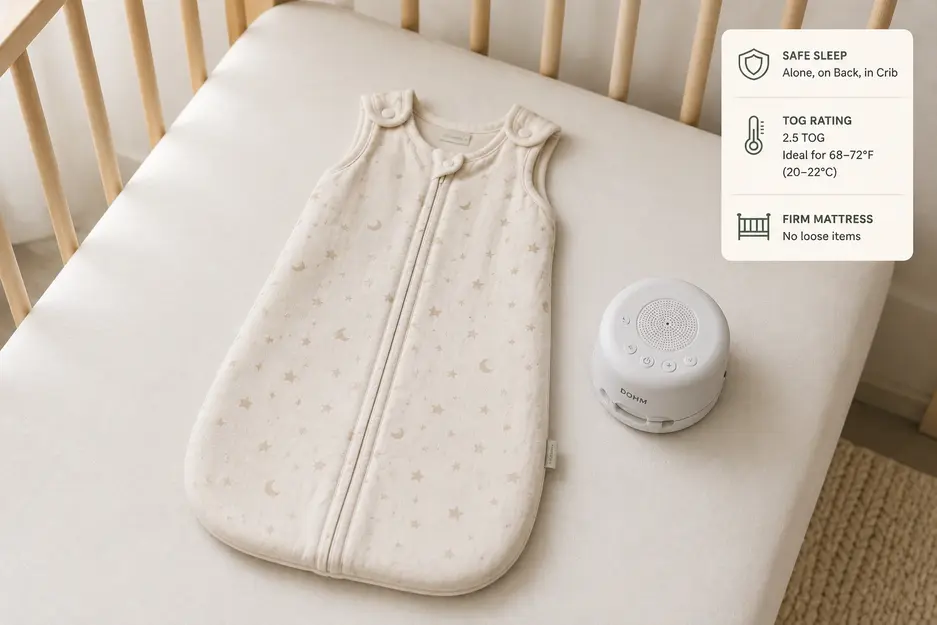
Sleep Sack Non-Negotiable From 3 Months
A sleep sack is a wearable blanket that keeps your baby warm without loose fabric in the sleep space. Choose TOG-rated based on room temperature 0.5 TOG for warm rooms above 24°C, 1.0 TOG for average rooms 20-23°C, and 2.5 TOG for cooler rooms below 20°C. Buy 2 to 3 so one is always available during laundry.
Crib Transition
Most bassinets have a weight or age limit of 4 to 6 months. If your baby is still in a bedside bassinet at 3 months, begin planning the crib transition. Crib setup stays identical to safe newborn sleep firm flat mattress, fitted sheet, sleep sack, nothing else.
4 Month Regression 💡
The regression is developmental maturing sleep cycles cause more frequent waking. No product fixes it. A consistent bedtime routine, appropriate awake windows, and patience are the evidence-based responses.
Play and Development Biggest Change This Stage
This is where the 3–6-month essentials list diverges most from the newborn list. Your baby is now alert, curious, and needs physical and cognitive stimulation. The right gear supports the milestones; the wrong gear wastes money on things baby ignores.
Activity Gym Essential From 3 Months
An activity gym with an overhead arch of dangling toys becomes one of the most-used items you own from 3 months. Babies spend increasing time batting objects, tracking movement, and developing the hand-eye coordination that leads to intentional grasping. Look for high-contrast colors and varied textures newborn vision responds to contrast, and tactile variety supports sensory development.
Tummy Time Mat Daily From 3 Months
Daily supervised tummy time builds the neck, shoulder, and core strength needed for rolling, sitting, and crawling. The AAP recommends building to 30 cumulative minutes per day by 3 months. A firm padded mat, a rolled towel under the chest, or your own chest are all appropriate surfaces.
Soft Rattles and Sensory Toys From 4 Months
By 4 to 5 months, your baby deliberately reaches for and grasps objects. Soft rattles, crinkle toys, and high-contrast board books held by a caregiver support this stage. Simple is better electronic toys with lights and sounds overstimulate more than they benefit at this age.
Teethers From 4 Months
Teething sensitivity begins as early as 3 to 4 months often months before the first tooth breaks through. A silicone or natural rubber one-piece teether is safe and effective. Avoid amber necklaces the AAP and FDA both flag these as choking and strangulation hazards with no evidence of effectiveness.
Feeding Essentials
Feeding remains breast milk or formula only until around 6 months. But the gear for solid food introduction needs to be ready before you need it high chairs take weeks to arrive, and the transition to solids moves faster than most parents expect.
As your baby approaches six months, you may also be wondering when and how to introduce solids. Our Baby Food for 6–12 Months guide walks you through the process.
High Chair Order at 4-5 Months, Use at 6
A high chair is only appropriate once your baby sits with support typically around 6 months. But order at 4 to 5 months because shipping takes time. Look for full recline-to-upright adjustment, a removable washable tray, and a five-point harness.
Soft-Tipped Spoons + Suction Bowls
Silicone soft-tipped spoons are gentle on new gums. Suction base bowls stay on the high chair tray and significantly reduce waste. Start with 4 to 6 spoons and 2 to 3 small bowls.
Silicone Bibs with Pocket
A silicone bib with a food-catching pocket is one of the most practically useful items for the solids stage. They wipe clean in seconds, go in the dishwasher, and catch a meaningful amount of what miss’s baby’s mouth. Register for 4 to 6 before 6 months.
Solid Food Readiness 💡
AAP recommends starting solids around 6 months. Signs: sitting with minimal support, interest in food, tongue-thrust reflex faded. Not before 4 months under any circumstances.
Transport Small Changes
Transport gear stays largely the same, but a few practical updates happen between 3 and 6 months as your baby gains neck and trunk control.
Stroller Recline
At 3 months, most babies have enough head and neck control for a more upright stroller position. Many are more engaged and less fussy when they can see their surroundings. Check your stroller manual for the recommended minimum age for each position.
Baby Carrier Easier Now
Soft-structured carriers become significantly more comfortable once baby has stronger neck control. The ergonomic M-position knees higher than bottom remains important regardless of carrier type. Many parents find 3 to 6 months is actually when carriers are used most.
Must-Have vs Nice-to-Have 3-6 Month Baby Essentials
This table separates what your baby genuinely needs from what is pleasant to have but not essential. Everything in the Must-Have column has a developmental or safety reason. Everything in the Nice-to-Have column is optional buy only if your budget allows and your baby shows interest.
| Item | Must-Have ✅ | Nice-to-Have ⭐ | Skip ❌ | Why |
| Sleep sack (TOG-rated) | ✅ | AAP safe sleep — replaces swaddle when rolling starts | ||
| Activity gym | ✅ | Supports eye tracking, reaching, tummy time | ||
| Firm tummy time mat | ✅ | AAP recommends 30 min/day from 3 months | ||
| Silicone teether | ✅ | Gum relief from 4 months — safe one-piece only | ||
| High chair | ✅ | Needed for solids — order at 4-5 months | ||
| Silicone bibs x4-6 | ✅ | Essential for solid food stage | ||
| Soft-tipped spoons + suction bowls | ✅ | First solids utensils — no alternatives needed | ||
| White noise machine | ✅ | Continues from newborn — supports sleep through regression | ||
| Baby bouncer / swing | ⭐ | Useful when supervised and awake — not for sleep | ||
| Baby jumper / doorway jumper | ⭐ | Fine from when baby can hold head up — developmental activity | ||
| Playmat with mirror | ⭐ | Mirrors support self-recognition development | ||
| Baby food maker | ❌ | A regular blender or fork works identically | ||
| Amber teething necklace | ❌ | AAP + FDA advise against — choking hazard, no evidence | ||
| Bumbo floor seat | ❌ | Not recommended by AAP — does not support natural sitting development | ||
| Electronic light-up learning toys | ❌ | Overstimulating for 3-6 months — simple is better |
3-6 Month Baby Essentials vs Newborn Essentials What Changes
This table shows exactly how 3–6-month baby essentials differ from the newborn list. Keep the items in the Keep column. Retire the Swap or Stop items. Add the New column as each milestone is reached.
| Category | Keep From Newborn ✅ | Swap or stop ❌ | New for 3-6 Months ➕ |
| Sleep | Crib/bassinet, white noise, firm mattress | Swaddle (when rolling starts), newborn insert | Sleep sack (TOG-rated), crib if still in bassinet |
| Play | Tummy time surface, high-contrast items | Newborn mobiles (now too far for baby’s focus) | Activity gym, soft rattles, sensory toys, teethers |
| Feeding | Bottles, burp cloths, nursing pillow | Newborn nipple flow (move to medium flow) | High chair, soft spoons, silicone bibs, small bowls |
| Transport | Car seat, stroller, carrier | Newborn car seat inserts (check manual) | Carrier easier with neck control |
| Clothing | Onesies, footed sleepers, socks | Newborn and 0–3-month sizes | 3–6-month size, 6-9 month from around 5 months |
| Health | Thermometer, nasal aspirator, first aid | Nothing to retire | Teether, sunscreen from 6 months |
7 Common Mistakes Parents Make at the 3-6 Month Stage
These are the most frequently reported mistakes from first-time parents at this exact stage on Reddit parenting threads, in Quora answers, and in pediatrician waiting rooms. All of them are avoidable once you know about them.
Mistake 1: Continuing to Swaddle After Rolling Signs Appear
This is the most dangerous mistake at this stage. Many parents keep swaddling because baby sleeps better with it and they have not seen a full roll. But a rolling attempt arms pushing, body rocking is enough reason to stop immediately. A swaddled baby who rolls to their stomach cannot reposition. Stop swaddling that night. Transition to a sleep sack.
Mistake 2: Starting Solids Before 4 Months
Some parents start solids as early as 2 to 3 months either because of pressure from family, belief that it improves sleep, or confusion about readiness. The AAP is clear: not before 4 months under any circumstances, and around 6 months for most babies. Starting too early stresses an undeveloped digestive system and has not been shown to extend sleep. Your pediatrician is the right person to confirm timing for your specific baby.
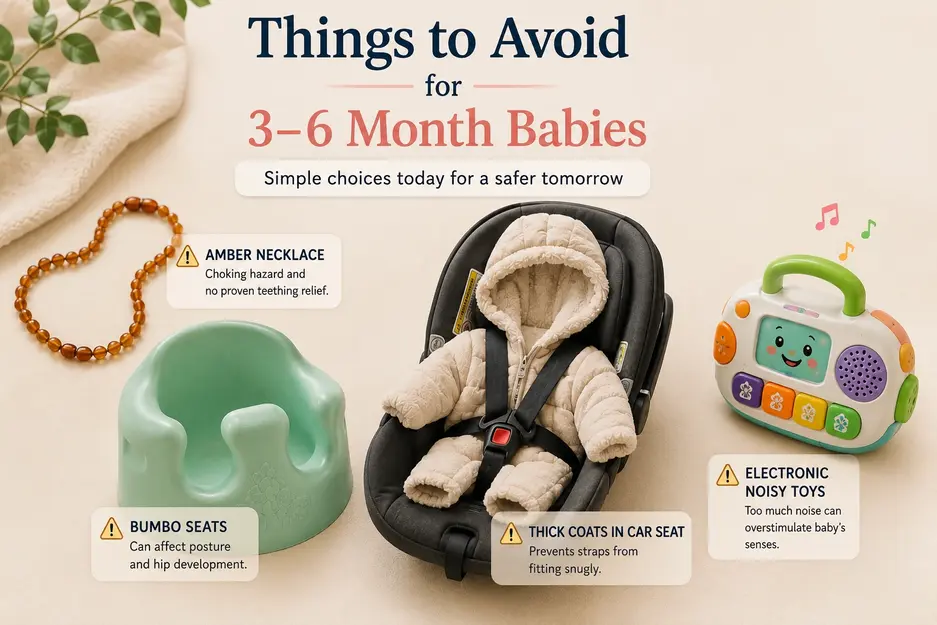
Mistake 3: Buying a Bumbo Seat
The Bumbo floor seat looks like an easy solution for propping up a baby who cannot yet sit independently. The AAP does not recommend it. It places baby in a position their trunk muscles are not ready for and can develop compensatory muscle patterns that interfere with natural sitting progression. Supervised tummy time and supported lap sitting are the appropriate approaches at this stage
Mistake 4: Using an Amber Teething Necklace
Amber necklaces are popular in some parenting communities as a teething remedy. The FDA and AAP both advise strongly against them. They pose a strangulation risk if they catch on anything and a choking risk if they break. There is no clinical evidence they relieve teething pain. A chilled silicone teether achieves the gum pressure that actually provides relief.
Mistake 5: Letting Baby Sleep in a Bouncer or Swing
Bouncers and swings are useful supervised tools while baby is awake. They are not safe sleep surfaces at any age. An inclined position can cause positional asphyxia — baby’s head drops forward, narrowing the airway. If your baby falls asleep in a bouncer, transfer them to a firm flat surface as soon as you notice. This rule does not change at 3 months.
Mistake 6: Stockpiling the Wrong Diaper Size
Many parents buy large quantities of Size 1 diapers and find their baby is already in Size 2 by 3 months. Size 1 fits babies from 8 to 14 pounds most 3-month-olds are at or near the upper end. Buy one pack to assess fit, then stock the size that actually fits. A diaper that leaks regularly is not the right size, regardless of what the label says.
Mistake 7: Skipping the 4-Month Well Visit
The 4-month pediatrician visit is not just for vaccinations it includes a developmental assessment that checks for milestones specific to this stage. Missing it means missing the professional evaluation that catches developmental concerns early, when intervention is most effective. It also includes guidance on the transition to solids and sleep changes that are directly relevant to this guide.
Clothing for 3 to 6 Months
Clothing at this stage is more straightforward than the newborn phase because you now know your baby’s size and growth rate. The guesswork is largely gone.
- Onesies: 6 to 8 in size 3-6 months daily base layer year-round
- Footed sleepers: 4 to 6 in size 3-6 months primary outfit for home days
- Move to 6–9-month size from around 4 to 5 months not 6
- Socks: 6 pairs minimum they vanish constantly
- Sun hat with brim essential for outdoor use from 6 months
Sizing Note:💡
Baby clothing size labels vary widely between brands. Go by weight and height, not the number on the tag. Most 3–6-month sizes fit babies between 12 and 16 pounds.
Health and Safety Updates at 6 Months
A few health items become newly relevant as your baby approaches 6 months and begins exploring the world more actively.
- Mineral sunscreen SPF 30 AAP approves zinc oxide or titanium dioxide sunscreen from 6 months for outdoor use. Before 6 months, keep baby in shade or use protective clothing.
- Baby-proofing preview by 6 months some babies roll across rooms. Outlet covers, cabinet latches, and stair gates become relevant in the next 2 to 3 months. Start assessing your floor layout now.
- 4-month and 6-month well visits both include developmental assessments and vaccinations. These are not optional appointments.
The 3 to 6 Month Stage Is a Gear Reset Not an Add-On
The 3–6-month baby essentials represent a genuine gear reset. Stop swaddling when rolling signs appear. Add the activity gym, tummy time mat, and teether. Order the high chair and solid food gear before you need it. Know that the 4-month sleep regression is developmental no product fixes it.
The common mistakes in this guide are all avoidable with a little advance knowledge. The checklist at the top of this article is your reference screenshot it and come back to it at week 11 and week 22.
Disclaimer: ⚠️
This article is for informational purposes only. Developmental milestones vary between babies timings here are general guides based on AAP 2024 developmental guidelines. Always consult your pediatrician before changing your baby’s sleep setup, feeding schedule, or introducing solid foods.
FAQ’S
Q1. When should I stop swaddling my baby?
Stop as soon as your baby shows any rolling sign even an attempt, not a full roll. This typically happens between 2 and 4 months. The AAP states swaddling must stop at the first rolling sign because a swaddled baby who rolls to their stomach cannot reposition safely. Transition to an arms-free sleep sack that night. If you are unsure, film a night on the baby monitor arms pushing and body rocking is a rolling attempt.
Q2. What developmental toys does a 3-month-old actually need?
An activity gym with high-contrast hanging items at arm’s reach, tummy time on a firm padded surface, and face-to-face caregiver interaction. The AAP’s developmental research consistently shows that adult interaction talking, singing, making eye contact supports brain development more than any toy at this stage. Simple high-contrast black-and-white cards held at 8 to 12 inches are evidence-backed. Electronic toys are not.
Q3. Does my 3 month-old need a high chair yet?
No not yet. A high chair is appropriate when your baby can sit with support, typically around 6 months. But purchasing at 4 to 5 months is practical because shipping takes time and family members planning gifts for 5 to 6-month celebrations often need suggestions. Never place baby in a high chair or start solid foods before they can hold their head up reliably and sit with minimal support
Q4. Why does my 4 month old suddenly sleep worse?
The 4-month sleep regression affects the majority of babies. It is caused by a neurological maturation process that permanently changes sleep cycle structure baby’s cycles begin to resemble adult cycles and they wake more easily between stages. This is developmental and does not reverse. The practical responses are a consistent bedtime routine, age-appropriate awake windows, and patience. No product stops the regression.
Q5. Can I use a baby bouncer or swing for my 3 month old to sleep in?
No. AAP safe sleep guidelines state that bouncers, swings, rockers, and inclined sleepers are not safe sleep surfaces at any age. An inclined position can cause positional asphyxia the head drops forward and narrows the airway. If your baby falls asleep in a bouncer, transfer them to a firm flat surface as soon as possible. Supervised use while awake and alert is fine.