
Complete 0 to 3 Months Baby Essentials Checklist 2026
Bringing a newborn home is one of the most exciting — and overwhelming — moments of your life. You want to be prepared for everything, but the sheer volume of baby products on the market makes it hard to know what you actually need versus what’s clever marketing.
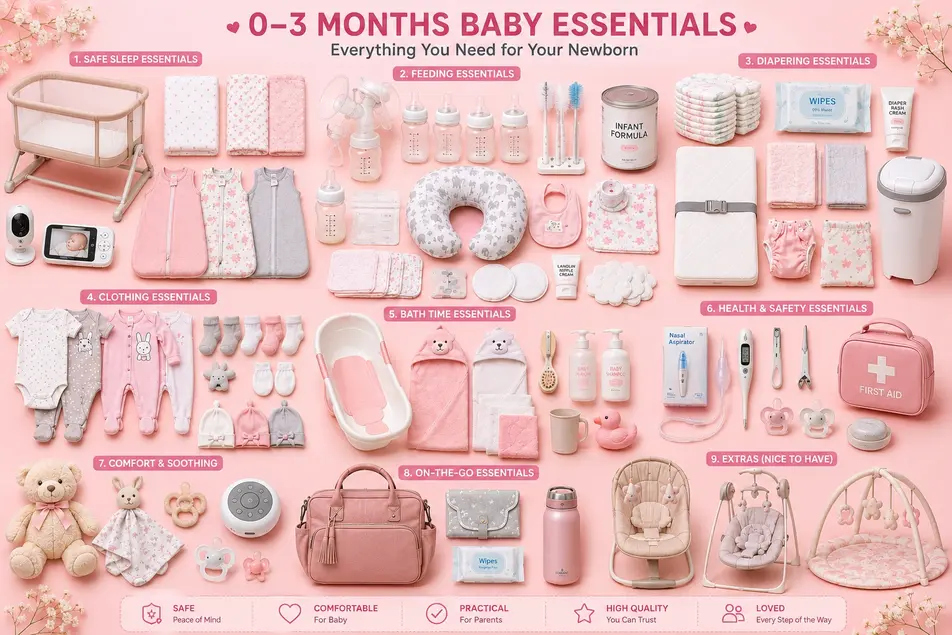
This guide cuts through the noise. Whether you’re building your registry, packing your hospital bag, or doing a last-minute baby supply run at 37 weeks, this checklist covers every essential for the first three months — organized by category, with honest notes on what’s worth buying and what you can skip.
What Do You Actually Need for a 0–3 Month Baby?
For the first three months, a newborn needs safe sleep gear, feeding supplies, diapering essentials, basic clothing, bathing items, and a few comfort/soothing tools. You do not need a stroller, high chair, baby food, or most “developmental” toys at this stage. Prioritize function over novelty.
Why the First 3 Months Are Different
The 0–3 month phase often called the “fourth trimester” is unlike any other stage of babyhood. Your newborn is adjusting to life outside the womb: they sleep up to 16–18 hours a day, eat every 2–3 hours, and have very limited sensory capacity. Their world is small, close, and needs to feel safe.
This means your shopping list should reflect that reality not a 6-month-old’s.
The Complete 0–3 Months Baby Essentials Checklist
1. Safe Sleep Essentials 🛏️
Safe sleep is non-negotiable. The American Academy of Pediatrics (AAP) recommends babies sleep on their backs, on a firm, flat surface, in the same room as parents for at least the first 6 months.
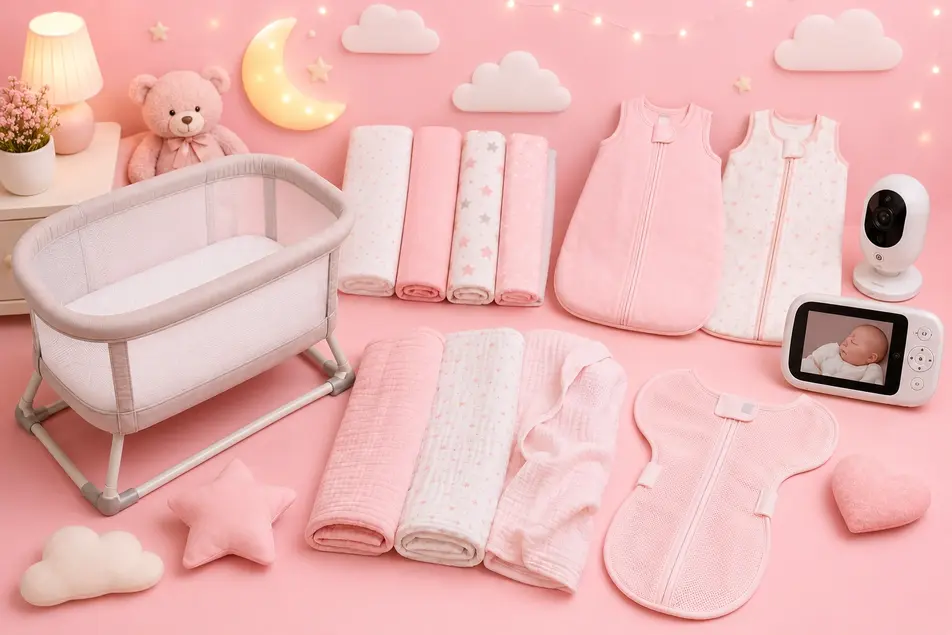
What Must Haves:
What Skip for Now:
Pro Tip
A bedside bassinet (like the SNOO or a simple rocking bassinet) keeps baby within arm’s reach for night feeds and is especially helpful for C-section recovery.
2. Feeding Essentials 🍼
Whether you’re breastfeeding, formula-feeding, or combination feeding, the first three months involve a lot of feeding up to 8–12 times per day.
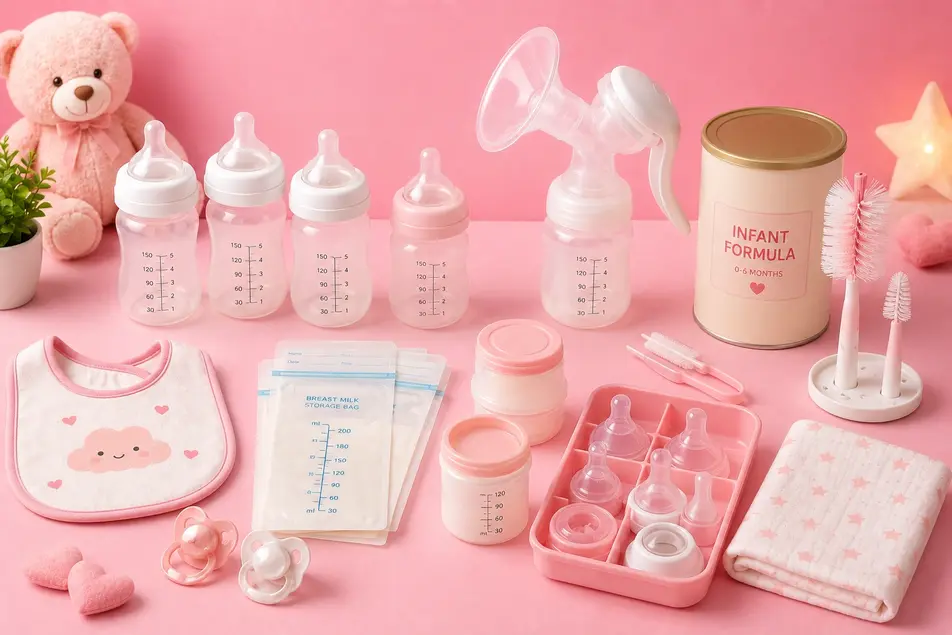
If Breast Feeding:
If Formula-Feeding or Combo Feeding:
For All Feeding Methods:
3. Diapering Essentials 🧷
Newborns go through 8–12 diapers per day in the first weeks. That’s not an exaggeration — you’ll be changing diapers roughly every 2 hours around the clock.
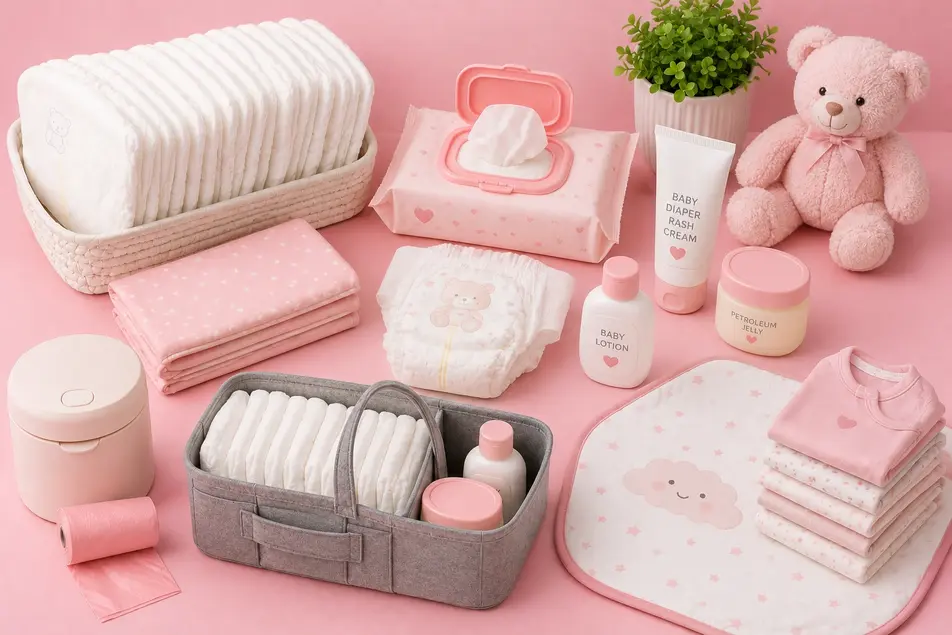
What Must Haves:
If Cloth Diapering?
If you’re going the cloth route, you’ll need:
4. Clothing Essentials
Newborns don’t need wardrobes, they need soft, easy-to-change outfits that don’t fight you at 3 a.m.
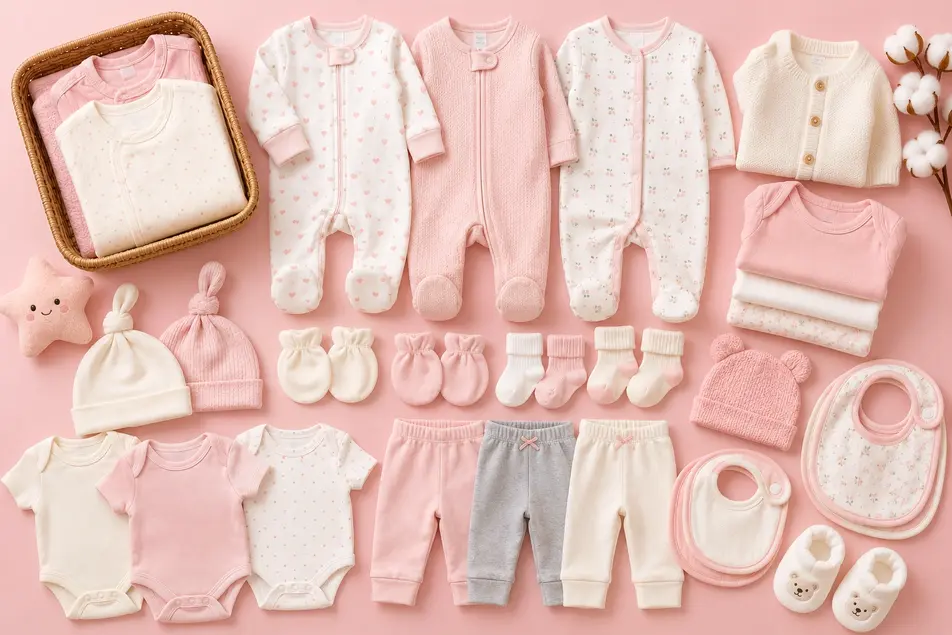
What to Buy:
| Item | Quantity | Notes |
|---|---|---|
| Onesies (short & long sleeve) | 6–8 Pair | Snaps at bottom for easy diaper access |
| Footed sleepers/pajamas | 6–8 Pairs | Zipper > snaps for nighttime |
| Socks | 6–8 Pairs | They fall off constantly |
| Scratch mittens | 2–3 Pairs | Newborns can scratch their own faces |
| Hats | 2–3 Pairs | Warmth in first few weeks; hospital usually provides one |
| Swaddle-friendly outfits | _______ | Avoid thick seams that bunch under a swaddle |
Sizing Reality Check:
5. Bath Time Essentials 🛁
Newborns only need baths 2–3 times per week — daily bathing can dry out their delicate skin.
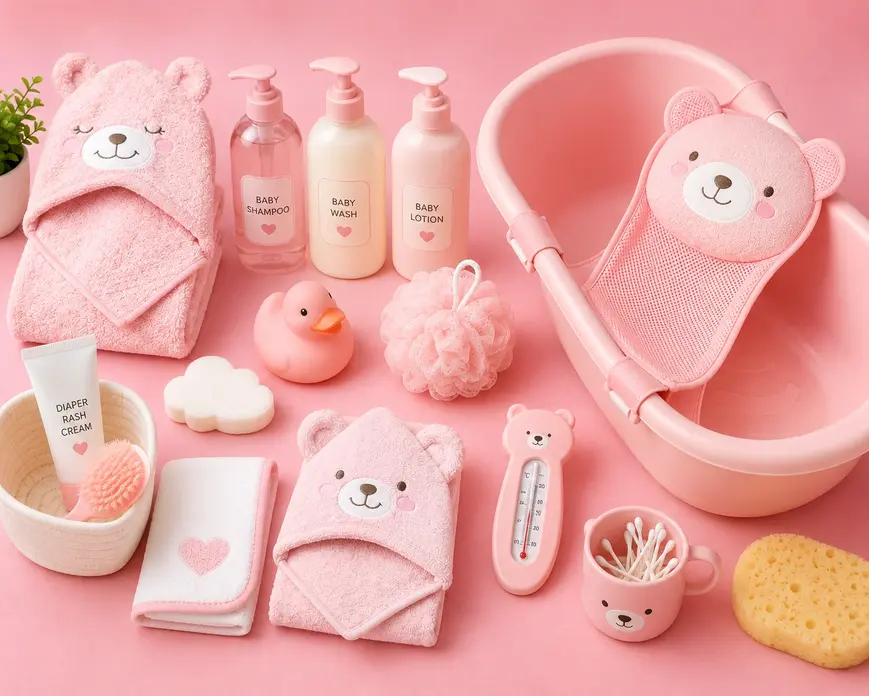
What Must Haves:
What Skip for Now:
6. On The Go Essentials 🚗
You’ll leave the house sooner than you think — even just for pediatric appointments in the first week.
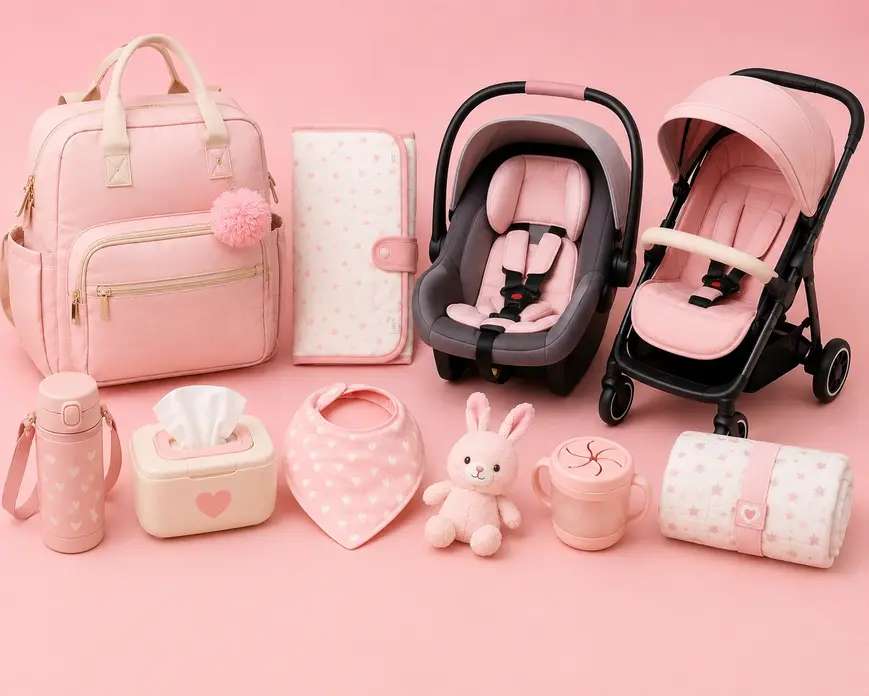
What is Non-Negotiables:
Diaper Bag Essentials (Always Pack):
7. Health & Safety Essentials 🤱
Your pediatrician will be your best resource, but these items help you handle everyday situations at home.
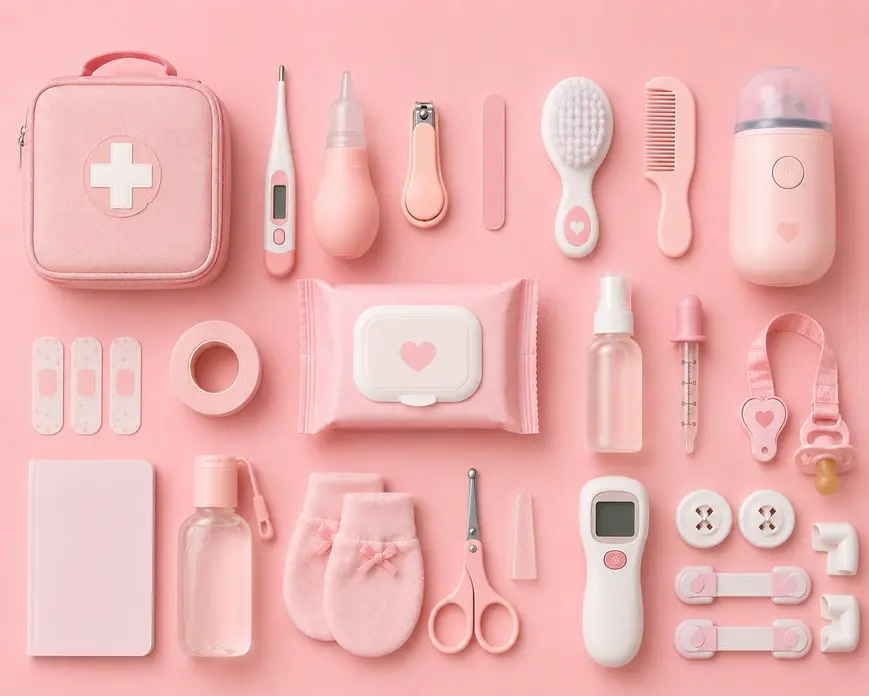
Health Kit:
Safety Items:
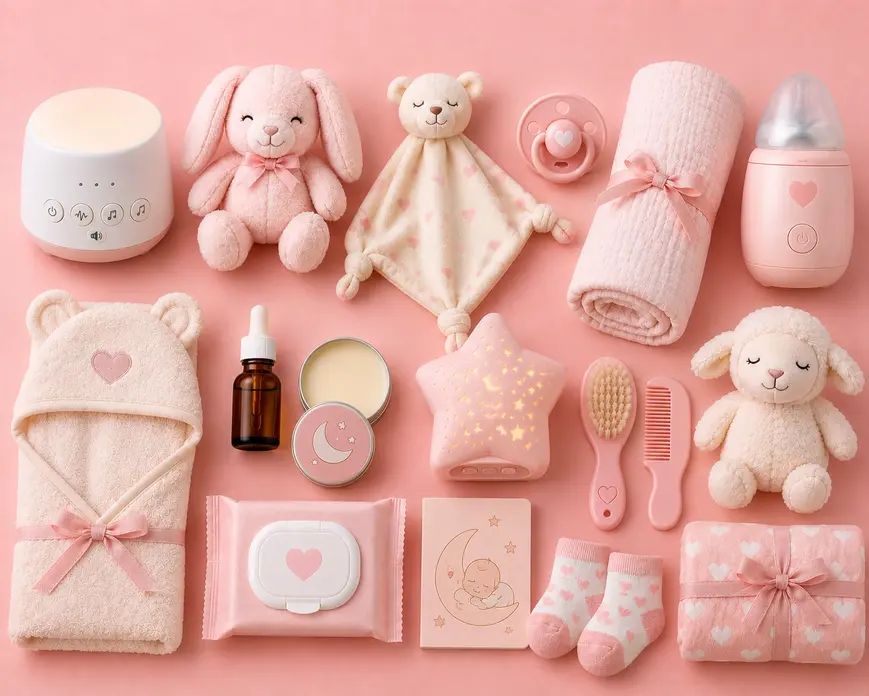
8. Soothing & Comfort Essentials 🎵
The “5 S’s” method — Swaddle, Side/Stomach position, Shush, Swing, Suck is backed by research for calming newborns. These products support that approach.
What Actually Works:
What To Skip:
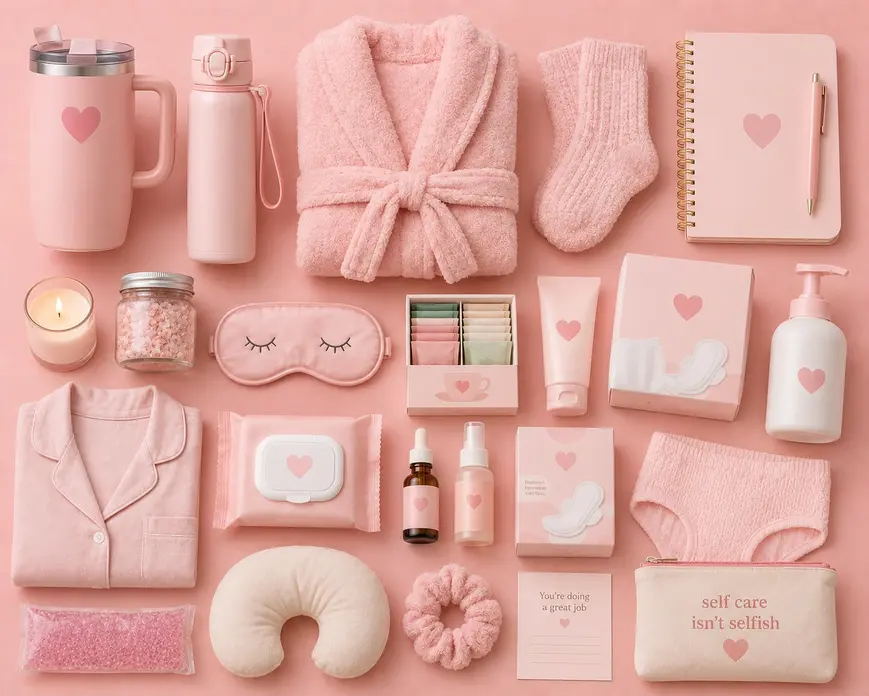
9. Postpartum Essentials for Parents 💻
This checklist isn’t complete without acknowledging your needs. A cared-for parent is better equipped to care for a baby.
For Birthing Parents:
For All New Parents:
Common Mistakes New Parents Make When Buying Baby Essentials
1. Buying Too Many Newborn-Sized Items
Most babies outgrow newborn size within 2–4 weeks. Buy just a week’s worth of newborn clothes and stock up on 0–3 month sizes instead.
2. Over-Investing Before Birth
Baby preferences vary wildly. Don’t buy six bottles of the same brand before knowing if your baby will take them. Don’t stock six months of formula before knowing if your baby has a sensitivity.
3. Skipping the Car Seat Inspection
Up to 59% of car seats are installed incorrectly, according to the National Highway Traffic Safety Administration (NHTSA). Get yours checked at a certified inspection station before your due date.
4. Ignoring Second-Hand Safety Rules
Gently used baby clothing, carriers, and bouncers are fine secondhand. Never buy a used car seat (you can’t verify its crash history) or a crib that doesn’t meet current safety standards.
5. Forgetting Postpartum Recovery Needs
New parents — especially birthing parents — often focus entirely on the baby and forget to prepare for their own recovery. Stock your postpartum care items before delivery.
6. Buying Gadgets Over Basics
A $400 smart bassinet won’t help if you run out of diapers or nipple cream. Nail the basics first, then consider upgrades.
Expert Tips for Building Your Baby Essentials List
- Start with a minimalist list. You can always buy more; you can’t return open products. Aim for the minimum viable setup and add based on your actual baby’s needs.
- Ask other parents in your local climate. What works in Arizona’s dry heat differs from what’s essential in Minnesota winters.
- Create a registry across multiple stores. Use Amazon, Target, and Buy Buy Baby — completion discounts add up.
- Don’t overbuy wipes brands before birth. Some babies have skin reactions to specific brands; buy in small quantities first.
- Wash and prep everything before your due date. Wash clothes, assemble gear, install the car seat — ideally by week 36. Babies don’t always wait until their due date.
- Prioritize durability over aesthetics. The cutest diaper bag won’t help if it has no insulated bottle pockets. Function first.
Estimated Budget: 0–3 Month Baby Essentials
| Category | Budget Range | Mid-Range | Premium |
|---|---|---|---|
| Sleep (bassinet + bedding) | $80–150 | $200–400 | $500–1,700+ |
| Feeding (pump + bottles) | $0–100 | $150–300 | $400+ |
| Diapering (3 months supply) | $150–250 | $250–400 | $400+ |
| Clothing | $50–100 | $100–250 | $300+ |
| Bath | $30–60 | $60–100 | $100+ |
| Car seat + stroller | $100–200 | $300–600 | $800–1,500+ |
| Health + safety | $50–100 | $100–150 | $150+ |
| Soothing | $30–100 | $100–300 | $400+ |
| Estimated Total | ~$490–1,060 | ~$1,260–2,500 | $2,550–5,500+ |
Author Words:
This guide was written by a parenting content specialist with years of experience researching infant care, pediatric safety guidelines, and real-world parent feedback. All product recommendations are based on AAP safety standards, verified user reviews, and pediatric best practices — not sponsored placements. The goal is simple: give new parents clear, honest information so they can make confident decisions for their families.
Frequently Ask Questions
1. What are the absolute must-haves for a newborn’s first week at home?
The bare minimum for the first week: a safe sleep surface (bassinet or crib with firm mattress), fitted sheets, swaddle blankets, diapers (newborn and Size 1), fragrance-free wipes, onesies and sleepers, a rectal thermometer, a nasal aspirator, and feeding supplies appropriate to your method. Everything else can wait.
2. How many diapers do I need for the first 3 months?
In the first month, expect to use about 280–350 newborn/Size 1 diapers. By 3 months, you’ll be using roughly 180–240 diapers per month in Size 2. In total, budget for approximately 700–900 diapers for the first 3 months.
3. When should I start buying baby essentials during pregnancy?
Most parents start around 20–28 weeks. Try to have the major items (crib, car seat, feeding supplies) ready by 36 weeks — roughly a month before your due date — since babies can arrive early.
4. Do I need both a bassinet and a crib?
Not necessarily. A bassinet is useful for the first 3–4 months for room-sharing convenience, but if space or budget is a concern, many parents go straight to a crib from birth. The crib will last much longer (typically 2–3 years).
5. What’s the safest sleeping arrangement for a 0–3 month baby?
According to the AAP: baby sleeps alone (no bed-sharing), on their back, on a firm and flat sleep surface, in the same room as parents. No loose bedding, pillows, bumpers, or positioners.
6. Are baby bouncers and swings safe for newborn sleep?
No. Bouncers and swings are for supervised awake time only. Never leave a baby to sleep unsupervised in a bouncer, swing, or car seat. Inclined sleepers have been recalled and are no longer considered safe.
7. What clothing size should I buy for a newborn?
Buy mostly 0–3 month sizes. Only buy a small quantity (5–6 pieces) of newborn size, and skip it entirely if your baby is projected to be over 8 lbs at birth.
8. Is breastfeeding really free? What supplies do I actually need?
Breastfeeding is lower cost than formula but not entirely free. You’ll likely spend on a pump (often covered by insurance), nursing bras, nipple cream, breast pads, and possibly lactation consultant fees. Budget $100–300 total depending on your situation.
9. Do newborns need any toys in the first 3 months?
Not really. A newborn’s vision is limited to 8–12 inches. High-contrast black-and-white cards or a simple mobile with contrasting colors are sufficient for visual stimulation. Skin-to-skin contact and your voice are far more valuable than toys at this stage.
10. What’s the difference between a baby wrap and a structured carrier?
A wrap (like Solly Baby) is a long piece of stretchy fabric you tie around your body — very close contact, great for newborns, but has a learning curve. A structured carrier (like Ergobaby Embrace) has buckles and straps with quicker adjustment — easier for beginners and partners. Both are safe for newborns when used correctly with baby in the “M-position.”